
Trump Erupts During Kennedy Center Board Meeting After Judge Blocks Latest Attempt to Put His Name on Building
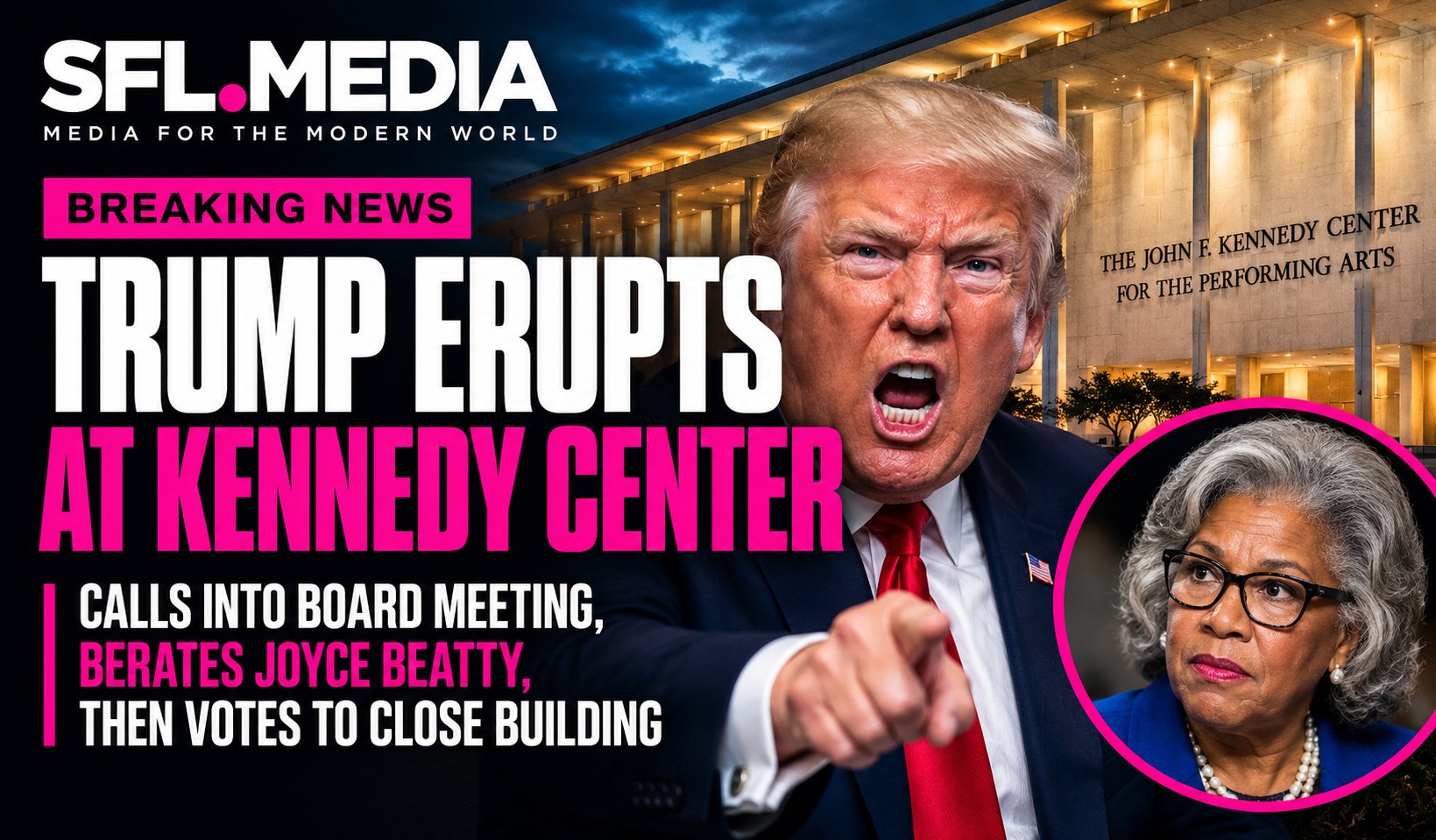
President Called Into Kennedy Center Meeting With Howard Lutnick and Berated Rep. Joyce Beatty Before Board Voted to Close the Historic Venue for Renovations
WASHINGTON — President Donald Trump’s escalating battle to put his name on the John F. Kennedy Center for the Performing Arts erupted into an extraordinary confrontation after a federal judge blocked the institution’s latest attempt to honor Trump on the historic building, prompting the president to call into a Kennedy Center board meeting and angrily confront Democratic Rep. Joyce Beatty, whose lawsuit has repeatedly stopped the effort.
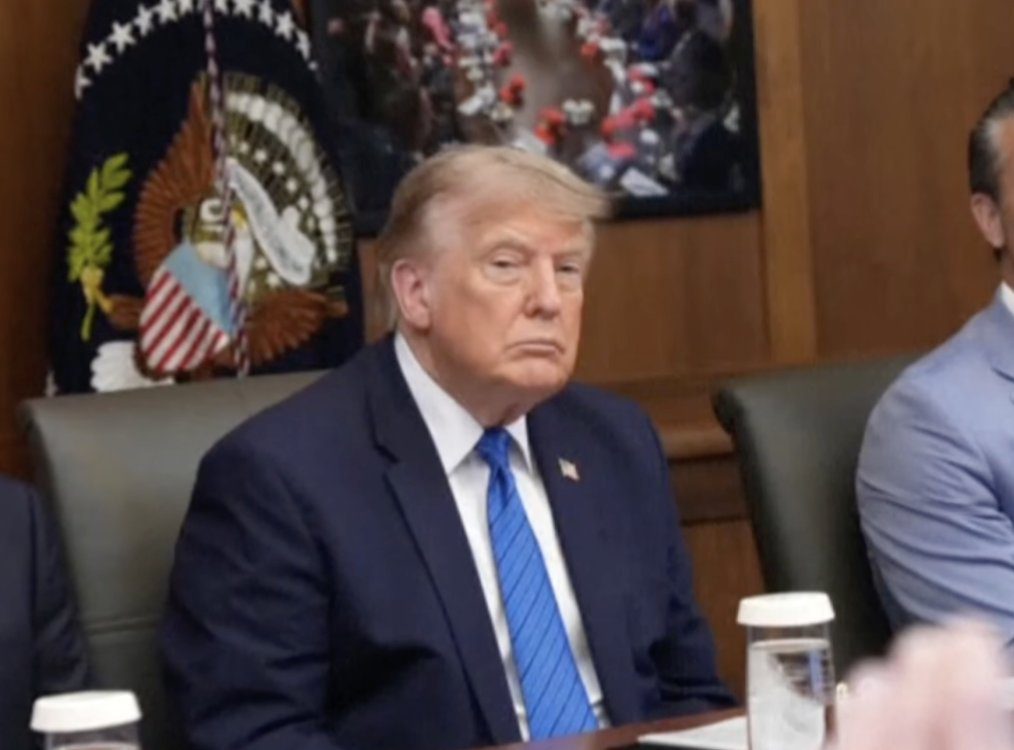
Trump, who serves as chairman of the Kennedy Center Board of Trustees, joined the September 15 virtual meeting alongside Commerce Secretary Howard Lutnick, according to CNN. Multiple sources familiar with the meeting told the network that Trump repeatedly raised his voice and directed particular anger toward Beatty, an Ohio Democrat and congressionally designated member of the board who sued to challenge the board’s efforts to rename the institution. One source summarized the scene in unusually blunt terms: “It was effing crazy.”
The explosive meeting unfolded shortly after U.S. District Judge Christopher Cooper ruled that the Kennedy Center board could not use a new inscription or other measures to circumvent his earlier order prohibiting the institution from being renamed for Trump. After the heated exchange, the board voted to close the Kennedy Center’s main building for up to two years as part of a proposed $257 million renovation project. The ruling marked another legal defeat for Trump and his allies in a fight that has evolved from a dispute over a performing arts center into a larger confrontation over presidential power, congressional authority and control of one of Washington’s most prominent national memorials.
The Judge Had Already Ruled the ‘Trump Kennedy Center’ Illegal
The September ruling was not the first time Cooper blocked the Kennedy Center board from putting Trump’s name on the institution. In May, the federal judge ruled that the board’s earlier decision to rename the institution the “Trump Kennedy Center” was unlawful, concluding that Congress had explicitly named the center for President John F. Kennedy and that the board did not possess unilateral authority to change it. “Congress gave the Kennedy Center its name, and only Congress can change it,” Cooper wrote in the May decision.
That ruling ordered officials to remove Trump’s name from the building’s facade, website, official materials and other branding. It also blocked the board’s then existing plan to close the center for two years. The D.C. Circuit subsequently declined to stay the renaming injunction while the case was appealed. The dispute began after Trump reshaped the Kennedy Center’s leadership following his return to the White House. The newly constituted board elected Trump chairman and ultimately voted in December 2025 to rename the institution. Trump’s name was installed on the building’s front portico the following day, above Kennedy’s name, and the new “Trump Kennedy Center” branding was incorporated into official materials. Beatty challenged those actions in federal court, arguing that the board had exceeded its statutory authority, and Cooper agreed.
Kennedy Center Board Tried a New Route to Put Trump’s Name on the Building
After losing the first round in court, the Kennedy Center board pursued a different strategy. On August 13, trustees approved a resolution designed to recognize what the board described as Trump’s “current and future existential and unprecedented contributions to the survival of the Center.” The plan called for an inscription on the building reading “Restored and Renovated by President Donald J. Trump.” A second inscription would recognize the “Trump Kennedy Center Fund” if it reached a $100 million fundraising threshold, while another portion of the proposal sought to name the physical site and grounds for Trump.
Cooper ruled that at least two portions of the plan violated his existing order and the federal statute governing the Kennedy Center. “Linguistic gymnastics cannot extricate the Kennedy Center’s Board from an operative judicial order or the governing statute it was designed to enforce,” Cooper wrote. The judge pointed to a 1983 amendment to federal law stating that “no additional memorials or plaques in the nature of memorials” may be installed in public areas of the Kennedy Center, concluding that an inscription crediting Trump with restoring and renovating the building would effectively create precisely the kind of additional memorial Congress prohibited. “Simply put,” Cooper wrote, “Defendants cannot install memorials for President Trump or anyone or anything else at the Kennedy Center without Congress’s blessing.”
Trump Calls Into Board Meeting and Goes After Joyce Beatty
The court ruling landed shortly before the Kennedy Center board convened for its scheduled meeting. Trump called into the virtual session along with Lutnick and quickly became involved in a lengthy confrontation with Beatty, according to CNN’s reporting and Beatty’s own subsequent account. CNN correspondent Sunlen Serfaty reported that two sources described Trump as berating, yelling and screaming at Beatty during the meeting. According to those sources, Trump blamed the congresswoman and her lawsuit for interfering with his plans for the Kennedy Center and accused her of contributing to the institution’s decline.
Beatty later appeared on CNN and described the confrontation herself, saying the president became angry as she began asking questions about the proposed renovation. “The President threw a tantrum,” Beatty said, adding that Trump attacked her character and called her incompetent. Beatty said she considered the behavior inappropriate for both the chairman of the Kennedy Center board and the president of the United States. The episode was particularly striking because Beatty was not merely a political critic commenting from outside the institution: she serves on the Kennedy Center board by virtue of her congressional position and is the plaintiff whose federal lawsuit has successfully challenged several actions taken by Trump and the reconstituted board.
Board Votes to Close Kennedy Center for Up to Two Years
Following the confrontation, the board voted to close the Kennedy Center’s main building for renovations, reviving a closure plan that had previously been blocked by Cooper’s May ruling. The proposed renovation has been estimated at approximately $257 million and is intended to address substantial problems with the aging complex. Reports and board documents have identified water intrusion, deteriorating infrastructure and other significant maintenance issues at the building.
The existence of legitimate repair needs, however, has become intertwined with the dispute over Trump’s name. After the September board meeting, Trump publicly tied the renovation project to the outcome of the naming litigation, saying construction would not proceed unless the courts ultimately allowed his recognition plan to move forward. Trump announced that the closure would take effect immediately but said renovation and reconstruction could not begin until the appeals court ruled on the naming dispute. He further stated that if the administration lost its appeal and the Supreme Court did not reverse that decision, the Kennedy Center’s reconstruction and renovation “will not take place.” The Justice Department moved to appeal Cooper’s ruling.
The president’s statement intensified accusations from Beatty and other critics that the future of a national cultural institution was effectively being conditioned on whether Trump received personal recognition on the building. Trump and his allies, meanwhile, have argued that his leadership and fundraising are essential to rescuing an institution facing severe physical and financial problems.
Kennedy Center Leadership Warned of ‘Certain Fiscal Collapse’
Behind the legal and political spectacle is a genuine financial crisis at the Kennedy Center, although the causes of that crisis are themselves disputed. Documents distributed to trustees before the September meeting warned that the center faced “certain fiscal collapse” within weeks and could struggle to meet basic financial obligations. Kennedy Center officials argued that Trump’s continued fundraising involvement was critical to the institution’s survival and contended that recognizing him on the building could help preserve that support.
The Washington Post subsequently reported that the institution’s finances had deteriorated substantially since Trump assumed control of the board. According to confidential board documents and tax filings reviewed by the newspaper, contributions and ticket revenue declined, borrowing increased and the institution drew on restricted donor funds and reserves as its financial position worsened. That reporting complicates Trump’s repeated assertions that he inherited an institution already approaching financial ruin. The Post reported that the Kennedy Center had been generally financially stable in late 2024 following its recovery from the pandemic, although it still faced major long-term maintenance and capital needs.
Under Trump-era leadership, according to the Post, gift income fell nearly 25 percent in fiscal 2025 and ticket revenue declined approximately 15 percent, while the center sharply reduced its development staff. Trump has said his fundraising efforts produced approximately $17 million for the institution. The result is a remarkable financial and political standoff: Kennedy Center leadership argues that Trump’s fundraising is essential to preventing financial collapse, while critics contend that the center’s deterioration accelerated after Trump seized control of its leadership and transformed the institution into a political battleground.
The Kennedy Center Is Not Simply Another Building Trump Can Rename
At the center of the legal dispute is a distinction that has sometimes been obscured by the political drama: the Kennedy Center is not an ordinary federal office building or a privately controlled arts institution whose board can simply change its name. Congress established it as a living memorial to President John F. Kennedy following his 1963 assassination, and federal law governs both its official identity and the memorials permitted inside its public spaces. That congressional designation has become the foundation of Cooper’s rulings against Trump and the board.
The court has not ruled that Trump cannot participate in fundraising for the center, oversee its operations as chairman or advocate for renovations. Instead, Cooper has repeatedly concluded that the board cannot use those powers to override Congress and transform a congressionally designated memorial to Kennedy into a memorial that also honors Trump. That distinction is why the board’s attempted workaround failed. Changing the wording from a formal renaming to a “recognition,” “testimonial” or “acknowledgment” did not alter the substance of what the board was attempting to accomplish, Cooper concluded.
The Fight Has Now Expanded Beyond Trump’s Name
The controversy has continued to grow since the September ruling. Trump has declined to provide an unequivocal guarantee that the existing Kennedy Center building will remain standing, raising fears among lawmakers that the renovation project could ultimately become a much more sweeping reconstruction or demolition. Those concerns have prompted bipartisan action in Congress. Sens. Jeff Merkley, a Democrat, and Lisa Murkowski, a Republican, along with Democratic Rep. Chellie Pingree, have backed legislation that would prevent a congressionally designated presidential memorial from being demolished without congressional approval. A federal judge has separately required the administration to provide advance notice before pursuing demolition of the Kennedy Center.
The Kennedy Center Honors have also been displaced by the closure, with the 2026 ceremony scheduled to take place at Capital One Arena rather than inside the institution that has traditionally hosted the event. What began as a dispute over adding Trump’s name to a Washington landmark has therefore expanded into a broader fight over the physical future, finances and legal identity of one of the nation’s premier cultural institutions.
Trump’s Kennedy Center Battle Raises a Larger Question About Presidential Power
Trump and his supporters maintain that the president is attempting to rescue a deteriorating arts institution, secure hundreds of millions of dollars for repairs and restore a Kennedy Center they say previous leadership neglected. There is no serious dispute that portions of the building require substantial work. But the legal question is different from the political argument over whether Trump deserves credit for helping renovate it.
Congress created the Kennedy Center as a memorial to John F. Kennedy, established its name and restricted the installation of additional memorials in its public spaces. So far, the federal courts have repeatedly concluded that the president and the board he controls cannot simply override those laws. Trump can continue appealing, Congress could change the statute and the Supreme Court could ultimately become involved, but unless the law or the court rulings change, the institution remains what Congress designated it to be: the John F. Kennedy Center for the Performing Arts.
That is what makes the September 15 confrontation so extraordinary. After a federal judge told the president for a second time that his board could not circumvent federal law to put his name on the Kennedy Center, Trump personally entered the board meeting, angrily confronted the congresswoman whose lawsuit had stopped him, and watched as the board voted to close the building for renovations. One person familiar with what happened inside the meeting needed only three words to describe the scene: “It was effing crazy.”

Sources & Further Reading
- U.S. District Court / Beatty v. Trump — Case Record and May 29 Ruling — Federal case record covering Judge Christopher Cooper’s May 29 decision. Civil Rights Litigation Clearinghouse
- September 15 Ruling — Beatty v. Trump — Includes the September 15 order and response from Beatty’s legal team. Washington Litigation Group
- CNN — “It Was Effing Crazy”: Trump Calls Into Kennedy Center Board Meeting — CNN’s reporting on the heated board meeting and Trump’s confrontation with Joyce Beatty. CNN Transcripts
- CNN — The Lead: Kennedy Center Appeals Ruling Keeping Trump’s Name Off Building — Additional reporting on the call, court ruling and board vote. CNN Transcripts
- CNN — Joyce Beatty Describes Trump’s “Tantrum” During Kennedy Center Meeting — Beatty’s account of Trump shouting and calling names during the meeting. CNN Transcripts
- The Washington Post — Kennedy Center Closes as Trump Threatens to Stop Repairs Over Naming Fight — Detailed account of the closure, board meeting, renovation and naming dispute. The Washington Post
- The Washington Post — Kennedy Center Warns of “Certain Fiscal Collapse” — Reporting based on the financial documents presented to trustees. The Washington Post
- The Washington Post — Kennedy Center Was Solvent When Trump Took Over. Then Its Finances Collapsed. — Financial analysis based on 15 years of records, tax filings and internal documents. The Washington Post
- Associated Press — Kennedy Center Honors Moved Amid Fight Over Trump’s Name — Coverage of the closure, $257 million renovation and relocation of the Kennedy Center Honors. AP News
- Reuters — Bipartisan Lawmakers Move to Block Demolition of Kennedy Center — Latest reporting on congressional efforts to prevent demolition without congressional approval. reuters.com














































Want to join the conversation?
Create an account or sign in to share your thoughts, vote,
and reply to other readers.
Showing 0 of 0 comments
Don't have an account?
Already have an account?