
Byron Donalds Gets Cornered on MSNBC as Al Sharpton Forces Him to Defend His Jim Crow Remarks
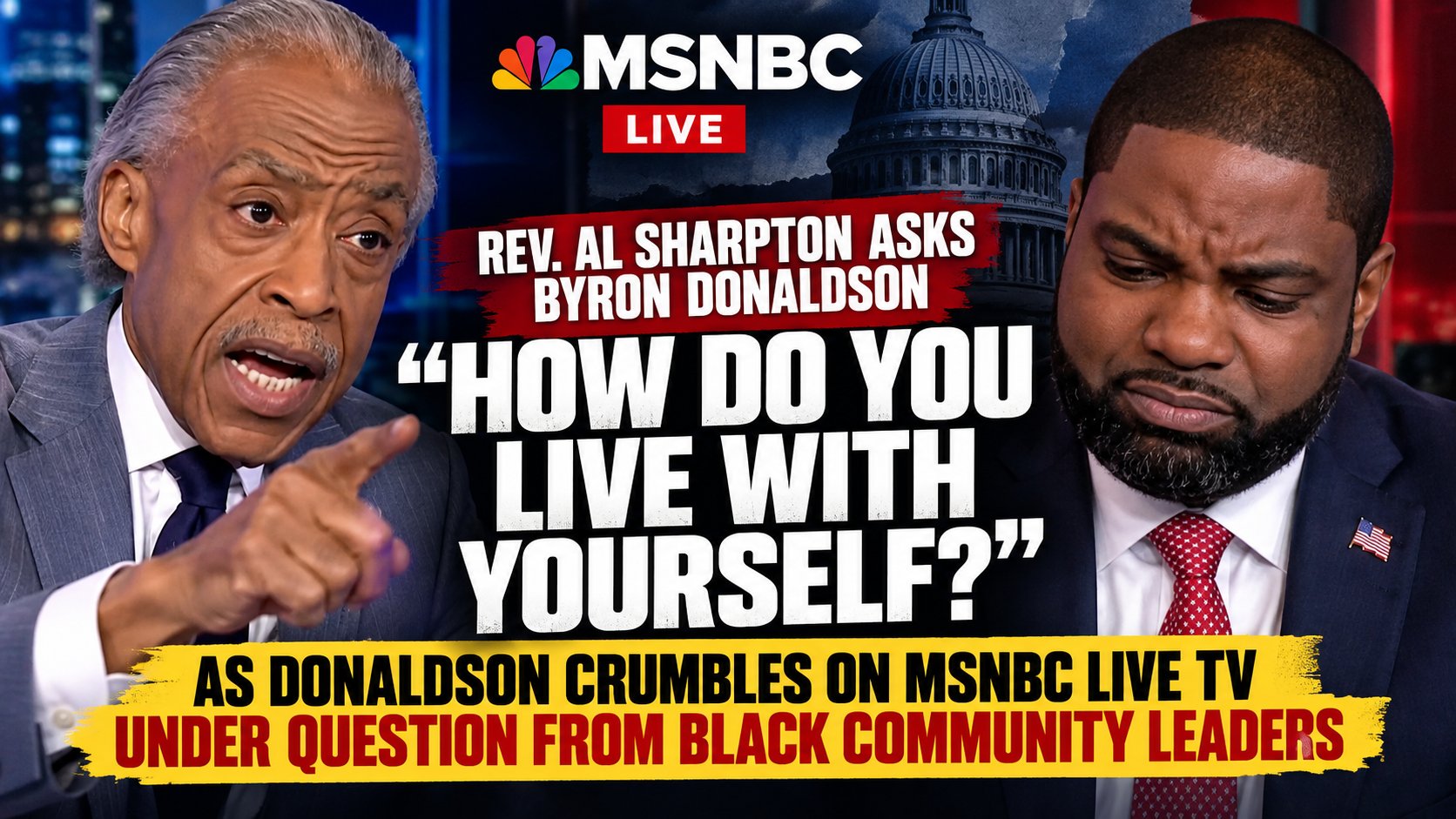
Florida Republican Rep. Byron Donalds went on MSNBC attempting to explain one of the most controversial comments of his political career and instead found himself in an extended confrontation with Rev. Al Sharpton over Jim Crow, Black families, Donald Trump and the Republican Party’s record on criminal justice and policing.
The interview on MSNBC’s PoliticsNation followed remarks Donalds made at a Trump campaign outreach event in Philadelphia aimed at Black voters. Donalds told the audience, “During Jim Crow, the Black family was together,” before contrasting Black family structure during that period with what happened following the expansion of federal social programs under President Lyndon B. Johnson. The comments immediately generated criticism from Democrats and civil rights advocates, while Donalds maintained that his words had been distorted and that he had never argued segregation itself benefited Black Americans.
Sharpton’s interview exposed the central problem Donalds faced in defending the remark. Donalds wanted to discuss marriage statistics during a historical period that overlapped with Jim Crow while separating those statistics from Jim Crow itself. Sharpton repeatedly pushed him to explain why he chose Jim Crow, a system defined by legally enforced racial segregation, disenfranchisement and discrimination, as the reference point in the first place.
Donalds Insists He Never Said Jim Crow Was Better
Donalds began by rejecting the premise that he had praised segregation, telling Sharpton, “I never said or insinuated anything about Jim Crow being better.” He argued that he had simply been discussing historical marriage rates among Black Americans and described those statistics as an “empirical fact.”
That distinction is important because some characterizations of the controversy went further than Donalds’ actual words. Donalds did not explicitly say Jim Crow was good for Black Americans or that racial segregation caused stronger families. His original language, however, directly invoked the era while contrasting Black family structure then with what followed the creation and expansion of Johnson-era social programs. At the Philadelphia event, Donalds said, “During Jim Crow, the Black family was together,” before referencing Johnson, the Department of Health, Education and Welfare and the subsequent direction of Black America.
Donalds later offered essentially the same explanation in other television appearances, arguing that Black marriage rates had been significantly higher before Johnson’s Great Society programs and suggesting those policies were one factor in their subsequent decline. His position was that Jim Crow represented a historical timeframe overlapping with the statistics he was discussing, not a system he believed was responsible for producing stronger Black families.
Sharpton was not willing to let that distinction end the conversation.
Sharpton Keeps Coming Back to One Question: Why Jim Crow?
The confrontation sharpened when Sharpton focused not simply on what Donalds denied saying, but on the terminology Donalds voluntarily chose. As Donalds attempted to distinguish between saying marriage rates were higher “during” Jim Crow and arguing they were higher “because of” Jim Crow, Sharpton reminded him that Donalds himself had introduced the phrase into the discussion.
At a literal level, Donalds’ distinction is valid. Saying something occurred during a historical period does not automatically mean the defining political system of that period caused it. Sharpton’s challenge, however, went deeper: if Donalds merely wanted to identify a period before the Great Society, why invoke Jim Crow rather than simply saying “before the Great Society” or identifying the specific decades and marriage statistics he wanted to discuss?
That question followed Donalds across multiple television appearances. Interviewers repeatedly asked why he specifically connected Black family structure to the Jim Crow period, while Donalds consistently responded that he was establishing a chronological marker rather than praising segregation. The disagreement therefore became less about whether Donalds explicitly endorsed Jim Crow, he did not, and more about the historical framing he chose to make his argument.
The underlying demographic question is also more complicated than a simple Jim Crow versus Great Society comparison suggests. Black marriage rates declined substantially during the latter half of the 20th century, but marriage rates and family structures changed across American society during that broader period. Assigning those changes primarily to Johnson-era social programs is therefore a causal political argument, not something established solely by observing that marriage rates changed after those programs were introduced.
“How Can You Even Live With Yourself?”
Sharpton eventually abandoned the more clinical debate over demographic statistics and confronted Donalds directly over what he believed the congressman’s framing implied.
“How can you even live with yourself acting like Jim Crow was a good era or better era for Blacks?” Sharpton asked. “What happened to you?”
Donalds immediately rejected the characterization and again insisted he had never claimed Jim Crow itself produced stronger Black families. The exchange became increasingly contentious because the two men were ultimately arguing different propositions. Donalds was defending the literal meaning of his words, while Sharpton was challenging the historical and rhetorical decision to use Jim Crow as the comparison in the first place.
That distinction is essential to understanding the controversy accurately. Donalds did not say racial segregation strengthened Black marriages. He did, however, invoke the Jim Crow period while arguing that Black families had been more intact before the Great Society and suggesting Johnson-era policies contributed to their subsequent decline. Critics interpreted that juxtaposition as romanticizing a period defined by systemic racial oppression, while Donalds maintained that such an interpretation deliberately distorted what he actually said.
The Interview Turns to Donald Trump
Sharpton then broadened the discussion from Donalds’ historical argument to his support for Donald Trump, forcing the Florida congressman to defend Trump’s record with Black Americans and on criminal justice policy.
Donalds pointed to one of Trump’s most significant bipartisan criminal justice accomplishments: the First Step Act. Trump signed the legislation into law in December 2018, changing portions of federal sentencing law while expanding programs intended to reduce recidivism and improve reentry opportunities for federal prisoners. Donalds contrasted that legislation with Joe Biden’s prominent role in developing the 1994 crime bill, which has faced sustained criticism over policies associated with the era of mass incarceration.
Sharpton acknowledged that elements of the 1994 crime legislation went too far but rejected the argument that Trump’s signing of the First Step Act resolved the broader debate over his record on race and criminal justice. The conversation then moved toward one of the defining domestic crises of Trump’s first term: the national protests and police reform debate that followed the May 2020 murder of George Floyd.
Donalds Defends the Republican Police Reform Plan
Sharpton pressed Donalds on why Trump did not deliver sweeping federal police-accountability legislation following Floyd’s murder. Donalds responded by pointing to Republican Sen. Tim Scott’s JUSTICE Act, the police reform proposal Senate Republicans advanced in 2020. Donalds argued that one of the major differences between Republican and Democratic approaches involved qualified immunity, the legal doctrine that can shield government officials, including police officers, from personal liability in certain civil lawsuits. Donalds maintained that eliminating qualified immunity could expose individual officers to financially devastating litigation and ultimately make police recruitment and retention significantly more difficult.
Sharpton countered from the opposite direction, arguing that greater personal accountability could help deter police misconduct and excessive force. Their disagreement reflected the much larger national debate that emerged following Floyd’s murder: whether meaningful police reform could be accomplished primarily through training, reporting requirements and departmental reforms or whether officers also needed to face greater individual civil liability for misconduct.
The exchange ultimately extended beyond disagreement over the details of competing legislation. Sharpton questioned whether Trump had used the presidency to provide the national leadership necessary to confront police violence, while Donalds argued that Republicans had offered substantive reforms that Democrats rejected because they wanted to go further on qualified immunity.
Donalds’ Jim Crow Argument Followed Him Beyond MSNBC
The controversy did not disappear after the MSNBC interview. Donalds continued defending his remarks in subsequent appearances, maintaining that critics had intentionally transformed a discussion about marriage rates into an assertion that Black Americans were better off under segregation. Months later, during another visit to Philadelphia, Donalds said he did not regret making the comments.
The persistence of the controversy illustrates why the original phrasing became politically problematic. Donalds was attempting to make a conservative argument about family formation, government assistance and changing social conditions in Black America. Instead, his decision to introduce that argument with the phrase “during Jim Crow” overwhelmed nearly everything else he was trying to discuss.
Jim Crow was not merely a date on a historical timeline. It describes a system of state and local laws and practices that enforced racial segregation and helped deny Black Americans equal access to voting, education, housing, employment and public accommodations while existing alongside widespread racial intimidation and violence. Donalds’ critics therefore argued that treating Jim Crow primarily as a chronological reference for favorable family statistics separated those statistics from the defining conditions under which Black families were actually living.
Donalds’ response has remained consistent: correlation in time is not causation, and acknowledging that Black marriage rates were higher during a particular historical period does not constitute an endorsement of the racist system that existed alongside them.
Sharpton Put the Weakest Part of Donalds’ Argument Under a Microscope
The MSNBC interview became compelling because Sharpton did not allow Donalds to retreat entirely into a debate over whether his remarks had been technically misrepresented. Donalds was correct that he never literally said Jim Crow laws caused Black families to be stronger, and responsible coverage should preserve that distinction. Sharpton, however, kept returning to the more difficult question: if Jim Crow itself was irrelevant to Donalds’ causal argument, why make Jim Crow the frame?
That was the point where Donalds’ defense became considerably more difficult. He could defend the demographic observation, debate the consequences of Great Society programs and accuse political opponents of twisting his words, but none of those arguments directly answered why a discussion supposedly centered on marriage statistics needed to begin with one of the most notorious systems of racial discrimination in American history.
For a Florida politician who has built a national profile as one of Trump’s most prominent Black Republican allies, the confrontation also demonstrated the political risks involved in compressing generations of Black American history into a campaign argument about family structure and government policy. Donalds entered the interview prepared to defend what he had said. Sharpton spent much of the conversation forcing him to explain why he chose to say it that way.

Sources & Further Reading
MSNBC / PoliticsNation — Al Sharpton Interviews Byron Donalds on Jim Crow Remarks
https://www.youtube.com/watch?v=tgFE9aTJ4I8
The Philadelphia Inquirer — Donalds’ Original Philadelphia Jim Crow Remarks
https://www.inquirer.com/politics/philadelphia/bryon-donalds-philadelphia-jim-crow-20240605.html
The Philadelphia Inquirer — What Byron Donalds Said About Jim Crow and Black Families
https://www.inquirer.com/politics/byron-donalds-jim-crow-trump-campaign-20240606.html
Reuters — Donalds Defends Jim Crow Remarks Following Democratic Criticism
https://www.reuters.com/world/us/republican-lawmaker-defends-jim-crow-comments-after-criticism-black-democrats-2024-06-06/
CNN — Donalds Explains His Jim Crow Comments to Abby Phillip
https://transcripts.cnn.com/show/cnap/date/2024-06-05/segment/01
CNN — Analysis of Donalds’ Comments and Black Marriage Rates
https://transcripts.cnn.com/show/lcl/date/2024-06-05/segment/01
U.S. Department of Justice — First Step Act and Federal Criminal Justice Reform
https://www.justice.gov/archives/doj/file/1340216/dl?inline=

























Want to join the conversation?
Create an account or sign in to share your thoughts, vote,
and reply to other readers.
Showing 0 of 0 comments
Don't have an account?
Already have an account?