
Just How Much Power Does Jared Kushner Really Have?
The relationship between Benjamin Netanyahu and the Kushner family is considerably older than Jared Kushner’s career in Washington. By the time Jared Kushner became one of Donald Trump’s most important advisers in 2017, Netanyahu was not simply a foreign leader whom Kushner had been assigned to deal with. He was already a longtime family acquaintance who had visited the Kushner home in New Jersey, maintained a relationship with Jared’s father, Charles Kushner, and benefited from the family’s financial and social connections to the pro-Israel community.
That history is important because it helps explain why Jared Kushner was able to establish unusually direct access to Netanyahu once Donald Trump entered the White House. It also explains why questions about Kushner’s potential conflicts of interest did not begin in 2017. They existed because the family relationship, charitable giving, political activity, business interests and Israeli connections had developed over decades.
It Starts With the Kushner Family
The Kushner story begins with Jared’s grandparents, Joseph and Rae Kushner, Holocaust survivors who immigrated to the United States after World War II and eventually established themselves in New Jersey. Joseph Kushner entered the construction business, and the family developed substantial real estate holdings in the state.

Their son Charles Kushner expanded the business considerably. Charles became a major New Jersey real estate developer and a significant political donor and philanthropist. The family also became deeply involved in Jewish institutions, Orthodox Jewish education and organizations supporting Israel. That background matters because Jared did not discover Israel or American-Israeli politics after marrying Ivanka Trump. Israel was already part of the family’s philanthropic, religious and political world.
Jared grew up in Livingston, New Jersey, in an Orthodox Jewish family. The family established and supported Jewish schools and institutions, including the Joseph Kushner Hebrew Academy, named for Jared’s grandfather. The Kushners also contributed extensively to Jewish and Israeli organizations. Benjamin Netanyahu eventually became part of that social and political orbit.
Charles Kushner and Benjamin Netanyahu
The central figure in establishing the Kushner Netanyahu relationship was Jared’s father, Charles. Charles Kushner was a major supporter of pro Israel causes and developed a personal relationship with Netanyahu when Netanyahu was already an important Israeli political figure. The relationship was sufficiently close that Netanyahu was welcomed into the Kushner home in Livingston.
Jared later described one such visit in his memoir, Breaking History. According to Kushner, Netanyahu was a private citizen at the time and was visiting the United States. Charles had invited him to stay with the family. Netanyahu ended up sleeping in Jared’s bedroom while the teenage Jared moved into the basement and slept on pullout couches alongside Netanyahu’s security guards. It is an almost absurdly intimate detail in the history of American foreign policy.
The future Israeli prime minister was literally sleeping in the bedroom of the future American presidential adviser. Jared recalled that Netanyahu, unable to sleep because of jet lag, picked up a copy of Charles Dickens’s Great Expectations from his bookshelf. Netanyahu read approximately half of it and asked Jared the next morning whether he could take it with him. Jared refused because the book had been a gift from his girlfriend. The anecdote sounds almost too cinematic to matter, but it illustrates something important: Netanyahu’s relationship with the Kushners was personal long before Jared had any official authority over U.S. foreign policy.
The Financial Connection Was More Complicated
The Kushner Netanyahu relationship was not exclusively social. Netanyahu had spent periods outside the Israeli premiership while continuing to cultivate his political career. During one of those periods, Charles Kushner hired Netanyahu for speaking engagements. There is a discrepancy in the publicly reported accounting of those payments that is worth preserving rather than pretending it does not exist.
Reporting based on Andrea Bernstein’s American Oligarchs says Charles Kushner used real-estate partnership money to pay Netanyahu approximately $400,000 for several speaking engagements, including an appearance connected to the Kushner family’s synagogue. Other reporting, including an NPR account of allegations made during the investigation into Charles Kushner’s business practices, described a $100,000 payment from company funds for Netanyahu to speak at the synagogue and at an event honoring Charles.
The discrepancy may reflect different payments or different accounting of the engagements. The important documented point is that Netanyahu was financially connected to the Kushner family through paid speaking appearances, and prosecutors later scrutinized Charles Kushner’s use of company and partnership funds for political and personal purposes.
Charles Kushner eventually pleaded guilty to federal charges involving tax evasion, illegal campaign contributions and witness tampering. The Federal Election Commission separately reached a 2004 settlement with Kushner and 40 partnership entities over more than $500,000 in political contributions made without obtaining the required agreement of the partners to whom the contributions were attributed. The FEC imposed a $508,900 civil penalty.
The Netanyahu-related spending became part of the broader picture of how Charles Kushner mixed real estate, philanthropy, politics and personal relationships. That does not establish that Netanyahu participated in Charles Kushner’s illegal conduct. It establishes that the relationship existed and that payments associated with Netanyahu became part of the scrutiny surrounding Charles Kushner’s financial practices.
Jared Grows Up Inside That Environment
Jared Kushner therefore entered adulthood with something that most future presidential advisers do not possess. A personal connection to a future foreign head of government that had been established through his family. Jared attended the Joseph Kushner Hebrew Academy and later Harvard. He also participated in the March of the Living, an educational trip involving Holocaust history in Poland and Israel. During that period he was exposed to the history of the Holocaust and the political and religious importance of Israel in a particularly direct way.
The family connection to Netanyahu continued while Jared was growing up. When Jared eventually took over significant responsibilities in the family real estate business after Charles went to prison, he was already accustomed to the intersection of money, politics, Jewish philanthropy and international relationships. That became increasingly important after Jared married Ivanka Trump in 2009.
Then Comes Ivanka Trump
Jared’s marriage to Ivanka transformed the scale of his access to political power. Ivanka Trump, Donald Trump’s daughter, converted to Judaism before marrying Jared. The couple became a prominent Orthodox Jewish family within Trump’s broader social and business world. The marriage connected two wealthy New York-area real estate families: the Kushners and the Trumps.
That connection eventually produced an extraordinary concentration of family, business and political power. By the time Donald Trump ran for president in 2016, Jared was no longer simply the son of Charles Kushner. He was simultaneously a real estate executive, newspaper owner, political adviser, Orthodox Jewish businessman, son-in-law of the Republican presidential nominee and someone with an existing relationship with Netanyahu’s circle. That combination is central to understanding what happened next.
2016: Jared Enters Trump’s Political Operation
Jared Kushner became increasingly influential inside Donald Trump’s presidential campaign. Although he had no traditional diplomatic background, he developed a particular interest in the Middle East and Israel. His existing contacts included people close to Netanyahu, including Ron Dermer, who served as Israel’s ambassador to the United States.
Trump increasingly trusted Kushner with foreign policy matters. After Trump won the 2016 election, Kushner emerged as the administration’s principal figure on Middle East diplomacy. The extraordinary part was that he was being placed in that position while his family still had extensive financial and philanthropic connections involving Israel.
The Settlement Donations
Another important piece of the story involves the Kushner family’s charitable foundations. Tax records showed that the Charles and Seryl Kushner Foundation made donations to organizations associated with Jewish settlements in the West Bank.
Between 2011 and 2013, the foundation donated approximately $58,500 to West Bank settlement-related organizations, according to reporting by The Washington Post. Other reporting identified additional donations, including contributions to the American Friends of Bet El Yeshiva Center and the Etzion Foundation.
The family’s charitable giving was much broader than settlement organizations. The Kushners donated to hospitals, schools, Jewish institutions, Israeli cultural organizations and organizations supporting Israeli soldiers. But the settlement donations became particularly significant after Jared was placed in charge of the Trump administration’s Middle East peace effort.
The issue was obvious: the American official charged with helping negotiate an Israeli Palestinian agreement came from a family whose charitable foundation had supported organizations in Israeli settlements. That does not prove that Jared’s policies were dictated by his family’s charitable giving. It does demonstrate why Palestinian officials and ethics observers questioned whether he could operate as a completely detached intermediary.
2017: The Relationship Becomes Government Policy
Once Trump became president, the old family relationship acquired an entirely different significance. Jared Kushner became a senior White House adviser and was assigned an enormous portfolio involving the Middle East. In June 2017, Kushner traveled to Israel and met directly with Netanyahu alongside Jason Greenblatt and U.S. Ambassador David Friedman.
The official White House account described the meeting as part of the administration’s effort to create a lasting Israeli-Palestinian peace agreement. Kushner also met Palestinian Authority President Mahmoud Abbas. The significance of the arrangement was that Kushner was not merely communicating with Netanyahu through the normal diplomatic bureaucracy. He was communicating directly with him at the highest level. The family friendship had effectively become a diplomatic channel.
The Embassy Move
One of Trump’s most consequential Israel related decisions was his December 2017 recognition of Jerusalem as Israel’s capital and decision to move the U.S. Embassy from Tel Aviv to Jerusalem. Kushner was deeply involved in the administration’s Middle East deliberations surrounding the move.
According to Kushner’s later memoir, Trump and Netanyahu had a tense telephone conversation before the announcement. Kushner recalled Trump telling Netanyahu that he believed Netanyahu was creating problems and questioning whether the Israeli prime minister was helping the broader diplomatic effort.
Trump ultimately proceeded with the recognition and embassy relocation. The episode demonstrates something important about the Kushner Netanyahu relationship. It was close, but it was not synonymous with Netanyahu controlling Kushner or Kushner simply doing whatever Netanyahu wanted. There were moments when Kushner and Trump pushed Netanyahu in directions he did not initially want to go.
The Golan Heights
The same pattern appeared in 2019. Netanyahu wanted the United States to recognize Israeli sovereignty over the Golan Heights. According to Kushner’s memoir, Netanyahu’s government pressed the Trump administration on the issue. Trump ultimately recognized Israeli sovereignty over the Golan Heights in March 2019.
Kushner’s account portrays Netanyahu as an aggressive advocate for Israeli interests, while Trump was willing to use the relationship for his own political and diplomatic objectives. Again, the relationship was close, but it was transactional as well as personal.
The Trump Peace Plan
The relationship reached another major turning point in January 2020 when the Trump administration unveiled its Israeli Palestinian peace proposal. Kushner was one of its principal architects. Netanyahu attended the White House rollout.
Kushner later described a particularly tense moment. Netanyahu appeared to interpret the plan as providing Israel with a green light for immediate annexation of portions of the West Bank. Kushner believed Netanyahu was moving beyond what the administration had actually agreed to. According to Kushner’s account, he was furious.
The dispute exposed something that is often lost in simplified descriptions of the Kushner Netanyahu relationship. Jared Kushner was not simply an Israeli proxy inside the Trump White House. He was pursuing his own diplomatic strategy, and at times that strategy conflicted directly with Netanyahu’s immediate political objectives.
The Annexation Dispute
The annexation dispute became particularly serious. Kushner later accused Ambassador David Friedman of giving Netanyahu the impression that Israel could proceed rapidly with annexation without first receiving further approval from the White House. Friedman disputed Kushner’s characterization.
Kushner wrote that he confronted Friedman and insisted that immediate annexation was not what the administration had agreed to. The episode, according to Kushner, represented one of the lowest points in the relationship between the Trump administration and Netanyahu’s government. That is significant because it shows that even a relationship rooted in decades of friendship could produce serious political conflict.
And Then Something Unexpected Happened: The Abraham Accords
The biggest diplomatic achievement associated with Kushner’s first White House tenure was not an Israeli Palestinian peace agreement. It was the normalization of relations between Israel and several Arab states. This became the Abraham Accords. Kushner was deeply involved in the negotiations.
The basic strategic idea was to establish formal relations between Israel and Arab governments without requiring a final Israeli Palestinian settlement first. The United Arab Emirates and Bahrain established diplomatic relations with Israel in 2020, followed by normalization agreements involving Morocco and Sudan.
The United States described the agreements as historic steps toward regional peace and cooperation. Netanyahu’s role was obviously central because Israel was one of the parties to the agreements. But Kushner’s contribution was equally significant because he helped construct the diplomatic architecture connecting Israel with the Gulf states.
The UAE Connection Changes Everything
Kushner’s relationship with Netanyahu was part of a larger network. During Trump’s first term, Kushner developed relationships with Gulf leaders, particularly officials from the United Arab Emirates and Saudi Arabia. That allowed him to approach Middle Eastern diplomacy differently from previous administrations.
Rather than making an Israeli Palestinian agreement the prerequisite for broader regional normalization, Kushner helped pursue what became an “outside-in” strategy: strengthen relationships between Israel and Arab states first and use those relationships to create a different regional framework. Netanyahu eventually accepted the strategy. The result was the Abraham Accords. That is probably the single most consequential diplomatic product of the Kushner-Netanyahu relationship.
But the Relationship Was Never Simply “Kushner Works for Bibi”
It is tempting to reduce the story to a simple formula. That the Kushners were pro Israel, Charles Kushner knew Netanyahu, Jared Kushner knew Netanyahu, and therefore Jared became Netanyahu’s man inside the Trump administration. The documented history is more complicated.
Kushner frequently advanced Israeli interests, but he also pressured Netanyahu. The annexation dispute is one example. The Abraham Accords are another. Netanyahu initially wanted annexation of portions of the West Bank. Kushner ultimately helped create a diplomatic arrangement in which Israel postponed that move in exchange for normalization with the UAE. In other words, Kushner’s relationship with Netanyahu gave him access. It did not necessarily eliminate disagreements.
The Kushner Family’s Broader Israeli Connections
Jared was not the only Kushner with Israeli connections. Charles and Seryl Kushner have long supported Jewish and Israeli causes. The family foundation supported Israeli hospitals, Jewish educational institutions, cultural organizations and the Friends of the Israel Defense Forces. It also donated to organizations connected with West Bank settlements. Jared’s siblings have been involved with family charitable structures. The Charles and Seryl Kushner Foundation’s directors have included Jared and his siblings.
Jared’s brother Joshua Kushner went on to establish Thrive Capital and became a major technology investor, while other members of the family remained involved in the family’s philanthropic and business activities. The family therefore represents something larger than Jared himself. A multigenerational American Jewish family whose identity, philanthropy and financial interests have included substantial relationships with Israel.
Charles Kushner’s Political Rehabilitation
Charles Kushner’s story also returned to Washington. After his criminal conviction and imprisonment, Donald Trump pardoned him in December 2020. Years later, during Trump’s second presidency, Charles Kushner was nominated to become U.S. ambassador to France and Monaco.
The Senate confirmed him in 2025. That development is relevant because it illustrates the extraordinary durability of the Kushner family’s political influence. Charles had gone from New Jersey real estate developer and major political donor, to federal prisoner, to pardoned businessman, to American ambassador. His earlier relationship with Netanyahu existed long before any of that.
Jared’s Post White House Career
Jared Kushner’s relationship with Israel did not end when Trump left office. In 2021, Kushner established Affinity Partners, an investment firm backed heavily by Middle Eastern sovereign wealth. The firm’s largest early outside backer was Saudi Arabia’s Public Investment Fund, which committed approximately $2 billion.
Affinity later expanded its investments in Israel. One of its most important Israeli investments was Phoenix Financial, a major Israeli financial services and insurance company. In 2025, Israeli regulators approved Affinity’s purchase of an additional 4.95 percent stake in Phoenix, allowing Kushner’s firm to approximately double its ownership.
That created a new layer to the Kushner Israel story. During Trump’s first administration, Kushner had been a government official negotiating with Israel. Afterward, his private investment company became a significant investor in Israeli business.
The Phoenix Investment and the New Conflict-of-Interest Question
By 2026, this issue had become considerably more consequential. Affinity became Phoenix’s largest shareholder. Phoenix itself has investments in numerous Israeli companies, including defense related businesses. A CNN investigation published in October 2026 reported that Phoenix had hundreds of millions of dollars invested across Israeli companies involved in military production and support, including Elbit Systems and several other companies.
The important distinction is that Affinity does not directly own those defense companies. Its economic exposure comes through its ownership of Phoenix. That distinction matters. Nevertheless, it means Kushner’s private investment firm can benefit financially from the performance of a major Israeli financial company that itself has substantial investments connected to Israel’s defense industry. At precisely the same time, Jared Kushner has returned to a central diplomatic role involving Israel and Gaza. That creates a potential conflict of interest question that is materially different from the questions raised during Trump’s first presidency.
Kushner Returns to Middle East Diplomacy
During Trump’s second administration, Jared initially indicated that he intended to remain outside formal government. Events changed that. Kushner returned to Trump’s inner circle as an adviser and became involved in Middle East diplomacy. In 2025, he worked alongside Trump’s Middle East envoy Steve Witkoff in negotiations surrounding Gaza.
Kushner and Witkoff eventually met directly with Hamas representatives during negotiations that helped produce a Gaza ceasefire and hostage release agreement. Netanyahu publicly credited Trump, Kushner and Witkoff with helping produce the agreement. That put Jared Kushner back at the center of Israeli American diplomacy nearly five years after leaving the White House.
The family relationship that had begun with Charles Kushner and Netanyahu had now evolved into something much larger: Jared Kushner was directly negotiating with the Israeli prime minister while simultaneously maintaining a private investment empire with substantial exposure to Israeli financial markets.
2026: Kushner and Netanyahu Are Still Dealing Directly
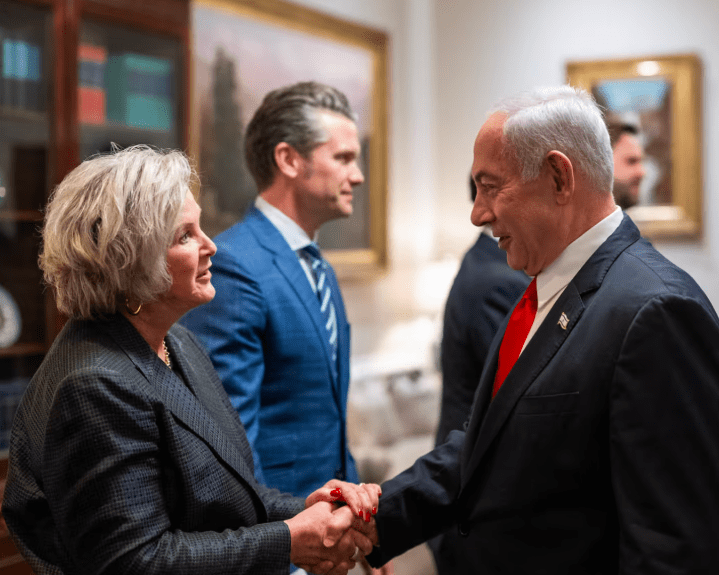
The relationship remains active. In August 2026, Kushner traveled to Israel and held an approximately four hour meeting with Netanyahu regarding the Trump administration’s Gaza plan. Kushner had also met Hamas representatives in Egypt shortly before meeting Netanyahu. The negotiations centered on Hamas disarmament, Israeli military withdrawal and the future administration and reconstruction of Gaza.
The meeting reportedly produced limited progress because Netanyahu remained unwilling to accept an Israeli withdrawal before Hamas’s weapons, tunnels and military infrastructure were eliminated. Kushner was therefore once again in the remarkable position of attempting to negotiate between Israel and its adversaries while maintaining a longstanding personal relationship with Netanyahu.
The Entire Arc
Viewed chronologically, the relationship looks less like a single political alliance and more like a multigenerational network that gradually moved from private life into international diplomacy. The first generation was Joseph and Rae Kushner, Holocaust survivors who established the family in New Jersey. The second generation was Charles Kushner, who built the family’s real estate fortune, became a major political donor and philanthropist, developed a strong relationship with Netanyahu and supported numerous Israeli and Jewish causes.
The third generation was Jared Kushner, who grew up with Netanyahu as a family acquaintance, inherited the family business after his father’s imprisonment, married Ivanka Trump and eventually became Donald Trump’s principal Middle East adviser. Ivanka’s conversion to Judaism and marriage to Jared also created a bridge between the Kushner and Trump families that eventually placed Jared inside the White House.
Then came the diplomatic period. Jerusalem, the Golan Heights, the Trump peace plan, the annexation dispute and ultimately the Abraham Accords. After that came the investment period: Affinity Partners, Saudi and Gulf capital and significant investments in Israeli businesses. And then came the return to diplomacy during Trump’s second administration, with Kushner again negotiating directly with Netanyahu over Gaza.
What Is Actually Proven?
Several facts are firmly documented. Charles Kushner and Netanyahu had a longstanding personal relationship. Netanyahu stayed at the Kushner family home. Jared Kushner met Netanyahu as a young man and later described the encounter himself. Charles Kushner paid Netanyahu for speaking engagements, although public accounts differ over the precise amounts and accounting of the payments. The Kushner family has donated extensively to Jewish and Israeli organizations.
The family’s charitable foundations donated to organizations connected to West Bank settlements. Jared Kushner became Trump’s principal Middle East adviser. Kushner worked directly with Netanyahu on Trump’s Middle East policy. Kushner played a major role in developing the Trump administration’s Middle East peace plan.
Kushner was deeply involved in the Abraham Accords. Kushner’s investment firm subsequently became a major investor in Israel. And Kushner has again worked directly with Netanyahu during Trump’s second administration. Those facts alone establish an extraordinary degree of continuity.
What Is Not Proven?
What cannot responsibly be claimed is that Netanyahu controlled Jared Kushner, that Netanyahu secretly directed American foreign policy through Kushner, or that Kushner’s policies were simply dictated by his family’s financial interests. There is evidence that Kushner and Netanyahu disagreed on important issues.
The 2020 annexation dispute is particularly important evidence against the simplistic idea that Jared was merely Netanyahu’s representative in Washington. Likewise, the fact that the Kushner family donated to settlement organizations does not prove that Jared personally directed U.S. policy in favor of those settlements. And Affinity’s investment in Phoenix does not by itself prove that Kushner’s diplomatic decisions were made for financial gain. Those are questions that require evidence of causation, not simply evidence of overlapping relationships.
Why the Relationship Matters
The remarkable thing about the Kushner Netanyahu relationship is not one secret transaction. It is the continuity. A relationship that began in the world of New Jersey Jewish philanthropy and real estate eventually intersected with the presidency of the United States, Israeli government policy, Palestinian diplomacy, Gulf monarchies, the Abraham Accords, Gaza negotiations and billions of dollars in international investment capital.
Charles Kushner knew Netanyahu before Jared had entered politics. Jared knew Netanyahu before Jared had entered the White House. Jared then became one of the most powerful people in Washington dealing with Netanyahu. After leaving government, Jared built an investment firm backed by Middle Eastern sovereign wealth and invested heavily in Israel.
Then, under Trump’s second administration, he returned to the diplomatic arena and again sat across the table from Netanyahu. That is the larger story. It is not simply the story of two men who became friends. It is the story of a relationship that crossed family, religion, philanthropy, real estate, politics, diplomacy and finance across multiple decades.
And that is precisely why the Kushner-Netanyahu connection continues to attract scrutiny. The same personal access that can make diplomacy possible can also create questions about conflicts of interest, divided loyalties and the extraordinary concentration of political and financial influence within a small number of interconnected families. The documented record does not require a conspiracy theory to be interesting. The actual history is already remarkable enough.














































Want to join the conversation?
Create an account or sign in to share your thoughts, vote,
and reply to other readers.
Showing 0 of 0 comments
Don't have an account?
Already have an account?