
Corey Lewandowski: The Trump Enforcer Who Turned Government Into a Power Brokerage Operation
Corey Lewandowski was never simply a campaign operative. Inside Trump world, he evolved into something far more dangerous: a political enforcer who blurred the line between public service, private influence, intimidation, and personal profit until the distinctions barely existed at all.
For more than a decade, Lewandowski operated as one of Donald Trump’s most aggressive loyalists, a man whose value came not from governing expertise or policy knowledge, but from his willingness to weaponize chaos, dominate institutions, bulldoze opponents, and enforce absolute loyalty to Trump above everything else. His rise through the MAGA movement mirrored the transformation of modern Republican politics itself, less institutional, less accountable, more transactional, more performative, and increasingly convinced that power existed to reward allies and punish enemies.
By the time his tenure inside Kristi Noem’s Department of Homeland Security collapsed in scandal during March 2026, Lewandowski had become the perfect symbol of Trump-era governance gone rotten, a political operative with extraordinary influence, minimal transparency, and mounting allegations of corruption orbiting around nearly every major operation he touched.
The Original Trump Enforcer
Lewandowski first exploded onto the national political scene in early 2015 when Donald Trump hired him to run his insurgent presidential campaign. At the time, most Republican strategists viewed Trump as a sideshow candidate. Lewandowski understood something others missed, Trump’s political value wasn’t discipline. It was disruption. His philosophy became legendary inside campaign circles.
“Let Trump be Trump.”
That phrase wasn’t just campaign messaging. It became the operating doctrine of the entire MAGA movement. Lewandowski encouraged Trump’s instinct for confrontation, grievance, spectacle, and media warfare. Instead of trying to moderate Trump into a conventional Republican candidate, he built a campaign designed around outrage itself. Massive rallies, nonstop media feuds, attacks on institutions, and direct emotional appeals to resentment became the foundation of Trumpism’s rise. And it worked. But the same aggression that made Lewandowski effective also made him combustible.
The Michelle Fields Incident
In March 2016, Lewandowski became the center of national controversy after an altercation with Breitbart reporter Michelle Fields at a Trump campaign event in Jupiter, Florida. Fields alleged Lewandowski forcibly grabbed her arm while she attempted to ask Trump a question. Video footage and photographs quickly spread across national media, igniting outrage over the campaign’s hostility toward journalists. Lewandowski was charged with simple battery by Palm Beach County authorities.
Though prosecutors ultimately declined to move forward with the case, the incident became one of the earliest major warning signs about the culture forming around Trump’s political operation, aggression toward the press, hostility toward accountability, and a reflexive instinct to attack critics rather than de-escalate controversy. The campaign initially denied the incident entirely before footage complicated those claims.
It would not be the last time Lewandowski operated inside that pattern.
Fired, But Never Really Gone
By summer 2016, internal warfare inside Trump’s campaign erupted between Lewandowski and newly empowered strategist Paul Manafort. Trump’s children and establishment Republicans increasingly viewed Lewandowski as too volatile for a general election operation. On June 20, 2016, Trump fired him. But in Trump world, termination rarely meant exile. Lewandowski quickly transformed himself into a political access merchant, monetizing his proximity to Trump through consulting firms, lobbying operations, media appearances, and corporate influence campaigns. He co-founded Avenue Strategies and later operated Lewandowski Strategic Advisors, where critics accused him of selling access to Trump’s political orbit while maintaining close personal ties to the administration.
The arrangement perfectly reflected one of the defining ethical gray zones of the Trump era: former insiders leveraging relationships with government power while remaining deeply intertwined with the same political ecosystem. Washington has always had influence peddlers. Trump world industrialized it.
The Return to Power
After helping stabilize portions of Trump’s 2024 political comeback operation, Lewandowski quietly re-entered federal power in April 2025 through Kristi Noem’s Department of Homeland Security. The move immediately raised alarms. Rather than serving in a traditional Senate confirmed role, Lewandowski entered DHS as a Special Government Employee, an obscure federal classification intended for temporary advisory work. The designation allowed him to bypass many of the transparency requirements and disclosure rules normally attached to senior government officials.
Officially, he was merely an unpaid advisor. Unofficially, according to whistleblowers, congressional investigators, and internal DHS staffers, Lewandowski rapidly became the department’s shadow chief of staff. He allegedly exercised enormous operational influence over contracts, staffing decisions, budget routing, communications strategy, and departmental priorities, despite never undergoing Senate confirmation or public scrutiny.
That loophole became central to the scandal. Because Lewandowski was technically “temporary,” he existed in a strange gray zone where he reportedly possessed immense influence without traditional accountability mechanisms. Critics viewed it as deliberate. An unelected political operative had effectively embedded himself inside one of the most powerful security agencies in the United States government while avoiding the transparency standards expected of actual public officials.
The $100,000 Bottleneck
The system that ultimately exposed the extent of Lewandowski’s influence revolved around a policy implemented under Kristi Noem in July 2025. Noem required personal approval for every DHS contract or grant exceeding $100,000.
Publicly, the policy was framed as fiscal oversight. Internally, investigators increasingly viewed it as a power-centralization mechanism. According to congressional investigations and internal routing documents later obtained by journalists, nearly every major contract reportedly flowed through a political review structure before reaching Noem’s desk and sitting near the very end of that chain was Corey Lewandowski.
The implications were staggering. An unpaid political operative was allegedly functioning as a gatekeeper over billions of dollars in federal spending. The consequences quickly became severe. By early 2026, reports indicated billions in disaster recovery funds and emergency preparedness grants were stalled inside DHS approval channels while states struggled with ongoing crises and severe weather emergencies. Federal operations slowed, funding froze, projects stalled, and investigators increasingly questioned whether contractors who cooperated politically were receiving preferential treatment.
The Contractor “Success Fee” Allegations
The most explosive allegations against Lewandowski centered on accusations that he attempted to leverage his government influence for private financial gain. House Oversight investigators began examining claims that Lewandowski and his allies pressured major DHS contractors, including firms tied to immigration detention operations, to hire his private consulting network or provide what insiders allegedly described as “success fees.” The allegations painted a disturbing picture. According to reports from contractors and congressional investigators, companies seeking DHS business allegedly faced a simple reality, stay in Lewandowski’s orbit and contracts moved smoothly. Refuse to play along and access allegedly disappeared.
At the center of the controversy sat The GEO Group, one of the nation’s largest private prison and immigration detention contractors. Investigators examined whether Lewandowski attempted to exploit his DHS influence while simultaneously maintaining private consulting relationships tied to the very industries seeking government contracts. The accusations were not merely unethical. If proven criminally, they touched the territory of extortion, bribery, procurement fraud, and abuse of federal authority. Lewandowski denied wrongdoing, but politically, the optics became catastrophic. The man effectively operating as DHS’s shadow manager was now accused of turning federal access into a private tollbooth operation.
The Noem Ad Scandal
At the same time, Lewandowski became deeply entangled in the disastrous $220 million DHS border advertising scandal that ultimately consumed Kristi Noem’s tenure. The campaign itself already looked politically questionable: expensive, theatrical propaganda-style border ads featuring Noem herself in heavily staged patriotic imagery. But investigators soon uncovered alarming details about where the money went.
A massive portion of the contracts flowed through Safe America Media LLC, a newly formed company with virtually no operational history, no established infrastructure, and direct ties to Republican political operatives. Investigators later discovered production work tied to the campaign flowed toward The Strategy Group, a Republican consulting firm run by Benjamin Yoho. That connection mattered because Yoho’s wife, Tricia McLaughlin, served as Noem’s top communications official inside DHS. The scandal exploded into a textbook example of alleged insider contracting and political self dealing.
Then things got even worse…
When questioned under oath before the Senate Judiciary Committee on March 3, 2026, Kristi Noem flatly denied that Corey Lewandowski played any role in approving DHS contracts. Within 24 hours, journalists obtained internal routing sheets reportedly showing Lewandowski’s initials and signatures on major departmental approvals.
The contradiction was devastating.
Noem had either misled Congress or lost control of her own department.
Either explanation was politically fatal.
Trump fired her less than two days later.
The “Blanket Incident”
Nothing captured the arrogance and dysfunction of the Noem-Lewandowski operation more perfectly than the infamous Coast Guard jet scandal. According to multiple reports and congressional oversight inquiries, Noem and Lewandowski frequently traveled aboard a $70 million Coast Guard Boeing 737 operating under DHS authority. The aircraft reportedly contained a rear sleeping area and was increasingly viewed by critics as a taxpayer-funded luxury transport operation for political elites.
Then came the meltdown. During a February 2026 aircraft swap caused by maintenance complications, a personal blanket belonging to Noem was accidentally left behind on the original aircraft. According to reports, Lewandowski erupted in anger, a senior Coast Guard pilot was allegedly fired on the spot, and officials later realized no qualified replacement existed to operate the aircraft.
The result bordered on political satire. The same pilot allegedly had to be rehired almost immediately because Noem and Lewandowski still needed someone certified to fly the aircraft home.
Inside military aviation circles, the story became a humiliating symbol of political entitlement and amateur power abuse. Even worse, Lewandowski possessed no military authority whatsoever. Yet according to witnesses and oversight investigations, he allegedly inserted himself directly into operational military decisions over a missing personal blanket. It became one of the defining images of the entire scandal ridden DHS era.
“Trump Will Pardon Me”
As investigations intensified, whistleblowers described an increasingly reckless atmosphere surrounding Lewandowski and Noem. According to multiple reports, Lewandowski openly bragged about his political immunity.
“I can do whatever the f— I want and DJT will pardon me.”
That quote became politically radioactive because it distilled one of the central criticisms surrounding Trump’s political culture, the belief among loyalists that presidential protection placed them above consequences. Rules became optional. Oversight became theater. Government became transactional. And loyalty became the only real currency that mattered.
The Final Collapse
By March 2026, the scandals had become impossible to contain. The corruption investigations, contractor allegations, congressional probes, military aviation scandal, ad-contract controversy, and mounting outrage over aggressive immigration operations together created a political disaster too large for even Trump to defend. Kristi Noem was fired on March 5, 2026. Lewandowski was formally pushed out weeks later as DHS attempted to contain the fallout. Congressional investigators immediately moved to preserve communications, encrypted messages, Signal chats, procurement records, and internal DHS documentation tied to Lewandowski’s role. The investigations remain politically explosive because they go beyond personal scandal. They strike directly at whether federal power itself was being manipulated for private gain.
The Corey Lewandowski Legacy
Corey Lewandowski did not invent corruption in American politics. He did something arguably worse. He normalized the idea that government itself could operate like a permanent loyalty marketplace, where access, intimidation, media spectacle, political protection, and personal enrichment all blurred together into one continuous system. He became one of the clearest embodiments of Trump-era operational politics: aggressive, transactional, unaccountable, profitable, and loyal above all else. And when the scandals finally exploded, the same movement that empowered him discarded him exactly the same way it discarded countless other Trump insiders before him: useful until politically inconvenient.
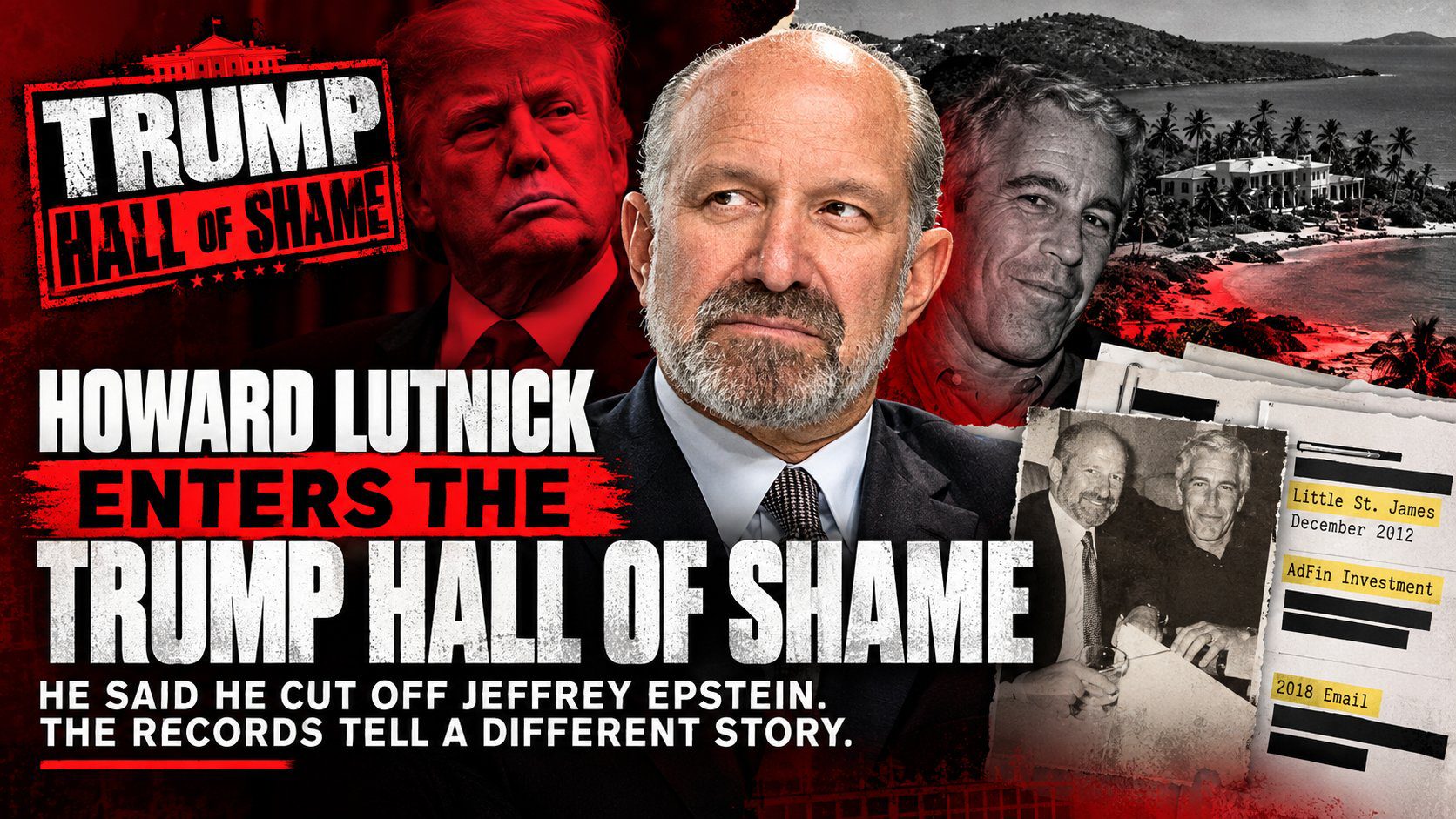
That is why Corey Lewandowski belongs in the Trump Hall of Shame. Not because he was controversial. Not because he was combative. But because he represents what happens when political operatives stop viewing government as public service and start treating it like private leverage wrapped in patriotic branding.






























Want to join the conversation?
Create an account or sign in to share your thoughts, vote,
and reply to other readers.
Showing 1 of 1 comment
Don't have an account?
Already have an account?