
The White House and President Donald Trump have announced a major step in establishing a national policy framework for artificial intelligence, aiming to ensure the responsible and ethical development of AI technologies. This clickable link is a MUST READ.
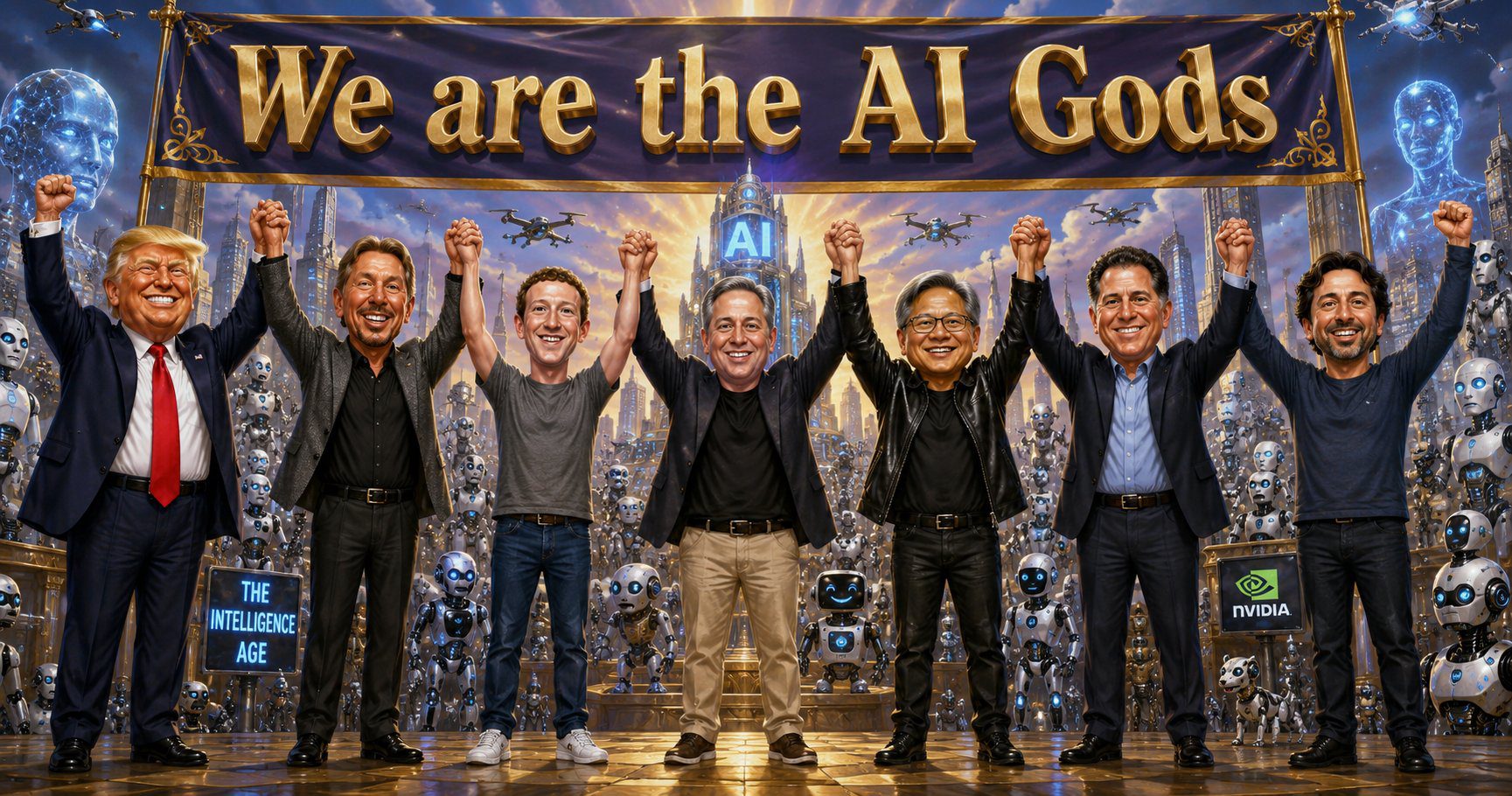
Key highlights include a commitment to transparency, robust privacy protections, and fostering innovation, while also addressing potential risks such as bias and misuse. The framework emphasizes collaboration between government, industry, and civil society, with a focus on ensuring that AI serves the public good and protects civil liberties.
Who is on the Council That Put this All Together?
David Sacks was born in Cape Town, South Africa, in 1972, and later moved to the U.S. He earned a degree in economics from Stanford and a law degree from the University of Chicago. Sacks was COO at PayPal during its rapid growth and later co-founded Yammer, which Microsoft bought for $1.2 billion. He also founded Craft Ventures, a venture capital firm, and he currently co-chairs the President’s Council of Advisors on Science and Technology, having previously served as the AI and crypto czar during Trump’s second term.
Jensen Huang was born in 1963 in Taiwan and later moved to the U.S. He earned a bachelor’s degree in electrical engineering from Oregon State and a master’s from Stanford. In 1993, he founded NVIDIA and, as CEO, grew it into a leader in AI infrastructure. By late 2025, NVIDIA’s market cap briefly surpassed five trillion dollars, and Huang was named Person of the Year by the Financial Times in 2025.
The current members of the President’s Council of Advisors on Science and Technology (PCAST) for 2026 include co-chairs Sacks and Michael Kratsios, along with 13 initial members. Among them are major tech leaders like Marc Andreessen, Sergey Brin, Safra Catz, Michael Dell, Ellison, Huang, Lisa Su, and Zuckerberg. The council is expected to grow to 24 members in total, with a strong focus on tech industry leadership.
What are the Goals and Aims?
This is a huge deal. Without clear liability, you get this kind of Wild West situation where AI developers could avoid accountability, even if their tech causes harm. So, a lot of experts have been saying that for real trust and safety, we need legal clarity, especially as AI decisions get more integrated into everyday life.
The White House AI policy framework team has several specific tasks. They are identifying state AI laws that conflict with federal policy, coordinating legal challenges, and crafting legislative recommendations for Congress. They’re also pushing for federal permitting reforms to speed up AI infrastructure and focusing on special risks, like child safety and intellectual property. Finally, they’re preparing the workforce with AI education and mapping out a federal approach to preempt inconsistent state laws.
What are the Pros and Cons of This?
The executive order “Ensuring a National Policy Framework for Artificial Intelligence” is viewed by supporters as an effort to create a single, nationwide approach to regulating artificial intelligence instead of allowing a patchwork of different state laws. Advocates argue that one federal framework could reduce confusion for businesses, lower compliance costs, and make it easier for companies to innovate and launch AI products across the country without needing to follow dozens of separate state regulations.
Supporters also believe a national system could help the United States remain globally competitive in artificial intelligence, particularly against countries investing heavily in AI development, by encouraging faster innovation, economic growth, and technological leadership.
Critics, however, argue that the executive order could centralize too much authority at the federal level and weaken the ability of individual states to create stronger protections for their residents. Some worry that states attempting to regulate concerns such as AI bias, deepfakes, fraud, hiring discrimination, misinformation, or child safety could find their efforts limited by a national standard that prioritizes innovation over safeguards.
Others argue that a federal framework may disproportionately benefit large technology companies that prefer lighter, uniform regulation and have greater influence in shaping policy. There are also legal concerns about whether an executive order alone should carry such broad regulatory influence over an issue that many believe Congress should address through legislation.
In short, supporters tend to see the policy as a way to streamline regulation, boost innovation, and strengthen American competitiveness, while critics see it as a possible expansion of federal control that could reduce consumer protections and give too much flexibility to the AI industry.
And this is already happening when it comes to the massive data centers. They take up huge space, use huge energy, use up huge amounts of water, produce very few jobs, and are an eyesore.

















































Want to join the conversation?
Create an account or sign in to share your thoughts, vote,
and reply to other readers.
Showing 0 of 0 comments
Don't have an account?
Already have an account?