
The Epstein Emails: How Jeffrey Epstein Rebuilt Access to Silicon Valley Power After His Conviction
Jeffrey Epstein was a convicted sex offender by the time these emails were written.
That fact is not disputed. In 2008, Epstein pleaded guilty in Florida to state charges related to soliciting prostitution from a minor. He registered as a sex offender. His Palm Beach case was public. His name was synonymous with scandal long before his 2019 arrest.
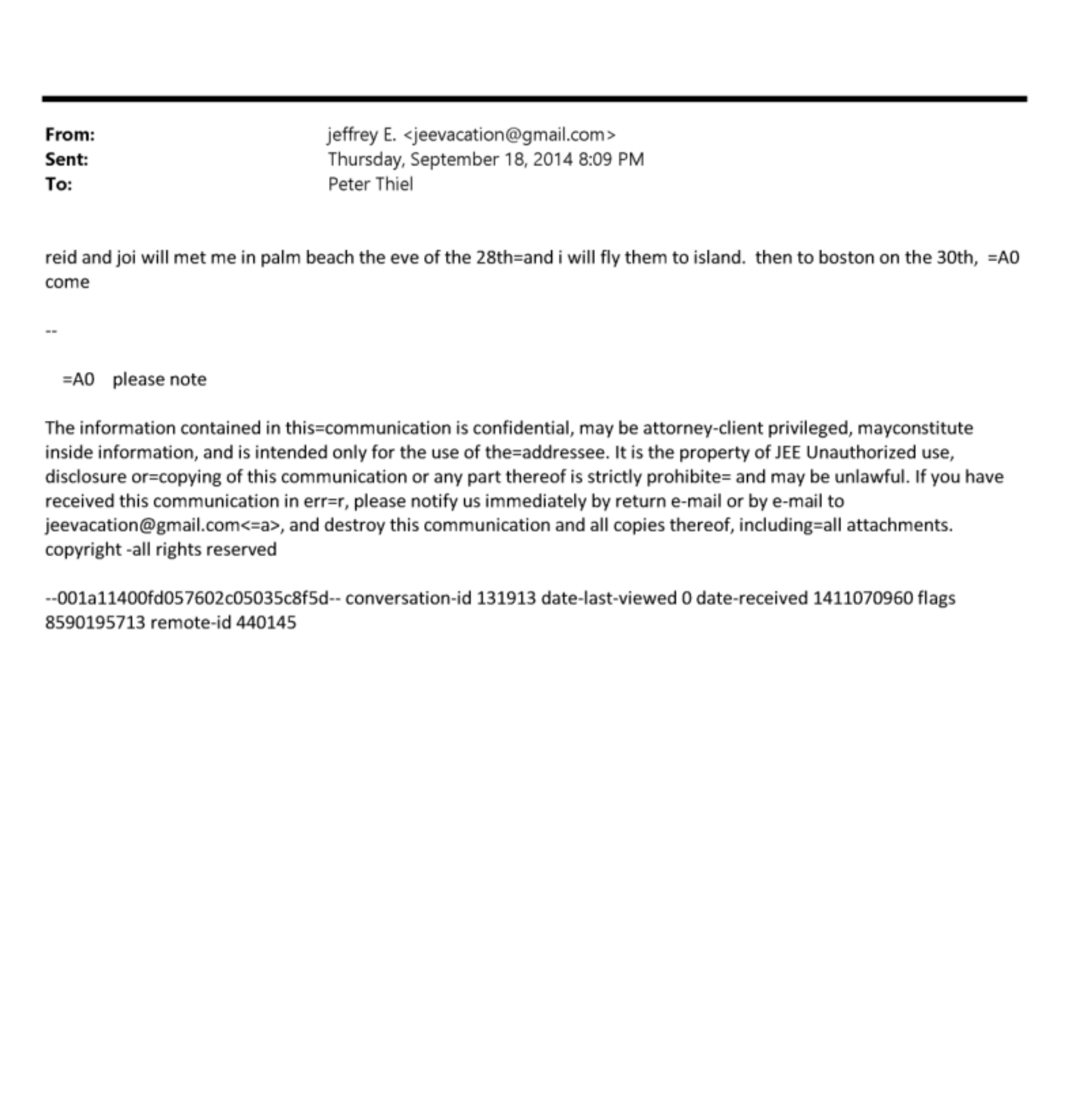
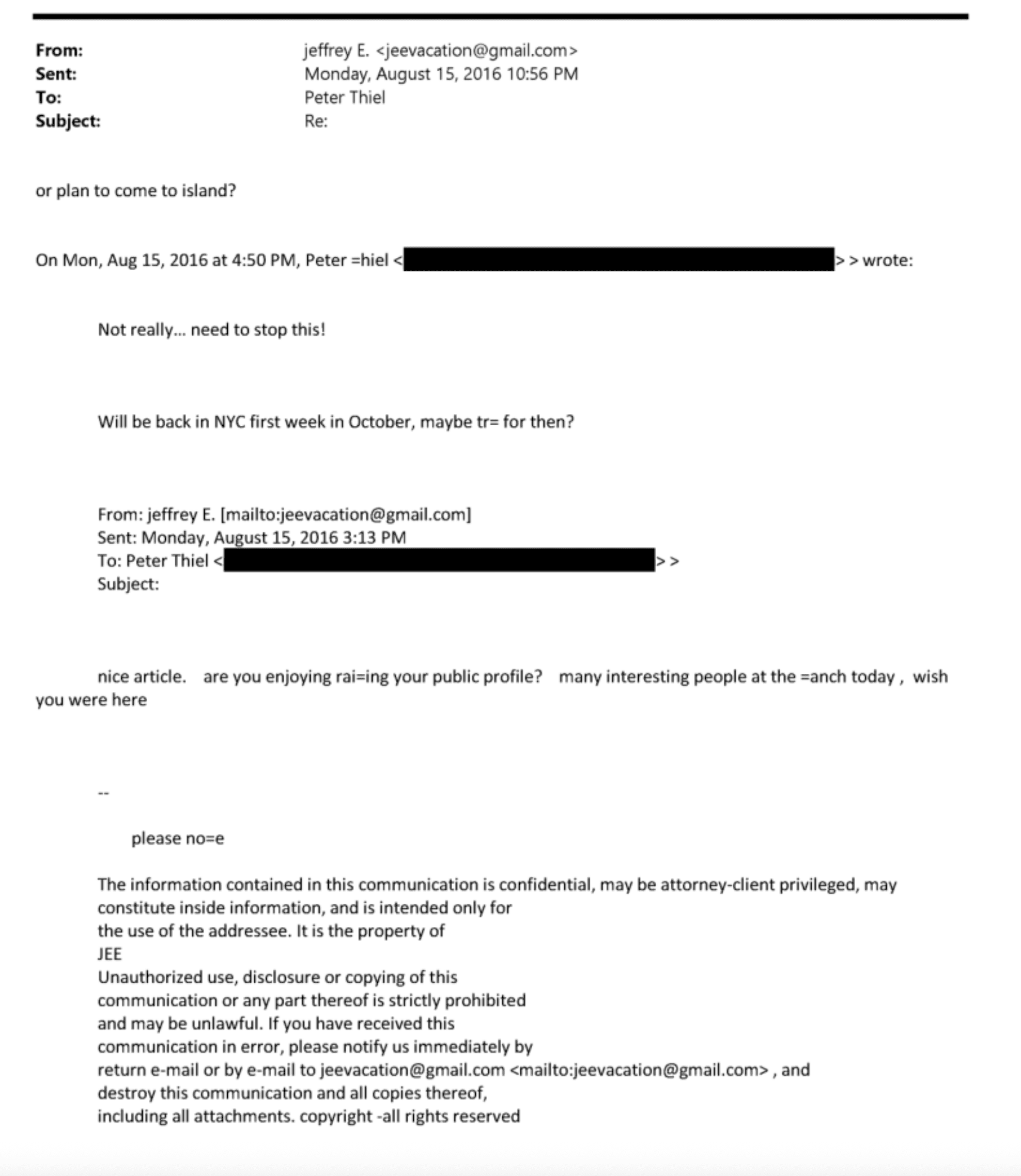
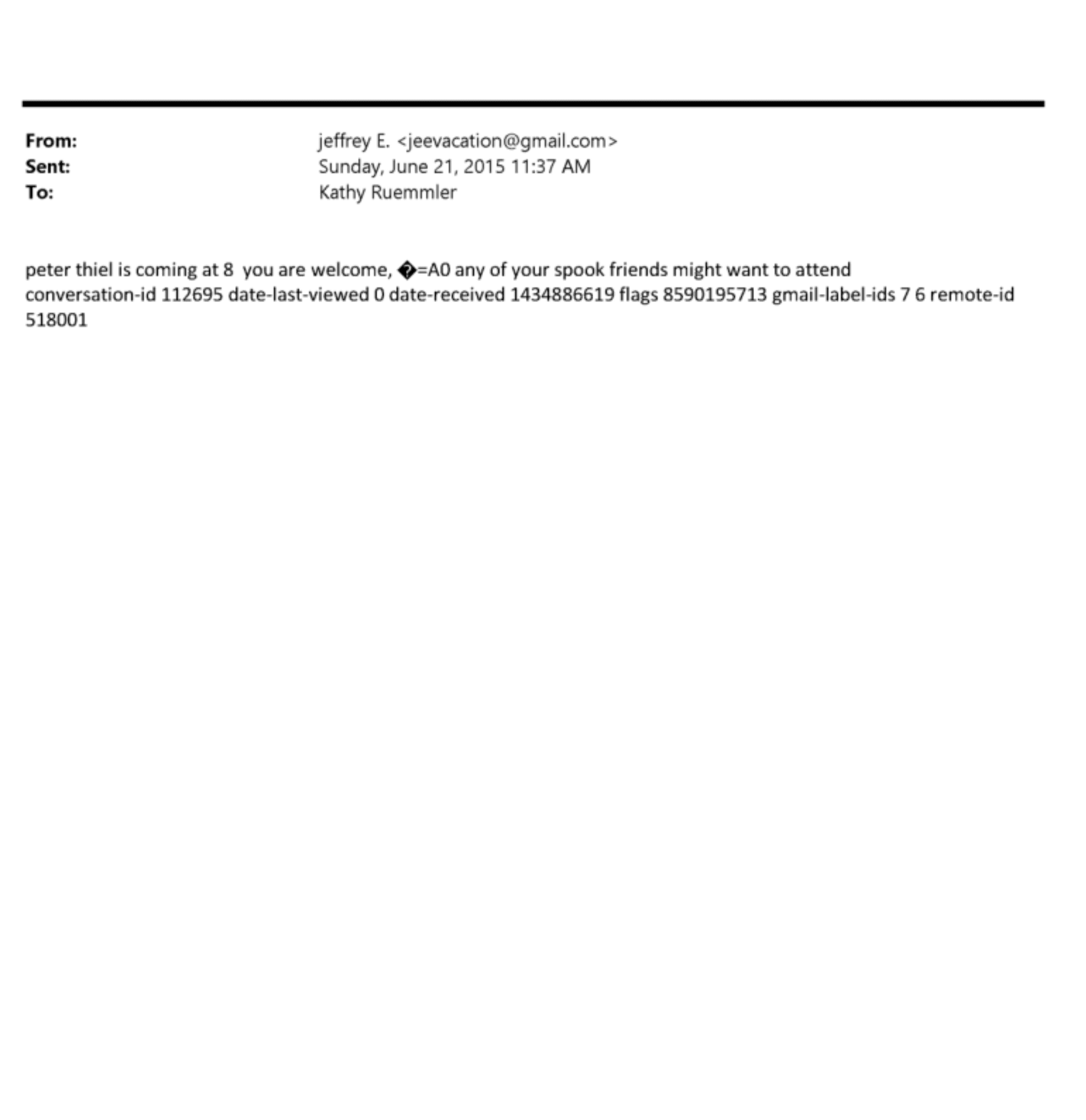
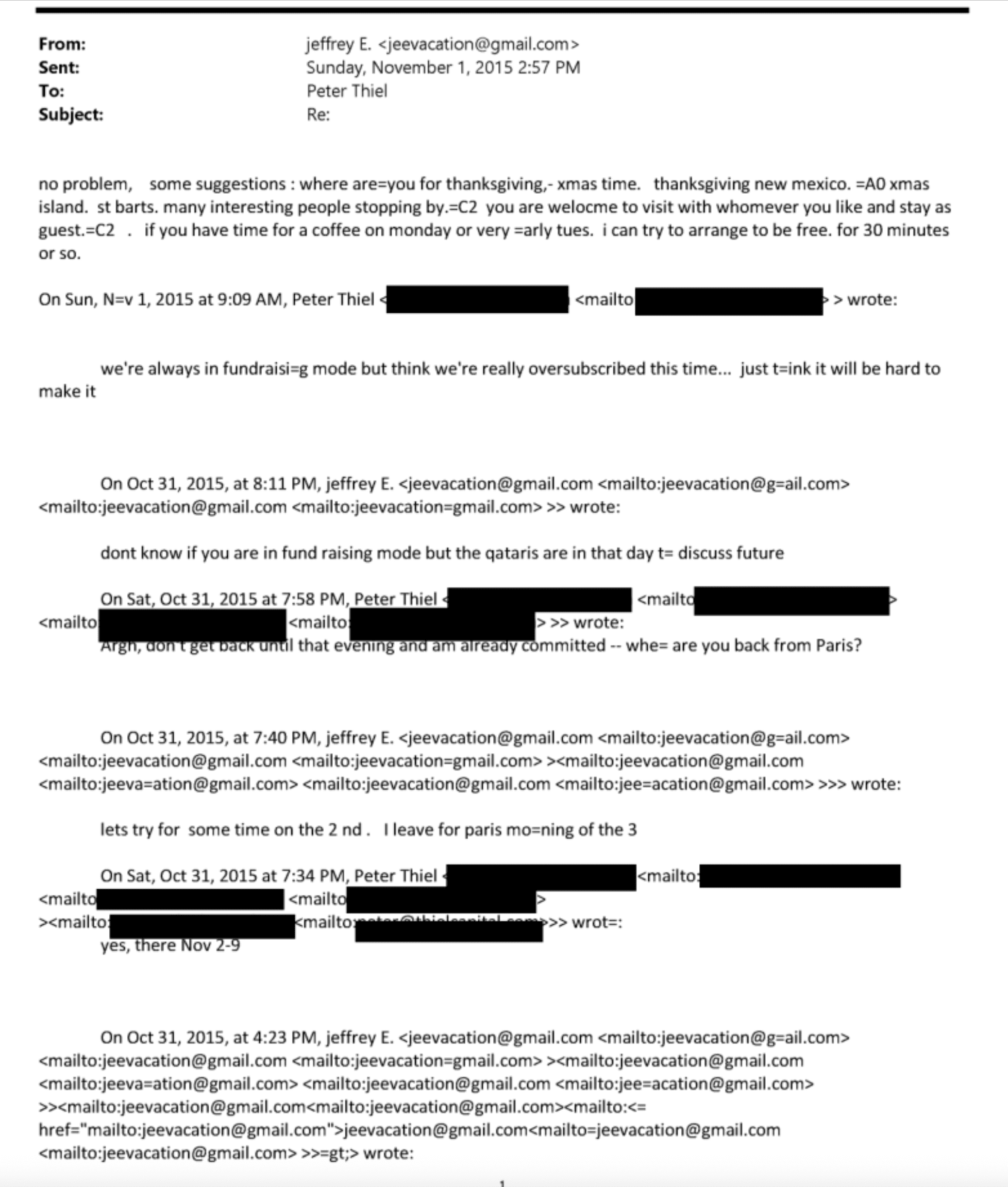
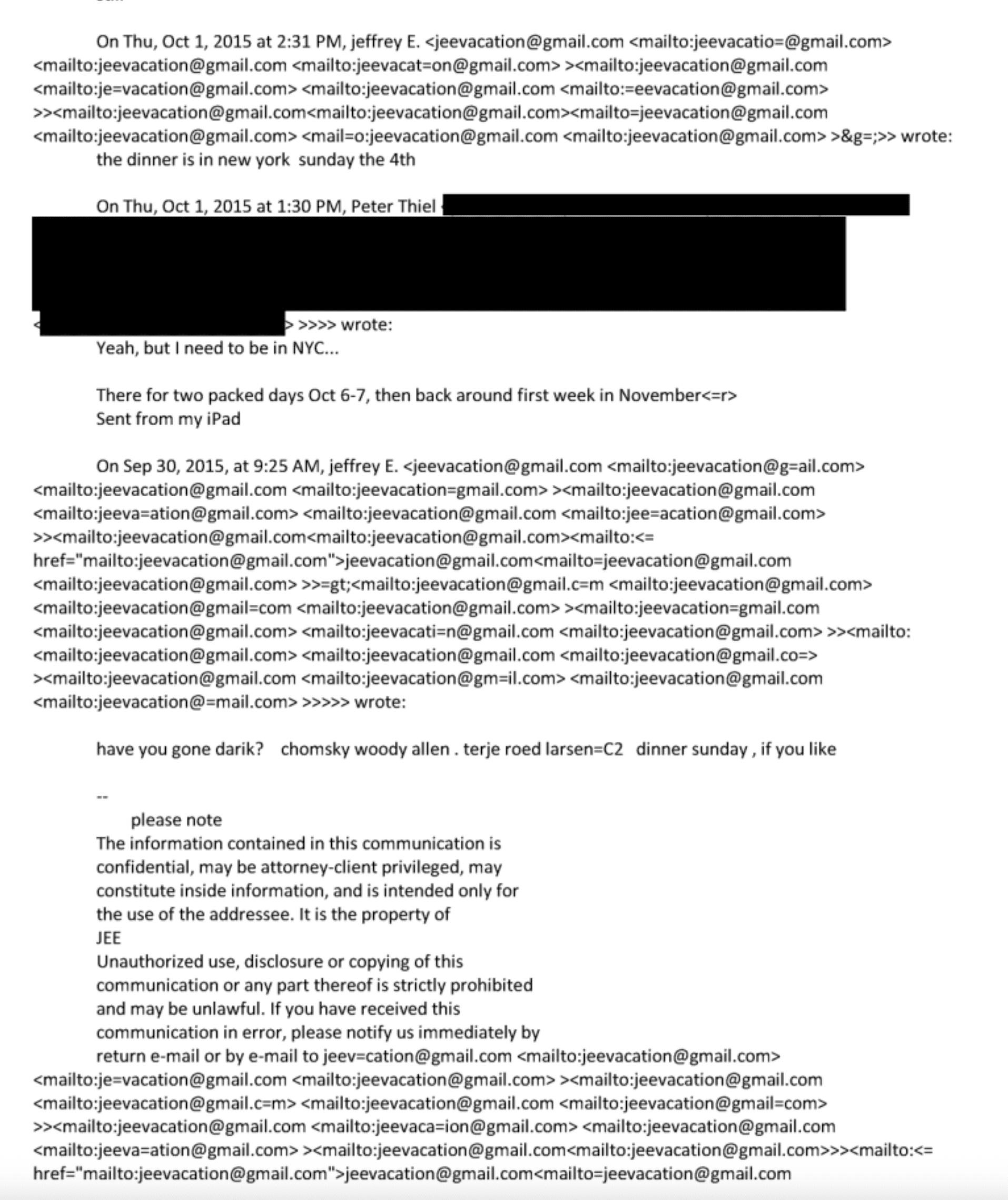
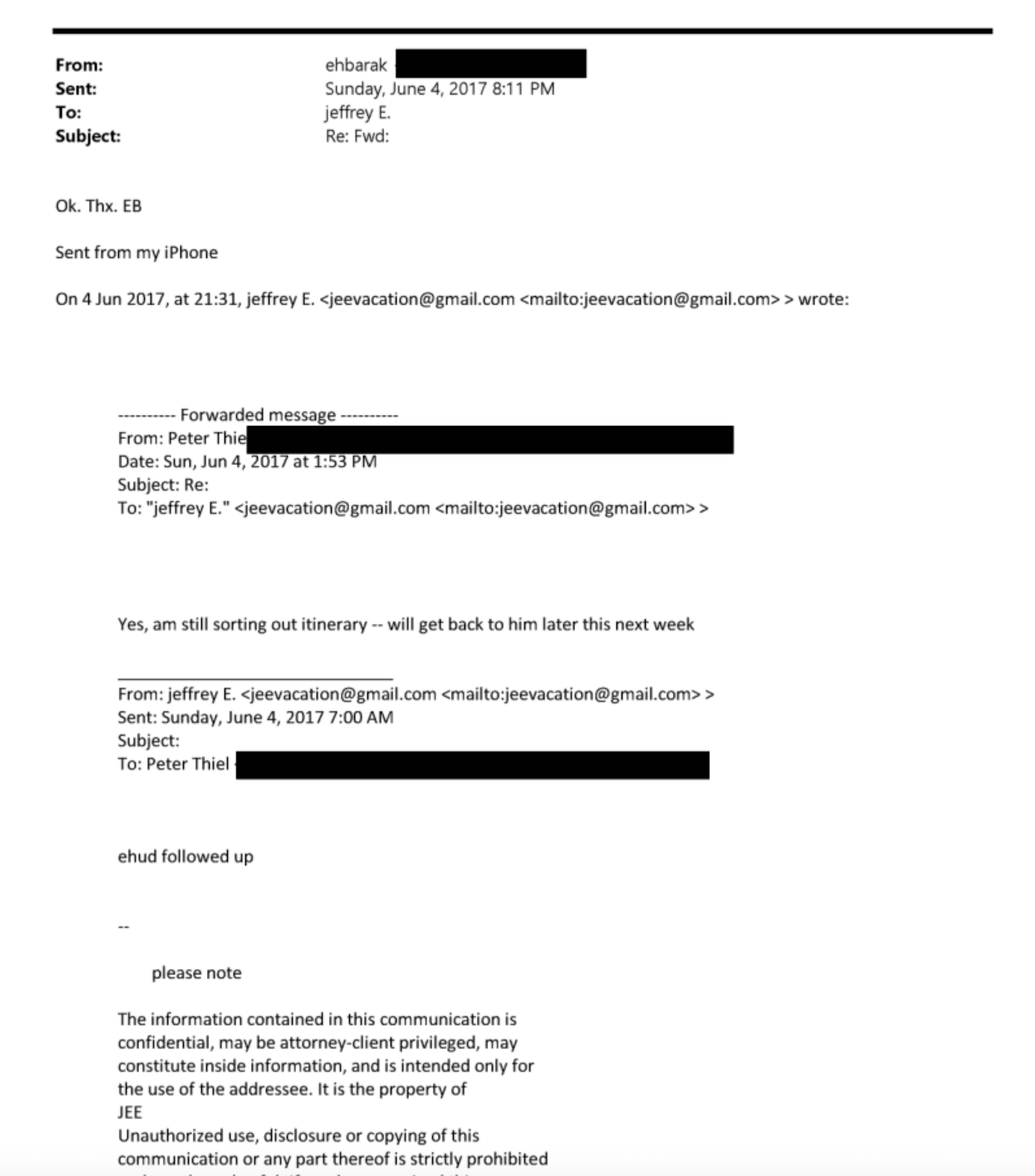
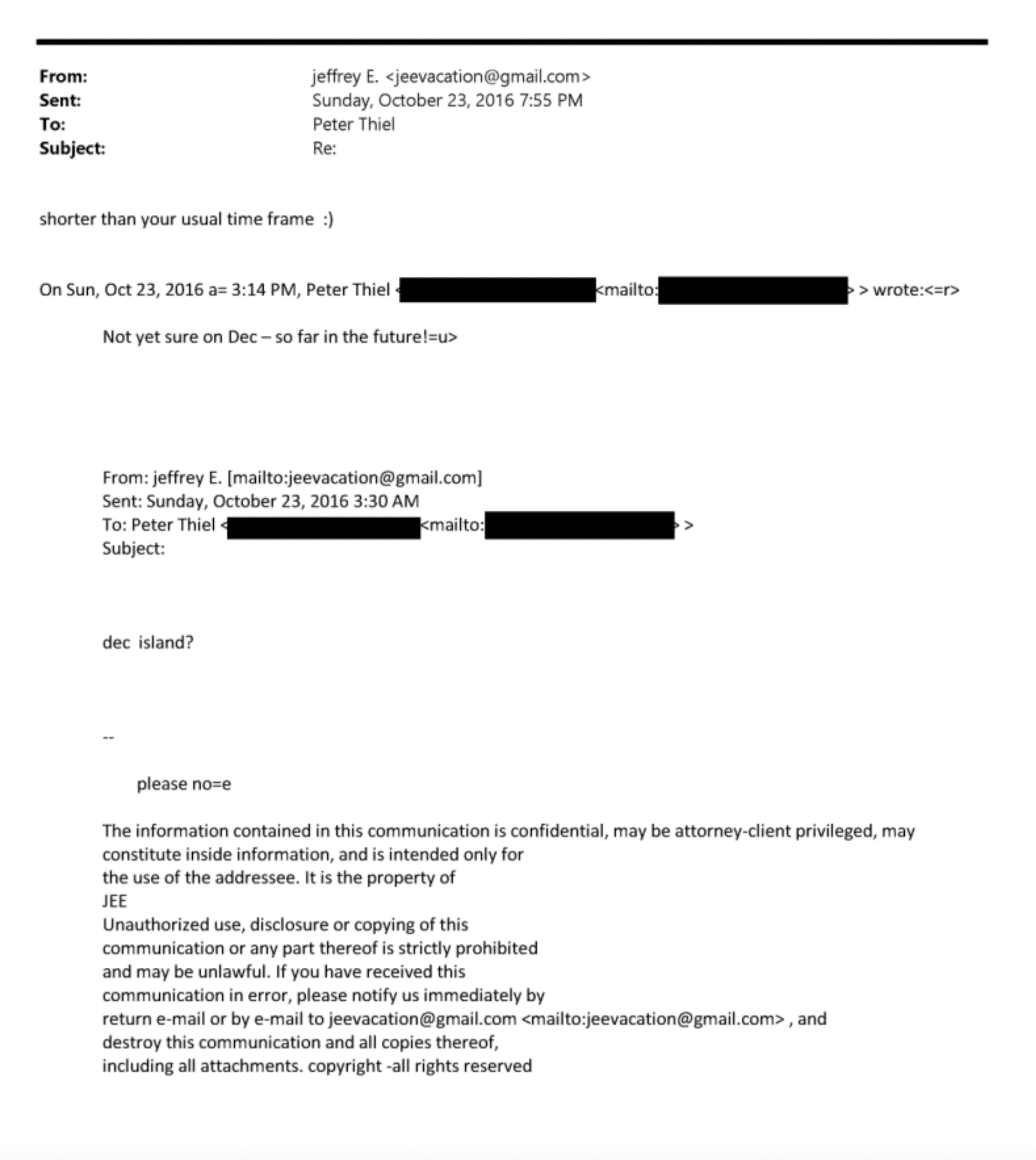
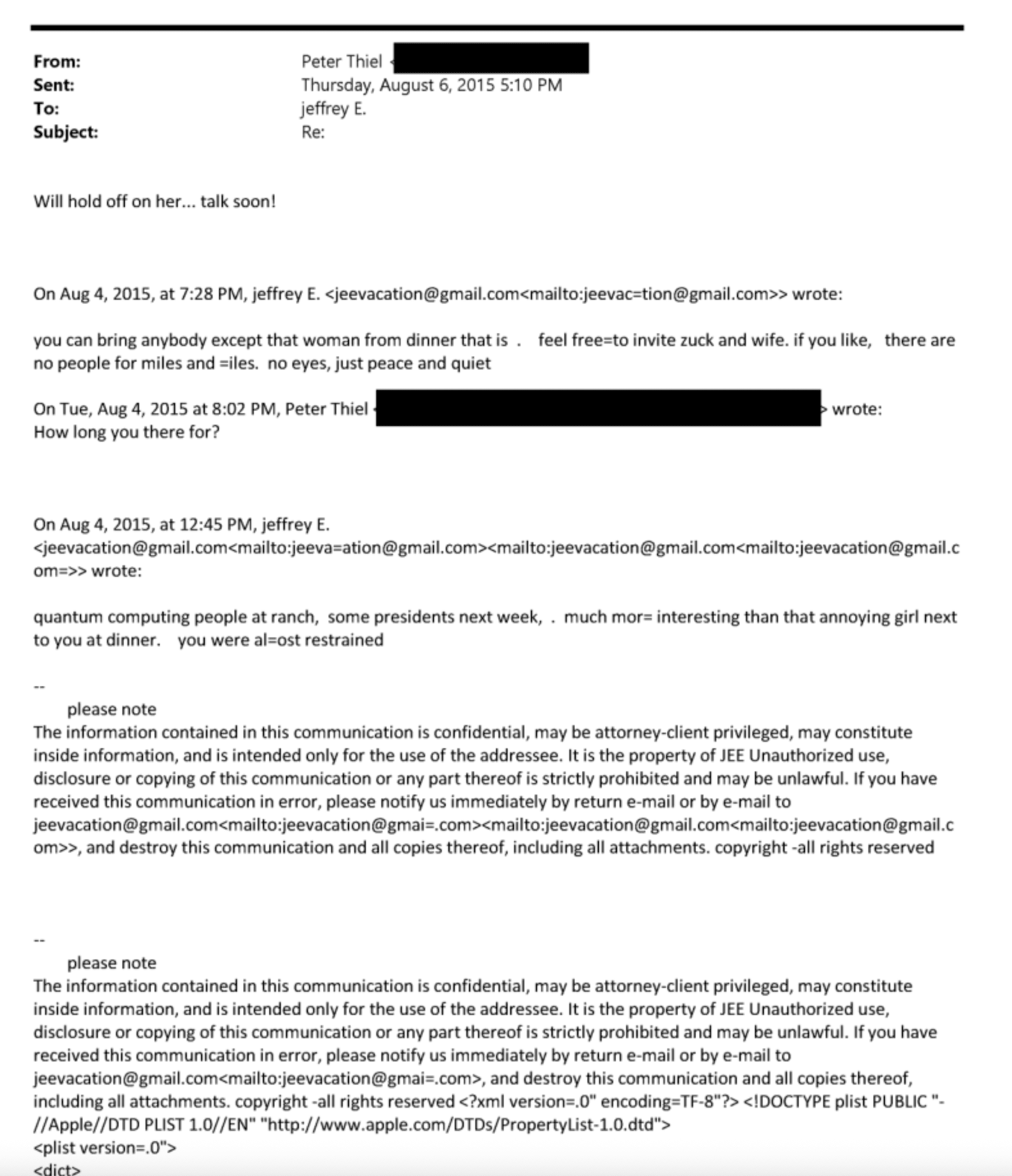
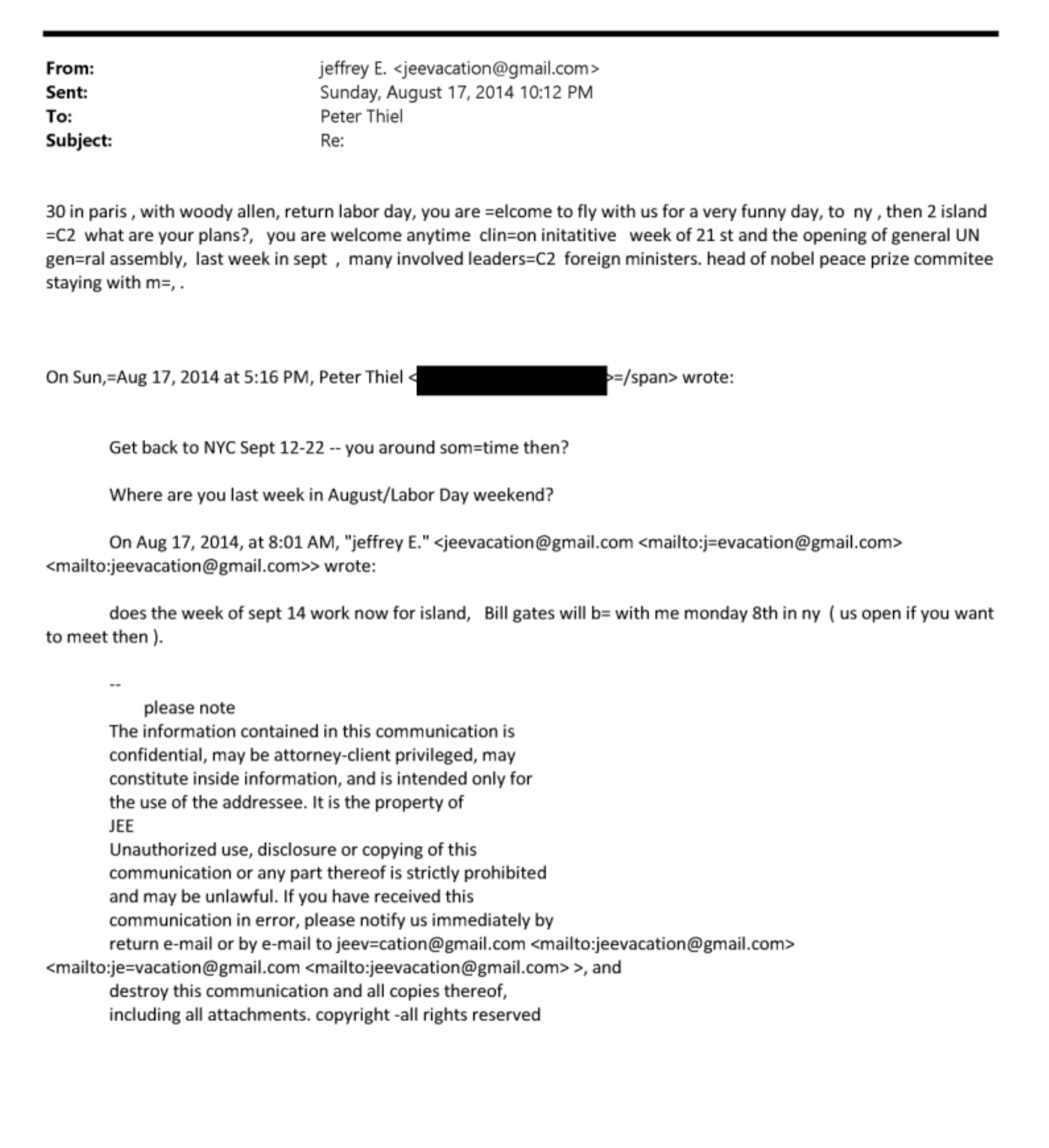
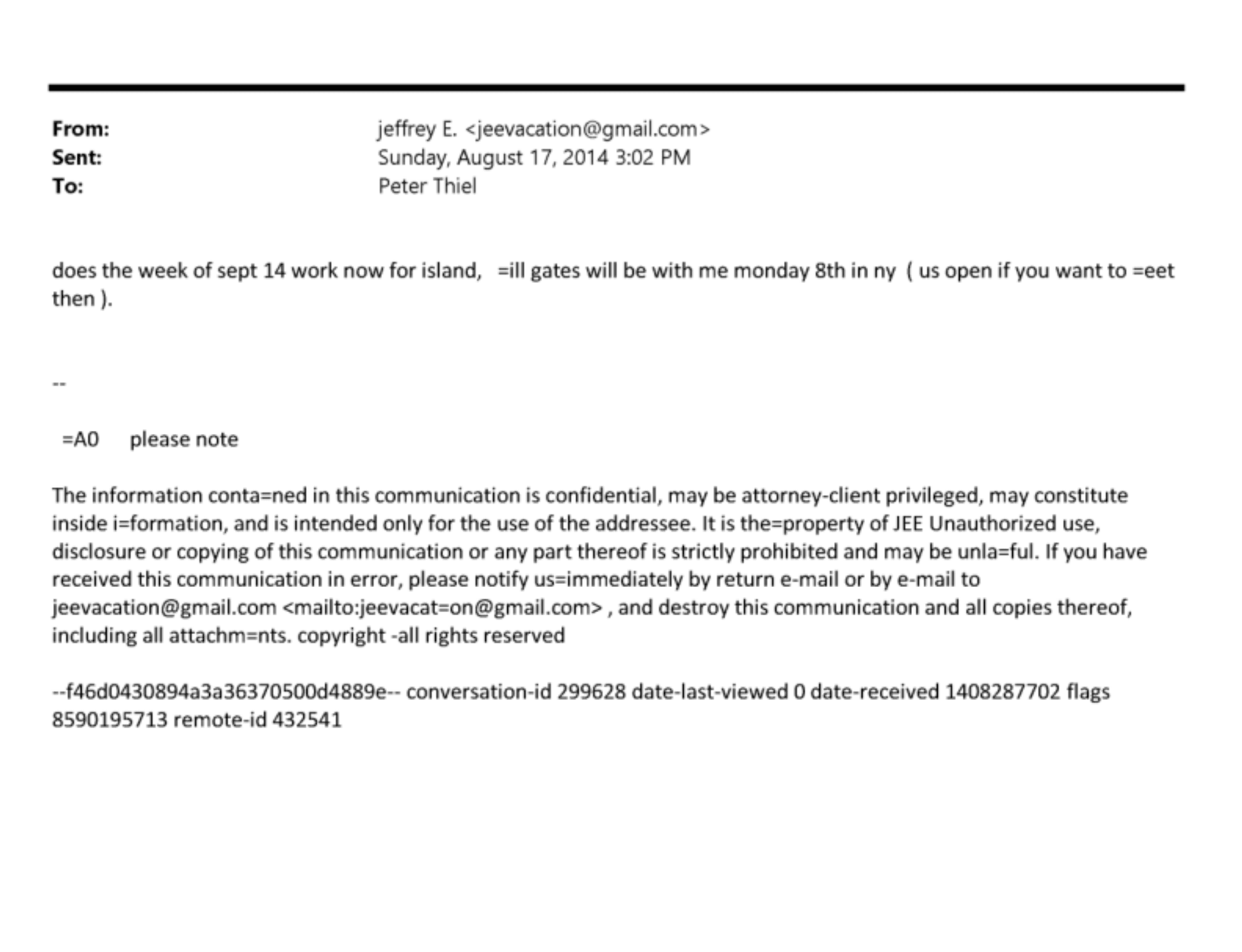
Yet between 2014 and 2017, six to nine years after that conviction, newly reviewed emails show Epstein actively corresponding with billionaire investor Peter Thiel, coordinating meetings, extending invitations to his properties, and confirming a multi-million-dollar advisory agreement.
These documents do not prove criminal conduct by Thiel. They do not show illegal activity. What they do show is something else entirely: continued access.
And that, in the Epstein story, is always the real headline.
Post-Conviction Contact: Not a One-Off, But a Pattern
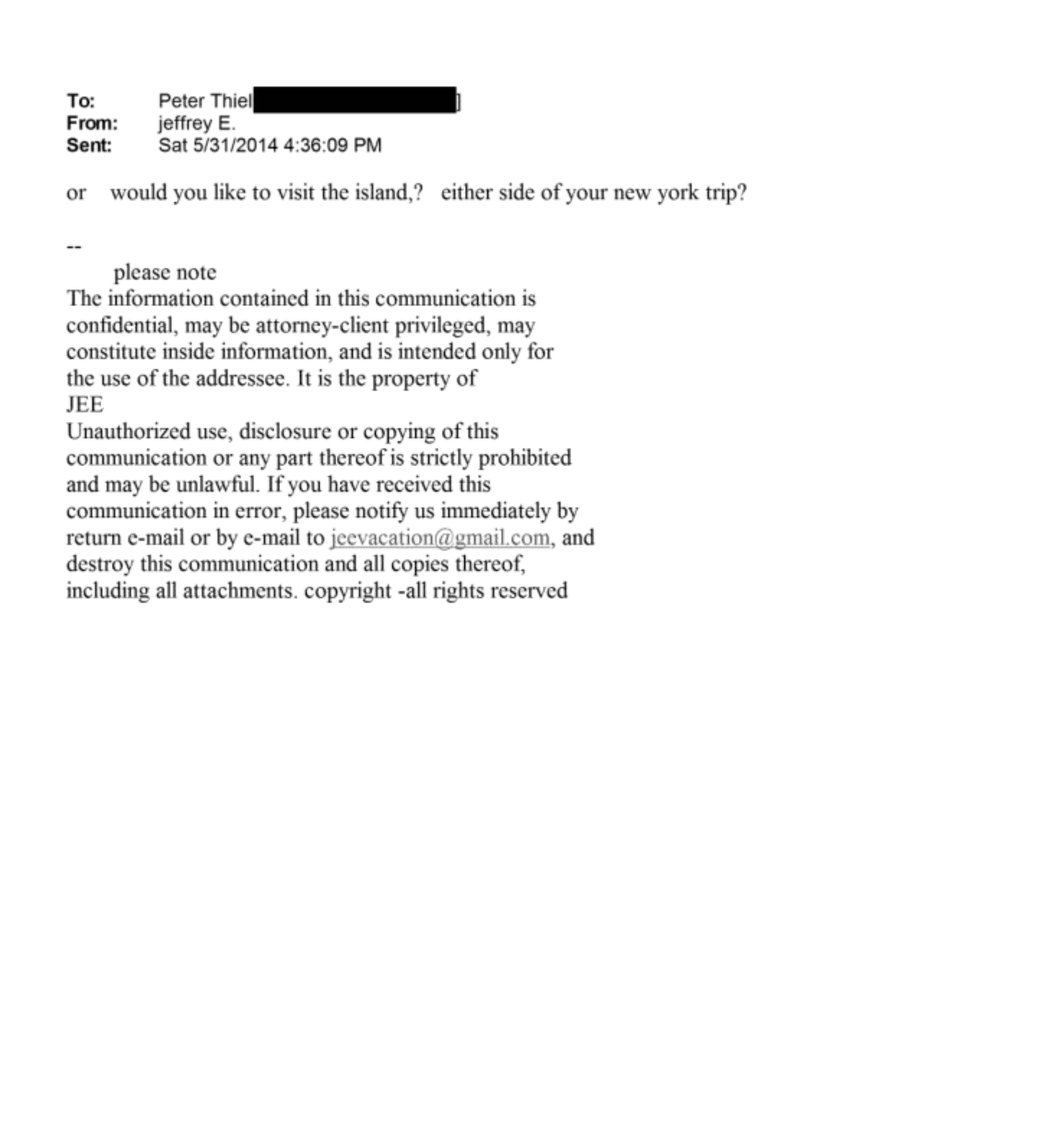
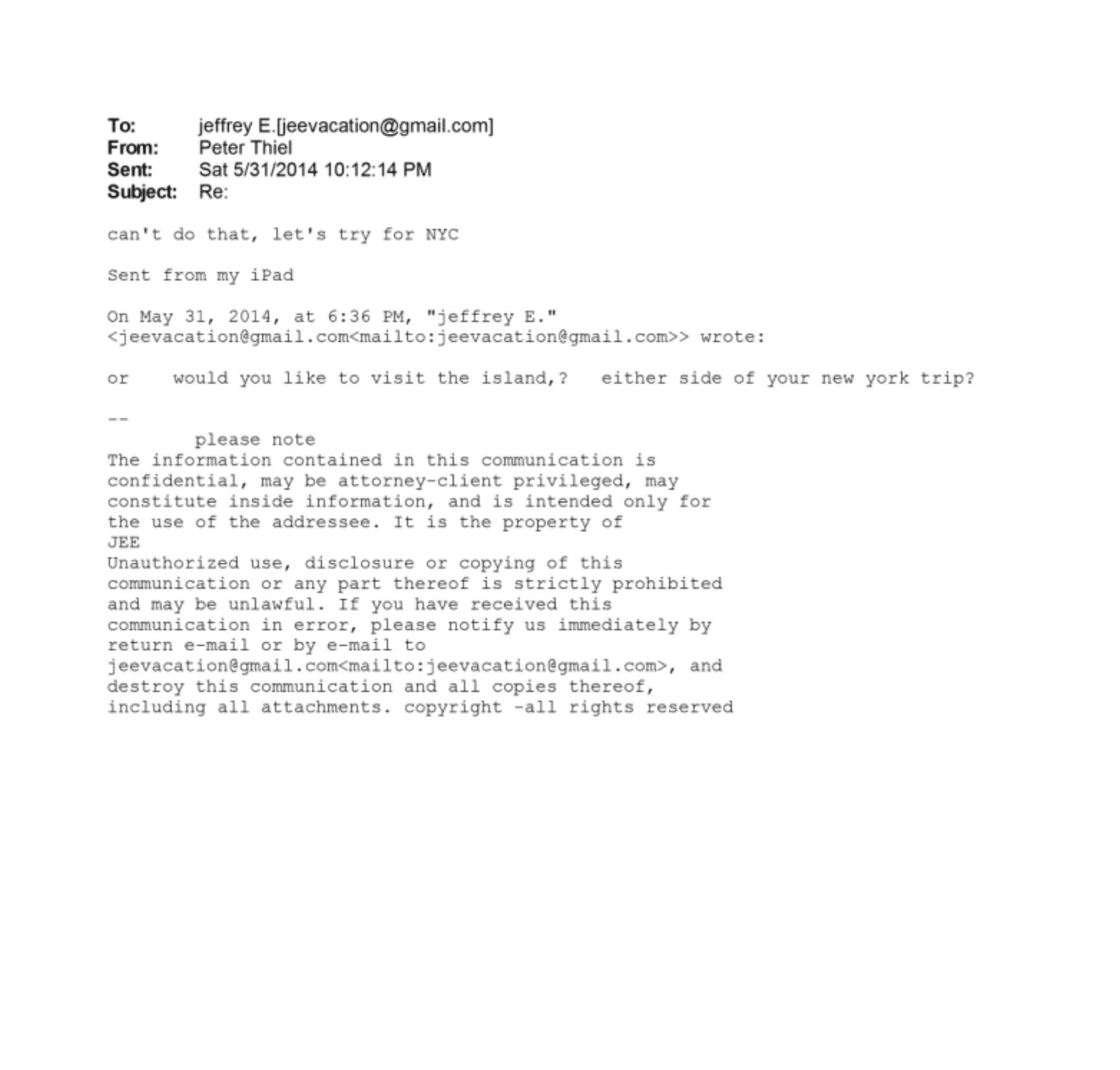
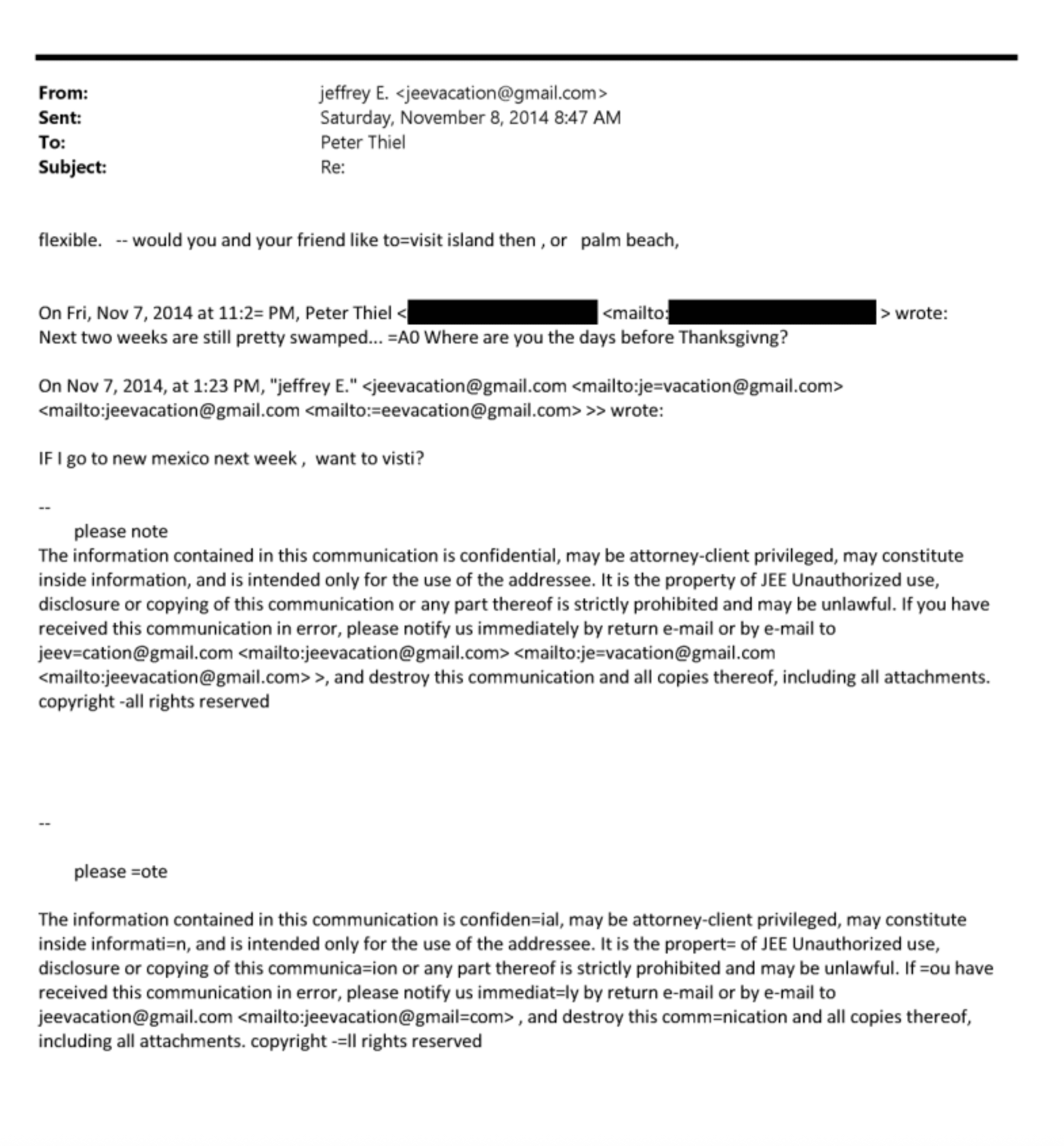
The emails span multiple years. In May 2014, Epstein emailed Thiel:
“would you like to visit the island? either side of your new york trip?”
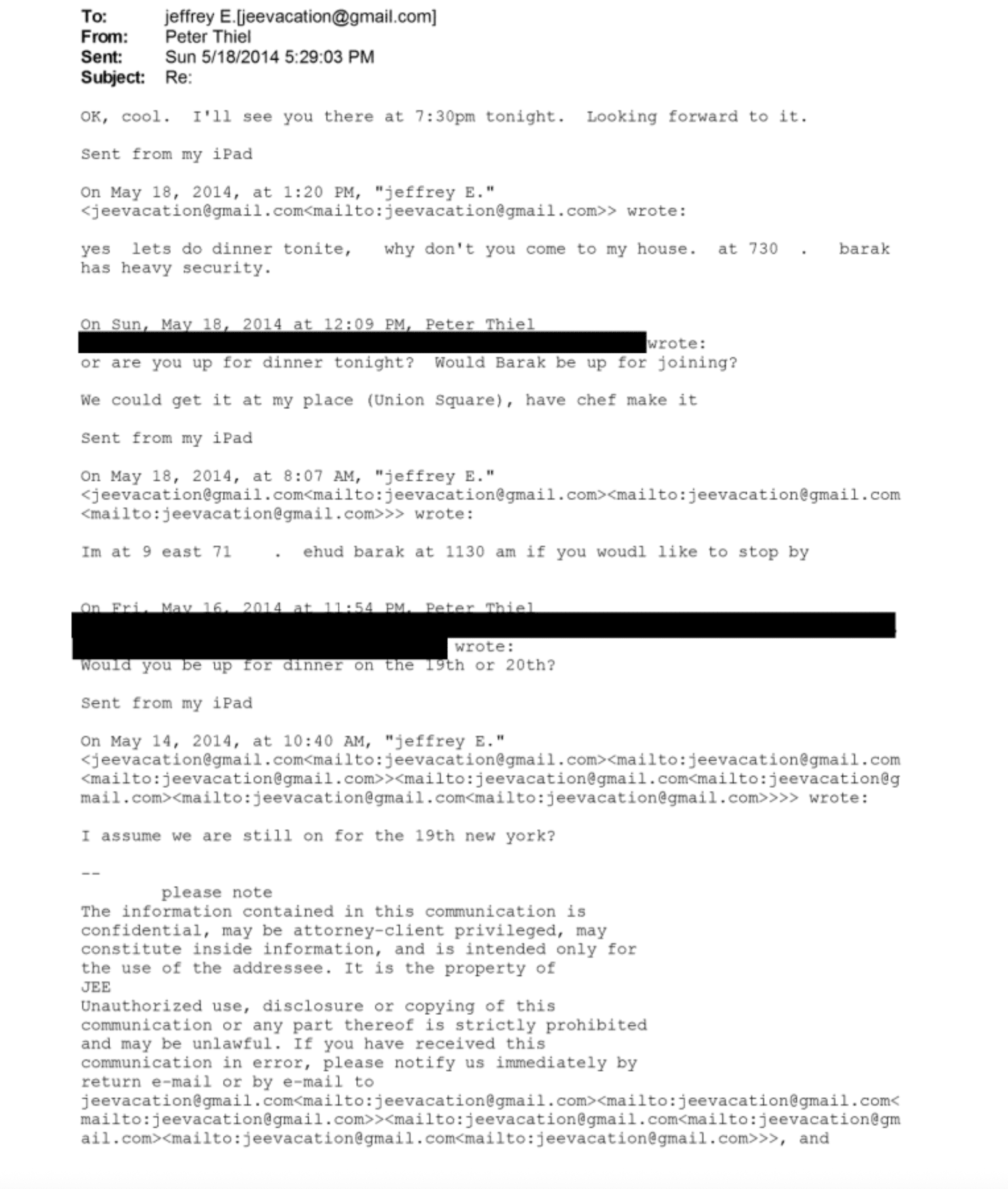
“the island” refers to Little St. James in the U.S. Virgin Islands, a property that would later become central to federal sex trafficking charges. That same month, the two coordinated dinner plans in Manhattan. Epstein wrote:
“yes lets do dinner tonite, why don’t you come to my house. at 730. barak has heavy security.”
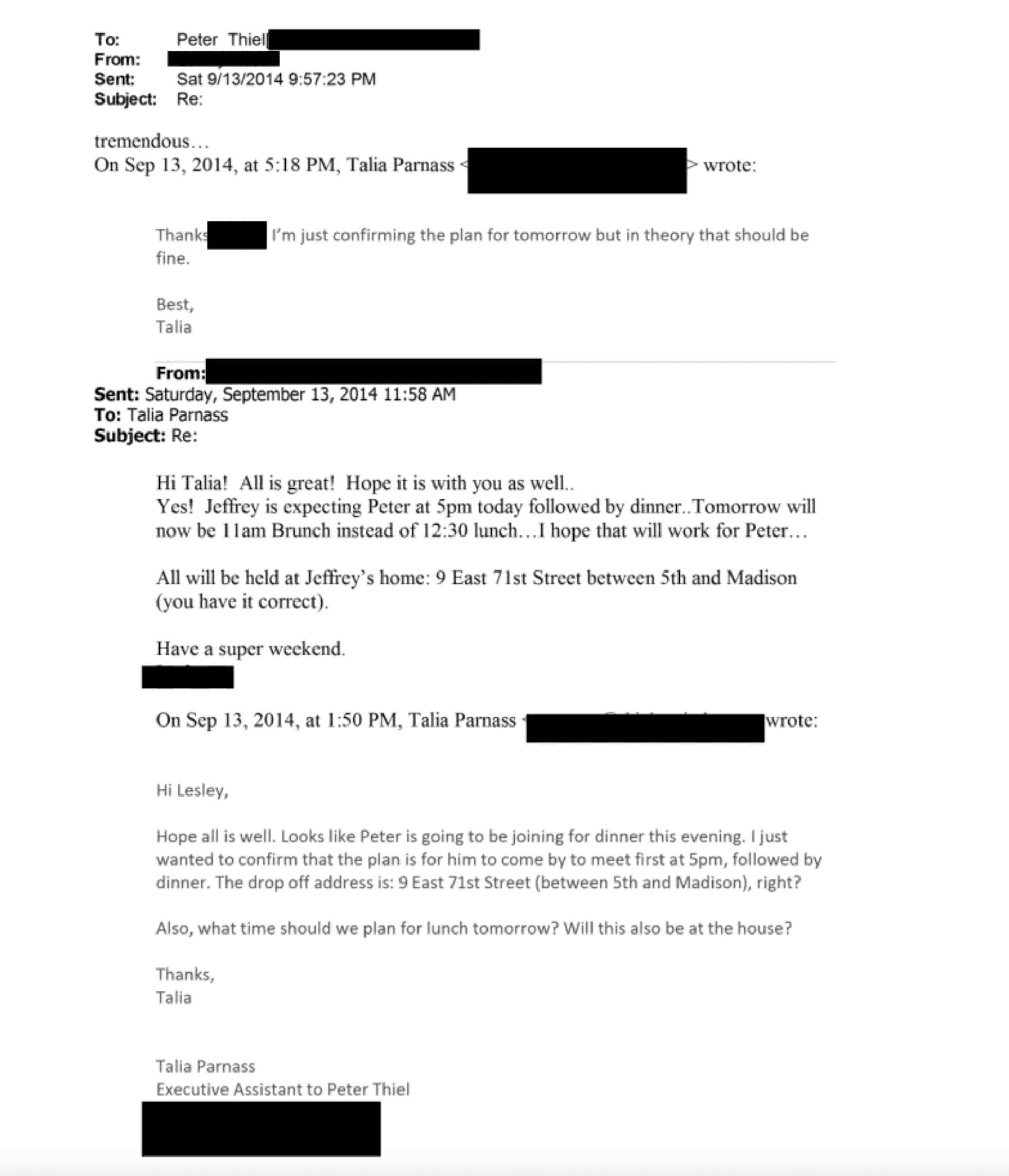
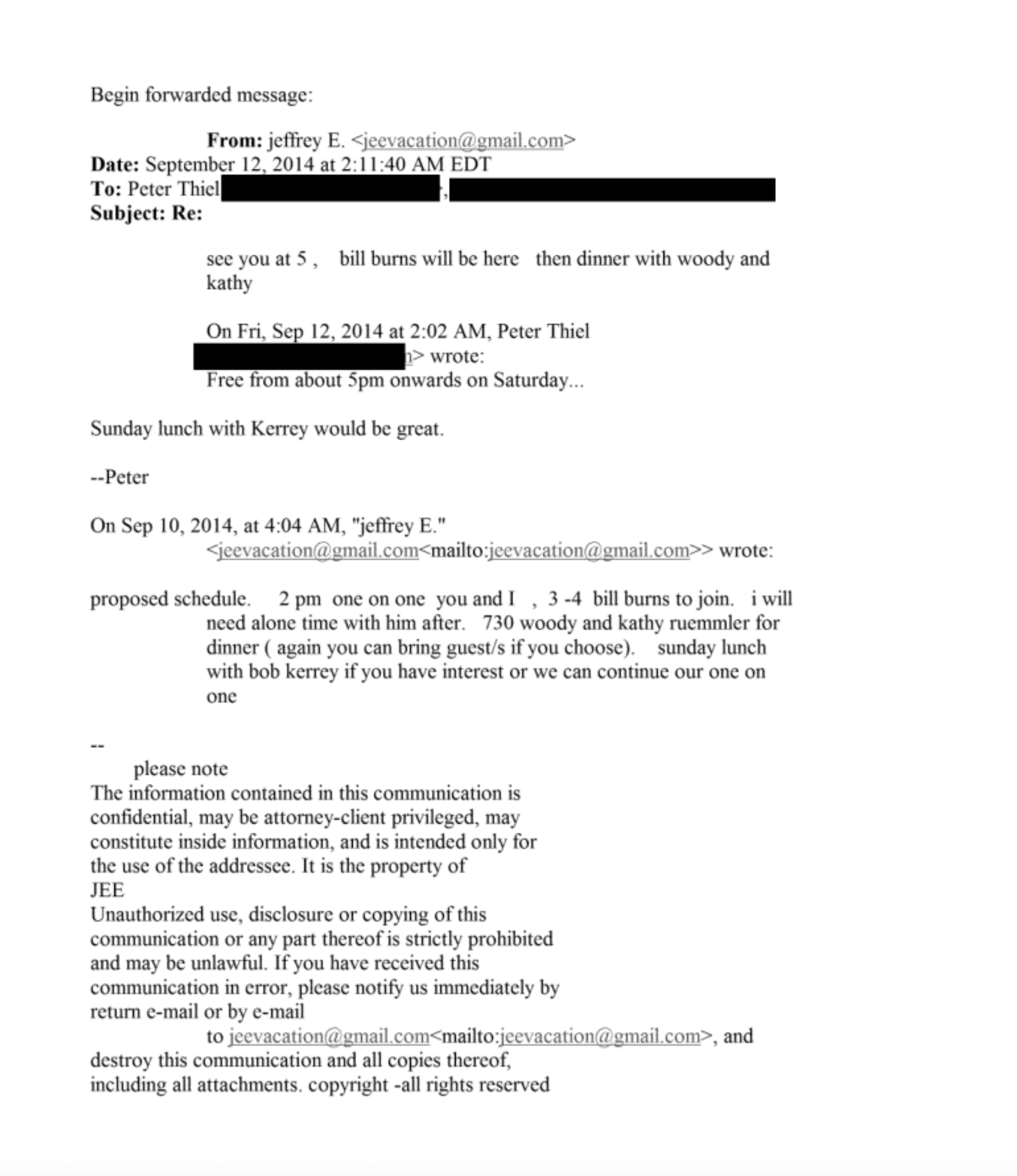
The address referenced repeatedly in the emails is 9 East 71st Street, Epstein’s Upper East Side townhouse. In September 2014, scheduling emails involving Thiel’s executive assistant confirm plans for Peter Thiel to attend dinner at Epstein’s home. One message outlines a proposed schedule:
“2 pm one on one you and I, 3-4 bill burns to join… 730 woody and kathy ruemmler for dinner…”
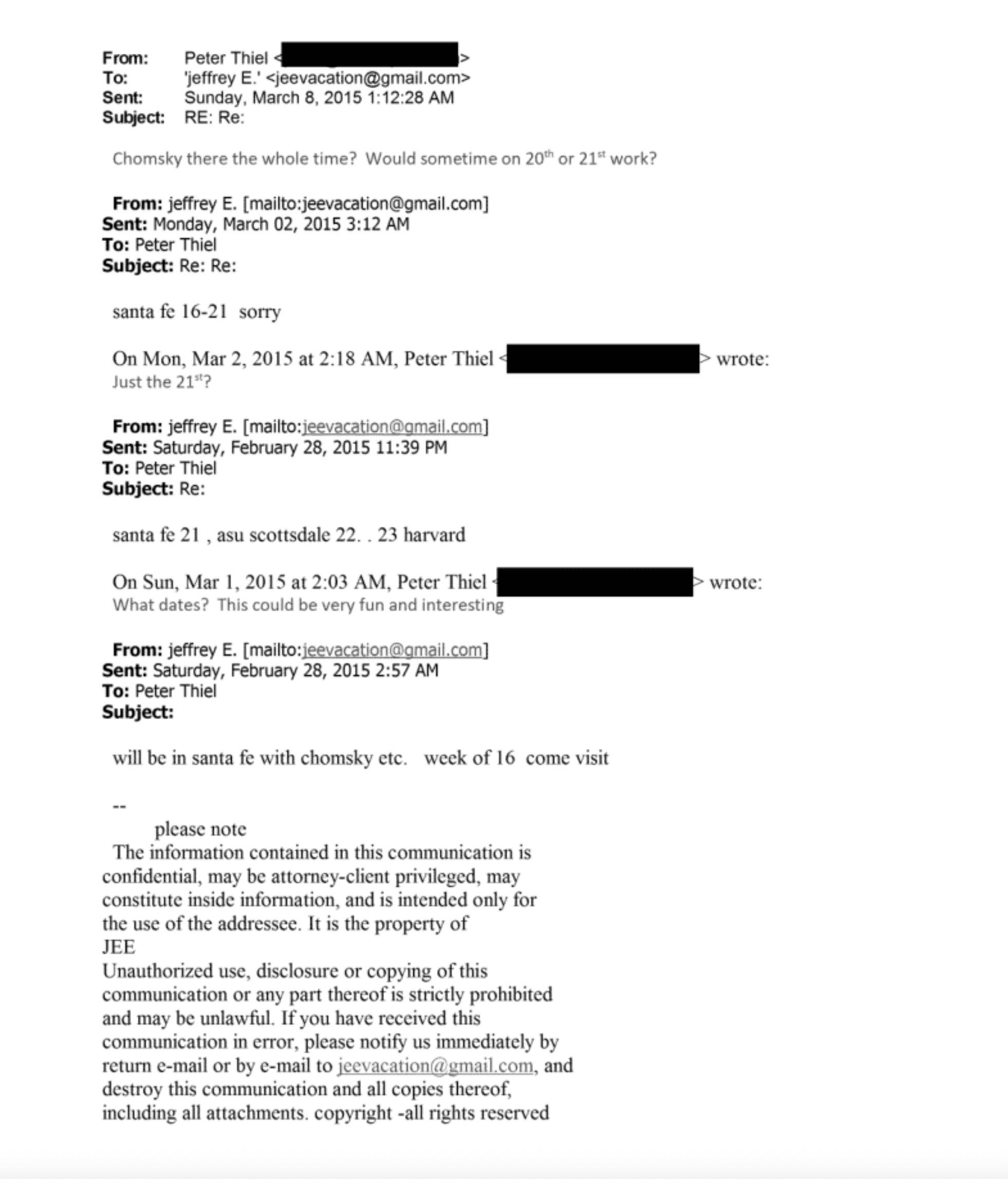
The “Bill Burns” referenced appears to be William Burns, who later became Director of the CIA. Woody is referenced in context with dinner. Ehud Barak, the former Israeli Prime Minister, is also mentioned in separate exchanges. This was not isolation. It was networking.
Invitations to the Island
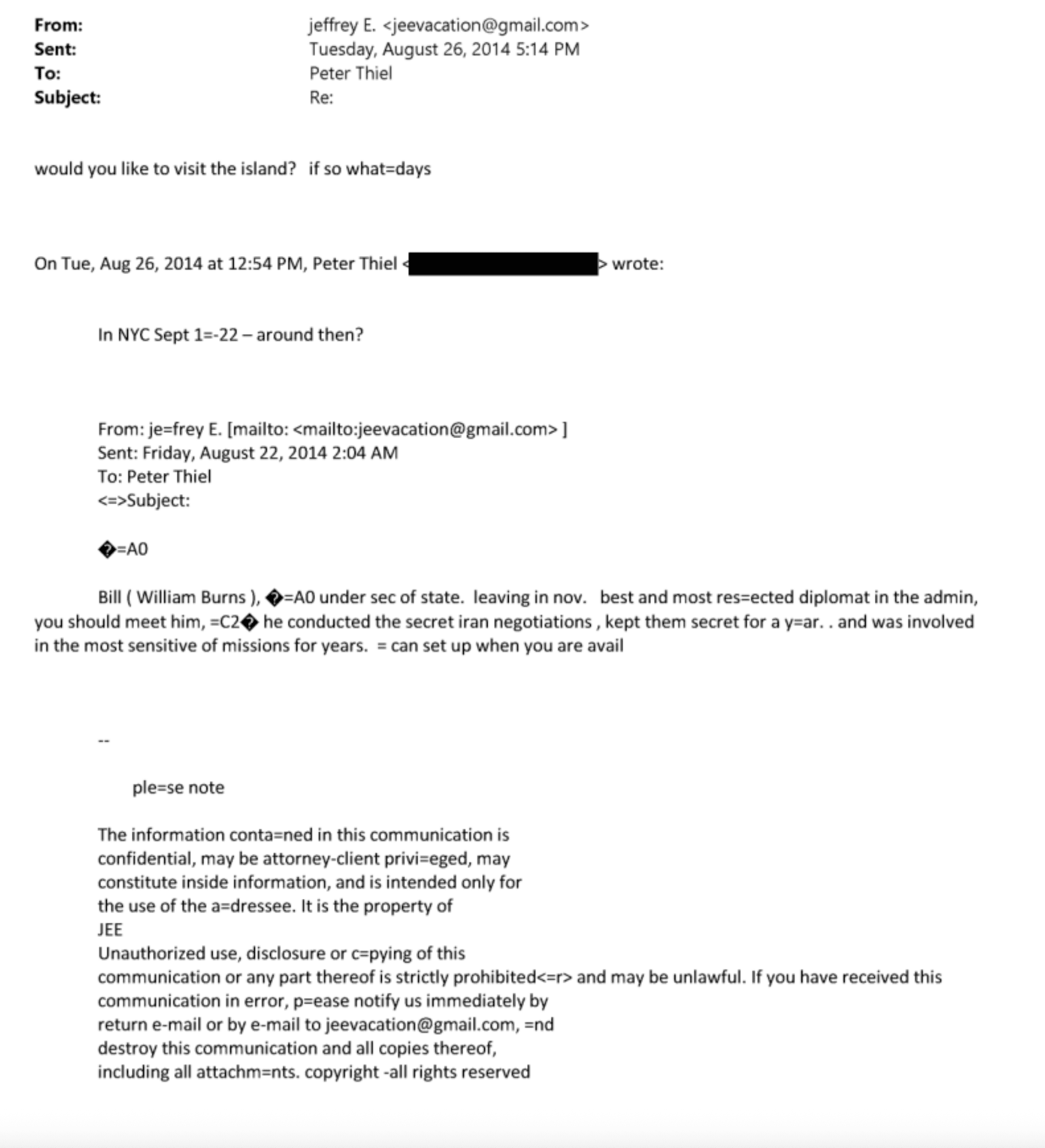
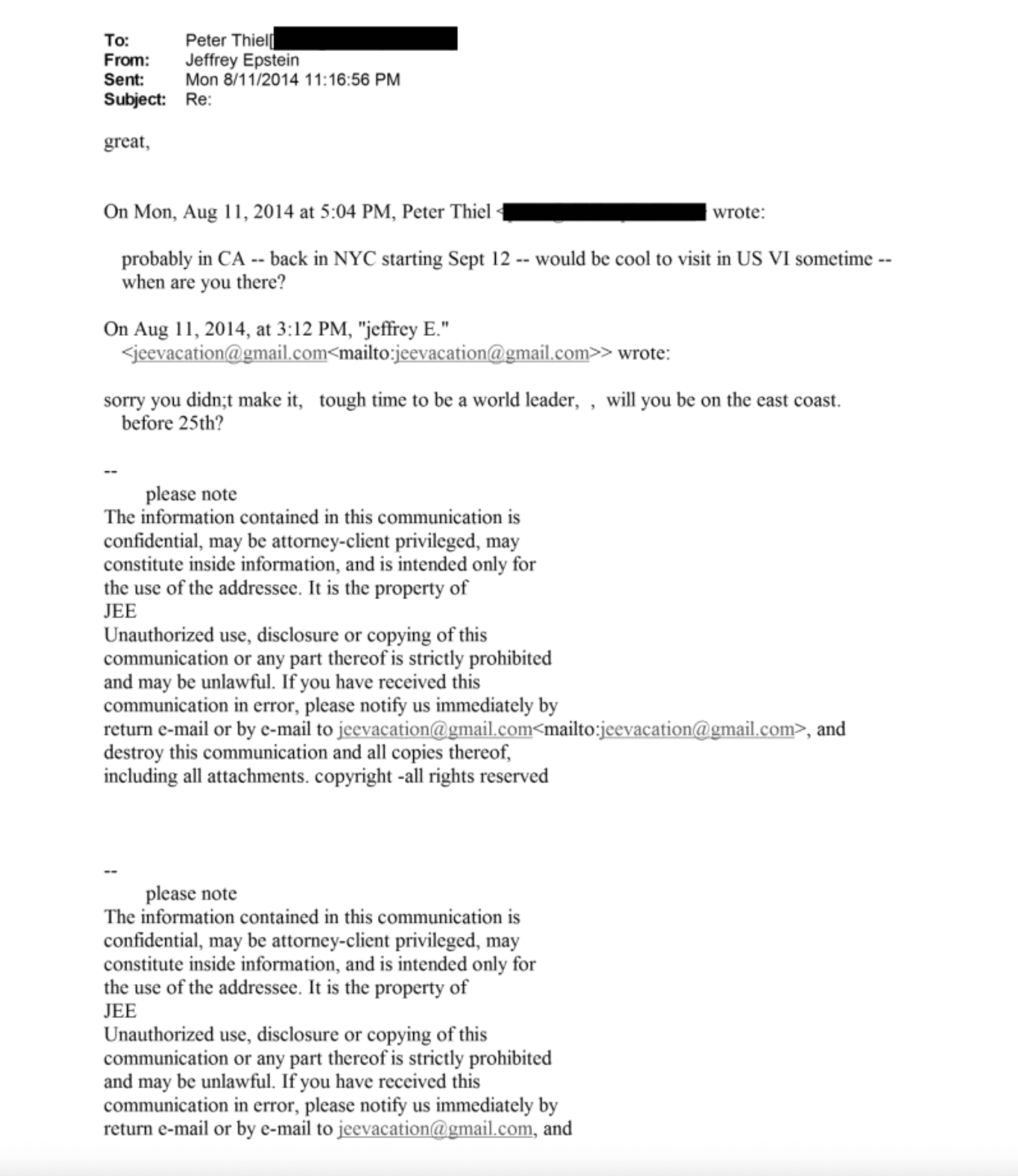
In August 2014, Epstein wrote again:
“would you like to visit the island? if so what-days”
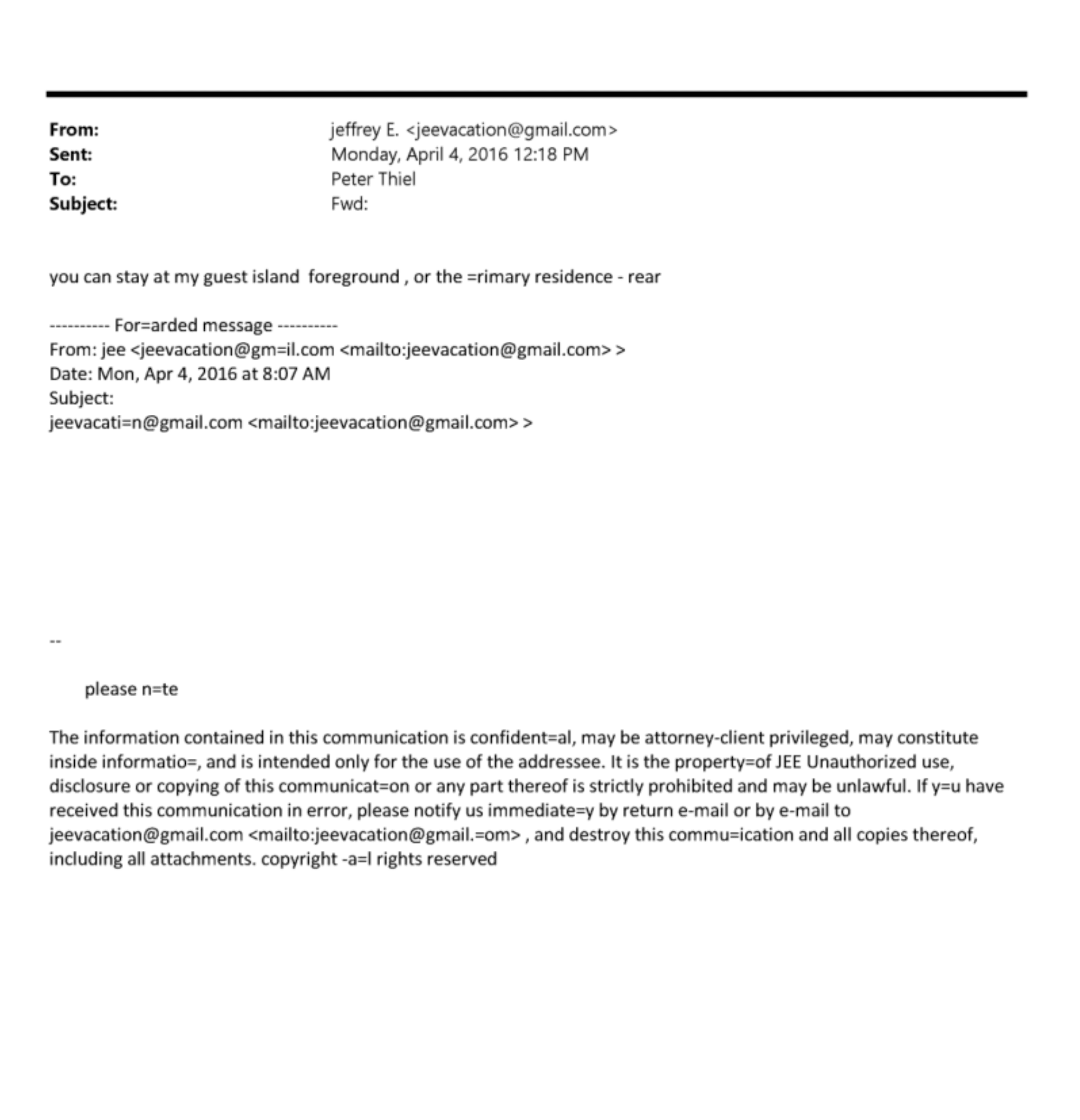
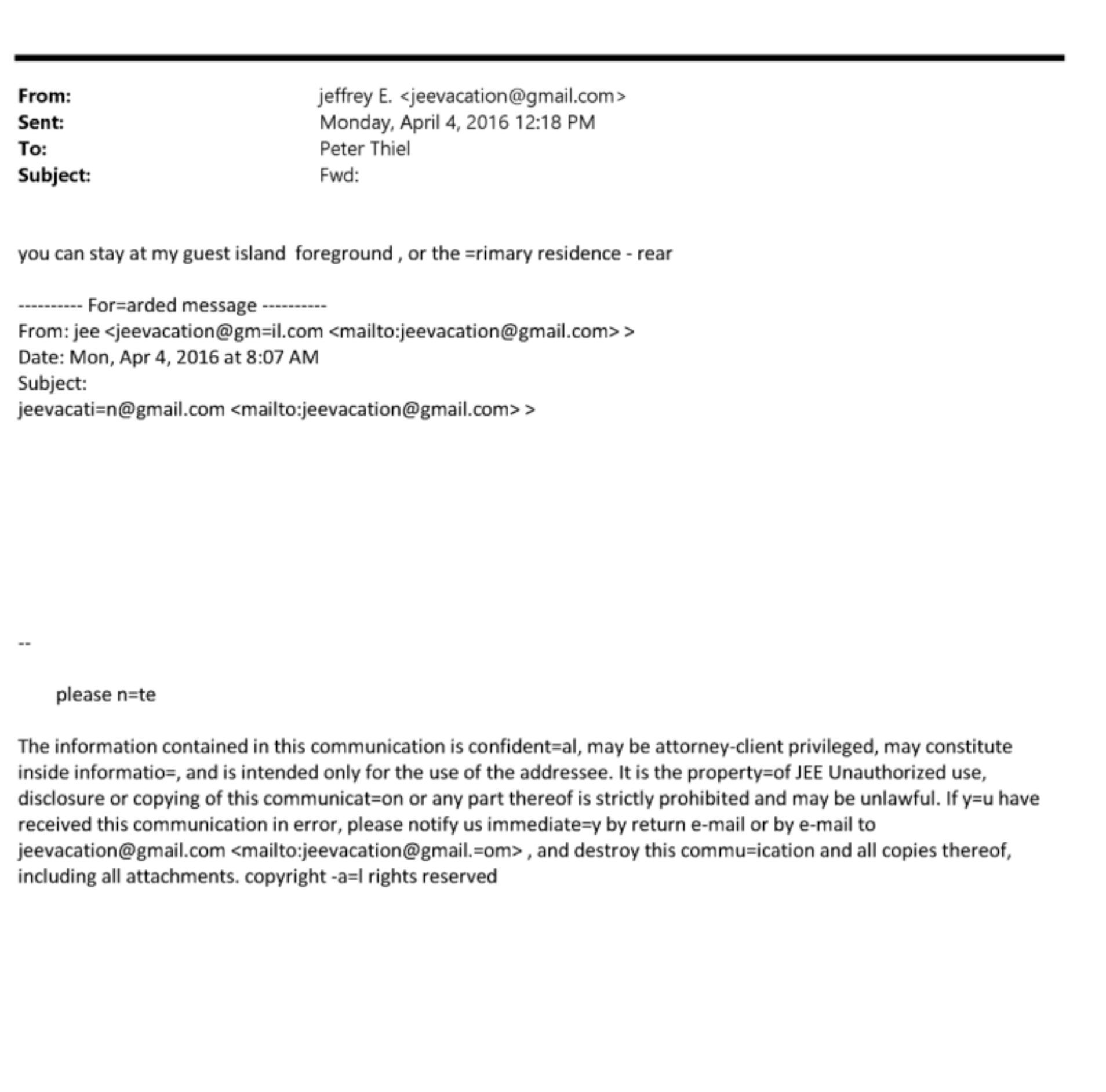
In April 2016, another email offered:
“you can stay at my guest island foreground, or the primary residence – rear”
The language is casual. Logistical. Familiar. There is no confirmation in the documents provided that Thiel accepted or visited Little St. James. The emails show invitations, not proof of travel. But the invitations existed. And they were extended years after Epstein’s conviction.
The $40 Million Advisory Agreement
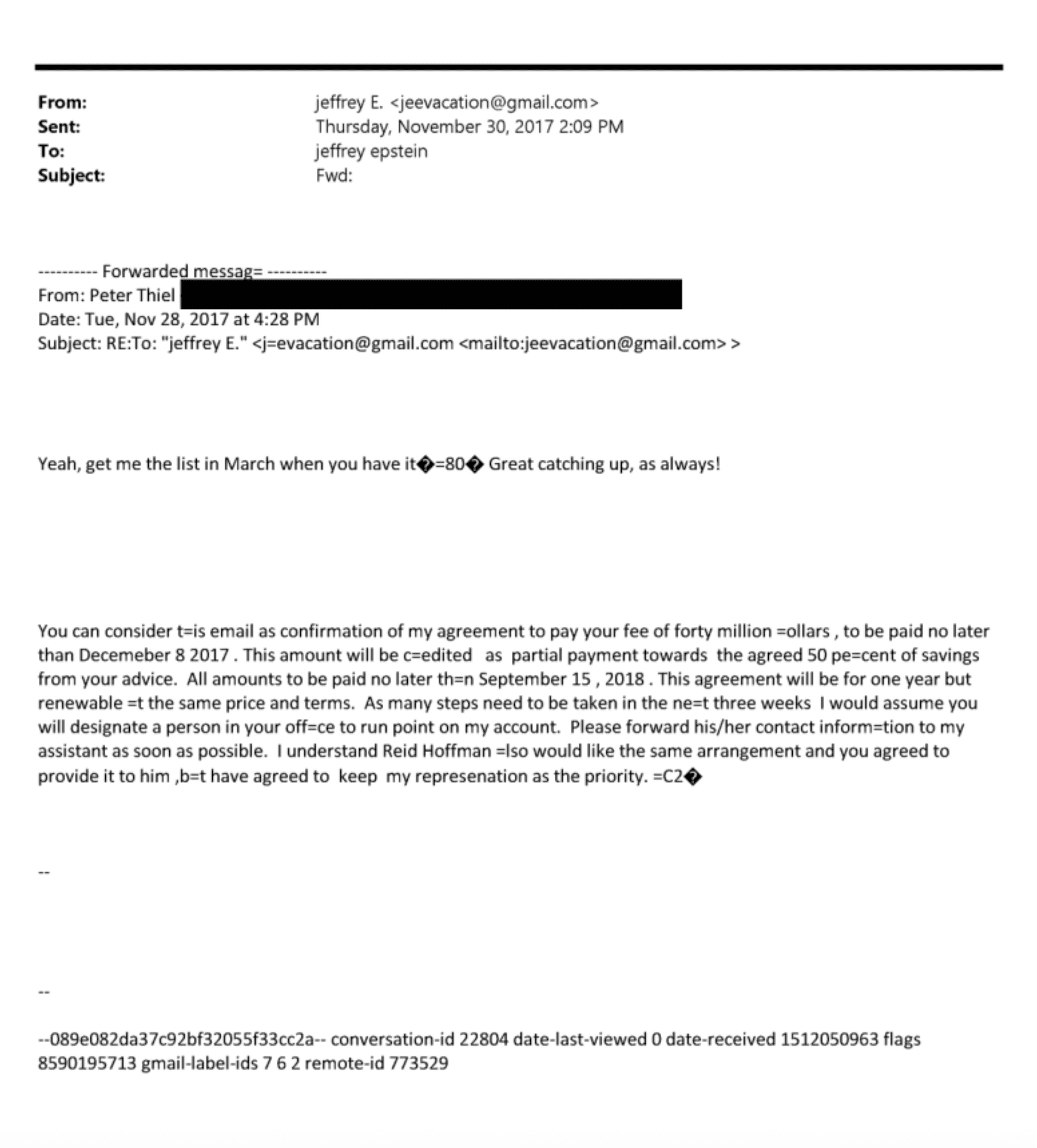
Perhaps the most significant document appears in November 2017.
In that email, Peter Thiel writes:
“You can consider this email as confirmation of my agreement to pay your fee of forty million dollars…”
The email describes payment terms, timelines, and references to advisory savings arrangements. It outlines a one-year agreement, renewable, and confirms that a portion of payment would be made by December 8, 2017. This was not a casual dinner acquaintance. It was a formal financial relationship. There is no indication in the documents that this agreement was illegal. Wealthy individuals frequently enter advisory arrangements. However, the scale, $40 million, underscores the level of engagement. Epstein, despite his conviction, was still operating as a financial intermediary within elite circles.
Political and Diplomatic Crossroads
The emails also reveal introductions and scheduling around high-profile political figures.
One message from August 2014 describes William Burns as:
“best and most respected diplomat in the admin… conducted the secret iran negotiations… involved in the most sensitive of missions for years.”
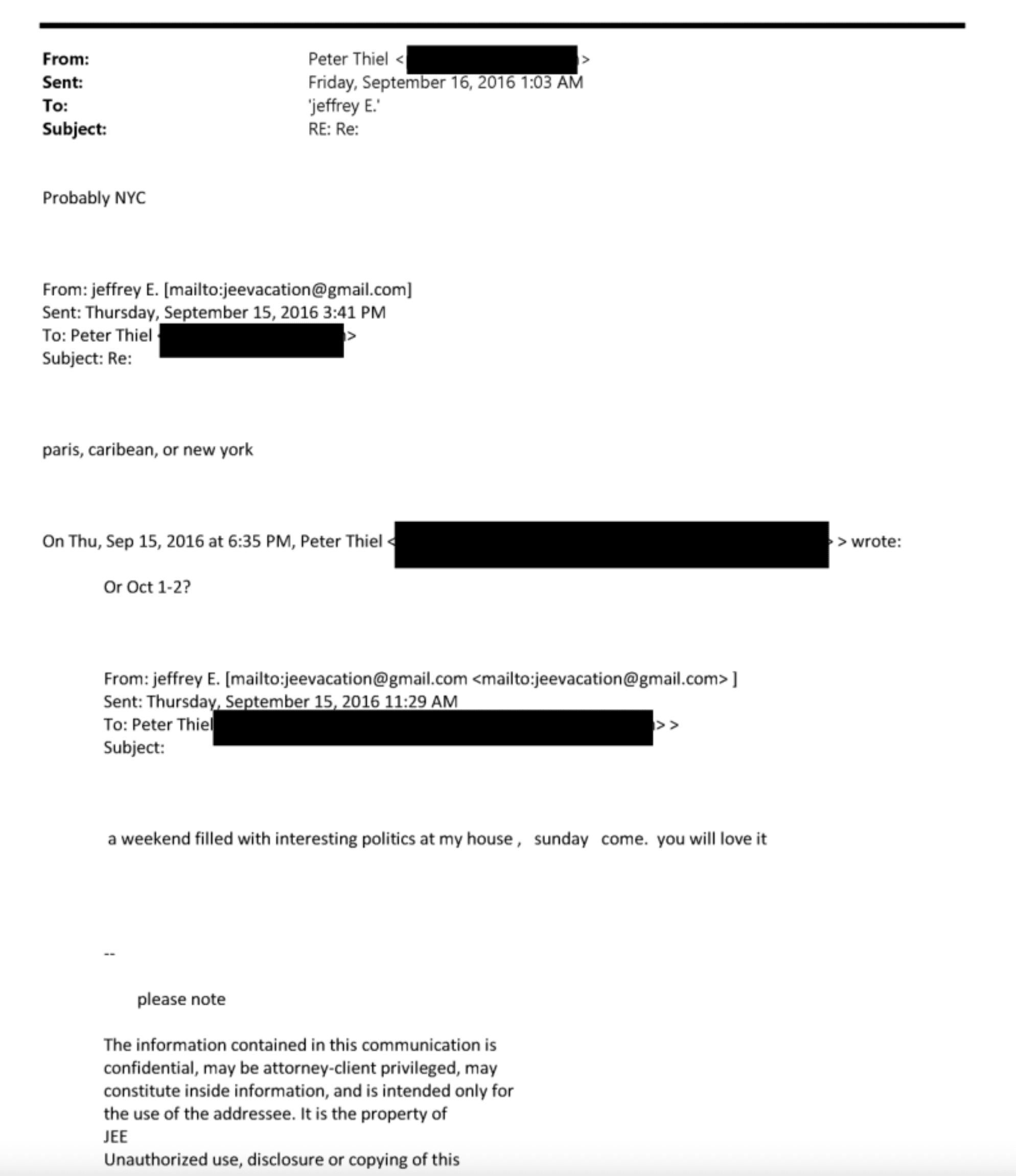
Epstein suggests arranging meetings. In another exchange, he references a “weekend filled with interesting politics at my house.” The implication is not criminal wrongdoing. The implication is access. Epstein, a registered sex offender, continued to convene high-level intellectuals, diplomats, and billionaires at his Manhattan townhouse.
What the Documents Do Not Show
It is critical to separate documented fact from assumption.
These emails do not prove:
• That Peter Thiel engaged in criminal conduct
• That he visited Little St. James
• That he was aware of sex trafficking activity
• That the advisory agreement involved illegal activity
Association is not guilt. But association, particularly sustained, post-conviction association is relevant. The Epstein story has never been about one man operating in isolation. It has always been about how power insulates itself.
The Bigger Question: Why Was Epstein Still Welcome?
By 2014, Epstein’s reputation was widely known. His Palm Beach case had drawn national scrutiny. He was registered as a sex offender. Yet these emails show he was still hosting dinners. Still arranging introductions. Still brokering meetings between billionaires and diplomats. Still collecting enormous advisory fees.
This is the through-line in the Epstein saga:
He did not lose access. He recalibrated it. And members of the global elite from politics to academia to tech continued to interact with him. Some later said they regretted it. Others distanced themselves publicly after his 2019 arrest. But the documentary record repeatedly shows that between 2010 and 2018, Epstein re-entered elite social and financial networks. The emails reviewed here are part of that larger pattern.
The Tech World and Reputation Risk
For Silicon Valley figures, proximity to Epstein has become reputationally radioactive. After his 2019 arrest, companies and executives scrambled to clarify the extent of their associations. The timeline matters. The communications outlined here predate the 2019 federal charges but postdate the 2008 conviction. That gray zone, after conviction but before renewed criminal charges, is where many of Epstein’s relationships existed. It was the rehabilitation window.
Why This Still Matters
The Epstein case is no longer just about sex trafficking charges. It is about the ecosystem that allowed a convicted offender to maintain legitimacy in elite circles.
These emails add to a documented record that shows:
• Post-conviction normalization
• Financial engagement at extraordinary levels
• Political and diplomatic introductions
• Invitations to properties later tied to federal charges
The legal system may adjudicate crimes. But history adjudicates power. And the historical record shows that Jeffrey Epstein was not socially exiled after 2008. He remained embedded in conversations that spanned tech, diplomacy, finance, and politics. That is not speculation. It is documented correspondence. And that is why the emails matter.


















































Want to join the conversation?
Create an account or sign in to share your thoughts, vote,
and reply to other readers.
Showing 0 of 0 comments
Don't have an account?
Already have an account?