
Trump’s Support Among Younger Voters Plunges as New Polls Signal Growing Democratic Advantage Ahead of 2026 Midterms
WASHINGTON, D.C. — New national polling analyzed by CNN is raising fresh concerns for President Donald Trump and congressional Republicans as Democrats appear to be building a substantial advantage heading into the 2026 midterm elections, particularly among younger voters and highly motivated likely voters.
The survey data points to sharp declines in Trump’s standing with Americans under 50, a widening Democratic lead on the generic congressional ballot, and growing dissatisfaction with the direction of Congress. While Election Day remains months away and political dynamics can change rapidly, analysts say the numbers represent one of the most significant shifts in the electorate since the 2024 presidential election.
Young Voters Shift Sharply Away From Trump
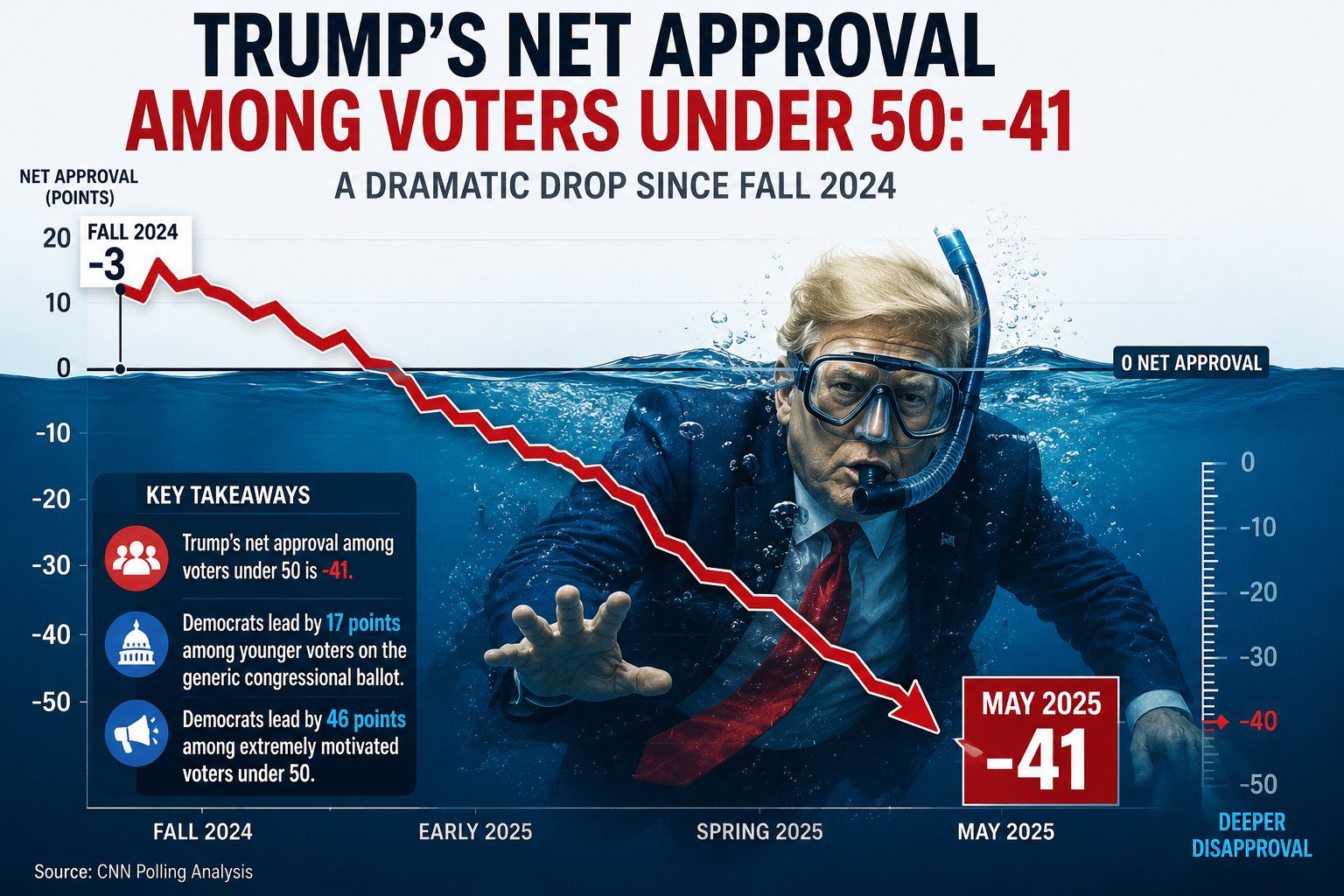
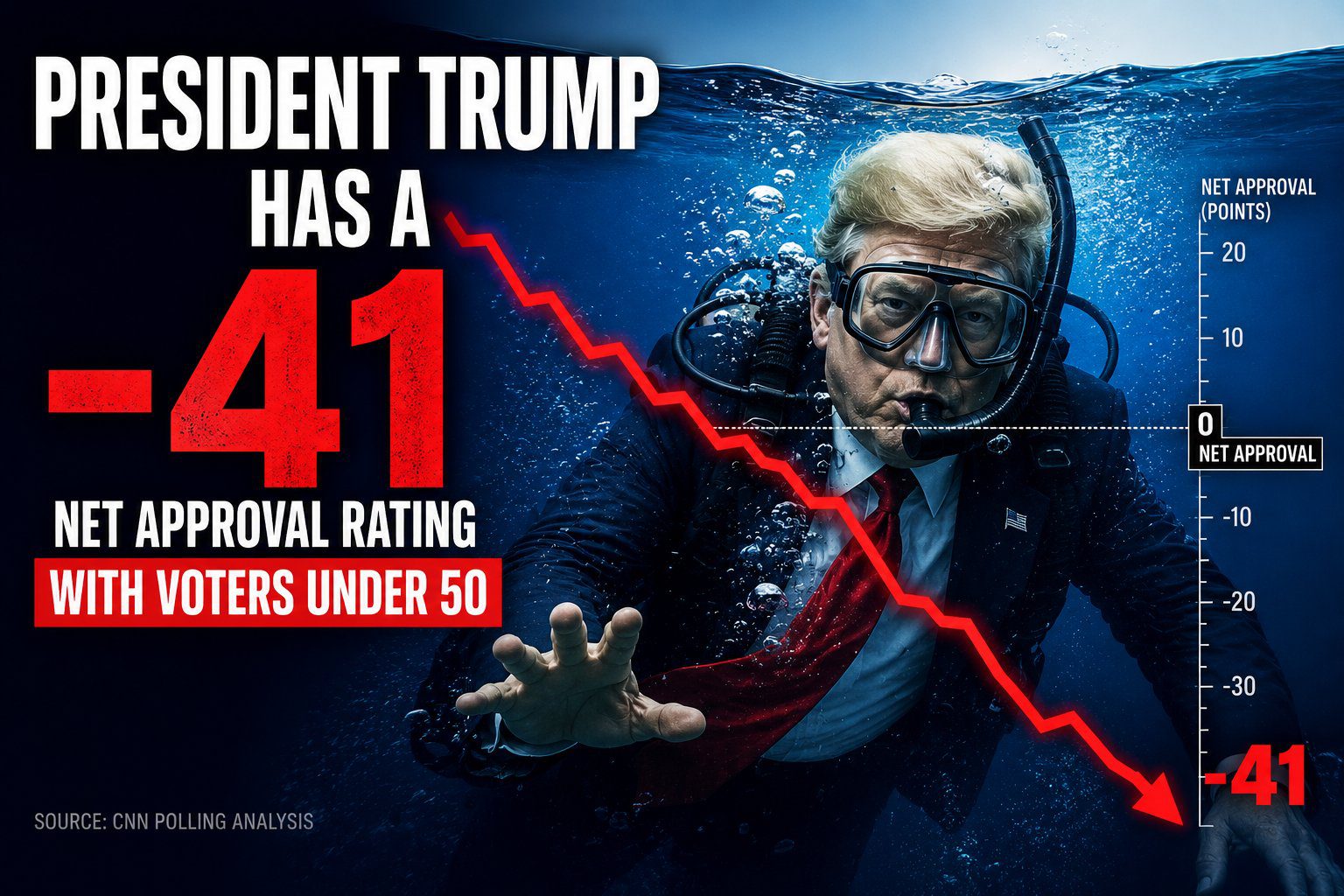
According to the polling discussed by CNN Senior Data Reporter Harry Enten, President Trump’s approval rating among voters younger than 50 has deteriorated dramatically since the 2024 election. Trump’s net approval rating among voters under 50 now stands at -41 points, representing a 38-point swing away from where he stood during the fall of 2024.
By comparison, voters aged 50 and older have shown a considerably smaller shift, with Trump’s standing declining by less than 15 points. Political analysts have long viewed younger voters as one of the Democratic Party’s strongest constituencies, but the latest figures suggest that advantage has expanded considerably since Trump returned to office.
Democrats Build Larger Congressional Lead
The polling also found Democrats increasing their advantage when voters were asked which party they would support in congressional elections.
Among voters under age 50:
- Democrats led Republicans by 4 percentage points during the 2024 election cycle.
- That advantage has now expanded to 17 percentage points, according to the new survey.
Nationally, Democrats hold an 8-point lead on the generic congressional ballot, with 47% of registered voters saying they would support a Democratic candidate for Congress compared with 39% backing a Republican candidate. Generic congressional ballot polling is widely viewed as one of the key indicators of the overall political environment heading into midterm elections, although individual races often produce different outcomes based on local issues and candidate quality.
Enthusiasm Gap Could Shape Midterm Turnout
Perhaps the most significant finding discussed during CNN’s analysis involves voter enthusiasm. Among voters under age 50 who describe themselves as “extremely motivated” to vote in the upcoming midterms, Democrats currently hold a 46 point advantage.
That represents a dramatic increase from the 2024 election cycle, when Democrats held only a narrow 2 point edge among the same highly engaged voting bloc. Across all age groups, Democrats also maintain approximately a 20 point advantage among voters who say they are extremely motivated to cast ballots, suggesting enthusiasm currently favors the party out of power, a common trend during midterm elections.
Independent Voters Continue Moving Away From GOP
The survey also indicates Democrats are performing better among independent voters, a critical bloc that frequently determines competitive House and Senate races.
Among independents:
- 40% support Democratic congressional candidates.
- 29% support Republican candidates.
That 11 point Democratic advantage could prove especially important in suburban districts and battleground states where independent voters often decide elections.
Majority Wants New Faces in Congress
The polling suggests frustration extends well beyond either political party. According to the survey, 51% of Americans say they want to replace most members of Congress, reflecting a growing sense that Washington is failing to address the country’s most pressing concerns. Despite sharp partisan divides, voters across the political spectrum appear united in their dissatisfaction with the political establishment, expressing little confidence that current lawmakers are effectively tackling issues such as inflation, the cost of living, immigration, public safety, and the national debt. The findings underscore a broader anti-incumbent mood that could create significant opportunities for challengers in the 2026 midterm elections, as many Americans signal they are ready for a new generation of leadership rather than another election dominated by familiar faces.
According to the survey:
- 51% of voters believe the country would be better off if most current members of Congress were replaced.
The finding reflects continued public dissatisfaction with Washington despite unified Republican control of the White House and Congress.
Both Parties Continue to Struggle With Favorability
Despite Democrats leading on several key electoral measures, neither major political party enjoys strong public approval. The survey found that the Republican Party holds a 31% favorability rating, while the Democratic Party trails slightly at 30%, highlighting widespread dissatisfaction with the nation’s political institutions as a whole. Rather than signaling broad enthusiasm for either side, the numbers suggest many voters are casting their support based on dissatisfaction with the alternative rather than genuine confidence in party leadership.
This lack of enthusiasm reflects a growing trend of political polarization coupled with voter fatigue. As Americans continue to express frustration over persistent economic pressures, rising national debt, immigration, crime, healthcare costs, and partisan gridlock, both parties face increasing pressure to demonstrate tangible results instead of relying on traditional campaign messaging. Heading into the 2026 midterm elections, the challenge for Democrats will be converting their current polling advantage into lasting voter enthusiasm, while Republicans must work to rebuild support among key demographics—particularly younger and independent voters—without assuming dissatisfaction with Democrats alone will be enough to secure victories.
The survey found:
- Republican Party favorability: 31%
- Democratic Party favorability: 30%
The results suggest many voters remain dissatisfied with both parties even while expressing a preference on congressional races. Political strategists have argued that turnout and candidate quality may ultimately prove more influential than party image alone.
Democratic Coalition Continues Ideological Evolution
CNN’s analysis also highlighted changing ideological trends within the Democratic Party. According to the poll, 34% of Democrats now identify as democratic socialists, while that figure rises to 40% among Democrats under the age of 45. The findings point to a continued shift in the party’s ideological makeup, particularly among younger voters who increasingly embrace a more progressive political identity than previous generations.
The growing influence of the party’s progressive wing could have significant implications for Democratic candidates and policy priorities heading into the 2026 midterm elections and beyond. Issues such as universal healthcare, expanded social programs, climate initiatives, labor protections, affordable housing, and higher taxes on wealthy Americans have gained increasing support among younger Democratic voters. At the same time, the ideological shift presents challenges for party leaders seeking to balance the priorities of progressive activists with those of moderate Democrats and independent voters in competitive swing districts. How successfully Democrats navigate those competing interests may play a key role in determining whether their current polling advantages translate into electoral success.
Among Democratic and Democratic-leaning voters:
- 34% identify themselves as democratic socialists.
The number is even higher among younger Democrats:
- 40% of Democrats under age 45 identify as democratic socialists.
- 28% of Democrats over age 45 do so.
The figures illustrate the ongoing generational differences within the Democratic coalition, although the term “democratic socialist” encompasses a broad range of political beliefs and policy preferences.
Cost of Living Emerges as Top Political Issue
One of the strongest findings centered on voter priorities. According to the polling, 73% of Americans believe President Trump and the Republican Party are not focusing enough on the issues that matter most to them, particularly everyday economic concerns such as:
- Inflation
- Housing affordability
- Cost of living
- Healthcare expenses
During CNN’s panel discussion, analysts from both parties largely agreed that economic issues are likely to dominate the 2026 campaign. Democratic strategists argued their party should continue emphasizing wages, healthcare, and affordability, while Republican strategists said the GOP should contrast economic conditions in Republican led and Democratic-led states and continue framing Democratic candidates through ideological messaging.
Midterm Landscape Still Has Time to Change
While the polling presents encouraging signs for Democrats, political analysts caution that national surveys offer only a snapshot of voter sentiment at a particular moment. Congressional control will ultimately be decided by hundreds of individual races across the country, where local issues, fundraising, candidate recruitment, and turnout operations often prove decisive.
Historically, the president’s party has frequently lost House seats during midterm elections, though exceptions have occurred under unique political circumstances. With months remaining before the 2026 midterms, both parties are expected to intensify their focus on the economy, public safety, immigration, healthcare, and the cost of living as they compete for control of Congress.


















































Want to join the conversation?
Create an account or sign in to share your thoughts, vote,
and reply to other readers.
Showing 0 of 0 comments
Don't have an account?
Already have an account?