
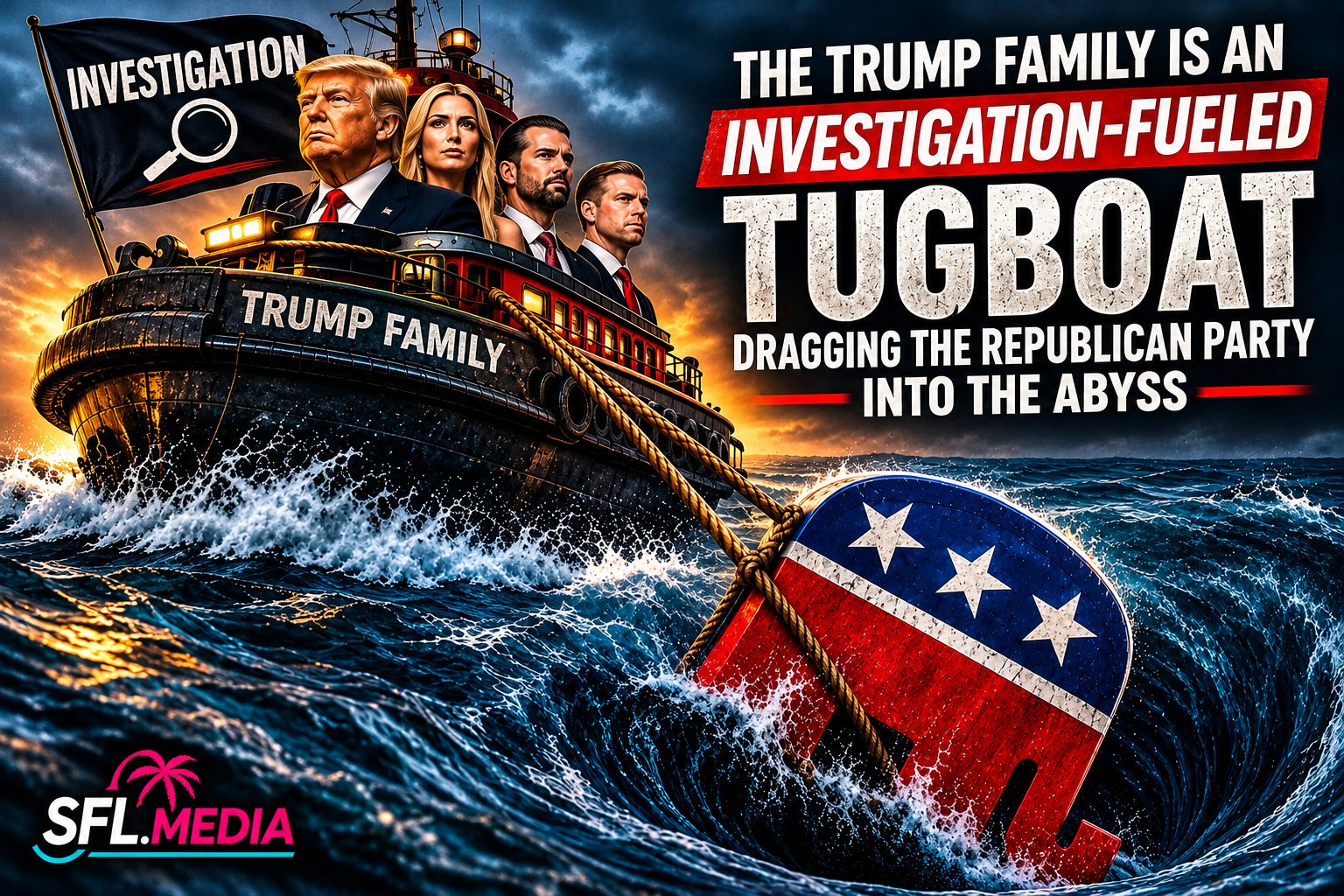
The Republican Party’s Trump Trap: How Loyalty to Donald Trump Is Threatening the GOP’s Political Future
The Republican Party has spent nearly a decade building its political identity around Donald Trump. Now, following a devastating 2026 midterm election in which Democrats captured both chambers of Congress, Republicans face an increasingly uncomfortable question: Has the man who transformed their party become the biggest obstacle to its political survival?
The Republican Party is confronting a crisis that extends far beyond one disastrous election cycle. At the center of that crisis is President Donald Trump, whose extraordinary ability to command loyalty, dominate conservative media, and mobilize Republican voters has become both the party’s greatest organizational strength and one of its most consequential electoral liabilities. For years, Republican politicians have operated under a relatively simple calculation: stay close to Trump, defend his controversies, embrace his political agenda, and avoid becoming the next target of his movement. That strategy has helped numerous candidates survive Republican primaries, where Trump’s endorsement and the enthusiasm of his supporters can determine whether an incumbent keeps a job. But the 2026 midterms exposed a fundamental weakness in that approach: winning a Republican primary and winning a national election are two very different political exercises.
The voters who reward uncompromising loyalty to Trump are not necessarily the suburban moderates, independents, college educated professionals, and politically exhausted Americans who decide competitive congressional races. In many battleground districts, the qualities that make a candidate attractive to the Republican base can become serious liabilities when the electorate expands. The result is a party trapped between individual political survival and collective electoral success, with lawmakers incentivized to protect their own careers even when their decisions may damage the Republican brand nationally. The 2026 election demonstrated just how expensive that contradiction can become.
The 2026 Midterms Exposed a Republican Party in Serious Trouble
The November 3, 2026, midterm elections delivered a sweeping rejection of Republican control of Washington, with Democrats winning both the House of Representatives and the Senate. The Associated Press called Democratic control of the Senate late Tuesday evening and the House early Wednesday morning, ending unified Republican control of Congress and fundamentally changing the political landscape for the final two years of Trump’s presidency. Democratic victories reached deep into traditionally Republican territory, including Senate flips in Texas, Kansas, South Carolina, Iowa, Ohio, North Carolina, and Maine, while the party also made significant gains in competitive House districts.
The scale of the Democratic victory was especially damaging because several of the states that rejected Republican Senate candidates had supported Trump in the 2024 presidential election. In Texas, Democrat James Talarico won a Senate seat in a state Republicans had dominated for decades. In Kansas, Democrat Adam Hamilton defeated Republican Sen. Roger Marshall, delivering the party its first Senate victory in the state since the Great Depression. In Ohio, former Democratic Sen. Sherrod Brown returned to the Senate after winning in a state Trump carried in three consecutive presidential elections. These results were not simply the product of Democratic victories in traditionally liberal states; they represented a significant breakdown in Republican electoral strength across parts of the country that had recently supported the president.
Economic frustration played a major role in that reversal. According to election reporting and exit polling cited by Reuters, nearly nine in ten voters identified the cost of living as an important factor in their decision, while nearly two thirds blamed Trump for high prices. Voters also expressed dissatisfaction with the direction of the country, concerns about government corruption, and opposition to the administration’s war with Iran. Those findings complicate any attempt to blame the Republican defeat exclusively on Trump’s personality or political rhetoric. Economic conditions, foreign policy, candidate quality, and voter frustration with the governing party all contributed to the outcome. Nevertheless, Trump’s political identity and governing record were central to the election, making it difficult for Republican candidates to separate themselves from the administration voters were evaluating.
The Republican Primary System Rewards the Very Behavior That Can Cost the Party Elections
The Republican Party’s structural problem begins with the incentives governing its primary elections. In many safely Republican districts, the greatest immediate threat to an incumbent is not a Democratic challenger but another Republican accusing the incumbent of insufficient loyalty to Trump. That threat encourages elected officials to defend the president even when his actions create problems for their own reelection campaigns. Republican politicians may feel compelled to support controversial positions, excuse political misconduct, or avoid criticizing decisions they privately question because challenging Trump can carry a greater immediate political cost than defending him.
For Republicans representing overwhelmingly conservative districts, this strategy can be entirely rational. Their primary electorate is often more ideologically committed than the broader voting population, and winning the Republican nomination can effectively guarantee victory in November. But Republicans representing competitive suburban districts face a different reality. They must appeal to voters who may favor conservative tax policies, stricter immigration enforcement, or reduced government regulation without embracing Trump’s personal controversies, confrontational rhetoric, or approach to governing. Those candidates are effectively being asked to satisfy two electorates with competing expectations, creating a political contradiction that cannot always be resolved through careful messaging.
Research from the Brookings Institution examining the 2022 Republican primaries found that approximately 96.5% of Trump endorsed congressional candidates won their nomination contests. That figure requires an important qualification: Trump frequently endorsed incumbents and other candidates already favored to win, meaning the success rate cannot be attributed entirely to his influence. Nevertheless, the research illustrates how effectively Trump established himself as a central figure in Republican candidate selection. His influence helped create a political environment where maintaining the president’s approval could become as important as legislative accomplishments, ideological consistency, or electability in a competitive general election.
The consequence is a classic collective action problem. What protects an individual Republican politician from a primary challenge may damage the party’s ability to compete nationally. Lawmakers who recognize that Trump’s political behavior is hurting Republicans may still conclude that publicly opposing him would end their careers. Because those incentives operate at the individual level, the party can continue making strategically damaging decisions even when many of its members understand the broader consequences.
Suburban America Is Becoming the Republican Party’s Political Warning Sign
American elections are rarely decided exclusively by the most enthusiastic supporters of either political party. Competitive races frequently turn on relatively small movements among independents, moderate partisans, and voters whose political preferences change from election to election. These voters are particularly important in suburban congressional districts surrounding major metropolitan areas, where changes in educational attainment, demographics, and political attitudes have reshaped the electoral landscape. For Republicans, the challenge is not simply persuading Americans that conservative policies are preferable to Democratic alternatives. It is convincing voters that supporting a Republican candidate does not necessarily require endorsing every controversy associated with Trump.
The problem is especially significant among voters who prioritize stability, predictability, economic security, and competent government. A suburban voter may agree with Republicans on taxation, business regulation, immigration, or public safety while rejecting the party because of its association with Trump’s political conduct. Conversely, a voter who disagrees with Democrats on important policy questions may nevertheless support Democratic congressional candidates as a check on the White House. This dynamic becomes particularly dangerous during midterm elections, when voters can register dissatisfaction with a sitting president without committing themselves to the opposition party’s entire governing agenda.
The evidence also requires nuance. Pew Research Center’s analysis of the 2024 presidential election found that Kamala Harris won suburban voters by approximately four percentage points, a smaller advantage than Joe Biden enjoyed in 2020. That means Trump’s suburban appeal was not uniformly deteriorating before the 2026 election. His coalition had demonstrated the ability to make gains in some suburban and demographic groups even as he remained intensely polarizing. The larger strategic concern is whether Republican candidates can reproduce those gains without Trump’s personal presence on the ballot while avoiding the opposition turnout his political brand can generate.
Ron DeSantis Calls the Republican Defeat a Political Meteor Strike
Florida Gov. Ron DeSantis delivered one of the most striking assessments of the Republican Party’s national defeat, describing the election as something far more serious than an ordinary midterm setback. Speaking after the election, DeSantis characterized the Democratic wave as a political catastrophe and suggested that Florida’s Republican performance prevented the national results from looking even worse for the GOP.
“It’s the political equivalent of a meteor strike.” — Florida Gov. Ron DeSantis
DeSantis also described the results as a potential political worst case scenario for a midterm election, using the language of an extinction level event to emphasize the magnitude of the Republican losses. His assessment was particularly notable because Florida remained a Republican stronghold while Democrats made extraordinary gains elsewhere. The contrast demonstrated that Republican electoral strength has not disappeared uniformly across the country, but it also exposed the limitations of assuming that a strategy successful in Florida can be reproduced nationally.
Florida’s political environment differs considerably from those of Pennsylvania, Michigan, Wisconsin, and other competitive states where independent voters and suburban electorates can determine statewide outcomes. Republican victories in Florida therefore offer limited reassurance about the party’s ability to rebuild a national majority. DeSantis’s remarks also underscored a broader concern within the GOP: Republicans cannot continue treating political success in their safest states as evidence that their national coalition remains healthy when voters elsewhere are delivering increasingly damaging defeats.
Trump’s Political Coalition Is Powerful, but It May Not Be Transferable
Any serious assessment of the Republican Party’s predicament must acknowledge the scale of Trump’s political accomplishments. He fundamentally reshaped Republican politics, expanded the party’s appeal among noncollege voters, and made measurable gains with demographic groups that historically favored Democrats. His 2024 presidential victory demonstrated that his political coalition could win a national election despite years of controversy, legal battles, and intense opposition. Dismissing those achievements would misunderstand the Republican Party’s dilemma, because the same political movement that now threatens the GOP’s general election prospects also helped return it to power.
Research from the Pew Research Center found that Trump’s 2024 electorate was more racially and ethnically diverse than the coalitions that supported him in 2016 and 2020. The share of Trump voters who were Hispanic, Black, Asian, or another racial or ethnic minority increased from approximately 11% in 2016 to 20% in 2024. About two thirds of his 2024 voters did not have a four year college degree, illustrating the strength of his appeal among working class Americans. These changes represented a meaningful shift in the Republican coalition and challenged assumptions about the party’s long term demographic limitations.
But expanding a political coalition around a particular candidate is not the same as building a durable majority for an entire political party. Some voters support Trump because of his policies, others because of his confrontational personality, and still others because they see him as an outsider willing to challenge political institutions they distrust. Those motivations do not necessarily transfer to another Republican candidate. A voter who enthusiastically supports Trump may have little interest in voting for a conventional Republican senator or congressional candidate, particularly in a midterm election when the president himself is not on the ballot.
That creates a potentially damaging imbalance for Republicans. They may retain the political opposition associated with Trump without consistently benefiting from his unique ability to mobilize supporters. The 2026 results do not prove that every Republican candidate suffers from this problem, but they provide substantial evidence that Trump’s personal electoral success cannot be treated as a guarantee of broader Republican victories. The party must now determine whether it has built a sustainable political movement or an electoral coalition that depends disproportionately on one individual.
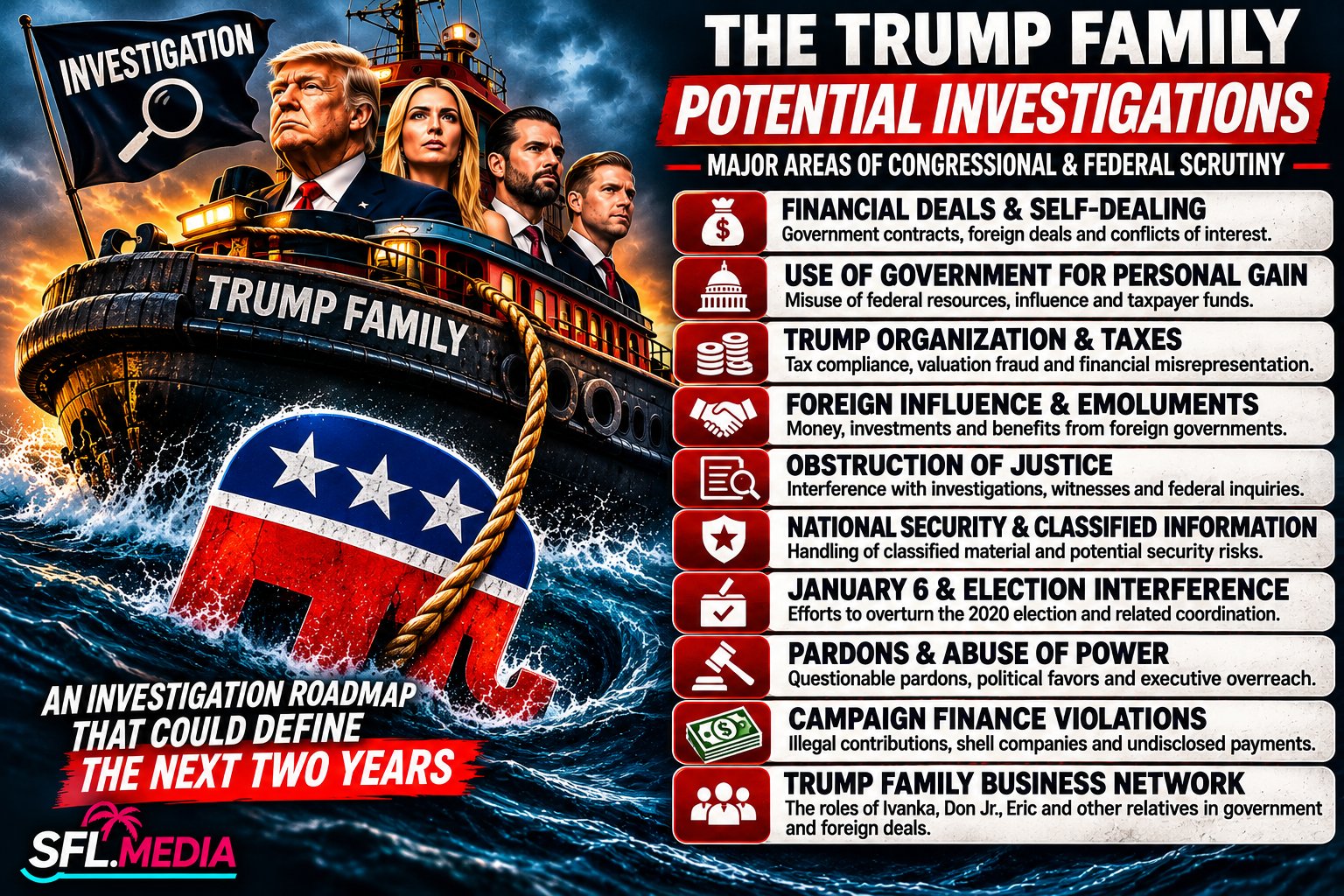
Democrats Now Have the Power to Investigate Trump, and Republicans Will Have to Defend Him
The Democratic takeover of Congress introduces another major complication for Republican candidates preparing for the 2028 election. When the new Congress convenes in January 2027, Democrats will control congressional committees, investigative agendas, and oversight priorities in both chambers. That will give them substantially greater authority to scrutinize the Trump administration, investigate federal spending, examine potential conflicts of interest, and seek records concerning decisions made throughout the president’s second term. Democratic leaders will also be positioned to block much of Trump’s legislative agenda, although the president will retain significant executive authority and the power to veto legislation.
For Republicans, the political danger is straightforward. Every major congressional investigation could force vulnerable lawmakers to answer questions about Trump’s conduct rather than their own legislative priorities. Hearings involving administration officials, government contracts, ethics concerns, or potential misconduct could dominate the national political conversation, leaving Republican candidates repeatedly defending controversies they did not create and may have little ability to control. Investigations do not establish wrongdoing, and any allegations arising from congressional oversight must be evaluated on their evidence. Nevertheless, the political burden of defending an administration under sustained scrutiny can become significant regardless of the ultimate legal findings.
Republicans also face the possibility of legislative paralysis. With Democrats controlling Congress and Trump retaining the presidency, major policy achievements will generally require some degree of bipartisan cooperation. If both sides instead spend the next two years fighting over investigations, spending bills, and executive authority, Republican candidates may enter the 2028 election with few new legislative accomplishments to present to voters. That would be particularly problematic if economic dissatisfaction continues to shape public opinion.
There is an important counterargument. Aggressive congressional investigations could energize Trump’s supporters, particularly if voters perceive Democratic oversight as excessive, partisan, or disconnected from the economic problems facing ordinary Americans. Democrats will therefore face their own political test: whether they can conduct meaningful oversight while demonstrating that their congressional majorities are capable of addressing public concerns. But even if some investigations strengthen Trump’s standing with his base, they could simultaneously deepen the broader political polarization that makes Republican candidates vulnerable in competitive elections.
The JD Vance Problem: Republicans Need a Successor, but Trump Controls the Political Brand
The Republican Party’s predicament extends beyond the remainder of Trump’s presidency. It also threatens to complicate the emergence of a viable presidential nominee in 2028. Vice President JD Vance is among the most prominent potential successors to Trump’s political movement, with a national profile, strong connections to the party’s populist wing, and an established relationship with the president. Those advantages could make him a formidable contender in a Republican primary, but they also expose him to many of the same general-election challenges confronting the party today.
A candidate closely identified with Trump may inherit access to the president’s political network, donors, activists, and loyal supporters. That candidate may also inherit the controversies, policy liabilities, and negative perceptions associated with the administration. The dilemma is especially significant for someone attempting to present himself as a new generation of Republican leadership while defending the record of the previous one. If Vance or another Republican contender attempts to distance himself from Trump, he risks alienating voters who view loyalty to the president as a defining political virtue. If he embraces Trump without qualification, he risks entering the general election carrying much of the political baggage that contributed to the party’s midterm difficulties.
This is one of the fundamental weaknesses of personality driven political movements. Transferring loyalty from a dominant political figure to a successor is not automatic, particularly when the movement’s identity has become inseparable from the personality of its founder. Republicans must determine whether Trumpism represents a durable set of political ideas that can survive without Trump or a movement whose electoral success depends heavily on his individual appeal. Those are two very different political propositions, and the answer could determine the party’s ability to compete nationally for years.
The Republican Party Cannot Afford to Confuse Trump’s Voters With a Permanent Republican Majority
One of the clearest lessons of the 2026 election is that political coalitions are not permanent possessions. Americans who supported Trump in 2024 did so for a variety of reasons, including inflation, immigration, economic dissatisfaction, cultural concerns, foreign policy, and frustration with Democratic leadership. Treating those voters as a single ideologically uniform bloc misunderstands the coalition’s complexity and risks encouraging Republicans to mistake temporary political support for lasting party loyalty.
A voter who supported Trump because of grocery prices may abandon Republicans if those prices remain high. A voter attracted to his promises of economic stability may reconsider that support during a prolonged international conflict or period of economic uncertainty. Younger voters who embraced Trump’s anti-establishment message may eventually view the Republican Party itself as the establishment, particularly after years of Republican control of the White House. The 2026 election suggests that at least some of these political relationships have weakened, although more detailed voter-level research will be necessary to establish precisely how much of the Democratic victory resulted from persuasion, turnout differences, or changes in the composition of the electorate.
Rebuilding a durable Republican coalition will require more than finding another politician capable of delivering Trump’s speeches. It will require a governing agenda that can survive beyond the political career of a single individual, with recognizable positions on wages, housing affordability, health care, education, immigration, government spending, and economic opportunity. Republicans will also need to demonstrate that their candidates can exercise independent judgment rather than simply defend the president’s decisions. Without that independence, the party risks remaining trapped in a cycle where every election becomes a referendum on Trump, even when he is no longer eligible to seek another presidential term.
The Republican Party’s Co-Dependency Trap Could Define Its Future
The relationship between Trump and the Republican Party increasingly resembles a political co-dependency trap. Trump depends on Republican lawmakers to defend his administration, support his agenda, and preserve his influence within the party. Republican lawmakers, in turn, depend on Trump’s supporters, political network, and influence over primary elections to protect their own careers. Both sides receive immediate benefits from the arrangement, but the broader party may pay a substantial long-term price.
Republican politicians who challenge Trump risk losing their primaries, while Republicans who refuse to challenge him may struggle to win competitive general elections. Party leaders who recognize this contradiction face an institutional structure that often rewards maintaining the status quo. The 2026 election demonstrated the potential consequences of that arrangement on a national scale, with Democrats capturing Congress, Republicans suffering defeats in traditionally conservative states, and the GOP entering the final two years of Trump’s presidency under substantially weakened political circumstances.
None of this guarantees that Republicans will remain politically disadvantaged. The party retains substantial financial resources, powerful state level organizations, a committed voter base, and a demonstrated ability to recover from major electoral defeats. Democrats will also face significant challenges in translating congressional control into meaningful improvements in voters’ lives, particularly with a Republican president retaining veto authority. Political conditions can change rapidly, and a Democratic congressional majority today does not guarantee a Democratic presidential victory in 2028.
But the Republican Party can no longer assume that Trump’s ability to win elections personally will translate into victories for the party as a whole. That assumption has become increasingly difficult to defend after an election in which Democrats made historic gains across states that had recently supported him. The GOP must now confront the possibility that its greatest source of internal political unity has become a major obstacle to expanding its national coalition.
The Republican Party Must Decide Whether It Exists to Win Elections or Protect Donald Trump
The central question facing Republican leaders is no longer whether Trump transformed the party. He unquestionably did. The question is whether the Republican Party can remain nationally competitive while continuing to organize so much of its political identity around defending him. For years, Republicans have treated loyalty to Trump as an essential condition of political survival, building a system in which candidates are rewarded for allegiance to the president and punished for challenging his authority. The 2026 midterms exposed the potential cost of that arrangement, revealing a party capable of commanding extraordinary enthusiasm within its base while suffering devastating losses across the broader electorate.
A successful political party must be capable of recruiting new leaders, adapting to changing public opinion, acknowledging policy failures, and competing for voters who do not already support it. A party organized primarily around protecting one politician struggles to perform those functions, particularly when its elected officials fear that independent judgment could cost them their careers. Republicans now face a choice between preserving the political structure that has protected individual officeholders and rebuilding the broader coalition necessary to win national elections.
The two objectives are not necessarily incompatible, but the 2026 results suggest that the tension between them has become impossible to ignore. Trump’s supporters remain an essential part of the Republican electorate, and abandoning them would create its own political risks. Yet continuing to demand unconditional loyalty to the president could make it increasingly difficult for Republican candidates to win over the voters who decide competitive elections.
The Republican Party spent years teaching its politicians that their careers depended on Donald Trump. The 2026 midterms have raised a far more consequential possibility: that the party’s political future may depend on learning how to win without him.

Sources & Further Reading
Election Results and National Reporting
Republican Strategy, DeSantis and Electoral Research
SFL Media — Related Political Coverage
















































Want to join the conversation?
Create an account or sign in to share your thoughts, vote,
and reply to other readers.
Showing 0 of 0 comments
Don't have an account?
Already have an account?