
Pete Hegseth Faces Impeachment as Republicans Turn on Pentagon Chief After Midterm Election Disaster
Defense Secretary Pete Hegseth is facing a renewed impeachment effort led by a Republican congressman as the political fallout from the war in Iran intensifies following the GOP’s devastating 2026 midterm election losses. Rep. Thomas Massie of Kentucky is preparing to force a House vote on eight articles of impeachment accusing Hegseth of violating congressional war powers, overseeing unlawful military operations and abusing his authority. With Democrats preparing to take control of Congress in January, the Pentagon chief faces growing pressure over his military leadership, controversial decisions and increasingly combative relationship with lawmakers responsible for overseeing the nation’s armed forces.
A Republican Congressman Moves to Impeach Trump’s Defense Secretary
Defense Secretary Pete Hegseth is confronting one of the most serious political challenges of his tenure after Republican Rep. Thomas Massie of Kentucky announced plans to force a House vote on eight articles of impeachment when lawmakers return to Washington the week of November 9. The extraordinary move places a Republican congressman at the forefront of an effort to remove a Cabinet official appointed by a president of his own party, just days after voters delivered sweeping midterm election defeats to Republicans nationwide.
Massie’s resolution accuses Hegseth of exceeding his constitutional authority, disregarding congressional restrictions on military operations and participating in military campaigns that the Kentucky lawmaker contends violated federal law and international humanitarian obligations. The allegations extend beyond the ongoing conflict involving Iran to military operations in Venezuela, Yemen, the Caribbean Sea and the eastern Pacific Ocean, along with accusations involving the Pentagon’s treatment of political critics and civilian casualties.
The impeachment effort began well before the election. On September 15, Massie introduced a resolution containing eight articles of impeachment and read its contents on the House floor. Republican leadership subsequently ended the House session early, preventing an immediate vote before lawmakers departed for the election recess. Massie, who lost his Republican primary earlier this year to a Trump backed challenger, has since promised to renew the effort during the lame duck session, arguing that members of Congress should be required to take a public position on Hegseth’s conduct.
Speaking to Roll Call in late October, Massie said he believed the resolution had a better than even chance of passing, particularly if Democrats supported it and a small number of Republicans broke with the administration. Following the midterm elections, he issued a more direct ultimatum, indicating that he would abandon the renewed impeachment effort only if Hegseth resigned. His assessment remains a political prediction rather than a confirmed vote count, but the Republican Party’s election losses have intensified questions about whether Hegseth can retain sufficient congressional support to survive the challenge.
Eight Articles of Impeachment Target Iran and Other Military Operations
Massie’s impeachment resolution is substantially broader than a disagreement over the Pentagon’s handling of a single conflict. The first three articles accuse Hegseth of violating separate provisions of the War Powers Resolution of 1973, the federal law intended to limit a president’s ability to conduct prolonged military operations without congressional authorization. The remaining articles address military campaigns outside Iran, the protection of civilians, alleged extrajudicial killings and accusations that Hegseth abused his authority to retaliate against a sitting United States senator.
According to Massie’s official congressional announcement, the first article argues that Hegseth participated in launching and conducting hostilities against Iran without a declaration of war, statutory authorization or another lawful justification under the War Powers Resolution. The second accuses him of continuing the conflict despite congressional efforts to direct the removal of American forces, while the third alleges that military operations continued beyond the statutory time limits governing unauthorized hostilities.
The remaining five articles accuse Hegseth of disregarding legal requirements intended to minimize civilian casualties, overseeing unlawful lethal strikes against suspected drug-trafficking vessels, retaliating against Democratic Sen. Mark Kelly of Arizona for protected speech, participating in the operation that captured Venezuelan leader Nicolás Maduro and his wife, Cilia Flores, and conducting unauthorized military operations in Yemen. Massie argues that these actions collectively demonstrate a pattern of disregarding constitutional limits on military authority and the legal protections governing armed conflict.
The allegations are serious, but they remain allegations advanced by the congressman rather than findings established through an impeachment trial or criminal proceeding. Whether any particular military operation violated federal law, international law or the Constitution depends on the applicable legal authority, the circumstances surrounding the operation and the evidence supporting the charges. The Trump administration disputes the characterization of its military actions as unlawful and maintains that its operations have served legitimate national security objectives.
The Iran War Becomes a Political Disaster for Republicans
The impeachment effort comes amid growing Republican frustration over the political and economic consequences of the war in Iran, which began in February 2026 and has continued to dominate American foreign policy. The conflict has contributed to disruptions in global energy markets, concerns about shipping through the Strait of Hormuz and questions about whether the administration underestimated the difficulty of achieving its military objectives.
Following the November 3 midterm elections, Vice President JD Vance publicly linked the war to Republican losses, reflecting growing concern among party officials that the conflict had undermined the GOP’s standing with voters already frustrated by economic conditions and the administration’s broader performance. The election results intensified an internal debate over whether the administration had pursued military objectives without adequately preparing for the political, economic and strategic consequences of a prolonged conflict.
CNN reported that some Republican lawmakers and political allies privately blamed Hegseth for encouraging Trump to pursue military action without a sufficiently clear strategy for ending the conflict. Those criticisms, however, do not remove responsibility from the president, who serves as commander in chief and ultimately authorizes major American military operations. Hegseth’s role as defense secretary makes his advice, planning and execution legitimate subjects of scrutiny, but the decision to wage war cannot be attributed to the Pentagon chief alone.
For Republicans, the political calculation has become increasingly difficult. Defending Hegseth may require lawmakers to defend a war that has become a significant political liability, while supporting impeachment would mean publicly repudiating one of Trump’s most prominent Cabinet appointments. The election results have made that choice more urgent, particularly for Republicans who believe the party must change direction before the 2028 presidential election.
Hegseth’s Congressional Confrontations Become a Political Liability
Hegseth’s difficulties extend beyond the war itself. His appearances before congressional committees have repeatedly produced heated exchanges with lawmakers demanding answers about military strategy, American casualties, defense spending and the Pentagon’s treatment of senior military officers. Critics argue that his confrontational style reflects an unwillingness to accept oversight, while supporters contend that he is forcefully defending military personnel and the administration’s national security policies.
One widely circulated confrontation involved Democratic Sen. Gary Peters of Michigan, who challenged Hegseth over the administration’s military strategy and the risks faced by American service members. Peters argued that troops were being placed in danger without a credible plan for achieving victory, while Hegseth accused the senator of disparaging the sacrifices of military personnel. Peters rejected that characterization, drawing a distinction between the service members carrying out their assignments and the civilian officials responsible for directing the conflict.
The exchange illustrated a recurring dispute between the defense secretary and congressional critics: whether questioning the administration’s military strategy constitutes criticism of the troops themselves or legitimate scrutiny of the officials who send those troops into combat. Peters maintained that supporting service members requires demanding accountability from their leaders, particularly when military operations lack clearly defined objectives or an achievable conclusion.
The controversy has been amplified by viral videos portraying Hegseth as losing his temper during congressional hearings and press appearances. Although some clips document genuinely heated confrontations, descriptions circulating on social media do not always accurately represent the full exchange. The more consequential issue is whether the defense secretary can provide clear, substantive answers about military objectives, troop protection, civilian casualties, legal authority and the financial costs of ongoing operations.
Military Veterans in Congress Challenge Hegseth’s Leadership
Democratic Rep. Pat Ryan of New York, an Army veteran who served in Iraq, has been among Hegseth’s most outspoken congressional critics. During congressional questioning, Ryan challenged the defense secretary over American military casualties and whether Pentagon leadership had adequately addressed intelligence warnings and vulnerabilities affecting service members deployed in the Middle East.
Ryan’s criticism focused on the responsibilities of senior civilian defense officials to protect American personnel and provide adequate resources, intelligence and defensive capabilities. His questioning challenged Hegseth’s leadership rather than the performance of the service members involved, reinforcing a broader argument that military accountability must extend to the Pentagon’s highest offices.
Rep. Jason Crow of Colorado, another military veteran serving in Congress, has likewise questioned Hegseth’s fitness for the position. Crow has argued that removing the defense secretary should be a priority for Democrats, contending that American service members deserve experienced and competent civilian leadership. His position reflects growing concern among Democratic defense specialists that the Pentagon’s leadership has become increasingly politicized during Hegseth’s tenure.
The criticism from lawmakers with military backgrounds carries particular significance because it challenges one of Hegseth’s central political arguments: that his leadership is restoring military effectiveness and prioritizing combat readiness. His opponents contend that operational competence, accountability and respect for congressional oversight are essential components of military leadership, not obstacles to it.
Civilian Casualties and the Laws of War Become Central to the Impeachment Case
Massie’s impeachment resolution raises questions about the legal standards governing American military operations, particularly strikes involving civilian casualties and attacks on vessels suspected of participating in drug trafficking. International humanitarian law requires parties to armed conflicts to distinguish between military targets and civilians, avoid indiscriminate attacks and take feasible precautions to minimize civilian harm.
One allegation concerns a strike on a girls’ school in Iran during the early stages of the conflict. CBS News reported that a preliminary assessment found the United States was likely responsible for the strike, although the assessment did not conclude that the school had been intentionally targeted. The distinction between responsibility for a strike and deliberate targeting of civilians is legally significant, and investigators would need to examine the intelligence, targeting procedures and operational decisions involved before reaching conclusions about potential violations.
The legal status of military operations against suspected drug-trafficking vessels presents additional complications. A government cannot automatically treat every suspected criminal as a lawful military target merely by describing an operation as part of a broader security campaign. Whether lethal military force is legally justified depends on the circumstances, the applicable domestic and international law and the status of the individuals targeted.
Massie’s resolution alleges that Hegseth oversaw unlawful killings during maritime operations, including strikes involving survivors and failures to provide assistance to people in distress. These accusations would require examination of operational orders, intelligence assessments, rules of engagement, targeting decisions and internal legal reviews. Investigators would also need to determine what information was available to senior Pentagon officials before operations were approved and whether applicable civilian protection requirements were followed.
These questions extend beyond partisan disagreements over military strategy. They concern the legal limits on the use of American military power and the accountability of officials responsible for authorizing or supervising potentially lethal operations. Establishing whether violations occurred requires evidence, not merely political accusations or the existence of civilian casualties.
Trump’s Refusal to Fire Hegseth Complicates Republican Efforts to Move On
Despite mounting pressure, President Trump has publicly defended Hegseth and rejected suggestions that he intends to remove him. Asked about the defense secretary’s future following the election, Trump praised his performance and suggested that opposition to Hegseth was partly driven by his dismissal of senior military officers and efforts to reshape Pentagon leadership.
Hegseth responded to the impeachment threat in a video released November 5, describing the military campaign against Iran as a historic effort to prevent the country from acquiring nuclear weapons. He defended his removal of senior Pentagon leaders, reversal of diversity initiatives and other controversial policy changes as evidence that he was fulfilling the president’s agenda. His message signaled that he intended to remain in office and fight the impeachment effort rather than resign voluntarily.
The Pentagon has also defended Hegseth’s leadership. In response to Massie’s original impeachment resolution, Pentagon press secretary Kingsley Wilson characterized Hegseth as a transformative leader who had reduced bureaucracy and pursued reforms intended to strengthen military effectiveness. The department maintained that its leadership remained united behind the secretary’s agenda.
Nevertheless, reporting indicates that some Trump advisers believe Hegseth could still be replaced as Republicans assess the consequences of the election. Republican Sen. Thom Tillis of North Carolina has also warned that the defense secretary faces a reckoning, citing concerns about his strained relationships with lawmakers and the administration’s effort to secure a $1.5 trillion defense spending package.
The disagreement places Trump in a difficult position. Removing Hegseth could be interpreted as an acknowledgment that the administration mishandled the Iran war, while retaining him risks prolonging a political controversy that some Republicans believe contributed to their election defeat. The president’s public support may provide Hegseth with political protection, but it cannot eliminate Congress’s constitutional authority to investigate or impeach federal officials.
Democrats Are Preparing Broader Pentagon Investigations
Even if Hegseth survives the immediate impeachment vote, the incoming Democratic Congress is preparing a broader examination of his management of the Defense Department. Rep. Adam Smith of Washington, a senior Democrat on the House Armed Services Committee, has emphasized the need for aggressive oversight of the Iran war, Pentagon leadership decisions and what Democrats describe as the erosion of the military’s traditionally nonpartisan institutional structure.
Potential subjects include Hegseth’s dismissal of senior military officers, the administration’s approach to Ukraine, operations against suspected drug-trafficking vessels, the conduct of the Iran war and decisions involving military personnel policies. Democrats may also examine whether Hegseth’s strained relationships with lawmakers have undermined the Pentagon’s ability to obtain congressional approval for major spending priorities.
The investigations could create substantial political and administrative challenges even if they do not produce additional impeachment proceedings. Congressional committees can request documents, summon witnesses and question officials under oath, potentially exposing internal disagreements over military strategy and the decision-making processes behind controversial operations.
The Pentagon’s relationship with Congress is especially important because lawmakers control defense appropriations and exercise oversight of military operations. A defense secretary who loses the confidence of key members of both parties may find it increasingly difficult to secure funding, defend policy decisions and maintain public confidence in the department’s leadership.
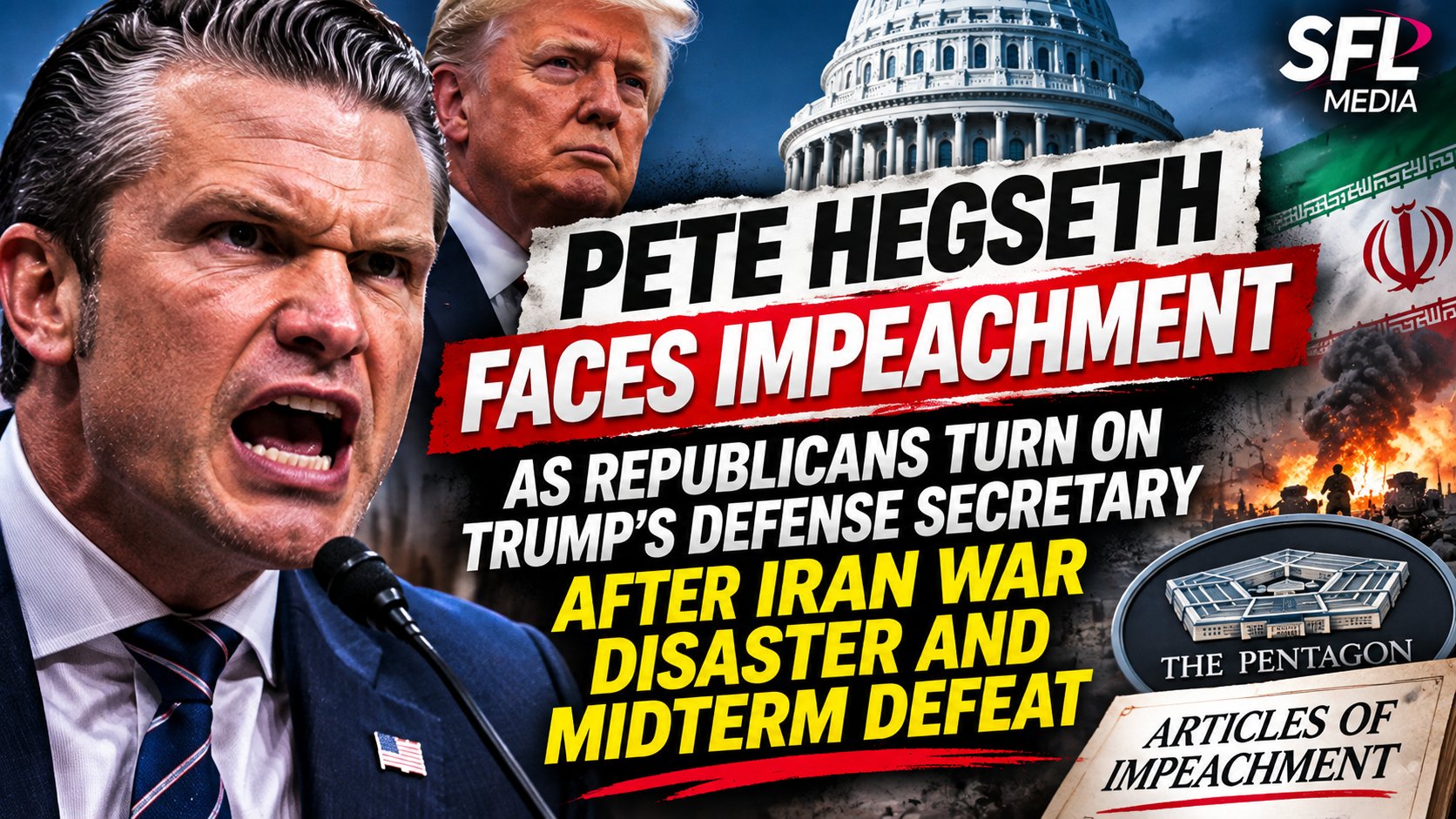
Can Congress Actually Remove Pete Hegseth?
The Constitution gives the House of Representatives the authority to impeach federal civil officers, including Cabinet secretaries, by a simple majority vote. If the House approves articles of impeachment, the matter moves to the Senate, where conviction and removal require a two thirds majority of senators present.
Massie intends to pursue a privileged resolution, a parliamentary mechanism that can require the House to address a qualifying matter within a limited period. However, forcing consideration does not guarantee that lawmakers will vote directly to impeach Hegseth. House leadership may seek to table the resolution or use other procedural measures to prevent its adoption.
Because the new Democratic majority will not take office until January 2027, the immediate November vote would occur in the outgoing Republican controlled House. That makes Republican defections particularly important, although the election results, possible absences and the political calculations of retiring or defeated lawmakers could affect the outcome.
If the House impeaches Hegseth, the Senate would determine whether to convict and remove him. Even a successful House vote would not automatically end his tenure, and the Senate could decline to convict. Historical precedent shows that impeachment of Cabinet officials is exceptionally rare: Secretary of War William Belknap was impeached in 1876, while Homeland Security Secretary Alejandro Mayorkas was impeached in 2024. Neither was removed through a Senate conviction.
Massie’s effort therefore presents a serious political threat without guaranteeing Hegseth’s removal. The immediate question is whether enough Republicans are prepared to break with Trump to allow the impeachment resolution to advance. The larger question is whether the incoming Democratic Congress will pursue its own impeachment proceedings if Hegseth remains in office after January.
The Bigger Question: Who Is Responsible for the War?
The growing movement against Hegseth raises a question that extends beyond the defense secretary’s personal leadership: who should bear responsibility for a military conflict that has become a major political and economic liability for the administration?
Hegseth serves as the president’s principal civilian defense adviser and oversees the Department of Defense, making him directly accountable for military planning, implementation and the advice he provides to the commander in chief. But the Constitution places ultimate command authority over the armed forces in the presidency, and Trump remains responsible for the decision to initiate and continue major military operations.
Some Republicans now appear willing to hold Hegseth accountable for the war’s consequences while continuing to defend Trump. That distinction may be politically convenient, but it does not eliminate the president’s responsibility for the administration’s strategic decisions. Congressional investigators will need to determine not only what Hegseth recommended but also what Trump authorized, what intelligence informed those decisions and whether the administration complied with constitutional and statutory limits.
For Democrats, the impeachment fight offers an opportunity to demand accountability for the war and the Pentagon’s leadership. For Republicans, it presents an uncomfortable choice between loyalty to Trump and responding to an electorate that has delivered a major political setback. For Hegseth, it may determine whether he can remain in one of the most consequential positions in the federal government.
The next major development is expected when the House returns the week of November 9. Massie has promised to renew his impeachment effort, Hegseth has vowed to fight it, and Trump has publicly stood by his defense secretary. Whether the confrontation ends in a House vote, a resignation or a prolonged congressional investigation remains uncertain, but the political pressure surrounding Hegseth is unlikely to disappear simply because the White House continues to defend him.
What is no longer in doubt is that Hegseth’s leadership has become a major point of contention not only between Democrats and Republicans, but increasingly within the Republican Party itself. The coming congressional fight will test whether lawmakers are prepared to enforce constitutional limits on military power, demand accountability for controversial operations and challenge a defense secretary who has become one of the most divisive figures in the Trump administration.
The impeachment effort may begin with Pete Hegseth, but the questions it raises about the Iran war, congressional authority and responsibility for American military decisions reach all the way to the White House.

Sources & Further Reading
- U.S. Rep. Thomas Massie — Official Congressional Statement: Eight Articles of Impeachment Against Defense Secretary Pete Hegseth
- Roll Call — October 26, 2026: Massie Vows Week-One Vote in Lame-Duck Session to Impeach Hegseth
- Reuters — November 5, 2026: Hegseth Vows to Keep Fighting From Pentagon, Defends Iran War
- CNN Newsource — November 5, 2026: House Could Vote Next Week to Impeach Hegseth as GOP Support Wavers
- Associated Press: Speaker Johnson Recesses House Early as Massie Pushes Hegseth Impeachment
- CBS News — September 15, 2026: GOP Rep. Thomas Massie Introduces Impeachment Articles Against Hegseth Over Iran War
- The Washington Post — September 15, 2026: Republican Lawmaker Moves to Force Vote on Impeaching Hegseth
- The Washington Examiner — November 4, 2026: Massie Gives Hegseth Impeachment Ultimatum as GOP Pins Blue Wave on Iran War
SFL Media: U.S. Politics, Military Affairs and Investigative News



















































Want to join the conversation?
Create an account or sign in to share your thoughts, vote,
and reply to other readers.
Showing 0 of 0 comments
Don't have an account?
Already have an account?