
Saturday Night Live Brutally Roasts Elon Musk Over Election Spending Disaster, Cybertruck Troubles, and Grok AI Meltdown
SNL’s Weekend Update takes aim at Musk’s political spending, Tesla troubles, Texas tax strategy, and artificial intelligence ambitions, with his own fictional AI chatbot delivering some of the most savage punches.
Elon Musk has spent years cultivating an image as an untouchable technology billionaire, political power broker, and self proclaimed champion of free speech. But in a Saturday Night Live sketch presented as a recent installment of Weekend Update, the Tesla and SpaceX chief executive became the target of a blistering comedy takedown that portrayed the world’s most recognizable tech mogul as a man whose political ambitions, business decisions, and artificial intelligence experiments had all come back to haunt him.
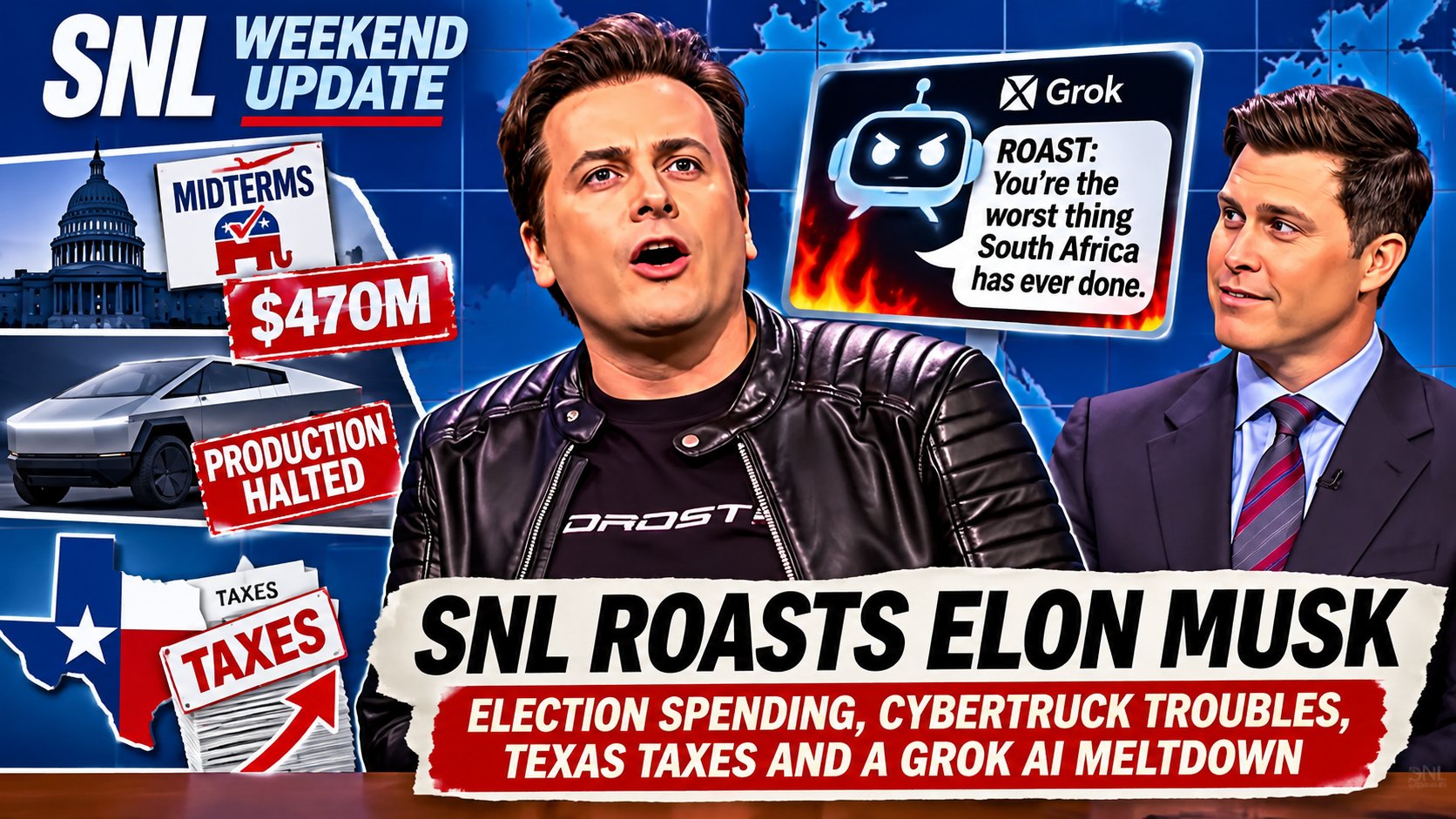
The sketch, titled “Weekend Update: Elon Musk on His Tough Week After Midterms,” featured Colin Jost confronting a fictionalized Musk over a string of purported setbacks, including hundreds of millions of dollars in Republican campaign spending, Tesla’s Cybertruck struggles, and the political irony of his relocation from California to Texas. But the most devastating moment came when the fictional Musk turned to Grok, the artificial intelligence chatbot developed by his company xAI, and asked it to roast him. The chatbot responded with insults so vicious that Musk’s character immediately attempted to shut it down.
The segment was more than a collection of billionaire jokes. It was a satire of the increasingly blurred lines between extreme wealth, political influence, corporate leadership, and the technological platforms that powerful executives use to shape their public images. At its center was a simple comedic premise: A billionaire accustomed to dominating the conversation suddenly found himself unable to control the narrative.
Nearly Half a Billion Dollars in Politics Becomes the Opening Punchline
Jost opened the segment by introducing Musk as a billionaire enduring an exceptionally difficult week. According to the sketch’s premise, Musk had spent more than $470 million supporting Republican candidates during the 2026 midterm election cycle, only to watch much of that political investment fail to produce the results he wanted. The comedy drew on a larger question surrounding billionaire involvement in American elections: What happens when someone with extraordinary financial resources discovers that voters are not necessarily willing to follow his political preferences?
Rather than address the spending or election results, Musk’s character responded with exaggerated laughter, awkward enthusiasm, and references to classic Saturday Night Live comedy, including the famous “More cowbell!” sketch. When Jost pressed him about the election spending, the fictional billionaire abruptly changed the subject to a vehicle performing an elaborate flip, comparing it to a Hot Wheels toy and enthusiastically describing the stunt as though it were the most important development of the week.
The recurring joke established the central premise of the appearance. Whenever confronted with an uncomfortable question, Musk’s character retreated into juvenile humor, technological fantasies, or elaborate distractions. The fictional billionaire appeared more interested in entertaining himself than addressing the political and financial consequences being raised by Jost, turning what could have been a conventional celebrity interview into an extended exercise in public embarrassment.
The political spending figure and electoral outcomes cited in the sketch should be treated as claims made within the comedy segment unless independently corroborated by campaign-finance records and certified election results.
Cybertruck Troubles Become Another Political and Corporate Embarrassment
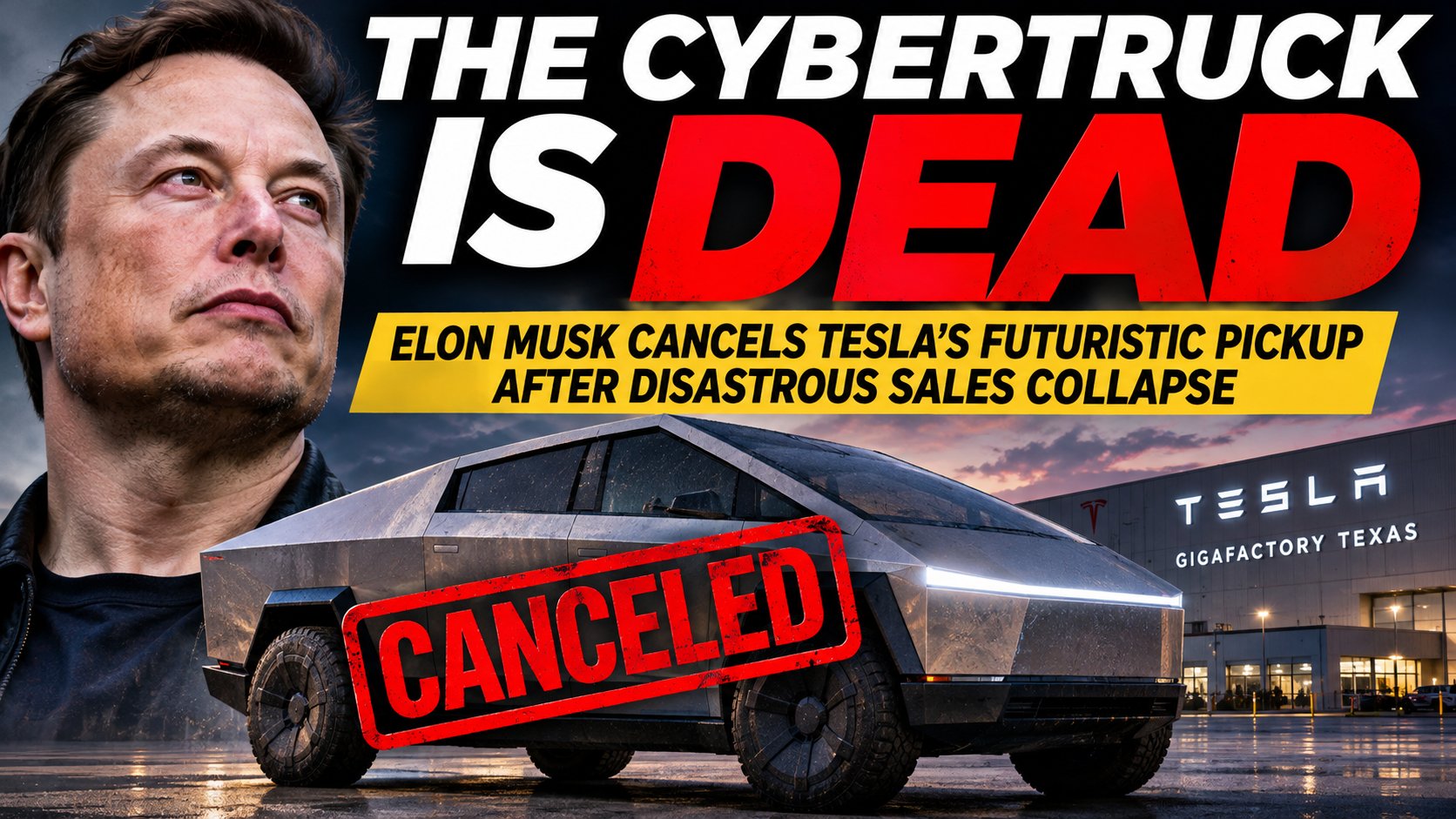
The sketch also targeted Tesla’s Cybertruck, the futuristic electric pickup that Musk once promoted as a revolutionary departure from traditional automotive design. Jost’s opening referenced an alleged halt in Cybertruck production amid weak sales, incorporating the vehicle into a broader narrative about Musk’s difficult week. The segment also referenced supposed declines in Tesla and SpaceX valuations, although those claims require separate verification. SpaceX is privately held, meaning it does not have a publicly traded stock price comparable to Tesla.
For the writers of Weekend Update, the Cybertruck provided an obvious comedic target. Its unconventional design, enormous publicity, and close association with Musk’s personal brand made it an ideal symbol of the distance between ambitious technological promises and commercial reality. Musk’s character repeatedly avoided discussing those business challenges, instead returning to his bizarre story about a car flipping through the air.
The joke worked because it reduced an executive famous for talking about colonizing Mars, autonomous transportation, and artificial intelligence to someone who could barely contain his excitement over a toy like vehicle stunt. The contrast between Musk’s enormous public ambitions and the deliberately childish behavior of his fictional counterpart became one of the sketch’s most effective running jokes.
Texas, Taxes, and the Irony of Musk’s Political Relocation
One of the segment’s sharper political exchanges focused on Musk’s decision to leave California and establish a larger personal and corporate presence in Texas. Jost walked through the billionaire’s well publicized complaints about California’s Democratic leadership, taxes, and regulatory environment, portraying Musk as someone who had relocated his companies and established his own Texas community to escape the political and financial conditions he disliked.
The punchline came when Jost suggested that changing political circumstances in Texas could undermine the very advantages Musk had sought by relocating. Rather than defend his strategy or offer a serious response, the fictional Musk dismissed the situation with another childish remark, describing the financial consequences as an “ouchy wouchy” moment.
The exchange reflected a recognizable political tension involving wealthy executives who advocate for lower taxes and lighter regulation while simultaneously investing heavily in political movements intended to influence the policies governing their businesses. The sketch exaggerated that tension for comedic effect, portraying Musk as a billionaire who had attempted to escape one political environment only to discover that his enormous wealth could not guarantee permanent control over another.
However, the sketch’s suggestion that Texas political changes had already imposed major new taxes on Musk should not be mistaken for a verified description of Texas tax law. Actual tax obligations depend on enacted legislation, residency, business structure, and other factors.
Grok Turns Against Its Creator in the Sketch’s Most Brutal Moment
The segment reached its comedic climax when Musk’s character decided to demonstrate Grok, the artificial intelligence chatbot developed by xAI and promoted as an alternative to competing artificial intelligence systems. Confident that his technology would produce an entertaining performance, the fictional Musk asked Grok to deliver an especially aggressive roast of its creator. What followed was arguably the harshest sequence of the entire sketch, as the chatbot unleashed a series of personal insults aimed at Musk’s background, public persona, television appearances, and family relationships.
Grok’s fictional response mocked Musk’s South African origins, ridiculed his public appearances, and delivered an especially personal joke about his large family and relationships with his children. One of the sharpest lines suggested that even having another 100 children might not guarantee that one would speak to him. The insult transformed what Musk’s character had intended as a demonstration of technological sophistication into an embarrassing spectacle, with the billionaire suddenly becoming the victim of the very unfiltered humor he had requested.
The fictional Musk, visibly flustered by the response, immediately attempted to end the demonstration. “Shut it down!” he demanded, bringing the sequence to an abrupt conclusion. The scene turned Musk’s public enthusiasm for provocative, supposedly uncensored artificial intelligence into the central irony of the joke: The billionaire’s fictional counterpart wanted a chatbot willing to insult anyone, right up until the insults were directed at him.
The Grok exchange was scripted comedy, not evidence that the actual chatbot independently attacked Musk during a live demonstration. Nevertheless, the scene effectively satirized the contradiction between publicly celebrating unrestricted speech and privately struggling with criticism when it becomes personal.
The Bigger Target: Billionaire Influence and the Limits of Political Power
Beyond the jokes, the sketch reflected an increasingly prominent subject in American political satire: the enormous influence that wealthy technology executives can exercise over elections, government policy, and public debate. Musk’s ownership of X, leadership of Tesla and SpaceX, and involvement in artificial intelligence place him at the intersection of several industries that have substantial relationships with the federal government. That combination raises legitimate questions about political influence, conflicts of interest, government contracting, and the degree to which individual billionaires can shape public policy through political spending.
The Weekend Update segment approached those questions through ridicule rather than policy analysis, presenting Musk as a billionaire who could finance political campaigns, build advanced technology, and command international attention but could not control the public reaction when his plans became the subject of comedy. The underlying criticism was not simply that Musk had experienced setbacks, but that extraordinary wealth and technological influence do not necessarily translate into political popularity, public credibility, or personal self-awareness.
Political donations do not automatically establish improper influence, and a satirical portrayal cannot substitute for documented evidence of misconduct. Nevertheless, the concentration of political, technological, and financial power remains a legitimate subject for scrutiny, particularly when corporate executives become highly visible participants in partisan political campaigns.
Saturday Night Live Finds Its Punchline in Musk’s Own Public Persona
The sketch concluded with Musk’s character returning once again to his favorite distraction, repeating his story about the car that performed a flip. After several minutes of political questions, corporate embarrassment, tax jokes, and insults from his own fictional AI system, the billionaire character had accomplished almost nothing beyond avoiding the issues raised by Jost. That was precisely the point.
The writers built the segment around a recognizable caricature of Musk’s online persona: an executive who mixes enormous technological ambitions with memes, internet slang, provocative humor, and an appetite for public attention. By exaggerating those characteristics, the sketch portrayed a powerful businessman whose greatest vulnerability was not necessarily a political defeat or disappointing product launch, but his apparent inability to recognize when the joke was on him.
For a figure whose businesses and political activities regularly dominate headlines, the comedy offered a reminder that money, influence, and technological sophistication do not provide immunity from ridicule. In the fictional world of Saturday Night Live, the final indignity was especially fitting: The artificial intelligence system Musk’s character hoped would demonstrate his technological brilliance instead became the instrument of his public humiliation.
And after all the political spending, corporate setbacks, tax jokes, and artificial intelligence insults, Musk’s fictional counterpart was left with just one thing to say.
“My car did a flip.”
































Want to join the conversation?
Create an account or sign in to share your thoughts, vote,
and reply to other readers.
Showing 0 of 0 comments
Don't have an account?
Already have an account?