
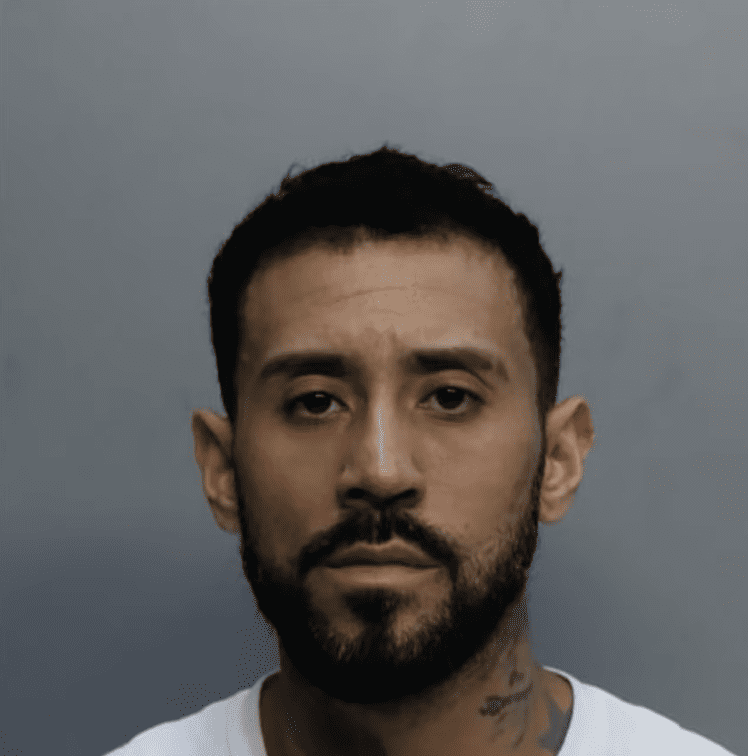
Nick Reiner’s Former Rehab Roommate Reveals Years of Anger Toward Parents Rob and Michele Reiner Before Their Murders
A former teenage roommate of Nick Reiner has come forward with disturbing allegations about his behavior during a stay at a luxury Malibu rehabilitation facility, describing years old expressions of hostility toward his parents, episodes of aggression and a family he says repeatedly tried to help their troubled son.
Former Rehab Roommate Describes Troubling Behavior Years Before the Killings
A former roommate of Nick Reiner is speaking publicly about his experiences with the son of Hollywood filmmaker Rob Reiner and photographer Michele Singer Reiner, offering a firsthand account of what he describes as intense resentment, unpredictable behavior and violent confrontations during their time together at a residential rehabilitation facility.
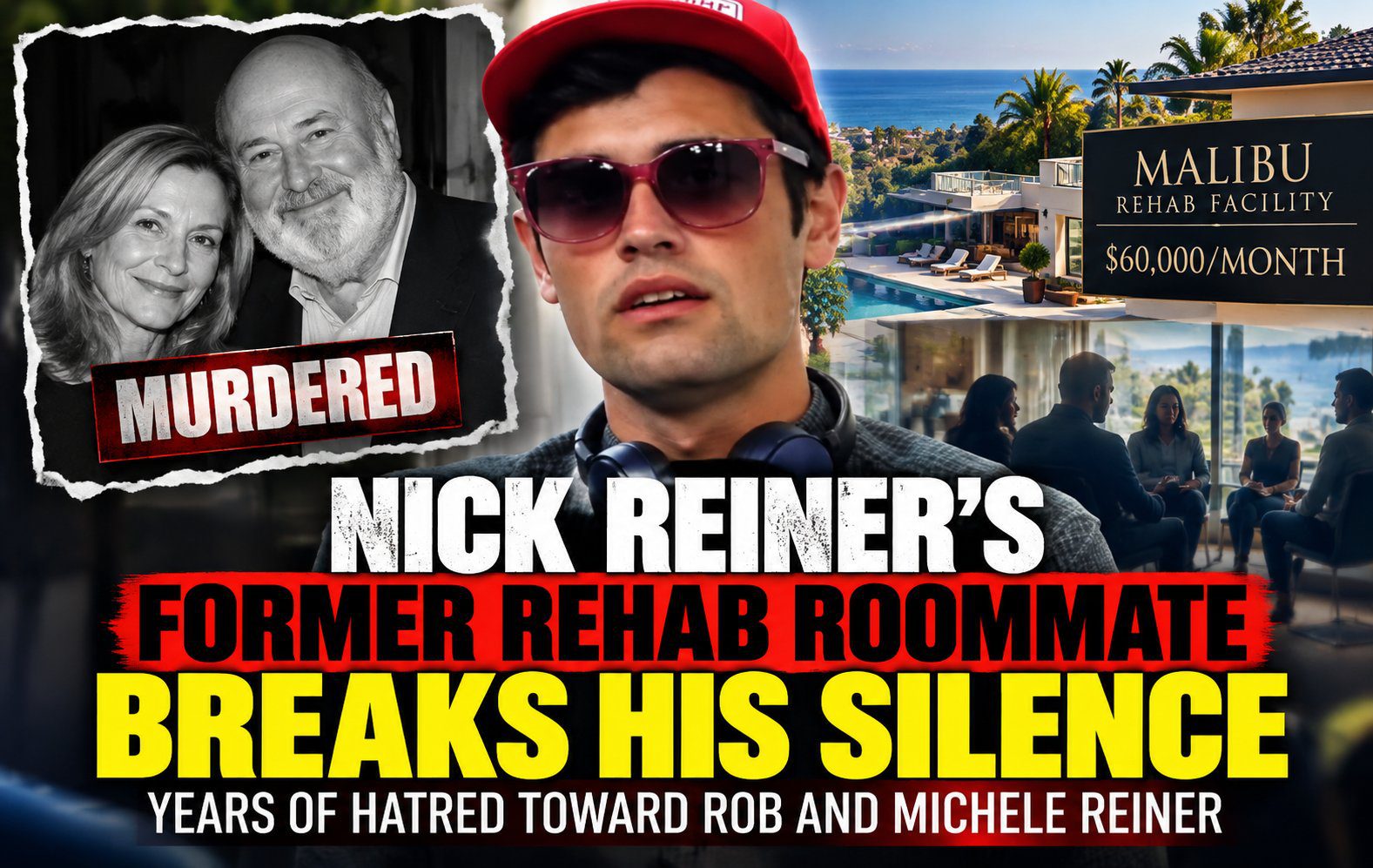
In an interview with investigative journalist Brian Entin, Danny Svilar said he shared a room with Reiner when both were approximately 15 years old at an upscale Malibu treatment center reportedly costing $60,000 per month. According to Svilar, the experience left him with memories of a teenager who could be entertaining and personable one moment but intensely angry and confrontational the next.
Svilar said he immediately thought of Nick when he learned that Rob and Michele Reiner had been killed. “I knew exactly who it was,” he told Entin, describing his reaction to the initial reports. His statement reflects his personal recollection and suspicions, not independent evidence establishing responsibility for the killings.
The interview has drawn attention because Svilar’s account concerns behavior allegedly observed years before the deaths. His recollections offer a perspective on the family’s struggles, although the allegations have not been independently substantiated through treatment records or contemporaneous witness statements.
Late Night Rants and Allegations of Deep Resentment Toward His Parents
One of the most striking elements of Svilar’s account concerns what he described as repeated late night conversations in which Reiner expressed hostility toward his parents. Svilar alleged that Nick would stay awake complaining about Rob and Michele, expressing resentment over their celebrity status and dissatisfaction with his own circumstances.
According to Svilar, the anger was not limited to ordinary disagreements between a teenager and his parents. He described a recurring pattern of bitterness that seemed disproportionate to the support and opportunities available to Reiner. Svilar characterized his former roommate as entitled and unwilling to appreciate the resources his family was providing, calling him a “pompous little punk” whose principal interest at the time appeared to be using drugs.
Those comments represent Svilar’s interpretation of conversations and behavior he remembers from adolescence. They do not establish Reiner’s state of mind at the time of his parents’ deaths, nor do they demonstrate that statements made during treatment were connected to any subsequent criminal conduct. Nevertheless, the allegations provide a window into the strained family relationships that Svilar says were evident during their time at the facility.
Former Roommate Recalls Physical Confrontations Inside Treatment Facility
Svilar also described incidents in which Reiner allegedly became physically aggressive toward other residents. He recalled witnessing an attack on another teenager at the rehabilitation center and described a separate confrontation in which Reiner reportedly raised a fist toward him after taking offense at something he said.
According to Svilar, a staff member intervened and separated the two before the encounter escalated further. He characterized Reiner’s behavior as unpredictable, saying that his former roommate could initially appear friendly and humorous before reacting angrily to a perceived insult or disagreement.
The allegations have not been independently verified through facility incident reports, and Svilar’s interview does not establish how frequently such confrontations occurred or what disciplinary measures followed. His account is nonetheless significant because it describes specific incidents rather than relying solely on generalized impressions of Reiner’s personality.
Rob and Michele Reiner Were Reportedly Deeply Involved in Their Son’s Treatment
While Svilar offered an unflattering assessment of Nick’s behavior, his recollections of Rob and Michele Reiner were markedly different. He described the couple as unusually engaged parents who participated actively in their son’s treatment rather than leaving his care entirely to staff members or paid representatives.
Svilar said the Reiners attended family therapy sessions, group meetings and scheduled parents’ weekends. He recalled Rob Reiner spending informal time with residents, including playing Frisbee with teenagers at the facility, and portrayed both parents as consistently present during a difficult period in their son’s life.
That account challenges any simplistic suggestion that the family’s wealth necessarily translated into parental indifference. According to Svilar, the Reiners were visibly committed to helping their son, even as he allegedly continued expressing resentment toward them. His recollections cannot establish the full history of the family’s relationships or treatment decisions, but they provide an important counterpoint to speculation that the couple was detached from their son’s struggles.
Retired FBI Agent Examines Allegations of Premeditation and Post Crime Behavior
Retired FBI agent Maureen O’Connell joined Entin to discuss how investigators and prosecutors may interpret the allegations against Reiner, particularly in light of his reported history of behavioral problems and the circumstances surrounding his parents’ deaths.
O’Connell discussed the significance of alleged actions after the killings, including reports that Reiner left the family home, traveled to a hotel and subsequently moved through Los Angeles. The discussion also addressed allegations concerning drug use and attempts to avoid detection. Such claims require careful distinction between verified investigative evidence, media reporting and expert interpretation.
The prosecution has formally alleged that Reiner committed the murders by lying in wait, a special circumstance included in the grand jury indictment unsealed in August 2026. Prosecutors accuse him of fatally stabbing his parents at their Brentwood residence on December 14, 2025. He was arrested later that day in Los Angeles. Reiner has pleaded not guilty to two counts of murder and remains presumed innocent unless proven guilty.
The allegations of longstanding hostility described by Svilar may attract attention as investigators examine the family’s history, but childhood statements and confrontations do not, by themselves, establish premeditation. Prosecutors must prove the required elements of the charged offenses through admissible evidence, while the defense retains the right to challenge witness recollections, the reliability of statements and the prosecution’s interpretation of events.
Could Mental Health Become a Central Issue in the Defense?
The interview also examined whether Reiner’s history of psychiatric treatment and substance use could become relevant to his defense. O’Connell discussed the legal distinction between a person having a serious mental health condition and meeting the requirements for a successful insanity defense.
Under California law, an insanity defense generally requires proof that, because of a qualifying mental disease or defect, the defendant was incapable of understanding the nature and quality of the criminal act or distinguishing right from wrong when it occurred. A history of psychiatric treatment, addiction or erratic behavior does not automatically satisfy that standard.
The legal discussion focused on how prosecutors might use evidence of planning, flight or other purposeful conduct to challenge such a defense. However, those behaviors must be assessed in the context of the complete evidentiary record, and their existence would not independently resolve questions about Reiner’s mental state at the time of the alleged crimes.
Did Years of Expensive Rehabilitation Fail to Address the Underlying Problems?
Another major theme of Entin’s discussion involved the limitations of expensive residential treatment and the difficult decisions families face when repeated interventions fail to produce lasting improvements. Svilar’s description of a facility costing approximately $60,000 per month illustrated the extraordinary financial resources available to the Reiner family, but also raised questions about whether access to costly treatment necessarily translates into successful outcomes.
The program revisited comments from addiction specialist and television personality Dr. Drew Pinsky, who discussed the limitations of luxury rehabilitation facilities when treating severe and persistent substance-use disorders alongside other psychiatric concerns. High treatment costs may reflect accommodations, staffing and amenities, but price alone does not establish clinical effectiveness or guarantee sustained recovery.
Entin and O’Connell also discussed whether repeated financial assistance, protection from consequences or other forms of family support can sometimes complicate treatment. Those observations were presented as general considerations rather than proven explanations for the Reiner case. Family involvement, financial resources and treatment decisions cannot be identified as causes of violent conduct without substantially more evidence.
Svilar’s recollections underscore the complexity of the issue. He described parents who were actively involved in treatment and a teenager who, in his account, remained resentful and confrontational despite that involvement. The contrast illustrates how a family can invest substantial time, money and emotional effort in treatment without controlling another person’s behavior or guaranteeing a successful outcome.
Prosecutors Will Not Seek the Death Penalty as Murder Case Moves Forward
The criminal proceedings against Nick Reiner remain active in Los Angeles County Superior Court. In September, District Attorney Nathan Hochman announced that prosecutors would not pursue capital punishment, following a review of the case and consultation with members of the Reiner family. If convicted as charged, Reiner faces life imprisonment without the possibility of parole.
At an October 7 hearing, attorneys addressed questions concerning whether grand jury transcripts and related materials should remain sealed. Additional proceedings are scheduled for later in October, including consideration of the grand jury records and separate questions concerning Reiner’s potential access to trust assets for his legal defense.
The prosecution’s case rests on the evidence presented through the criminal justice system, not on the retrospective opinions of former acquaintances or television commentators. Nevertheless, Svilar’s interview has introduced another account of the Reiner family’s difficulties, describing a period when Rob and Michele were reportedly deeply involved in helping their son while others around him observed behavior they found troubling.
More than a decade after their time together in Malibu, Svilar’s memories have taken on a significance he could not have anticipated as a teenager. His account portrays a family struggling with persistent conflict despite considerable resources and parental involvement. Whether any of those early experiences will become relevant in court remains to be determined as the prosecution and defense prepare for trial.

Sources & Further Reading
- Brian Entin — Interview With Nick Reiner’s Former Rehab Roommate and Expert Discussion
- Los Angeles County District Attorney — August 12, 2026, Murder Indictment Announcement
- Los Angeles County District Attorney — September 15, 2026, Death Penalty Decision
- Los Angeles Times — Prosecutors Allege Nick Reiner Lay in Wait
- NBC Los Angeles — Prosecutors Will Not Seek Death Penalty
- People — Nick Reiner’s October 7 Court Appearance















































Want to join the conversation?
Create an account or sign in to share your thoughts, vote,
and reply to other readers.
Showing 0 of 0 comments
Don't have an account?
Already have an account?