

FBI Investigating Suspected Hack of National Criminal Database Used by Police Across America
Federal investigators are examining a suspected cyber intrusion involving one of the nation’s most important law enforcement databases, raising concerns about the security of sensitive criminal justice information and the reliability of records used by police officers across the United States.
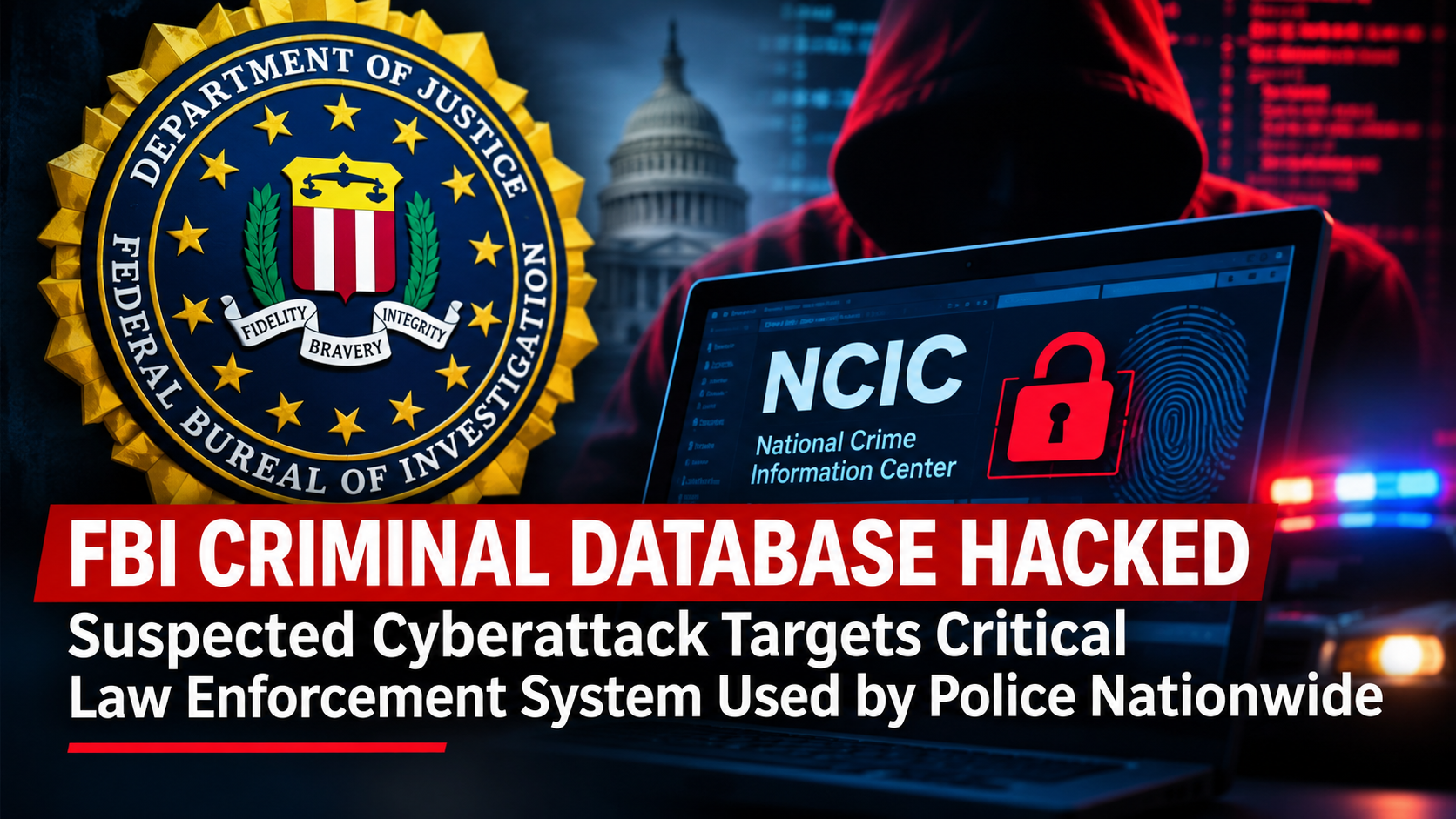
The Federal Bureau of Investigation is investigating a suspected cyber intrusion targeting the National Crime Information Center (NCIC), a critical criminal justice database that connects federal, state, and local law enforcement agencies nationwide. The investigation was first reported Friday, November 20, by CNN and NBC News, citing sources familiar with the matter, before the Associated Press reported additional details Saturday. The potential breach has raised serious questions about whether unauthorized actors accessed sensitive law enforcement information, although investigators have not publicly established whether records were stolen, altered, or otherwise compromised.
The NCIC serves as a central information-sharing resource for law enforcement agencies, providing access to records involving wanted fugitives, missing persons, stolen vehicles, firearms, and other information used in criminal investigations. Police officers routinely depend on the system during traffic stops, arrests, and investigations, making its security an important operational concern. While a confirmed intrusion could have consequences extending far beyond the FBI itself, the scope of the suspected compromise remains unclear, and there is currently no verified evidence that officers have relied on inaccurate or manipulated records.
Trump Briefed on FBI Cybersecurity Investigation
President Donald Trump reportedly acknowledged being briefed on the suspected intrusion during a television interview Saturday, describing the situation as “not good” while suggesting the investigation might uncover information that otherwise would not have surfaced. His comments came as federal investigators continued examining the suspected breach, including how unauthorized access may have occurred, which systems were potentially affected, and whether sensitive criminal justice information was exposed.
The FBI reportedly became aware of the suspicious activity around Thursday, November 19, but has not publicly released a detailed technical assessment or identified a suspected attacker. Investigators have not established whether the incident involved a foreign intelligence service, organized cybercriminals, or another threat actor. There is also no confirmed public evidence connecting the investigation to other recent technology disruptions affecting federal agencies, making any broader attribution premature.
Why the National Crime Information Center Is Critical to American Law Enforcement
The National Crime Information Center is operated by the FBI’s Criminal Justice Information Services Division and functions as a nationwide computerized index of criminal justice information. Authorized law enforcement personnel use the system to identify wanted individuals, locate missing persons, check stolen property records, and exchange information across jurisdictional boundaries. Its importance extends from major federal investigations to everyday police encounters, where timely access to accurate information can influence decisions about arrests, public safety, and ongoing criminal investigations.
In South Florida, the system is part of the broader information infrastructure used by agencies such as the Fort Lauderdale Police Department, the Broward Sheriff’s Office, and other local and federal law enforcement organizations. An officer conducting a traffic stop in Broward County or investigating a wanted fugitive in Miami-Dade County may depend on information obtained through NCIC connected systems. The possibility of unauthorized access therefore raises concerns not only about the confidentiality of criminal justice records but also about the integrity of information officers depend on when making decisions in the field.
A distinction remains between a suspected cybersecurity breach and evidence that criminal records were actually manipulated. Unauthorized access could potentially expose sensitive investigative information, while unauthorized changes to database entries could create additional operational risks. However, investigators have not publicly confirmed that warrants were altered, criminal records were falsified, or arrests were affected by compromised information. The FBI’s separate Interstate Identification Index supports criminal history information sharing and should not be confused with NCIC’s primary functions, even though both operate within the nation’s interconnected criminal justice infrastructure.
FBI Faces Another Security Investigation Following Earlier 2026 Incidents
The reported NCIC intrusion follows other cybersecurity concerns involving FBI systems during 2026, including a September incident affecting a recruitment-related website reportedly claimed by the hacking group ShinyHunters. That incident involved allegations of unauthorized access to employment related information, while separate reporting earlier in the year described suspicious activity involving an internal FBI system associated with investigative functions. Although these incidents have raised questions about the bureau’s cybersecurity defenses, investigators have not publicly established that they involved the same attackers, vulnerabilities, or coordinated operations.
The NCIC investigation carries potentially different operational implications because the database supports criminal justice information sharing throughout the country. A compromise affecting a recruitment website would primarily raise concerns about the exposure of applicant or employee information, while unauthorized access to a law enforcement database could potentially involve sensitive investigative records and information used during police operations. The actual severity of the latest incident, however, cannot be determined until investigators establish what systems were accessed, what information may have been exposed, and whether the accuracy or availability of records was affected.
Nationwide Technology Outages Add to Cybersecurity Concerns
The FBI investigation comes amid heightened scrutiny of cybersecurity and technology reliability across federal agencies and major American corporations. Recent disruptions have affected the Federal Aviation Administration, the National Security Agency, financial institutions, and other critical technology systems, generating public concern about the resilience of infrastructure that supports transportation, national security, and financial services. Although the incidents occurred within a relatively short period, federal officials have cautioned against assuming that unrelated outages and suspected intrusions are part of a coordinated cyberattack.
Trump administration officials have attributed several recent government and private-sector technology disruptions to routine system upgrades, maintenance, and efforts to address security vulnerabilities rather than malicious activity. The Associated Press reported Saturday that there was no immediate indication connecting those outages to the suspected FBI database intrusion. Cybersecurity experts generally distinguish between service interruptions caused by technical failures and security breaches involving unauthorized access, making it important to establish the facts of each incident before drawing conclusions about a broader threat.
FBI Director Kash Patel Promoted Cybersecurity Efforts as Intrusion Emerged
The timing of the suspected breach has also drawn attention to FBI Director Kash Patel, who appeared on Fox News Thursday to discuss the bureau’s cybersecurity initiatives after officials reportedly learned of the latest security incident. During the appearance, Patel highlighted Operation Winter Shield, an FBI initiative aimed at helping organizations identify vulnerabilities and strengthen protections against cyber threats, while emphasizing the administration’s efforts to improve the security of critical infrastructure.
Patel argued that previous administrations had failed to make necessary security improvements, telling Fox News, “Other administrations could have made these updates, but they didn’t.” He added that the bureau was working to address longstanding vulnerabilities and strengthen national cybersecurity defenses. The comments came as investigators were examining a suspected intrusion involving one of the FBI’s most important information-sharing systems, although the public record does not establish whether the incident involved vulnerabilities addressed by the initiative.
What Investigators Still Need to Determine
The central questions surrounding the investigation concern how attackers may have gained access to NCIC, what information they could have obtained, and whether the integrity of any records was affected. Investigators must also determine whether the suspected intrusion originated within the database itself or through a connected system, whether unauthorized users obtained elevated access privileges, and whether any information was copied or modified. Establishing those facts will be essential to understanding the incident’s severity and determining whether additional safeguards are necessary for participating law enforcement agencies.
The identity and motivation of the suspected attackers also remain unknown. Although foreign intelligence agencies and financially motivated cybercriminal groups have historically targeted American government systems, no credible public attribution has been established in this case. Likewise, there has been no verified announcement that NCIC operations have been suspended, that criminal justice records have been corrupted, or that law enforcement agencies have been instructed to stop using the database.
A Critical Test for Federal Law Enforcement Cybersecurity
The investigation highlights the challenge of protecting interconnected government information systems that must remain accessible to thousands of authorized users while preventing unauthorized access. NCIC’s nationwide reach makes it a valuable resource for police departments and federal investigators, but the same connectivity underscores the importance of strong authentication, continuous monitoring, access controls, and procedures for detecting potentially compromised information.
For law enforcement agencies throughout Florida and the rest of the country, the immediate concern is whether the system remains secure and its information trustworthy. For the FBI, the investigation presents a significant test of its ability to identify the source of a suspected intrusion, determine whether sensitive information was exposed, and reassure participating agencies that critical criminal justice records remain reliable.
As of November 21, the FBI has not publicly disclosed the full scope of the incident or confirmed whether any records were stolen or altered. Until investigators provide additional findings, the reported compromise remains a serious cybersecurity investigation with potentially significant consequences, but without verified evidence of widespread data manipulation or operational disruption. The distinction is essential: a suspected breach of a critical law enforcement database warrants scrutiny, but its actual impact must be established through evidence rather than speculation.

Sources & Further Reading
-
Reuters — FBI Criminal Information Database Hacked, CNN Reports, November 21, 2026
-
CNN via WSVN — The FBI Was Hacked Again, This Time Its Crime Database, November 20, 2026
-
ABC News — FBI National Crime Database Targeted in Hack, November 21, 2026
-
Al Jazeera — FBI National Crime Database Suffers Suspected Breach, November 21, 2026
-
Federal Bureau of Investigation — Criminal Justice Information Services Division
-
FRANCE 24 English — FBI Criminal Database Hacked, Video Report
-
SFL Media — National News, Politics and Cybersecurity Coverage

















Loading comments…