

Former Louisiana Police Officer Convicted of Raping Young Boys Sentenced to Three Life Terms and Chemical Castration
A former Louisiana police officer and volunteer firefighter has been sentenced to three consecutive life terms without the possibility of parole after being convicted of sexually abusing multiple young boys, in a case that prosecutors described as one of the most disturbing examples of child exploitation they had encountered.
NEW ROADS — Kedreyon K. Williams, 31, a former part time officer with the New Roads Police Department and volunteer firefighter, has been sentenced to three mandatory life terms without parole following his conviction on multiple charges involving the sexual abuse of children. The case, prosecuted in Louisiana’s 18th Judicial District Court, involved allegations of repeated assaults against boys between the ages of 8 and 11, with investigators uncovering evidence of abuse at locations where Williams worked, volunteered, and lived.
The jury reportedly deliberated for approximately 40 minutes before finding Williams guilty on all counts, including three counts of first degree rape involving children under 13, first degree rape while armed with a dangerous weapon, indecent behavior with a juvenile, and offenses involving child sexual abuse material. District Judge Kevin Kimball imposed the life sentences, while District Attorney Tony Clayton pursued an additional punishment involving chemical castration under Louisiana law.
The case has drawn attention not only because of the severity of the crimes but also because Williams previously held positions associated with public safety and community trust. His work in law enforcement and emergency services placed him in roles where residents would ordinarily expect professionalism, accountability, and protection, making the circumstances of the offenses particularly disturbing.
A Child’s Disclosure Triggered the Investigation
The investigation began after one of the young victims disclosed the abuse to his mother, who immediately contacted law enforcement. That report prompted an investigation by the Pointe Coupee Parish Sheriff’s Office, which ultimately identified additional victims and uncovered evidence connecting Williams to multiple incidents of sexual abuse.
Investigators determined that the offenses occurred at several locations in and around New Roads, including fire stations where Williams volunteered, a private business where he worked, and his residence. Prosecutors alleged that Williams used these settings to gain access to children and commit offenses against boys who were too young to fully understand or defend themselves against the abuse.
Authorities arrested Williams in July 2024 after investigators developed evidence supporting the allegations. The investigation included interviews, witness accounts, and digital evidence recovered from electronic devices. According to the case summary, investigators discovered video evidence on Williams’s cellphone documenting the sexual abuse of a child, providing prosecutors with evidence that became central to the criminal proceedings.
The victims’ identities have not been publicly disclosed in this article because they were minors at the time of the offenses. Their privacy remains especially important given the nature of the crimes and the possibility of long-term psychological consequences.
Former Police Officer and Volunteer Firefighter Abused Positions of Trust
Williams previously served as a part time officer with the New Roads Police Department between October 2017 and May 2019 and also worked as a volunteer firefighter. His background in public safety became a significant element of the case because some of the offenses reportedly occurred at fire stations where he volunteered.
The allegations raised serious questions about the vulnerability of children in community environments where adults hold positions of authority or are perceived as trustworthy. Firefighters and police officers are routinely entrusted with protecting the public, and prosecutors portrayed Williams’s conduct as a profound violation of that responsibility.
Although Williams was no longer serving as a New Roads police officer when he was arrested, his previous law enforcement employment and continued involvement in emergency services made the case especially troubling for the local community. The available case summary does not establish whether any agency received prior complaints about Williams or whether institutional failures contributed to his access to victims.
Jury Deliberates Less Than 40 Minutes Before Convicting Williams
The case proceeded to trial in Louisiana’s 18th Judicial District Court, where prosecutors presented testimony and evidence supporting multiple charges of sexual abuse involving children. Jurors reportedly needed only 39 to 40 minutes to reach unanimous guilty verdicts on all counts, an unusually brief deliberation given the seriousness and number of charges.
The convictions included three counts of first degree rape involving children under 13, along with additional sexual offenses and charges related to child sexual abuse material. Louisiana law provides exceptionally severe penalties for first degree rape, including mandatory life imprisonment without the possibility of parole in applicable cases.
The swift verdict represented a major milestone for the victims and their families, who had endured the investigation and criminal proceedings following the initial disclosure. Family members later delivered victim impact statements describing the harm caused by Williams’s actions and expressing appreciation for the children who came forward.
The speed of the jury’s decision does not independently establish the weight of any particular piece of evidence, but the guilty verdicts confirmed that jurors found the prosecution had proved the charged offenses beyond a reasonable doubt.
Judge Calls It the Worst Child Sexual Abuse Case He Has Seen
On November 12, 2026, District Judge Kevin Kimball sentenced Williams to three life terms in prison following his October convictions. According to the 18th Judicial District Attorney’s Office, Kimball described the crimes as the “worst case” of child sexual abuse he had encountered during his judicial career, underscoring the extraordinary severity of the offenses.
Louisiana law mandates life imprisonment for the first degree rape convictions involved in the case, but District Attorney Tony Clayton sought an additional punishment. Prosecutors filed a motion requesting castration, and subsequent reporting confirmed that Williams was ordered to undergo chemical rather than surgical castration. The punishment involves medication intended to suppress testosterone and sexual drive, although officials have not announced when the treatment would begin.
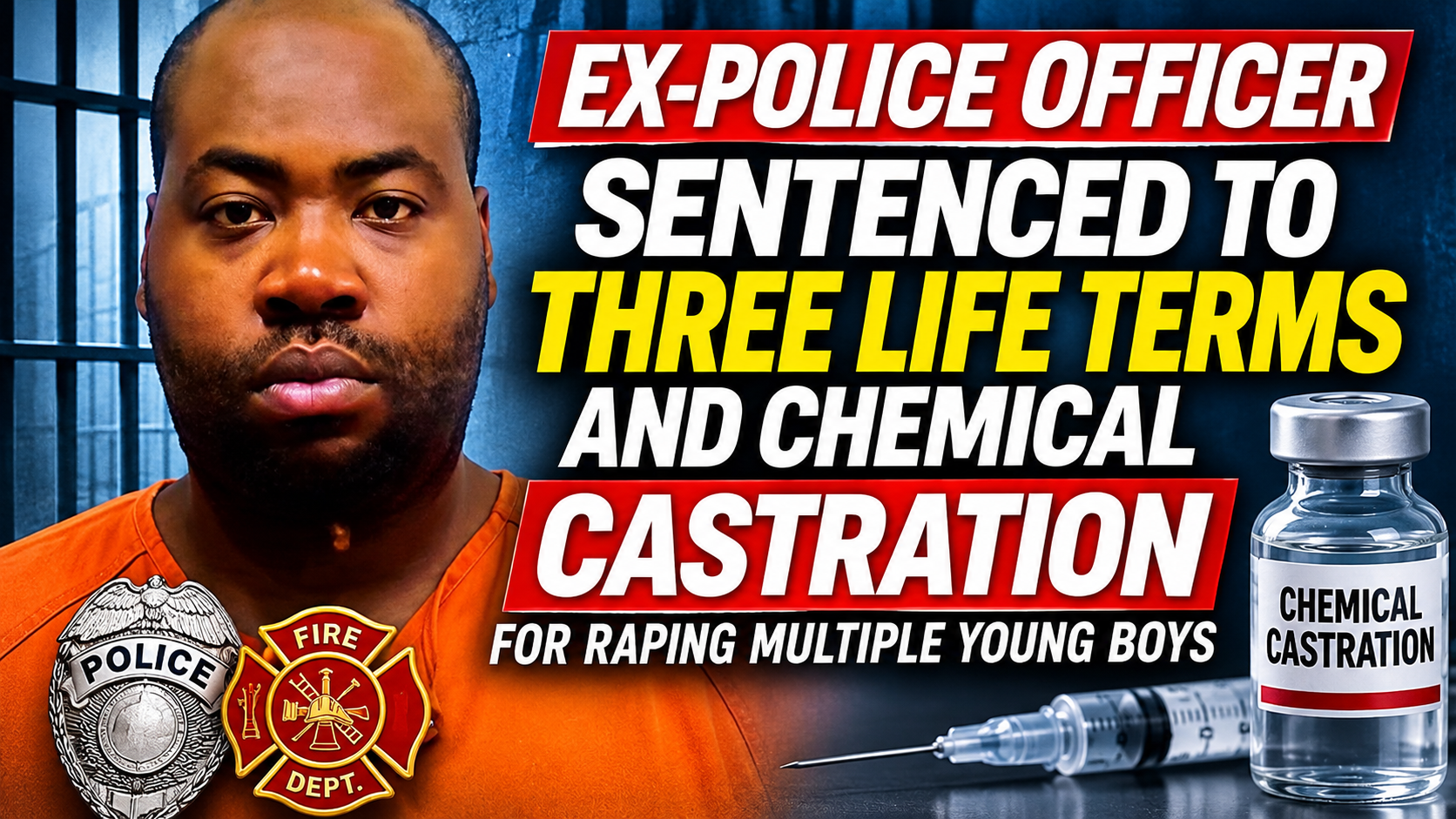
Louisiana Prosecutor: ‘We Will Take His Manhood’
Clayton issued an unusually forceful public statement following the sentencing, condemning Williams for exploiting children who were unable to protect themselves. The district attorney characterized the additional castration order as a further punishment beyond the mandatory prison sentences and expressed hope that the verdict would provide some measure of reassurance to the victims’ families.
“The castration is another layer of punishment for these horrendous crimes.”
Clayton also declared that offenders who sexually exploit children should face consequences beyond imprisonment, using particularly harsh language to emphasize his office’s position. His remarks reflected the prosecution’s determination to pursue the strongest penalties available under Louisiana law, although the precise implementation of the castration order remains a separate legal and medical question.
What Chemical Castration Means Under Louisiana Law
Louisiana has authorized chemical castration for certain sexual offenses since 2008. The treatment generally involves medication that reduces testosterone production or suppresses its effects, potentially lowering sexual drive. Unlike surgical castration, chemical treatment does not involve the removal of reproductive organs, and its effects may be reversible after treatment is discontinued.
The state expanded its sentencing laws in 2024 to permit judges to order surgical castration for certain aggravated sexual offenses involving young children. Williams’s sentence, however, involves chemical castration, according to clarification provided by the district attorney’s office to Louisiana First News. State law requires medical evaluation before treatment, and the timing of any procedure or medication may depend on statutory requirements governing incarceration and release.
Because Williams is serving three life terms without parole, questions remain about whether and when the chemical castration component will actually be administered. The order should therefore not be confused with confirmation that the treatment has already occurred. The distinction is important because Louisiana’s castration statutes contain procedural requirements that can affect implementation, even after a judge imposes the punishment.
Victims’ Courage Helped Bring a Former Public Safety Officer to Justice
The prosecution began with a child telling his mother about the abuse, an act that ultimately exposed additional victims and led to Williams’s conviction. The mother’s decision to contact police allowed investigators to uncover offenses that prosecutors said occurred in several settings where Williams had access to children, including facilities associated with his volunteer firefighting duties.
The case also raises broader questions about safeguarding children in organizations that depend on public trust. Williams’s previous employment as a police officer and his volunteer firefighting work did not prevent him from committing serious crimes, and the fact that some offenses occurred at fire stations highlights the importance of institutional safeguards, reporting procedures, and independent oversight.
No publicly reviewed evidence establishes that officials at those institutions knew about the abuse before the investigation. Nevertheless, the case illustrates how positions of authority can create opportunities for exploitation when offenders gain access to vulnerable children.
For the victims and their families, the conviction and sentencing bring the criminal trial to a close, subject to any subsequent appeals or legal proceedings. Williams now faces imprisonment for the remainder of his life, while the additional chemical castration order remains subject to the requirements of Louisiana law.
A Case That Exposes the Devastating Consequences of Betrayed Trust
The sentencing of Kedreyon Williams represents one of the most severe punishments available in Louisiana’s criminal justice system. Three mandatory life terms ensure that he will not be eligible for parole, while the chemical castration order reflects prosecutors’ determination to seek an additional sanction for crimes involving young children.
The case also demonstrates the importance of taking disclosures of child sexual abuse seriously. One child’s decision to speak to his mother set in motion an investigation that identified other victims, uncovered digital evidence, and ultimately produced multiple convictions. The outcome illustrates the essential role of families, investigators, and the courts in responding to abuse, particularly when the accused has occupied positions associated with public safety.
For the community of New Roads, the case leaves difficult questions about trust, institutional responsibility, and the protection of children. For the families affected, the legal outcome establishes accountability for crimes that prosecutors described as exceptionally disturbing, even as the longer process of recovery continues beyond the courtroom.
















Loading comments…