

Bill Maher Says America Has Had Enough of Trump’s Cruelty and the Left’s Performative Politics After 2026 Midterm Elections
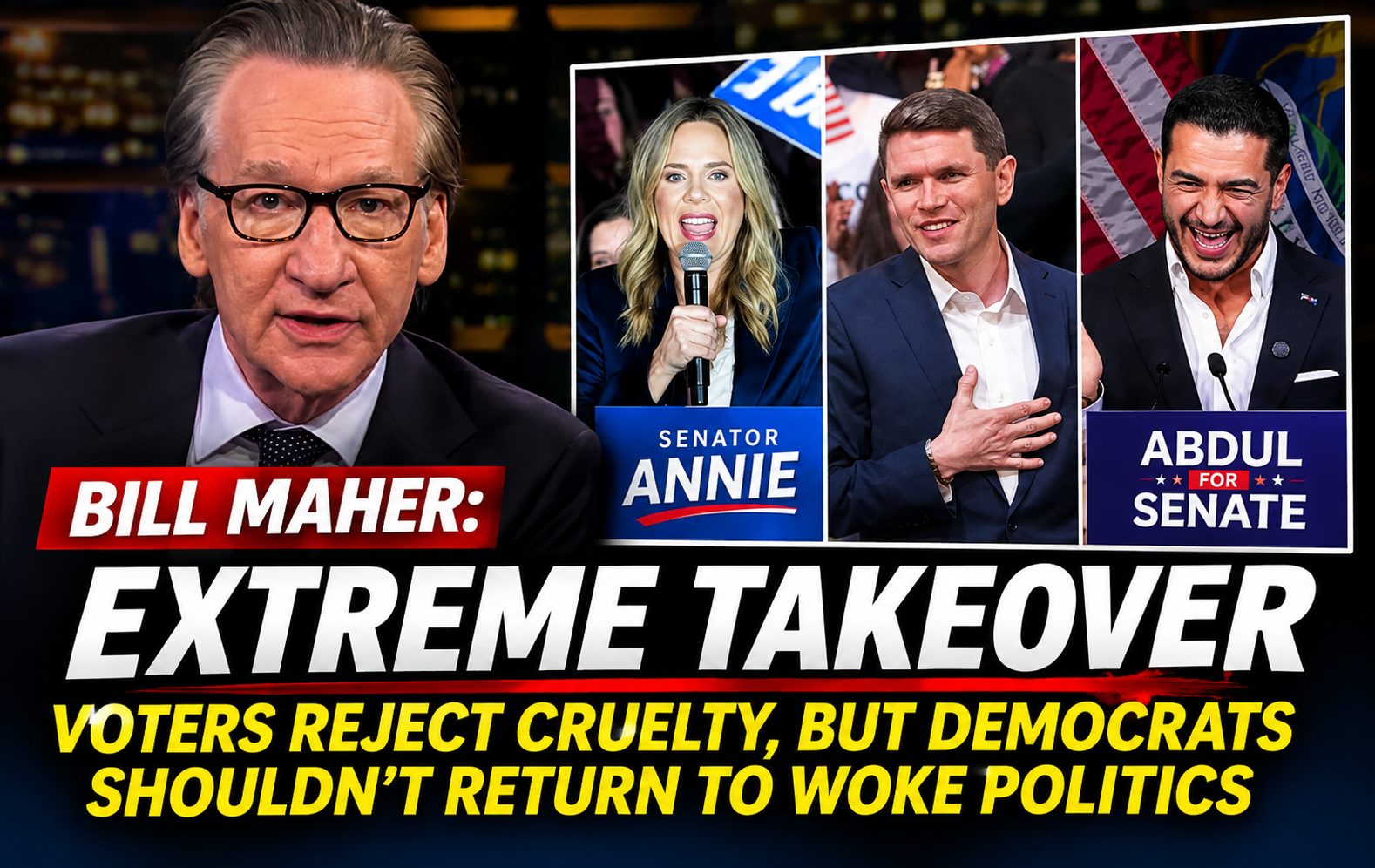
In his latest “New Rules” editorial, the HBO host argues that voters rejected the Republican Party’s embrace of political cruelty but warns Democrats against interpreting their election victories as permission to revive unpopular progressive policies, ideological purity tests and the culture-war excesses that helped fuel the conservative backlash.
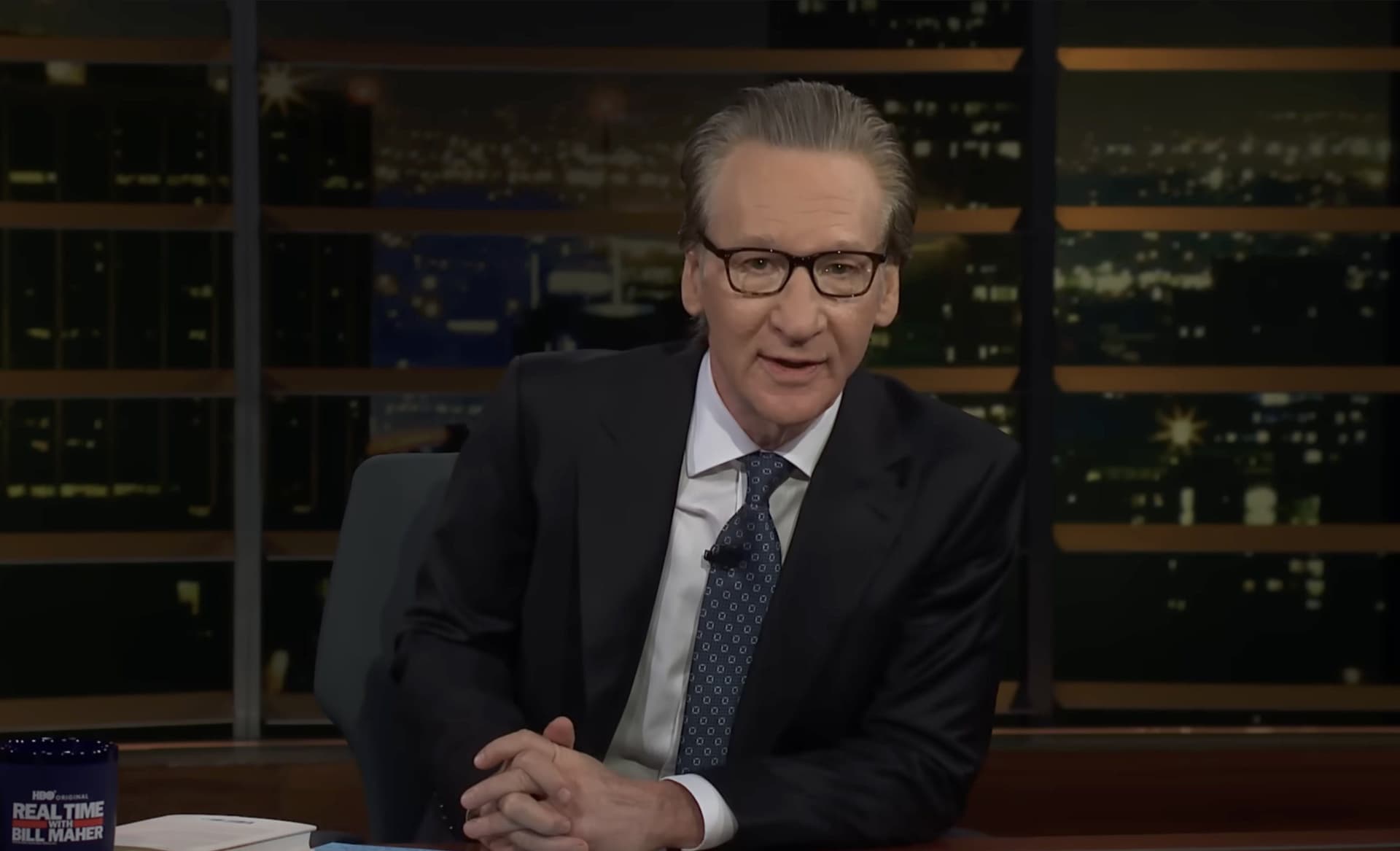
NEW YORK — Bill Maher believes American voters have finally reached their breaking point with the country’s exhausting political mood swings, and in his latest Real Time with Bill Maher editorial, the comedian delivered a pointed message to both parties: Stop treating every election as a mandate to embrace the opposite extreme.
In a segment titled “Let’s Vibe,” Maher examined the political fallout from the 2026 midterm elections, arguing that voters had rejected the cultural and political atmosphere surrounding President Donald Trump’s second administration without necessarily endorsing a return to the progressive politics that dominated portions of the national conversation earlier in the decade. His central argument was that Americans are tired of being forced to choose between self-righteous moralizing on the left and deliberately offensive behavior on the right.
Maher described a political pendulum that swung toward Democrats in 2020, shifted decisively toward Trump and Republicans in 2024, and reversed direction again in 2026. Comparing the experience to getting carsick, he suggested that the country needs something more durable than another temporary cultural rebellion. Instead of repeatedly rejecting one set of excesses by embracing another, Maher argued that voters want leaders capable of exercising common sense, respecting basic standards of decency and solving practical problems.
The editorial was not simply an attack on Trump or a warning to Democrats. It was a broader indictment of a political culture in which provocation, ideological performance and social media approval increasingly compete with competence, accountability and effective government.
From Liberal Virtue Signaling to Conservative Vice Signaling
Maher’s sharpest criticism was directed at what he described as the Republican Party’s embrace of “vice signaling,” a political style in which cruelty, offensiveness and contempt for political opponents become selling points rather than liabilities. For years, conservatives criticized progressive activists for virtue signaling, accusing them of using public displays of moral superiority to demonstrate their ideological credentials. Maher argued that the backlash eventually produced something equally destructive: politicians who appear to compete over how aggressively they can reject empathy, restraint and traditional standards of public conduct.
The comedian drew a distinction between rejecting sanctimonious behavior and celebrating genuinely objectionable conduct, arguing that Americans who grew tired of being lectured by progressive activists did not necessarily want political leaders who seemed to take pleasure in humiliating others. In Maher’s telling, the 2026 election results reflected a growing rejection of that approach, particularly when political messaging crossed the line from toughness into gratuitous cruelty.
The criticism also challenged the Republican Party’s historical emphasis on character, personal responsibility and family values. Maher suggested that conservatives once understood the importance of personal conduct and moral leadership, even when pursuing aggressive policies on immigration, crime or national security. His argument was that enforcing the law and maintaining public order do not require politicians to turn human suffering into a public spectacle.
Trump’s Cabinet Becomes a Symbol of the Republican Party’s Changing Values
Maher contrasted Abraham Lincoln’s famous “team of rivals,” which brought competing political perspectives into his administration, with Trump’s selection of cabinet officials and political allies whose public personas often emphasize confrontation and ideological loyalty. The comparison was intended to illustrate what Maher sees as a broader deterioration in the standards Americans expect from senior government officials.
Among his targets was Defense Secretary Pete Hegseth, whom Maher criticized over rhetoric involving the public presentation of executions. The comedian also singled out Homeland Security Secretary Kristi Noem, referencing controversy surrounding an expensive wristwatch she wore while appearing at immigration detention facilities, including the Florida detention center commonly known as “Alligator Alcatraz.” Maher used the imagery to question the judgment of officials who project wealth, power and toughness while discussing the confinement or punishment of vulnerable people.
The editorial also criticized reductions in American foreign assistance, including programs that provide mosquito nets to prevent malaria in developing countries. Maher framed such decisions as examples of political leaders treating humanitarian assistance as a symbol of weakness rather than evaluating whether relatively inexpensive interventions save lives and advance American interests.
He additionally referenced a campaign advertisement associated with Republican politician Vivek Ramaswamy that targeted a 12 year old rape victim, using the example to argue that modern political messaging has become increasingly willing to exploit deeply personal suffering for partisan advantage. The segment’s broader point was that conservatives can advocate restrictive immigration policies, stronger criminal enforcement and reduced government spending without abandoning compassion or basic standards of decency.
These examples were presented as Maher’s political criticism, rather than independently established findings of misconduct. The precise circumstances surrounding the officials’ statements, the reported price of Noem’s watch and the Ramaswamy advertisement require separate verification before being treated as factual allegations.
Maher Warns Democrats Not to Mistake an Election Victory for an Ideological Blank Check
Although Maher directed considerable criticism toward the Trump administration, he was equally determined to prevent Democrats from interpreting their midterm success as proof that every progressive position had suddenly become popular. His warning was that the same voters who rejected Republican excesses in 2026 could turn against Democrats again if the party returned to the political habits that alienated portions of the electorate during the early 2020s.
Maher argued that Democrats risk repeating their mistakes when they confuse the priorities of politically engaged activists with the concerns of ordinary voters. In his view, Americans are less interested in elaborate demonstrations of ideological commitment than in whether their neighborhoods are safe, their children receive a good education, their healthcare works and their government can perform basic functions competently.
The comedian’s warning reflects a recurring theme in his political commentary: Electoral victories should be interpreted as opportunities to govern effectively, not as permission to impose every policy favored by the most vocal members of a political coalition. While the Republican Party may have suffered from embracing an increasingly confrontational political identity, Maher suggested that Democrats would be making a serious mistake by assuming the country now wants an equally uncompromising progressive alternative.
The “Lawn Sign” Left and the Politics of Moral Superiority
One of Maher’s primary targets was what he called the “lawn sign” wing of progressive politics, referring to the familiar signs displayed outside homes declaring support for equality, science, kindness and other broadly accepted values. Maher mocked the idea that publicly announcing one’s moral commitments necessarily translates into effective public policy, arguing that political movements can become more concerned with demonstrating their own righteousness than measuring whether their proposals actually improve people’s lives.
His criticism extended to symbolic gestures such as land acknowledgments, which recognize Indigenous peoples’ historical connections to particular territories. Maher portrayed such practices as examples of progressive political culture placing excessive emphasis on language, identity and public displays of awareness. Supporters of land acknowledgments, however, regard them as meaningful recognition of historical dispossession, illustrating the broader disagreement over whether symbolic gestures are valuable in themselves or must be accompanied by measurable policy changes.
Maher argued that the problem emerges when political leaders begin evaluating policies according to how morally satisfying they feel rather than their actual consequences. He warned that this approach can alienate voters who may agree with progressive goals but disagree with the methods used to pursue them. In his assessment, political self-righteousness can become counterproductive when it encourages voters to seek an alternative, even one whose policies or behavior they might otherwise find objectionable.
Public Safety, Shoplifting and Homelessness Become Central Targets
Maher’s criticism became more concrete when he turned to public safety, homelessness and criminal justice, arguing that progressive policymakers sometimes undermine their own stated goals by refusing to acknowledge the consequences of ineffective enforcement. He questioned who benefits when authorities decline to enforce laws against shoplifting, suggesting that businesses, workers and residents ultimately bear the costs when persistent theft is allowed to continue without meaningful intervention.
The comedian also criticized approaches to homelessness and severe mental illness that he believes prioritize ideological commitments over practical outcomes. In particular, he questioned whether distributing clean needles to people experiencing severe psychiatric illness is sufficient when some individuals may also require intensive treatment. The comparison reflects Maher’s argument that compassion should be measured by whether people receive effective assistance, rather than whether a policy satisfies a particular political philosophy.
That criticism requires important context. Harm reduction programs, including sterile syringe distribution, are supported by substantial public health evidence showing that they can reduce transmission of HIV and hepatitis C. They are not inherently alternatives to psychiatric treatment, addiction services or housing assistance, and the effectiveness of any particular intervention depends on the needs of the individual and the resources available. Similarly, policies addressing homelessness and public disorder involve complicated questions about civil liberties, healthcare capacity, housing costs and the legal standards governing involuntary treatment.
Nevertheless, Maher’s larger political argument was that voters expect government to maintain safe public spaces while helping vulnerable people, rather than treating those objectives as mutually exclusive. He suggested that Democrats risk losing public confidence when their rhetoric appears disconnected from the everyday experiences of residents confronting theft, disorder or inadequate emergency services.
COVID, Ozempic and Standardized Testing Expose What Maher Sees as Progressive Contradictions
Maher also challenged what he characterized as selective attitudes toward science and evidence within progressive political culture. He referenced lingering debates over COVID-era masking, changing public discussions about obesity and the widespread use of medications such as Ozempic, suggesting that political identity can influence how people interpret scientific findings. His criticism was directed at the tendency to treat scientific conclusions as authoritative when they support an existing worldview while resisting inconvenient evidence that challenges it.
Those examples involve distinct medical and scientific questions that should not be conflated. Mask effectiveness depends on factors including mask type, fit and exposure conditions, while medications containing semaglutide have demonstrated clinical benefits for certain patients when prescribed appropriately. Maher’s commentary is best understood as a criticism of political inconsistency rather than a scientific assessment of those interventions.
The HBO host also questioned efforts to eliminate standardized testing in college admissions, arguing that such exams can provide talented students from lower-income backgrounds with opportunities to demonstrate academic ability beyond the resources available at their schools. Critics of standardized testing point to socioeconomic disparities in preparation, access and performance, while supporters argue that objective academic measures can help identify students whose abilities might otherwise be overlooked.
For Maher, these controversies illustrated a recurring problem: Policies designed to advance fairness can produce unintended consequences when political leaders fail to examine how they operate in practice. His broader warning was that Democrats should be willing to reconsider approaches that fail to deliver their intended results, even when those policies remain popular among influential activist groups.
“Defund the Police” Becomes Maher’s Warning for Democrats Heading Into 2028
Maher concluded by returning to one of the most controversial political slogans of the past decade: “defund the police.” The phrase emerged prominently during the 2020 protests following George Floyd’s murder, although its meaning varied considerably among activists, ranging from reallocating certain police responsibilities to social services to substantially reducing police department budgets.
Maher argued that Democrats would be making a serious mistake by reviving the slogan or allowing voters to believe the party was indifferent to public safety. He maintained that Americans across racial, economic and political backgrounds want reliable emergency services, effective law enforcement and neighborhoods where they can live without fear. His argument was that those expectations should not be dismissed as inherently conservative or incompatible with progressive goals.
The political debate over policing remains more complicated than any single slogan suggests. Advocates of criminal justice reform have called for stronger accountability, improved training, alternative responses to mental-health emergencies and investments in violence prevention, while opponents have warned that reducing police resources could weaken public safety. Those competing approaches require evaluation on their merits rather than being treated as interchangeable positions held by every Democrat.
Maher’s warning was ultimately strategic as much as ideological. He argued that Democrats should not interpret their midterm victories as a reason to revisit messaging that Republicans successfully used against them in previous elections. Instead, he urged the party to focus on practical results that appeal to voters who want both effective public safety and accountable government.
The Political Pendulum Could Swing Again in 2028
The larger significance of Maher’s editorial lies in his interpretation of the 2026 midterm elections as a rejection of political excess rather than a permanent realignment of American ideology. Democrats’ electoral success demonstrated widespread dissatisfaction with Republican leadership, but it did not necessarily mean that voters had embraced every element of the Democratic Party’s policy agenda. Maher argued that political coalitions can quickly lose public confidence when they mistake temporary electoral advantages for unconditional approval.
His analysis also raises an important distinction between the two parties’ respective controversies. Criticism of progressive rhetoric, symbolic politics or ineffective municipal policies is not necessarily equivalent in seriousness to allegations involving government abuses, mistreatment of vulnerable people or failures of federal accountability. Those issues must be evaluated according to their actual consequences, not simply presented as matching examples of political extremism.
Even so, Maher’s underlying warning was that neither party can build durable public support by treating political victory as permission to disregard the concerns of voters outside its most enthusiastic base. Republicans, he argued, should recognize that Americans can favor border security and law enforcement without endorsing cruelty, while Democrats should understand that support for equality and social justice does not eliminate public expectations for competent government, personal responsibility and effective institutions.
The 2028 presidential election will provide another test of whether either party can translate those lessons into a sustainable political strategy. After years of increasingly bitter cultural conflict, Maher suggested that voters may be less interested in another dramatic ideological transformation than in leaders who can govern without constantly manufacturing new political battles.
Maher’s Message: Americans Want Competence, Not Another Culture War
Bill Maher’s latest New Rules editorial offered a diagnosis of an American political system trapped in a cycle of backlash, overcorrection and renewed resentment. His criticism of Republican vice signaling was a warning that political toughness can become politically destructive when it crosses into performative cruelty, while his criticism of progressive virtue signaling challenged Democrats to distinguish between moral intentions and measurable results.
The argument also reflects a broader frustration with political messaging that reduces complicated questions to cultural identity tests. Americans can support immigration enforcement while opposing mistreatment, demand public safety while supporting police accountability, and favor equal opportunity while questioning whether particular education or social policies achieve their intended goals. Maher’s central contention was that these positions should not be treated as contradictions simply because they do not fit neatly into the ideological expectations of either political party.
For Democrats, the immediate challenge is turning their 2026 electoral victories into effective governance without reviving controversies that could undermine their coalition. For Republicans, the challenge is determining whether the party can retain support for conservative policies while abandoning the confrontational political behavior Maher believes helped drive voters away.
The larger lesson is that electoral success does not excuse political arrogance, and losing an election does not automatically make every position associated with the opposing party correct. A functioning democracy requires more than competing factions taking turns punishing one another for the excesses of the previous administration.
Maher’s message was that Americans have spent too many election cycles choosing between politicians who insist they are morally superior and politicians who appear proud of behaving worse. The country, he argued, deserves a political culture that values competence, decency and results over the endless pursuit of the next ideological “vibe shift.”

Sources & Further Reading
-
Fox News — Bill Maher Warns Democrats Not to Return to Bad Ideas After Midterm Victories — November 14, 2026.
-
HBO Podcasts — Real Time with Bill Maher, Episode 749 — November 13, 2026 episode.
-
RealClearPolitics — Maher Calls for an End to America’s Political Death Spiral — November 7, 2026, covering his previous editorial.














Loading comments…