
Bill Maher Says America Is Too Lonely to Ban Workplace Romance
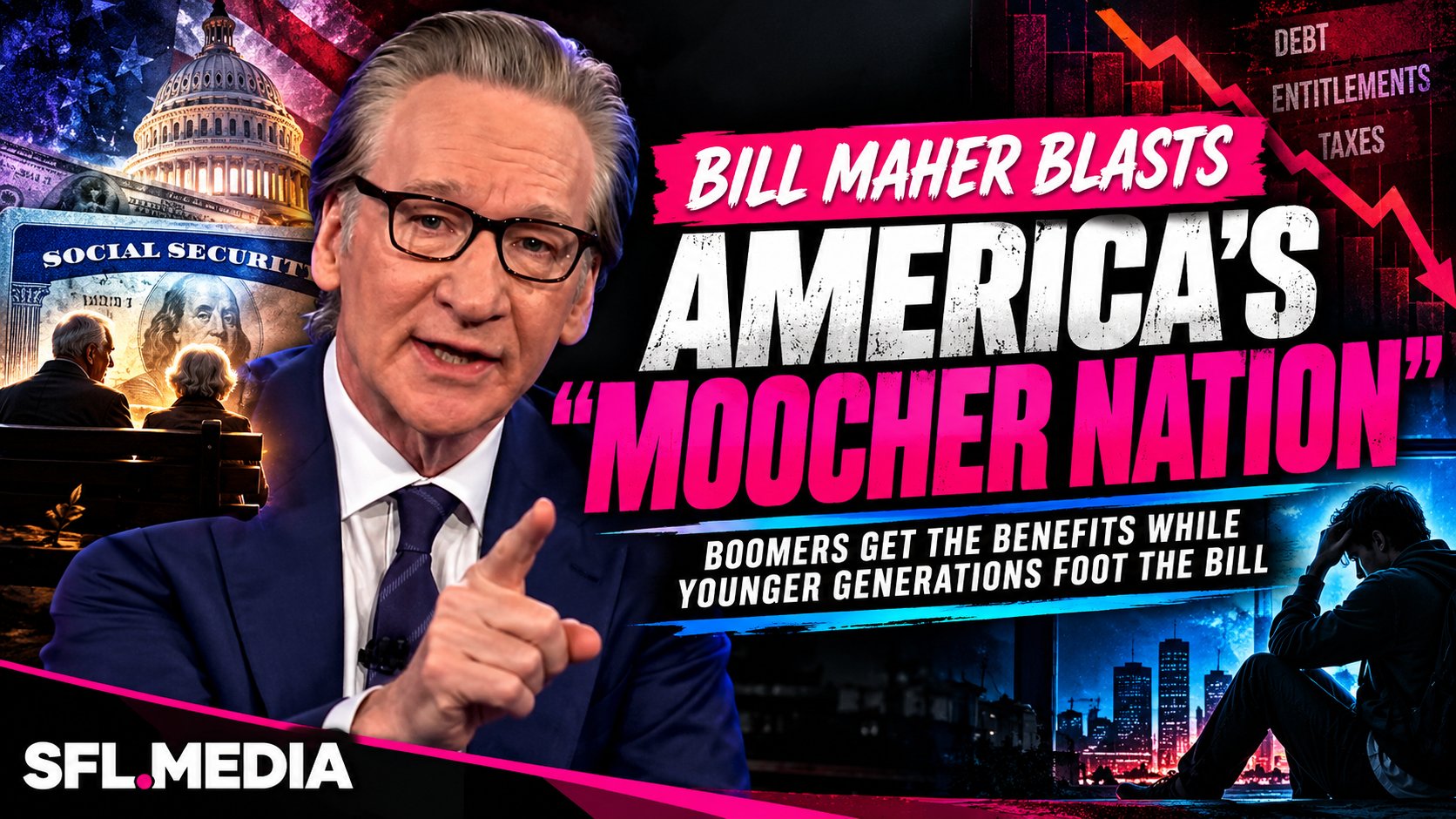
Bill Maher has a new prescription for America’s increasingly lonely, digitally isolated workforce: stop treating every office romance like a pending HR catastrophe.
During his latest “New Rules” segment on HBO’s Real Time with Bill Maher, the comedian argued that America’s campaign to eliminate romantic relationships from workplaces has collided with another cultural problem. Younger Americans are socializing less, dating less and increasingly struggling to form relationships in the real world, while employers and institutions continue restricting one of the places where adults have historically met romantic partners: work.
Maher’s argument is deliberately provocative but relatively simple. Americans spend enormous portions of their lives at work, where friendships, attraction and relationships naturally develop. If society simultaneously complains that dating apps are miserable, young people are lonely and adults no longer meet organically, Maher argues it makes little sense to eliminate one of the remaining environments where people regularly get to know each other face to face.
The distinction, however, is important. Maher isn’t arguing that sexual harassment or coercion should be tolerated. His broader argument is that consensual relationships between adults should not automatically be treated as misconduct simply because two people work together. That question becomes considerably more complicated when one person controls the other’s salary, assignments, promotion or career, precisely the problem that has driven many corporate and congressional restrictions on relationships between supervisors and subordinates.
Maher Takes Aim at America’s Loneliness Problem
Maher connected workplace dating restrictions to a much larger transformation in American social life. Americans increasingly communicate through phones, dating apps and social media while spending less time interacting face to face. Dating apps were supposed to make finding partners easier, but for many users they have transformed dating into an endless marketplace of profiles, swipes and disposable conversations.
Work is fundamentally different because coworkers repeatedly interact in the real world. They see how another person behaves under stress, whether they are funny, competent, reliable or impossible to tolerate. Relationships can develop gradually over weeks or months rather than being determined by a photograph, a short biography and an algorithm. Maher’s point is that society cannot simultaneously mourn the disappearance of organic human connection while declaring more of the places where those connections historically formed inappropriate for romance.
Workplace Romance Is Still Remarkably Common
Maher cited a Forbes Advisor survey that found 43% of respondents who had experienced workplace romance eventually married someone they worked with. The same survey found more than 60% of adults reported having participated in a workplace romance, while 61% of respondents who had dated coworkers cited a lack of time outside work to meet romantic partners as one reason office relationships happen.
Those numbers make workplace romance difficult to dismiss as some fringe behavior. Millions of Americans spend more waking hours with coworkers than almost anyone else in their lives, making attraction and relationships statistically inevitable in large organizations.
The same research, however, demonstrates why employers remain nervous. Forbes found 57% of respondents said workplace relationships affected their job performance, 35% did not disclose their relationship to their employer and 40% of respondents who had experienced an office romance acknowledged cheating on an existing partner with a colleague. Workplace relationships are neither the romantic paradise Maher jokingly describes nor the automatic HR disaster critics sometimes portray. They are complicated largely because human relationships themselves are complicated.
Congress Has Become Ground Zero for the Debate
Maher then turned his attention to Capitol Hill, where years of sexual misconduct controversies have triggered increased scrutiny of relationships involving lawmakers and congressional employees. Current House rules prohibit members from engaging in sexual relationships with employees under their supervision, restrictions created in response to legitimate concerns about coercion, retaliation and the enormous power imbalance between elected officials and comparatively junior congressional staffers.
Maher singled out Republican House Speaker Mike Johnson and Democratic Rep. Alexandria Ocasio-Cortez while criticizing efforts to expand restrictions involving relationships with Capitol Hill employees. His argument is that congressional staffers may represent a particularly strong example of why sweeping prohibitions can become unrealistic. Capitol Hill employees routinely work extremely long hours in an environment where professional and social lives heavily overlap. When nearly everyone a person knows is connected to politics and most waking hours are consumed by work, the pool of people available to meet outside that environment becomes significantly smaller.
The counterargument is equally significant. Congress isn’t an ordinary workplace. Members possess extraordinary institutional and professional power, while junior aides may depend on lawmakers and senior staff for assignments, promotions, recommendations and future employment. A relationship that appears consensual can therefore become considerably more complicated when one person’s career depends upon the other.
The Chuck Edwards Case Shows Where Maher’s Argument Gets Complicated
Maher devoted part of the segment to North Carolina Republican Rep. Chuck Edwards, whose treatment of two young female employees became the subject of a House Ethics Committee investigation. The bipartisan committee ultimately recommended that the House formally censure Edwards after finding what it described as persistent unprofessional and inappropriate conduct involving the staffers.
The committee found no evidence that Edwards engaged in sexual activity with the women or explicitly propositioned them, and Edwards maintained that he did not intend his behavior as sexual or romantic. Investigators nevertheless documented conduct that went considerably beyond an ordinary professional relationship. According to the committee’s findings, Edwards repeatedly gave the women expensive personal gifts, commented on their appearances, invited them to private dinners and trips and sent highly affectionate messages and notes. Reported gifts included jewelry, designer purses, shoes, flowers, electronics, trips, performance tickets, a robotic vacuum and personalized firearms.
Maher turned the extraordinary volume of gifts into one of the segment’s biggest jokes, portraying Edwards less as a predatory boss than a man spending an enormous amount of money to remain trapped in the “friend zone.” The underlying Ethics Committee findings were more serious. Investigators concluded that the staffers were uncomfortable with Edwards’ behavior and had been placed in an untenable position because Edwards was their boss. The committee also concluded that a reasonable observer could interpret his conduct as romantic despite Edwards’ insistence that this was not his intention. Edwards subsequently abandoned his 2026 reelection campaign following the committee’s recommendation for censure.
The Edwards case illustrates the critical distinction at the center of the workplace romance debate. Two similarly positioned coworkers who voluntarily begin dating present a fundamentally different ethical situation from a powerful elected official pursuing or showering gifts on employees whose careers he controls.

The Office May Be Maher’s Best Exhibit
Maher eventually reached for perhaps the most recognizable cultural example available: The Office. One of the most beloved American sitcoms of the 21st century is essentially nine seasons of coworkers becoming romantically entangled with each other. Jim and Pam, Dwight and Angela, Michael and Jan, Michael and Holly, Ryan and Kelly, Andy and Angela, from an HR perspective, Dunder Mifflin’s Scranton branch was a rolling workplace liability convention.
From an audience perspective, however, those relationships were the emotional engine of the series. Jim and Pam became one of modern television’s most recognizable couples precisely because viewers watched two ordinary people slowly develop feelings for each other while spending their lives together at work. Maher’s point is that American culture enthusiastically celebrates this dynamic in fiction while increasingly treating the same phenomenon as suspicious in real life.
The comparison is obviously comedic rather than legal analysis, but it exposes a genuine cultural contradiction. Americans still romanticize the idea of meeting someone naturally through everyday life, yet many of the environments where that historically happened have disappeared, moved online or become professionally sensitive.
The Real Question Isn’t Whether Coworkers Should Date
There is an important distinction buried beneath Maher’s comedy. “Workplace romance” is an enormous category encompassing fundamentally different relationships. Two coworkers with comparable authority who meet at work, begin dating and eventually marry do not necessarily present the same ethical problem as a CEO dating an entry-level employee, a professor dating a student or a member of Congress pursuing someone whose salary and professional future they directly control.
Treating all those relationships identically makes little sense, but pretending power dynamics are imaginary is equally unrealistic. A relationship can involve two consenting adults while still creating enormous professional pressure when one person controls the other’s assignments, compensation, promotion or continued employment. Even a genuinely consensual relationship can create favoritism concerns for other employees or become professionally destructive after a breakup.
The challenge for employers should therefore be less about attempting to eliminate human attraction and more about distinguishing consensual relationships from harassment, coercion, conflicts of interest, favoritism and retaliation. That requires considerably more nuance than simply declaring the workplace a romance-free zone.
America Has Created a Strange Dating Contradiction
Maher’s larger argument resonates because it identifies a real contradiction in modern American life. People are repeatedly told they should meet romantic partners organically instead of relying entirely on dating apps, but approaching strangers can be considered intrusive, dating coworkers can create professional complications and relationships involving supervisors can create legitimate ethical and legal problems. Meanwhile, traditional social institutions such as neighborhood organizations, churches, civic groups and local clubs occupy less of many Americans’ lives, while remote work has eliminated another major source of routine social interaction.
There is no serious argument for returning to an era when powerful bosses could proposition employees without consequences. Workplace harassment protections exist because abuse was real, widespread and frequently ignored. The #MeToo movement exposed numerous cases in which powerful people exploited professional authority while victims feared that resisting them could destroy their careers.
But there is also a meaningful difference between protecting employees from exploitation and attempting to regulate ordinary human attraction out of existence. A workplace where a supervisor cannot pressure a subordinate into a relationship is a reasonable goal. A society where consenting adults are increasingly afraid to approach anyone they actually know may be creating a different problem.
That is ultimately where Maher’s latest “New Rules” lands. If Americans are increasingly lonely, increasingly online and increasingly frustrated with algorithmic dating, perhaps the answer isn’t to designate another major part of adult life as a place where romance is automatically forbidden. Adults still need environments where they can actually meet, spend time together and form meaningful relationships.
For millions of Americans, whether HR likes it or not, one of those places has always been work.
Sources
Real Time with Bill Maher — “New Rule: Free Workplace Romance!”
https://www.youtube.com/watch?v=hMSIl5E7hz8
Forbes Advisor — Workplace Romance Statistics
https://www.forbes.com/advisor/business/workplace-romance-statistics/
Roll Call — House Ethics Panel Recommends Censure of Rep. Chuck Edwards
https://rollcall.com/2026/08/03/ethics-panel-recommends-censure-chuck-edwards/
The Washington Post — House Ethics Findings on Chuck Edwards
https://www.washingtonpost.com/politics/2026/08/03/house-panel-seeks-censure-rep-chuck-edwards-treatment-female-staff/
Associated Press — Chuck Edwards Ends Reelection Campaign Following Ethics Findings
https://apnews.com/article/d7b4da2002915b3ff1352cf3bb95a754


















































Want to join the conversation?
Create an account or sign in to share your thoughts, vote,
and reply to other readers.
Showing 0 of 0 comments
Don't have an account?
Already have an account?