
Bill Maher Says America’s Melting Pot Is Breaking Down as He Takes on Immigration, Islam and the Progressive Left
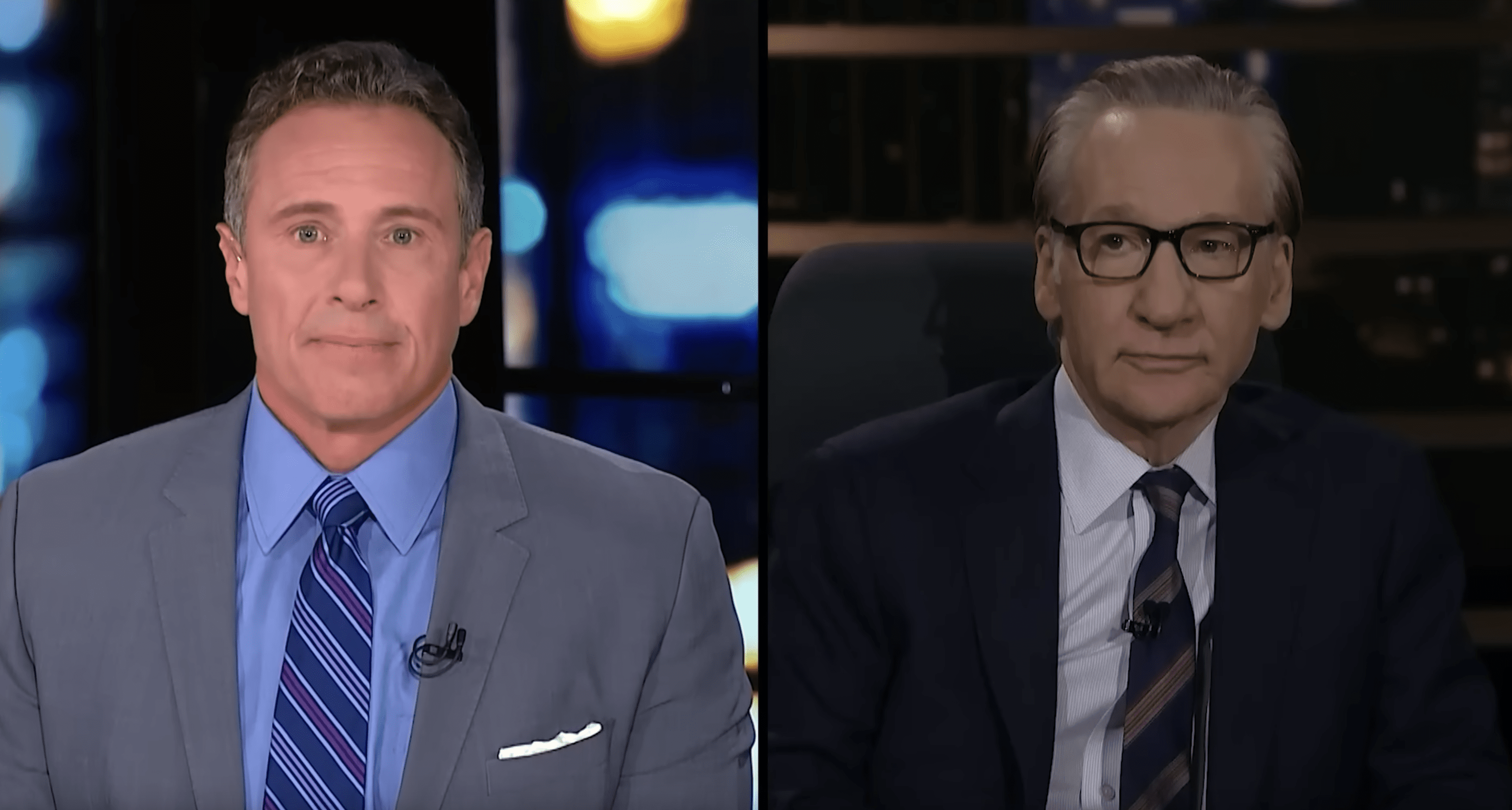
Bill Maher used the closing “New Rules” editorial of his latest episode of HBO’s Real Time with Bill Maher to wade directly into one of America’s most politically combustible debates, immigration, assimilation and whether a liberal democracy can remain liberal if it becomes afraid to demand adherence to its most fundamental values.
In the segment, titled “Melt in America,” Maher argued that the United States should remain a nation that welcomes immigrants from around the world while simultaneously restoring something he believes has increasingly disappeared from the immigration debate, the expectation that newcomers assimilate into the basic civic values of the country they have chosen to join.
The distinction is central to Maher’s argument. He is not calling for immigrants to abandon their food, religion, language, clothing, holidays, music or cultural traditions. Instead, Maher argues that underneath America’s multiculturalism must exist a shared commitment to democracy, equality between men and women, LGBTQ+ rights, freedom of expression and the separation of religious authority from secular government.
His message was essentially: bring your culture, but the Constitution still wins.
It was classic Maher, intentionally provocative, occasionally crude and designed to irritate portions of both the political left and right. But beneath the comedy was a serious argument about a contradiction Maher believes modern progressives increasingly refuse to confront: What happens when tolerance for cultural and religious diversity collides with intolerance toward women, gay people, religious dissenters and other minorities?
Maher Says Immigration and Assimilation Are Not the Same Thing
Maher began with America’s traditional self image as a melting pot, arguing that one of the country’s greatest strengths has historically been its ability to attract ambitious and talented people from across the world and eventually incorporate them into American society. But Maher contends something has changed. In his view, celebrating multiculturalism has increasingly become confused with the idea that asking immigrants to assimilate into any shared American civic culture is inherently offensive.
Maher rejects that premise. His argument is not that immigrants should become culturally indistinguishable from people whose families have lived in America for generations. It is that immigration into a liberal democracy comes with an expectation that certain principles outrank cultural tradition. Those principles include women’s equality, freedom of religion and freedom from religion, freedom of speech, democratic government and equal treatment for LGBTQ+ citizens.
Maher described those principles as non-negotiable.
That distinction matters because Maher’s argument can easily be flattened into a simplistic anti-immigration message when it is considerably more complicated. Maher remains broadly supportive of immigration and has repeatedly attacked Donald Trump and the MAGA movement. His argument here is aimed at both sides, conservatives who demonize immigrants and progressives who, in his view, sometimes become so uncomfortable criticizing minority cultures that they abandon the liberal principles they otherwise claim to defend.
Maher Targets a Democratic Candidate Over LGBTQ+ Rights
One of Maher’s sharpest examples involved Melissa Chaudhry, a Democratic congressional candidate in Washington state’s 9th Congressional District. Chaudhry became the subject of controversy after acknowledging that she had been cautious about publicly emphasizing her LGBTQ+ positions because some Muslim constituents did not share those views.
The Stranger reported that Chaudhry had omitted an explicitly pro-LGBTQ+ position from her campaign website, prompting Washington Stonewall Democrats to urge organizations that had endorsed her to reconsider their support. Chaudhry maintained that she supported LGBTQ+ protections, and her campaign platform now explicitly supports LGBTQ+ equality and civil rights.
That became exactly the type of progressive contradiction Maher loves attacking. His point was not that Chaudhry herself opposed LGBTQ+ equality. The more uncomfortable question was why a progressive politician should become less vocal about gay rights because a socially conservative religious constituency might object.
If conservative evangelical Christians demanded that a Democratic candidate downplay LGBTQ+ rights to avoid offending them, progressives would almost certainly condemn it. Maher’s argument is that the principle should not change because the religious conservatives involved happen to be Muslim.
That is where his argument becomes particularly uncomfortable for portions of the progressive coalition. Maher believes liberalism loses credibility when it applies its principles selectively.
The Gay Cruise Incident Gave Maher a Real-World Example
Maher then pointed to a bizarre international incident involving nearly 2,000 predominantly gay travelers aboard Virgin Voyages’ Scarlet Lady, chartered by LGBTQ+ travel company Atlantis Events. The cruise was scheduled to visit Turkey, including Kuşadası and Istanbul, but the planned stops were blocked amid controversy surrounding the LGBTQ+ passengers. The ship was then rerouted toward Alexandria, Egypt, where it was also denied entry before continuing elsewhere in the Mediterranean.
The incident received particular attention in South Florida after a local passenger traveling with his husband spoke publicly about the experience.
For Maher, the episode illustrated his larger argument almost perfectly. Countries can aggressively enforce conservative cultural norms when LGBTQ+ visitors arrive, he argued, while Western societies are increasingly told that expecting newcomers to respect Western liberal norms amounts to intolerance.
Maher effectively reversed the question: If another society can declare homosexuality incompatible with its values, why can’t a liberal democracy declare homophobia incompatible with its values?
Maher Revives the Assimilation Debate
Maher also brought activist Linda Sarsour into the discussion, resurfacing past comments in which she argued that protecting Muslim communities should take priority over assimilation. Those remarks were originally made in the context of political pressure facing Muslim Americans during Trump’s first administration, and that context matters. But the comments have continued circulating because they represent a genuine philosophical divide over what assimilation should mean in modern America.
To some Americans, assimilation means abandoning cultural identity and conforming to a dominant culture. Maher’s version is different. He is arguing for civic assimilation rather than cultural uniformity.
Eat what you want. Worship how you want. Speak whatever language you want at home. Celebrate whatever holidays you want. Preserve your traditions.
But American law applies equally to everyone. Women have equal rights. Gay people are equal citizens. Religious authority does not supersede constitutional government. People are allowed to criticize religion. Democracy outranks theology.
That is the bargain Maher believes America should demand.
Where Maher’s Argument Gets More Complicated
The most controversial portion of the segment arrives when Maher moves from individual examples to broader questions about Islamic conservatism, Sharia and immigration into Western democracies.
This is where precision becomes especially important.
“Sharia” is not one universally agreed legal code. The term can describe religious and ethical guidance governing everything from prayer and personal conduct to marriage and inheritance and, under some interpretations, criminal law. Treating every Muslim who expresses support for Sharia as supporting theocratic government or brutal criminal punishments would therefore be misleading.
There is nevertheless legitimate polling showing substantial support for religious law among Muslim populations in some countries. A 2025 Pew Research Center survey found large majorities of Muslims surveyed in Bangladesh, Indonesia and Malaysia favored making Sharia the official law for Muslims in their countries. Attitudes were substantially different in Turkey, where support was considerably lower.
That complexity matters because Maher’s broader point should not be transformed into a claim that Muslims collectively reject democracy or liberal society. Muslim communities are politically, culturally and ideologically diverse, just like Christian, Jewish and other religious communities.
The legitimate democratic question is what happens when any religious doctrine — Islamic, Christian or otherwise — attempts to override secular law and the constitutional rights of other citizens.
Maher’s Actual Target Is Religious Fundamentalism
For all the attention his criticism of Islam receives, Maher has spent decades attacking organized religion broadly. Christian nationalism has hardly escaped him.
Maher’s worldview is fundamentally secular. His concern is less about which holy book someone reads than what happens when believers demand that everyone else live under their interpretation of it.
That distinction is especially important because the United States is simultaneously confronting a powerful Christian nationalist movement on the political right. A government imposing conservative Christian doctrine on reproductive rights, sexuality, education or marriage presents the same fundamental liberal-democratic problem Maher identifies when discussing Islamic fundamentalism: religious conviction attempting to become compulsory public law.
A liberal society protects your right to practice your religion.
It also protects everyone else’s right not to.
That is the principle holding Maher’s argument together.
Then Maher Turns to Europe’s Migration Crisis
The timing of “Melt in America” is particularly significant because Europe continues to confront enormous political pressure surrounding migration. Maher referenced the recent crisis involving Ceuta, the Spanish enclave on the North African coast bordering Morocco, where tens of thousands of people reportedly attempted to reach the territory amid rumors and social-media claims about access to the border.
Maher used the situation to challenge another politically explosive question: Where does legitimate asylum end and economic migration begin?
International asylum law exists for an important reason. People genuinely fleeing persecution and other qualifying threats have legal rights that wealthy democratic countries cannot simply wish away. But economic hardship by itself does not automatically qualify everyone for asylum.
Maher’s argument is that wealthy Western countries cannot function as the permanent economic escape valve for every struggling country on Earth. At some point, he argues, sustainable development requires functioning economies, institutions and opportunities within migrants’ home countries rather than a system in which enormous populations are encouraged to make dangerous journeys toward Europe or North America.
That argument will infuriate parts of the left. It will also sound increasingly familiar across Europe, where governments have spent years struggling to reconcile humanitarian obligations with border security and domestic political pressure.
The Progressive Blind Spot Maher Wants Democrats to Confront
The most politically interesting portion of Maher’s monologue may not actually be about immigration. It is about the modern left. Maher has spent years arguing that progressives sometimes become trapped by their own hierarchy of marginalized groups. LGBTQ+ rights must be protected. Women’s equality must be protected. Religious minorities must be protected. Immigrants must be protected. But what happens when members of one historically marginalized community hold socially conservative views about another?
Maher argues that too many progressives freeze. Criticizing conservative Christians for opposing gay marriage is easy in progressive politics. Criticizing conservative Muslims for opposing gay rights becomes more complicated because progressives correctly recognize that Muslims themselves have frequently been targets of discrimination, xenophobia and political scapegoating. Maher’s response is that protecting Muslims from discrimination and criticizing illiberal religious beliefs are not mutually exclusive.
That may be the strongest part of his argument. A Muslim American should have exactly the same civil rights as a Christian American. And a Muslim cleric arguing against gay equality should be subject to exactly the same political and intellectual scrutiny as a Christian pastor making the same argument. Equal citizenship requires equal protection. It also requires equal standards.
But Assimilation Has a Darker American History Too
There is another side of the argument that deserves acknowledgment. “Assimilation” is not an ideologically neutral word in American history. Immigrants have repeatedly faced pressure to suppress languages, traditions and identities to become sufficiently “American.” Different generations of Irish, Italian, Jewish, Asian, Latino and other immigrants encountered discrimination even while successfully becoming part of American society.
Critics of Maher’s framing can reasonably argue that America has sometimes demanded cultural conformity from immigrants while simultaneously preventing certain groups from ever being fully accepted as American. That history is real. The challenge is separating coercive cultural conformity from the shared civic expectations required to maintain a liberal democracy. Those are not the same thing.
Requiring an immigrant to stop speaking Arabic is cultural authoritarianism. Requiring that immigrant to respect another citizen’s equal protection under American law is constitutional government. That distinction is where a more serious version of the assimilation debate needs to begin.
‘Melt in America’ Is Classic Bill Maher
Maher has built his career by wandering directly into political arguments that many other liberal entertainers would rather avoid, and “Melt in America” is another example. The segment will inevitably be clipped by conservatives as evidence that even Bill Maher thinks liberals have lost their minds on immigration. Progressives will accuse him of flattening complicated immigrant communities and disproportionately focusing on Islamic conservatism. Both reactions miss part of the more interesting argument underneath the monologue.
Maher is asking what a multicultural liberal democracy actually requires from the people living inside it. America can accommodate thousands of cultures. It cannot operate under thousands of competing legal systems. People can disagree about religion, sexuality, gender, politics and morality. That is the entire point of living in a free society. What they cannot do is strip their neighbors of equal citizenship because their religion, culture or political ideology says they should.
That principle applies to an Islamic fundamentalist who wants religious law imposed on others. It applies to a Christian nationalist who wants biblical doctrine enforced by government. It applies to immigrants. And it applies to Americans whose families arrived generations ago. Maher’s “Melt in America” is deliberately provocative entertainment, but underneath the jokes is a question considerably more serious than the culture-war framing surrounding it:
Can America remain the world’s great melting pot without maintaining a common civic foundation underneath all that diversity?
Maher’s answer is yes, but only if the country remembers that tolerance does not require tolerating intolerance.
Sources
Real Time with Bill Maher — “New Rule: Melt in America”
The Stranger — Melissa Chaudhry LGBTQ+ Controversy
Melissa Chaudhry for Congress — Campaign Platform
The Washington Post — LGBTQ+ Cruise Denied Entry
Local 10 — South Florida Passenger Discusses LGBTQ+ Cruise Controversy















































Want to join the conversation?
Create an account or sign in to share your thoughts, vote,
and reply to other readers.
Showing 0 of 0 comments
Don't have an account?
Already have an account?