
Elon Musk’s Empire of Influence: Billions in Taxpayer Dollars, Battlefield Power, Federal Investigations and the Growing Crisis of Accountability
From SpaceX and Tesla to Starlink, DOGE and X, Elon Musk has accumulated extraordinary influence over American government, national security and global communications. Now, allegations of interference in Ukraine’s military operations, threats against congressional investigators and a growing history of regulatory disputes are raising a fundamental question: Has one billionaire become too powerful for Washington to hold accountable?
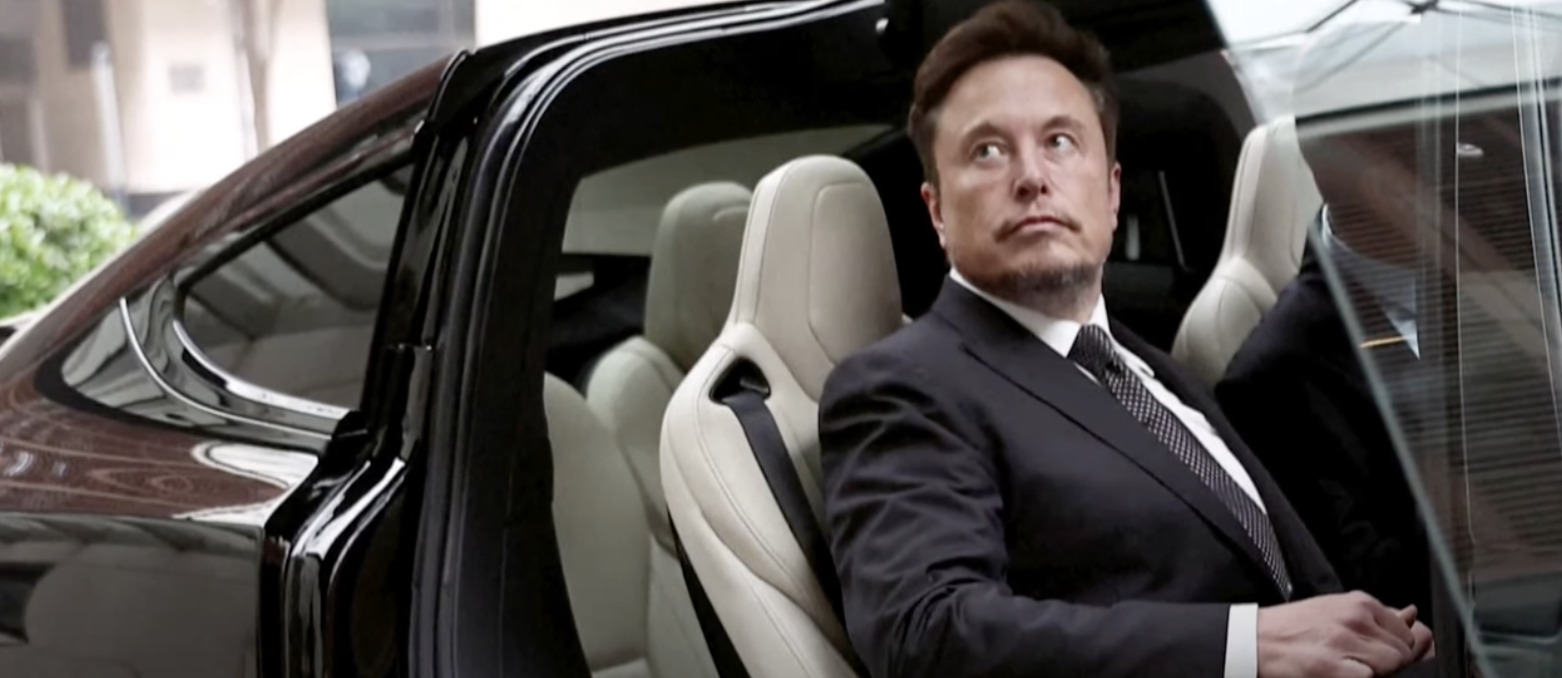
WASHINGTON, D.C. — Elon Musk has built a business empire that reaches into nearly every corner of American power. His companies manufacture electric vehicles, launch national security satellites, transport astronauts, provide military communications, develop artificial intelligence and operate one of the world’s most influential social media platforms. At the same time, his businesses have benefited from billions of dollars in federal contracts, government incentives and other forms of taxpayer supported investment. The result is an extraordinary concentration of technological, financial and political influence in the hands of a billionaire whose companies have repeatedly clashed with federal regulators, workers, shareholders and government officials.
Musk’s defenders see a visionary entrepreneur whose companies have accomplished what established corporations and government agencies struggled to achieve. SpaceX transformed the economics of orbital launches, Tesla helped accelerate the electric vehicle industry, and Starlink has provided critical communications capabilities to remote communities and military forces. Those achievements are substantial, but they have also made Musk’s companies increasingly difficult for the federal government to replace, particularly in areas involving national security and space infrastructure.
His critics see a more troubling arrangement: a businessman whose enterprises depend heavily on government business while he attacks the institutions responsible for regulating them, whose participation in federal government operations created serious conflict of interest concerns, and whose control over satellite communications has raised unprecedented questions about the ability of private corporations to influence military operations. The controversy has intensified as lawmakers demand answers about restrictions affecting Ukraine’s military communications and Musk publicly warns Democratic politicians against investigating his businesses.
The distinction between documented misconduct, unresolved allegations and political criticism is essential. Musk has faced federal enforcement actions, civil lawsuits and regulatory investigations, but those proceedings do not establish that he has committed every offense alleged by critics. Similarly, business relationships or reported communications with foreign leaders do not independently demonstrate espionage, illegal foreign influence or criminal wrongdoing. Nevertheless, the cumulative record raises significant questions about national security, corporate governance, government contracting and whether American institutions have adequate authority to oversee companies that have become strategically indispensable.
Starlink, Ukraine and the Extraordinary Power to Influence a War
Perhaps no controversy better illustrates Musk’s unusual geopolitical influence than SpaceX’s role in Ukraine. Following Russia’s full scale invasion in February 2022, Starlink became a critical communications resource for Ukrainian soldiers, emergency responders and civilian institutions. Its satellite network provided connectivity when conventional telecommunications infrastructure was damaged or destroyed, allowing military units and public agencies to maintain communications under extraordinarily difficult conditions.
But the same technology that helped Ukraine defend itself exposed a remarkable strategic vulnerability. Access to essential battlefield communications depended partly on the decisions, technical capabilities and contractual obligations of a private American corporation. Unlike conventional military infrastructure directly operated by a national defense establishment, satellite connectivity could be affected by corporate service policies, commercial restrictions and decisions made thousands of miles from the battlefield.
That vulnerability became a major international controversy in September 2023 following reporting based on Walter Isaacson’s biography of Musk. Initial accounts suggested that Musk had ordered Starlink service disabled near Crimea to prevent a Ukrainian maritime drone attack against Russian naval vessels. Isaacson subsequently clarified that service had not been activated in the relevant area and that Musk had declined a Ukrainian request to extend coverage. Musk maintained that he had not disconnected an existing service and argued that facilitating the operation could have escalated the war.
The correction was important because refusing to activate additional coverage is not the same as deliberately shutting down communications during an ongoing operation. Nevertheless, the incident demonstrated how the policies and decisions of a private satellite provider could influence the military capabilities of a sovereign nation defending itself against an invasion.
October 2026: New Starshield Restrictions Trigger Bipartisan Demands for an Investigation
The controversy has intensified dramatically following reports that restrictions imposed on SpaceX satellite communications disrupted Ukrainian military drone operations in October 2026. Ukrainian officials reported that connectivity problems affected equipment operating above certain speeds, including drones used in military operations and efforts to intercept incoming Russian attacks. Reporting described speed restrictions around 100 miles per hour, raising concerns that previously functioning systems had become unreliable during active combat.
Reuters reported that a directive to restrict Ukraine’s military satellite communications originated within the White House, citing American and Western officials familiar with the matter. Separate reporting by The Telegraph alleged that Musk had proposed speed restrictions to President Donald Trump, who subsequently approved the idea. Those accounts have not established the complete chain of command through publicly released government records, and Trump denied personally ordering the restrictions. Musk, meanwhile, maintained that Starshield systems were controlled by the United States government and that operational restrictions were determined by military authorities and ultimately the president.
The distinction is consequential. If the restrictions originated with the White House, the administration faces questions about why an American ally’s military communications were constrained while Russia continued attacking Ukrainian infrastructure. If Musk personally proposed the changes, investigators must determine whether he acted in a private advisory capacity, whether the proposal was evaluated through appropriate national security channels and whether contractual obligations were respected. If SpaceX independently imposed restrictions beyond government instructions, the company could face additional questions concerning its responsibilities as a defense contractor.
On October 21, Republican Representative Brian Fitzpatrick called for a congressional investigation into the reported slowdown, arguing that the matter was too serious to ignore. Fitzpatrick said investigators needed to determine whether Musk personally ordered restrictions affecting military grade satellite services and whether doing so would have violated applicable law. His comments were particularly significant because they demonstrated that concern over the incident extended beyond Democratic critics of Musk.
The controversy took another turn on October 22 when Radio Free Europe/Radio Liberty reported that Ukraine still had not received answers from the Pentagon or SpaceX. Denys Sienik, Ukraine’s chargé d’affaires in Washington, said the restrictions remained in effect and that Kyiv had received no response explaining the situation. The continuing uncertainty raised questions about whether Ukrainian commanders had adequate warning, whether the restrictions had been properly authorized and whether the United States had fully evaluated their consequences.
SFL Media previously examined these allegations in its reporting on Musk’s satellite restrictions, the White House’s reported involvement and the consequences for Ukraine’s defense. The latest congressional demands strengthen the case for an independent investigation capable of establishing who initiated the restrictions, who authorized them, which contracts governed the services and whether Ukrainian military officials were properly informed.
Starlink Versus Starshield: Who Controls America’s Military Satellite Infrastructure?
Understanding the controversy requires distinguishing between Starlink, SpaceX’s commercial satellite internet service, and Starshield, its government focused national security program. Starlink primarily serves consumers, businesses and government customers, with commercial service terms restricting certain military uses. Starshield is designed for defense and intelligence applications, including secure communications, specialized satellite capabilities and government missions governed by procurement agreements.
That distinction matters because purchasing a military communications service can establish contractual obligations substantially different from those governing an ordinary commercial subscription. However, the existence of a Pentagon contract does not automatically establish that the government possesses complete technical control over every component of the network. Authority over coverage areas, operating restrictions, terminal access and service continuity depends on the relevant contracts, technical architecture and applicable laws.
This creates a serious accountability problem when military communications depend on infrastructure operated by a private contractor. Who has the technical ability to restrict service during combat? Which changes require Pentagon approval? Can a corporate executive recommend limitations that directly affect military operations? What happens when a contractor’s commercial interests, political preferences or risk calculations conflict with the operational requirements of an American ally?
The central national security issue is not simply whether Musk personally ordered a particular restriction. It is whether the United States has established enforceable safeguards preventing essential military communications from being altered without appropriate authorization, oversight and accountability.
International Law, Presidential Authority and the Possibility of Government Intervention
The legal framework governing private satellite networks is considerably more complicated than the suggestion that a corporation can operate beyond government authority. Article VI of the 1967 Outer Space Treaty makes participating states internationally responsible for their national activities in outer space, including activities conducted by private companies. It also requires authorization and continuing supervision of nongovernmental space operations, establishing an important legal foundation for government oversight of commercial satellite systems.
That responsibility does not mean every operational decision by an American satellite company automatically constitutes an act of war by the United States. Nor does it mean that any satellite supporting military communications automatically becomes a lawful military target. International humanitarian law evaluates whether an object qualifies as a military objective based on its contribution to military action and the military advantage offered by its destruction or neutralization, while continuing to impose restrictions involving proportionality and precautions.
The United States also possesses emergency powers under Section 606 of Title 47 of the U.S. Code, which authorizes certain presidential actions affecting communications systems under specified circumstances. However, the statute does not provide unrestricted authority to confiscate SpaceX or permanently nationalize Starlink simply because government officials disagree with Musk. Any such intervention would require careful examination of statutory authority, constitutional protections, property rights, compensation requirements and the specific communications infrastructure involved.
A more immediate policy response could involve stronger defense contracts, government controlled communications alternatives, mandatory service continuity protections and clearer restrictions on unilateral changes affecting active military operations. Such reforms would address the vulnerability without requiring the federal government to establish criminal wrongdoing as a prerequisite for improving national security.
Musk’s Reported Communications With Vladimir Putin Raise Security Concerns
Questions about Musk’s influence over Ukraine’s military capabilities have become more sensitive because of reporting concerning his contacts with Russian President Vladimir Putin. In October 2024, The Wall Street Journal reported that Musk had maintained communications with Putin beginning in late 2022, citing current and former officials familiar with the conversations. The newspaper described discussions involving personal matters, business interests and geopolitics, including an allegation that Putin had asked Musk not to activate Starlink over Taiwan as a favor to Chinese President Xi Jinping.
The report did not establish that Musk complied with the alleged request or entered into an unlawful arrangement with either government. Musk disputed aspects of reporting about his communications with Russian leadership. Nevertheless, the allegations raised legitimate counterintelligence questions because SpaceX performs sensitive work for the American government, including national security launches and classified programs.
Foreign contacts involving individuals with access to sensitive defense information can trigger reporting obligations depending on their security clearance status, the nature of the communications and applicable disclosure requirements. Investigators could reasonably examine whether any required disclosures were made and whether foreign officials attempted to influence decisions affecting American security interests. However, the available reporting does not establish that Musk is a Russian or Chinese agent, that he acted under the direction of a foreign government or that he violated the Foreign Agents Registration Act.
The concern is therefore not whether Musk should be presumed guilty because he reportedly communicated with foreign leaders. It is whether executives controlling strategically important American infrastructure face sufficient oversight when their commercial relationships and private diplomacy intersect with the interests of geopolitical adversaries.
DOGE: The Government Efficiency Campaign That Created New Questions About Waste, Savings and Accountability
Musk’s involvement in the Trump administration’s Department of Government Efficiency, commonly known as DOGE, created another extraordinary intersection of private financial interests and public authority. The initiative promised to eliminate waste, reduce federal spending, modernize government operations and dramatically shrink the federal bureaucracy. Its activities included workforce reductions, contract cancellations, agency reorganizations and efforts to gain access to federal information systems.
DOGE’s financial claims, however, became a major source of controversy. In August 2026, The Washington Post reported that the Government Accountability Office had identified significant errors in the initiative’s reported savings, including billions of dollars that could not be independently verified. Some contracts and leases had been counted incorrectly, while other savings were attributed to DOGE despite decisions that predated its involvement. Those findings challenged the reliability of the initiative’s public accounting and raised questions about whether the government had accurately measured the results of its cost-cutting campaign.
The findings do not establish that DOGE saved no money whatsoever. They do demonstrate why announced contract cancellations cannot automatically be treated as actual reductions in government spending. A contract may have already been substantially paid, a replacement service may be necessary, or workforce reductions may generate additional expenses through litigation, rehiring, administrative disruption and diminished services. Any credible assessment must consider independently verified net savings rather than simply adding together the advertised values of canceled contracts.
The controversy is particularly significant because DOGE operated under the banner of financial accountability while Musk’s own companies maintained extensive relationships with the federal government. The resulting contradiction was difficult to ignore: a billionaire whose businesses depended on public contracts was helping reshape the institutions responsible for managing government spending and overseeing corporate compliance.
DOGE’s Access to Sensitive Federal Information Raises Privacy and Conflict of Interest Concerns
The controversy surrounding DOGE extended beyond financial accounting into the handling of sensitive government information. A June 2025 Washington Post investigation reported that DOGE had obtained access capabilities involving records at multiple federal agencies containing information potentially valuable to Musk’s businesses. Those records included sensitive details involving government contracts, regulatory activities and companies competing with his commercial ventures.
Reuters separately reported that DOGE personnel sought extensive access to Securities and Exchange Commission systems, including internal communications, personnel information, contracts and payment records. The requests were particularly sensitive because the SEC had previously investigated and pursued enforcement actions involving Musk and his companies. Access to confidential information about competitors, regulatory strategies or ongoing investigations could create serious conflicts if appropriate safeguards were absent.
The existence of access permissions does not prove that DOGE personnel stole information, transferred government records to Musk’s companies or used confidential data for private financial gain. Establishing such misconduct would require forensic evidence, access logs, communications or other documentation demonstrating unauthorized activity. Nevertheless, the breadth of the reported access raises substantial questions about cybersecurity controls, conflict screening, the separation of government and private business interests, and whether federal agencies retained adequate authority over their own information systems.
For Congress, the appropriate investigation would examine precisely what information DOGE personnel accessed, who authorized that access, whether restrictions were imposed on sensitive commercial records and whether any information was retained or shared beyond its authorized purpose. Those are questions of public accountability, not simply partisan disagreement.
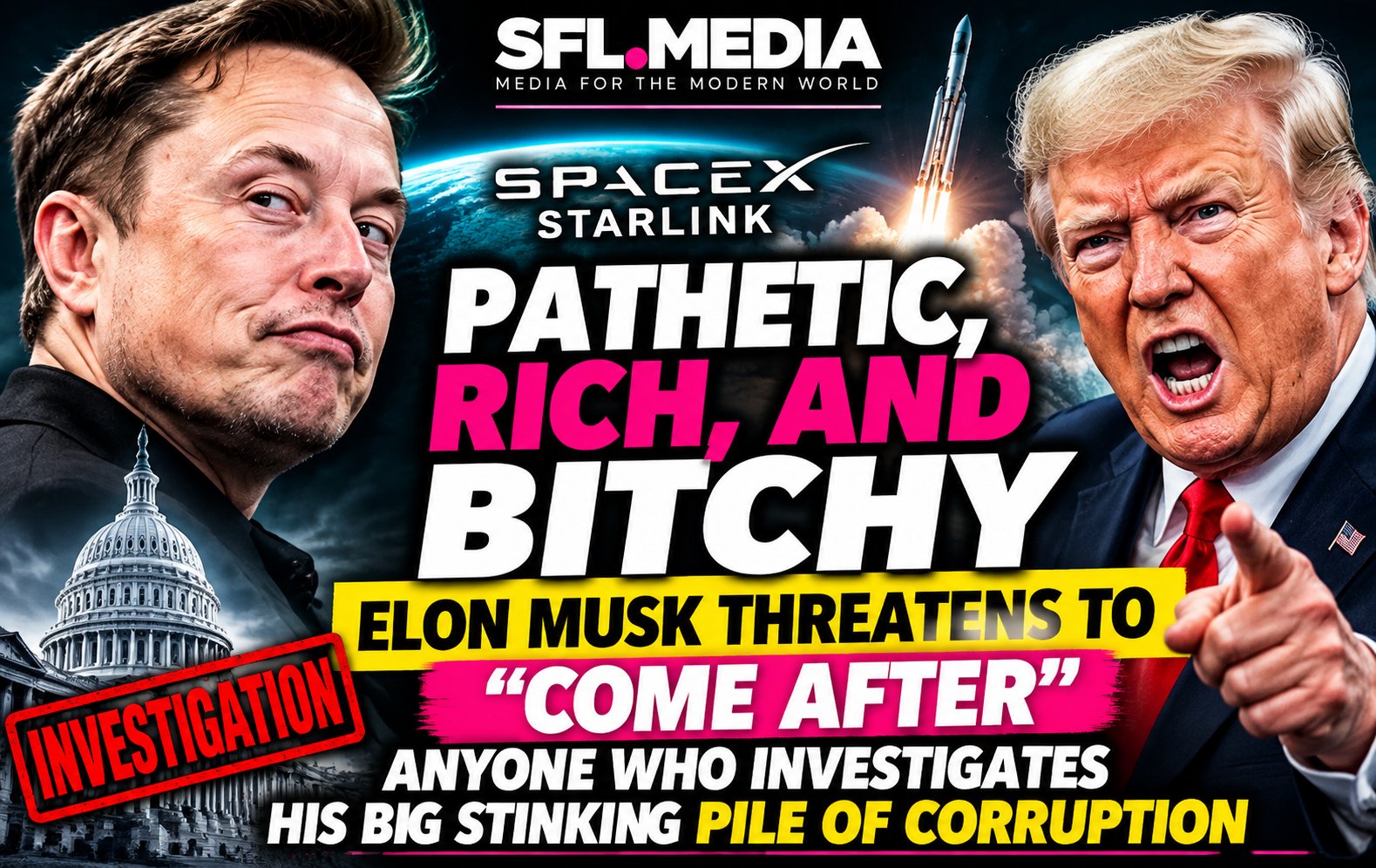
Billions in Federal Contracts: Musk’s Complicated Relationship With the Government
Musk has frequently criticized government regulation, federal bureaucracy and public spending, yet government agencies have played an important role in the growth of his businesses. SpaceX has secured major NASA and Department of Defense contracts involving astronaut transportation, cargo missions, satellite launches and national security infrastructure. Tesla has benefited from policies supporting electric vehicles, including consumer tax incentives and regulatory credit programs, although these financial arrangements differ substantially from direct government procurement.
Those relationships are not inherently improper. Federal agencies routinely contract with private businesses to obtain technology and services, and SpaceX has demonstrated capabilities that have made it a valuable government supplier. The issue arises when a major contractor obtains influence over government operations that could affect its own financial interests, regulatory exposure or competitors.
Federal conflict of interest provisions, including 18 U.S.C. § 208, can restrict government employees and certain special government employees from participating personally and substantially in official matters affecting their financial interests. Whether Musk’s DOGE activities violated any particular provision depends on his official status, the decisions involved, applicable exemptions or waivers and evidence of his participation. His ownership of companies receiving federal contracts does not automatically establish criminal wrongdoing, but it creates an obvious need for independent oversight and transparent conflict management procedures.
The government also faces a practical dilemma. SpaceX provides capabilities that cannot necessarily be replaced immediately without disrupting important missions. That dependency gives the company substantial commercial leverage and makes it more difficult for policymakers to consider punitive contracting measures without evaluating national security consequences.
Tesla, SpaceX, xAI and the Growing Web of Intercompany Financial Transactions
Musk’s collection of businesses has attracted increasing attention over how capital, technology, employees and commercial opportunities move between companies under his influence. Tesla is a publicly traded corporation with obligations to outside shareholders, while other Musk ventures have operated through different ownership and financing structures. Transactions between these businesses can create legitimate strategic opportunities, but they also introduce potential conflicts when the same individual has substantial influence over both sides of a deal.
In January 2026, Tesla disclosed an agreement to invest approximately $2 billion in xAI preferred stock, accompanied by a framework for potential artificial intelligence collaborations. Tesla described the arrangement as consistent with market terms and its broader AI strategy. The investment nevertheless raised governance questions about whether the transaction appropriately served Tesla shareholders and whether independent directors had adequately evaluated its financial and strategic implications.
On October 22, Reuters reported that Musk’s public support for a potential combination involving Tesla and SpaceX had complicated preliminary discussions over a transaction potentially valued in the trillions of dollars. The proposed arrangement had not been finalized, and special committees were reportedly involved in evaluating the discussions, with Musk recused from negotiations.
These developments make scrutiny of related-party transactions particularly important. Investigators and shareholders can reasonably examine whether valuations are fair, whether financing arrangements are adequately disclosed and whether transactions disproportionately benefit particular companies or investors. However, describing Musk’s business empire as a Ponzi scheme would exceed the available evidence. A Ponzi scheme is a specific fraudulent arrangement involving payments to earlier investors using funds from later investors rather than legitimate underlying economic activity. No established finding demonstrates that Musk’s businesses collectively operate in that manner.
The stronger investigative issue is whether an increasingly interconnected network of corporations can maintain sufficient financial transparency, independent governance and protection for minority shareholders as major transactions move between entities associated with the same controlling figure.
The SEC’s Twitter Stock Case and Musk’s History of Securities Enforcement
One of the clearest examples of formal federal enforcement involving Musk concerns his acquisition of Twitter, now known as X. In January 2025, the Securities and Exchange Commission sued Musk, alleging that he failed to disclose his accumulation of more than 5% of Twitter’s outstanding shares within the required reporting period in 2022. The agency alleged that the delay allowed him to continue purchasing shares at prices lower than those likely to have prevailed following a timely disclosure, estimating the financial benefit at at least $150 million.
Musk’s legal team disputed the allegations and challenged the SEC’s characterization of the matter. The proceedings subsequently developed further, with the SEC filing an amended complaint in May 2026 involving the Elon Musk Revocable Trust and proposing a $1.5 million civil penalty against the trust without an admission or denial of the allegations. A federal court approved a final judgment in July 2026.
The case illustrates the importance of distinguishing regulatory allegations from criminal convictions. It was a civil securities enforcement matter, and its eventual resolution should not be misrepresented as proof of a criminal fraud conviction against Musk. Nevertheless, the original allegations raised serious questions about compliance with disclosure rules intended to ensure that ordinary investors receive timely information about major stock acquisitions.
Musk’s earlier securities history also includes the SEC’s 2018 enforcement action concerning his public statements about potentially taking Tesla private at $420 per share with funding secured. That matter resulted in settlements involving Musk and Tesla, including financial penalties and corporate governance requirements. The episode remains a significant example of how statements by an influential executive can affect public markets and attract regulatory scrutiny.
Tesla’s Autonomous Driving Claims and Federal Safety Investigations
Tesla’s marketing of Autopilot and Full Self Driving technology has generated years of controversy involving vehicle safety, consumer expectations and the accuracy of public statements about autonomous capabilities. Federal safety regulators have investigated crashes involving Tesla driver assistance systems, including incidents involving emergency vehicles and questions about whether drivers adequately understood the systems’ limitations.
Musk has repeatedly made ambitious predictions about the future of autonomous driving, including timelines for increasingly capable systems. Critics argue that some statements created expectations beyond what Tesla vehicles could reliably perform at the time. Regulators and litigants have examined whether marketing representations, driver-monitoring safeguards and system limitations were adequately communicated to customers.
Missed technological forecasts do not automatically establish securities fraud or criminal deception. Prosecutors would need evidence satisfying the applicable statutory elements, including material misrepresentation and the required intent. Civil consumer protection and securities cases involve different legal standards, and regulatory investigations must be distinguished from final findings of wrongdoing.
Nevertheless, Tesla’s safety controversies illustrate the importance of independent oversight when companies market technologies that can directly affect human lives. Innovation does not eliminate the responsibility to provide accurate information about product capabilities or to comply with applicable safety requirements.
Labor, Civil Rights, Environmental and Animal Welfare Controversies
Musk’s companies have also faced regulatory disputes involving employment practices, workplace discrimination, environmental compliance and animal research. In 2023, the Equal Employment Opportunity Commission sued Tesla, alleging that Black employees at its Fremont, California, facility experienced racial harassment and retaliation. Tesla has disputed allegations involving its workplace practices, and the existence of a lawsuit should not be confused with a final determination that every allegation has been proven.
The National Labor Relations Board has pursued complaints involving labor activity and employee protections at Musk-associated businesses, while environmental regulators have scrutinized matters involving manufacturing facilities and SpaceX launch operations. Neuralink has also faced public criticism and regulatory attention over allegations concerning animal testing practices and research procedures.
These controversies involve different companies, statutes and evidentiary standards. A civil complaint, administrative investigation or regulatory citation does not necessarily establish criminal misconduct by Musk personally. But the range of issues demonstrates why independent enforcement institutions remain essential, particularly when a corporation’s leadership possesses substantial political influence and public visibility.
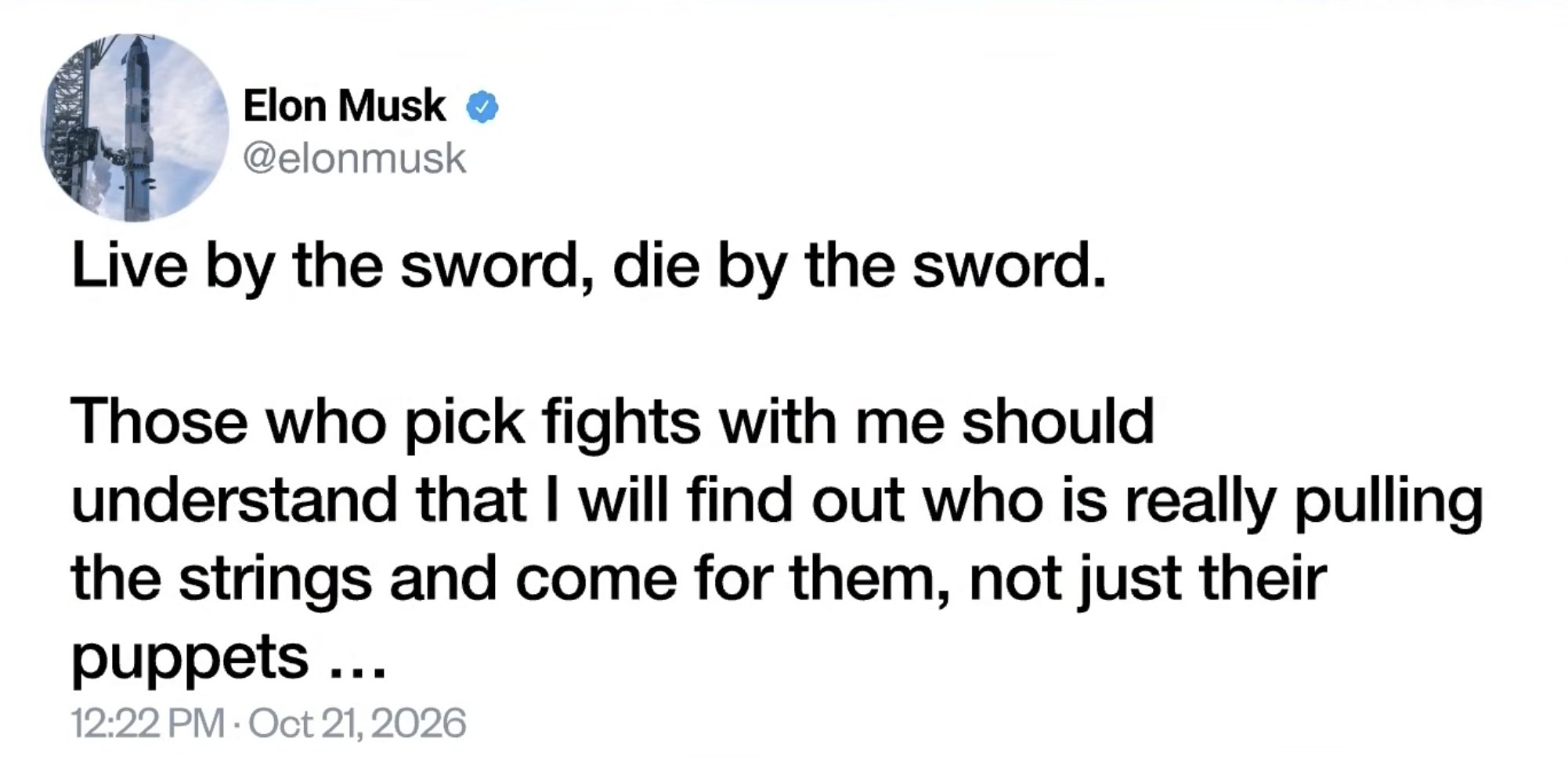
Musk Warns Democratic Lawmakers: “I Will Come for Them”
The latest political confrontation erupted on October 21, 2026, when Musk publicly warned Democratic lawmakers who were reportedly preparing investigations into his companies and government activities if their party regained congressional power in the November midterm elections.
Responding to reporting about potential investigations, Musk wrote on X, “Live by the sword, die by the sword.” He followed with a more pointed warning, declaring that those who challenged him should understand that he would identify the people behind the effort and “come for them, not just their puppets.”
The statements came as Democratic lawmakers considered potential inquiries into DOGE, federal contracting, conflicts of interest and the reported restrictions affecting Ukrainian military communications. Representative Zoe Lofgren, the ranking Democrat on the House Science, Space and Technology Committee, characterized the number of potential conflicts as extraordinary, while other lawmakers raised concerns about the relationship between Musk’s government contracts and his political influence.
Musk’s comments are significant because congressional oversight is an established constitutional function. Lawmakers possess authority to investigate federal spending, examine executive branch conduct, request records and, under applicable procedures, issue subpoenas. Those powers are particularly important when government operations involve private businesses receiving substantial public funding.
Musk is entitled to criticize politicians, challenge investigations in court and oppose congressional inquiries he considers politically motivated. The First Amendment protects aggressive political speech, including criticism of elected officials. However, threats of retaliation against officials exercising lawful oversight raise questions about whether political rhetoric could become unlawful intimidation or obstruction if accompanied by conduct satisfying the relevant criminal statutes.
The public statements alone do not establish that Musk committed a criminal threat or obstruction offense. Investigators would need to examine the precise language, context, intent and any subsequent actions. Nevertheless, the episode demonstrates the increasingly confrontational relationship between Musk and lawmakers seeking to examine the conduct of his businesses.
Musk’s Political Spending Adds Another Layer to the Accountability Debate
Musk’s influence over Washington extends beyond government contracts and public statements. His substantial political contributions have made him one of the most consequential individual financial participants in recent American elections, creating another area of scrutiny as his businesses continue to depend on federal policy decisions.
An October 16, 2026, investigation by Judd Legum reported that Musk had spent at least $366 million in the current election cycle, including approximately $276 million between July and September. The reporting described major contributions to Republican political committees and organizations supporting congressional candidates, placing Musk among the largest known political donors in the country.
Political contributions made in compliance with campaign finance law are not inherently improper, and supporting candidates whose policies align with a business owner’s interests does not establish bribery or corruption. The concern arises from the broader intersection of extraordinary political spending, major government contracts, regulatory interests and the potential ability to influence the composition of institutions responsible for oversight.
The situation creates a difficult accountability question. When a billionaire spends hundreds of millions of dollars supporting political candidates while his companies receive substantial federal business, the public has a legitimate interest in understanding whether procurement decisions, regulatory policies and government appointments are being made independently and in accordance with the law.
What Federal Investigators Should Examine
A comprehensive congressional investigation would need to separate potential criminal conduct from civil regulatory violations, contractual disputes, ethics concerns and matters of public policy. The available record supports several areas of legitimate inquiry, but it does not establish that prosecutors currently possess sufficient evidence to charge Musk with the offenses his critics have suggested.
The Ukraine satellite controversy warrants examination of the contractual relationship between SpaceX and the Pentagon, the origin of the reported restrictions, any communications involving Musk or White House officials, the operational consequences for Ukrainian forces and whether appropriate military authorities approved the changes. Investigators should also determine whether the restrictions complied with applicable procurement requirements and whether the government maintained adequate control over a service essential to an allied military.
The DOGE controversy requires an independent accounting of claimed savings, a review of federal information-system access and an examination of whether Musk participated in government decisions affecting his financial interests. Investigators could seek access logs, relevant communications, conflict of interest disclosures, ethics determinations and any applicable waivers to establish whether government safeguards functioned as intended.
Financial oversight should focus on related-party transactions, securities disclosures, corporate governance procedures and whether public shareholders received adequate protection when Musk-associated companies entered into major investments or considered restructuring. Separately, lawmakers could examine foreign-contact reporting requirements and determine whether appropriate security protocols were followed in connection with sensitive government contracting.
Finally, any investigation into Musk’s statements about congressional oversight should evaluate whether subsequent actions involved unlawful intimidation or interference rather than assuming that inflammatory political language alone establishes a crime. The legal standards governing these different matters must remain distinct if the investigation is to produce credible findings capable of withstanding judicial scrutiny.
Can the Federal Government Suspend Musk’s Contracts or Take Control of Starlink?
Federal procurement rules provide mechanisms for suspending or debarring contractors when legally sufficient grounds exist, including certain fraud-related convictions, serious misconduct or other circumstances affecting a contractor’s present responsibility. Such actions generally require appropriate procedures and cannot lawfully be based solely on political disagreement with a company’s executive.
SpaceX presents a particularly complicated case because its launch and communications capabilities are deeply integrated into American national security and space operations. Abruptly terminating contracts without viable alternatives could disrupt missions and potentially undermine the very government interests an enforcement action was intended to protect.
That dependency does not mean SpaceX should be immune from consequences if wrongdoing is established. It means the government should develop alternatives that reduce its reliance on any single contractor. Congress could strengthen service-continuity provisions, require more independent technical oversight, diversify satellite procurement and establish clearer rules governing communications infrastructure used during military operations.
The possibility of direct government intervention in satellite communications should also be examined within existing statutory and constitutional limits. Emergency powers may provide options under specific circumstances, but permanent nationalization or seizure would raise substantial legal and financial questions. A more sustainable solution would be to ensure that strategically important communications systems operate under enforceable government agreements with clear chains of authority and meaningful remedies for violations.
The Larger Crisis: When Private Wealth Becomes Public Power
The most consequential issue surrounding Musk may not be any single lawsuit, regulatory investigation, satellite restriction or political confrontation. It is the structural problem created when the United States becomes increasingly dependent on private companies controlled or heavily influenced by an individual whose financial and political interests may diverge from those of the government.
SpaceX has achieved major technological advances, Tesla helped reshape the automobile industry, and Starlink has delivered communications services with enormous civilian and military value. Those accomplishments are genuine and deserve recognition. But commercial success does not eliminate the need for legal accountability, nor should strategic importance create an exemption from independent government oversight.
If a private communications network is essential to an American ally’s survival, its operating conditions should be governed by enforceable agreements and appropriate military authority. If a federal contractor participates in government restructuring, potential conflicts of interest should be disclosed and independently evaluated. If government savings are claimed, they should be audited. If sensitive federal information is accessed, the public should have confidence that it remains protected. And if elected representatives seek to investigate a powerful business executive, they must be able to exercise their lawful oversight responsibilities without unlawful interference.
The United States does not need to presume Musk guilty of crimes that have not been proven to recognize the risks created by the concentration of technological infrastructure, federal contracting relationships and political influence. Those risks are substantial enough to justify serious congressional scrutiny, stronger procurement safeguards and greater transparency across government relationships with major technology contractors.
Ultimately, the question is not whether Elon Musk has built extraordinary companies. He has. Nor is it whether he possesses the right to criticize government officials, support political candidates or defend his business interests. He does. The question is whether the American government has become so dependent on one billionaire’s companies that its ability to regulate, investigate and hold them accountable is compromised. In a functioning democracy, no private citizen should be so powerful, so politically connected or so indispensable that the ordinary rules of accountability cease to apply.
Sources & Further Reading
The Washington Post — GAO Findings on DOGE’s Savings Claims — August 2026.
Reuters — Tesla and SpaceX Merger Discussions — October 22, 2026.
Popular Information / Judd Legum — Musk’s 2026 Political Spending — October 16, 2026.










































Want to join the conversation?
Create an account or sign in to share your thoughts, vote,
and reply to other readers.
Showing 0 of 0 comments
Don't have an account?
Already have an account?