

Zelenskyy Fires Back at Trump as White House Linked Starlink Restrictions Weaken Ukraine’s Defenses and Washington Eases Pressure on Putin
Ukrainian President Volodymyr Zelenskyy is challenging Donald Trump over restrictions on military satellite communications, a controversial Russian diesel agreement, and American pressure to stop Ukrainian attacks on Russian oil infrastructure. His latest statements follow investigations linking the satellite restrictions to the White House and raising questions about Elon Musk’s involvement.
BRUSSELS, Belgium — Ukrainian President Volodymyr Zelenskyy has delivered a forceful response to President Donald Trump, defending Ukraine’s right to protect itself while criticizing Washington for pursuing economic arrangements with Russia that could strengthen Vladimir Putin’s position in the war. Speaking at a European Union summit in Brussels on Friday, Zelenskyy addressed growing tensions over American military assistance, restrictions on SpaceX satellite communications, Russian energy sanctions, and Trump’s increasingly confrontational public statements about Ukraine.
The confrontation comes as investigations have raised serious questions about the origins of restrictions imposed on Ukraine’s Starshield satellite network, a military communications system operated by Elon Musk’s SpaceX. Reuters reported on October 15 that the directive to restrict the service originated inside the White House, citing American and Western officials familiar with the decision. The Telegraph subsequently reported that Musk had personally proposed the restrictions to Trump, who allegedly agreed. Trump has denied responsibility, and the precise chain of authorization remains unresolved.
Zelenskyy’s latest remarks add a critical dimension to those investigations: the Ukrainian president’s direct account of how the restrictions interfered with his country’s ability to intercept incoming Russian drones. He said Ukrainian forces lost the ability to use certain defensive systems effectively after satellite communications speed limits were reduced, potentially leaving civilian populations more exposed to Russian attacks. The dispute has unfolded alongside Washington’s decision to ease certain restrictions on Russian energy exports, a controversial agreement involving Russian diesel, and American criticism of Ukraine’s strikes against Russian oil refineries. Together, these developments have created one of the most serious public disagreements between Washington and Kyiv as Ukraine continues fighting Russia’s invasion and preparing for another winter of attacks on its electrical infrastructure.
Zelenskyy Responds to Trump’s Claim That He Is More Difficult to Deal With Than Putin
One of the most revealing exchanges during Friday’s press conference came when Zelenskyy was asked about Trump’s assertion that the Ukrainian president was more difficult to negotiate with than Vladimir Putin. The comparison placed the leader of an invaded country in the position of defending his conduct against that of the president responsible for launching the full-scale invasion in February 2022. Zelenskyy rejected the suggestion that defending Ukrainian sovereignty made him an unreasonable negotiating partner, explaining that his responsibility was to protect Ukraine’s territory, population, and national independence while exercising the country’s right to defend itself against foreign aggression.
The Ukrainian president distinguished his position from Putin’s by arguing that Russia continued demanding territorial concessions while pursuing military operations against Ukraine. He maintained that Moscow’s conduct demonstrated an unwillingness to negotiate a genuine and sustainable peace, regardless of the diplomatic language used by Russian officials. The disagreement reflects a fundamental difference between Trump’s emphasis on reaching a negotiated settlement and Zelenskyy’s insistence that any agreement must protect Ukraine against renewed Russian aggression. Kyiv has repeatedly argued that a ceasefire without enforceable security guarantees could allow Moscow to consolidate territorial gains, rebuild its military capabilities, and resume attacks at a later date.
Zelenskyy also challenged the suggestion that Ukraine was obstructing peace negotiations, maintaining that Russia’s continuing military operations and territorial demands were the primary obstacles to a durable settlement. Reuters reported that he characterized Moscow’s negotiating posture as a parody of a genuine peace process, reinforcing his argument that Ukraine cannot be expected to surrender territory or accept conditions that could leave it vulnerable to another invasion.
Reuters Traces Starshield Restrictions to the White House as Musk Faces New Questions
The controversy surrounding American satellite communications has become one of the most consequential developments in the deteriorating relationship between Washington and Kyiv. As South Florida Media previously reported in its investigation into the Starshield restrictions, Reuters established through interviews with two American officials and a Western official that the directive to limit Ukraine’s access to the military satellite service originated within the White House. According to the October 15 investigation, Pentagon officials received instructions to restrict the SpaceX operated network, which Ukrainian forces use for battlefield communications, drone operations, and other military activities. The officials did not identify the individual who authorized the directive, and a senior American official denied that Trump personally requested the restrictions.
The Telegraph introduced another significant allegation on October 16, reporting that Musk had approached Trump with a proposal to impose speed limits on Ukrainian satellite communications and that the president agreed. The newspaper attributed the account to sources familiar with the discussions, although the allegation has not been independently established through publicly released government records or communications documenting the alleged conversation. Musk, meanwhile, publicly emphasized that Starshield systems are owned and controlled by the American government and that restrictions on their operation are determined by the military and ultimately the president. His statement clarified the government’s formal authority over the service but did not establish who originally proposed the restrictions or who personally approved their implementation.
Trump denied that either he or Musk was responsible for the disruption when questioned by reporters on October 16. His denial conflicts with The Telegraph’s account of his alleged approval, while Reuters’ findings establish that the reported directive originated inside his administration without identifying him as its author. The distinction is important because the available reporting provides substantial evidence that the restrictions resulted from a government decision rather than an ordinary technical malfunction, but does not conclusively establish that Trump personally ordered the slowdown, that Musk independently implemented it, or that the restrictions were intended to benefit Russia.
Nevertheless, the findings have created serious questions about why the restrictions were imposed, whether American officials evaluated their consequences for Ukrainian military operations, and why Ukrainian forces were not given sufficient warning before losing capabilities they relied upon during active combat.
Zelenskyy Says the Satellite Restrictions Prevented Ukraine From Shooting Down Russian Drones
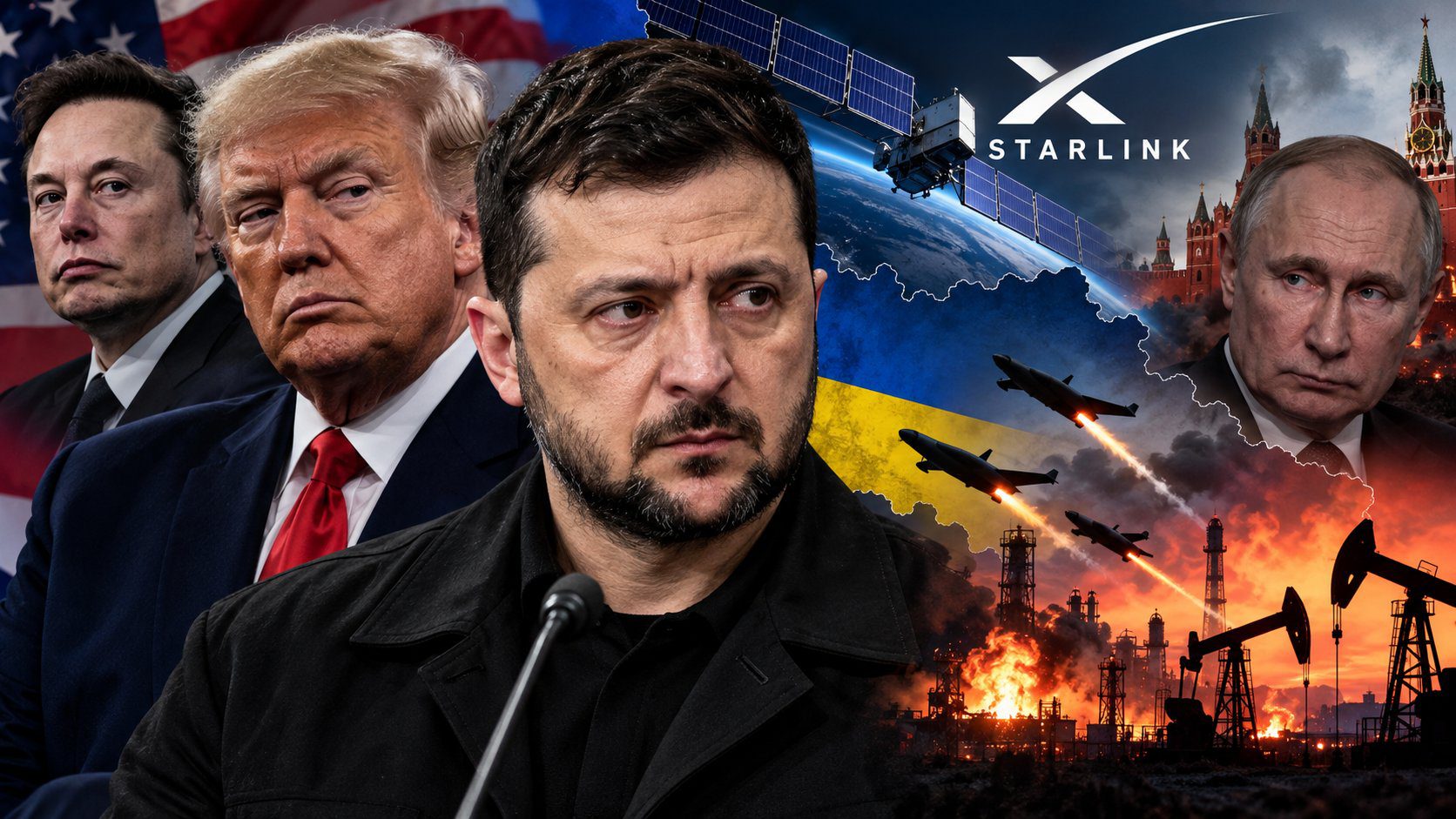
Zelenskyy’s Brussels remarks provided a direct account of the operational consequences Ukrainian forces experienced after Starshield speed limits were reduced. According to the Ukrainian president, the restrictions interfered with interceptor drones designed to destroy incoming Russian attack aircraft, including newer jet powered versions of the Iranian designed Shahed drone. These defensive systems rely on satellite communications to operate at the speeds necessary to engage certain aerial targets. Ukrainian officials reported that terminals experienced restrictions when moving above approximately 100 miles per hour, while Zelenskyy described limitations affecting defensive operations against Russian drones traveling at substantially greater speeds.
The Ukrainian president explained that the satellite service had not been completely shut down. Instead, speed restrictions made certain military applications unusable, preventing Ukrainian forces from employing some of the defensive systems they had developed to protect populated areas. He also confirmed that Ukraine had received indications from American officials that the restrictions would be eased, although some capabilities were still being restored and the service had not returned to its previous operating conditions.
The Associated Press separately reported that Ukrainian officials were negotiating with SpaceX and the American government to remove the restrictions. Serhii Beskrestnov, a Ukrainian presidential adviser specializing in military communications, described the limits as particularly damaging to drone operations and warned that the disruption could undermine defenses against faster Russian aerial weapons. The consequences extend beyond conventional battlefield operations because Ukrainian forces have increasingly relied on interceptor drones as a comparatively inexpensive way to counter Russian aerial attacks. Advanced surface to air missiles remain essential against certain threats, but using costly interceptors against large numbers of inexpensive drones creates substantial financial and logistical challenges.
When interceptor drones lose communications or become unable to operate at the required speeds, Ukrainian forces may have fewer effective options for stopping incoming weapons. That vulnerability is particularly serious when Russian attacks target electrical infrastructure, residential areas, and other facilities essential to civilian life. Zelenskyy has previously alleged that the restrictions cost Ukrainian lives, although no publicly available independent investigation has established a direct causal connection between the satellite restrictions and specific civilian deaths. Determining responsibility for particular casualties would require detailed operational records identifying which defensive systems failed, which Russian weapons subsequently reached their targets, and whether the communications restrictions caused those failures. The documented disruption nonetheless raises an urgent question about why restrictions were imposed on technology supporting Ukraine’s defenses while Russia continued conducting large-scale aerial attacks.
Trump’s Russian Diesel Deal Raises Concerns About Financing Moscow’s War
Beyond the satellite controversy, Zelenskyy sharply criticized Washington’s decision to pursue an arrangement involving Russian diesel while easing certain economic restrictions on Russian energy exports. The Ukrainian president said the agreement had been made without adequate consultation with Kyiv and warned that it could undermine years of Western efforts to limit Moscow’s financial resources. The Trump administration has defended its energy policies against the backdrop of rising international fuel prices and disruptions associated with the conflict involving Iran, arguing that additional energy supplies can help stabilize markets while creating opportunities for diplomatic engagement with Moscow.
Ukraine sees a different strategic consequence. Russia remains a major energy exporter, and revenue from petroleum products contributes to the economy supporting its military operations. Zelenskyy argues that easing restrictions on Russian energy trade without obtaining corresponding concessions from Moscow reduces the economic pressure intended to encourage an end to the invasion. The diesel arrangement has also generated criticism from American lawmakers concerned that increased Russian energy sales could provide additional revenue to the Russian government while its military continues attacking Ukraine.
Zelenskyy warned that the agreement could establish a precedent for further concessions involving natural gas, Russian banking restrictions, and frozen Russian assets. His concern was that an initial transaction justified by energy-market conditions could eventually lead to broader sanctions relief without requiring Russia to withdraw its forces or agree to meaningful security guarantees. The Ukrainian president also questioned the logic of pursuing economic arrangements that could benefit Moscow while simultaneously asking Ukraine to limit military operations against Russian energy infrastructure. That contradiction has become a central feature of the dispute, with Washington seeking lower energy prices and diplomatic progress while Kyiv argues that weakening Russia’s financial constraints could prolong the war by reducing the economic consequences of continued aggression.
Trump Condemns Ukrainian Oil Strikes While Russia Continues Attacking Ukraine’s Power Grid
The disagreement over Russian energy exports is closely connected to another major confrontation: Trump’s criticism of Ukrainian attacks against Russian oil refineries. Trump has publicly condemned the strikes, describing them as a disgrace and arguing that disruptions to Russian petroleum production contribute to higher international fuel prices. American officials have pressured Kyiv to limit attacks against Russian energy facilities, particularly as global markets contend with broader supply disruptions.
Ukraine maintains that Russian petroleum infrastructure plays an important role in sustaining Moscow’s war effort. Refineries provide fuel used in military logistics, while energy exports generate government revenue that can support defense expenditures and other state operations. Kyiv argues that attacks against qualifying military objectives within Russia are part of its effort to weaken the invasion, although the legality of individual strikes depends on international humanitarian law, including whether a facility constitutes a military objective and whether anticipated civilian harm would be excessive relative to the expected military advantage. Not every energy facility automatically qualifies as a lawful military target.
Zelenskyy also addressed proposals for an energy ceasefire, explaining that Ukraine had supported the concept of reciprocal restrictions on attacks against energy infrastructure. However, he argued that Russia continued targeting Ukrainian electrical facilities, undermining the possibility of an effective arrangement. The practical consequences of Russian attacks have become increasingly severe. On October 16, the Associated Press reported that Russian strikes across nine Ukrainian regions triggered emergency electricity outages affecting hundreds of thousands of households. The attacks came as Ukrainian authorities were preparing for another winter in which electricity, heating, and water systems could face sustained pressure.
Russia has repeatedly targeted Ukrainian energy infrastructure throughout the conflict, forcing utilities to conduct emergency repairs and ration electricity while military engineers and civilian workers attempt to restore damaged facilities. For Zelenskyy, the central question is why Ukraine should be expected to restrain attacks against Russian energy facilities while Moscow continues striking infrastructure that supplies electricity and heat to Ukrainian civilians. The Trump administration’s stated position is that limiting attacks on energy infrastructure could reduce economic disruption and support negotiations, while Ukraine maintains that restraint must be reciprocal and accompanied by credible measures protecting its population.

Zelenskyy Demands Patriot Missiles as Ukraine Faces Another Dangerous Winter
Zelenskyy also used the Brussels summit to press for additional American air defense equipment, including interceptors used by Patriot missile defense systems. He explained that Ukraine urgently needs these weapons to protect electrical infrastructure, cities, and military installations from Russian missile attacks. Patriot systems are particularly important because they can engage certain ballistic missile threats that conventional drone interceptors cannot reliably defeat. Ukraine has struggled to obtain sufficient quantities of advanced interceptor missiles, and the growing demand for American air defense weapons in other conflicts has complicated efforts to replenish its supplies.
The Ukrainian president described obtaining interceptors in small quantities wherever possible, illustrating the logistical difficulties facing Kyiv as it attempts to maintain adequate defensive coverage across a large country. He also said he had proposed that Washington provide additional air defense capabilities if the administration intended to proceed with energy arrangements benefiting Russia. From Kyiv’s perspective, any decision that potentially reduces economic pressure on Moscow should be accompanied by stronger measures protecting Ukrainians from continued attacks. Zelenskyy said the requested weapons had not been delivered.
The shortage is particularly dangerous because Russian forces frequently launch combinations of drones, cruise missiles, and ballistic missiles intended to overwhelm Ukrainian defenses. Different threats require different interception technologies, and a shortage in one category can create vulnerabilities that other systems cannot adequately compensate for. Together, the Starshield restrictions and Patriot missile shortages expose a broader weakness in Ukraine’s military position: its ability to protect civilians depends heavily on sophisticated technology supplied or controlled by foreign governments.
Europe Reaffirms Support as Ukraine Seeks Another €70 Billion
As relations with Washington deteriorate, Zelenskyy is increasingly emphasizing the importance of European military, economic, and diplomatic support. During the Brussels summit, the Ukrainian president requested approximately €70 billion in additional assistance for 2027, describing the funding as necessary to sustain Ukraine’s defense against Russia. The request reflects the enormous financial demands of maintaining military operations while supporting government services, repairing damaged infrastructure, and protecting a population affected by years of warfare.
European Commission President Ursula von der Leyen and European Council President António Costa reaffirmed their commitment to Ukraine, while other European leaders expressed support for maintaining assistance through the approaching winter. German Chancellor Friedrich Merz also emphasized the need for continued European backing, reflecting concern that instability in the relationship between Washington and Kyiv could leave Ukraine increasingly dependent on European resources.
The financial and military challenges are substantial. Europe has expanded its defense production and assistance programs, but replacing certain American capabilities remains difficult, particularly in advanced air defense, satellite communications, and intelligence support. European Union foreign policy chief Kaja Kallas acknowledged the importance of Starlink technology to Ukraine and the difficulty of replacing those capabilities quickly. The situation has accelerated discussions about Europe’s strategic autonomy and its ability to sustain Ukrainian defenses if American assistance becomes less predictable.
For European governments, the stakes extend beyond Ukraine. Russia’s invasion has fundamentally changed the continent’s security environment, and European leaders have repeatedly warned that a settlement failing to deter further aggression could create additional instability.
Ukraine Continues Negotiating With Washington Despite the Public Confrontation
Despite his unusually direct criticism of Trump, Zelenskyy confirmed that Ukrainian negotiators remain in communication with American officials and that further diplomatic discussions are expected. The continued dialogue reflects the difficult position facing Kyiv, which depends on American military technology, intelligence capabilities, and diplomatic influence while increasingly disagreeing with Washington over the policies governing those resources.
Trump has emphasized the importance of ending the war through negotiation and reducing economic disruptions associated with the conflict. His administration has pursued direct engagement with Moscow while applying pressure on Ukraine over attacks against Russian energy facilities and other military decisions. Zelenskyy has maintained that negotiations must recognize Ukraine’s sovereignty and cannot simply require Kyiv to accept Russian territorial demands. He has also argued that Moscow’s continuing attacks demonstrate why diplomatic assurances must be accompanied by enforceable security guarantees.
Those disagreements have become increasingly visible, but neither government has announced a complete breakdown in diplomatic relations. Ukraine’s challenge is to preserve access to American military support while resisting decisions it believes undermine its national security, while Washington is attempting to pursue its diplomatic objectives without creating additional vulnerabilities for a country still defending itself against a large-scale invasion.
The Unanswered Question: Did American Policy Decisions Make Ukraine More Vulnerable to Russia?
The latest developments raise questions that extend beyond the personal relationship between Trump and Zelenskyy. Reuters has reported that the Starshield restrictions originated inside the White House, while The Telegraph has alleged that Musk proposed the restrictions to Trump and that the president agreed. Trump denies responsibility, and the precise authorization process remains unclear. Ukrainian officials have documented operational disruptions, while Zelenskyy has now publicly explained how those limitations interfered with defensive operations against Russian drones.
At the same time, Washington has pursued an agreement involving Russian diesel, eased certain energy restrictions, and pressured Ukraine to stop attacking Russian refineries. These decisions have occurred while Moscow continues launching strikes against Ukrainian infrastructure and demanding concessions in negotiations. The timing and combined consequences warrant scrutiny, but they do not independently establish that the administration coordinated the policies to assist Russia or that Putin directed the decisions. The available evidence supports examining their effects, the decision-making process, and whether American officials adequately considered the consequences for Ukraine.
There are also important distinctions between the policies themselves. Easing energy restrictions can provide Russia with additional commercial opportunities, but the precise financial benefit depends on transaction volumes, market conditions, and the structure of the arrangements. Restricting satellite communications can reduce Ukrainian military capabilities, but determining whether particular Russian attacks succeeded because of those restrictions requires operational evidence. What is already established through the cited reporting is that Ukrainian officials experienced disruptions to critical military technology, that the restrictions affected defensive operations, and that the Ukrainian government is increasingly concerned about the reliability of American support.
The public deserves answers about who authorized the Starshield restrictions, whether the decision was connected to pressure over Russian refinery strikes, what military risk assessments were conducted, and whether Ukrainian officials received adequate warning. Those questions are particularly important because decisions affecting military communications and air defense can have consequences far beyond diplomatic negotiations, potentially determining whether Ukrainian forces successfully intercept incoming weapons and whether critical infrastructure remains operational during sustained attacks.
Zelenskyy Draws a Line as the War Enters Another Critical Phase
Zelenskyy’s Brussels appearance demonstrated that Ukraine is increasingly prepared to challenge American policies publicly while continuing to seek Washington’s assistance. The Ukrainian president did not announce an end to negotiations, reject American diplomatic engagement, or abandon efforts to secure additional military support. Instead, he defended Ukraine’s right to resist Russian aggression and challenged arrangements he believes could weaken his country’s ability to survive.
The larger confrontation involves competing approaches to ending the war. Trump is emphasizing negotiations, energy market stability, and engagement with Moscow, while Zelenskyy is emphasizing military deterrence, economic pressure on Russia, territorial sovereignty, and security guarantees intended to prevent another invasion. Those objectives may overlap in some areas, but the latest disputes demonstrate how difficult they are to reconcile while Russian attacks continue and Ukraine remains dependent on foreign controlled military capabilities.
For the United States, the controversy raises questions about transparency, accountability, and the consequences of decisions affecting Ukraine’s defense. For Europe, it reinforces the urgency of developing the financial and military capacity to support Ukraine over the long term. For Ukraine, the consequences are immediate: maintaining enough weapons, communications infrastructure, and defensive systems to protect its population through another winter of war. Zelenskyy’s message in Brussels was that Ukraine remains willing to negotiate, but it will not abandon its right to defend itself or remain silent when decisions by its partners threaten that defense. Whether Washington and Kyiv can resolve their disagreements remains uncertain, but the dispute has already moved beyond political rhetoric and into decisions affecting Ukraine’s military capabilities, economic security, and civilian protection.

Sources and Previous SFL Media Reporting
Previous SFL Media Investigation
Primary Reporting and Verification
- Reuters — Order to Limit Starshield for Ukraine Came From Inside White House, Sources Say — October 15, 2026
- Reuters — Trump Says Neither He Nor Musk Responsible for Ukraine Loss of Starlink Access — October 16, 2026
- Reuters — Trump-Zelenskyy Rift Threatens Vital Support for Kyiv — October 17, 2026
- Associated Press — Ukraine Negotiates to Lift Speed Limits on Military Satellite Network — October 16, 2026
- The Guardian — European Union Summit and Zelenskyy’s Brussels Statements — October 16, 2026
- Associated Press via PBS NewsHour — Russian Attacks on Nine Ukrainian Regions as Tensions With Washington Grow
- Full Video — Zelenskyy Responds to Trump During Brussels Press Conference










Reader discussion
Join the conversation
Want to join the conversation?
Create an account or sign in to share your thoughts, vote and reply to other readers.
No comments yet. Be the first to share your thoughts.
No comments