
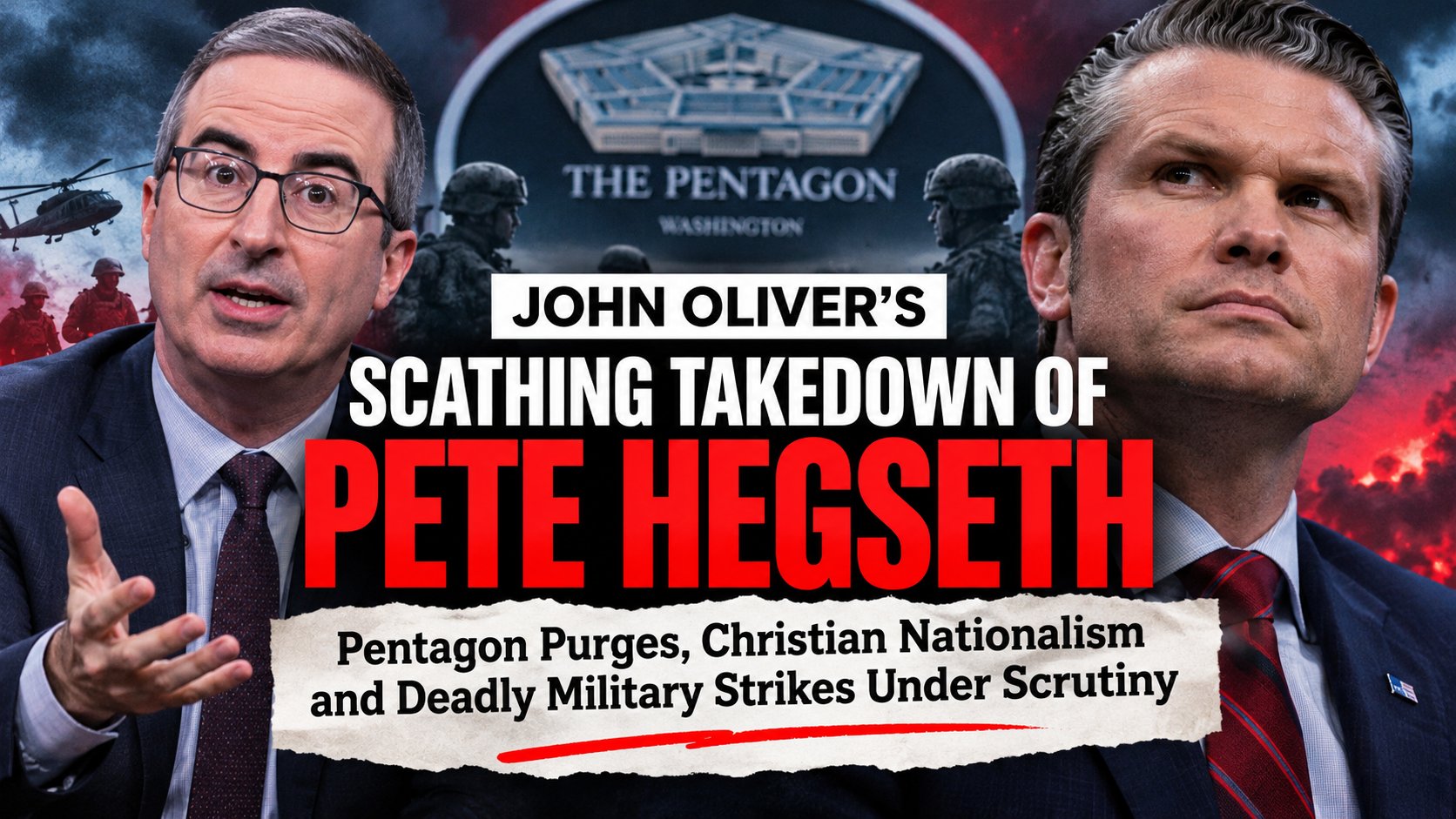
John Oliver Demolishes Pete Hegseth in Scathing 35-Minute Exposé of Pentagon Purges, Christian Nationalism and Deadly Military Strikes
HBO’s Last Week Tonight delivers a blistering examination of Trump’s defense secretary, exposing controversies involving military leadership, alleged misconduct, civilian casualties and the growing influence of political ideology inside the Pentagon.
John Oliver delivered one of his most aggressive political investigations of the year on HBO’s Last Week Tonight, dedicating approximately 35 minutes to Defense Secretary Pete Hegseth and the mounting controversies surrounding his leadership of the United States military. What began with jokes about Hegseth’s questionable exercise technique quickly escalated into a sweeping examination of his qualifications, personal scandals, religious ideology, military leadership decisions and the deadly consequences of American military operations under President Donald Trump.
The segment, which aired November 8 and was published on YouTube November 9, portrayed Hegseth as a deeply polarizing figure whose approach to military leadership has raised serious questions about professionalism, political loyalty and accountability. Oliver examined everything from the dismissal of senior military commanders and the elimination of diversity initiatives to allegations involving civilian casualties in Yemen, Iran and maritime operations targeting suspected drug traffickers. The comedian ultimately argued that Hegseth’s conduct warranted impeachment, turning what might have been another late night takedown into a pointed demand for congressional accountability.
At the center of the investigation was a question that extends far beyond Hegseth’s political affiliations or personal controversies: What happens when the civilian leader of the world’s most powerful military prioritizes ideological confrontation, aggressive public messaging and demonstrations of toughness while facing questions about operational oversight and institutional safeguards?
From Fox News Personality to Leader of the World’s Most Powerful Military
Oliver opened by examining Hegseth’s carefully cultivated image as a physically imposing, unapologetically aggressive military leader. Footage of the defense secretary performing kettlebell exercises in front of service members provided an easy comedic target, particularly after online commentators questioned his technique. But Oliver quickly shifted from physical performance to the much more consequential question of whether Hegseth possesses the experience, judgment and leadership skills necessary to oversee an institution responsible for American national security and military operations around the world.
Hegseth, a former Fox News personality and Army National Guard veteran, entered the Pentagon with military deployment experience but without the senior command, large scale logistics or executive management background traditionally associated with leading the Defense Department. His supporters have argued that his outsider status makes him uniquely positioned to challenge entrenched military bureaucracy, while critics contend that the administration placed ideological loyalty and television communication skills above the institutional expertise required for one of the most demanding positions in government.
The program highlighted Hegseth’s repeated attacks on diversity, equity and inclusion programs, transgender military service, gender pronouns and identity based observances. Hegseth has framed these policies as part of a broader effort to restore combat readiness and eliminate political distractions from the armed forces. Oliver, however, argued that the administration’s fixation on cultural grievances risks diverting attention from the military’s actual responsibilities, including strategic planning, operational effectiveness, intelligence coordination and protecting American service members.
Oliver also revisited the Signal messaging scandal, in which journalist Jeffrey Goldberg was inadvertently included in a group conversation involving senior administration officials discussing military operations. The incident raised serious questions about information security and the handling of sensitive operational details. Oliver contrasted those concerns with footage of Hegseth criticizing unfavorable media coverage and suggesting preferred headlines about American military operations, portraying a defense secretary seemingly more interested in controlling public perception than answering difficult questions about national security.
A Troubled Record of Allegations Before Entering the Pentagon
The investigation examined Hegseth’s career before joining the Trump administration, including his years at Princeton University, his military service and his leadership of veterans’ advocacy organizations. Oliver reviewed previously reported allegations involving heavy drinking, workplace behavior, financial management and personal misconduct, questioning whether Hegseth’s background had received sufficient scrutiny before his appointment to one of the most powerful positions in the federal government.
Former associates have described concerns about Hegseth’s behavior while leading veterans’ organizations, although Hegseth has disputed allegations of misconduct. Oliver also revisited an unusual incident involving an axe-throwing demonstration during a television appearance, when an errant throw struck a member of the West Point band. The episode provided another opportunity for comedy, but it also served the program’s larger argument about the gap between Hegseth’s carefully constructed public image and questions surrounding his judgment.
One of the most personal controversies involved a 2018 email written by Hegseth’s mother, Penelope Hegseth, during his second divorce. In the message, she accused her son of mistreating women and described him as an “abuser of women.” The email became public during scrutiny of his nomination, although his mother subsequently explained that she had written it in anger, regretted sending it and did not believe it accurately represented her son. Oliver revisited the controversy as part of the broader examination of Hegseth’s character, while the subsequent clarification remains essential context for understanding the original accusation.
The program’s underlying argument was not that personal controversies automatically disqualify someone from public office. Rather, Oliver questioned whether the administration and Congress had adequately evaluated a nominee whose position carries extraordinary responsibility for military personnel, national security decisions and the use of lethal force.
Christian Nationalism, Religious Extremism and the Pentagon’s Ideological Direction
Oliver devoted substantial attention to Hegseth’s religious affiliations, controversial tattoos and connections to figures associated with Christian nationalist political movements. The segment examined the Latin phrase Deus Vult, meaning “God wills it,” which appears among Hegseth’s tattoos and has historical associations with the Crusades. Although the phrase has been adopted by some far-right movements, its use does not automatically establish extremist beliefs, and the program explored the controversy surrounding Hegseth’s National Guard assignment during a presidential inauguration.
The investigation also examined Hegseth’s associations with pastor Doug Wilson and conservative Reformed Christian organizations. Wilson has attracted criticism for his positions on gender roles, religious authority and the relationship between Christianity and public institutions. Oliver connected those controversies to Hegseth’s previously expressed skepticism about women serving in combat roles, raising concerns about whether religious and ideological beliefs could influence military personnel decisions.
The distinction between private religious conviction and government policy is fundamental. American service members and civilian officials enjoy constitutional protections concerning religious belief, but the armed forces are required to operate under federal law, constitutional principles and professional military standards. Critics argue that elevating particular religious or political beliefs into informal qualifications for leadership could undermine the military’s longstanding commitment to institutional neutrality and merit-based advancement.
Oliver portrayed Hegseth’s religious connections as part of a broader ideological transformation within the Pentagon, where debates about military readiness have increasingly become entangled with disputes over gender, identity, religious authority and political loyalty. The concern is not that a defense secretary holds strong religious beliefs, but whether those beliefs influence official decisions in ways that compromise equal treatment, military effectiveness or constitutional obligations.
Senior Military Purges Raise Questions About Political Loyalty and Professional Independence
Among the most consequential issues examined was the removal of experienced senior military leaders, including Gen. Charles Q. Brown Jr., the former chairman of the Joint Chiefs of Staff, and Adm. Lisa Franchetti, the first woman to serve as chief of naval operations. Both officers had reached the highest levels of military leadership following lengthy careers, and their dismissals became central examples in Oliver’s criticism of the administration’s approach to military personnel decisions.
The segment cited an analysis suggesting that approximately 10% of the military’s highest ranking officers had been removed or had promotions blocked, with women and minority officers representing a disproportionate share of those affected. The precise figures depend on the officers included, the time period examined and the methodology used, but Oliver argued that the broader pattern warranted scrutiny over whether professional qualifications were being displaced by political considerations.
Presidents and defense secretaries possess considerable authority to replace senior military leaders, and personnel changes are not inherently improper. Nevertheless, widespread dismissals without transparent performance based explanations can create uncertainty within the chain of command, discourage independent professional advice and undermine confidence that military advancement depends on experience and competence rather than ideological conformity.
Oliver also examined a controversy involving an unauthorized low-altitude helicopter flyby near musician and Trump supporter Kid Rock’s residence. According to the program, Hegseth intervened in the resulting investigation, and the episode was discussed alongside tensions involving senior Army leadership and the reported removal of Army Chief of Staff Gen. Randy George. Although the timing of separate events does not establish a causal relationship, Oliver used the controversy to question whether personal relationships and political considerations were influencing decisions ordinarily governed by military regulations and established procedures.
The larger concern is the potential erosion of the military’s nonpartisan professional culture. American military officers are expected to follow lawful civilian orders while providing candid advice based on operational realities, intelligence assessments and professional expertise. If senior commanders come to believe that disagreement or unfavorable advice could threaten their careers, the consequences could extend well beyond personnel disputes and directly affect national security decision-making.
Maximum Lethality and the Weakening of Military Legal Oversight
The tone of Oliver’s investigation became considerably darker when he turned to Hegseth’s emphasis on maximum lethality and the administration’s approach to the laws governing armed conflict. Hegseth has repeatedly advocated aggressive military operations and criticized what he considers excessive bureaucracy and restrictive rules. Oliver questioned whether that philosophy, combined with changes to legal oversight and civilian harm mitigation programs, could increase the risk of unlawful or preventable deaths.
Military lawyers, known as judge advocates general, provide commanders with legal advice concerning targeting decisions, rules of engagement, international humanitarian law and the lawful conduct of military operations. Civilian harm mitigation programs serve a related purpose by helping military planners identify risks to noncombatants, improve intelligence procedures and investigate incidents in which civilians may have been killed or injured.
Oliver argued that weakening these safeguards while simultaneously encouraging more aggressive operations creates a dangerous combination. The program examined reported changes affecting legal oversight and civilian harm mitigation, suggesting that the administration’s focus on operational speed and overwhelming force could come at the expense of the review processes intended to prevent catastrophic mistakes.
International humanitarian law does not prohibit every military operation that results in civilian casualties. Instead, it establishes requirements involving distinction, proportionality, military necessity and feasible precautions. Determining whether a particular strike violates those principles requires examining the intended target, the intelligence available to commanders, the anticipated military advantage and the foreseeable risks to civilians.
Those distinctions are essential because an aggressive military strategy is not automatically unlawful, just as civilian casualties do not automatically establish a war crime. However, reducing oversight, weakening investigative procedures or disregarding credible warnings can increase the risk of unlawful conduct and make accountability substantially more difficult when operations go wrong.
Yemen and Caribbean Boat Strikes Raise Serious Questions About International Law
Oliver examined U.S. military operations in Yemen and strikes against vessels suspected of involvement in drug trafficking in the Caribbean and Pacific. The program focused on reported civilian casualties, disputed targeting decisions and allegations that some maritime operations involved attacks on individuals who survived initial strikes.
In Yemen, the investigation questioned whether sufficient precautions had been taken to protect civilians during operations against hostile forces, particularly when strikes occurred near populated areas. The program argued that civilian casualty reports deserve independent examination and that military officials should be required to explain the intelligence, targeting procedures and legal justifications behind operations that result in significant loss of life.
The maritime strikes raised additional questions because suspected drug trafficking does not, by itself, automatically authorize the use of military lethal force. The legal framework governing an operation depends on whether it occurs during an armed conflict, the status and conduct of the individuals involved, the applicable rules of engagement and the government’s claimed authority to conduct the strike.
Oliver highlighted allegations involving attacks on survivors of maritime strikes, a particularly serious issue under international humanitarian law. When the law of armed conflict applies, individuals who are shipwrecked or otherwise rendered incapable of fighting may be protected from attack. Deliberately targeting protected survivors could constitute a grave violation of international law, although determining whether a particular incident amounts to a war crime requires establishing the facts, applicable legal standards and intent of those responsible.
The program’s central criticism was that military leaders cannot simply characterize suspected criminals or hostile individuals as legitimate targets without demonstrating a lawful basis for using lethal force. Oliver argued that an administration committed to projecting military strength must also be prepared to explain its actions, investigate credible allegations of wrongdoing and hold responsible officials accountable when legal standards are violated.
Iran School Strike Highlights the Devastating Consequences of Faulty Intelligence
One of the most disturbing sections of the investigation concerned a reported strike on an elementary school in Minab, Iran, during the early stages of the conflict. According to the account presented by Oliver, the attack killed more than 150 people, including more than 120 children, and raised questions about whether outdated targeting intelligence contributed to the tragedy.
The program described the incident as an example of the potentially catastrophic consequences of military operations conducted with inaccurate intelligence or insufficient safeguards. The reported casualty figures and explanation involving outdated intelligence require independent corroboration, and responsibility for the strike should not be treated as conclusively established without reliable investigative findings.
If a school was struck because military planners relied on outdated or incorrect information, determining responsibility would require examining how the target was selected, whether the available intelligence was properly verified, what commanders knew before authorizing the operation and whether reasonable precautions could have prevented civilian deaths. A devastating outcome does not automatically establish criminal intent, but it can raise serious questions about negligence, operational procedures and compliance with the laws of armed conflict.
Oliver connected the tragedy to his broader criticism of Hegseth’s leadership, arguing that the consequences of weakening oversight are not confined to internal Pentagon disputes or political arguments in Washington. They can be measured in civilian casualties, destroyed communities and families permanently affected by decisions made thousands of miles away.
The segment challenged the administration’s emphasis on military lethality by highlighting the responsibility that accompanies the ability to deploy overwhelming force. Effective military leadership requires not only the capacity to defeat adversaries but also reliable intelligence, lawful targeting procedures, professional oversight and meaningful accountability when operations cause civilian harm.
Pentagon’s Response to Oliver Becomes Another Controversy
Oliver concluded by examining Hegseth’s public defense of his leadership and the Pentagon’s response to inquiries from Last Week Tonight. The segment featured Hegseth rejecting impeachment demands while emphasizing his alignment with President Trump, reinforcing Oliver’s criticism that political loyalty has become a defining characteristic of the defense secretary’s public identity.
The Pentagon’s response generated additional attention after the program presented comments from its press office that reportedly described Hegseth as “very based” and suggested Oliver should be deported. The remarks reflected the combative internet language increasingly common in political communications but appeared strikingly out of place in an official response to questions about military leadership, civilian casualties and national security.
Government officials are not obligated to agree with journalists, political opponents or comedians. They are, however, accountable to the public for their official decisions, particularly when those decisions involve military operations, federal spending and the potential loss of human life. Oliver used the exchange to argue that the Pentagon’s public communications had become another extension of the administration’s political culture rather than a mechanism for providing substantive answers to legitimate questions.
The episode illustrated a broader problem confronting American institutions: the growing tendency to respond to serious oversight questions with personal attacks, political slogans and social media rhetoric. While such tactics may appeal to partisan audiences, they do little to resolve questions about operational effectiveness, legal compliance or government accountability.
Oliver Calls for Hegseth’s Impeachment as Congressional Scrutiny Intensifies
Oliver’s investigation ultimately went beyond criticism and satire, ending with an explicit call for Congress to impeach and remove Hegseth. The comedian argued that the combination of leadership controversies, military personnel dismissals, ideological priorities and questions surrounding lethal operations had created a situation requiring more than public criticism or routine congressional hearings.
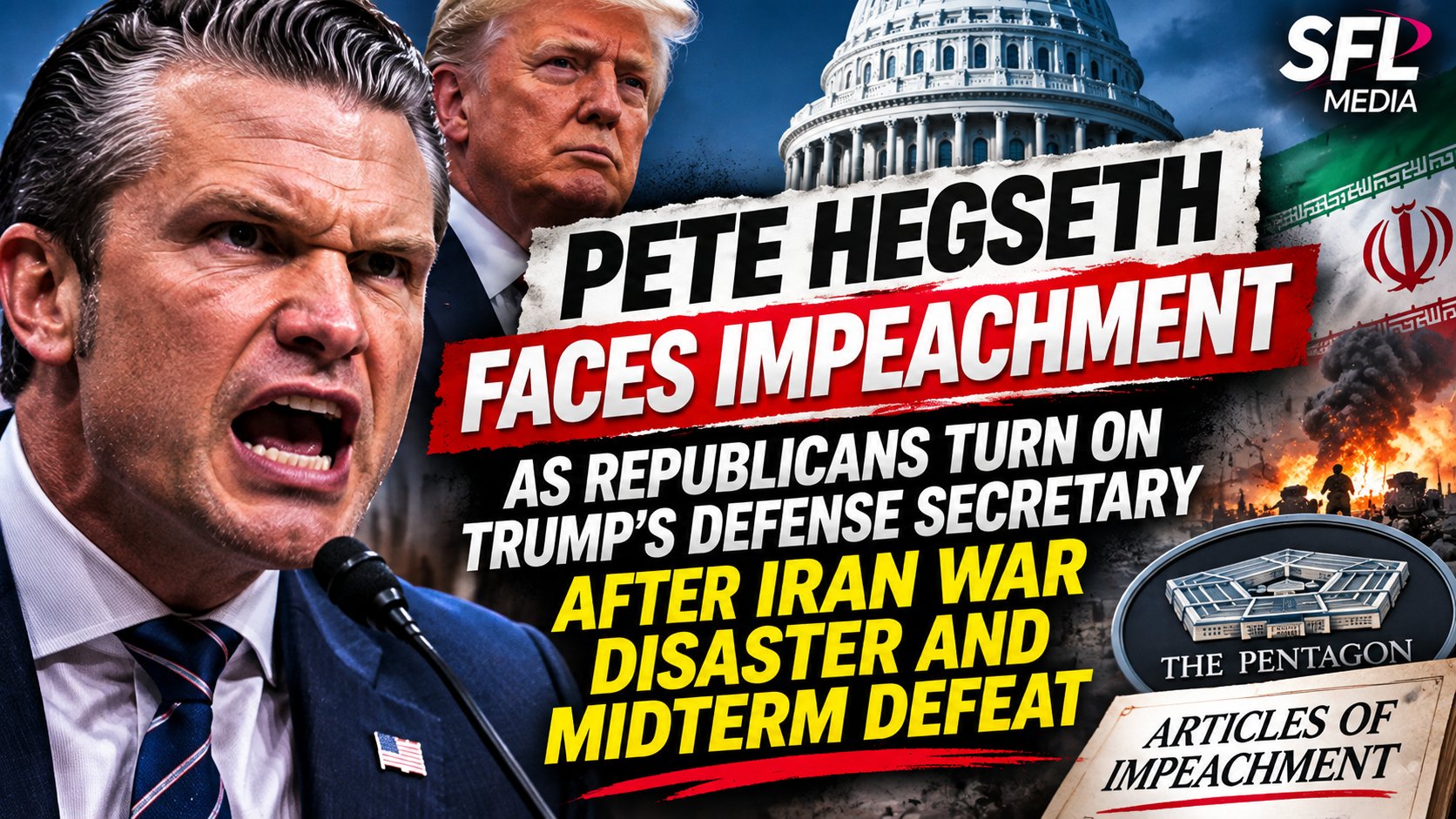
The impeachment demand comes amid a congressional effort led by Republican Rep. Thomas Massie, who has pursued articles of impeachment against Hegseth involving allegations connected to military operations in Iran, Yemen and Venezuela. The Associated Press reported November 10 that the resolution could face a House vote during the week, while President Trump has continued to defend his defense secretary.
The political environment has also shifted following the November 3 midterm elections, which strengthened Democrats’ position in Congress and created the prospect of more aggressive oversight once the newly elected lawmakers take office. Congressional investigators could seek testimony, operational records, targeting assessments and communications relating to military leadership changes and controversial strikes, although the scope and outcome of any future investigations remain uncertain.
Impeachment and removal are separate constitutional processes. The House of Representatives possesses the power to impeach federal civil officers, while the Senate conducts impeachment trials and requires a two-thirds vote of members present for conviction. Political criticism, disputed allegations and even serious policy disagreements do not automatically establish grounds for removal, making independent evidence and a clear constitutional case essential.
Oliver nevertheless argued that Congress has a responsibility to investigate whether Hegseth’s conduct has compromised military effectiveness, legal accountability or the professional independence of the armed forces. His demand placed the defense secretary’s controversies within a larger debate about the constitutional checks intended to prevent abuses of executive power.
A Larger Crisis of Military Professionalism and Democratic Accountability
Beyond the personal controversies surrounding Hegseth, the significance of Oliver’s investigation lies in its examination of civilian control, military professionalism and the institutional safeguards that govern the use of American military power. The United States military operates under elected civilian leadership, but that authority carries responsibilities that cannot be reduced to political loyalty, ideological agreement or public demonstrations of toughness.
A defense secretary has broad authority to establish policy, direct military priorities and recommend leadership changes within the law. Those powers also require sound judgment, professional expertise, respect for constitutional obligations and the willingness to accept independent advice. Military effectiveness depends not only on advanced weapons and combat capabilities but also on experienced commanders, accurate intelligence, disciplined operational planning and legal safeguards designed to prevent unnecessary loss of life.
The controversies examined by Last Week Tonight raise questions that deserve examination by Congress, military inspectors general, independent investigators and the American public. Whether senior officers were dismissed for legitimate reasons, whether civilian casualty protections have been weakened, whether particular strikes complied with international law and whether political ideology has improperly influenced military leadership are matters that require evidence rather than partisan assumptions.
Oliver’s program was unmistakably critical of Hegseth, and its conclusions should be understood as political commentary supported by reporting rather than judicial findings or completed official investigations. Nevertheless, the underlying issues are serious enough to warrant scrutiny regardless of which political party controls the White House.
The ultimate question is not whether Pete Hegseth can survive a brutal 35-minute takedown from a late-night comedian. It is whether the Pentagon can demonstrate that its leadership decisions, military operations and accountability systems meet the standards expected of an institution entrusted with extraordinary power over human life.
For an administration that has made military strength a defining political message, genuine strength requires more than aggressive rhetoric, ideological confrontation and displays of physical toughness. It requires competent leadership, lawful decision-making, reliable intelligence, professional independence and the willingness to answer difficult questions when American military power causes harm.
John Oliver may have delivered those questions through comedy, but the responsibility for answering them belongs to the Pentagon, the White House and the United States Congress.

Sources & Further Reading
- Last Week Tonight with John Oliver — Pete Hegseth: Full HBO Main Segment, November 9, 2026
- HBO Max — Last Week Tonight, November 8, 2026: Pete Hegseth
- The Guardian — John Oliver on Pete Hegseth’s Military Plans
- TheWrap — Pentagon Calls for John Oliver’s Deportation Following Hegseth Investigation
- LateNighter — John Oliver Calls for Pete Hegseth’s Impeachment
- Associated Press — Rep. Thomas Massie Files Impeachment Resolution Against Hegseth
- South Florida Media — National Politics, Investigations and Commentary







































Want to join the conversation?
Create an account or sign in to share your thoughts, vote,
and reply to other readers.
Showing 0 of 0 comments
Don't have an account?
Already have an account?