

Trump White House Threatens Democratic Investigators With Criminal Prosecution as Senior DOJ Officials Resign Following Midterm Defeat
WASHINGTON, D.C. — President Donald Trump’s administration is heading toward a potentially historic constitutional confrontation with Congress following the November 2026 midterm elections, as White House lawyers warn incoming Democratic investigators that their oversight activities could cross into criminal conduct, senior Justice Department officials reportedly depart their positions, and federal prosecutors prepare for an increasingly hostile political environment.
At the center of the controversy is a fundamental question about American democracy: Can a president’s administration threaten criminal investigations against members of Congress for attempting to investigate the executive branch?
The dispute has intensified following Democratic victories in the midterm elections, with incoming congressional leaders preparing to investigate the Trump administration’s conduct, the Justice Department’s handling of politically sensitive cases, immigration enforcement operations, and the actions of senior Cabinet officials. The administration maintains that congressional investigations must serve legitimate legislative purposes and cannot be used simply to punish political opponents. Democratic lawmakers counter that the White House is attempting to intimidate Congress before its investigators have even issued their first subpoenas.
The legal distinction is critical. Congress possesses broad constitutional authority to investigate executive branch operations, government spending, potential misconduct, and matters requiring legislative reform. That authority is not unlimited, but the executive branch cannot simply declare otherwise legitimate congressional oversight criminal because the president objects to being investigated.
The developing confrontation could become one of the defining institutional battles of Trump’s second presidency, testing the independence of Congress, the limits of executive power, and the Justice Department’s responsibility to enforce federal law without political favoritism.
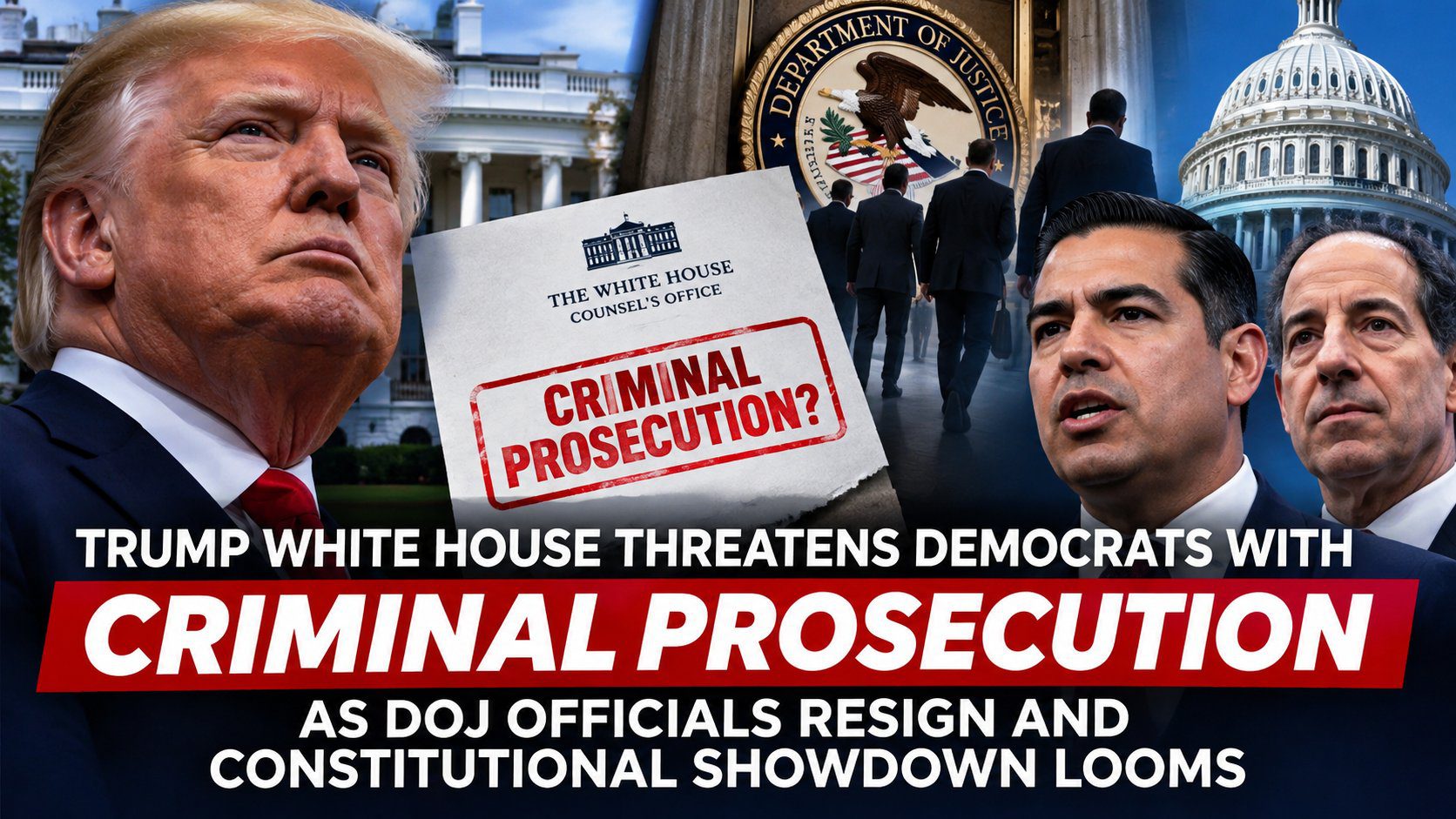
White House Counsel Warns Congressional Investigations Could Become Criminal
The confrontation escalated on November 9 when White House Counsel Will Scharf sent a formal letter to Rep. Robert Garcia, the California Democrat expected to lead the House Oversight Committee when the new Congress convenes in January. The letter challenged Democratic promises to investigate administration officials and warned that certain investigative tactics could expose lawmakers to criminal scrutiny.
Scharf specifically objected to Garcia’s election night message telling Trump administration officials to prepare for investigations. The White House characterized such statements as evidence that incoming Democratic leaders were motivated by political retaliation rather than legitimate legislative objectives.
The letter invoked established legal limits on congressional investigations, arguing that Congress cannot use its investigative powers solely to harass individuals, punish political opponents, or conduct criminal prosecutions under the guise of legislative oversight. Scharf also suggested that subpoenas deliberately designed to violate constitutional rights could themselves become subjects of investigation.
Those legal principles are not entirely without foundation. Congress does not possess unlimited investigative authority, and courts have recognized restrictions on inquiries that lack legitimate legislative purposes. However, the administration’s broader suggestion that anticipated investigations could constitute criminal conduct has raised serious questions about whether the White House is attempting to discourage constitutionally protected oversight before it begins.
The distinction between investigating government misconduct and threatening public officials with unlawful retaliation is central to the dispute. A congressional committee investigating potential corruption, misuse of public funds, abuse of authority, or violations of federal law is performing a recognized legislative function. Such investigations do not become criminal simply because their findings could embarrass the president or expose administration officials to political consequences.
Garcia rejected the White House’s warning and emphasized that congressional oversight authority originates in the Constitution, not from presidential approval. The incoming Democratic leadership has indicated that it intends to proceed with investigations despite the administration’s objections.
Attorney General Todd Blanche Escalates the Confrontation
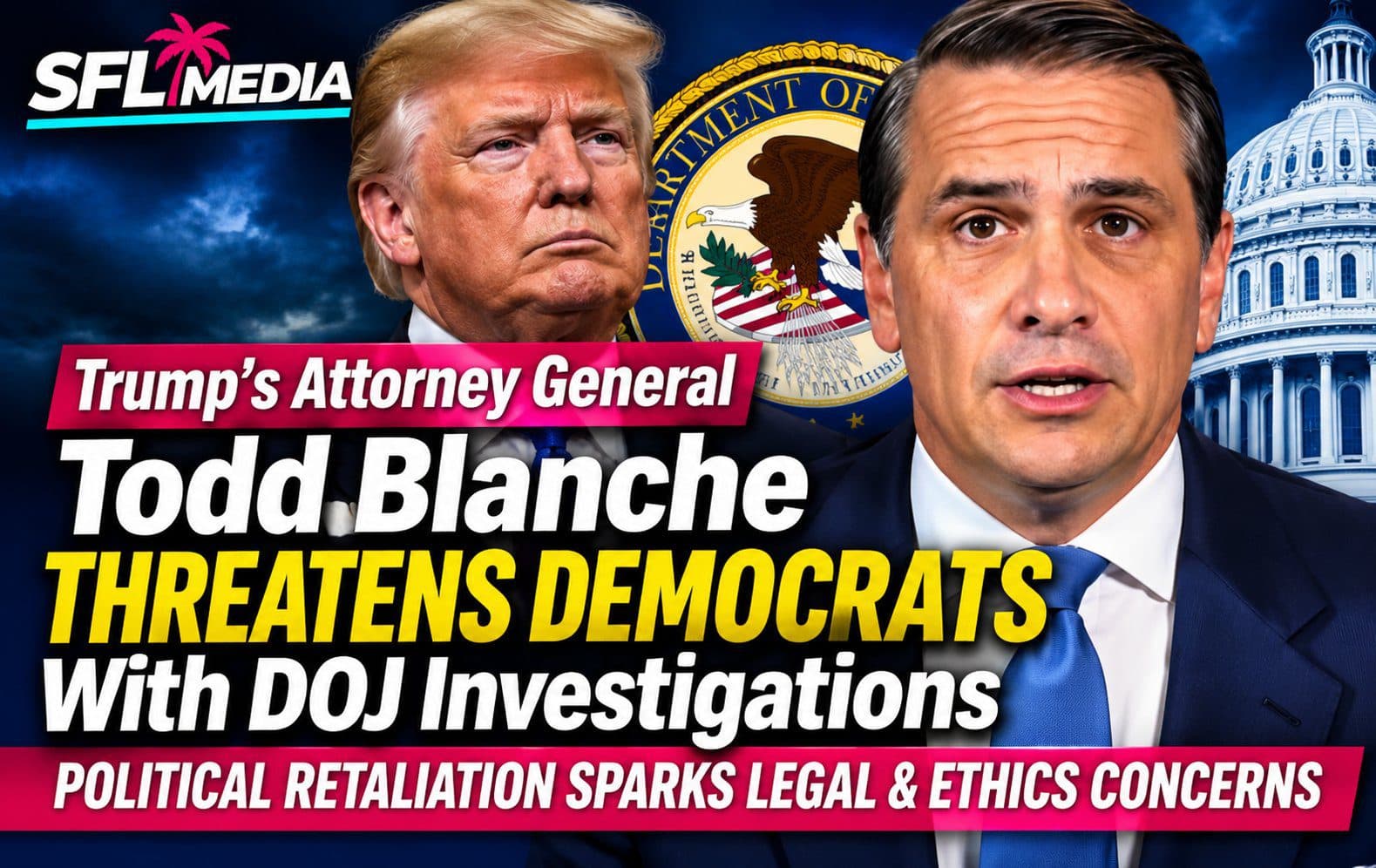
The White House letter followed public remarks by Attorney General Todd Blanche suggesting that Democratic promises to investigate administration officials could amount to threats and potentially criminal conduct. His comments raised the stakes because the Justice Department, unlike the White House Counsel’s Office, possesses federal investigative and prosecutorial authority.
Blanche’s position presents a particularly sensitive institutional question. The attorney general is responsible for overseeing federal law enforcement, including investigations involving public corruption and misconduct. Using that authority to investigate lawmakers solely because they intend to conduct legitimate oversight would raise serious constitutional and prosecutorial independence concerns.
During a November 11 interview on PBS NewsHour, New York Times federal law enforcement reporter Devlin Barrett explained that the administration’s warnings appeared far more significant as political messaging than as a developed legal argument.
Barrett observed that the White House had not clearly identified a viable criminal theory explaining how ordinary congressional investigations would violate federal law. He also noted that the administration had already pursued investigations of Democratic lawmakers on controversial legal grounds, including efforts involving members of Congress who publicly reminded military personnel of their obligation to reject unlawful orders.
The concern is not merely whether such investigations would ultimately succeed in court. Federal investigations can impose significant financial, professional, and personal burdens even when prosecutors never obtain convictions. For elected officials, the prospect of criminal scrutiny could also complicate committee operations, discourage witnesses, and create uncertainty around congressional proceedings.
At the same time, the administration retains the right to challenge subpoenas that exceed constitutional limits, violate applicable privileges, or lack legitimate legislative purposes. The constitutional problem would arise if federal prosecutorial powers were used to punish lawmakers for carrying out lawful legislative responsibilities rather than to investigate independently supported allegations of criminal conduct.
Four Senior Justice Department Officials Depart Following Democratic Victories
The confrontation is unfolding alongside an extraordinary period of leadership instability at the Justice Department. Four prominent officials associated with major Trump administration priorities departed within days of the midterm elections, leaving vacancies in some of the department’s most consequential divisions.
Harmeet Dhillon, who led the Civil Rights Division, announced her departure on November 5. During her tenure, the division pursued administration priorities involving university policies, antisemitism allegations, voting procedures, and challenges to diversity, equity, and inclusion programs. Dhillon indicated that she had decided to return to private practice before the election, making it important not to characterize her resignation as necessarily caused by the Democratic victories.
John Eisenberg, who headed the National Security Division, and Jason Reding Quiñones, the U.S. attorney for the Southern District of Florida, both departed on November 6. Eisenberg’s resignation came amid reporting about internal disagreements involving national security policy, although the precise circumstances surrounding his departure have not been fully established.
Brett Shumate, who led the Civil Division and helped defend major administration policies in federal court, also left his position. His division had been central to litigation involving executive authority, federal programs, immigration policy, and administration efforts to dismantle DEI initiatives. The departures are notable both for their timing and for the responsibilities of the officials involved. These were not peripheral political appointments. They occupied positions responsible for defending presidential policies, directing sensitive investigations, supervising federal prosecutors, and shaping the government’s legal strategy.
Although senior officials frequently leave government service following elections or periods of intense political pressure, the concentration of departures immediately after the midterms has intensified scrutiny of the department’s internal leadership and the expectations imposed on its political appointees.
South Florida Prosecutor’s Exit Raises Questions About Investigations of Trump’s Rivals
One of the most consequential departures for Florida involves Jason Reding Quiñones, who led the U.S. Attorney’s Office for the Southern District of Florida, headquartered in Miami. His office had been involved in a sweeping investigation examining previous federal investigations of Trump and his associates. The effort, sometimes described by administration officials as a grand conspiracy investigation, sought to determine whether political or law enforcement figures had improperly coordinated actions against Trump during earlier federal investigations.
The investigation attracted national attention because of its focus on individuals associated with previous inquiries into Trump’s conduct, including former senior intelligence and law enforcement officials.
According to reporting discussed by Barrett on PBS NewsHour, senior administration officials had grown dissatisfied with the investigation’s failure to produce more substantial criminal charges. That dissatisfaction reportedly contributed to tensions surrounding the Miami prosecutor’s leadership. The distinction between an investigation failing to establish criminal wrongdoing and prosecutors failing to satisfy political expectations is fundamental. Federal prosecutors are required to make charging decisions based on admissible evidence and applicable law, not on whether an indictment would satisfy the president or his political advisers.
The Miami office also handles major public corruption cases, international financial crimes, narcotics trafficking, national security matters, and other complex federal prosecutions. Leadership instability in that office therefore carries implications beyond Washington’s political disputes, particularly for South Florida’s federal law enforcement community. Quiñones’ departure does not, by itself, establish that prosecutors were improperly pressured or that the underlying investigation was illegitimate. Nevertheless, the reported dissatisfaction over the absence of major indictments raises questions about whether administration officials were evaluating prosecutorial performance according to evidentiary results or political expectations.
Justice Department Officials Told to Prepare for a ‘Wartime Footing’
The leadership crisis became more concerning following reporting that a senior Justice Department official instructed federal prosecutors to prepare for an intensified confrontation with Democratic lawmakers and state governments.
According to Bloomberg Law, Principal Associate Deputy Attorney General Aakash Singh told U.S. attorneys and their senior deputies during a November 9 conference call that the department would need to operate on a wartime footing following the midterm elections. Officials who were unwilling to participate in the administration’s coming battles were reportedly encouraged to consider resigning.
The message reportedly went beyond rhetorical preparation. Bloomberg Law reported that Singh warned additional U.S. attorneys could be forced out and emphasized that federal prosecutors were expected to follow the administration’s directives. The account was based on people briefed on the internal discussion, rather than a publicly released recording of the call. The language is striking because the Justice Department is a civilian law enforcement institution whose responsibilities include investigating crimes, protecting constitutional rights, and representing the United States in legal proceedings. Although political appointees are expected to implement lawful administration priorities, federal prosecutors are not supposed to treat opposing political parties as enemies in a partisan conflict.
The administration has defended its law enforcement priorities as necessary to combat violent crime, fraud, immigration violations, and threats to public safety. Those are legitimate areas of federal responsibility. The unresolved concern is whether the department’s increasingly confrontational political language reflects ordinary preparation for litigation or an expectation that prosecutors should participate in partisan retaliation.
The Constitutional Protection Trump Cannot Simply Override
The administration’s warnings also encounter a major constitutional obstacle: the Speech or Debate Clause, contained in Article I, Section 6 of the Constitution. The clause protects members of Congress from being questioned elsewhere for legitimate legislative acts. Its protections are designed to prevent the executive branch and judiciary from using legal proceedings to interfere improperly with legislative independence.
The Supreme Court has interpreted those protections to cover core legislative activities, including certain committee proceedings and investigations conducted within Congress’s constitutional authority. The protections are not absolute, however, and they do not immunize lawmakers from prosecution for unrelated crimes, bribery, or conduct outside the legitimate legislative sphere. Congressional oversight also has an extensive constitutional history. The Supreme Court has recognized Congress’s authority to obtain information necessary for legislation, evaluate federal programs, investigate misconduct, and determine whether existing laws require modification.
In Trump v. Mazars USA, LLP, the Supreme Court addressed congressional subpoenas seeking the president’s personal financial information and established a more demanding analysis for certain subpoenas involving a sitting president. That decision recognized important separation-of-powers concerns, but it did not eliminate Congress’s investigative authority or grant the executive branch a general right to refuse scrutiny.
The administration therefore has legitimate legal avenues for contesting subpoenas. It can challenge their scope, relevance, constitutional basis, or potential interference with executive functions. Courts can resolve those disputes, and some claims of executive privilege may be legally sustainable. What the administration cannot establish merely by assertion is that a congressional investigation becomes criminal because it targets the president’s allies or examines politically damaging conduct.
A Strategy That Could Delay Investigations for Months
Even if the administration’s warnings ultimately fail as legal arguments, they could still have practical consequences. Congressional investigations depend on access to documents, communications, witnesses, agency records, and testimony. When the executive branch refuses to cooperate, committees may be forced into lengthy disputes involving subpoena enforcement, privilege claims, and federal litigation. That process can consume months or longer, especially when courts must resolve novel constitutional questions or disputes involving senior presidential advisers.
Barrett’s analysis on PBS NewsHour suggested that the White House letter should be understood primarily as a declaration of its intention to resist congressional demands. Rather than establishing that oversight is criminal, the administration appears to be signaling that investigators should expect substantial legal and institutional resistance.
For Democrats, the challenge will be to distinguish investigations capable of producing meaningful evidence and legislative results from political confrontations that consume resources without delivering accountability.
For the White House, the strategy carries risks of its own. Blanket resistance to oversight could generate additional litigation, increase public scrutiny, and create new disputes over compliance with court orders. At the same time, courts may reject congressional demands that exceed constitutional boundaries, meaning neither side can assume it will prevail in every confrontation.
Democratic Control of the Senate Complicates Trump’s DOJ Replacements
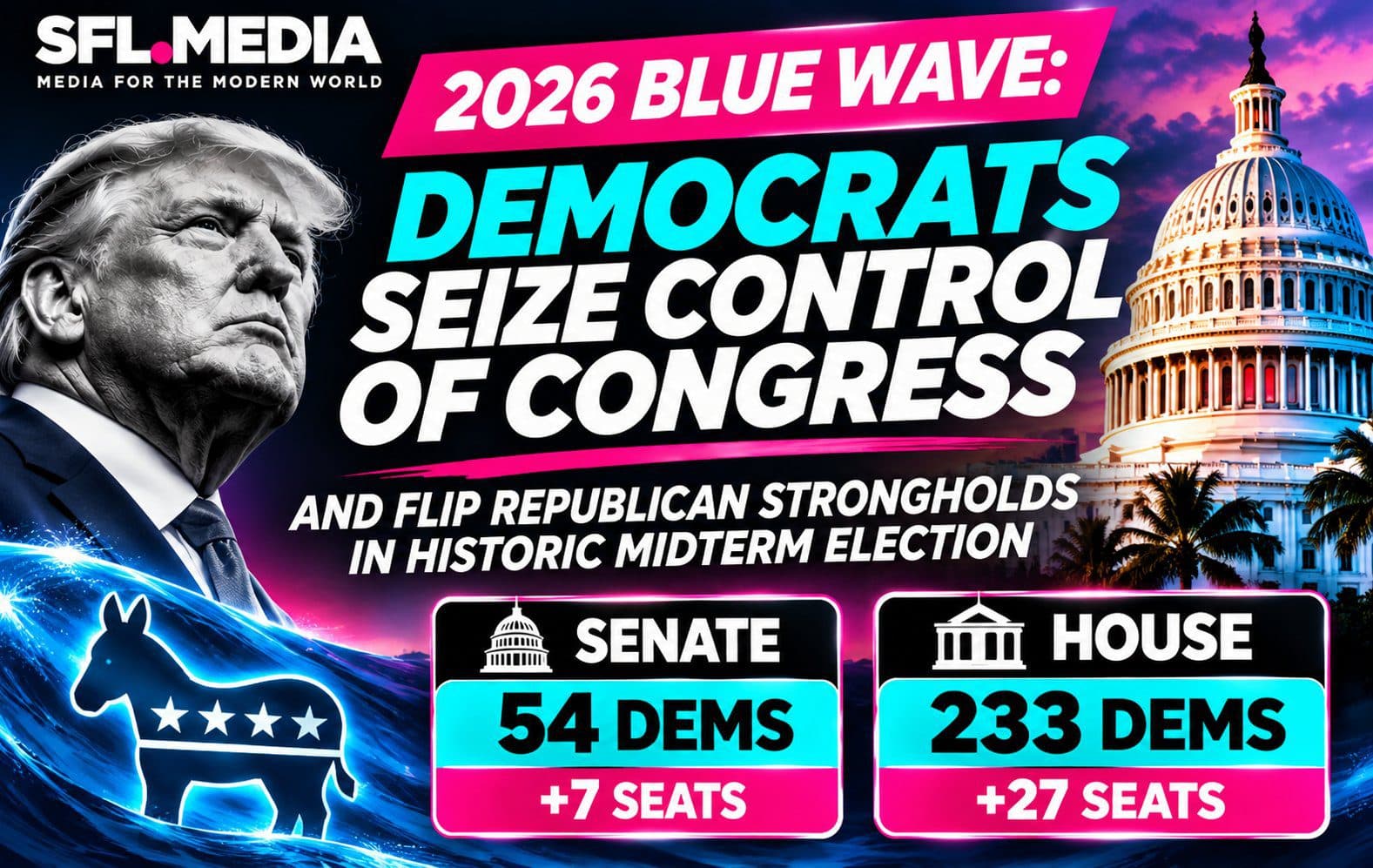
The leadership departures have created an additional problem for the administration because Democrats are preparing to assume control of the Senate in January 2027.
Many of the Justice Department’s most senior positions require presidential nomination and Senate confirmation. While Trump can nominate replacements, securing confirmation from a Democratic controlled Senate could prove considerably more difficult, particularly for candidates associated with controversial investigations or aggressive executive power theories.
The administration may attempt to rely on acting officials, career deputies, and other lawful temporary appointments to maintain operations. However, federal vacancies laws and constitutional appointment requirements impose restrictions on how long certain positions can be filled without Senate confirmed leadership.
These vacancies could also complicate the department’s ability to manage a growing volume of litigation and congressional demands. Experienced officials provide institutional knowledge, coordinate complicated investigations, and supervise legal strategies across numerous federal jurisdictions. The departure of senior leaders, combined with the loss of experienced career attorneys, could place additional pressure on an agency already confronting substantial legal challenges.
The political consequences are particularly significant because Democrats will possess both investigative authority in the House and greater influence over executive branch appointments through the Senate. The administration will retain control of federal law enforcement, but it will no longer enjoy the same congressional support that characterized the first half of Trump’s second term.
Texas and Other States Prepare for New Immigration Battles
The developing confrontation is not limited to Washington. The 2026 elections have also changed the political environment in states where the administration previously enjoyed substantial cooperation with local officials. Texas is emerging as an important example. Democratic electoral victories have altered the state’s political landscape, with some local officials indicating that they intend to reduce cooperation with federal immigration enforcement operations. The administration’s immigration strategy has relied in part on relationships with state and local law enforcement agencies, including cooperation involving detention, information sharing, and immigration enforcement operations.
A shift in those relationships could produce new legal disputes over federal authority, state sovereignty, local policing priorities, and the extent to which state and municipal governments must assist federal immigration operations. Federal immigration law remains enforceable regardless of which party controls a state government. However, states and localities generally cannot be compelled to administer federal regulatory programs simply because Washington wants their assistance, subject to important exceptions and applicable federal law.
For the Justice Department, this means the incoming Congress may not be its only source of institutional opposition. The administration could face simultaneous litigation and political challenges from newly empowered state officials, local governments, civil rights organizations, and congressional investigators. The result could be a prolonged period of legal confrontation in which immigration enforcement, congressional oversight, executive authority, and federal-state relations become interconnected disputes.
Democrats Consider Impeachment Investigations Into Blanche and Hegseth
Incoming Democratic leaders are also discussing whether investigations should extend beyond congressional hearings and subpoenas to potential impeachment proceedings against senior administration officials. Rep. Jamie Raskin, the Maryland Democrat positioned to lead the House Judiciary Committee, has been among the lawmakers raising questions about Attorney General Todd Blanche’s conduct and whether it could warrant impeachment scrutiny.
Blanche has overseen a Justice Department marked by major personnel changes, controversial investigations, and disputes over the independence of federal law enforcement. His defenders argue that he is implementing the president’s lawful priorities, while critics contend that the department has increasingly been used to advance Trump’s political interests.
Defense Secretary Pete Hegseth is another potential focus of Democratic oversight. Questions involving Pentagon leadership, military operations, compliance with federal law, and executive accountability could all fall within congressional investigative jurisdiction. Impeachment, however, requires more than political disagreement or controversial policy decisions. The Constitution permits the House to impeach civil officers for treason, bribery, or other high crimes and misdemeanors. Conviction and removal require a two thirds vote of senators present.
Even with Democratic majorities in both chambers, removing senior officials would therefore require substantial bipartisan support unless Democrats held an extraordinary supermajority. That reality may encourage Democratic leaders to prioritize evidence gathering, public hearings, document production, and legislative reforms before pursuing impeachment votes. Investigations can also uncover evidence that changes the political and legal calculus over time.
Is Threatening Congressional Oversight an Abuse of Power?
The central legal and ethical question is whether the administration’s warnings represent legitimate constitutional objections or an attempt to use the threat of federal prosecution to discourage political accountability. There is a meaningful difference between telling Congress that an unlawful subpoena will be challenged in court and suggesting that lawmakers themselves may face criminal investigation for announcing plans to scrutinize government officials.
The first is a normal component of constitutional government. The second, depending on the circumstances and intent, can raise serious concerns about separation of powers and the misuse of prosecutorial authority. It is important not to confuse those concerns with a judicial finding of wrongdoing. The White House letter, Blanche’s public remarks, and the reported internal Justice Department directives do not independently establish that any official has committed a crime or an impeachable offense. They do, however, create legitimate questions about the boundaries between political advocacy, executive resistance to oversight, and improper interference with congressional responsibilities.
Those questions become particularly important when threats of investigation originate from officials who control the machinery of federal law enforcement. Prosecutors wield extraordinary authority, including the ability to convene grand juries, seek warrants, compel evidence through lawful procedures, and pursue criminal charges. That authority carries corresponding obligations to avoid using federal criminal law as an instrument of partisan intimidation. Whether the administration’s conduct crosses any enforceable legal boundary would depend on specific actions, evidence of intent, applicable statutes, and the constitutional protections surrounding the affected lawmakers.
A Constitutional Showdown Is Coming in January
The November midterms have fundamentally altered the political balance in Washington, but they have not resolved the larger institutional struggle over executive power. Beginning in January, Democrats will have the opportunity to use congressional committees to investigate administration policies, examine federal spending, question senior officials, and seek records that Republican controlled committees may have declined to pursue.
The White House, meanwhile, has already signaled that it intends to contest investigations it considers politically motivated or constitutionally improper.
The Justice Department’s leadership upheaval adds another layer of uncertainty. With several senior positions vacant, additional departures reportedly under consideration, and a Democratic Senate poised to scrutinize future nominees, the administration faces difficult decisions about how to staff and direct federal law enforcement during the remainder of Trump’s presidency.
The larger issue extends well beyond Trump, Blanche, or any individual congressional investigator. Congressional oversight is one of the mechanisms the Constitution provides to prevent excessive concentrations of executive power. Presidents of either party may object to investigations, challenge subpoenas, and assert legally recognized privileges, but the constitutional system depends on the ability of separate branches to examine one another’s conduct.
The central question heading into 2027 is not whether Democrats will investigate the Trump administration. It is whether the White House will respect the constitutional legitimacy of those investigations—or attempt to turn the federal government’s prosecutorial authority against the lawmakers conducting them. The answer could shape not only the final two years of Trump’s presidency, but also the balance of power between Congress and the executive branch for administrations that follow.

Sources & Further Reading
-
PBS NewsHour — White House Threatens Democrats Over Plans to Investigate Trump (November 11, 2026)
-
Reuters — White House Warns Democratic Investigations Could Be Criminal
-
CBS News — White House Counsel Will Scharf’s Warning to Robert Garcia
-
Bloomberg Law — DOJ Official Urges Wartime Footing and Warns of Prosecutor Firings
-
Reuters — Senior DOJ Resignations and South Florida Prosecutor’s Departure
-
CBS News — Brett Shumate Resigns Amid DOJ Leadership Shakeup
-
Bloomberg Law — DOJ Appointees Consider Departures Amid Oversight Concerns
-
U.S. Constitution — Article I, Section 6: Speech or Debate Clause











Loading comments…