

Trump Intervenes to Reinstate Nvidia CEO Jensen Huang, Raising Questions About Crony Capitalism and Presidential Power
President Donald Trump’s intervention to restore Jensen Huang as Nvidia’s chief executive reportedly helped the billionaire recover $33 billion in personal wealth, while allegations of corporate misconduct, national security concerns and potential government coercion continue to generate bipartisan scrutiny.
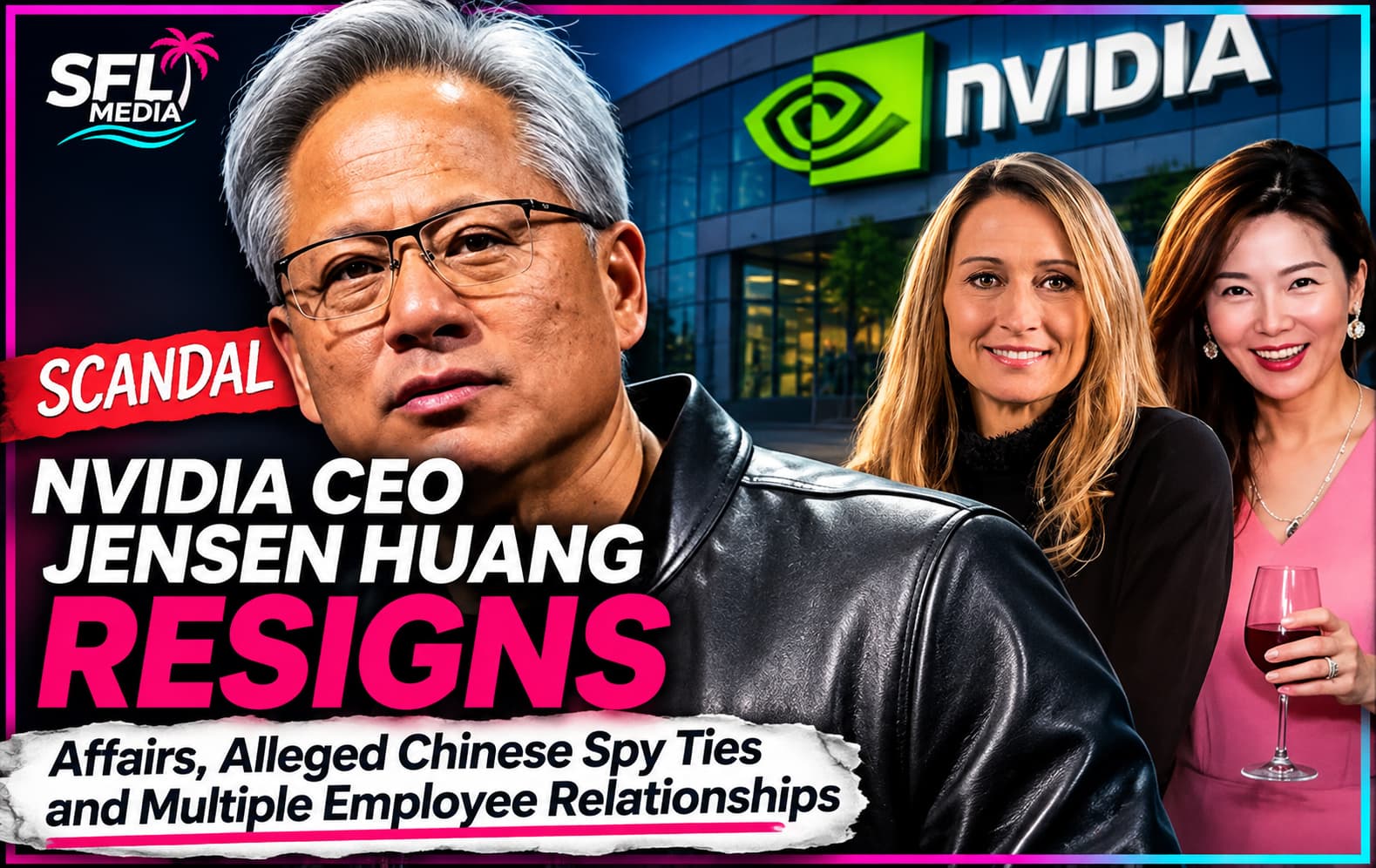
President Donald Trump has thrust his administration into the center of an escalating corporate governance controversy after personally intervening to secure the reinstatement of Nvidia CEO Jensen Huang. The extraordinary reversal came just 11 days after Huang resigned amid allegations involving extramarital affairs, violations of corporate conduct policies and potential connections between a woman with whom he was reportedly involved and Chinese intelligence officials.
Nvidia’s board of directors, having previously resisted Huang’s return, unanimously voted to reinstate the billionaire executive on November 23, 2026, following communications with senior members of the Trump administration. The decision triggered a dramatic recovery in Nvidia’s stock price, reportedly increasing Huang’s personal fortune by approximately $33 billion, according to CNN’s Erin Burnett OutFront.
Perhaps even more alarming are reports that Defense Secretary Pete Hegseth and senior Pentagon officials considered invoking the Defense Production Act, a federal law originally enacted during the Korean War, as leverage to pressure Nvidia into reinstating its former chief executive. The Pentagon has denied those reports, and the legislation was not ultimately invoked.
The controversy raises fundamental questions about the relationship between government authority, corporate independence and billionaire wealth in an American economy increasingly dominated by a handful of powerful technology companies.
Trump Admits to Personally Pressuring Nvidia’s Board
On November 12, 2026, Nvidia announced that Huang had resigned as president, chief executive officer and a member of the company’s board of directors. Chief Financial Officer Colette Kress was appointed interim CEO, while Harvey C. Jones assumed the position of board chairman. The company began searching for a permanent successor, signaling that Huang’s departure was more than a temporary interruption in his leadership.
Less than two weeks later, Nvidia abandoned that position following intervention from Trump and Vice President JD Vance. During an interview with CNBC’s David Faber, Trump openly acknowledged his role in persuading the company’s directors to reverse their decision.
“Well, I spoke to ’em. Let me just put it that way. And I convinced them, and I must tell you, it was a lot easier to convince them yesterday than it was a week and a half ago.”
— President Donald Trump, CNBC interview.
Nvidia independently confirmed the administration’s involvement in its November 23 announcement, acknowledging that its board had received information from senior government officials before reaching its decision. The company maintained that Huang’s reinstatement was in the best interests of its shareholders, employees, customers and business partners and stated that it was confident his return did not pose a national security risk.
Huang subsequently disputed the characterization that presidential pressure was responsible for his return, maintaining that Nvidia’s directors had independently reviewed the circumstances. Nevertheless, Trump’s public statements and Nvidia’s corporate announcement establish that the administration was directly involved in the process leading to his reinstatement.
Extramarital Affairs, Corporate Misconduct and Alleged Chinese Intelligence Connections
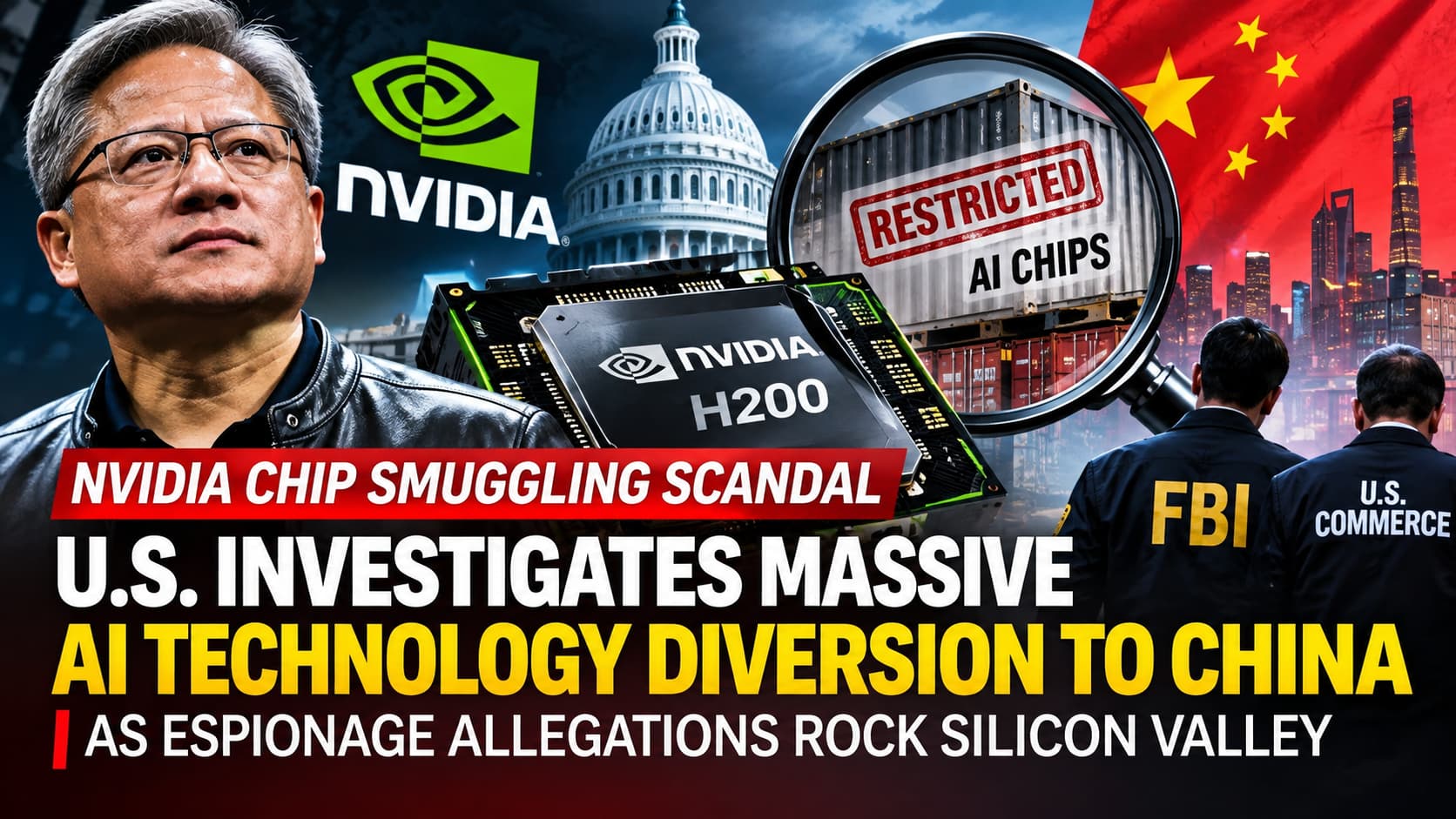
Huang’s resignation followed reports that he had conducted extramarital affairs involving employees and a Chinese businesswoman allegedly connected to Chinese intelligence. The controversy carried exceptional national security implications because Nvidia manufactures advanced semiconductors that are increasingly essential to artificial intelligence, military computing, scientific research and critical technological infrastructure.
The woman at the center of the reported counterintelligence concerns, Alice Huang, is a former executive associated with Megaspeed, a company that has attracted scrutiny over the suspected diversion of advanced American semiconductor technology to China. She is not related to Jensen Huang.
Following his reinstatement, Huang addressed Nvidia employees at the company’s California headquarters, reportedly acknowledging that he had violated portions of the company’s code of conduct and apologizing for his personal behavior. He also disputed allegations concerning his management style and indicated that he was taking steps to address his personal conduct.
However, the intelligence allegations remain contested. Reuters reported on November 26 that the FBI assessed the available intelligence as insufficient to establish that Alice Huang was an officer or asset of Chinese intelligence, while the CIA remained open to the possibility that additional evidence could emerge.
There is currently no publicly established evidence that Jensen Huang knowingly participated in espionage or transferred classified or restricted information to China. Those distinctions are essential, particularly given the seriousness of the allegations and the potential consequences for both individuals and American national security.
Trump’s Intervention Reportedly Makes Jensen Huang $33 Billion Richer
One of the most extraordinary consequences of Trump’s intervention was the financial benefit experienced by Huang himself. CNN’s Erin Burnett OutFront reported that Huang’s personal fortune increased by approximately $33 billion following his reinstatement and the subsequent recovery in Nvidia’s share price.
Nvidia shares initially surged by nearly one-third after the company announced Huang’s return, helping reverse a broader sell off across artificial intelligence related investments. Because Huang owns a substantial stake in the company he co-founded, the increase in Nvidia’s valuation translated into an enormous recovery in his estimated personal wealth.
The $33 billion figure represents an increase in the estimated market value of Huang’s assets, not a direct payment from the federal government or necessarily realized investment profits. Nevertheless, the scale of the financial benefit raises legitimate ethical questions when presidential intervention in a private corporation’s leadership coincides with such an extraordinary increase in the personal fortune of the executive involved.
Presidential policies routinely influence corporate earnings, investment valuations and financial markets. Personally intervening to restore a particular billionaire to his corporate leadership position, however, represents a significantly more individualized application of political influence. The circumstances warrant scrutiny, even in the absence of evidence establishing an unlawful financial arrangement.
Pete Hegseth Reportedly Considered Using Wartime Powers to Pressure Nvidia
Perhaps the most troubling allegation surrounding Huang’s reinstatement involves discussions reportedly held within the Pentagon about using the Defense Production Act of 1950 to exert economic pressure on Nvidia’s board of directors.
According to The Washington Post, Defense Secretary Pete Hegseth and Deputy Defense Secretary Steve Feinberg were reportedly involved in discussions concerning whether extraordinary federal industrial powers could be used to influence the semiconductor manufacturer’s leadership decision.
Originally enacted during the Korean War, the Defense Production Act grants presidents extensive authority over domestic industrial production when necessary to support national defense. Successive administrations have used the legislation to secure military supplies, strengthen critical supply chains and accelerate manufacturing during national emergencies, including the COVID-19 pandemic. Using that authority to influence the appointment of a private corporation’s chief executive would represent a fundamentally different application of legislation originally intended to protect national security and industrial preparedness.
The Pentagon has denied the reported discussions. Furthermore, there is no established evidence that the proposal was formally presented to Nvidia’s directors, that Trump approved such a plan or that the Defense Production Act was invoked. Nevertheless, the allegations raise important questions about the potential use of emergency economic powers to influence corporate leadership decisions.
The Justice Department Did Not Conduct a Formal Investigation Into Huang Before His Return
The Trump administration has defended its intervention by maintaining that Huang’s leadership is important to American technological competitiveness and that available government information did not establish that he posed a national security threat.
However, Reuters reported on November 25 that the Justice Department did not conduct a formal investigation into Huang himself before Trump pushed for his reinstatement. Instead, Attorney General Todd Blanche relied on information obtained through existing investigations involving Nvidia customers suspected of diverting advanced semiconductor technology to China, including Super Micro Computer and Megaspeed International.
Those investigations had reportedly uncovered no evidence that Huang knowingly participated in unlawful technology transfers or acted as an agent of China. Nvidia was not a target of those particular investigations and had reportedly cooperated with investigators by providing relevant information and documentation.
Blanche subsequently communicated his assessment to Trump and Vance, who relayed government assurances to Nvidia’s board. However, the absence of evidence establishing criminal wrongdoing is not necessarily equivalent to a comprehensive determination that all potential corporate governance, export compliance and counterintelligence concerns have been resolved.
Criminal investigations, intelligence assessments and corporate misconduct inquiries operate under different standards. Conduct that does not result in criminal charges may still raise significant questions about executive judgment, corporate security and regulatory compliance.
When National Security Becomes a Justification for Corporate Favoritism
Nvidia occupies an increasingly important position within America’s economic and national security infrastructure. Its advanced computing technology powers artificial intelligence systems, military applications, research institutions and data centers operated by some of the world’s largest corporations.
The Trump administration has argued that uncertainty surrounding Nvidia’s leadership could undermine American technological competitiveness, destabilize financial markets and weaken the country’s strategic position relative to China. From that perspective, restoring Huang could be viewed as an effort to protect an important American industry during a period of significant technological competition.
However, the argument that one billionaire executive is indispensable to American national security raises a separate and potentially more troubling question about the concentration of economic and technological power. If the stability of American financial markets, artificial intelligence development and national defense infrastructure depends on the continued employment of one corporate executive, that dependence itself represents a strategic vulnerability. A resilient economy should possess institutions capable of surviving executive misconduct, leadership transitions and independent corporate oversight without requiring direct intervention from the White House.
Nvidia’s Board Reversal Raises Serious Questions About Corporate Independence
Publicly traded corporations are governed by boards of directors responsible for overseeing executive leadership, managing corporate risks and protecting shareholder interests. Directors are expected to exercise independent judgment rather than simply implement the political preferences of government officials.
Nvidia’s reversal following intervention from Trump and Vance has prompted questions about whether its directors retained sufficient independence throughout the decision making process. Although the board ultimately voted unanimously to restore Huang, critics have questioned whether that outcome reflected a genuinely independent assessment or the influence of an administration with considerable regulatory and economic authority over the semiconductor industry.
Nvidia has announced additional governance measures, including a board-level committee dedicated to national security and export controls, as well as plans to appoint a chief compliance officer. Its independent investigation into the reported foreign intelligence concerns will also continue, despite Huang’s reinstatement. Those measures represent important acknowledgments that questions surrounding corporate compliance and national security remain unresolved. Shareholders deserve to know what information changed the board’s assessment, what assurances were provided by government officials and whether directors considered the full range of potential risks associated with reinstating Huang.
The precedent extends considerably beyond Nvidia. If a president can effectively influence who leads a strategically important private corporation, future administrations could attempt to exercise similar influence over banks, pharmaceutical companies, defense contractors, telecommunications providers or media organizations.
S&P Warns Nvidia’s Board Independence May Be Compromised
Concerns about Nvidia’s corporate governance are no longer confined to political critics or dissatisfied shareholders. On November 25, S&P Global Ratings placed the semiconductor manufacturer’s credit rating under review for a possible downgrade, citing weaknesses exposed by Huang’s departure and subsequent reinstatement. The ratings agency raised concerns about the independence of longtime board members and whether Nvidia’s governance practices had developed sufficiently alongside the company’s extraordinary expansion and strategic importance.
“We believe the long tenure of certain board members may have compromised their independence.” — S&P Global Ratings, as reported by Reuters on November 25, 2026.
S&P indicated that Nvidia’s AA credit rating could be lowered by one notch within 90 days. The announcement demonstrated that concerns about corporate governance have tangible financial implications, extending beyond political controversy into the company’s creditworthiness and its relationships with institutional investors.
Moody’s offered a somewhat different assessment, maintaining Nvidia’s existing credit rating and stable outlook while acknowledging that Huang’s reinstatement reduced immediate leadership uncertainty without fully resolving governance and regulatory concerns.
Together, the assessments illustrate the tension between short-term financial stability and longer-term institutional accountability. Restoring an influential executive may reassure investors temporarily, but that reassurance does not eliminate the underlying governance questions that contributed to the controversy.
Congressional Republicans and Democrats Demand Answers
Huang’s reinstatement has generated criticism from lawmakers across party lines, particularly those concerned about China’s access to advanced American semiconductor technology and the integrity of the government’s export control system. Lawmakers have questioned whether the administration acted prematurely in declaring that Huang did not represent a national security threat and whether Nvidia’s corporate leadership adequately monitored the distribution of its advanced computing products.
The bipartisan nature of the criticism is particularly significant. Concerns about restricted technology reaching Chinese entities are not limited to political opposition to Trump. They reflect longstanding debates about American technological competitiveness, military preparedness and the enforcement of national security restrictions.
Huang is expected to face congressional questioning in early December, providing lawmakers with an opportunity to examine Nvidia’s export compliance practices, corporate governance procedures and the circumstances surrounding his reinstatement. The company’s leadership must also continue addressing questions surrounding its relationships with customers suspected of diverting restricted semiconductor technology to China. Huang’s return does not resolve those investigations or eliminate Nvidia’s responsibility to maintain effective export compliance systems.
Incoming Democratic Congress Could Investigate White House Communications
The controversy comes as Democrats prepare to assume control of Congress in January 2027 following the 2026 midterm elections, providing congressional investigators with greater authority to scrutinize the Trump administration’s relationships with major corporations and billionaire executives.
The circumstances surrounding Huang’s reinstatement present several potential areas of congressional inquiry, including communications between the White House and Nvidia’s directors, the assurances provided by federal law enforcement officials and reported Pentagon discussions involving the Defense Production Act.
Investigators could also examine whether administration officials discussed regulatory consequences, government contracts, export licensing decisions or other economic considerations while attempting to secure the board’s cooperation.
No evidence reviewed for this article establishes that Huang’s reinstatement was exchanged for political contributions, personal financial benefits to Trump or other unlawful favors. Determining whether government officials exercised improper coercion would require access to internal communications, relevant government records and testimony from individuals directly involved in the negotiations.
The central question is not whether presidents should ever communicate with corporate executives. It is whether government officials exercised their authority appropriately, whether the board remained independent and whether the administration’s actions were consistent with its responsibility to protect the broader public interest.
Wall Street’s Dependence on Artificial Intelligence Gives Billionaires Extraordinary Political Influence
The Nvidia controversy also highlights the growing concentration of financial and political influence within America’s artificial intelligence industry. A relatively small group of technology companies now plays an enormous role in determining the performance of major stock market indexes, influencing retirement accounts, institutional investment portfolios and perceptions of the broader economy.
Nvidia’s stock decline following Huang’s resignation contributed to wider investor anxiety surrounding artificial intelligence investments. Trump’s intervention subsequently helped restore market confidence, at least temporarily, demonstrating the extent to which the fortunes of individual technology executives have become intertwined with broader economic conditions.
That dynamic creates a potentially dangerous incentive for political leaders to prioritize the market stability of dominant technology corporations over independent corporate oversight, regulatory enforcement and accountability. When an executive becomes so economically influential that government officials consider his continued employment essential to national prosperity, the distinction between private corporate interests and public policy becomes increasingly difficult to maintain.
For ordinary Americans, including South Florida residents whose retirement savings and investment accounts are exposed to major technology stocks, the consequences of this concentration of economic power extend considerably beyond Silicon Valley. Corporate governance decisions involving a single semiconductor manufacturer can now influence the financial security of millions of households that have no meaningful role in those decisions.
Presidential Power, Crony Capitalism and the Future of American Free Enterprise
The United States has traditionally promoted private enterprise, competitive markets and limited government interference in corporate decision-making as central principles of its economic system. Trump’s intervention in Nvidia’s leadership challenges those principles by demonstrating how directly the executive branch can influence the governance of a strategically important publicly traded corporation.
There are legitimate circumstances in which the federal government must intervene in private industry to protect national security, respond to emergencies or enforce federal law. Those interventions, however, should operate under transparent legal authority, objective standards and meaningful institutional oversight. Using presidential influence to reinstall a preferred billionaire executive is a considerably more controversial proposition, particularly when that executive experiences tens of billions of dollars in personal wealth appreciation while significant questions about corporate conduct remain unresolved.
Trump’s supporters argue that the intervention protected American technological leadership, reassured investors and prevented additional economic damage. Critics argue that it represents an emerging form of crony capitalism in which corporate leadership decisions increasingly depend on political relationships with the White House rather than independent corporate governance.
The controversy ultimately deserves an investigation capable of establishing what government officials communicated to Nvidia, what intelligence and legal assessments were available at the time, whether extraordinary federal powers were seriously considered and whether the company’s directors exercised genuinely independent judgment.
What is already established is that Trump personally intervened, Nvidia reversed its position, Huang recovered his leadership role and the billionaire’s estimated fortune increased dramatically. Meanwhile, corporate governance inquiries and national security questions remain unresolved, and one of the world’s leading credit ratings agencies has publicly questioned the independence of Nvidia’s board.
The fundamental question facing the United States is whether its government is protecting the independence and integrity of American capitalism or increasingly using presidential power to protect the fortunes of the billionaires who dominate it.
Sources & Further Reading

Corporate Announcements and Primary Documentation
-
Nvidia – Board Reinstates Jensen Huang as President, CEO and Board Director
-
Nvidia – Official November 12, 2026, CEO Resignation and Leadership Transition Filing
-
CNN – Erin Burnett OutFront: White House Nvidia Story Shifts, Mystery $300 Million Donation and More
Presidential Intervention and Pentagon Reporting
-
Reuters – Huang Returns as Nvidia CEO After Trump Intervention in Abrupt Board Reversal
-
The Washington Post – Trump Ties His Administration’s Future to Jensen Huang
-
The Independent – Reported Pentagon Discussions and the Pentagon’s Denial
National Security and Corporate Misconduct
-
Reuters – How the Trump Administration Determined Jensen Huang Is Not a National Security Threat
-
Reuters – U.S. Officials Divided Over Chinese Spying Allegations Following Jensen Huang’s Return
Corporate Governance and Financial Markets
-
Reuters – S&P Warns Nvidia’s Board May Be Compromised, Places Credit Rating on Downgrade Watch
-
Reuters – Nvidia Board’s Huang Reversal Raises Doubts About Independence
-
Reuters – Moody’s Says Huang’s Reinstatement Eases Uncertainty
-
Reuters – Nvidia Reinstates Jensen Huang as CEO, Igniting Technology Stock Surge
Political Analysis and Further Coverage












Loading comments…