
EDC Colombia 2026 Makes Historic Medellín Debut With Alesso, Armin van Buuren, deadmau5, Richie Hawtin, and More Than 80 Artists
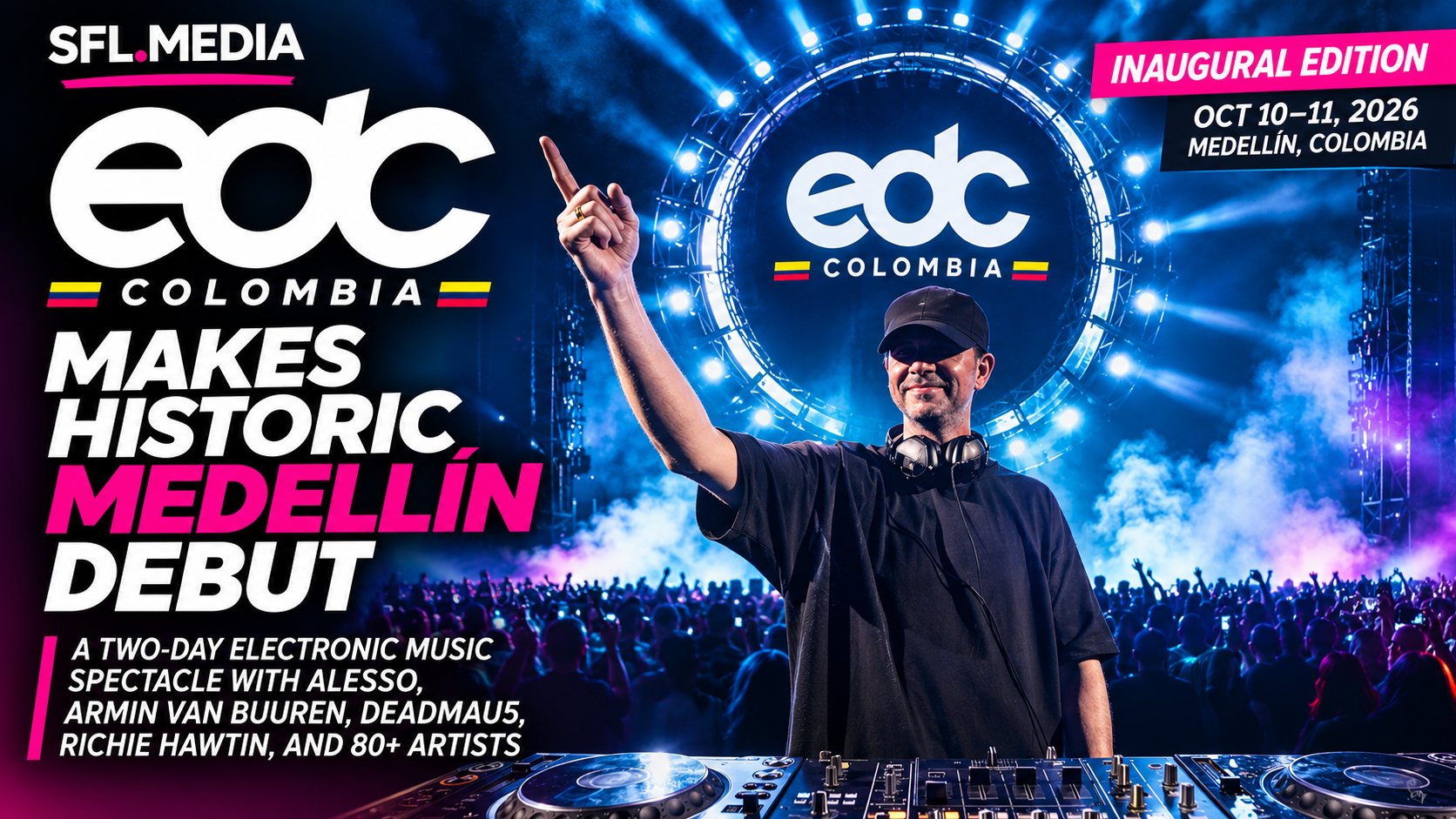
Electric Daisy Carnival brought its signature combination of electronic music, elaborate stage production, and international festival culture to Medellín for the first time on October 10–11, 2026. Featuring seven stages, more than 80 artists, and a lineup spanning mainstream EDM, techno, trance, house, and melodic electronic music, the inaugural edition marked an ambitious new chapter for Colombia’s growing dance music scene.
Medellín, Colombia, became the newest destination on the international Electric Daisy Carnival circuit when EDC Colombia staged its inaugural edition on October 10 and 11, 2026, at the Unidad Deportiva Atanasio Girardot. Organized by Insomniac Events in partnership with Colombian entertainment promoter Páramo Presenta, the two day festival brought together international headliners, established underground performers, and emerging regional talent for one of the country’s most ambitious electronic music events.
The festival’s reported lineup included more than 80 artists performing across seven stages, giving attendees access to an unusually broad range of electronic music within a single event. From the mainstage sounds of Alesso, Armin van Buuren, Kaskade, and Illenium to the darker techno of Richie Hawtin, Boris Brejcha, and 999999999, EDC Colombia was designed to showcase the diversity of modern dance music rather than concentrate exclusively on commercially popular DJs.
For Medellín, the arrival of the EDC brand represented more than another major concert weekend. It placed the city within an international festival network associated with large scale productions in Las Vegas, Orlando, Mexico City, and other destinations, while creating an opportunity to showcase Colombia’s established electronic music culture to a wider audience.
The inaugural event also reflected the continuing international expansion of electronic music festivals, as promoters increasingly look beyond traditional European and North American markets toward cities with growing nightlife industries, dedicated fan communities, and established cultural infrastructure.
Seven Stages Turned Medellín Into an Electronic Music Playground
EDC Colombia’s production was built around seven performance areas: kineticFIELD, circuitGROUNDS, neonGARDEN, stereoBLOOM, bionicJUNGLE, daisyFIELDS, and the boomboxARTCAR. Five were established EDC stage concepts, while the additional areas expanded the festival’s programming and gave smaller-scale performances room to develop outside the major stages.
The festival also featured curated programming associated with Factory 93, Dreamstate, and Time Warp, brands recognized for their connections to underground techno, trance, and European electronic music culture. Rather than representing three additional permanent stages, these takeovers helped shape the musical identity of the existing festival spaces.
The scale was substantial. Medellín newspaper El Colombiano reported before the event that organizers expected approximately 94,000 visits across the two days and projected an economic impact of $37.1 million. Those figures were forecasts, not verified final attendance or revenue totals. Local broadcaster Telemedellín subsequently reported approximately 45,000 attendees on the opening day, confirming that the inaugural festival drew a large crowd.
Beyond the performances, the festival incorporated elaborate lighting, visual effects, creative costumes, and the decorated totems that have become a distinctive part of EDC culture. The totems serve both as artistic expressions and as practical meeting points for groups navigating enormous crowds, turning the audience itself into part of the visual spectacle.
Alesso, deadmau5, and Illenium Led an Explosive Opening Night
Saturday, October 10, delivered an exceptionally strong mainstage schedule, bringing together progressive house, melodic bass, and internationally recognized EDM performers. The kineticFIELD programming began with Gaia and continued through sets from Augusto Yepes, MËSTIZA, Dombresky, Miss Monique, and Alok before transitioning into a late night sequence featuring deadmau5, Illenium, and Alesso.
For fans of melodic electronic music, the closing stretch offered three very different approaches to large scale festival performance. deadmau5 brought the production focused electronic sound that helped establish him as one of the genre’s defining artists, while Illenium represented the emotionally driven melodic bass movement that has attracted an enormous international audience. Alesso, meanwhile, delivered the progressive house identity that has made him a mainstay of major dance festivals for more than a decade.
Alesso’s appearance was particularly significant for a festival making its Colombian debut. His catalog of soaring melodies and festival oriented productions has become closely associated with the modern mainstage experience, making him a natural choice to anchor the opening night’s final hours.
But Saturday’s programming was far more diverse than its mainstage headliners suggested. circuitGROUNDS featured Above & Beyond, Richie Hawtin, ARTBAT, and other internationally respected performers, creating a musical progression from trance and progressive sounds into darker, more hypnotic electronic territory. The contrast between the two major stages gave attendees a choice between emotionally charged festival anthems and more experimental club-oriented music.
Armin van Buuren, Kaskade, and Afrojack B2B Green Velvet Took Over Sunday
Sunday, October 11, continued the festival with another heavyweight mainstage lineup. Kaskade, Afrojack B2B Green Velvet, and Armin van Buuren formed the centerpiece of the evening’s programming, with Colombian artist Funk Tribu scheduled to close kineticFIELD in the early hours following the second day.
The Afrojack and Green Velvet collaboration stood out as one of the festival’s most intriguing bookings. Afrojack is internationally associated with big-room house and festival oriented productions, while Green Velvet is known for his distinctive vocal performances, Chicago house influences, and underground techno and house credentials. Bringing the two together created an unusual stylistic combination that bridged mainstream EDM and club culture.
Armin van Buuren’s appearance further reinforced the festival’s emphasis on trance. The Dutch DJ and producer has spent decades helping define the genre through his performances, recordings, and A State of Trance radio brand. His inclusion alongside Above & Beyond, Cosmic Gate, Astrix, Vini Vici, and Infected Mushroom gave EDC Colombia a trance presence substantial enough to appeal to dedicated fans rather than merely casual festival audiences.
Kaskade added another dimension to the Sunday lineup, representing the melodic and progressive side of American house music. His longstanding association with the EDC brand made him an especially fitting performer for the Colombian debut.
Techno Fans Had Their Own Festival Within the Festival
For attendees more interested in underground electronic music than commercial mainstage productions, EDC Colombia assembled a formidable selection of techno and house performers. Richie Hawtin, Boris Brejcha, ARTBAT, Nico Moreno, 999999999, Restricted, Maceo Plex, Jamie Jones, and Beltran represented a broad range of styles, from minimal techno and melodic club music to aggressive industrial influenced sounds.
Richie Hawtin’s appearance connected the festival to the history of underground techno. As one of the genre’s most influential producers and performers, Hawtin has spent decades exploring minimalist electronic music, technology driven DJ performance, and the relationship between sound and immersive club environments.
Boris Brejcha brought his distinctive high tech minimal identity, while ARTBAT represented the melodic techno movement that has become increasingly prominent at major international festivals. Nico Moreno, Restricted, and 999999999 provided a harder alternative, reflecting the continued growth of fast, aggressive techno among younger dance music audiences.
The inclusion of Maceo Plex and Jamie Jones further broadened the underground offering. Both artists have developed international followings through their distinctive approaches to house and techno, while Beltran and other emerging performers represented a newer generation of club music producers.
The Factory 93 and Time Warp programming helped distinguish EDC Colombia from festivals that treat underground music as a minor addition to their mainstage offerings. Their presence signaled that Insomniac and Páramo Presenta intended to serve multiple electronic music communities within the same event.
Trance, Psytrance, and Melodic House Brought More Depth to the Lineup
EDC Colombia also gave significant attention to trance and psytrance, genres that have developed dedicated audiences throughout Latin America. Above & Beyond, Cosmic Gate, Astrix, Vini Vici, Infected Mushroom, Billy Gillies, and Colombian producer KhoMha were among the artists featured in the festival’s programming, providing everything from melodic progressive trance to faster, psychedelic electronic music.
The Dreamstate programming was particularly important because trance is frequently underrepresented at large festivals dominated by house, techno, and commercial EDM. By incorporating an established trance brand, EDC Colombia created a dedicated identity for fans whose musical preferences extend beyond the mainstage.
The festival also embraced Afro house, melodic house, and globally influenced dance music through performers including BLOND:ISH, Francis Mercier, Carlita, LP Giobbi, Korolova, Miss Monique, and Augusto Yepes. Their inclusion reflected the growing international popularity of electronic music incorporating African rhythms, Latin influences, melodic production, and organic instrumentation.
For Colombia, these sounds have particular relevance. The country’s nightlife culture has long embraced house and techno, while its internationally connected music scene has increasingly incorporated Afro house, melodic electronic music, and cross-cultural collaborations.
Colombian Artists Shared the Spotlight With International Superstars
Although the international headliners attracted much of the attention, EDC Colombia also created opportunities for domestic artists to perform alongside some of the biggest names in electronic music. Local reporting following the event identified 36 Colombian artists or projects on the lineup, including performers connected to Medellín’s developing electronic music scene.
Funk Tribu was among the most prominent Colombian names, with the artist scheduled to close kineticFIELD on the festival’s second night. Other performers, including Cato Anaya, Augusto Yepes, KhoMha, Felipe Gordon, and several emerging local DJs, demonstrated the range of electronic music being produced within Colombia.
The involvement of local talent matters because the long-term value of an international festival depends partly on whether it creates opportunities for the host country’s musicians and entertainment professionals. Major events can provide exposure, industry relationships, and production experience that extend beyond the festival weekend, particularly when local performers share stages with established international artists.
Medellín’s Music Lab initiative also participated in the wider festival programming, with local reporting identifying 17 artists involved in 15 performances. Their inclusion helped connect the international EDC brand with the city’s own creative community rather than presenting the event solely as an imported entertainment product.
More Than 94,000 Festival Visits and a Major Economic Boost for Medellín
The inaugural EDC Colombia delivered substantial attendance numbers. According to figures attributed to organizer Páramo Presenta and reported by Blu Radio and El Colombiano, the festival recorded approximately 94,000 admissions across the two days, averaging 47,000 per day. That is a cumulative attendance figure and should not be interpreted as 94,000 unique individuals.
The organizers also reported a substantial international audience, with approximately 23,000 visitors from abroad and more than 14,000 domestic tourists traveling from other Colombian cities. The United States, Mexico, Peru, and Brazil were among the international markets represented.
The event’s reported economic contribution was estimated at more than 110 billion Colombian pesos, benefiting hotels, restaurants, transportation providers, retailers, and other local businesses. That post-event estimate should be distinguished from the city’s earlier projection of $37.1 million in economic activity; neither figure represents independently audited festival profit or tax revenue.
For Medellín, the numbers reinforce the potential of electronic music tourism. Large international festivals can bring visitors who spend money well beyond the event grounds, creating demand for accommodations, transportation, restaurants, and entertainment throughout the surrounding city.
The festival’s significance also extends to the wider Colombian music industry. Hosting an established international brand can help attract future productions, strengthen relationships with global promoters, and increase visibility for local performers and technical crews.
The Debut Was Also Marked by Serious Medical Emergencies and Two Deaths
Despite the strong attendance and economic results, EDC Colombia’s inaugural edition was also overshadowed by serious medical incidents that deserve attention in any complete account of the event.
According to reporting by El Colombiano and other Colombian outlets citing Medellín health authorities, medical personnel recorded 193 patient encounters during the festival, including 107 involving intoxication associated with psychoactive substances. Seven patients required transfers to medical facilities, and two foreign attendees subsequently died following serious medical complications.
The deceased were identified in local reporting as Costa Rican national Ismael Gerardo Méndez Huertas, 27, and Ajay Bhatnagar, 51. At the time of the reports reviewed, definitive medical determinations of the causes of death had not been established, making it inappropriate to attribute either death conclusively to drug consumption.
Authorities also investigated a separate assault involving an Australian visitor in the Laureles neighborhood. Local officials deployed additional police, military personnel, public-space enforcement officers, and operational staff to support security around the event.
The medical incidents highlight the challenges associated with organizing large-scale electronic music festivals, particularly events extending into the early morning hours and attracting tens of thousands of attendees. Access to emergency medical services, reliable communication, crowd management, hydration, and rapid transport to hospitals are essential components of festival safety.
The incidents do not negate the event’s artistic or economic achievements, but they are a significant part of its inaugural history. A successful international festival must ultimately be judged not only by attendance and production quality, but also by the safety and welfare of the people attending it.
Why EDC Colombia Matters to the Global Electronic Music Industry
EDC Colombia’s debut represents another important step in the globalization of electronic dance music. Once concentrated heavily in European clubs and a relatively small number of American festival destinations, major electronic music events now operate across an increasingly interconnected network of international cities.
Insomniac has built the Electric Daisy Carnival brand around immersive stage production, elaborate visual design, and a broad interpretation of dance music culture. Bringing that model to Medellín demonstrates confidence in Colombia’s electronic music audience and its ability to support an event of substantial international scale.
The partnership with Páramo Presenta was also essential. International festival brands depend on local promoters with knowledge of venues, regulations, logistics, audience behavior, and regional entertainment markets. Combining Insomniac’s established production identity with a Colombian organizer’s local experience provided the foundation for the event.
For South Florida electronic music fans, the expansion is especially interesting. Miami has long been an important international destination for dance music through Ultra Music Festival, Miami Music Week, and its year-round club scene, while Orlando hosts one of EDC’s most established American editions. Medellín now offers another major destination within relatively easy reach of Florida, potentially strengthening the already significant relationship between the region’s nightlife audiences and Latin American electronic music culture.
There is no confirmed future edition or 2027 date established by the reporting reviewed here. Nevertheless, the scale of the debut, the international attendance, and the involvement of major promoters provide a foundation for evaluating whether EDC Colombia can become a recurring fixture on the global festival calendar.
EDC Colombia 2026 Was a Landmark Debut With Lessons for the Future
The inaugural EDC Colombia brought together an unusually diverse electronic music lineup, combining the mainstage appeal of Alesso, Armin van Buuren, deadmau5, Kaskade, and Illenium with the underground credibility of Richie Hawtin, Boris Brejcha, Jamie Jones, Maceo Plex, and ARTBAT. The festival’s seven performance areas, international production, and participation by Colombian artists demonstrated the ambition behind Insomniac and Páramo Presenta’s expansion into Medellín.
Its approximately 94,000 cumulative admissions also demonstrated the strength of demand for major electronic music events in Colombia, while the reported tourism and economic activity underscored the potential benefits for the host city. But the event’s legacy must also include the medical emergencies and two deaths reported in its aftermath. Those incidents raise serious questions about festival safety, emergency response, and the responsibilities that accompany large-scale entertainment productions.
Ultimately, EDC Colombia 2026 demonstrated both the extraordinary possibilities and the significant responsibilities associated with bringing one of electronic music’s most recognizable festival brands into a new market. For Medellín, the debut established a major new connection to the international dance music industry. For Insomniac, it expanded the reach of the EDC experience into another important Latin American market. And for electronic music fans, it offered two days of performances spanning the full spectrum of modern dance culture.
The electric sky arrived in Colombia. What happens next will determine whether this historic debut becomes the beginning of a lasting festival tradition.













































Want to join the conversation?
Create an account or sign in to share your thoughts, vote,
and reply to other readers.
Showing 0 of 0 comments
Don't have an account?
Already have an account?