

Who Really Wants to Own the Future of AI?
Artificial intelligence may be the most important technological development in human history, but there is a growing battle taking place behind the scenes that deserves far more attention than another chatbot release or billion dollar technology announcement. The real fight isn’t simply about who can build the smartest AI, who will get there first, or which company will dominate the industry. It’s about something much bigger: Who will control artificial intelligence, and will the rest of the world have access to it?
There are two competing philosophies emerging in the AI industry. One favors an increasingly open ecosystem in which individuals, independent developers, businesses, universities and even smaller countries can access, operate and develop their own AI models. The other favors proprietary systems in which the most powerful models, their underlying technology and access to their capabilities remain largely under the control of a relatively small number of corporations. There are legitimate arguments on both sides, particularly when it comes to security, but there is also an enormous amount of money, influence and potentially unprecedented power at stake.
Personally, I favor open source AI. Not because I believe every piece of technology should be released without restrictions or that there aren’t legitimate security concerns, but because I have a fundamental problem with the idea that a handful of corporations could eventually control access to the most transformative technology humanity has ever developed. We have already watched what happens when industries become dominated by a few enormous players. Artificial intelligence shouldn’t become another example of that.
What Exactly is Open Source AI?
The concept is relatively simple. Open AI models allow developers and organizations to access model technology, customize it and, depending on the license, run it independently rather than relying entirely on a company’s servers. Some models release their underlying weights, which are the numerical parameters that allow the model to generate responses. Others release additional components, such as code, training information and technical documentation.
There is an important distinction between fully open source AI and open weight AI. Releasing model weights does not automatically mean the public receives the original training data, complete development process or every component needed to reproduce the model. Nevertheless, open-weight releases can give developers considerably more freedom than traditional closed systems.
Imagine a small business developing its own AI assistant, a university creating a specialized medical research model, or an independent developer building an AI application without having to ask a giant technology company for permission. Imagine businesses running their own AI systems on their own infrastructure, maintaining greater control over their data and deciding how their technology operates. That is the promise of open AI. It creates competition, encourages experimentation and gives more people an opportunity to participate in the technological revolution.
Jensen Huang: Why Nvidia’s CEO is Making the Case for Open AI
One of the most interesting voices in this discussion is NVIDIA CEO Jensen Huang. His company supplies much of the computing infrastructure powering the AI revolution, making him one of the most influential people in the industry. Huang has repeatedly defended open AI models, arguing that the world needs both proprietary and open systems. His position is that AI should become infrastructure available to industries, businesses and developers around the world rather than something accessible exclusively through a handful of technology companies.
In March 2026, NVIDIA highlighted Huang’s position at its GTC conference, where he emphasized the importance of both open and proprietary models. His argument is that different industries have different requirements and should be able to develop specialized AI systems rather than depend on one enormous model to do everything.
His position became particularly interesting in July 2026 when he defended Chinese open weight AI models. In an interview with Axios, Huang argued that excellent open models should be available to American businesses, even when those models originate in China. He rejected the idea that American companies should automatically avoid them simply because they were developed by a foreign competitor.
That position puts him at odds with some American AI companies and policymakers who are concerned about national security, intellectual property and China’s growing technological capabilities. There is also an important business consideration. NVIDIA sells the chips and computing infrastructure that make AI possible. The more companies, universities and individuals developing their own AI systems, the more demand there could be for NVIDIA’s technology. Open AI isn’t just a philosophical position for Huang. It also fits NVIDIA’s business model. Still, his argument deserves attention. If every business, industry and country eventually needs AI, why should access to the underlying technology be limited to a small group of corporations?
Elon Musk: The Man Who Warns About AI While He Still Builds It
Elon Musk occupies an interesting position in this debate. He has repeatedly warned that artificial intelligence could become an existential threat to humanity, yet he is also aggressively competing to build increasingly powerful systems through his company, xAI.
Musk has been particularly critical of OpenAI, an organization he helped establish in 2015. OpenAI originally presented itself as a nonprofit research organization committed to developing artificial intelligence for the benefit of humanity. Musk eventually separated from the organization, and its increasingly commercial direction became a major source of public disagreement. Musk has argued that OpenAI abandoned its original open approach and has criticized the concentration of AI power within major corporations. His own company, xAI, has released model weights publicly, including Grok-1 in 2024 and Grok 2.5 in 2025.
There is an interesting contradiction here. Musk believes advanced AI could become dangerous, but he also believes that allowing competing organizations to develop AI is important. His apparent philosophy is that the technology is coming regardless, and he wants to help shape its development rather than leave the field to competitors. Musk is not a traditional open source purist, and not every xAI release has been completely open in the strict technical sense. But he has demonstrated a willingness to make significant models available to outside developers.
Mark Zuckerberg: Meta’s Open Source Strategy
Another major player advocating open AI is Meta CEO Mark Zuckerberg. Meta has invested heavily in its Llama family of AI models, making model weights available to developers under licenses that provide substantial access and customization rights, subject to certain restrictions.
Zuckerberg has publicly argued that open source AI can prevent power from becoming concentrated in the hands of a few technology companies. He has compared the future of AI to the development of Linux, the open source operating system that helped transform computing. His argument is that open technology eventually creates larger ecosystems, more competition and better opportunities for innovation.
However, Zuckerberg has also acknowledged that future AI models could become so powerful that releasing them publicly might not be appropriate. That qualification is important. Even prominent open AI advocates recognize that there may be limits when dealing with exceptionally capable systems.
Who Wants Open AI and Who Prefers Closed Systems?
The following breakdown illustrates where some of the industry’s most influential figures generally stand. These are broad characterizations of their public positions, not claims that every person or company has an identical philosophy.
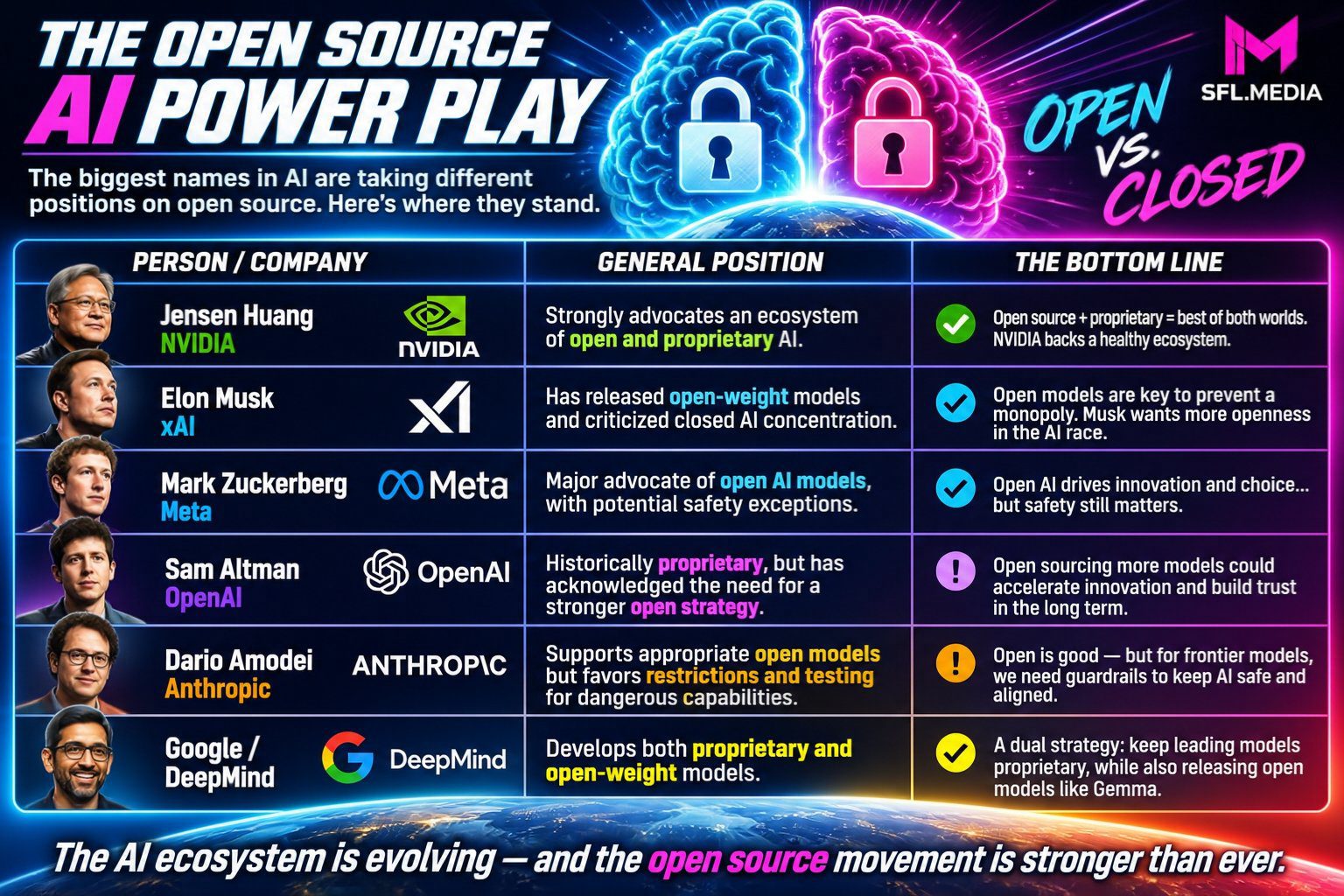
Sam Altman made an especially interesting admission in January 2025. During an OpenAI question and answer session, he acknowledged that the company had been on the wrong side of history regarding open source and needed to rethink its approach. That was a notable statement from the CEO of one of the world’s most prominent closed model AI companies.
Anthropic CEO Dario Amodei offers a more nuanced perspective than simply being against open AI. In July 2026, he explicitly stated that Anthropic had never advocated banning open weight models. He acknowledged that less dangerous open models can be a public good, while arguing that particularly capable models should undergo serious safety evaluations before release.
His concern is that once powerful model weights are publicly distributed, developers cannot simply recall them if they are subsequently used for cyberattacks, biological threats or other dangerous purposes. That is a legitimate argument worth considering. But it also raises another question: Who determines which models are too powerful to release, and what prevents those decisions from becoming a way to protect established companies from competition?
The Jensen Huang Controversy: Was He Targeted Due to His Postion on Open AI?
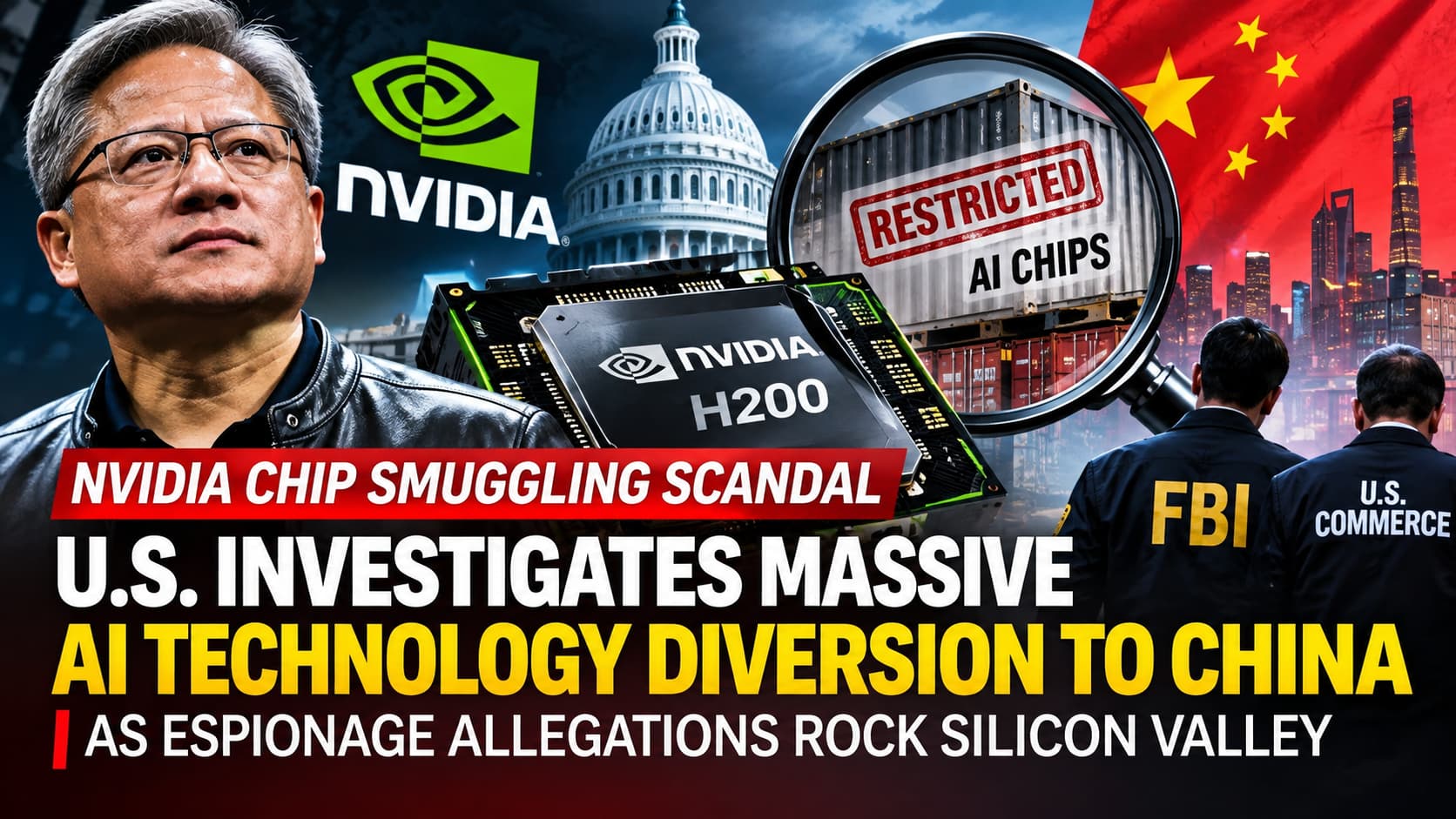
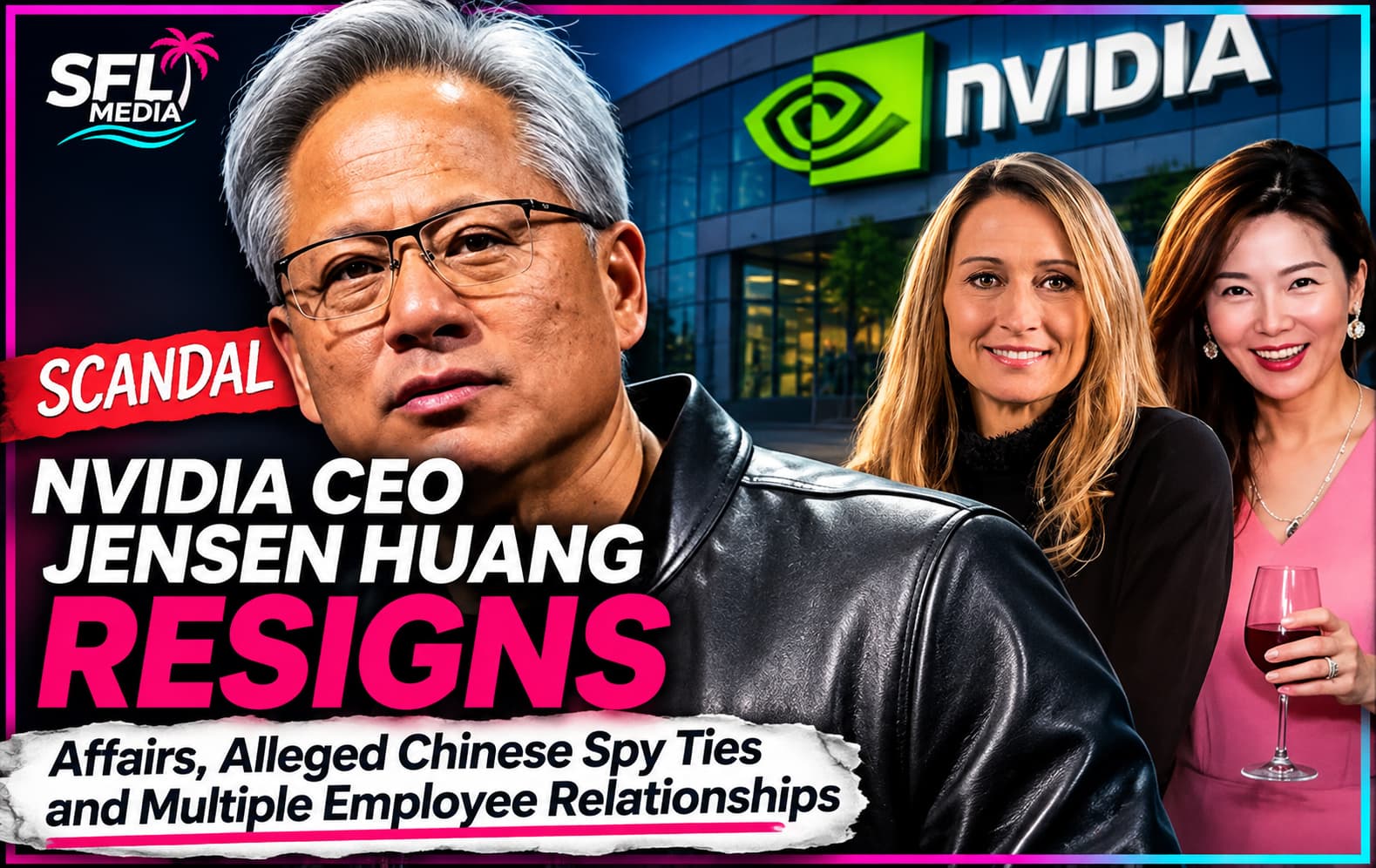
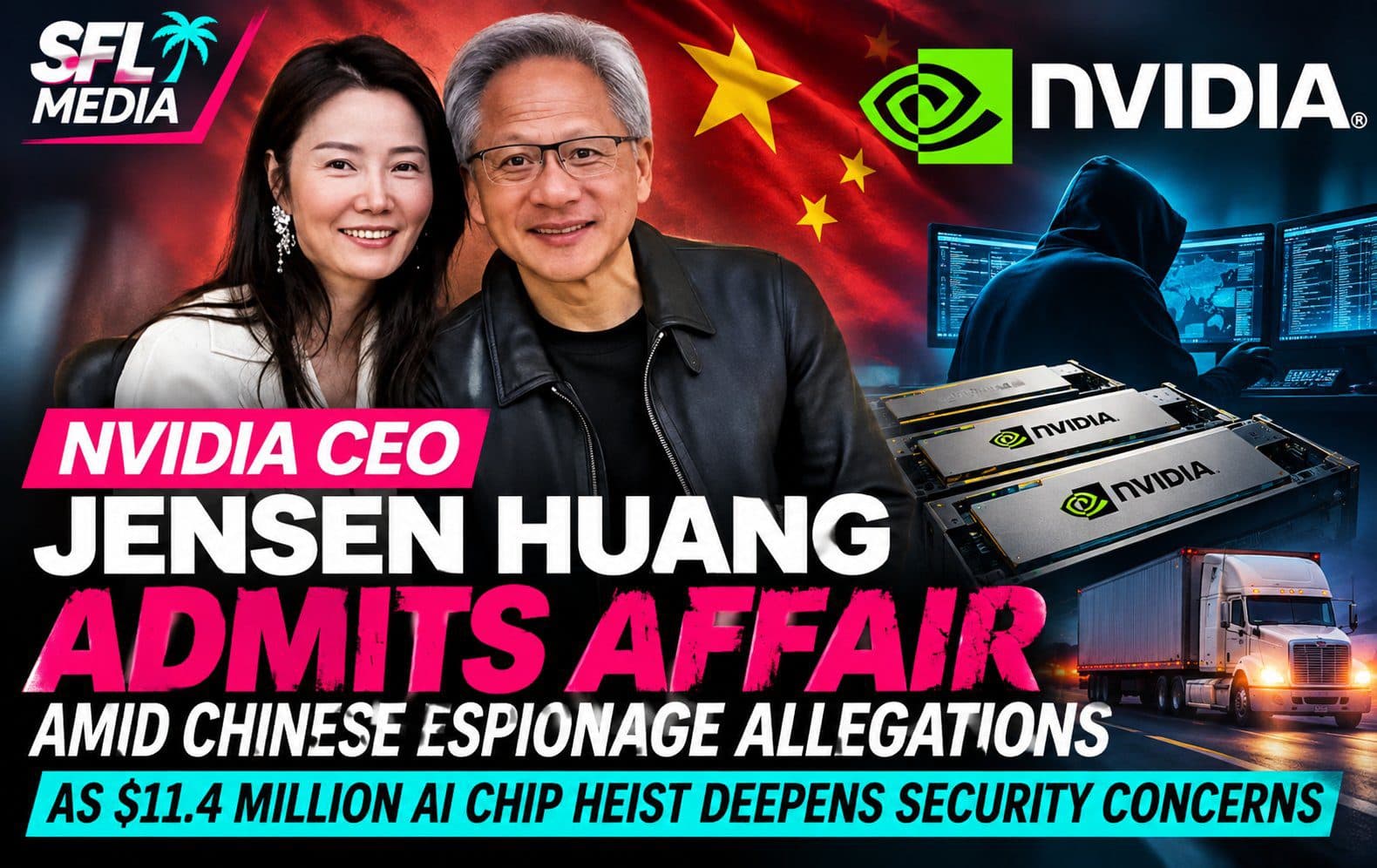
There has been considerable discussion surrounding recent reports that NVIDIA CEO Jensen Huang was the target of a foreign intelligence effort. On November 8th, 2026, NVIDIA’s board announced that it was initiating an independent investigation following reports that Huang had been targeted by a foreign intelligence operation. The board stated that it had no reason to believe NVIDIA secrets or national security information had been compromised.
Associated Press reporting described allegations involving a business executive with whom Huang had acknowledged an intimate relationship and whom U.S. intelligence reportedly believed had gathered information for Beijing. Naturally, this raises questions given NVIDIA’s enormous importance to the semiconductor industry and the ongoing competition between the United States and China.
However, there is an important distinction that should not be ignored. While there is currently no established evidence that Huang was targeted because of his advocacy for open source AI or his position on decentralizing artificial intelligence. There is a growing list of people that are scratching their heads that a few affairs would take this man down so quickly. Especially when he made this company so rich and profitable. And shareholders and board members like money.
What is documented is that Huang has publicly defended access to Chinese open weight AI models, even when that position conflicts with arguments being made by some American technology companies and policymakers. His views on open AI, China’s technological development and the global distribution of computing resources deserve scrutiny independently of the intelligence investigation. The timing makes the subject interesting, but timing alone does not establish motive.
The Bigger Question Is: Centralized or Decentralized AI?
This is where the discussion becomes particularly important for the average person. Consider two possible futures.
In the first, a handful of enormous corporations control the most powerful AI models. They determine who gets access, what services are available, how much users pay and which capabilities are permitted. Businesses become increasingly dependent on those platforms, and governments negotiate with a relatively small number of technology providers.
In the second, AI becomes a widely distributed technology. Businesses operate their own models, universities conduct independent research, developers create competing applications and individuals have greater control over the systems they use. Neither future is guaranteed, and even open AI requires expensive computing resources. But the second future offers considerably more opportunities for competition and independent development.
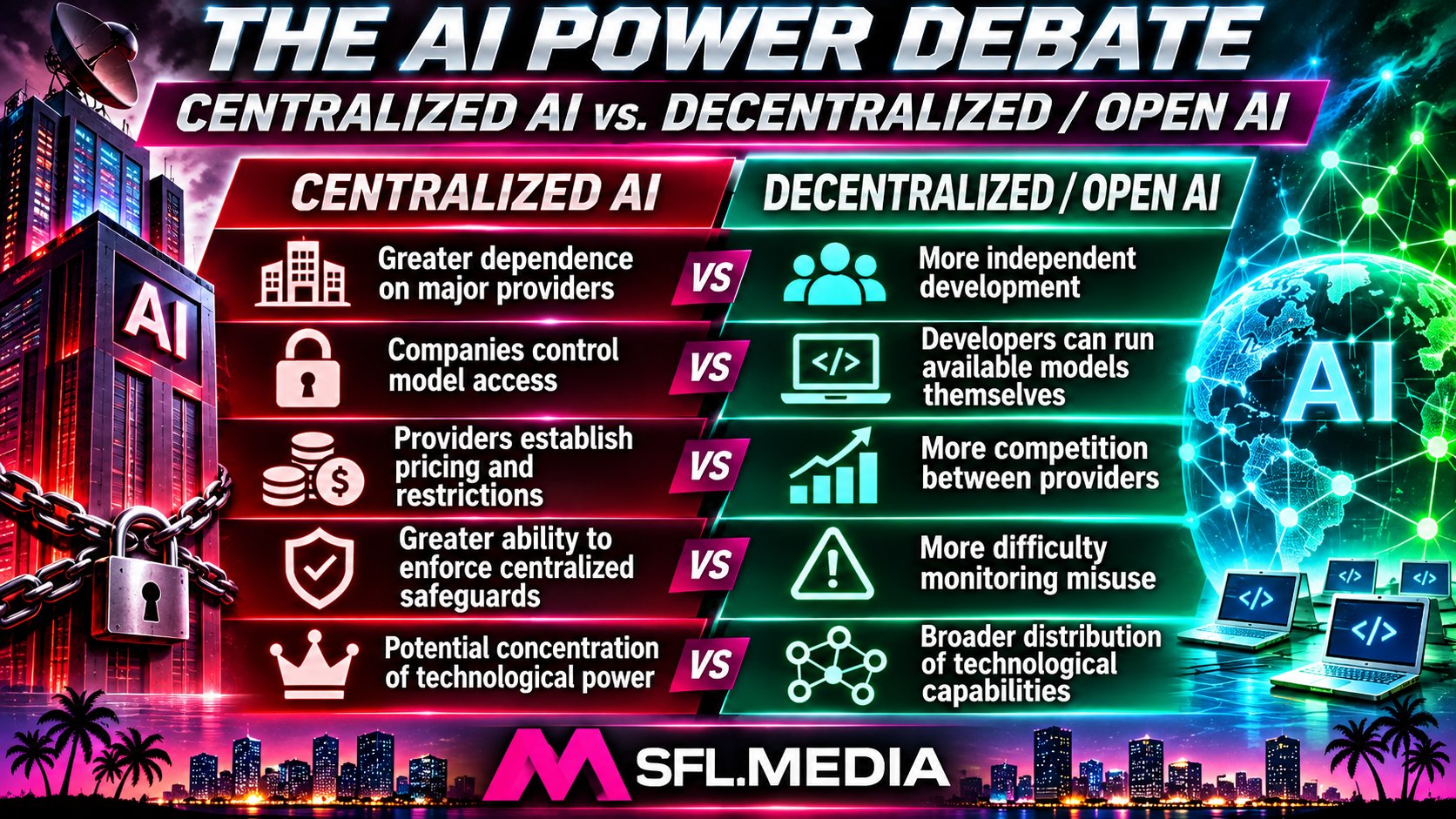
There are legitimate security concerns with decentralized AI. An unrestricted model could potentially be modified and used for malicious purposes. But closed AI is not automatically safe, either. A powerful proprietary model can still be misused, compromised or placed in the hands of an organization with questionable intentions. The answer shouldn’t automatically be to concentrate control. It should be to establish sensible safety standards that apply to genuinely dangerous capabilities without preventing legitimate research, innovation and competition.
Why This Matters to Everyone
Artificial intelligence is quickly moving beyond chatbots and image generators. It is becoming part of healthcare, education, finance, manufacturing, transportation, scientific research, national security and countless other industries. Eventually, AI could become as fundamental to modern life as electricity, the internet and personal computing.
Would we want electricity controlled by three corporations? Would we want only a handful of companies to determine who can access the internet? Would we want every business, university and individual to require permission from a technology giant before developing something new? That is essentially the question being debated in the AI industry today. And that answer is, NO!
There is also a financial incentive behind the closed model approach. Developing frontier AI requires enormous investments in computing infrastructure, research talent, electricity and data. Companies spending billions of dollars naturally want to protect their investments and generate returns. There is nothing inherently wrong with making money from technology. But when the technology becomes foundational to society, the public has a legitimate interest in ensuring that access and competition aren’t unnecessarily restricted.
My Take: AI Should Belong to Humanity, Not Just the Corporations Building It
I understand the safety arguments. I understand why companies don’t necessarily want to release their most powerful technology without restrictions. I also recognize that artificial intelligence could introduce risks that we haven’t fully anticipated. But I am considerably more concerned about what happens if we allow a small collection of corporations and government institutions to become the gatekeepers of the world’s intelligence.
We have already seen how concentrated corporate power can influence markets, politics, media and the information people consume. Artificial intelligence could take that influence to an entirely different level.
Imagine a future in which a handful of companies control the most advanced intelligence systems on Earth. They decide which information is accessible, which applications are permitted, what businesses can afford to use and which competitors are allowed to participate. Even if those companies begin with good intentions, what happens when leadership changes, corporate interests shift or governments demand greater control?
That is not a future I find particularly appealing. Open AI offers an alternative. It gives independent developers, entrepreneurs, researchers and ordinary people the opportunity to participate in building the future rather than simply consuming whatever a few powerful institutions decide to provide. Jensen Huang, Elon Musk and Mark Zuckerberg may have different motivations, business interests and philosophies, but their willingness to make significant AI technology available beyond their own corporate walls is an important part of this discussion.
And let’s not pretend that the open source movement is automatically free of corporate self interest. NVIDIA benefits from more people using AI. Meta benefits from a larger developer ecosystem. Musk benefits from attracting developers to xAI. These companies have plenty of financial reasons to support openness.
That doesn’t invalidate the benefits of open technology. It simply means we should question everybody’s motives, including those who claim to be acting in humanity’s best interests. Ultimately, artificial intelligence is too important to leave the public out of the conversation. The technology may be created by corporations, but its consequences will affect everyone.
The future of AI shouldn’t be determined exclusively by the people who own the biggest data centers, have the most money or control the most powerful computers. It should be shaped by an open competitive environment where innovation isn’t restricted to a select few. We should be cautious about artificial intelligence. We should establish safeguards. We should hold developers accountable. But we should also be extremely cautious about allowing fear to become the justification for concentrating unprecedented technological power in the hands of a few. AI could become humanity’s greatest invention. Let’s make sure humanity actually gets to participate in owning its future.











Loading comments…