

Elon Musk Says He Feels Foolish After Spending Nearly $500 Million on Republicans Who Lost the 2026 Midterms
Billionaire Elon Musk is expressing regret over spending nearly half a billion dollars attempting to influence the 2026 midterm elections after Democrats delivered sweeping victories across the country, captured control of Congress, and flipped major Republican strongholds, including Texas. In a remarkable political reversal, the Tesla and SpaceX CEO now claims he is not part of the MAGA movement, describes himself as ideologically moderate, and is striking a surprisingly friendly tone toward the incoming Democratic governor of Texas.
Elon Musk spent much of the past two years positioning himself as one of the most powerful financial and political allies of President Donald Trump and the Republican Party. Now, following a devastating midterm election cycle for Republicans, the world’s most prominent technology billionaire is publicly questioning whether his enormous political investment was worth it.
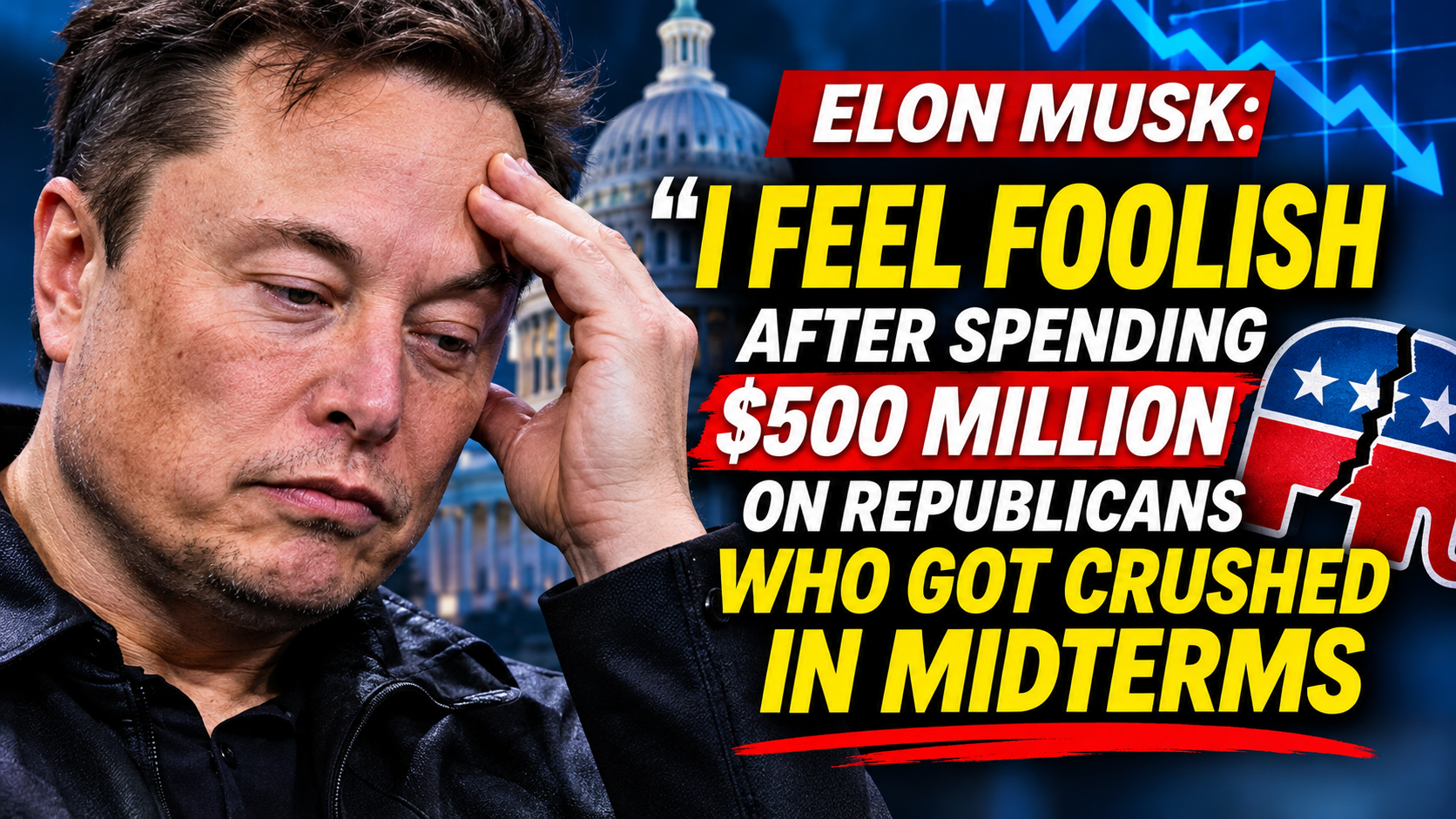
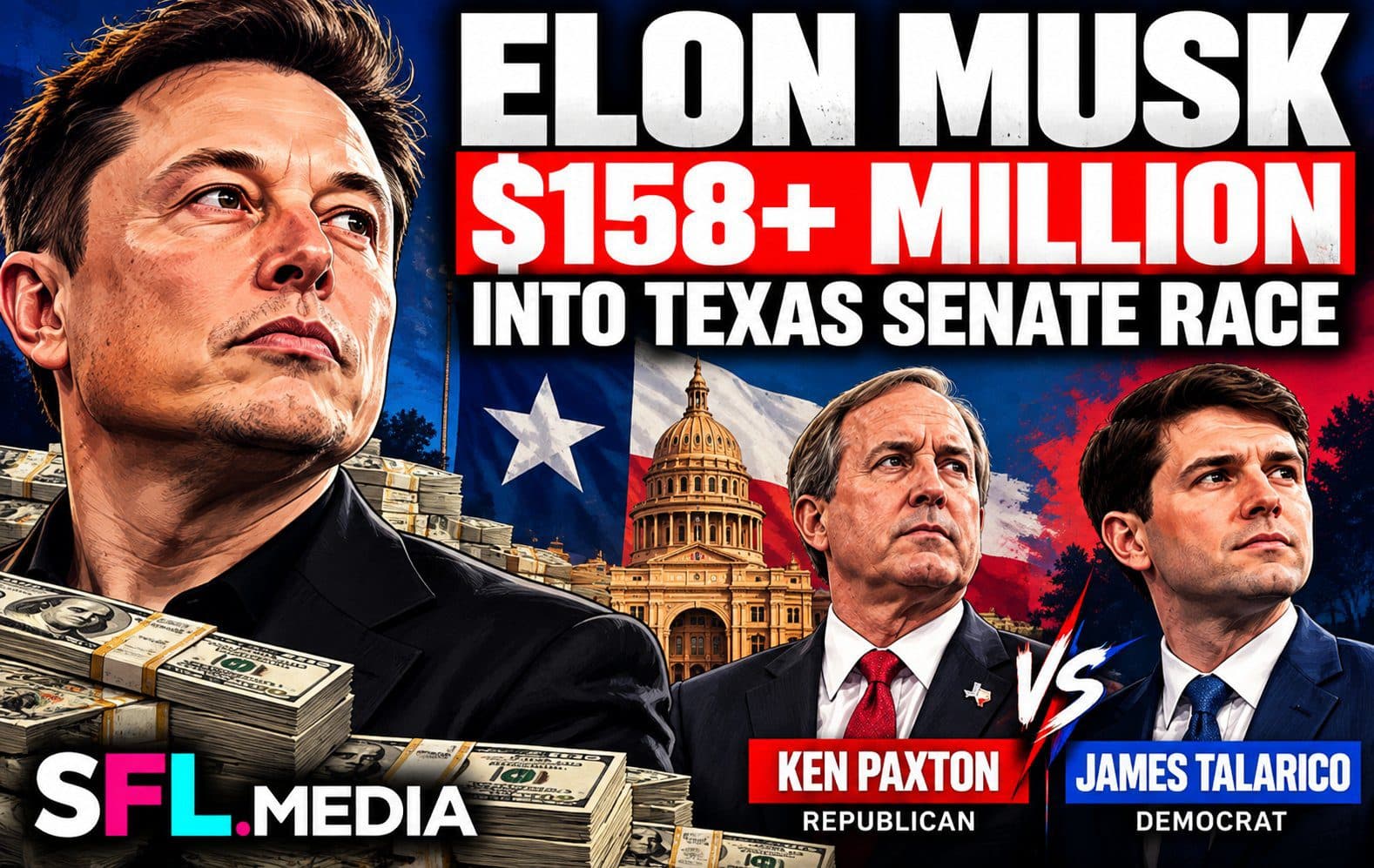
Speaking virtually at The New York Times DealBook Summit on November 18, 2026, Musk acknowledged that his political spending had produced disappointing results, despite the extraordinary sums he committed to supporting Republican candidates. According to reporting highlighted by CNN, Musk spent nearly $500 million during the 2026 election cycle, making him one of the most financially influential political donors in the country.
“I feel pretty foolish about having spent so much money, and not seeing much for it,” Musk said during the interview. He also acknowledged that, given another opportunity, he would have spent less, suggesting that the election results demonstrated the limitations of using personal wealth to influence democratic elections.
The comments represent a striking reversal for a businessman who previously embraced Trump’s political movement, promoted Republican candidates to millions of followers on his social media platform X, and became one of the most visible public faces of the administration’s controversial government-cutting initiative. CNN’s November 19 coverage examined Musk’s sudden change in tone, featuring technology journalist Kara Swisher, who questioned the sincerity of his political repositioning and suggested that business interests, rather than ideological reflection, may be driving his latest statements.
Nearly $500 Million in Political Spending Fails to Deliver Republican Victories
Musk’s reported spending during the 2026 midterm elections placed him in a category of political influence available to only a handful of Americans. With a personal fortune tied to Tesla, SpaceX, xAI, and other business ventures, he possessed the financial resources to support candidates, political action committees, advertising campaigns, and voter mobilization efforts on a scale far beyond the reach of ordinary donors.
Yet the election results illustrated an important limitation of political spending. Despite the money directed toward Republican candidates and conservative political organizations, Democrats captured a series of high profile victories in states where Republicans had previously enjoyed substantial advantages. The reported Democratic gains included major Senate victories, control of Congress, and the election of Democratic governors in traditionally Republican territory.
The losses were especially significant in Texas, where Musk had invested heavily in Republican political efforts. Democrats nevertheless achieved major breakthroughs, including the election of Gina Hinojosa as governor and James Talarico to the U.S. Senate, according to the election results discussed in the CNN segment. Musk’s acknowledgment that he would spend less if given another opportunity raises questions about the future of billionaire funded political campaigns. Wealthy donors can finance advertising, organizational infrastructure, and extensive voter outreach, but they cannot guarantee that voters will support their preferred candidates, particularly during an election dominated by dissatisfaction with the party in power.
The distinction matters because political spending is often discussed as though financial resources can automatically translate into electoral success. Musk’s experience suggests that even extraordinary amounts of money may fail to overcome unfavorable political conditions, unpopular policies, or voter concerns about economic performance and government accountability.
Musk Claims He Is Not MAGA After Previously Calling Himself Dark MAGA
Perhaps the most remarkable portion of Musk’s DealBook interview involved his attempt to distance himself from the political movement he had previously embraced so enthusiastically. During the discussion, Musk described himself as ideologically moderate and suggested that he did not identify with MAGA, the political movement built around Donald Trump’s Make America Great Again slogan.
“I’m not MAGA,” Musk said, adding that he was not entirely sure what the label meant. He explained that if MAGA required unquestioning loyalty to Republican Party policies, he did not consider himself part of that movement. Musk also suggested that both major political parties had positive and negative qualities, presenting himself as a political independent rather than a committed partisan.
The remarks stand in sharp contrast to Musk’s previous public appearances and political rhetoric. During the 2024 presidential campaign, Musk famously embraced the phrase “Dark MAGA,” presenting himself as an especially enthusiastic supporter of Trump’s return to the White House. He subsequently became deeply involved in the administration’s political agenda, including the Department of Government Efficiency, commonly known as DOGE.
CNN underscored that contradiction by juxtaposing Musk’s new statements with footage from February 2025 showing him wielding a chainsaw onstage as a symbol of his campaign to slash federal government spending. The visual comparison illustrated the enormous distance between Musk’s earlier political persona and his current attempt to present himself as a moderate outsider.
For critics, the reversal raises an obvious question: How can someone who spent hundreds of millions of dollars supporting Republican candidates, publicly embraced MAGA symbolism, and played a prominent role in Trump’s administration now claim uncertainty about what the movement represents? Musk’s explanation leaves considerable room for interpretation. It is possible that his political views have genuinely evolved, but the timing of his statements, immediately following major Republican election losses, has invited skepticism from journalists and political observers.
Kara Swisher Calls Musk’s Political Rebranding Nonsense
Technology journalist Kara Swisher, who has spent decades covering Silicon Valley and its most influential executives, was particularly critical of Musk’s attempt to distance himself from MAGA. Appearing on CNN, Swisher described his suggestion that he did not understand the movement as “nonsense,” pointing to his extensive political spending, public appearances, and previous declarations of loyalty.
Swisher argued that Musk’s recent comments were difficult to reconcile with his actions over the previous two years. The billionaire had repeatedly promoted Republican political messaging, appeared at high profile conservative events, and used his social media platform to amplify political arguments closely associated with Trump’s movement.
She also emphasized the unusual circumstances surrounding the DealBook interview, noting that Musk was reportedly traveling in China with President Trump while attempting to portray himself as politically independent. For Swisher, the contradiction reinforced her view that the billionaire was attempting to reposition himself after recognizing that the political environment had changed.
Her criticism reflects a broader concern about the relationship between wealthy technology executives and political power. Business leaders can invest enormous sums in political movements, cultivate relationships with elected officials, and influence public debate, but they may also attempt to distance themselves from those alliances when political circumstances become unfavorable.
Swisher’s analysis suggested that Musk’s new rhetoric should be evaluated against his financial interests and political history rather than accepted solely on the basis of his latest public statements. The central question is not simply whether Musk now considers himself moderate, but whether his future actions will reflect a meaningful change in political priorities.
Musk Suddenly Praises Texas’s Incoming Democratic Governor
Musk’s comments about Texas Governor elect Gina Hinojosa provided another striking example of his changing political posture. After supporting Republican efforts to maintain control of the state, Musk expressed confidence that the incoming Democratic administration would govern responsibly and suggested that he did not expect major problems for businesses operating in Texas.
He described Hinojosa as likely to be relatively moderate rather than an extreme progressive and predicted that conditions in Texas would remain stable under her leadership. The conciliatory remarks represented a significant departure from the combative political messaging that characterized much of Musk’s previous involvement in Republican campaigns.
Texas is especially important to Musk because several of his most valuable business operations are located there. Tesla operates a major manufacturing facility near Austin, SpaceX maintains extensive operations in South Texas, and Musk has relocated significant portions of his corporate activities to the state after previously criticizing California’s political and regulatory environment.
These investments make the relationship between Musk and Texas’s incoming governor more than a matter of partisan preference. State economic policies, infrastructure development, environmental regulation, workforce conditions, taxation, and business incentives can all affect the long-term performance of companies with substantial physical operations. Musk’s sudden willingness to speak positively about Hinojosa therefore raises questions about whether he is pursuing a political reconciliation or simply acknowledging the practical realities of operating major businesses in a state now governed by Democrats.
Tesla and SpaceX Have Billions of Reasons to Maintain Good Relations With Texas
Swisher offered a straightforward explanation for Musk’s change in tone: unlike a social media account or political endorsement, enormous industrial facilities cannot simply be relocated whenever an election produces an unfavorable result.
During the CNN discussion, Swisher referenced reporting concerning approximately $1.7 billion in Texas tax incentives and the extensive physical investments associated with Musk’s companies. Tesla’s manufacturing infrastructure, SpaceX’s launch and production operations, and related business facilities represent long-term commitments that depend on relationships with state and local governments.
Musk previously moved significant business operations away from California while criticizing the state’s political leadership and regulatory environment. Texas, however, presents a different challenge because the companies have already committed substantial capital to facilities that cannot be moved quickly or cheaply. That reality gives the incoming Democratic administration considerable influence over the business environment in which Musk operates. Even when political leaders disagree with a corporate executive’s personal views, both sides may have practical incentives to cooperate on employment, investment, infrastructure, and economic development.
Swisher suggested that Musk’s conciliatory comments reflected precisely this calculation. Having spent enormous sums attempting to influence the election and failed to achieve his preferred outcome, he now faces the necessity of working with elected officials he did not support. The situation illustrates a broader principle of political and economic power: billionaires may have extraordinary influence over campaigns, but elected governments retain authority over many of the laws, regulations, and public investments that shape corporate operations.
Silicon Valley’s Political Elite May Be Reconsidering Its Alliance With Trump
Musk’s post-election remarks may also reflect a broader recalibration among wealthy technology executives who cultivated relationships with Trump and the Republican Party. During the CNN discussion, Swisher pointed to figures including Amazon founder Jeff Bezos and executives associated with Palantir, suggesting that some of Silicon Valley’s most influential leaders were beginning to reconsider their political positioning after the Democratic victories.
The underlying calculation is straightforward. Corporate executives frequently seek access to political power, particularly when their businesses depend on government contracts, regulatory decisions, antitrust enforcement, tax policy, or public investment. When control of Congress changes, those executives may face pressure to establish relationships with the incoming majority.
That dynamic is especially significant for technology companies with substantial government business. SpaceX maintains extensive relationships with federal agencies, while Palantir has major interests in government technology and defense-related contracts. Amazon also operates across sectors heavily influenced by federal policy, including cloud computing, logistics, labor regulation, and competition law.
Swisher suggested that the 2026 election results had exposed growing public frustration with the political influence of wealthy technology executives, creating incentives for those leaders to soften their rhetoric and rebuild relationships with Democratic officials.
However, a change in tone does not necessarily indicate a change in ideology. Corporate executives can adjust their public messaging without abandoning their policy preferences, political relationships, or financial interests. Whether Musk and other prominent technology leaders are undergoing genuine political transformations or simply adapting to a new balance of power remains an open question.
Democrats Debate How Aggressively to Confront Trump and His Billionaire Allies
The second half of CNN’s segment shifted from Musk’s political reversal to a larger question facing Democrats after their midterm victories: Should the party use its new congressional power to aggressively confront Trump and his wealthy supporters, or should it focus on a more moderate message emphasizing economic stability, cooperation, and everyday concerns?
The debate reflects competing interpretations of the election results. Some Democrats argue that voters delivered a mandate to challenge Trump’s administration, investigate potential abuses of power, and confront the influence of wealthy political donors. Others believe the party’s success was driven primarily by dissatisfaction with economic conditions and that Democrats should concentrate on affordability, healthcare, government competence, and restoring public trust.
CNN highlighted prominent Democrats associated with different approaches, including California Governor Gavin Newsom and Michigan Senator-elect Abdul El-Sayed, alongside incoming senators James Talarico of Texas and Scott Colom of Mississippi. The discussion also referenced the resurgence of moderate Blue Dog Democrats, with 22 members reportedly associated with the coalition.
The strategic disagreement is consequential because winning control of Congress is only the beginning of the governing process. Democrats must now determine how to use their legislative and oversight authority while maintaining the diverse coalition that delivered victories across traditionally Republican states. The emergence of figures such as Talarico and Colom illustrates the potential appeal of candidates who emphasize local concerns, economic opportunity, and communication with voters outside traditional Democratic strongholds. At the same time, more confrontational voices argue that failing to challenge powerful political and corporate interests would squander the mandate voters delivered.
For Musk and other billionaire political donors, the outcome of that debate could have significant consequences. An aggressive congressional oversight agenda might bring renewed scrutiny of government contracts, corporate subsidies, political spending, and relationships between private businesses and federal agencies.
Can Billionaires Buy Political Influence Without Buying Elections?
Musk’s extraordinary political spending raises a fundamental question about American democracy: How much influence should a single wealthy individual have over the electoral process?
Under the existing campaign finance system, wealthy individuals can contribute enormous sums to independent political expenditure organizations, including super PACs, provided those organizations comply with applicable restrictions on coordination with candidates. This structure allows billionaires to finance political advertising and other election related activities at levels far beyond what ordinary citizens can afford.
The legal ability to spend such sums does not guarantee electoral success. Musk’s reported experience in the 2026 midterms demonstrates that voters can reject candidates despite massive financial support from wealthy donors. Nevertheless, the failure of one donor’s preferred candidates does not eliminate broader concerns about the political influence that concentrated wealth can purchase.
Even unsuccessful spending can affect which candidates receive attention, which political messages dominate advertising, and which issues become central to campaigns. Wealthy donors can also develop relationships with political leaders and advocacy organizations that continue long after an election has ended.
Musk’s admission that he feels foolish about the money he spent is therefore revealing for reasons that extend beyond his personal disappointment. It underscores the extent to which American political campaigns have become arenas for extraordinary private financial investment, even when the ultimate decisions remain in the hands of voters.
Musk’s Political Retreat Comes After a Costly Republican Defeat
The contrast between Musk’s earlier political persona and his latest statements is difficult to ignore. The billionaire who once proudly embraced Dark MAGA, appeared onstage with a chainsaw to celebrate government spending cuts, and committed enormous financial resources to Republican campaigns is now presenting himself as a political moderate who questions the value of his own spending.
His comments do not establish that he has abandoned Trump, changed his underlying policy positions, or permanently withdrawn from Republican politics. They do, however, demonstrate a significant shift in public messaging following an election in which his preferred candidates suffered substantial defeats.
For Democrats, Musk’s remarks offer an opportunity to argue that their victories overcame not only Republican incumbents but also some of the country’s most powerful financial backers. For Republicans, they raise uncomfortable questions about whether reliance on billionaire donors can compensate for unpopular policies or a deteriorating political environment. And for Musk, the immediate challenge is considerably more practical. His companies continue to depend on government relationships, regulatory decisions, and economic conditions that will increasingly be shaped by Democratic elected officials.
The billionaire may regret spending nearly half a billion dollars on the election, but the political consequences of that spending will not disappear simply because he now describes himself as moderate.
The central irony is that Musk spent an extraordinary amount of money trying to influence who would govern America, only to find himself explaining why he can work with the Democrats who won.

Sources & Further Reading
- CNN — Elon Musk on Election: I Feel Foolish About Having Spent So Much Money (November 19, 2026)
- Al Jazeera — Elon Musk Says He Feels Foolish About U.S. Midterm Spending
- The New York Times — DealBook Summit Coverage
- Federal Election Commission — Campaign Finance Data and Political Spending
- OpenSecrets — Campaign Finance and Political Donor Research
- Tesla — Corporate and Investor Information
- South Florida Media — National Politics, Business and Technology News






Loading comments…