
Trump and Musk Face Questions Over Ukraine Starshield Restrictions as Kyiv Confirms Satellite Service Restored After Military Disruptions
Ukraine says its critical military satellite connections have returned to normal after more than a week of restrictions that disrupted drone operations. But questions remain about who ordered the slowdown, why Washington and SpaceX offered conflicting explanations, and what damage occurred while Russian attacks continued.
Ukraine Restores Critical Military Satellite Communications After More Than a Week of Disruptions
WASHINGTON, D.C. — Ukraine confirmed Saturday that its Starlink and Starshield satellite communications systems had returned to normal operating speeds following more than a week of restrictions that disrupted military operations, interfered with drone missions and triggered a growing controversy involving President Donald Trump, SpaceX founder Elon Musk and Ukrainian President Volodymyr Zelensky.
The restoration followed days of conflicting statements from Washington, SpaceX and Ukrainian officials about who controlled the restrictions and whether the systems had actually been returned to normal. Although Kyiv now says the immediate technical problem has been resolved, the episode has exposed Ukraine’s dependence on American controlled military communications infrastructure and raised questions about who has the authority to restrict essential battlefield technology during an active war.
Ukraine’s Defense Ministry reported Saturday that its monitoring systems were recording stable satellite connections at speeds exceeding 400 kilometers per hour, approximately 249 miles per hour. Zelensky subsequently confirmed that the networks had returned to their pre-restriction operating speeds, an important development for Ukrainian forces that rely on satellite communications for frontline coordination, logistics, reconnaissance and drone operations.
The restrictions had reportedly limited connectivity for certain equipment traveling faster than approximately 160 kilometers per hour, or 100 miles per hour. That threshold was particularly damaging to Ukraine’s high speed interceptor drones, which are increasingly used to defend against Russian attack drones. Ukrainian commanders reported lost aircraft, interrupted missions and communication failures, while officials in Kyiv struggled to determine who had authorized the restrictions and when they would be lifted.
The restoration addresses the immediate operational crisis, but it does not resolve the central questions surrounding the controversy: Who ordered the slowdown, why was it imposed, what military damage resulted, and why did American officials provide conflicting explanations while Ukraine continued reporting battlefield disruptions?
Zelensky Contradicted Trump as Ukrainian Forces Reported Continuing Restrictions
The dispute intensified Friday when Zelensky publicly contradicted Trump’s assertion that Musk had already restored Ukraine’s satellite access. Speaking during an appearance at the Hudson Institute, the Ukrainian president said the restrictions remained in effect despite assurances from the American administration, while Ukrainian diplomatic and military officials continued reporting connectivity problems.
CNN reported that Ukrainian forces were experiencing connection failures when certain satellite equipped systems exceeded approximately 100 miles per hour. A Ukrainian officer described interruptions lasting 10 to 15 seconds and said the restrictions had contributed to unusually high equipment losses. Such interruptions can be particularly consequential for drones that depend on continuous satellite connectivity for navigation, targeting information or operator control, potentially causing missions to fail or forcing operators to abandon aircraft.
The disagreement created an unusual public confrontation between the White House and a wartime ally. Trump maintained that Musk had restored the service, while Ukrainian officials insisted the limitations remained active. As recently as Friday, Ukraine’s representatives in Washington were describing mixed messages from American officials and reporting that the restrictions had not been fully removed.
By Saturday morning, Ukrainian defense officials were reporting substantial improvements, and Zelensky confirmed that the systems had returned to the operating speeds available before the restrictions. CNN nevertheless reported that one source in the Donetsk region was still observing a speed limitation earlier that morning, illustrating the difficulty of determining whether a network-wide restoration had reached every military unit simultaneously.
Reuters Reports Starshield Restriction Order Originated Inside the White House
One of the most consequential developments in the controversy came from Reuters, which reported that the instruction to restrict Starshield originated inside the White House. According to reporting based on two American officials and a Western official familiar with the matter, Defense Department leaders received a message that the satellite service used by Ukrainian forces needed to be slowed.
The officials did not identify who inside the White House issued the instruction or establish the complete chain of command through which the restrictions were implemented. The administration has disputed responsibility, with a senior American official telling Reuters that Trump had not made such a request. The White House did not establish publicly whether another official had authorized the change.
The distinction is important because Starshield is a military focused service developed by SpaceX for government and national security customers. Unlike ordinary consumer internet access, the system supports military operations, and restrictions on its use can directly affect the capabilities of a foreign partner engaged in an active conflict. If the slowdown originated within the executive branch, the episode raises questions about the administration’s military assistance policy, the decision making process behind the restrictions and whether Ukrainian authorities received sufficient warning. It also raises the possibility that a decision affecting frontline military operations was implemented without a publicly explained strategic or operational justification.
Reuters’ reporting points toward the White House as the source of the instruction, but the publicly available evidence does not conclusively identify the individual responsible or establish why the restriction was imposed. Those unanswered questions remain central to the controversy.
Trump Reportedly Contacted Musk as Both Sides Disputed Responsibility
CNN reported that Trump contacted Musk after learning of the restrictions and urged him to restore Ukraine’s full access to Starshield. The account, attributed to a person familiar with the matter, suggested that the president turned directly to the SpaceX founder as Ukrainian officials warned that the slowdown was disrupting military operations.
Trump declined to provide a consistent public account of any conversation with Musk. He initially emphasized that the problem had been resolved, while later saying that he would intervene if restrictions remained in place. Asked who had ordered the slowdown, the president said he did not know, adding that he would not necessarily disclose the information even if he did.
Musk, meanwhile, rejected the suggestion that SpaceX had independently decided to restrict Ukraine’s military access. He maintained that Starshield systems were controlled by the United States government and that decisions about speed limitations or permitted uses ultimately rested with American military authorities and the president.
Those statements created a direct conflict over responsibility. The White House denied that Trump had ordered the slowdown, while Musk pointed toward government control of the military service. Ukrainian officials, meanwhile, reported receiving inconsistent explanations as they attempted to restore communications that had become essential to their military operations.
The contradiction is not merely political. It concerns the authority to alter a communications system that Ukrainian forces depend on for battlefield operations. Establishing responsibility would require access to the technical instructions implementing the restrictions, communications between SpaceX and American officials, and any government orders authorizing changes to the service.
The 100 MPH Restriction Disrupted Ukraine’s Drone Defenses
The technical restriction at the center of the dispute reportedly interrupted connectivity for certain Starlink and Starshield equipped systems traveling faster than approximately 160 kilometers per hour. While that speed would be substantial for an ordinary ground vehicle, it is relatively low for military aircraft and high speed interceptor drones designed to pursue incoming Russian threats.
Ukraine has increasingly relied on domestically developed drones to conduct reconnaissance, strike Russian military positions and intercept attack drones before they reach populated areas or critical infrastructure. Satellite connectivity can provide a communications link for systems operating beyond the practical range of conventional radio equipment, making reliable access especially important for certain long-distance or high-speed missions.
When those connections are interrupted, operators may lose the ability to control an aircraft, receive surveillance information or complete a mission. Ukrainian officials reported that the restrictions forced operational changes, disrupted missions and contributed to the loss of equipment. CNN quoted one military officer who said the number of lost assets had increased substantially during the period of restricted access.
The Associated Press also reported that Ukrainian officials were negotiating with SpaceX, the Pentagon and the American government to remove the limitations, which had been introduced without adequate warning to the military units affected. The restrictions interfered with efforts to intercept Russian drones, including faster jet-powered variants that can travel well above the reported satellite speed threshold.
Although some Ukrainian sources estimated substantial financial losses from the disruptions, a comprehensive independent accounting of destroyed equipment, failed missions and operational consequences has not been made public. The documented significance of the episode lies in the reported interference with military capabilities, even as the precise scale of the damage remains uncertain.
Ukraine Faced Russian Attacks While Waiting for Patriot Interceptors
The Starshield controversy unfolded during a period of continued Russian drone and missile attacks against Ukraine, increasing the military significance of restrictions affecting Kyiv’s defensive capabilities. Ukrainian officials warned that the disruption complicated efforts to intercept incoming drones at a time when the country was also facing delays in receiving additional Patriot air defense interceptors.
The two systems serve different military purposes. Patriot missiles are designed to intercept aerial threats, including certain ballistic missiles, while Starlink and Starshield provide communications capabilities that can support reconnaissance, coordination and some drone operations. Nevertheless, limitations affecting both areas intensified Ukrainian concerns about the reliability and timing of American military support.
Retired U.S. Admiral James Stavridis, appearing in CNN’s coverage, discussed the strategic importance of maintaining reliable communications and defensive capabilities as Ukraine continued confronting Russian attacks. For Ukrainian commanders, even temporary disruptions can require operational adjustments that consume resources and reduce the effectiveness of defensive systems.
The broader concern is that Ukraine has built important elements of its military operations around technology and assistance supplied or controlled by foreign partners. Changes in operating permissions, access restrictions or delivery schedules can therefore have immediate battlefield consequences, regardless of whether those changes are motivated by technical, contractual or political considerations.
Restrictions Coincided With Trump’s Pressure on Ukraine Over Russian Oil Refineries
The timing of the Starshield slowdown has also drawn scrutiny because it coincided with heightened tensions between Washington and Kyiv over Ukraine’s attacks on Russian oil infrastructure. Trump had been pressuring Ukraine to halt strikes against Russian refineries while pursuing diplomatic and commercial arrangements involving Moscow.
Reuters reported that the administration had announced a deal involving Russian diesel and that American officials had expressed frustration with continued Ukrainian strikes on Russian energy facilities. The Starshield restrictions emerged during the same period, raising questions about whether the communications slowdown was connected to broader diplomatic pressure.
The timing alone does not establish a causal relationship. Neither the public statements from the administration nor the available reporting conclusively demonstrates that the restrictions were intended to punish Ukraine for attacking Russian refineries. However, Reuters’ account that the instruction originated inside the White House gives the question additional significance and creates a clear basis for further investigation.
The distinction between the affected operations is also important. Reuters reported that Ukraine does not rely on Starlink or Starshield for its long range drone attacks against Russian territory, including strikes on oil refineries. Instead, the restrictions primarily affected military communications and certain drone operations within Ukraine and against Russian forces in occupied territory.
That distinction raises an important operational question: If the slowdown was connected to pressure over refinery attacks, why were systems used for frontline communications and drone defense restricted when those systems were not central to the long-range strikes Washington opposed? No publicly disclosed explanation has resolved that issue.
Zelensky’s Tests Suggested the Restrictions Were Specific to Ukraine
Before Saturday’s restoration, Zelensky described tests conducted by Ukrainian personnel to determine whether the speed restrictions reflected a general technical limitation or a configuration affecting operations inside Ukraine.
According to Axios, the Ukrainian president said satellite terminals tested in vehicles traveling at higher speeds in European Union countries continued operating, while comparable tests inside Ukraine resulted in connection failures near the reported 160 kilometer per hour threshold. Zelensky interpreted the results as evidence that the restrictions were geographically targeted rather than the result of an unavoidable technical limitation affecting the entire satellite network.
Those observations raise legitimate questions about whether the systems had been deliberately configured to operate differently in Ukraine. However, the tests alone cannot identify who implemented the configuration or establish the purpose behind it. Satellite networks can employ geographic restrictions, speed thresholds and account-specific permissions for technical, contractual, regulatory or security reasons.
Determining the actual cause would require access to the network settings, administrative records and instructions governing the affected terminals. The public has not been provided with those records, leaving the precise technical and decision making process unresolved.
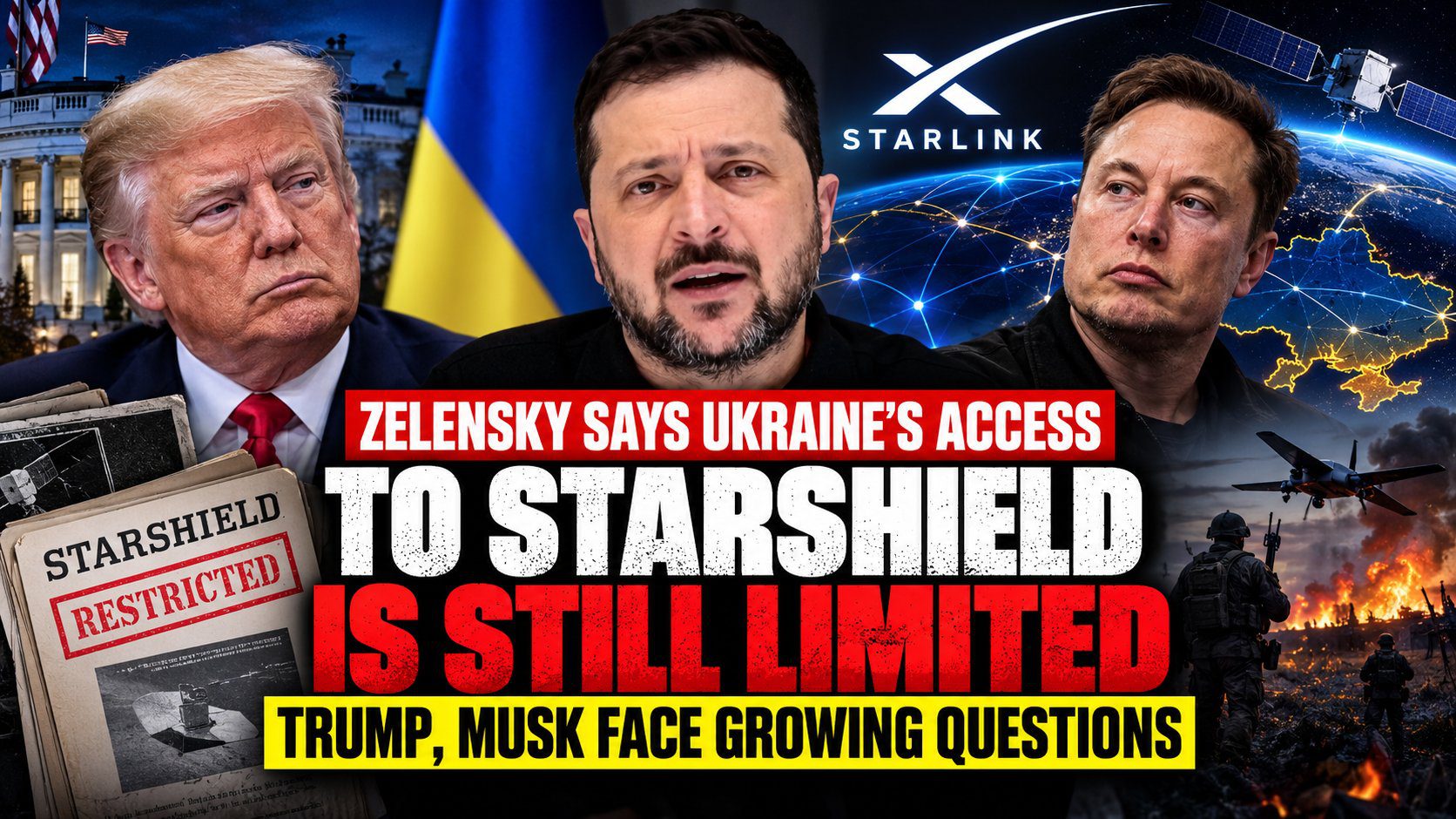
The Starshield Dispute Exposes Ukraine’s Dependence on American Controlled Technology
Beyond the immediate controversy, the episode has exposed a structural vulnerability in Ukraine’s military communications infrastructure. Starlink and Starshield have become valuable tools because satellite connectivity can remain available when terrestrial communications networks are damaged, disrupted or destroyed by military attacks. Their portability and broad coverage make them particularly useful in rapidly changing battlefield conditions.
However, reliance on a communications network controlled by a foreign government or private contractor creates a strategic dependency. Even a highly capable system can become a vulnerability if operating conditions can be changed without advance notice or a clearly established procedure for resolving disputes.
The reported speed restrictions demonstrated how a technical configuration could affect equipment that Ukrainian forces had already designed, deployed and integrated into military operations. When connectivity became unreliable, military personnel were forced to adjust tactics while confronting an enemy that continued launching attacks.
Ukraine and its European partners may seek to diversify satellite communications and reduce reliance on any single provider, but replacing an extensively deployed network would require substantial investment, technical integration, additional equipment and operational testing. No immediate replacement has been publicly demonstrated to offer every capability Ukraine currently obtains through SpaceX’s satellite infrastructure.
The incident therefore raises a broader national security issue extending beyond the present conflict: How much operational control should an allied military surrender when essential battlefield capabilities depend on infrastructure owned or managed outside its country?
Starshield Service Has Been Restored, but Questions About Responsibility Remain
By Saturday, Ukrainian officials were reporting that Starlink and Starshield had returned to their previous operating speeds. Defense Minister Yevhenii Khmara credited direct dialogue and diplomatic engagement with Washington for helping resolve the problem, while Zelensky emphasized the importance of restoring communications for frontline logistics, military operations and defenses against Russian drones.
The restoration represents a significant improvement for Ukrainian forces, particularly those operating high-speed drones that depend on reliable satellite connections. It also changes the factual status of the controversy: The restrictions that Ukrainian officials said remained active Friday can no longer accurately be described as universally continuing after Kyiv’s Saturday announcement.
Nevertheless, the end of the technical disruption does not settle the question of accountability. Reuters has reported that the restriction order originated inside the White House, while the administration has denied that Trump authorized it. Musk has maintained that the U.S. government controls Starshield’s operating permissions, and Ukrainian officials have described confusion over who was responsible for the slowdown.
The unresolved questions are substantial. Who issued the instruction to restrict the service? What military, technical or diplomatic justification was offered? Were Ukrainian commanders notified before the restrictions took effect? What equipment and missions were lost during the disruption? And what safeguards now exist to prevent another interruption without advance coordination?
These questions do not require assuming that Trump or Musk intended to damage Ukraine’s war effort. They arise from the reported consequences of a communications restriction that affected an American partner defending itself against a continuing Russian invasion.
For Ukraine, the immediate priority was restoring a system that had become integral to military operations. That restoration has now been announced. But the larger controversy remains unresolved: A critical wartime communications network was restricted for more than a week, Ukrainian forces reported operational losses, and the American government and SpaceX have yet to provide a complete, consistent public explanation of how the restrictions occurred.
The satellite connections are back. The answers about who turned them down and why are still missing.

Here is the clean, copy-and-paste version with clickable links and no citation icons or extra formatting.
Sources & Further Reading
SFL Media Related Reporting
2. The Emperor Has No Starshield: Why Would Any Nation Trust Its Survival to Elon Musk?
Independent News Sources
6. Reuters — Ukraine Says Starlink and Starshield Operating at Normal Speeds
7. Associated Press — Trump Administration Offers Mixed Messages on Ukraine’s Starshield Access
8. NPR — Ukraine Says Starlink Is Back to Normal After Disruptions
9. United24 Media — Trump Reportedly Asked Musk to Reconsider Starlink Restrictions
10. CNN — Original Video Report on Ukraine’s Starshield Restrictions




















































Want to join the conversation?
Create an account or sign in to share your thoughts, vote,
and reply to other readers.
Showing 0 of 0 comments
Don't have an account?
Already have an account?