
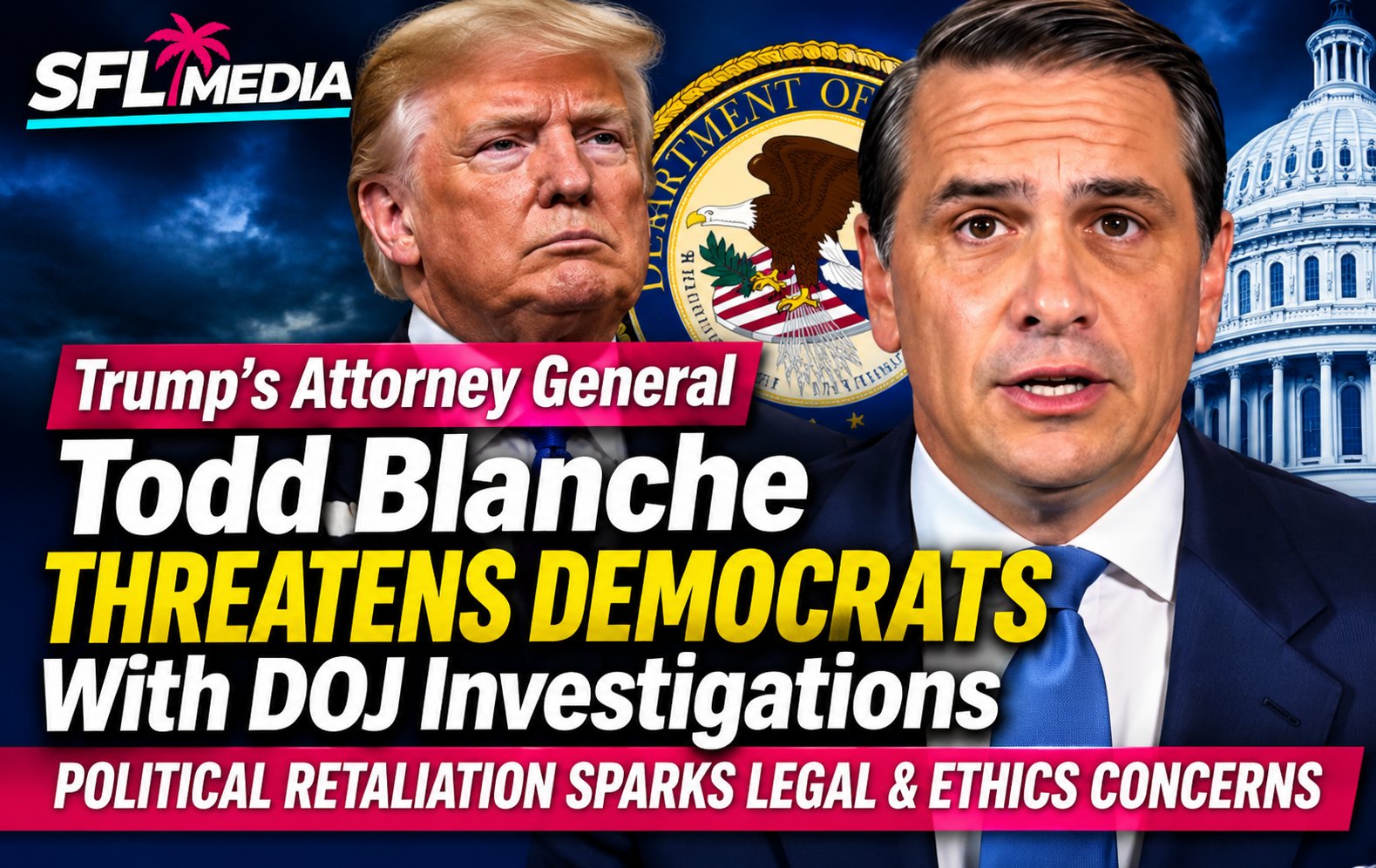
Trump’s DOJ Threatens Democrats With Investigations as Attorney General Todd Blanche Faces Questions Over Political Retaliation
Blanche warns Democrats they should be “very worried” as lawmakers accuse the Trump administration of turning the Justice Department into a political weapon, raising serious questions about congressional oversight, prosecutorial independence, and the ethical obligations of America’s top law enforcement officials.
WASHINGTON — A new confrontation between President Donald Trump’s Justice Department and congressional Democrats is intensifying concerns over the use of federal law enforcement for political retaliation, after Attorney General Todd Blanche defended the administration’s calls to investigate Democratic lawmakers and warned that members of the opposition party should be “very worried.”
The dispute, highlighted in a CNN video, centers on Trump’s demands that the Department of Justice investigate Democratic lawmakers over congressional oversight activities targeting administration officials and politically connected individuals. Blanche defended the prospect of federal investigations, arguing that Democratic warnings directed at Trump administration officials could constitute intimidation or other unlawful conduct.
Democrats have rejected that characterization, accusing the administration of attempting to criminalize legitimate congressional oversight and intimidate lawmakers before they can investigate potential wrongdoing inside the executive branch. Representatives Robert Garcia of California and Stephen Lynch of Massachusetts have challenged the administration’s position, emphasizing that Congress possesses independent constitutional authority to investigate executive misconduct, scrutinize government spending, and demand accountability from federal officials.
The controversy raises a fundamental question about the American justice system: Can a president direct federal law enforcement toward political opponents because they intend to investigate his administration, or does doing so cross the line from legitimate law enforcement into an abuse of government power?
Blanche’s Warning Raises Questions About the DOJ’s Independence
At the center of the controversy is Blanche’s defense of Trump’s demands for investigations into Democratic lawmakers. According to the account of the CNN segment, Trump accused congressional Democrats of engaging in “extortion” through oversight inquiries and correspondence targeting administration officials and donors.
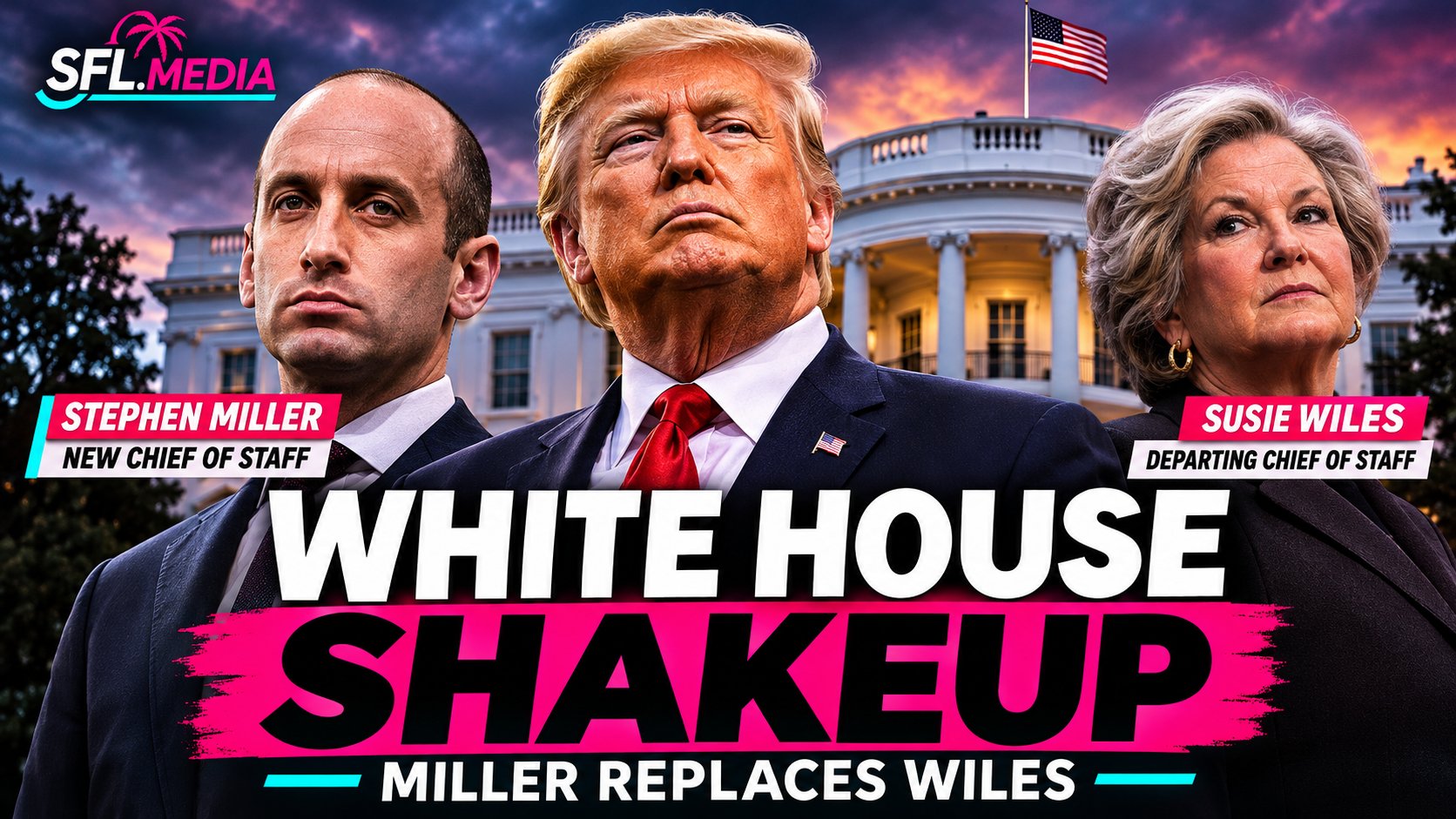
Blanche argued that statements warning administration officials, including White House Chief of Staff Stephen Miller, to prepare for investigations or obtain legal representation could cross the line from political rhetoric into unlawful threats or intimidation.
That argument carries significant legal implications. A congressional warning that an official may face subpoenas, hearings, document requests, or criminal referrals is not inherently unlawful. Those mechanisms are established features of congressional oversight, and the possibility of legal exposure does not automatically transform an oversight warning into extortion.
Federal extortion statutes require specific legal elements that cannot be established merely by demonstrating that a lawmaker threatened to investigate government misconduct. Similarly, a warning to obtain legal counsel does not, by itself, establish a criminal threat.
The distinction matters because congressional investigators regularly warn government officials, corporate executives, and other witnesses that testimony, document production, and compliance with subpoenas may carry legal consequences. Treating those warnings as criminal intimidation without additional evidence could substantially undermine Congress’s ability to investigate the executive branch.
Democrats Accuse Blanche of Acting as Trump’s Personal Attorney
Representative Robert Garcia has challenged Blanche’s understanding of the Justice Department’s responsibilities, arguing that the attorney general appears more interested in protecting Trump and his political allies than preserving the department’s institutional independence.
Garcia’s criticism reflects a longstanding concern about the distinction between the president’s personal legal interests and the Justice Department’s responsibility to enforce federal law on behalf of the United States.
Although the attorney general is a presidential appointee and serves within the executive branch, the office is not equivalent to a private attorney representing the president’s personal interests. Federal prosecutors are obligated to enforce the law, respect constitutional protections, and exercise prosecutorial discretion in accordance with applicable legal and ethical standards.
Representative Stephen Lynch has similarly rejected the suggestion that Democrats should abandon investigations because administration officials regard congressional scrutiny as threatening. Lynch has emphasized that lawmakers intend to examine potential corruption, corporate influence, and executive branch misconduct through established oversight procedures.
The disagreement is particularly consequential because congressional investigations can expose misconduct that would otherwise remain hidden from public scrutiny. Oversight committees have authority to request records, interview witnesses, conduct hearings, and issue subpoenas when supported by a legitimate legislative purpose.
Those powers are not unlimited, but neither can the executive branch simply declare legitimate oversight activities criminal because they create political or legal problems for the administration.
Trump’s Threat Comes Days After Voters Delivered a Major Political Rebuke
The timing of the confrontation adds another dimension to the controversy. Blanche’s remarks came on November 8, just days after the 2026 midterm elections produced major Democratic gains and positioned the party to assume control of congressional oversight committees in January.
Rather than accepting the prospect of intensified legislative scrutiny, Trump publicly ordered the Justice Department to examine Democratic threats of impeachment and other potential consequences for administration officials and political supporters. The president characterized those warnings as criminal conduct, although no specific criminal offense had been publicly substantiated against the lawmakers involved.
The confrontation is therefore about more than a disagreement over aggressive political language. It concerns whether the executive branch can use the possibility of criminal prosecution to discourage another constitutionally established branch of government from exercising its oversight responsibilities.
Blanche’s statements also followed his public declaration that the Justice Department would serve as legal counsel for Miller. Responding to Garcia’s warning that the incoming chief of staff should prepare for scrutiny, Blanche wrote that Miller already had an attorney: the attorney general and the Justice Department.
The department can legally represent federal officials in certain matters arising from their official duties. However, that authority is not unlimited and does not automatically make the attorney general the personal defense attorney for every administration official facing congressional investigation. The distinction becomes especially important when the interests of an individual official may conflict with the government’s broader legal obligations.
Could Blanche Face Professional Discipline or Disbarment?
Beyond the political dispute, Blanche’s conduct raises questions about the ethical responsibilities of attorneys who wield federal prosecutorial authority.
Attorneys general and federal prosecutors are not exempt from professional conduct requirements simply because they hold powerful government positions. Lawyers remain subject to applicable licensing rules, and state disciplinary authorities can investigate misconduct even when it occurs during federal government service.
Two provisions of the American Bar Association’s Model Rules of Professional Conduct are particularly relevant.
Rule 3.8 — Special Responsibilities of a Prosecutor: This rule prohibits prosecutors from pursuing criminal charges they know are unsupported by probable cause. Its purpose is to recognize that prosecutors possess extraordinary power over individuals and must exercise that authority with special regard for fairness and justice.
Rule 8.4 — Professional Misconduct: This provision addresses conduct involving dishonesty, fraud, deceit, misrepresentation, or behavior prejudicial to the administration of justice. It also prohibits certain attempts to improperly influence government officials or achieve results through unlawful means.
The ABA’s model rules are not themselves enforceable disciplinary laws. Their application depends on the rules adopted by the relevant licensing jurisdiction, and professional discipline requires an established violation rather than political disagreement alone. Nevertheless, a prosecutor who knowingly fabricates criminal allegations, initiates charges without probable cause, or abuses legal authority to retaliate against protected political activity could face serious professional consequences.
Depending on the evidence and governing jurisdiction, those consequences can include reprimand, suspension, or disbarment. There is an important distinction between threatening an investigation, opening an investigation, and knowingly pursuing unsupported criminal charges. Blanche’s public statements raise legitimate questions about his judgment and the potential misuse of prosecutorial authority, but they do not, standing alone, establish that he has committed an ethical violation warranting disbarment.
The Legal Problem With Investigating Congressional Oversight
The Constitution grants Congress substantial investigative authority through its legislative and impeachment powers. Federal courts have repeatedly recognized that congressional oversight is an essential part of the constitutional system of checks and balances. Lawmakers do not possess blanket immunity from criminal prosecution. Members of Congress can be investigated for bribery, corruption, extortion, obstruction, and other offenses when sufficient evidence supports such inquiries.
But the Constitution’s Speech or Debate Clause provides important protections for legitimate legislative acts, including certain committee activities and investigative work. Prosecutors cannot simply disregard those protections because a congressional investigation is politically inconvenient. The First Amendment also protects substantial political speech, including criticism of government officials and advocacy for investigations or impeachment.
A legitimate criminal inquiry would require evidence of conduct satisfying the elements of an actual offense. The fact that a lawmaker promises to investigate an administration official, demand documents, or pursue impeachment does not itself establish criminal wrongdoing. Federal law also provides potential remedies for certain unconstitutional retaliatory actions. Whether those remedies apply depends on the particular conduct, evidence, applicable immunity doctrines, and the officials involved.
The Justice Department Has Already Faced a Setback in a Related Dispute
The administration’s latest threats follow another confrontation involving Democratic lawmakers and federal prosecutors.
In February, a federal grand jury rejected an attempt to indict Senator Elissa Slotkin and five other Democrats over a video encouraging military personnel to refuse unlawful orders. That episode, reported in coverage of the current dispute, illustrates the legal difficulties prosecutors can encounter when attempting to turn politically contentious speech into criminal charges.
A grand jury’s refusal to indict is not a final judicial determination that an investigation was unconstitutional. Nevertheless, the earlier setback provides important context for evaluating the administration’s latest threats against lawmakers exercising their constitutional responsibilities.
As of November 8, it remains unclear whether the Justice Department has formally opened a new criminal investigation into congressional Democrats, which lawmakers would be targeted, or what specific criminal conduct investigators would examine. That uncertainty is significant. The administration’s public warnings are documented, but an actual criminal prosecution would require far more than political accusations.
Will State Bar Associations or Congress Hold Blanche Accountable?
The controversy places pressure on institutions responsible for maintaining professional standards and constitutional accountability.
State attorney disciplinary authorities have the power to investigate allegations of professional misconduct against lawyers within their jurisdiction. However, investigations generally require evidence of a specific violation, and the disciplinary process can involve confidential preliminary proceedings, evidentiary hearings, and judicial review. A state bar association cannot simply remove an attorney general from federal office. Professional discipline and removal from federal office are separate legal processes.
Congress, meanwhile, possesses its own oversight and impeachment powers. Lawmakers can investigate Justice Department conduct, demand relevant records, question officials, and examine whether federal resources have been used for improper political purposes. The House also has constitutional authority to impeach federal civil officers, with conviction and removal requiring a two thirds vote of senators present.
The most consequential question may be whether Congress investigates not only the administration’s public threats but also any subsequent decisions made inside the Justice Department. Communications directing prosecutors to pursue political opponents, evidence of pressure on career officials, or attempts to manufacture criminal allegations would be substantially more significant than inflammatory rhetoric alone.
At present, there is no verified public finding that Blanche has committed professional misconduct in connection with these statements, nor is there confirmation of a disciplinary proceeding arising from this particular controversy.
A Test of Constitutional Accountability
The immediate political implications are unmistakable. Democrats are preparing to assume expanded oversight responsibilities after a major electoral victory, while the president and his attorney general are publicly warning that those efforts could expose lawmakers to federal criminal investigations. The administration maintains that it is responding to threatening conduct and defending officials against politically motivated attacks. Democrats argue that the threats themselves are an attempt to intimidate Congress and obstruct legitimate scrutiny.
Both branches possess constitutional authority, but those powers serve different purposes. Congress can investigate executive misconduct, while the Justice Department can investigate genuine federal crimes. Neither power is supposed to exist solely for the personal or political protection of those exercising it.
For Blanche, the controversy creates a particularly difficult institutional test. As attorney general, he is responsible for leading an agency entrusted with enforcing federal law. His public insistence that the department will defend administration officials, combined with warnings directed at incoming congressional investigators, risks further eroding confidence that prosecutorial decisions will be made independently of political retaliation.
The fundamental issue is not whether Democrats should be immune from investigation. They should not. It is whether federal criminal authority will be used against lawmakers because they are preparing to investigate the president. If political opposition becomes sufficient grounds for criminal investigation, congressional oversight ceases to function as an independent constitutional safeguard and instead becomes an activity conducted under the threat of executive punishment.
Whether that danger materializes will depend on what Blanche and the Justice Department actually do next, and whether Congress, the courts, and professional oversight institutions enforce the legal boundaries separating legitimate prosecution from political retaliation.







































Want to join the conversation?
Create an account or sign in to share your thoughts, vote,
and reply to other readers.
Showing 0 of 0 comments
Don't have an account?
Already have an account?