

Trump Echoes Putin’s Playbook in China: Why Haven’t the FBI and CIA Explained the Relationship After a Decade of Investigations?
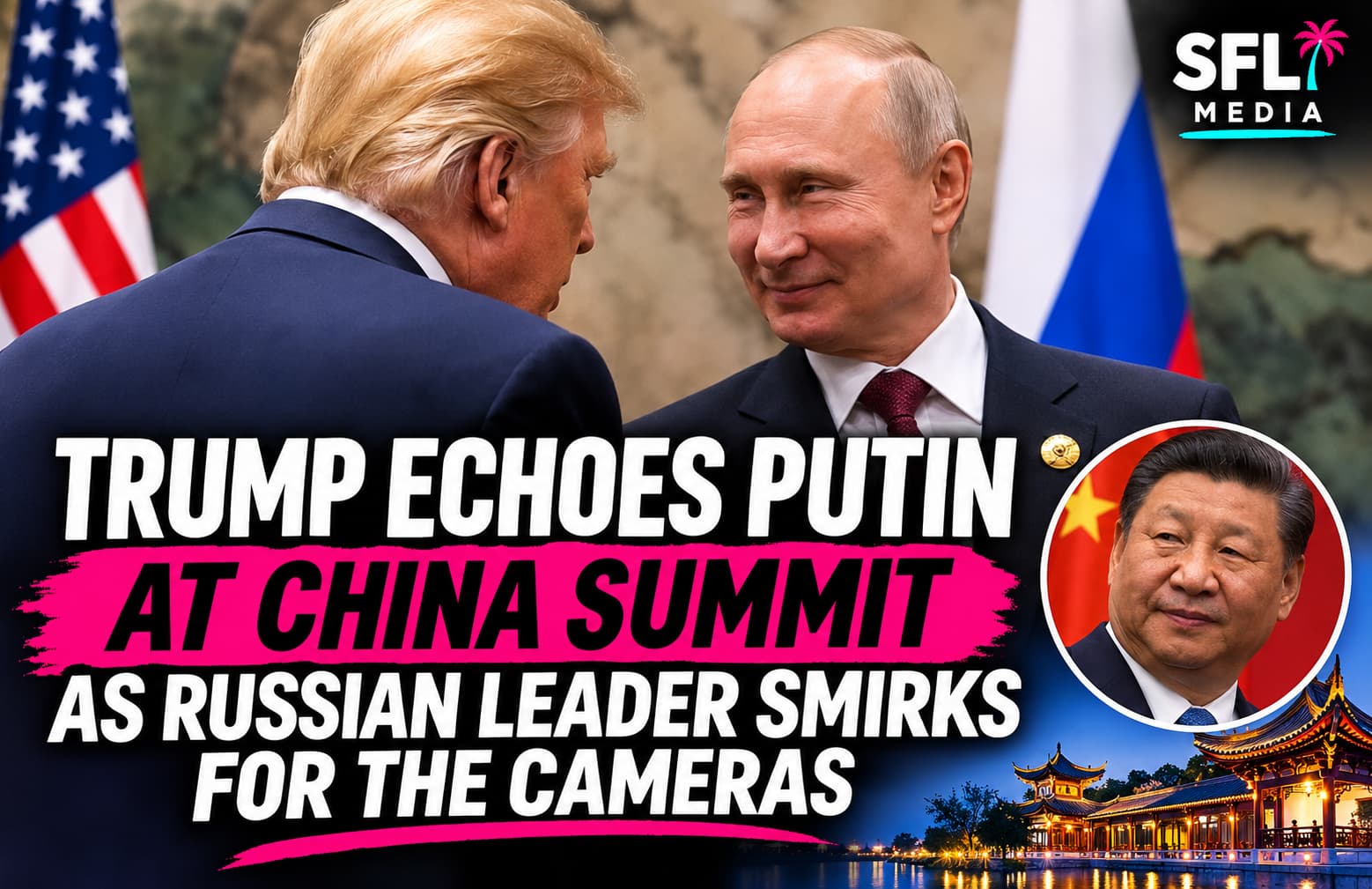
President Donald Trump stood alongside Russian President Vladimir Putin and Chinese President Xi Jinping at a historic summit in China and publicly attacked the International Criminal Court, the same institution seeking Putin’s arrest for alleged war crimes in Ukraine. The moment revived one of the most persistent questions in American politics: Why do Trump’s positions so frequently align with the Kremlin’s interests, who is shaping those positions, and what have America’s intelligence agencies actually established after more than a decade of scrutiny?
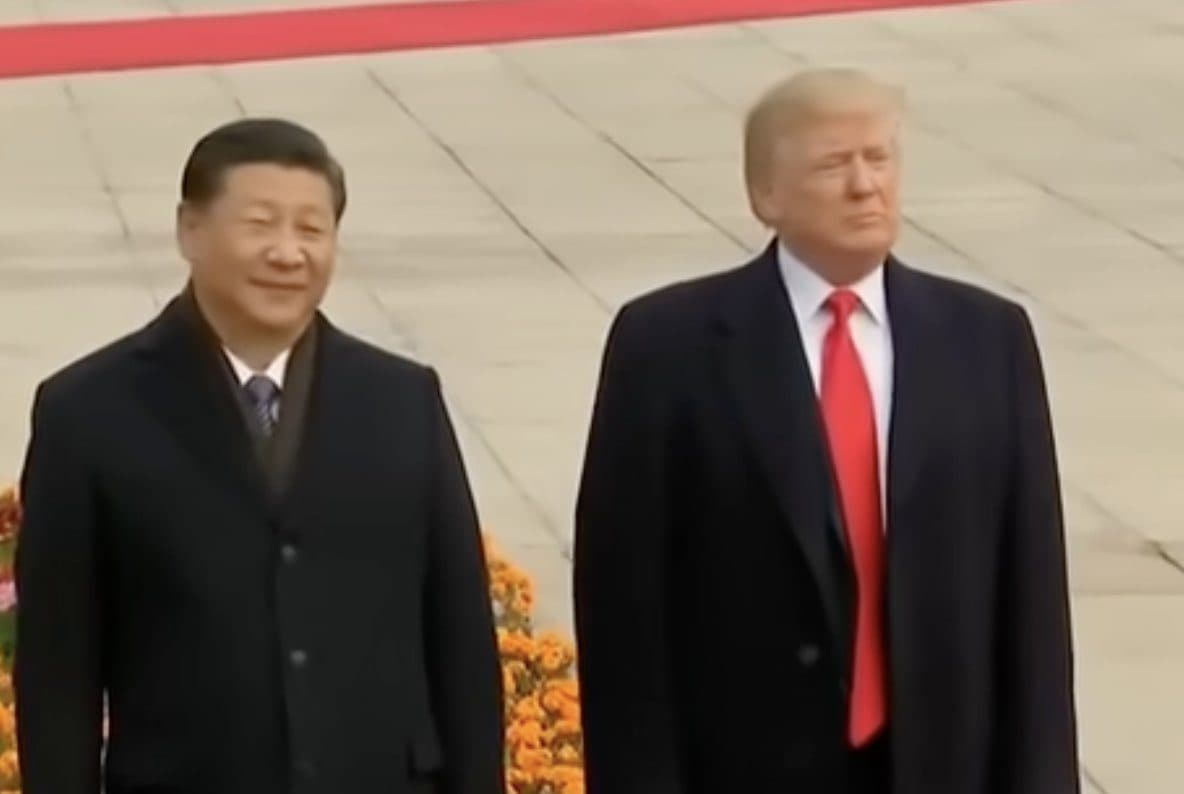
SHENZHEN, CHINA — On November 19, 2026, President Donald Trump joined Vladimir Putin and Xi Jinping for an unprecedented three-way summit that produced a joint declaration challenging international legal authority, emphasizing the immunity of government officials, and conspicuously avoiding any condemnation of Russia’s ongoing invasion of Ukraine.
For Putin, the diplomatic symbolism was considerable. A Russian president facing an International Criminal Court arrest warrant appeared beside the American president as an equal participant in discussions about international law, sovereignty, and the future of global institutions. Rather than facing renewed pressure over alleged war crimes, Putin watched Trump publicly criticize the very court responsible for issuing his arrest warrant.
The summit produced few concrete diplomatic breakthroughs. There was no enforceable Ukraine peace agreement, no ceasefire timetable, and no negotiated nuclear arms reduction treaty. Nevertheless, the three leaders endorsed a declaration addressing international courts and official immunity, positions that intersect directly with Russia’s longstanding objections to international legal accountability.
The meeting also raised a broader question about American intelligence and national security oversight. After years of investigations into Russian election interference, documented contacts between Trump associates and Russian-linked individuals, and repeated controversies surrounding Trump’s relationship with Putin, what do the FBI and CIA actually know about how the two leaders communicate and influence one another?
The public record establishes direct diplomatic contact, overlapping political interests, and significant Russian efforts to influence American politics. It does not establish that Putin secretly directs Trump’s statements or that an undiscovered communications channel exists. But the distinction between an unproven covert relationship and the documented mechanisms through which foreign governments influence American policy deserves far more attention.
Trump Attacks the International Criminal Court With Putin Sitting Beside Him
During the Shenzhen meeting, Trump delivered remarks criticizing international institutions that he argued had exceeded their authority. His comments specifically targeted the International Criminal Court, which issued an arrest warrant for Putin in March 2023 over the alleged unlawful deportation and transfer of Ukrainian children from occupied Ukrainian territory into Russia.
“I’ll be suggesting ways to protect our nation’s sovereignty from rogue globalist organizations such as the International Criminal Court.”
Trump continued by arguing that the court had exceeded its jurisdiction and indicated that the three leaders shared his concerns. The statement placed the American president publicly alongside two governments that have long resisted international judicial oversight of their officials. Russia rejects the allegations against Putin and does not recognize the ICC’s jurisdiction. China and the United States are also not parties to the Rome Statute establishing the court, although the legal circumstances surrounding each country’s relationship with the institution differ.
Trump’s remarks did not explicitly demand the cancellation of Putin’s arrest warrant. They did, however, reinforce an argument that Moscow has advanced for years: that international judicial institutions should face stronger limitations when attempting to hold national leaders accountable. The distinction between intent and consequence is important. The available evidence does not establish that Trump made the remarks specifically to protect Putin. The diplomatic consequences, however, were identifiable. A president facing an international arrest warrant received public support for restricting the authority of the institution seeking his arrest.
View this post on Instagram
The Joint Declaration Gave Moscow More Than a Photo Opportunity
The summit concluded with a four point declaration addressing United Nations reform, petroleum supplies, international legal jurisdiction, and nuclear risks. The agreement emphasized national sovereignty and the immunity of state officials while warning that the International Criminal Court and similar institutions should not exceed their jurisdiction. The declaration omitted explicit references to Russia’s invasion of Ukraine and the American conflict with Iran, despite both wars being central international security issues. It also provided no binding commitments on nuclear weapons reductions, leaving the leaders with a largely symbolic agreement rather than a detailed framework for resolving major disputes.
Reuters described the meeting as a diplomatic opportunity for Putin, while analysts cited in international coverage questioned whether Washington obtained meaningful concessions in exchange for the political legitimacy the summit afforded Russia and China. The language concerning international courts was particularly consequential because it appeared in a formal document endorsed by all three governments. Unlike an improvised presidential comment, a joint declaration ordinarily reflects negotiations among diplomats, national security officials, and other representatives of participating governments.
That creates an important and answerable question: Who within the American administration negotiated and approved language that could strengthen Moscow’s objections to international accountability? The answer would help establish whether the provision originated with Russian negotiators, American officials, Chinese representatives, or a negotiated compromise. Without that information, the public cannot fully evaluate how the United States arrived at a position that served an identifiable Russian diplomatic interest.
Who Is Supplying Trump’s Talking Points on Russia?
For years, Trump’s rhetoric toward Putin has generated controversy because of its occasional overlap with arguments promoted by Moscow. His criticism of NATO allies, skepticism toward some international institutions, emphasis on negotiating directly with powerful adversaries, and shifting positions on assistance to Ukraine have all produced debates about whether American policy is accommodating Russian objectives.
The Shenzhen summit provides another example of that overlap, but it also offers a more concrete subject for investigation than speculation about a secret messenger.
Presidential remarks at major international meetings are commonly prepared through a process involving White House speechwriters, national security advisers, diplomatic officials, and policy specialists. Formal declarations are typically reviewed and negotiated before leaders endorse them. The people responsible for those processes are therefore central to understanding how Trump’s statements and policy commitments were developed.
Who drafted the ICC language? Which American officials reviewed it? Did any national security advisers warn that the provision could undermine international accountability for alleged Russian war crimes? What did Trump and Putin discuss during their bilateral meeting before the three way summit, and how did those discussions affect the final declaration?
Those questions do not require assuming the existence of a clandestine Russian communications channel. They concern identifiable government processes, official negotiations, and the development of American foreign policy. There is also a documented explanation for why Trump might independently support the Kremlin’s position on the ICC. In February 2025, his administration imposed sanctions on the court, arguing that its investigations involving American and Israeli personnel threatened U.S. sovereignty. American opposition to aspects of ICC jurisdiction also predates Trump.
That history complicates any claim that Putin must have supplied the president with his talking points. Trump already had an established policy position that overlapped with Moscow’s objections. The more consequential question is whether his administration assessed the benefits that Russia could derive from placing that position in a joint declaration.
After More Than a Decade, What Have the FBI and CIA Actually Figured Out About Trump and Putin?
This is where the Shenzhen summit intersects with a much larger question about American intelligence accountability. The FBI, CIA, National Security Agency, and broader intelligence community collectively employ tens of thousands of people and operate with substantial federal funding. Their responsibilities include identifying foreign intelligence operations, protecting national security information, assessing threats from hostile governments, and understanding how foreign powers attempt to influence American decision-making.
Russia has been one of the central subjects of American intelligence collection for generations. Its intelligence services have extensive experience conducting influence operations, cultivating political relationships, and exploiting divisions within Western democracies. Understanding the nature of Russia’s interactions with American political figures is therefore not a peripheral concern. It falls squarely within the national security interests of the United States.
Yet after more than a decade of public controversy surrounding Trump and Russia, Americans still lack a comprehensive public account of the full scope of the president’s communications with Putin, the private diplomatic discussions surrounding major policy decisions, and the influence foreign officials may have exercised over the development of those policies.
That gap deserves scrutiny, but it must be described accurately. The fact that intelligence agencies have not publicly disclosed a secret communications channel does not establish that such a channel exists, that investigators failed to discover it, or that classified intelligence officials possess evidence they are concealing. It is also possible that the relevant communications occurred through acknowledged diplomatic channels or that Trump’s policy preferences developed independently.
The FBI and CIA have different legal authorities and responsibilities. The FBI investigates domestic counterintelligence threats and potential violations of federal law, while the CIA primarily collects and analyzes foreign intelligence. Neither agency is required to publicly disclose every intelligence finding, operational method, or classified assessment concerning a sitting president’s foreign relationships.
Nevertheless, the agencies’ extensive resources and the history of Russian interference justify asking what information has been collected, what conclusions have been reached, and what appropriate oversight mechanisms exist to evaluate those conclusions without compromising legitimate intelligence operations. The issue is not simply whether investigators have discovered a hidden telephone number or intermediary. It is whether the American government has adequately assessed the national security implications of a relationship that repeatedly places the president’s diplomatic positions in proximity to Moscow’s strategic objectives.
The Mueller Investigation Found Russian Interference, but Not an Established Trump Putin Command Channel
The historical record provides important answers to some of these questions. American intelligence agencies concluded that Russia interfered in the 2016 presidential election through hacking, information operations, and other activities intended to influence the American political environment. The intelligence community assessed that Putin ordered an influence campaign aimed at undermining Hillary Clinton and favoring Trump’s election.
Special Counsel Robert Mueller subsequently documented extensive Russian interference and numerous contacts between Trump campaign associates and Russian linked individuals. His investigation examined those relationships, including interactions involving former campaign chairman Paul Manafort, former national security adviser Michael Flynn, and other figures connected to Trump’s political operation.
Mueller’s investigation did not establish that the Trump campaign criminally conspired or coordinated with the Russian government in its election interference activities. That conclusion did not erase the documented contacts, the Russian operations, or the counterintelligence concerns associated with them. The Senate Intelligence Committee’s bipartisan investigation also examined the relationship between Manafort and Konstantin Kilimnik, whom the committee identified as a Russian intelligence officer. Its findings raised significant concerns about Russian intelligence access to individuals associated with Trump’s campaign.
These investigations established that Russia conducted extensive influence operations and that contacts with individuals in Trump’s political orbit warranted serious examination. They did not publicly establish a system in which Putin secretly transmitted instructions directing Trump’s speeches or presidential decisions. That distinction remains essential in 2026. A documented pattern of overlapping interests can justify investigation, but it cannot independently establish a covert command structure.
A Secret Backchannel Is Not the Only Way Foreign Influence Works
The assumption that Putin must be sending instructions through an undiscovered intermediary overlooks how foreign influence can operate in practice. Governments do not necessarily need clandestine communications to understand, encourage, or benefit from another leader’s policy preferences. Foreign governments can influence diplomatic outcomes through official negotiations, public statements, intelligence assessments, personal relationships, economic incentives, political pressure, and the selective presentation of information. They can also benefit when another government independently adopts positions consistent with their own interests.
Trump and Putin have communicated directly through acknowledged presidential meetings and diplomatic discussions. At Shenzhen, Trump publicly confirmed that he and Putin had held an extended conversation concerning the war in Ukraine before the trilateral session. Those exchanges provide an established avenue through which the leaders could communicate their positions without any need for a secret messenger.
The White House also has advisers, special envoys, diplomats, and national security personnel who regularly interact with foreign officials. Determining whether any particular individual improperly advanced Russian interests would require evidence of their conduct, communications, and decision-making responsibilities, not simply their participation in diplomatic negotiations.
This is where congressional oversight and investigative reporting can provide meaningful answers. The question is not whether Trump and Putin have some means of communicating; their direct diplomatic communication is publicly documented. The question is whether undisclosed relationships, conflicts of interest, or foreign influence have affected specific American policy decisions. No verified public evidence reviewed for this article establishes such a covert arrangement behind the Shenzhen declaration.
Why Intelligence Spending and Congressional Oversight Matter
The United States spends tens of billions of dollars annually on intelligence activities, including foreign intelligence collection, counterintelligence, cybersecurity, surveillance, and national security analysis. The National Intelligence Program alone has operated with annual budgets exceeding $70 billion in recent years, while additional military intelligence activities receive separate funding.
Those resources exist partly to help American officials understand foreign governments’ intentions and protect the country from hostile intelligence operations. Russia’s demonstrated history of election interference makes that responsibility especially important.
However, the size of an intelligence agency’s budget is not evidence that it can identify every private communication, prove every suspected influence relationship, or publicly release every classified conclusion. Intelligence collection involves legal restrictions, operational limitations, uncertainty, and the need to protect sensitive sources. The more appropriate accountability question is whether intelligence assessments concerning Russian influence have been conducted rigorously, communicated to authorized policymakers, and subjected to meaningful congressional oversight.
Congressional intelligence committees have access to classified oversight processes that are unavailable to ordinary citizens. Those mechanisms provide a route for examining sensitive national security concerns without requiring intelligence agencies to reveal operational secrets publicly. Lawmakers could also seek explanations about the development of the Shenzhen declaration, the roles of American negotiators, the national security assessments considered before the summit, and the administration’s evaluation of how its ICC position might affect Russia’s international standing. Such inquiries would focus on documented government conduct rather than assuming the existence of a communications channel that has not been established.
Putin’s Diplomatic Gains and America’s Unanswered Questions
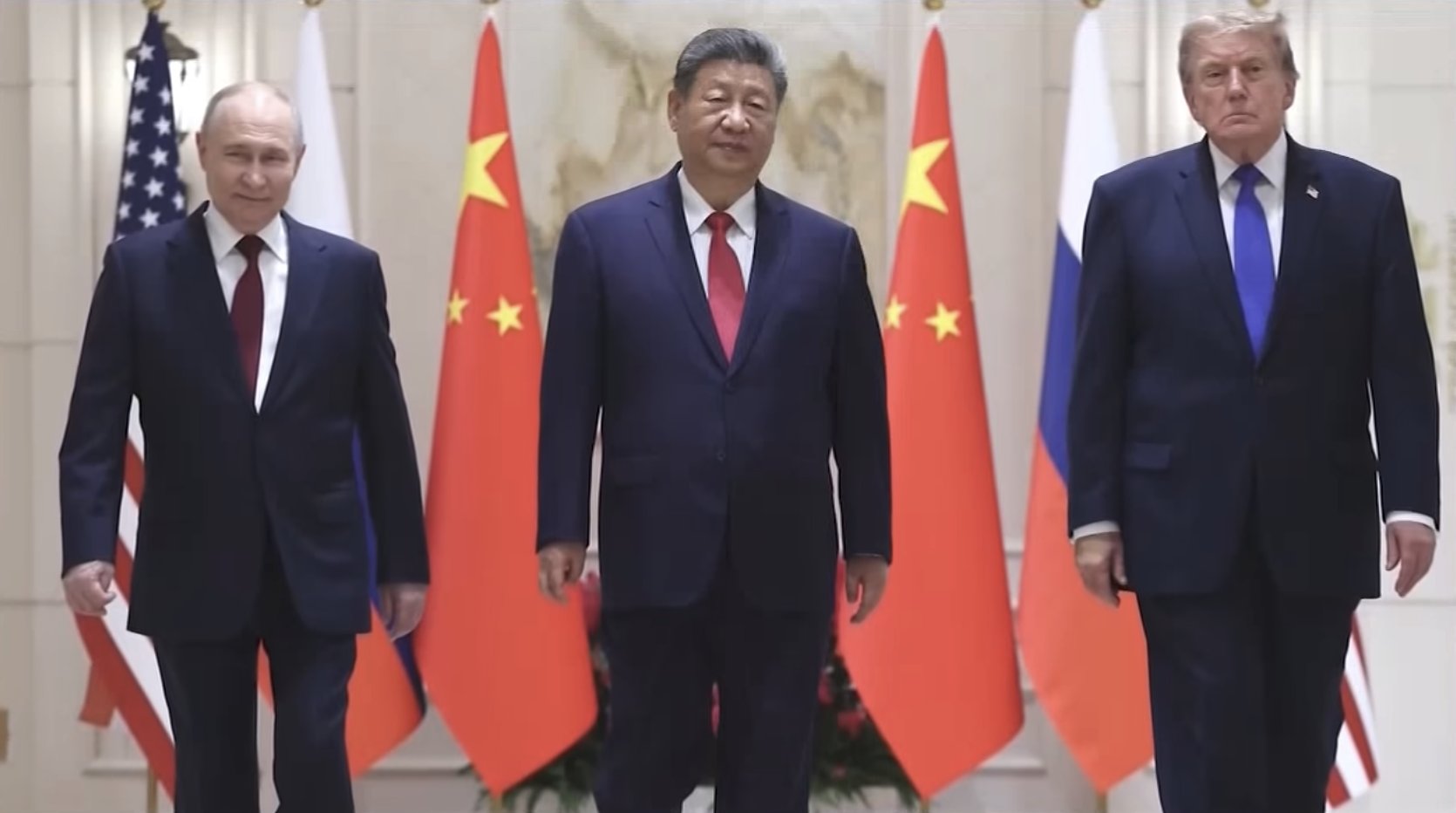
The Shenzhen summit offered Putin an opportunity to present Russia as an indispensable participant in shaping international security. The Russian president appeared alongside the leaders of the world’s two largest economies, participated in a declaration addressing international legal authority, and avoided any explicit condemnation of Russia’s invasion of Ukraine in the final agreement.
The summit also demonstrated the limits of symbolic diplomacy. The declaration did not resolve the war in Ukraine, produce a binding nuclear agreement, or establish a detailed framework for preventing future conflicts. Trump described the meeting enthusiastically, while outside analysts questioned whether the United States had obtained substantive concessions.
Engagement with adversarial governments is not inherently improper. American presidents have negotiated with Russian and Soviet leaders for decades, sometimes producing important arms-control agreements and other security arrangements. Diplomatic contact can reduce the risk of miscalculation, even when governments fundamentally disagree. But diplomacy should also be evaluated by its outcomes. If a meeting strengthens an adversary’s international position without producing corresponding American gains, the administration should be prepared to explain its strategy and the benefits it expects to achieve.
The ICC provision is a particularly relevant example because its implications extend beyond the summit itself. Russia has sought to challenge the legitimacy of international legal proceedings involving its leadership, while Ukraine and its supporters have emphasized accountability for alleged war crimes. A joint declaration criticizing international judicial authority therefore has consequences for an ongoing dispute in which the United States has substantial strategic interests. The administration’s responsibility is to explain how those consequences were considered and why the final language served American objectives.
The Bigger Question: Who Is Accountable for American Foreign Policy?
After years of investigations, the American public knows that Russia interfered in the 2016 election, that members of Trump’s political circle had documented contacts with Russian linked individuals, and that Trump and Putin have maintained direct diplomatic communications. What remains less transparent is how specific presidential policy decisions are developed and whether the influence of foreign governments has been adequately evaluated.
The Shenzhen summit illustrates why that distinction matters. Trump’s criticism of the International Criminal Court was consistent with an established position of his administration, but it also reinforced a longstanding Russian objective. The subsequent declaration placed the United States alongside Russia and China in challenging aspects of international judicial authority while offering few concrete commitments on Ukraine or nuclear arms control.
Those facts justify serious questions about the administration’s diplomatic strategy, its negotiating process, and the national security advice informing its decisions. They do not establish that Putin controls Trump or that American intelligence agencies have failed to discover a secret communications network.
The FBI and CIA should be accountable for assessing foreign influence and protecting American national security. The White House should be accountable for explaining who shapes presidential policy and why. And Congress should be accountable for exercising meaningful oversight when the interests of the United States and an adversarial government appear to converge.
The most important unanswered question is not necessarily how Putin sends Trump instructions. It is whether American officials can demonstrate that the president’s decisions are grounded in independently evaluated U.S. interests, that foreign influence risks have been properly assessed, and that the government has adequate safeguards against improper interference.
Putin left Shenzhen having participated in a declaration that advanced arguments consistent with Moscow’s opposition to international judicial oversight. Trump left describing a historic diplomatic achievement. The American public is entitled to understand what the United States gained, who negotiated the terms, and how the administration determined that the agreement served the country’s interests. After more than a decade of controversy surrounding Trump and Russia, those questions deserve answers supported by documents, testimony, and verifiable evidence—not speculation about a secret relationship that has never been publicly established.

Sources & Further Reading
-
The White House — U.S.-Russia-China Heads of State Declaration Toward Peace, November 19, 2026
-
Roll Call Factba.se — Trump’s Trilateral Summit Remarks and Transcript
-
Atlantic Council — Analysis of U.S. Strategy at the Shenzhen Summit
-
U.S. Department of Justice — Mueller Report on Russian Election Interference
-
Senate Select Committee on Intelligence — Russia Investigation and Congressional Oversight
-
Office of the Director of National Intelligence — U.S. Intelligence Community Budget
-
International Criminal Court — Official Court Records and Arrest Warrants









Loading comments…