
This Could Change the AI Race Forever
As artificial intelligence continues to consume staggering amounts of computing power, nations around the world are scrambling to solve a growing problem: Where do you put the servers, and how do you power and cool them efficiently?
China believes it may have found the answer beneath the ocean.
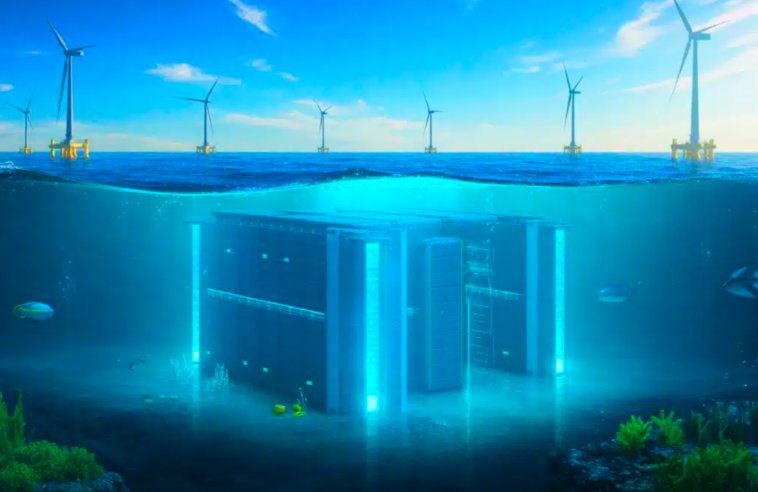
In what sounds like something straight out of a science fiction movie, China has deployed massive underwater data center facilities off its coastline, using the ocean itself as a natural cooling system while drawing much of its power from offshore renewable energy. The project represents one of the boldest infrastructure experiments of the AI era and could provide a glimpse into the future of global computing.
Why Data Centers Have Become a Massive Problem
The AI boom has created an unprecedented demand for data centers. There seems to be a news story on this topic every day now. Every AI model, chatbot, cloud service, and machine learning system requires enormous amounts of processing power. The larger the models become, the more electricity they consume.
Traditional data centers face two major challenges: power and heat.
Modern AI server farms generate tremendous amounts of heat, forcing operators to spend huge amounts of electricity simply keeping equipment cool. Some estimates suggest cooling systems can account for a significant portion of a facility’s overall energy usage.
China’s underwater approach attacks that problem directly.
Rather than fighting the heat with giant cooling systems, engineers are using naturally cold seawater surrounding submerged server modules to dissipate heat. The result is dramatically lower cooling requirements and significantly improved efficiency. China’s Hainan Underwater Intelligent Computing Center and newer projects near Shanghai are specifically designed to take advantage of these natural conditions.
A Data Center Sitting on the Ocean Floor
The facilities are not simply shipping containers dropped into the sea.
The underwater modules are highly engineered, pressure-resistant structures designed to house thousands of servers while operating in harsh marine environments. Some installations sit approximately 35 meters beneath the ocean surface and connect to shore through specialized submarine cables. Newer facilities near Shanghai reportedly house roughly 2,000 servers and are capable of supporting AI processing, cloud services, and large-scale data workloads.
China’s Hainan project is even more ambitious. Officials have discussed long-term plans involving dozens of underwater data cabins, creating what could become one of the largest submerged computing networks in the world.
Powered by Renewable Energy
Perhaps the most fascinating aspect of the project is its energy strategy.
Many reports describe the newer Shanghai-based facilities as drawing the overwhelming majority of their power from offshore wind farms. While some social media discussions and video titles refer to the systems as being powered entirely by ocean currents, the publicly available information points primarily to offshore wind energy combined with the ocean’s natural cooling capabilities. The underwater design dramatically reduces the energy needed for temperature management while renewable energy helps power the servers themselves.
That combination could prove critical as AI energy demands continue to surge worldwide.
China’s AI Infrastructure Play
This isn’t just about building a more efficient server farm.
China is investing heavily in artificial intelligence infrastructure as it competes with the United States and other nations for leadership in AI development. Computing power has become one of the most valuable strategic assets in the world. The ability to train AI models faster and more cheaply can provide significant economic and technological advantages.
According to Chinese reports, the Hainan underwater computing cluster can support AI applications requiring enormous amounts of processing power and is already being used for AI training, industrial simulations, gaming, and scientific research.
In other words, this isn’t a laboratory experiment. It is already being integrated into real-world computing operations.
Microsoft Tried It First
Interestingly, China was not the first to explore underwater data centers.
Microsoft launched an experimental project known as Project Natick several years ago, placing server modules beneath the ocean to study reliability and efficiency. The project demonstrated that underwater computing could work, with some reports showing surprisingly low failure rates compared to traditional land-based facilities.
However, Microsoft ultimately did not commercialize the concept. China appears to have taken many of those lessons and pushed the technology toward large-scale deployment.
Challenges Still Remain
Despite the impressive engineering, underwater data centers are not without risks.
Maintenance becomes significantly more difficult when servers are sitting on the ocean floor. Engineers must also contend with corrosion, subsea cable durability, marine environmental impacts, and long-term reliability concerns. Critics have also raised questions about the potential effects of transferring heat into marine ecosystems over extended periods.
Those challenges will ultimately determine whether underwater computing becomes a global trend or remains a niche solution.
The Bigger Picture
Regardless of whether every claim surrounding these projects proves successful, one thing is becoming increasingly clear. The AI race is driving infrastructure innovation at a pace few imagined just a few years ago.
What once sounded like science fiction, by placing supercomputers on the ocean floor and powering them with renewable energy, is now becoming a reality.
As AI models continue growing larger and more power-hungry, the future of computing may not be built in sprawling server farms across deserts and industrial parks.
It may be built beneath the waves.
And if China’s underwater data center strategy succeeds, it could give the country a significant advantage in the global race for AI dominance while simultaneously reshaping how the world thinks about data infrastructure for decades to come.



















































Want to join the conversation?
Create an account or sign in to share your thoughts, vote,
and reply to other readers.
Showing 0 of 0 comments
Don't have an account?
Already have an account?