
John Oliver Warns Trump’s Justice Department Is Becoming a Political Weapon as Career Prosecutors Flee
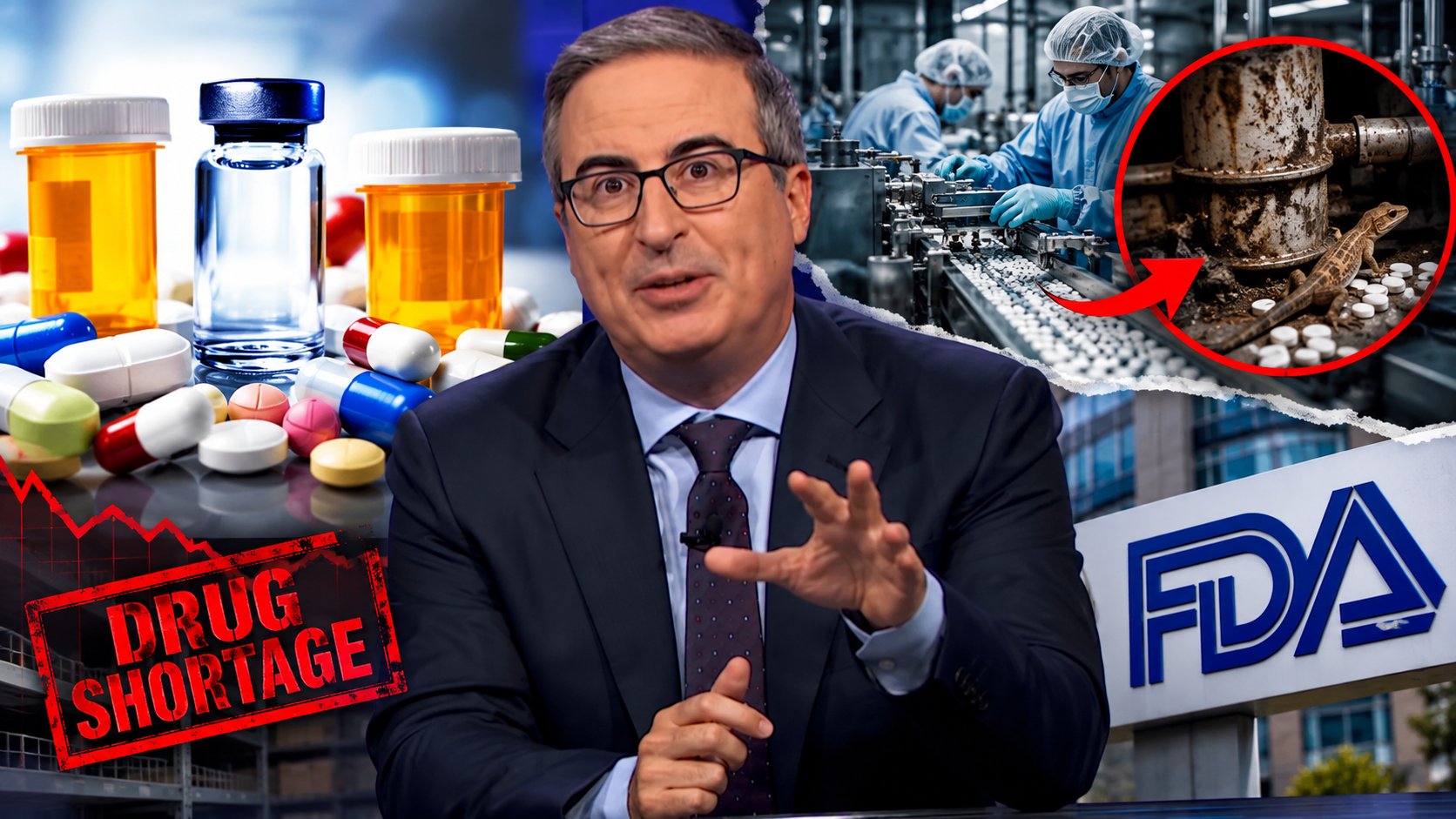
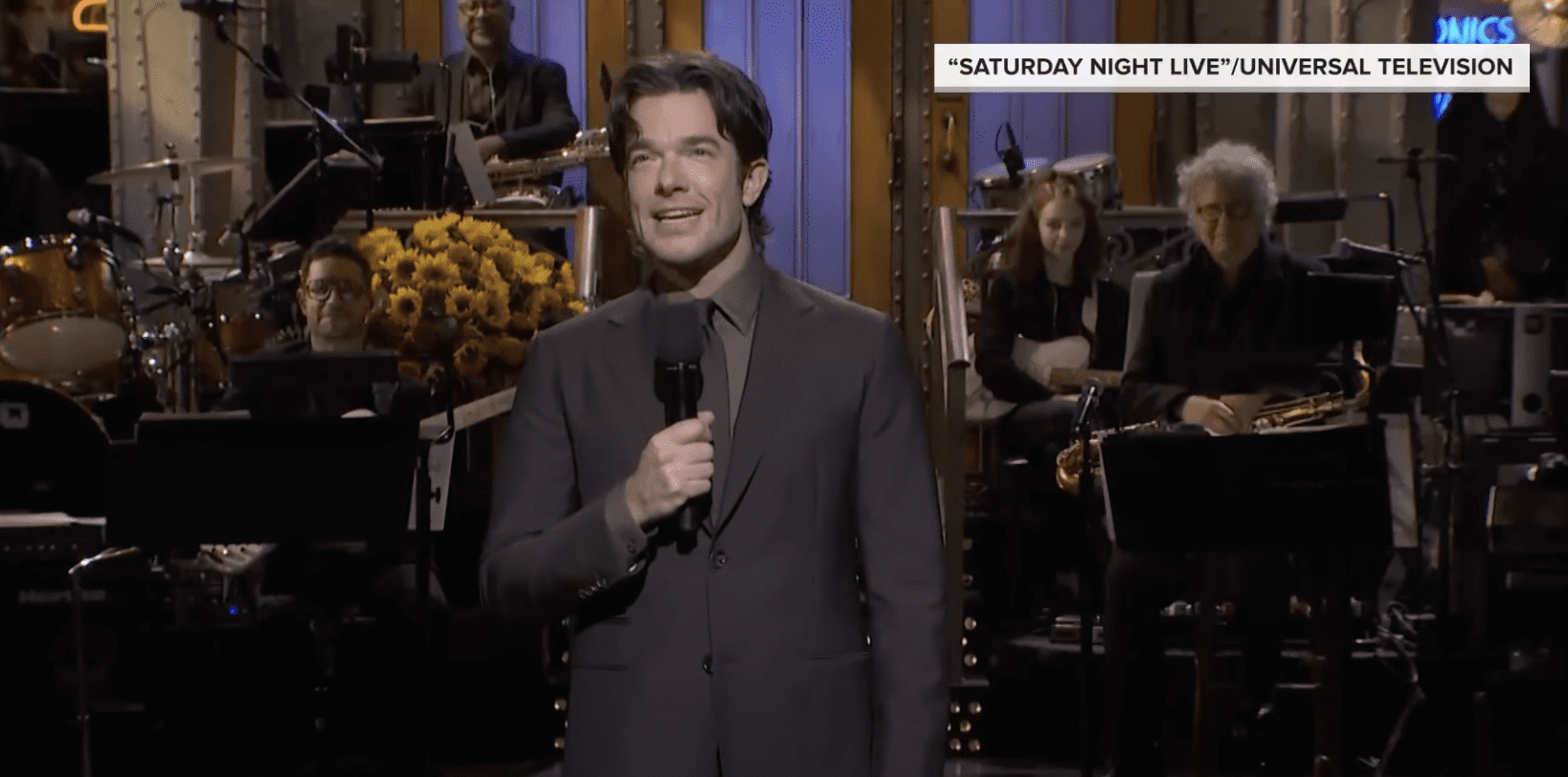
John Oliver used the latest episode of HBO’s Last Week Tonight to deliver a sweeping indictment of the transformation taking place inside the U.S. Department of Justice during President Donald Trump’s second term, arguing that an institution historically expected to enforce federal law with a degree of independence from the White House is increasingly being pulled into the president’s political battles.
The August 10 segment, titled “Trump & the DOJ,” focused not simply on individual controversial prosecutions or personnel decisions, but on what Oliver portrayed as a broader institutional breakdown: experienced prosecutors leaving the department, enforcement priorities being dramatically rewritten, civil rights cases being abandoned, and politically sensitive investigations increasingly colliding with judges and grand juries unwilling to accept the government’s arguments. At the center of Oliver’s warning is a fundamental question about the Justice Department: Does it represent the United States, or the president personally?
Oliver Says the DOJ’s Independence Is Being Eroded
The Justice Department is part of the executive branch, and presidents have always influenced its priorities through their choice of attorney general and administration policy. But modern presidents have generally faced strong institutional norms designed to create distance between the White House and individual criminal investigations.
Those norms became particularly important after Watergate, when Richard Nixon’s attempts to use federal law enforcement against perceived political enemies demonstrated the dangers of allowing presidential interests to dictate prosecutorial decisions. Oliver argues that Trump’s second administration is aggressively challenging that model. He highlighted comments from former DOJ official Mike Gordon describing the traditional responsibility of federal prosecutors.
“When you stand up in court,” Gordon explained, prosecutors represent “the United States and all of its people.”
That distinction is central to Oliver’s argument. A prosecutor representing the United States is supposed to evaluate evidence and the law independently. A prosecutor effectively representing the political interests of a president is operating under an entirely different standard. Trump himself has made little effort to conceal his anger toward the Justice Department officials and prosecutors involved in the investigations against him.
During a March 2025 appearance at the Justice Department, Trump described himself as having been relentlessly targeted by political opponents and compared the scrutiny he faced with the prosecution of notorious gangster Al Capone. Attorney General Pam Bondi welcomed Trump to the department for that appearance, illustrating the unusually close public relationship between the White House and DOJ leadership.
A Justice Department Losing Thousands of Lawyers
One of the most consequential issues raised by Oliver has little to do with television ready political fights. It is the loss of institutional experience. According to figures cited in the segment, the Justice Department employed nearly 13,000 attorneys before Trump returned to office. Oliver reported that nearly 4,000 attorneys have since departed while approximately 1,400 replacements have been hired. If those numbers hold, the issue extends well beyond partisan politics.
Federal prosecutors handle terrorism, organized crime, public corruption, financial fraud, cybercrime, narcotics trafficking, civil rights violations and countless other cases requiring specialized legal knowledge accumulated over years or decades. Losing experienced career lawyers faster than they can be replaced creates a knowledge deficit that cannot simply be repaired by filling empty positions.
Oliver also highlighted reports of hiring standards being lowered in some offices, with positions previously requiring courtroom experience becoming available to attorneys who meet more basic licensing requirements. The concern is not merely that inexperienced lawyers might lose cases. It is that mistakes made by federal prosecutors can have enormous consequences for defendants, victims and the public.
The Sandwich Case Becomes a Symbol of DOJ Overreach
Some of Oliver’s sharpest criticism focused on cases that have become almost absurd examples of prosecutorial escalation. Among them was the now infamous case involving a man accused of throwing a sandwich at a federal officer in Washington, D.C. Federal authorities initially sought a felony assault charge. Oliver highlighted the extraordinary resources deployed in the case, including a heavily armed law-enforcement operation at the defendant’s residence.
But the felony prosecution failed to secure a grand jury indictment. Prosecutors subsequently pursued a misdemeanor case. The defendant was acquitted. For Oliver, the episode represented something larger than a ridiculous dispute involving a sandwich. It demonstrated what can happen when prosecutors begin with the desired punishment and then attempt to construct the strongest possible case around it.
Grand Juries and Judges Are Becoming Critical Guardrails
One of the more important themes of Oliver’s segment was that many of the administration’s controversial prosecutions have encountered resistance from inside the judicial system itself. Grand juries have refused to approve some charges. Judges have dismissed cases. Prosecutors have faced scrutiny over their conduct. That resistance matters because federal prosecutors traditionally enjoy tremendous credibility in court. Judges and grand juries generally assume government attorneys have followed established procedures and carefully evaluated evidence before bringing serious charges. That institutional credibility is enormously valuable.
It can also be lost. Oliver highlighted the prosecution of protesters associated with demonstrations near the Broadview immigration facility outside Chicago. According to material discussed in the segment, a grand juror openly questioned the government’s case, reportedly describing it in extraordinarily dismissive terms. Prosecutorial handling of skeptical grand jurors subsequently became part of the controversy surrounding the case.
The broader danger is straightforward: once judges begin expecting political motivations, procedural shortcuts or poorly constructed cases from government attorneys, every federal prosecutor may have to work harder to establish credibility. That would affect prosecutors who have nothing whatsoever to do with Trump’s political agenda.
More Than 23,000 Criminal Investigations Were Closed
Perhaps the most significant statistic underlying Oliver’s argument comes from an analysis published by ProPublica earlier this year. According to that investigation, the Justice Department closed more than 23,000 criminal matters during the first six months of the Trump administration as resources shifted toward immigration enforcement. The abandoned matters included investigations involving white collar crime, fraud, drugs, terrorism and alleged abuse at a nursing facility.
Declining a federal prosecution is not inherently unusual. Prosecutors routinely decide that evidence is insufficient, federal resources would be better used elsewhere or another jurisdiction is better positioned to handle a case. The scale and speed of the shift, however, raised questions about what Americans are losing as the department reallocates personnel and resources. A Justice Department has finite manpower. Every prosecutor assigned to one priority is a prosecutor unavailable for another.
The Trump administration has made immigration enforcement a central federal priority. The policy debate is therefore not simply whether immigration laws should be enforced. It is also whether the massive redistribution of DOJ resources is leaving serious crimes in other categories under-investigated or unprosecuted.
Civil Rights Division Takes a Dramatically Different Direction
Oliver also focused extensively on Assistant Attorney General Harmeet Dhillon and the transformation of the Justice Department’s Civil Rights Division. The division was created during the civil rights era and has historically handled cases involving voting discrimination, police misconduct, housing discrimination and other constitutional and statutory protections.
Under the Trump administration, its priorities have changed substantially. The department has pursued challenges involving voter rolls and conservative complaints about discrimination while retreating from some previous federal investigations and agreements involving police departments and environmental justice.
One particularly striking example involves Lowndes County, Alabama. In April 2025, the Justice Department formally terminated an environmental-justice settlement stemming from an investigation into sanitation problems in the predominantly Black rural county. The previous agreement had addressed longstanding sewage and wastewater problems affecting residents.
The Trump DOJ explicitly tied its decision to the administration’s campaign against diversity, equity and inclusion initiatives. Dhillon said the department would no longer pursue environmental justice through what she characterized as a “distorting, DEI lens.” That decision illustrates how quickly the mission of a federal agency can change when political leadership changes.
Political Prosecutions Face Their Own Legal Problems
Oliver also examined federal cases involving some of Trump’s most prominent political adversaries, including former FBI Director James Comey and New York Attorney General Letitia James. Both have argued that prosecutions against them were politically motivated. The original cases against Comey and James were dismissed in 2025 after a federal judge concluded that the prosecutor who obtained the indictments had been unlawfully appointed.
The government subsequently brought new charges against Comey in April 2026 relating to his controversial “86 47” social media post. The existence of political history between Trump and these defendants does not automatically make a prosecution illegitimate. Political figures are not immune from criminal investigation simply because the president dislikes them. But that is precisely why prosecutorial independence matters. When a president repeatedly publicly demands investigations or punishment of political opponents, federal prosecutors face an additional burden: demonstrating that their decisions are based on evidence and law rather than presidential retaliation.
The Damage Could Outlast Trump
Oliver’s strongest argument was ultimately not about any individual prosecution. It was about institutional memory and public trust. Presidents leave office. Career institutions remain. When experienced prosecutors depart, rebuilding expertise can take years. When political officials lower professional standards, restoring them requires deliberate leadership. And when courts begin questioning whether government lawyers are presenting cases in good faith, repairing that credibility can be extraordinarily difficult.
There is also a danger that politicization becomes self perpetuating. If one administration openly uses federal law enforcement to pursue its political priorities, the next administration can point to that precedent when doing the same thing. Eventually, the argument becomes not whether the Justice Department should remain independent, but which political faction gets to control it. That would represent a profound change in American government.
The Courts May Be the Last Institutional Check
There was, however, an important counterpoint running through Oliver’s segment. The system has not simply surrendered. Grand juries have rejected charges. Judges have dismissed cases. Defense attorneys have challenged prosecutorial conduct. Former DOJ officials have spoken publicly about what they believe is happening inside the department. Those safeguards matter.
They demonstrate why the American justice system distributes power among prosecutors, grand juries, judges and juries rather than allowing any president or attorney general to determine guilt. But those protections work best when prosecutors themselves operate as the first institutional safeguard. A federal prosecutor possesses extraordinary power. The government can investigate someone, subpoena records, seize property, obtain warrants, force defendants to spend enormous amounts of money defending themselves and, ultimately, ask a court to take away their freedom. That is why prosecutorial ethics demand something fundamentally different from ordinary political combat.
John Oliver’s Warning Is Bigger Than Donald Trump
Strip away the comedy, exaggerated graphics and trademark John Oliver profanity, and the argument behind “Trump & the DOJ” is fundamentally institutional. The issue is not whether Americans like Donald Trump. It is not whether they agree with Pam Bondi, Harmeet Dhillon or Jeanine Pirro. And it is not whether conservatives or liberals should determine federal law-enforcement priorities. Elections inevitably affect policy.
The deeper question is whether there remains a boundary between setting law-enforcement priorities and using federal prosecutorial power as an extension of presidential politics. That boundary exists for a reason. The Justice Department possesses the machinery of the most powerful government in the world. Its prosecutors can destroy criminal organizations, dismantle terrorist networks, prosecute corrupt politicians and protect Americans whose constitutional rights have been violated.
They can also destroy an individual’s life. That power requires institutional restraint precisely because it is so enormous. Oliver’s warning is that once Americans accept the idea that the Justice Department exists to protect a president’s allies and punish his enemies, rebuilding an independent Justice Department may prove considerably harder than dismantling one.






































Want to join the conversation?
Create an account or sign in to share your thoughts, vote,
and reply to other readers.
Showing 0 of 0 comments
Don't have an account?
Already have an account?