
Scaramucci Claims the Mafia, Not a Lone Gunman, Assassinated JFK
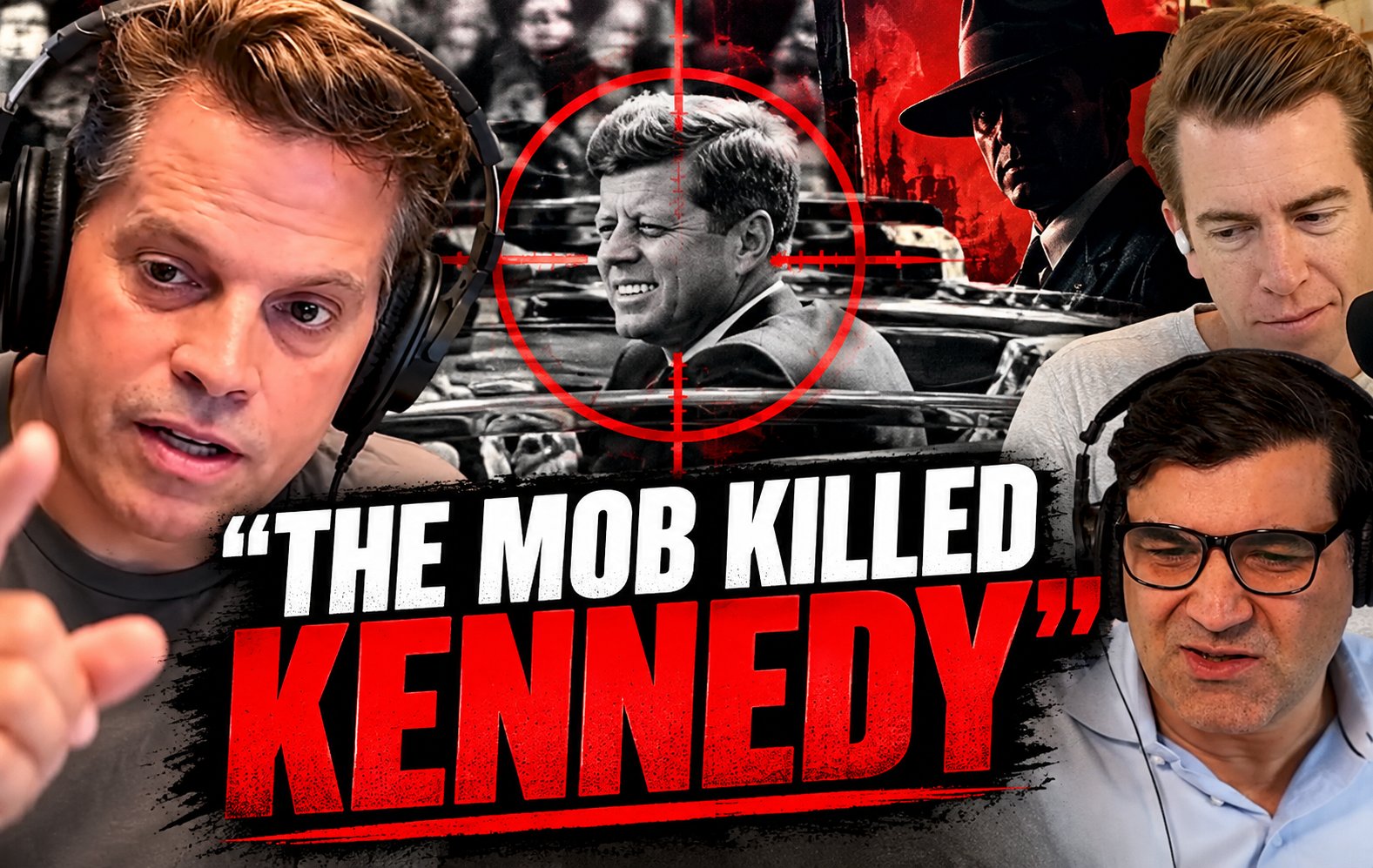
WASHINGTON — Former White House Communications Director Anthony Scaramucci is pointing the finger squarely at organized crime for the assassination of President John F. Kennedy, arguing that top mobsters orchestrated the 1963 murder in violent retaliation for Robert F. Kennedy’s uncompromising crusade against American mafia syndicates. Appearing as a guest on The Rest Is Classified podcast hosted by David and Gordon, Scaramucci laid out a multi-layered theory blaming high level mob figures, specifically New Orleans mob boss Carlos Marcello, for the president’s death, calling the hit a fatal error that organized crime figures ultimately regretted.
The Core Motive: Betrayal and Retribution
According to Scaramucci, the mafia felt profoundly double crossed by the Kennedy administration. During the tightly contested 1960 presidential election, organized crime networks were instrumental in securing JFK’s victory in key states like Illinois and West Virginia through trade union support and ballot manipulation. Joseph P. Kennedy, the president’s father and a former bootlegger with deep mob ties, had initially served as a bridge between the family and organized crime figures. However, after taking office, JFK appointed his brother Robert F. Kennedy as Attorney General, initiating an aggressive, federal campaign against organized crime that mob bosses viewed as a severe betrayal.
Scaramucci emphasized that a critical turning point occurred when Joseph P. Kennedy suffered a debilitating stroke in December 1961 that paralyzed him and robbed him of his speech. Scaramucci argued that had the senior Kennedy not been incapacitated, he would have successfully brokered a deal to restrain Bobby Kennedy, preventing the ultimate tragedy. Tensions reached a boiling point when Bobby Kennedy targeted New Orleans mafia boss Carlos Marcello, having him abruptly seized and flown to the jungles of El Salvador without his shoes in a humiliating deportation. Upon illegally returning to the United States, Marcello allegedly rallied the major crime families and put out a contract on the president.
The Execution and the “Distraction” Plot
Scaramucci claimed that an initial assassination attempt was planned for late October 1963 in Tampa, Florida, but was aborted due to rain and unfavorable positioning. When the operation moved to Dallas on November 22, Scaramucci alleged that Lee Harvey Oswald acted as a paid mob operative instructed to fire “distraction shots” from the Texas School Book Depository to draw public attention away from a professional hit team. Citing analysis of the Zapruder film, Scaramucci asserted that the fatal kill shot actually came from the front, naming a mob-affiliated marine sniper as the triggerman stationed behind the grassy knoll.
To prevent Oswald from exposing the plot, the mob turned to Dallas nightclub owner Jack Ruby, who was heavily in debt to organized crime and was offered a clean slate in exchange for silencing Oswald. Scaramucci insisted that Ruby’s access to the basement of the Dallas Police Department to shoot Oswald on live television was facilitated by corrupt police personnel who intentionally delayed Oswald’s transfer.
Government Silence and Official Findings
Addressing why modern presidential administrations have continued to withhold certain JFK assassination records, Scaramucci argued the secrecy is intended to protect sensitive intelligence sources and operational methods that federal agencies still rely on globally, rather than to shield conspiracy plotters. He noted that President Lyndon B. Johnson’s public 1.3 mile walk behind Kennedy’s casket to Arlington National Cemetery alongside foreign leaders just days after the murder signaled that top officials knew the government was not facing an ongoing foreign or domestic threat.
Scaramucci also highlighted the findings of the 1978 House Select Committee on Assassinations, which officially concluded that President Kennedy was “probably assassinated as a result of a conspiracy” involving a likely second gunman.
Host Skepticism and Counterarguments
Podcast hosts David and Gordon heavily challenged Scaramucci’s narrative, defending the official establishment findings and pointing out significant logical and factual gaps in the mafia theory. The hosts emphasized that the mob conspiracy narrative relies primarily on much later “deathbed confessions” including statements Marcello allegedly made to an FBI informant in prison during the mid 1980s rather than hard contemporary documentary evidence or wiretap intercepts.
Furthermore, the hosts argued that Jack Ruby’s erratic behavior prior to the shooting, including lingering around police headquarters in his underwear, worrying about union disputes involving strippers, and visiting a Western Union office to transfer money moments before the shooting, strongly contradicts the profile of a disciplined operative executing a planned hit. Despite the skepticism, Scaramucci maintained that historical context and informal accounts within organized crime circles confirm mafia involvement, concluding that the establishment view overlooks the clear motive and logistical capabilities of the mob.

Sources and Further Reading
The Rest Is Classified — Anthony Scaramucci Reveals Who Killed JFK: Watch the original podcast discussion
National Archives — JFK Assassination Records Collection: Explore declassified government records, investigative files, and assassination-related documents
Warren Commission Report (1964) — National Archives: Read the official investigation concluding that Lee Harvey Oswald acted alone
U.S. House Select Committee on Assassinations (1979) — Final Report: Read the congressional investigation that concluded Kennedy was probably assassinated as a result of a conspiracy
House Select Committee — Organized Crime and the JFK Assassination: Examine congressional findings concerning Carlos Marcello, organized crime, and possible conspiracy
National Academies of Sciences — Report of the Committee on Ballistic Acoustics (1982): Read the scientific reassessment that challenged the acoustic evidence for a second gunman

























Want to join the conversation?
Create an account or sign in to share your thoughts, vote,
and reply to other readers.
Showing 0 of 0 comments
Don't have an account?
Already have an account?