
Trump Administration Subpoenas Ilhan Omar’s Family as Federal Investigation Targets Her U.S. Citizenship and Future in Congress
Federal investigators reportedly seized the Minnesota congresswoman’s phone and issued more than a dozen grand jury subpoenas, including to members of her family, as authorities examine immigration records dating back three decades. Reporting indicates investigators are exploring a potential legal path to challenge her citizenship, raising questions about federal law enforcement and political accountability just weeks before the midterm elections.
Federal Investigation Expands From Search of Omar’s Home to Subpoenas Targeting Her Family
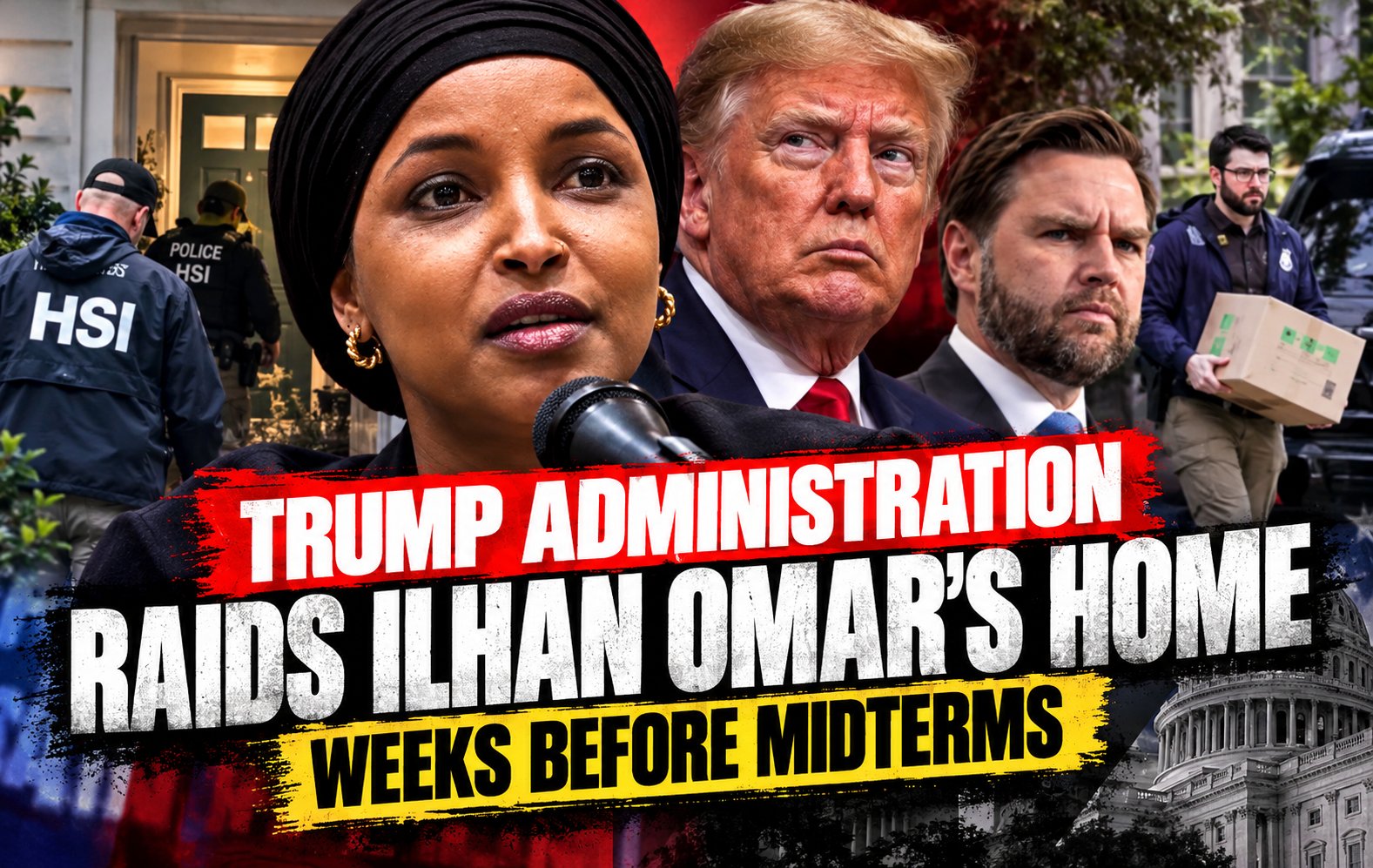
WASHINGTON, D.C. — The Trump administration’s reported investigation into Democratic Congresswoman Ilhan Omar has expanded beyond a search of her Washington residence, with federal authorities reportedly seizing her cellphone and issuing more than a dozen grand jury subpoenas, including to members of her family, as investigators examine whether immigration documents submitted decades ago contained false information that could provide grounds to challenge her American citizenship.
The developments represent a significant escalation of the investigation first covered by South Florida Media on October 13, when federal agents reportedly searched Omar’s Washington home just 22 days before the November 3 midterm elections. Subsequent reporting has described a potential denaturalization case as one of the administration’s objectives, although the government has not publicly established that Omar obtained citizenship unlawfully.
According to reporting attributed to the Associated Press, federal investigators seized Omar’s phone and issued more than a dozen grand jury subpoenas connected to an investigation in Minnesota. Some subpoenas reportedly were directed at Omar’s relatives. CBS News was also cited as reporting that multiple family members had received subpoenas. The precise number of relatives involved has not been publicly established, and receiving a subpoena does not mean that a person is suspected of wrongdoing.
The Wall Street Journal was cited as reporting that investigators were seeking to develop a legal case that could ultimately lead to Omar losing her citizenship and potentially facing deportation. Such an objective would have extraordinary implications for a sitting member of the United States House of Representatives. However, the existence of an investigation does not establish that prosecutors possess sufficient evidence to bring a successful case, that a court would approve denaturalization, or that Omar has committed a crime.
The timing has intensified concerns about the political implications of the investigation. Omar, a Somali-born American citizen representing Minnesota’s Fifth Congressional District, is seeking reelection and has been one of President Donald Trump’s most outspoken congressional critics. Trump has repeatedly attacked her political positions and questioned her background, while Omar has accused his administration of using federal law enforcement to intimidate a political opponent.
Investigators Examine Whether Omar’s Age Was Misrepresented During Immigration Proceedings
According to reporting attributed to The Washington Post, the immigration investigation focuses on whether Omar or her late father, Nur Omar Mohamed, made false statements in immigration documents submitted after their family arrived in the United States in 1995. Investigators reportedly are examining records connected to the family’s immigration history, including questions about Omar’s birth date and information provided during her father’s naturalization process.
Omar fled Somalia’s civil war with her family, spent several years in a refugee camp in Kenya, and arrived in the United States as a child in 1995. She became an American citizen in 2000. The investigation reportedly concerns whether her age was accurately represented in immigration records and whether she satisfied the legal requirements for acquiring citizenship through her father’s naturalization.
The distinction between a discrepancy in historical documentation and intentional immigration fraud is critical. A difference between dates recorded in public biographical materials does not automatically establish that a person submitted false information to federal immigration authorities. Investigators would need to examine the original records, determine which citizenship laws applied, and establish whether any potentially inaccurate statement was material to the legal process.
Federal authorities reportedly are also examining whether Omar’s father omitted or misrepresented information concerning his past military service in Somalia when seeking legal status in the United States. Mohamed died in 2020, making the investigation dependent on historical documents, government records, and potentially testimony from surviving relatives.
Questions about Omar’s birth year have circulated in conservative political circles for years. One issue involves public biographical records that previously listed her birth year as 1981 before being corrected to 1982. Omar’s office has characterized the discrepancy as an error in public information rather than evidence of an effort to conceal her actual age.
Immigration specialists have also observed that refugees fleeing countries affected by war and institutional collapse can encounter serious difficulties obtaining consistent birth documentation. Somalia’s prolonged civil conflict disrupted government institutions and recordkeeping systems, making historical documentation potentially difficult to reconstruct decades later. Those circumstances do not establish that every discrepancy is innocent, but neither do they justify assuming fraud without supporting evidence. The relevant legal question is whether the government can demonstrate that false information was knowingly submitted and that it affected the lawful acquisition of citizenship.
Why Investigators Are Subpoenaing Omar’s Relatives
The reported decision to issue grand jury subpoenas to members of Omar’s family suggests investigators are attempting to reconstruct the circumstances surrounding the family’s immigration history and the documentation used to establish legal status and citizenship. Relatives may possess information about birth dates, family relationships, migration records, historical applications, or statements made during immigration proceedings.
A grand jury subpoena can compel a person to provide documents or testimony relevant to a criminal investigation. It is a standard investigative instrument and does not, by itself, indicate that the recipient has committed a crime. Federal authorities have not publicly identified every reported subpoena recipient, described the complete range of requested documents, or established whether any family member is personally suspected of criminal conduct.
The Associated Press was cited as reporting that the subpoenas are connected to a grand jury gathering evidence in Minnesota. The investigation is reportedly being pursued by federal authorities, including Homeland Security Investigations, rather than constituting a personal subpoena action by President Trump. Although the administration oversees the executive agencies involved, the available reporting does not establish that Trump personally ordered individual subpoenas or selected particular relatives for questioning.
The family subpoenas are nevertheless significant because they indicate that investigators may be pursuing evidence beyond the material reportedly obtained during the search of Omar’s residence. The reported seizure of her cellphone adds another dimension to the investigation, potentially giving authorities access to communications and other information within the limits of any applicable warrant and judicial oversight.
Neither a search warrant nor a grand jury subpoena establishes guilt. The government must still determine whether the evidence supports criminal charges, a civil action challenging citizenship, or no further proceedings.
A Separate Federal Investigation Targets Omar’s Financial Disclosures
The immigration investigation is not the only reported federal inquiry involving Omar. U.S. Attorney Jeanine Pirro, who leads the federal prosecutor’s office in Washington, was reported to have confirmed that her office was examining the congresswoman’s financial disclosures. Pirro indicated that prosecutors would pursue criminal conduct if the evidence supported charges.
The financial inquiry reportedly concerns discrepancies in Omar’s congressional disclosure forms. According to the earlier reporting, one filing placed assets associated with Omar and her husband in a range extending into the millions of dollars, a substantial increase from previous disclosures. Omar subsequently amended the paperwork to report significantly lower asset values, attributing the discrepancy to an accounting or reporting error.
Congressional financial disclosures generally report assets in value ranges rather than precise dollar amounts, and amendments are not automatically evidence of fraud. The government would need to establish the relevant facts and legal elements before pursuing any criminal charge. A substantial discrepancy may warrant examination, but it does not independently establish that Omar intentionally submitted false information.
The separate inquiries also involve different legal questions. The immigration investigation concerns whether Omar lawfully acquired citizenship and whether historical records contain material misrepresentations. The financial investigation concerns the accuracy of disclosures submitted during her congressional service. Public reporting has not established that the two matters are legally connected or that evidence in one supports allegations in the other.
Can Trump Actually Strip a Sitting Congresswoman of Her Citizenship?
The most consequential allegation is that federal officials are attempting to develop a case that could revoke Omar’s citizenship and ultimately lead to her deportation. Such an effort would be extraordinary because Omar has been an American citizen for more than 25 years, has served in Congress since January 2019, and is currently seeking another term representing Minnesota.
Under federal law, citizenship obtained through naturalization can be challenged if the government establishes that it was illegally procured or obtained through a material misrepresentation or concealment. But denaturalization is not a presidential power that can simply be exercised through an executive order or administrative declaration. The Justice Department must pursue the appropriate legal proceedings, and a federal court must determine whether the government has satisfied the applicable burden of proof.
Civil denaturalization generally requires clear, unequivocal, and convincing evidence sufficient to justify revoking citizenship. Criminal proceedings involve different elements and the requirement of proof beyond a reasonable doubt. Civil denaturalization actions are not subject to the same general time limitations that apply to many criminal offenses, which helps explain why investigators may be examining documents dating back to the 1990s.
Omar’s circumstances present additional legal complications because she acquired citizenship as a minor through her father’s naturalization rather than through an ordinary adult naturalization application. The applicable statutes, her age at the relevant time, her parents’ legal status, and the precise circumstances of her citizenship acquisition would all matter. An alleged discrepancy in her birth year would not automatically establish that her citizenship was unlawfully obtained.
Even if the government succeeded in challenging citizenship, deportation would not necessarily follow automatically. Immigration status, removal proceedings, available defenses, and judicial review could create additional legal questions. Similarly, the constitutional requirement that members of the House be U.S. citizens for at least seven years would make any final citizenship ruling relevant to Omar’s eligibility to continue serving, but the consequences would depend on the actual judgment and subsequent legal proceedings.
The central distinction is that an investigation aimed at denaturalization is not the same thing as a successful denaturalization case. Omar remains an American citizen and a sitting member of Congress. No court ruling establishing that she obtained citizenship unlawfully has been identified in the reporting summarized here.
An Investigation Three Weeks Before the Midterms Raises Election Interference Concerns
The investigation’s reported timing is one of its most politically consequential features. Federal agents reportedly searched Omar’s home on October 12, just 22 days before the November 3 midterm elections, and the subsequent reports about subpoenas and prosecutorial activity have placed the allegations in the national political spotlight as voters prepare to cast ballots.
The Justice Department has longstanding policies intended to prevent investigative or prosecutorial actions from being undertaken for the purpose of affecting an election. Those policies do not create an absolute prohibition against investigating candidates near Election Day, nor do they grant elected officials immunity from criminal investigation. They do, however, require particular care when investigative actions could influence voters or create the appearance that federal law enforcement is being used for partisan purposes.
Democrats have accused the administration of targeting Omar for political reasons, pointing to Trump’s history of attacking the congresswoman and the timing of the investigative activity. The administration, meanwhile, has maintained that immigration fraud and other potential violations of federal law are legitimate subjects for investigation.
The reported involvement of a judicial search warrant is important. A warrant generally requires a judge to find probable cause that evidence relevant to a crime is likely to be found in the location searched. That judicial authorization distinguishes a search from an action undertaken solely on the president’s personal instructions. Nevertheless, a valid warrant does not settle every question about prosecutorial discretion, investigative priorities, or the political circumstances surrounding an operation.
For federal authorities, the issue is whether they can demonstrate that the investigation was initiated and pursued according to legitimate law enforcement considerations rather than an effort to damage a candidate before an election. For Omar and her supporters, the issue is whether a government led by a president who has repeatedly attacked her is using investigative powers to undermine her political standing.
Neither the timing nor the president’s past rhetoric independently proves improper political direction. Both are relevant circumstances that warrant scrutiny.
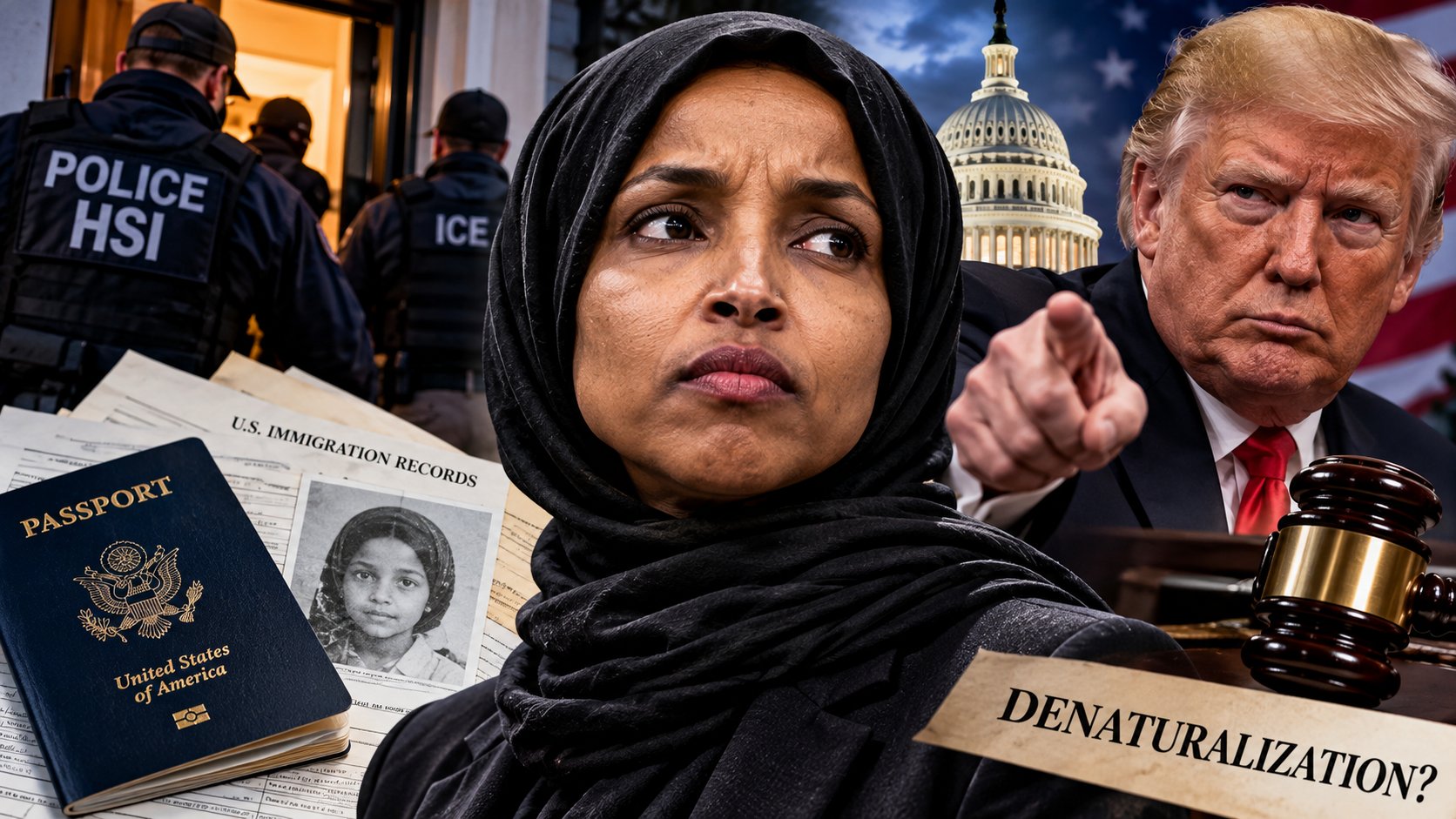
Omar Accuses Trump of Weaponizing Federal Law Enforcement
Omar has rejected the allegations and characterized the investigation as an extension of Trump’s longstanding political attacks against her. In a statement attributed to her following the reported search of her residence, she accused the administration of targeting political opponents and using federal law enforcement as a means of intimidation.
Her response reflects the history of conflict between the Minnesota congresswoman and Trump, who has repeatedly criticized her political positions, immigration background, and public statements since his first presidential term. Omar and her supporters argue that the investigation must be viewed in the context of those longstanding attacks, particularly because it concerns events from her childhood and has reportedly intensified shortly before an election.
Administration officials have defended the broader pursuit of immigration fraud investigations, while the Justice Department has not publicly established that Omar committed fraud. The political dispute is likely to intensify because the stakes extend beyond a conventional criminal investigation. A successful legal challenge to Omar’s citizenship could affect her immigration status and ability to hold federal office, while a failure to substantiate the allegations could deepen concerns about the use of federal investigative powers against an elected political opponent.
A Previous Review Reportedly Did Not Advance the Allegations
Another important detail emerged from reporting attributed to The Washington Post: Homeland Security had previously declined to pursue an investigation based on similar allegations. According to a former immigration official familiar with the earlier review, the agency did not move forward with the case years before the current inquiry was launched.
That history raises questions about what new evidence, if any, prompted investigators to reopen or expand scrutiny of Omar’s immigration records. An earlier decision not to proceed does not prevent authorities from investigating again if new evidence emerges, and it does not necessarily establish that the allegations were conclusively disproven. But the government has not publicly identified the evidence that distinguishes the present investigation from the earlier review.
The distinction matters because allegations involving Omar’s birth year and immigration history have circulated for years without producing a publicly established finding of citizenship fraud. If federal investigators now possess credible new evidence, the legal system provides mechanisms for examining it. If the investigation is primarily revisiting previously unsubstantiated allegations, the decision to undertake highly visible investigative actions immediately before an election would raise additional questions about prosecutorial judgment.
The public cannot fully assess those competing possibilities without more information about the evidence, the government’s legal theory, and the reasons for the investigation’s timing.
A Case That Could Test the Limits of Presidential Power and Federal Law Enforcement
The reported investigation into Omar now encompasses multiple federal inquiries, a search of her Washington residence, the seizure of her cellphone, and grand jury subpoenas reaching members of her family. According to reporting attributed to The Wall Street Journal, federal officials are seeking to build a case that could ultimately revoke her citizenship and lead to deportation. The allegations remain unproven, and no criminal conviction or judicial finding has been identified establishing that Omar obtained citizenship unlawfully.
The stakes extend beyond the future of one congresswoman. Federal investigators have a legitimate responsibility to examine credible evidence of immigration fraud, financial misconduct, or other violations of law, regardless of an individual’s political position. Elected officials are not exempt from investigation simply because they hold public office or oppose the president.
At the same time, the government has an equally important responsibility to ensure that investigative powers are not used to intimidate political opponents, manipulate elections, or pursue unsupported allegations for partisan advantage. Those responsibilities become especially consequential when investigators are examining decades old documents involving a sitting member of Congress shortly before voters decide whether to return her to office.
For Omar, the immediate consequences include legal uncertainty, intense public scrutiny, and a reported investigation reaching into her family’s history. For the administration, the challenge is demonstrating that its actions are supported by credible evidence and legitimate law enforcement objectives. For the public, the central question is whether the extraordinary measures being reported are proportionate to the evidence and consistent with the constitutional protections that apply to every American citizen.
The government has the authority to investigate a member of Congress. It does not have the authority to revoke citizenship simply because that member is a political adversary. Whether the current investigation represents a legitimate effort to enforce immigration law or an abuse of federal power will depend on evidence that has not yet been made public. Until that evidence is tested in court, Ilhan Omar remains an American citizen, a duly elected member of Congress, and a candidate entitled to the same legal protections as any other American.



















































Want to join the conversation?
Create an account or sign in to share your thoughts, vote,
and reply to other readers.
Showing 0 of 0 comments
Don't have an account?
Already have an account?