
John Oliver Exposes America’s Generic Drug Crisis: Dangerous Factory Conditions, Critical Medicine Shortages, and an FDA Struggling to Keep Up
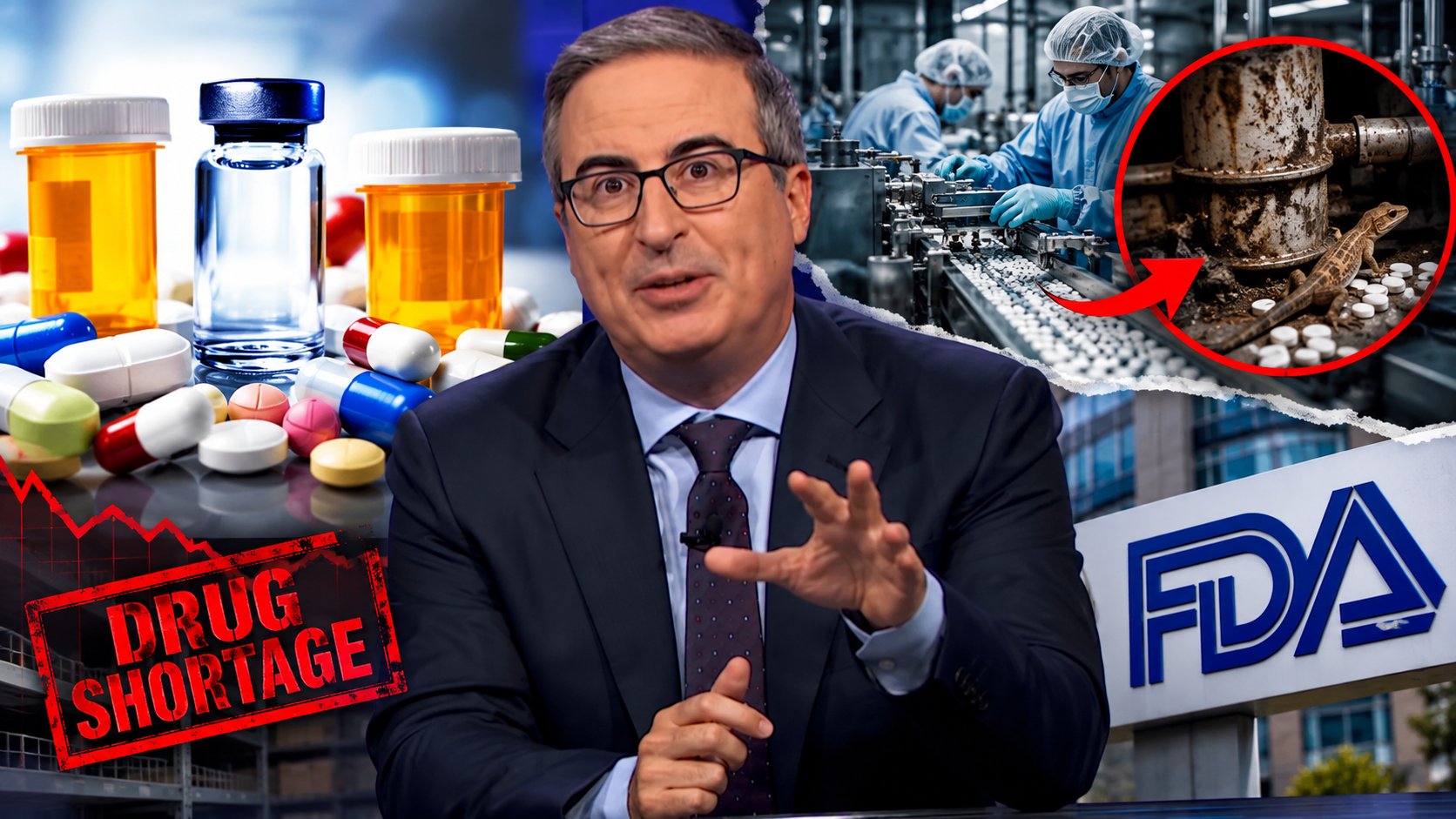
WASHINGTON, D.C. — America’s healthcare system depends on inexpensive generic medications to keep millions of patients alive, manage chronic diseases, and make essential treatments affordable. But behind the familiar prescription bottles lining pharmacy shelves lies a pharmaceutical supply chain increasingly strained by aggressive cost cutting, overseas manufacturing problems, drug shortages, and serious questions about the federal government’s ability to monitor the factories producing much of the nation’s medicine.
In an investigation featured on HBO’s Last Week Tonight, comedian and political commentator John Oliver examined the troubling economics of the generic pharmaceutical industry, highlighting how the same competitive pressures that make medications affordable can also undermine the reliability of their production. Drawing on government findings, investigative journalism, scientific research, and documented manufacturing violations, Oliver described a system in which manufacturers operate on narrow margins, essential drugs can disappear from the market with little warning, and regulators sometimes face an extraordinary choice between allowing questionable medicines into the country or risking shortages that could endanger patients.
The investigation raises a fundamental question about American healthcare: What happens when the country becomes so focused on making essential medications cheap that it fails to adequately protect the manufacturing systems responsible for producing them?
More Than 90% of American Prescriptions Depend on Generic Drugs
Generic medications are among the most consequential cost saving developments in modern American medicine. According to the U.S. Food and Drug Administration, generic drugs account for approximately 90% of prescriptions dispensed in the United States, providing patients with lower cost alternatives to brand name medications. To receive FDA approval, a conventional generic must demonstrate that it meets applicable standards for pharmaceutical equivalence and bioequivalence to its reference drug, including the same active ingredient, strength, dosage form, and route of administration.
The financial benefits are enormous. Generic competition has saved the American healthcare system trillions of dollars over time, while FDA estimates indicate that generic medicines frequently cost 80% to 85% less than their brand name equivalents once multiple manufacturers enter the market. Those savings make treatment accessible to patients who might otherwise struggle to afford medications for conditions ranging from hypertension and diabetes to serious infections, organ transplantation, and cancer.
But Oliver’s investigation focused on an uncomfortable contradiction within that success story. As insurers, pharmacy benefit managers, wholesalers, and large retail pharmacy chains negotiate aggressively for lower prices, manufacturers of older generic drugs can face diminishing profits. In some cases, companies conclude that producing a particular medication is no longer financially attractive and discontinue production altogether.
That creates a dangerous vulnerability when only a handful of companies manufacture an essential drug. If one producer encounters a quality problem, experiences a factory shutdown, or withdraws from the market, the remaining suppliers may lack the capacity to meet nationwide demand. A medication that was inexpensive and readily available can suddenly become difficult to obtain, leaving hospitals scrambling for alternatives and patients facing treatment delays.
Drug Shortages Have Become a Serious Public Health Threat
The consequences of fragile pharmaceutical supply chains extend far beyond inconvenience. The American Medical Association has repeatedly characterized drug shortages as a serious public health problem, warning that interruptions involving essential medications can compromise patient care, increase healthcare costs, and force physicians to make difficult treatment decisions.
Oliver cited a figure of 227 active drug shortages at the time of his broadcast, highlighting the persistence of supply disruptions involving sterile injectable medications, intravenous fluids, and drugs used in hospitals. The exact number of active shortages changes over time and depends on the tracking methodology, but the broader problem has been documented for years by the FDA, the American Society of Health System Pharmacists, and congressional investigators.
Hospital medications are particularly vulnerable because many sterile injectable products require specialized manufacturing facilities and extensive quality controls. Unlike ordinary tablets, these drugs must be produced under tightly controlled conditions to prevent microbial contamination, particulate matter, and other defects that can cause severe harm when injected directly into the bloodstream. When supplies become scarce, hospitals may be forced to conserve existing inventories, substitute medications, adjust treatment schedules, or delay procedures. Those decisions can become especially consequential for cancer patients, critically ill individuals, and people who depend on drugs with few clinically acceptable alternatives.
One of the most alarming examples involved vincristine, an essential chemotherapy medication used in the treatment of numerous childhood cancers. In 2019, a manufacturer discontinued production, leaving the remaining supplier struggling to satisfy demand and triggering widespread concern among pediatric oncologists and families. The shortage illustrated how a manufacturing decision affecting a relatively inexpensive medicine could threaten treatments for some of the nation’s most vulnerable patients.
For families confronting childhood cancer, the possibility that an established chemotherapy drug might become unavailable adds an entirely different level of uncertainty to an already devastating diagnosis. The problem is not necessarily that medicine lacks an effective treatment, but that the supply chain may fail to deliver a treatment physicians have relied upon for decades.
America’s Growing Dependence on Overseas Pharmaceutical Manufacturing
The investigation also examined how generic drug manufacturing has increasingly shifted outside the United States, particularly to India and China. Lower labor costs, large-scale manufacturing capacity, established chemical industries, and aggressive global competition have made overseas production central to the American pharmaceutical supply chain.
India is a major producer of finished generic medicines, while China plays a significant role in supplying active pharmaceutical ingredients and the chemical starting materials used to manufacture drugs. The exact proportion of American medications originating in each country depends on whether the measurement concerns finished dosage forms, active ingredients, manufacturing sites, or prescription volume. Those distinctions matter because a medication packaged in one country may contain ingredients manufactured elsewhere.
Foreign manufacturing is not inherently less safe than domestic production. Pharmaceutical companies in every country are required to meet applicable FDA standards when supplying the American market, and many overseas facilities maintain sophisticated manufacturing operations. Nevertheless, the concentration of production in distant countries creates logistical, geopolitical, and regulatory challenges that can become particularly serious when essential medicines are produced by only a small number of suppliers.
Oliver highlighted research examining differences in adverse events associated with generic drugs manufactured in different countries, including a study reporting a higher rate of serious adverse events among certain drugs produced in India compared with American made equivalents. Such findings warrant scrutiny, but they must be interpreted carefully. Observational research can identify associations without establishing that the country of manufacture itself caused the reported outcomes, and results involving particular products or datasets should not automatically be generalized to every generic medicine produced in a country.
The broader issue is whether manufacturers and regulators have sufficient visibility into the facilities, ingredients, quality control systems, and supply chains responsible for medicines consumed by millions of Americans.
Contaminated Eye Drops and Dangerous Manufacturing Failures
Among the most disturbing examples examined in the segment was the 2023 outbreak of infections linked to contaminated artificial tears. Federal health investigators connected the outbreak to certain eye drop products manufactured in India and contaminated with a highly drug resistant strain of Pseudomonas aeruginosa, a bacterium capable of causing severe infections.
According to the Centers for Disease Control and Prevention, the outbreak ultimately involved more than 100 identified patients across multiple states, with reported deaths, vision loss, and surgical removal of eyes among the consequences. The incident led to product recalls, investigations, and intensified scrutiny of the manufacturing facility involved.
The FDA identified serious deficiencies at the facility, including concerns involving contamination controls and manufacturing practices. The episode demonstrated how failures in pharmaceutical production can have consequences far beyond reduced drug effectiveness. In products intended for direct contact with sensitive tissues, microbial contamination can produce devastating injuries.
Oliver also discussed concerns involving medications with narrow therapeutic ranges, including drugs used to prevent organ transplant rejection. For such medicines, relatively small changes in drug exposure can have serious clinical consequences, making consistent manufacturing quality and careful patient monitoring particularly important. The lesson from these cases is not that generic drugs are inherently unsafe. Rather, the incidents illustrate why rigorous manufacturing standards, independent testing, transparent reporting, and effective regulatory oversight are essential regardless of whether a medicine is sold under a brand name or as a generic.
FDA Inspections Reveal Alarming Conditions Inside Pharmaceutical Factories
One of the most consequential issues raised by Oliver involves the FDA’s ability to inspect overseas manufacturing facilities. The agency is responsible for ensuring that drugs entering the American market meet federal standards for quality, safety, and manufacturing practices, regardless of where they are produced. However, monitoring thousands of facilities across multiple countries presents substantial logistical and financial challenges.
Historically, many FDA inspections of foreign manufacturing facilities have been announced in advance, unlike the unannounced inspections more commonly conducted at domestic plants. Advance notice can help inspectors arrange access, translators, and necessary documentation, but it can also provide manufacturers with opportunities to temporarily correct visible problems or conceal evidence of violations.
Oliver highlighted disturbing findings from inspections of overseas facilities, including allegations of manipulated quality control records, hidden testing operations, unsanitary manufacturing environments, and efforts to destroy documentation. Particularly troubling was the investigation of an Intas Pharmaceuticals facility in India, where FDA inspectors uncovered serious concerns about data integrity and manufacturing practices.
The Intas case became especially significant because the company was a major supplier of cisplatin, an essential chemotherapy medication. Manufacturing disruptions involving Intas contributed to a severe shortage of cancer treatments in the United States, demonstrating how regulatory failures at a single overseas factory can produce nationwide consequences.
This creates a difficult dilemma for federal regulators. If inspectors discover serious violations, restricting imports may be necessary to protect patients from potentially defective products. But if the factory supplies a substantial percentage of an essential medication, shutting off imports can simultaneously deprive hospitals of treatments they urgently need. The FDA must therefore balance two forms of risk: the possibility that a medicine manufactured under deficient conditions could harm patients and the possibility that removing the medicine from circulation could leave patients without treatment.
The FDA’s Controversial Practice of Allowing Drugs From Restricted Factories
Oliver also examined an FDA practice that has attracted substantial scrutiny from investigative journalists and pharmaceutical safety advocates: allowing certain medications to continue entering the United States from factories otherwise subject to import restrictions.
When a manufacturer violates federal standards, the FDA can place its products on import alert, allowing shipments to be detained or refused entry. However, the agency may permit specific medically necessary products to continue entering the country under carefully defined conditions when alternatives are unavailable or a shortage could threaten patient care. These exceptions, sometimes described as shortage-related carve-outs, are intended to preserve access to essential treatments. Nevertheless, they create a troubling regulatory contradiction. A facility may be considered sufficiently problematic to warrant import restrictions while still being permitted to supply particular medications to American patients.
ProPublica’s investigation of generic drug manufacturing documented cases in which facilities with significant regulatory violations continued shipping certain products to the United States under exceptions. The reporting also raised questions about how much information patients, physicians, and pharmacists receive concerning the manufacturing histories of the drugs they use.
The existence of an exception does not automatically mean the medication being imported is contaminated or defective. Regulators may impose additional testing, documentation, or other conditions to reduce risks. However, the practice demonstrates how limited manufacturing capacity can weaken the government’s practical ability to remove problematic suppliers from the market. The central issue is that a regulatory system becomes more vulnerable when essential medicines are produced by so few manufacturers that excluding one supplier could create an immediate medical crisis.
ProPublica Creates a Tool to Show Americans Where Their Medicine Comes From
One of the most practical developments highlighted in Oliver’s segment was the creation of Rx Inspector, a searchable database developed by investigative newsroom ProPublica. The tool allows patients, physicians, pharmacists, and researchers to identify factories associated with specific generic medications and examine available FDA inspection records.
ProPublica launched the resource in December 2025 after an extensive investigation into pharmaceutical manufacturing oversight. Its journalists assembled information from government databases, drug labeling records, facility registrations, and FDA inspection documents, including information obtained through litigation against the agency.
The resulting database connects tens of thousands of generic drug products to manufacturing facilities and regulatory records that previously were difficult for ordinary consumers to locate. The tool represents an important advance in transparency because prescription labels frequently identify distributors or repackagers rather than the factories where the medication was actually manufactured.
Patients can search using medication names, manufacturer information, pill markings, or National Drug Code identifiers. Depending on the available records, the system can identify manufacturing locations and display inspection findings, warning letters, and other regulatory information. The database has limitations. ProPublica acknowledges that some records are incomplete or outdated, and a facility’s inspection history does not establish that every medication produced there is defective. Nevertheless, it gives consumers access to information that historically has been difficult to obtain. The tool is available at ProPublica’s Rx Inspector website, linked in the sources section below.
Experts Call for Stronger Oversight and a More Reliable Domestic Drug Supply
The problems described in Oliver’s investigation have prompted calls for structural changes to America’s pharmaceutical supply chain. Proposed solutions include expanding domestic manufacturing capacity, diversifying suppliers across politically stable trading partners, improving the FDA’s ability to conduct unannounced overseas inspections, and changing purchasing practices that reward the lowest possible price without adequately considering manufacturing reliability.
Some pharmaceutical policy experts advocate for greater federal investment in domestic production of essential medicines, particularly sterile injectable drugs and medications with few alternative suppliers. Others argue that expanding manufacturing across multiple countries would provide greater resilience than attempting to produce every critical drug domestically.
Another proposal involves incorporating quality and supply reliability into purchasing decisions. Under the current system, manufacturers capable of producing drugs at extremely low prices may enjoy a competitive advantage even when other suppliers have stronger records of investment in manufacturing infrastructure. Giving hospitals, wholesalers, and government purchasers better information about production quality could encourage manufacturers to compete on reliability rather than price alone.
Such reforms would not necessarily be inexpensive. Building pharmaceutical manufacturing facilities, maintaining redundant production capacity, and expanding regulatory inspections all require investment. But drug shortages, treatment delays, emergency imports, and hospital efforts to locate alternative supplies also impose significant costs on the healthcare system.
The question for policymakers is whether the country should continue treating essential generic medications primarily as commodities purchased at the lowest possible price or recognize that maintaining a dependable supply of lifesaving medicine requires additional investment.
What Patients Should Do About Their Generic Medications
Despite the disturbing examples featured in the investigation, Oliver emphasized an essential point: Patients should not stop taking prescribed generic medications because of concerns about manufacturing quality. The overwhelming majority of approved generic medicines remain important, effective treatments, and abruptly discontinuing medication can create serious medical risks.
Patients who notice unexpected changes in how a medication works, new side effects, or differences in the appearance of their pills should speak with a pharmacist or healthcare professional. A change in pill color, shape, or markings can indicate that a pharmacy has switched manufacturers, although such changes do not automatically mean the medication is defective.
Consumers interested in learning more about their prescriptions can use ProPublica’s Rx Inspector to research manufacturing facilities and available inspection histories. They should interpret those records carefully and discuss any concerns with their healthcare providers rather than making medication changes independently.
The investigation ultimately presents a broader challenge for American healthcare. Generic drugs have delivered extraordinary savings and expanded access to treatment, but the economic model supporting them has also created vulnerabilities that cannot be solved simply by demanding ever lower prices. When essential medications are manufactured by a shrinking number of suppliers, when overseas factories operate beyond the reach of frequent inspections, and when regulators must choose between restricting questionable products and preventing dangerous shortages, the system is operating with limited room for error.
Oliver’s report makes clear that the problem is not the existence of generic drugs. It is the failure to consistently support the manufacturing quality, regulatory oversight, and supply-chain resilience necessary to keep those drugs affordable, available, and safe. America has succeeded in making many essential medicines inexpensive. The challenge now is ensuring that the country can continue producing and distributing them reliably without compromising the standards patients depend upon.

Sources and Further Reading
HBO — Last Week Tonight with John Oliver: Generic Drugs — Original Segment
U.S. Food and Drug Administration: Generic Drugs: Questions and Answers
U.S. Food and Drug Administration: FDA Drug Shortages Database
American Society of Health-System Pharmacists: Current Drug Shortages
Centers for Disease Control and Prevention: Outbreak of Extensively Drug-Resistant Pseudomonas aeruginosa Associated With Artificial Tears
ProPublica — December 18, 2025: Rx Inspector: ProPublica’s New Tool Provides Drug Information the FDA Won’t
ProPublica — December 18, 2025: How ProPublica Created Its Generic Prescription Drug Lookup Tool
ProPublica — January 23, 2026: How Rx Inspector Is Helping Patients, Doctors, and Researchers













































Want to join the conversation?
Create an account or sign in to share your thoughts, vote,
and reply to other readers.
Showing 0 of 0 comments
Don't have an account?
Already have an account?