
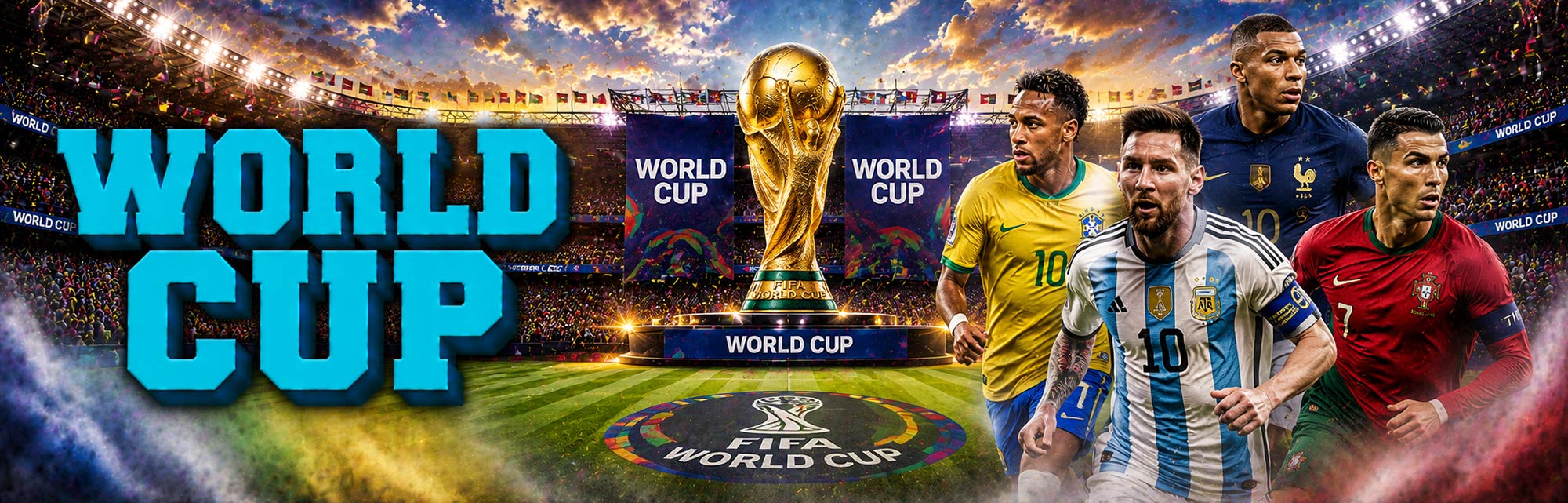
The debate over the future of FIFA president Gianni Infantino has intensified following a controversial proposal to sell a stake in the commercial and operational business surrounding the World Cup. While President Donald Trump has publicly defended Infantino and warned soccer federations against removing him, growing criticism from some of football’s most powerful governing bodies raises a fundamental question: Has Infantino lost the trust required to lead FIFA?
Trump came to Infantino’s defense Monday night in a post on Truth Social, praising the FIFA president and warning that replacing him would be a mistake.
“FIFA would be making a terrible mistake if, for any reason, they even considered replacing President Gianni Infantino,” Trump wrote. He added that Infantino was “fantastic” and argued that FIFA would never be as successful or profitable without him.
Trump’s endorsement is significant, particularly because the United States is co-hosting the 2026 World Cup alongside Canada and Mexico. But FIFA’s governance ultimately depends on its member associations and confederations—not on the support of one political leader.
And increasingly, some of those organizations are demanding change. Infantino apologized after FIFA’s plan to create FIFA Forward Enterprise, or FFE, became public. The proposed company would oversee the commercial and operational components of FIFA’s tournaments and potentially sell approximately 20% of the business to private investors.
The idea immediately generated concern because of the enormous financial value attached to the World Cup.
The World Cup is not simply another sporting event. It is the centerpiece of international soccer and one of the most valuable properties in global sports. Any attempt to sell an ownership interest connected to the tournament therefore carries enormous implications for FIFA’s member associations, players, clubs, fans and future generations of the sport.
UEFA, Concacaf and the Asian Football Confederation responded with a joint “open letter to the football family,” describing the handling of the proposal as a “fundamental breach of trust.”
The confederations argued that the proposal was advanced too quickly, without sufficient consultation and under a timeline that restricted meaningful scrutiny.
They also rejected the idea that the controversy was merely a procedural mistake. The message was much more serious: FIFA’s leadership had failed to properly respect the institutions it is supposed to represent.
The strongest argument for replacing Infantino is not simply that the proposal failed. Leaders are allowed to make mistakes.
The bigger issue is how the proposal was developed and presented. A plan involving a potential sale of an interest connected to the World Cup should require extensive consultation, complete transparency and a clear explanation of who benefits, who assumes the risks and how FIFA’s member associations would be protected.
Instead, UEFA, Concacaf and the AFC said the proposal was pushed through on a compressed timeline. The joint letter stated that a proposal “without meaningful consultation” and with a deadline that prevented member associations from properly reviewing its terms was not an oversight, but a design that limited scrutiny.
That is a devastating criticism for the president of a democratic international sports organization.
FIFA belongs to its 211 member associations. Its leadership is entrusted with protecting the interests of football worldwide. If major decisions can be developed without adequate consultation, questions naturally arise about whether FIFA’s governance structure is functioning as it should.
Perhaps the most important point raised by the confederations was that the World Cup does not belong to Infantino. It does not belong to FIFA’s president. It does not belong to FIFA’s executives. It belongs to the football community.
The joint statement emphasized that football belongs to players, fans, clubs, member associations and the institutions responsible for protecting the sport’s future.
That principle should be at the heart of the debate over Infantino’s future. The FIFA president is not the owner of the World Cup. He is its steward. That distinction matters enormously when billions of dollars and the future commercial structure of international soccer are involved.
The criticism has also reached the United States. U.S. Soccer, a member of Concacaf, issued its own statement supporting the regional confederation’s position. U.S. Soccer, Canada Soccer, the Caribbean Football Union and UNCAF said they stood together in calling for meaningful changes to strengthen FIFA’s governance, transparency and accountability. Those words should not be dismissed.
The United States is playing a central role in the 2026 World Cup, and U.S. Soccer will be directly connected to FIFA’s future commercial and governance decisions.
If FIFA’s leadership loses the confidence of organizations responsible for hosting and participating in its biggest competitions, replacing the president becomes a legitimate governance question—not a political power struggle.
The controversy became even more serious when UEFA indicated that its members could still consider boycotting FIFA competitions, including the World Cup.
That possibility demonstrates just how deeply the dispute has damaged relationships inside global soccer.
FIFA cannot function effectively if its largest continental confederations believe the organization’s leadership has abandoned transparency and consultation.
The threat of boycotts should be viewed as a warning sign. A president who has lost the confidence of major stakeholders faces an enormous challenge in maintaining the unity necessary to govern the world’s most popular sport.
Trump’s argument is straightforward: Infantino has overseen tremendous growth for FIFA and should not be removed. There is certainly a case to be made for Infantino’s accomplishments.
He has been FIFA president since February 2016 and has overseen an organization that has aggressively pursued commercial growth, expanded competitions and increased FIFA’s global reach. The 2026 World Cup is also the largest World Cup ever, featuring 48 teams and 104 matches across the United States, Canada and Mexico.
But financial success and governance are not the same thing. A leader can deliver record revenues and still lose the confidence of the organizations he is supposed to serve.
Trump’s claim that FIFA would never again be as successful or profitable without Infantino is also impossible to prove. No individual is bigger than FIFA, and certainly no individual should be considered indispensable to the World Cup.
That is precisely the kind of concentration of power that strong governance is supposed to prevent.
The most reasonable next step is not necessarily immediate removal. It is an independent investigation.
UEFA, Concacaf and the AFC have called for an independent review of the proposal. That review should examine how FFE was created, who participated in developing the plan, what information was provided to FIFA’s member associations, why the timeline was accelerated and whether appropriate governance procedures were followed.
It should also examine whether private investors could have gained influence over one of the most valuable properties in international sport.
If the investigation determines that Infantino deliberately circumvented FIFA’s governance processes or placed personal or executive interests above the interests of FIFA’s members, then his position should become untenable.
The timing makes the controversy even more important. Infantino has been FIFA president since his election on Feb. 26, 2016. His current term runs through 2027, and he has already announced his intention to seek another term that would extend his presidency through 2031.
That means FIFA’s member associations are not simply deciding how to respond to one failed commercial proposal. They are effectively deciding whether Infantino has earned another four years of leadership.
The controversy provides an opportunity for FIFA members to ask difficult questions about transparency, accountability, concentration of power and the organization’s relationship with its continental confederations.
Infantino’s supporters can point to FIFA’s commercial growth, the expanded World Cup and the organization’s financial success.
Those accomplishments matter. But leadership is about more than revenue. Trust matters.
When UEFA, Concacaf and the AFC collectively accuse FIFA leadership of a fundamental breach of trust, the organization cannot simply move on after an apology.
Infantino may believe his proposal was intended to modernize and strengthen FIFA’s business operations. But the controversy demonstrates why major decisions involving the World Cup must be transparent, collaborative and accountable to the football community.
The argument for replacing Infantino is therefore not that he has accomplished nothing. It is that FIFA should never become dependent on one individual, regardless of how successful that individual believes he has been.
Trump may believe Infantino is essential to FIFA’s future. But the future of world football should ultimately be decided by football’s institutions and member associations.
If an independent review confirms that Infantino’s handling of the World Cup commercialization plan represented a serious failure of judgment and governance, FIFA should seriously consider a change in leadership.
The World Cup belongs to the football world not to Gianni Infantino. And FIFA’s next president should be someone who understands that distinction from day one.













































Want to join the conversation?
Create an account or sign in to share your thoughts, vote,
and reply to other readers.
Showing 0 of 0 comments
Don't have an account?
Already have an account?