

America’s Prison System Is Obsolete: Why Are We Spending Billions Locking People in Cages When Technology Offers Another Way?
The United States spends more than $115 billion annually on public corrections and hundreds of billions more across its broader criminal justice system. In an era of GPS tracking, electronic monitoring, digital geofencing, and remote supervision, a fundamental question deserves serious consideration: Why are we still paying to house, feed, clothe, and confine so many people who could potentially be held accountable while remaining productive members of society?
A Criminal Justice System Built Around Physical Confinement
We live in a world where technology can locate a stolen smartphone, track a delivery vehicle across the country, monitor a person’s movements through GPS, and send an immediate notification when someone crosses a digitally established boundary. Yet when the American criminal justice system decides that someone deserves punishment, one of its principal responses remains remarkably straightforward: remove that person from society, place them inside a secured building, and make the government responsible for keeping them there.
The basic architecture of incarceration has changed far less than the technological world surrounding it. Prisons have acquired electronic security systems, surveillance cameras, biometric identification, and increasingly sophisticated administrative software, but their fundamental operating model remains physical confinement. The government takes custody of a human being, assumes responsibility for housing, feeding, clothing, protecting, and supervising that person, and then eventually releases many of those prisoners back into the communities from which they came.
For individuals who have committed murder, rape, serious sexual assaults, or other violent crimes and continue to present a substantial threat to public safety, physical incarceration can serve an essential protective purpose. Society has a legitimate interest in separating dangerous individuals from potential victims, and electronic monitoring cannot physically prevent someone from committing an act of violence.
But what about people convicted of nonviolent offenses, particularly those who present a demonstrably low risk of serious harm? What purpose does imprisonment serve that could not, in some cases, be achieved through supervised home confinement, electronic monitoring, mandatory employment, restitution, counseling, substance-use treatment, or structured community service?
That distinction raises a fundamental question about the future of American criminal justice: Should imprisonment remain such a widely used punishment, or should it increasingly become a measure reserved for cases in which physical confinement is necessary?
The answer requires examining more than the cost of prison buildings. It requires confronting what incarceration accomplishes, what it damages, who benefits financially from the existing system, and whether technological alternatives can provide meaningful accountability without reproducing the worst features of imprisonment in a different form.
Nearly Two Million People Behind Bars and an Enormous Public Expense
The scale of American incarceration is difficult to reconcile with the country’s technological and economic sophistication. According to the Prison Policy Initiative’s March 2026 report, Mass Incarceration: The Whole Pie, nearly two million people are confined in America’s prisons, jails, and other detention facilities. That population includes people serving sentences, individuals awaiting trial, and people detained through other legal processes. The distinction matters because not everyone behind bars has been convicted of a crime.
The financial burden is substantial. A federal Bureau of Prisons determination based on fiscal year 2024 expenditures calculated an average annual incarceration cost of approximately $47,162 per federal prisoner, equivalent to roughly $129 per day. Those figures cover federal incarceration and should not be mistaken for a universal national average, since state and local correctional costs vary considerably.
THE COST OF FEDERAL INCARCERATION
$47,162
Annual average per federal prisoner, FY 2024
$129
Approximate daily cost per federal prisoner
Source: Federal Bureau of Prisons, FY 2024 Cost of Incarceration determination.
These expenses extend well beyond food and a place to sleep. Correctional facilities require security personnel, medical professionals, administrators, transportation, maintenance, utilities, emergency services, and extensive physical infrastructure. Prisoners who develop serious illnesses or require specialized treatment can generate additional costs, while aging incarcerated populations create increasingly complex healthcare demands.
Some of those costs would remain under community supervision. Electronic monitoring requires equipment, personnel, communications infrastructure, and responses to violations. Treatment and social services also require funding. Furthermore, closing prison beds does not automatically eliminate the fixed costs of operating an institution. Meaningful savings generally require reducing staffing needs, consolidating facilities, or avoiding future prison construction.
Nevertheless, the economic question remains compelling. If a lower risk offender can be supervised safely in the community while maintaining employment, supporting dependents, paying taxes, and complying with court-ordered treatment, why should the government automatically assume the far greater responsibility of full time confinement?
That is not an argument for eliminating accountability. It is an argument for measuring accountability by its results rather than the number of days someone spends inside a cell.
America’s $445 Billion Criminal Justice System and the Potential to Reduce Public Debt
The financial argument for modernizing America’s correctional system extends well beyond the cost of maintaining prison cells. A February 2026 investigation by the Prison Policy Initiative estimated that the broader system of incarceration and criminalization costs governments, incarcerated individuals, and their families at least $445 billion annually. That figure includes policing, courts, correctional institutions, immigration enforcement, detention, and various private-sector services associated with the criminal justice system.
Within that enormous financial structure, approximately $115.8 billion goes toward public corrections annually, including prisons, local jails, juvenile facilities, probation, and parole. Another $203.2 billion is allocated to policing, $43.8 billion to judicial and legal expenses connected to criminal enforcement, and $54.3 billion to immigration policing and detention. Additional costs fall on individuals and families through fines, fees, bail-related expenses, and services connected to incarceration.
THE ECONOMICS OF AMERICAN INCARCERATION
$445B+
Broader annual criminal justice system costs
$115.8B
Annual public corrections spending
$203.2B
Annual policing expenditures
$54.3B
Annual immigration policing and detention spending
Source: Prison Policy Initiative, Following the Money of Mass Incarceration 2026. Estimates combine expenditure data from different reporting periods; the categories are components of the broader total.
The findings raise an economic question that rarely receives sufficient attention in debates about the national debt. If the United States could safely reduce its reliance on physical incarceration, close unnecessary correctional facilities, shrink associated administrative expenses, and replace expensive confinement with proportionate community supervision, how much of that spending could be eliminated?
Even savings representing a relatively modest percentage of current corrections expenditures would amount to billions of dollars annually. Those funds could potentially reduce government borrowing, support victim restitution, expand mental health and addiction treatment, or finance programs designed to prevent future criminal activity.
The distinction between federal and state spending is critical, however. Most corrections expenses are paid by state and local governments. Savings realized by Florida, California, Texas, or individual counties would improve their respective budgets, but they would not automatically reduce the federal national debt. Direct federal debt reduction would require savings within federal programs, changes to intergovernmental funding, or other fiscal actions.
What Could the Government Actually Save?
The potential savings from a major reduction in incarceration would depend on how many people could safely be moved into community supervision, how much electronic monitoring and treatment would cost, and whether governments actually closed facilities and eliminated associated expenses.
A prison system does not become dramatically cheaper merely because its population declines. Security staffing, buildings, utilities, administration, and maintenance represent substantial fixed costs. Research from the Vera Institute of Justice has emphasized that meaningful savings frequently depend on closing housing units or entire institutions rather than simply reducing the number of occupied beds.
Nevertheless, the financial opportunity is considerable. Using the Prison Policy Initiative’s estimated $115.8 billion annual public corrections expenditure as a baseline, different reductions in total spending would produce the following illustrative savings.
Potential annual corrections savings
Hypothetical reductions in the $115.8 billion annual spending baseline, before implementation costs.
| 20% reduction | $23.2 billion |
| 40% reduction | $46.3 billion |
| 60% reduction | $69.5 billion |
| 80% reduction | $92.6 billion |
Illustrative gross savings only, not forecasts of achievable reductions or net savings.
These are mathematical scenarios, not forecasts. They do not establish that spending could be reduced by these percentages without compromising public safety, and they do not account for the costs of replacing incarceration with supervision and rehabilitation programs.
Saving $150 billion to $200 billion annually would require reductions extending beyond the entire current public corrections budget. Such a target would involve restructuring other parts of the criminal justice system, and there is insufficient evidence to conclude that electronic monitoring could deliver savings on that scale.
But even a fraction of that ambition would represent a significant fiscal change. The broader policy question is whether governments should continue maintaining expensive correctional capacity when less restrictive options could serve some offenders and victims more effectively.
From Government Funded Incarceration to Financial Accountability
A community based correctional model could also change the economic relationship between offenders and the public. Under traditional incarceration, the government generally assumes responsibility for providing food, housing, medical care, security, and daily supervision. Prisoners have limited opportunities to earn conventional wages, contribute to household expenses, or compensate victims.
Under a carefully designed alternative, eligible individuals could remain employed, continue paying taxes, support their children, and make court-ordered restitution payments while completing their sentences. Courts could also establish reasonable contributions toward monitoring or treatment costs based on an individual’s ability to pay.
This approach would not necessarily turn the correctional system into a profit-generating enterprise. Supervision programs require professional staff, technology, compliance investigations, and access to treatment. Requiring people with limited financial resources to pay excessive monitoring fees could undermine rehabilitation, increase noncompliance, and produce additional incarceration.
The financial objective should therefore be cost recovery where appropriate, victim compensation, and reduced public expenditure not creating another industry dependent on extracting money from people under criminal supervision. The most valuable economic outcome may be preserving a person’s ability to remain productive. An individual who keeps a job, supports a family, pays restitution, and avoids future criminal conduct can generate benefits that extend far beyond the correctional budget.
Could Criminal Justice Reform Become a Debt Reduction Strategy?
America’s correctional system represents a substantial recurring public expense, and reducing unnecessary incarceration could produce long term budgetary benefits. But transforming those benefits into measurable debt reduction would require careful fiscal planning and a distinction between federal, state, and local savings.
The potential is not limited to cutting prison budgets. Reduced incarceration could also preserve household earnings, prevent some families from becoming dependent on additional public assistance, and allow formerly incarcerated individuals to remain active participants in the economy. Those indirect benefits are difficult to quantify precisely but deserve consideration alongside direct government expenditures.
A comprehensive modernization effort would need to establish measurable goals: fewer people unnecessarily incarcerated, lower rates of reoffending, improved victim restitution, stronger employment outcomes, and documented net savings after the costs of supervision and treatment.
The central financial argument is straightforward. A justice system should not spend more money confining people than is necessary to protect society and enforce the law. Where modern supervision and rehabilitation can accomplish those objectives at a lower cost, governments have a legitimate fiscal reason to examine those alternatives. And if those reforms generate substantial, verifiable savings, reducing public debt could become one of several potential uses for the money.
Prisons Are Supposed to Correct Criminal Behavior. Do They?
One of the most serious criticisms of incarceration is that prisons can expose individuals to precisely the conditions that make successful rehabilitation more difficult. Physical violence, social isolation, psychological stress, disruption of employment, and separation from family can complicate a person’s eventual return to society. Prison can also create opportunities for criminal networking, although the extent of that effect varies by facility, population, and individual circumstances.
The central contradiction is difficult to ignore. Society removes people from ordinary social life, places them in highly restrictive institutions, and then expects many of them to return as responsible, employed, productive citizens. For someone serving a relatively short sentence for a nonviolent offense, the punishment may include losing a job, housing, professional credentials, financial stability, and daily contact with children.
The consequences do not end when the prison gates open. Criminal records and employment gaps can make finding work more difficult, while accumulated debts and fractured relationships can leave formerly incarcerated individuals with fewer legitimate opportunities than they had before entering prison.
Research does not establish that every prison sentence makes an offender more dangerous, nor that every community based alternative reduces crime. But the evidence challenges the assumption that incarceration necessarily produces better outcomes than less restrictive sanctions. Studies comparing imprisonment with noncustodial alternatives frequently find little evidence that incarceration itself reduces subsequent offending, and some identify increased risks for certain populations.
This is where the purpose of punishment becomes essential. Prison can incapacitate an individual for the duration of confinement, which is especially important when someone poses a serious threat. But incapacitation, rehabilitation, deterrence, restitution, and accountability are different objectives. A system that excels at physically containing people is not automatically successful at preparing them to live responsibly after release.
Electronic Monitoring Already Exists. The Question Is How to Use It.
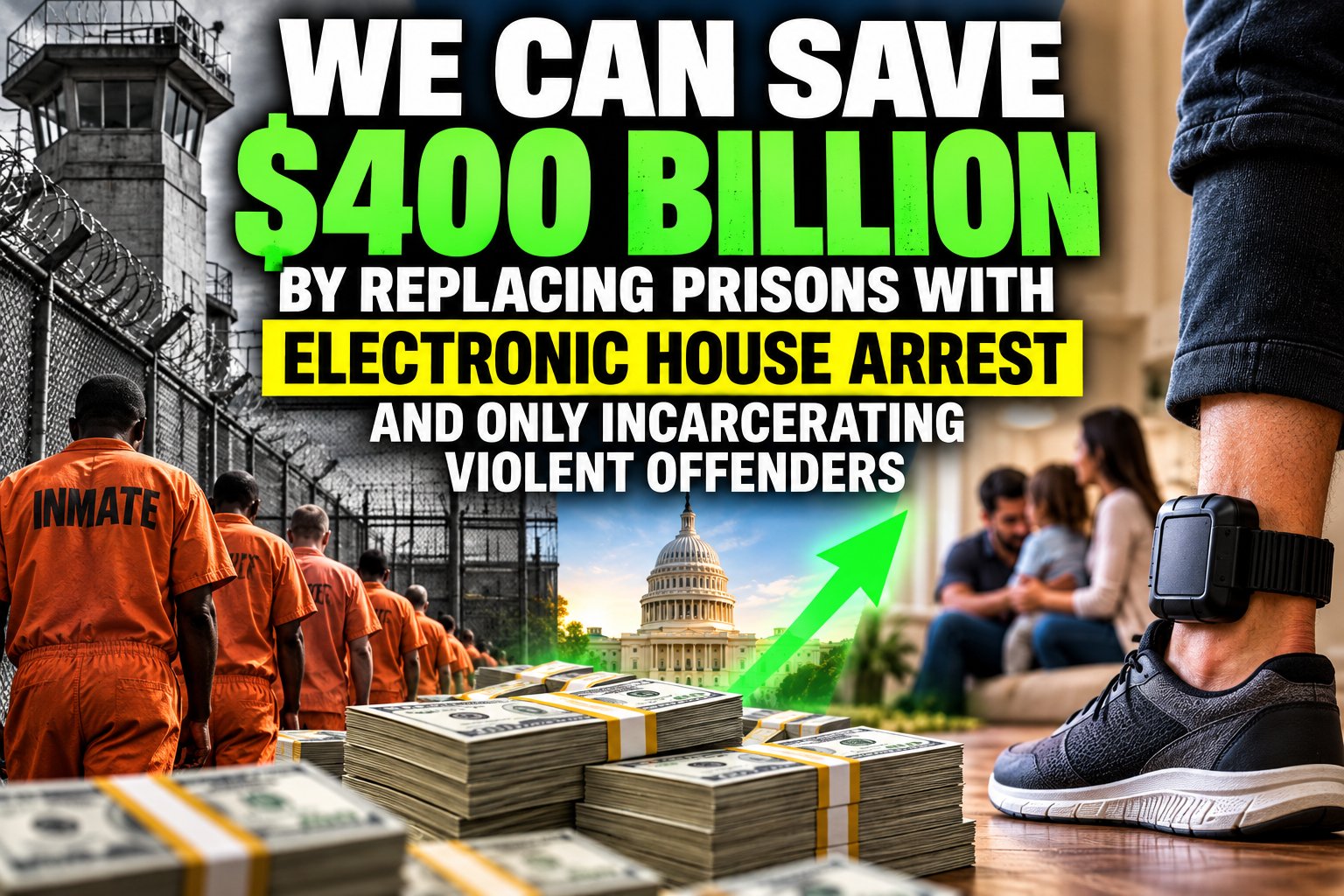
The technological foundation for a different correctional model is not hypothetical. GPS enabled ankle monitors, radio frequency home monitoring, electronic check ins, and location based restrictions are already used throughout the United States. These systems can help supervising authorities determine whether someone remains within an approved area, leaves home during restricted hours, or enters a prohibited location.
A person convicted of a qualifying nonviolent offense could, for example, be ordered to remain at a verified residence except for approved activities such as employment, education, medical appointments, counseling, court appearances, and family responsibilities. Electronic monitoring could record compliance with the geographic restrictions, while probation officers and treatment providers supervise other aspects of the sentence.
Modern geofencing could establish exclusion zones around specific locations when justified by the offense and an individualized risk assessment. Someone subject to a protective order might be prohibited from approaching a victim’s residence or workplace. Another person might face restrictions involving a particular business or location connected to the offense. Such conditions would require legal authorization and careful tailoring rather than indiscriminate surveillance.
Importantly, a location alert is not a physical barrier. An ankle monitor cannot prevent a person from entering a school, approaching a victim, committing an assault, or removing the device. Its value lies in supervision, documentation, and potentially faster intervention not guaranteed prevention.
There is research supporting carefully selected applications. A Florida study summarized by the National Institute of Justice in 2011 found that electronic monitoring was associated with an approximately 31% reduction in the risk of failure under community supervision compared with other supervision arrangements. The study found that GPS monitoring generally had a stronger association with reduced supervision failure than radio-frequency systems, although the effects differed across offender categories.
A 2020 systematic review examining 34 studies reached a more qualified conclusion. Electronic monitoring produced favorable overall findings in some analyses, including comparisons with imprisonment, but results were inconsistent across research designs and populations. The researchers also found that electronic monitoring was generally less expensive than prison but more expensive than ordinary probation or parole.
These findings are encouraging without proving that electronic monitoring is a universal replacement for incarceration. They suggest that the technology can play a useful role when the alternative is imprisonment, the population is appropriately selected, and supervision is paired with meaningful support.
What a Modern Alternative to Prison Could Look Like
A redesigned correctional system could use a graduated model of supervision in which restrictions reflect an individual’s demonstrated risk, offense history, behavior, and progress toward rehabilitation. Rather than treating all nonviolent convictions as equivalent, courts would distinguish between individuals who can safely remain in the community with minimal supervision and those who require more intensive controls.
A proposed four phase rehabilitation system
Phase 1: Structured home confinement
Strict curfews or home detention where warranted, with approved movement for work, medical care, education, and treatment.
Phase 2: Supervised community reintegration
Expanded movement privileges, scheduled check-ins, employment requirements where appropriate, and continued counseling or restitution.
Phase 3: Reduced electronic supervision
Removal of continuous tracking for individuals demonstrating compliance, replaced by proportionate probation conditions.
Phase 4: Completion and restoration
Termination of supervision upon successful completion, with access to reintegration services and applicable record relief processes.
Illustrative policy proposal, not an existing nationwide sentencing program. Movement between phases would require appropriate judicial or supervisory authorization.
Under this approach, rehabilitation would become a measurable component of punishment rather than an optional service offered within a correctional institution. Courts could require substance use treatment, mental health counseling, educational programs, vocational training, restitution payments, or community service when those conditions are legally appropriate and connected to the individual’s needs.
Employment would be particularly important. An incarcerated person generally has limited opportunities to earn market wages, contribute financially to a household, or compensate victims. A person under community supervision may be able to do all three, although restrictions must be designed around actual work schedules and transportation needs.
The model would also preserve the possibility of escalating consequences. New criminal conduct, credible threats, deliberate tampering, or serious repeated violations could trigger reassessment and, when legally justified, incarceration. Conversely, successful compliance could result in progressively fewer restrictions. The objective would be to replace unnecessary confinement with a system that preserves public safety while providing a realistic path back to ordinary life.
The Private Prison Industry Adds Another Layer to the Debate
The economics of incarceration become more complicated when government agencies contract with private corporations to operate detention facilities. Companies such as CoreCivic and The GEO Group receive substantial revenue from correctional and immigration detention contracts, making the continued demand for detention capacity an important component of their businesses.
According to the Prison Policy Initiative’s 2026 analysis of incarceration spending, private prison and detention companies generated an estimated $5.5 billion in revenue during 2025. Approximately $3.1 billion was attributed to the criminal legal system and $2.4 billion to immigration detention. The figures are estimates, but they demonstrate the considerable financial scale of the industry.
Private prisons, however, are not responsible for most American incarceration. Fewer than one in ten incarcerated individuals are held in privately operated prisons and jails. The overwhelming majority remain in public facilities, meaning eliminating private prisons alone would not resolve the broader problems associated with mass incarceration.
The concern is instead about incentives and accountability. When a corporation earns revenue from operating detention facilities, its commercial interests may not always align with policies designed to reduce incarceration. Critics have long questioned whether private prison contracting creates incentives to preserve detention capacity, while supporters argue that private operators can provide flexibility and help governments manage correctional populations.
There is also a risk that electronic monitoring could reproduce similar financial incentives. Private companies already provide surveillance equipment and supervision services, creating the possibility that an expanded monitoring system could become another lucrative correctional industry. Without careful oversight, policymakers could simply replace one set of contractors with another while increasing the number of people subjected to government surveillance.
A genuine alternative to mass incarceration would therefore need to measure success by reduced reoffending, lower correctional costs, improved rehabilitation, and fewer people under unnecessary supervision not by the number of ankle monitors deployed.
The Recidivism Problem: What Happens After Prison?
The strongest argument for examining alternatives to incarceration may be found in what happens after people leave prison. A Bureau of Justice Statistics study following prisoners released in 34 states in 2012 found that approximately 71% were arrested at least once within five years. Among those released in the 21 states with the necessary return to prison data, approximately 46% returned to prison within that period because of a new sentence or a probation or parole violation.
FIVE-YEAR RECIDIVISM FINDINGS
71%
Arrested within five years, 34 state release cohort
46%
Returned to prison within five years, 21 state subset
Source: Bureau of Justice Statistics, 2012 release cohort followed through 2017. These measures use different state samples and are not current year rates.
Those statistics require careful interpretation. An arrest does not establish guilt, a return to prison does not always involve a new crime, and the study does not demonstrate that incarceration caused subsequent offending. Nevertheless, the findings reveal the substantial difficulties many people experience after returning to society.
The National Institute of Justice has also examined whether the severity of criminal punishment meaningfully deters future offending. Its research summary emphasizes that the perceived certainty of apprehension generally has a stronger deterrent effect than increasing the severity of punishment. Longer prison sentences do not necessarily produce correspondingly greater deterrence, particularly when individuals have limited knowledge of the penalties attached to specific offenses.
This distinction matters because an effective correctional system should be judged by more than its ability to punish past misconduct. It should also be evaluated by whether it prevents future harm. If a less restrictive sanction can deliver comparable public safety outcomes while preserving employment, family relationships, and access to treatment, the justification for imposing incarceration becomes less straightforward.
The Problem With Replacing Prison Cells With Digital Cages
Electronic monitoring is not without serious disadvantages. Civil liberties advocates warn that expanding GPS supervision could create a system of continuous surveillance that reaches far beyond the prison population. Some critics describe this as electronic incarceration, arguing that restrictions imposed through ankle monitors can be highly disruptive even when individuals remain physically outside correctional institutions.
The Prison Policy Initiative’s 2026 report identifies several recurring concerns, including restrictive movement permissions, equipment problems, financial burdens, and the possibility of imprisonment for technical violations rather than new criminal conduct. The organization estimates that approximately 125,000 incarcerated individuals were being held for noncriminal technical violations of probation or parole conditions.
This exposes an important flaw in the idea of placing every offender under electronic monitoring. Some people who currently receive ordinary probation, fines, community service, or diversion programs do not require continuous GPS surveillance. Subjecting them to intensive monitoring would expand government control rather than reduce incarceration.
There are also constitutional and practical considerations. Electronic monitoring can reveal sensitive details about a person’s movements, relationships, medical appointments, and daily activities. Devices may generate false alerts because of signal interruptions or equipment failures. Individuals without stable housing may struggle to comply with home-confinement conditions, while those working irregular schedules may face unnecessary restrictions.
A responsible system would therefore require individualized judicial review, clear eligibility standards, limits on data collection and retention, independent investigation of disputed violations, and meaningful opportunities to challenge restrictions. Monitoring fees should not become a mechanism for punishing poverty, and technical malfunctions should not automatically result in incarceration.
Most importantly, electronic monitoring should replace incarceration only when that substitution is justified. It should not become a universal requirement imposed on everyone who encounters the criminal justice system.
Public Safety Must Remain the Central Consideration
The distinction between violent and nonviolent offenses is important, but it is not always sufficient to determine whether someone can safely remain in the community. A person convicted of a nonviolent financial offense may present little immediate physical danger, while another individual with a conviction categorized as nonviolent may have a history of threats, stalking, coercion, or repeated violations of protective orders.
Likewise, offense categories alone do not establish a person’s current risk. Individuals convicted of serious offenses can have different histories, circumstances, and rehabilitation prospects. Courts would need to consider the underlying conduct, prior criminal behavior, threats to identifiable victims, demonstrated compliance, and appropriately validated risk assessments rather than relying exclusively on the legal classification of a conviction.
Victims must also remain central to these decisions. Someone subjected to domestic abuse, stalking, fraud, or other harmful conduct may have legitimate concerns about an offender remaining nearby. Electronic monitoring can support geographic restrictions and provide records of certain violations, but it cannot guarantee protection or substitute for timely law enforcement intervention.
The goal should not be to release every person convicted of a nonviolent offense regardless of circumstances. Nor should technology be used to justify unnecessary surveillance of people who could safely complete less restrictive sentences.
The relevant question is whether a particular individual requires physical confinement to protect the public, ensure compliance with the law, or satisfy other legitimate sentencing objectives. Where incarceration is not necessary, courts should have credible, adequately funded alternatives available.
Florida Already Has Experience With Electronic Supervision
Florida offers an important example because electronic monitoring has been used within its correctional supervision system for years. The state’s experience was the subject of the National Institute of Justice research finding reduced supervision failure among monitored individuals compared with other community supervision arrangements.
That research provides a foundation for further evaluation, but it does not establish that every eligible prisoner in Florida could be transferred safely to home confinement. Expanding such a program would require careful analysis of offender eligibility, staffing, monitoring capacity, victim protections, housing availability, treatment resources, and the cost of maintaining both prison and community supervision infrastructure.
Florida’s prison system also serves a diverse population, including individuals convicted of serious violent offenses and people serving lengthy sentences. Any meaningful reduction in incarceration would require examining sentencing laws, admission practices, sentence lengths, and the circumstances under which individuals are returned to prison for supervision violations.
The opportunity for Florida and other states is to evaluate whether more people could complete sentences safely through structured community programs without compromising accountability. Such reforms could be tested through carefully designed pilot programs, with independent evaluations comparing public safety outcomes, costs, employment, housing stability, treatment participation, and subsequent convictions.
A Different Definition of Justice
The debate over incarceration ultimately comes down to what society expects punishment to accomplish. If the primary objective is to impose suffering, prison provides a direct and highly visible form of punishment. If the objectives also include preventing future crime, compensating victims, preserving families, and helping people return to productive lives, the appropriate response may be considerably more complicated.
Modern technology has created possibilities that previous generations of lawmakers could scarcely have imagined. Governments can establish location restrictions, document compliance, coordinate supervision, and provide remote access to some treatment and educational services. Those capabilities deserve serious consideration within a criminal justice system that continues to rely heavily on physical confinement.
But technology alone cannot solve the underlying problems of crime, poverty, addiction, mental illness, or social instability. An ankle monitor does not provide a stable home, teach employable skills, repair family relationships, or guarantee that someone will stop committing crimes. Those outcomes require human services, institutional accountability, and sustained investment.
The future of criminal justice may therefore depend less on replacing every prison cell with a GPS device than on abandoning the assumption that incarceration is the appropriate response whenever society wants to demonstrate accountability.
For people who present a serious danger, physical confinement will remain an important tool. For others, appropriately designed community supervision, restitution, treatment, and rehabilitation may offer a more proportionate response.
And beyond the human consequences, the financial implications deserve national attention. A correctional system consuming more than $115 billion annually in public funds should face rigorous scrutiny over whether its expenditures produce meaningful public safety benefits. Every unnecessary prison bed represents money that could potentially be redirected toward prevention, rehabilitation, victims, or other public priorities. Any savings should be demonstrated through actual budget reductions rather than optimistic projections.
The fundamental question is not whether society should stop holding people accountable for their actions. It is whether accountability must always require removing people from society—and whether a justice system equipped with 21st-century technology can develop better ways to protect the public without unnecessarily relying on prison walls.
If technology can help governments supervise people safely, keep families together, preserve employment, require treatment, compensate victims, and reduce unnecessary public spending, then the possibility of a fundamentally different correctional system deserves more than a passing conversation. It deserves serious research, transparent pilot programs, independent evaluation, and a national debate about what modern justice should actually look like.




















































Want to join the conversation?
Create an account or sign in to share your thoughts, vote,
and reply to other readers.
Showing 0 of 0 comments
Don't have an account?
Already have an account?