
ICE Agents Shoot Father Seven Times at His Car With 5 Year Old Son Inside, Sparking Outrage and Protests Across New York City
Federal immigration officers opened fire during an attempted arrest in a crowded New York neighborhood, wounding a 28 year old father while his young son sat in the backseat. The Trump administration is defending the shooting, but witnesses dispute its account, and city leaders are demanding answers about the use of deadly force.
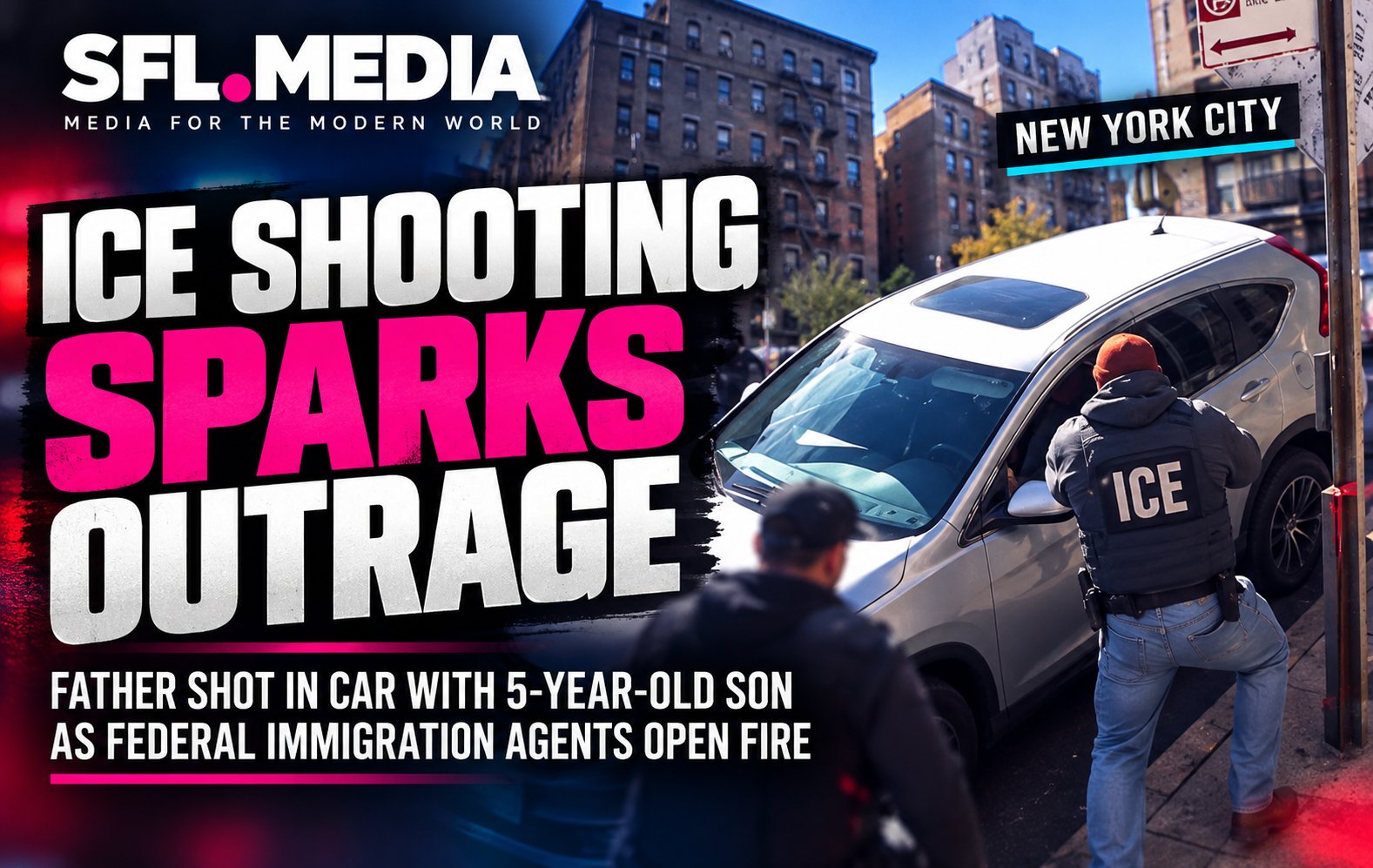
NEW YORK CITY — A federal immigration operation erupted into gunfire on a busy New York City street Thursday afternoon when an Immigration and Customs Enforcement officer fired at least seven rounds at a vehicle occupied by a 28 year old father and his 5 year old son, striking the man in the neck and triggering a wave of protests, political condemnation, and renewed scrutiny of the Trump administration’s increasingly aggressive immigration enforcement tactics.
The shooting occurred shortly after 4 p.m. on October 8 in the Marble Hill neighborhood, a geographically unusual section of Manhattan attached to the Bronx mainland. The wounded man, identified as Oscar Belgal, a Dominican national, was attempting to park his vehicle when plainclothes federal immigration officers approached him with weapons drawn. His young son was seated in the back of the car as the confrontation escalated into gunfire.
Belgal survived the shooting and was transported to New York Presbyterian Allen Hospital. His son was not physically injured, but witnesses and local officials described the incident as deeply traumatic for the child, who had been sitting just feet away when federal agents opened fire on his father.
The Department of Homeland Security has defended the shooting, claiming Belgal attempted to flee and endangered officers by driving toward them and striking federal vehicles. However, witnesses have challenged portions of that account, raising questions about whether the agents clearly identified themselves, whether Belgal understood who was approaching his vehicle, and whether deadly force was necessary.
The incident has also exposed a particularly troubling admission from federal officials: Homeland Security Secretary Markwayne Mullin acknowledged that the agents did not know a 5 year old child was inside the vehicle when the shots were fired. That admission has intensified questions about how officers assessed the potential danger to bystanders before discharging their weapons on a populated city street.
Seven Gunshots in a Neighborhood Filled With Families
According to New York Police Commissioner Jessica Tisch, the confrontation began when federal immigration officers approached Belgal’s vehicle near West 225th Street and Marble Hill Avenue. The officers were operating in plain clothes, and witnesses described some wearing masks and clothing resembling construction safety equipment.
As Belgal began moving his vehicle forward, at least one federal officer discharged a firearm seven times. One of the rounds struck Belgal in the neck, just below his left ear. The gunfire sent nearby pedestrians scrambling for safety in a neighborhood filled with apartment buildings, small businesses, families, and children returning home from school.
The circumstances immediately raised questions about the officers’ tactical decisions. Approaching an occupied vehicle with drawn firearms can create an extremely volatile encounter, particularly when the occupants may not immediately recognize the individuals approaching them as law enforcement officers. In this case, the presence of a small child in the backseat added another potentially catastrophic dimension to the confrontation.
Witnesses interviewed by news organizations disputed the federal government’s description of Belgal as an immediate threat. Some reported that the agents’ identities were not initially apparent, while others questioned whether the vehicle had been deliberately driven toward officers. Those accounts have not conclusively established the sequence of events, and investigators will need to examine available video, forensic evidence, and witness testimony to determine what happened in the seconds before the shooting.
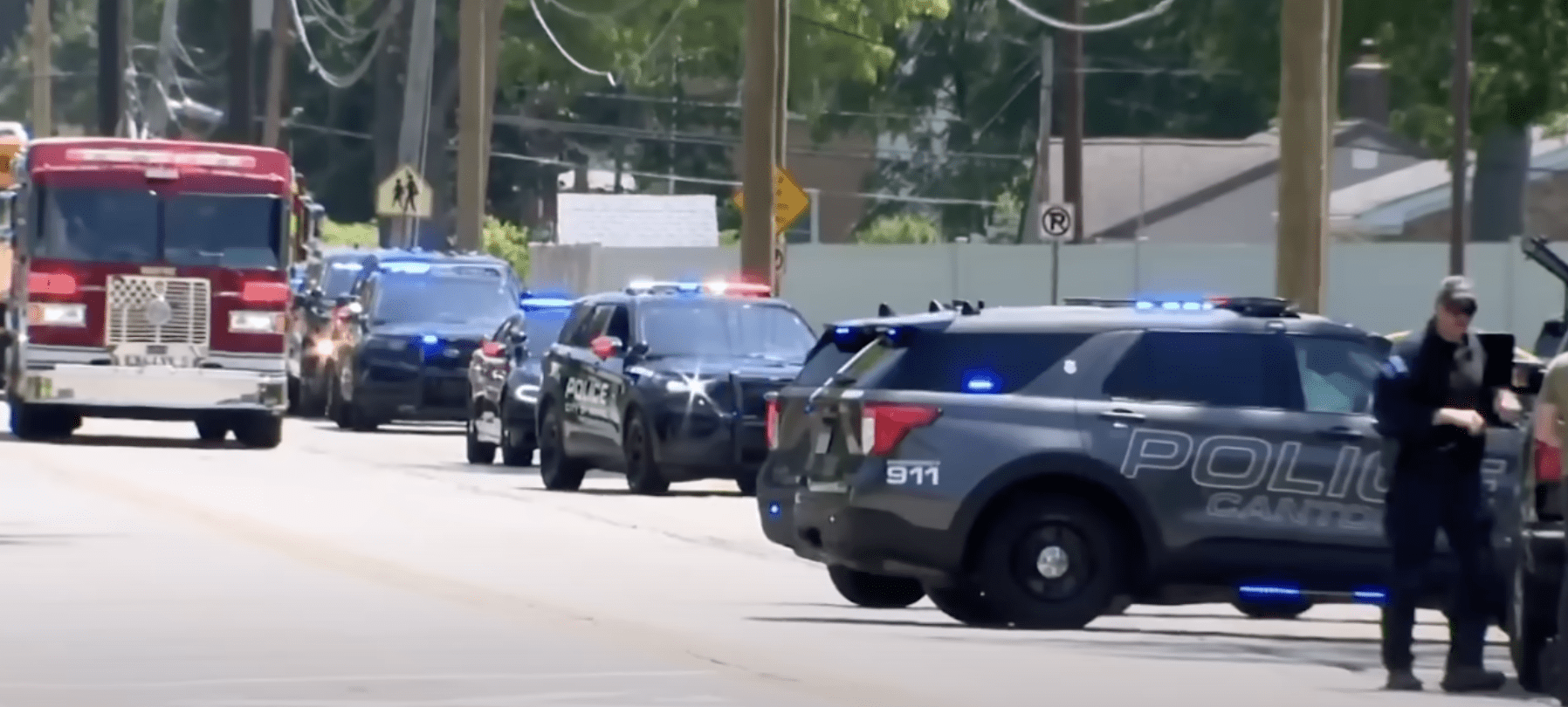
New York City police officers arrived after the federal agents opened fire. The NYPD was not responsible for the shooting, although its officers subsequently secured the scene, assisted with the response, and became involved in crowd control operations during protests later that evening.
Federal Officials Say the Driver Threatened Agents, but Witnesses Dispute the Account
Homeland Security Secretary Markwayne Mullin and senior ICE official Marcos Charles defended the operation Friday, arguing that the agents encountered a dangerous situation when Belgal allegedly refused commands to exit his vehicle and accelerated toward officers. Charles claimed the vehicle struck two ICE vehicles before the shooting, while Mullin argued that Belgal’s actions endangered both federal personnel and his own child.
The federal government has also emphasized Belgal’s criminal history. According to Reuters, Belgal pleaded guilty to fourth degree grand larceny in 2025 and received five years of probation. He also faces a pending charge involving the alleged sale of a controlled substance, to which he has pleaded not guilty. Federal officials have additionally alleged gang associations, although those allegations should not be treated as established facts without supporting evidence.
Those details may explain why Belgal was the subject of an immigration enforcement operation, but they do not independently establish whether the officer’s decision to fire was legally justified. Under constitutional standards governing law enforcement, the use of deadly force must be evaluated according to the immediate threat reasonably perceived by officers at the time, rather than solely on a suspect’s immigration status or previous criminal history.
Reuters reported that it could not independently verify the federal government’s account of the vehicle striking ICE cars. Federal officials have promised to release body camera footage from the agents involved, which could provide critical evidence about the moments preceding the gunfire.
The Child in the Backseat and the Questions Federal Officials Cannot Yet Answer
Among the most disturbing aspects of the shooting is the presence of Belgal’s 5 year old son, who was sitting in the backseat when the federal officer fired seven rounds at the vehicle. Although the child escaped physical injury, local officials have expressed concern about the psychological consequences of witnessing his father being shot at close range.
The Department of Homeland Security’s acknowledgment that agents were unaware of the child’s presence has become a central issue in the controversy. It raises questions about what the officers could see through the vehicle’s windows, whether they had conducted sufficient surveillance before approaching, and whether the urgency of the attempted arrest justified the risks created by firing into an occupied car.
The distinction matters because law enforcement officers are expected to account for the danger their actions may pose to innocent bystanders. A firearm discharged at a moving vehicle can endanger passengers, pedestrians, other motorists, and nearby residents, even when officers believe the driver presents a legitimate threat.
The NYPD subsequently confirmed that the child had been located with a family member and was physically unharmed. The boy’s longer-term psychological condition has not been independently established, although congressional candidate Darializa Avila Chevalier described him as traumatized by the encounter.
New York Mayor Confronts Trump Administration as ICE Takes Wounded Man Into Custody
New York City Mayor Zohran Mamdani condemned the shooting and personally intervened with the Trump administration in an unsuccessful effort to secure Belgal’s release. Mamdani said he spoke with President Donald Trump and Homeland Security Secretary Mullin, arguing that federal immigration operations were creating unnecessary danger for New Yorkers.
The mayor demanded that ICE suspend enforcement operations in the city and accused the agency of undermining public safety. The confrontation represents a significant escalation in the continuing dispute between New York’s municipal government and federal authorities over immigration enforcement, particularly in a city whose sanctuary policies restrict certain forms of cooperation between local agencies and federal immigration officers.
Despite the mayor’s intervention, federal agents removed Belgal from the hospital and transferred him into federal custody. Reports Friday indicated that his attorneys were seeking emergency judicial intervention to challenge his detention and prevent his removal from the United States while the legal proceedings continued. A federal judge issued temporary protection against deportation as his lawyers pursued a habeas corpus petition.
The transfer also raised concerns among legal advocates about Belgal’s ability to receive continuing medical treatment, communicate with attorneys, and participate in legal proceedings while recovering from a gunshot wound.
Protests Erupt as Congressional Candidate Is Knocked to the Ground by Police
Within hours of the shooting, hundreds of demonstrators gathered in Marble Hill and outside New York Presbyterian Allen Hospital, demanding accountability from federal immigration officials and calling for an end to ICE operations in New York City.
The demonstrations grew increasingly confrontational as protesters encountered officers from the NYPD’s Strategic Response Group, a specialized unit frequently deployed during large demonstrations and public order emergencies. Videos and eyewitness accounts documented clashes involving police barricades, officers pushing into crowds, and demonstrators confronting law enforcement personnel. Four people were arrested during the protests.
Among those caught in the confrontation was Darializa Avila Chevalier, the Democratic congressional nominee for New York’s 13th District. Avila Chevalier said she was attempting to intervene between protesters and police when an officer shoved her to the ground, leaving her with pain in her arm and lower back.
In subsequent interviews, Avila Chevalier criticized the NYPD’s handling of the demonstrations and called for the disbandment of the Strategic Response Group. She also demanded the resignation of Police Commissioner Jessica Tisch, arguing that the department had failed to adequately challenge federal immigration tactics and had instead emphasized Belgal’s criminal history.
New York City Council member Carmen De La Rosa, who represents the surrounding communities, similarly criticized the police response and questioned whether NYPD officers were providing assistance to federal immigration personnel beyond what the city’s sanctuary policies permit. Those allegations remain disputed, and the precise extent of cooperation between city and federal officers requires further examination.
New York Police Release Body Camera Footage Showing the Aftermath
The NYPD released approximately three minutes of body worn camera footage Friday showing the immediate aftermath of the shooting. The recording depicts Belgal wounded and handcuffed near his vehicle, with blood visible on the pavement and several plainclothes federal agents standing nearby.
One of the agents is seen holding a rifle while wearing a fluorescent reflective vest. The video also captures an increasingly agitated crowd confronting the federal officers as city police move to assist the wounded man. NYPD officers eventually carry Belgal into a police vehicle and transport him for emergency medical treatment.
The footage is significant because it documents the condition of the wounded man, the presence of armed federal personnel, and the role local officers played after the shooting. However, the released recording does not establish what happened immediately before the federal agent opened fire, making the promised federal body-camera footage particularly important to the investigation.
The Shooting Adds to a Growing Number of Armed Immigration Enforcement Encounters
The Marble Hill shooting is part of a broader national controversy surrounding the use of force by federal immigration officers during the Trump administration’s expanded deportation campaign.
According to a Reuters review, federal immigration agents had shot at least 21 people nationwide before the Marble Hill incident since Trump returned to office in January 2025, killing seven. The number has generated increasing scrutiny of enforcement operations involving heavily armed agents, unmarked vehicles, and confrontations in residential communities.
The administration maintains that aggressive immigration enforcement is necessary to apprehend individuals who have violated immigration laws and, in some cases, committed serious crimes. Federal officials also argue that officers face substantial risks when suspects attempt to evade arrest or use vehicles in ways that could endanger personnel.
Civil rights advocates and immigration attorneys counter that enforcement priorities do not exempt federal officers from constitutional restrictions on the use of force. They have called for greater transparency, independent investigations, and stronger oversight when immigration operations result in serious injuries or deaths. The Marble Hill incident brings those competing arguments into particularly sharp focus because the shooting occurred in a populated neighborhood, involved plainclothes agents, and endangered a young child who was not the target of the operation.
A Federal Investigation Must Determine Whether Seven Shots Were Justified
The central unresolved question is whether the federal officer who opened fire reasonably believed deadly force was necessary to prevent an imminent threat of death or serious bodily injury. That determination will depend on evidence that has not yet been fully released, including federal body-camera recordings, vehicle damage, witness statements, forensic findings, and the precise positions of the agents when Belgal’s vehicle began moving.
Investigators must also determine whether the agents properly identified themselves, whether Belgal had an opportunity to comply with their instructions, and whether alternative tactics could have reduced the danger to the vehicle’s occupants and surrounding public.
For Belgal’s family, the consequences are already substantial. A father was shot and hospitalized, a 5-year-old boy witnessed a violent encounter involving his parent, and federal authorities subsequently took the wounded man into immigration custody. For New York officials, the shooting has intensified an already bitter conflict over the limits of federal enforcement power inside the city.
Whatever investigators ultimately determine about Belgal’s actions, his immigration status and criminal record do not eliminate the need for a full accounting of the officer’s decision to use deadly force. The evidence must establish whether the threat justified the response, particularly when seven shots were fired at a vehicle containing a child. Until that evidence is publicly examined, the most consequential questions surrounding the Marble Hill shooting remain unanswered.










































Want to join the conversation?
Create an account or sign in to share your thoughts, vote,
and reply to other readers.
Showing 0 of 0 comments
Don't have an account?
Already have an account?