
Trump Goes Off the Rails Fingering Everybody Else But Himself (and the Iran War) for the “Blue Tsunami”
The Republican Party just took a political beating, and Donald Trump’s response has been remarkably predictable: blame everybody except the man sitting in the Oval Office. From Fox News and Tucker Carlson to Greg Abbott and Republican candidates, the finger pointing has begun. But the real problem may be much closer to home.
If there is one thing Donald Trump has perfected over the years, it is the art of never accepting responsibility. Businesses fail, somebody else is responsible. His administration makes a controversial decision, somebody else is responsible. His political allies turn against him, somebody else must have betrayed the movement. And now, following the Republican Party’s disastrous November 3rd, 2026, midterm elections, the blame game is in full swing.
Democrats captured control of both the House and Senate, delivering a major political rebuke to Republicans and raising serious questions about Trump’s influence over the party he has spent more than a decade reshaping. Rather than treating the results as a warning that voters may be growing tired of his leadership, Trump has been busy identifying people he believes are responsible for the Republican collapse. Apparently, when you’re Donald Trump, even an election loss involving your own political movement is somebody else’s fault.
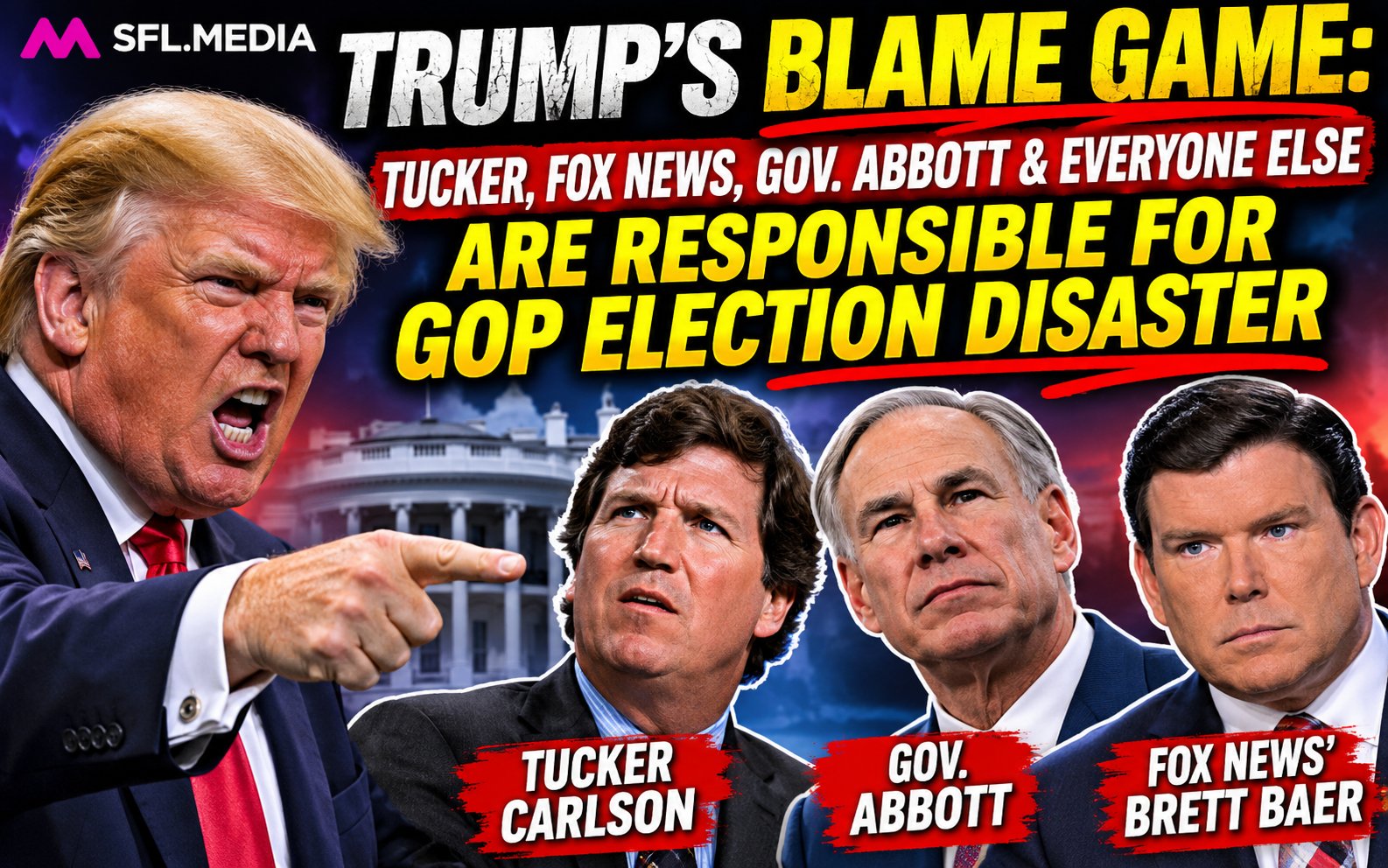
Fox News: From Favorite Network to Election Scapegoat
One of Trump’s most entertaining targets was Fox News, the network that has spent years providing him with a friendly platform and an enormous conservative audience. As election results rolled in Tuesday night, Trump took to Truth Social and accused Fox News of contributing to Republican losses by repeatedly featuring Democratic commentators and political opposition.
He specifically complained about the network’s coverage, including its decision to feature Democratic commentator Jessica Tarlov. He also attacked Fox’s polling operation, criticizing its numbers and suggesting the network had turned against him. In a particularly bizarre moment, Trump subsequently called into Fox News’ election coverage and criticized the very network he had just blamed for his party’s performance. The irony was difficult to miss. Fox News has been one of Trump’s most important media allies. Yet apparently even that relationship has an expiration date when election results don’t go his way.
Greg Abbott: Apparently Being a RINO Is Now a Losing Strategy
Trump also turned his attention toward Texas Governor Greg Abbott, who suffered an election defeat after previously receiving Trump’s endorsement. Rather than examining whether his own political brand had become a liability, Trump accused Abbott of abandoning conservative principles.
In a Truth Social post, Trump suggested Abbott had become a RINO (Republican in Name Only), during the final six months of his political life. The implication was that Abbott lost because he wasn’t sufficiently loyal to the MAGA movement.
There is something particularly revealing about that argument. When a Republican wins, Trump’s endorsement is frequently presented as proof of his political influence. When that same Republican loses, the candidate apparently wasn’t MAGA enough. It’s a remarkably convenient arrangement.
Tucker Carlson and the MAGA Media Civil War
Then there is Tucker Carlson, one of the most recognizable personalities to emerge from the conservative media world. Carlson has increasingly found himself at odds with elements of the Trump movement, particularly over foreign policy, America’s involvement in international conflicts and the direction of the Republican Party. Following the election, conservative media personalities began pointing fingers at Carlson and other influential podcasters, accusing them of weakening the MAGA movement.
One America News host Dan Ball specifically blamed Tucker Carlson, Megyn Kelly and Joe Rogan for dividing the conservative coalition. He argued that their criticism of Trump and Republican leadership contributed to the party’s losses. Other conservative voices, including Babylon Bee’s Joel Berry, attacked podcasters Tucker Carlson and Candace Owens for allegedly demoralizing Republican voters. So apparently reporting the truth, even if it is shitty news, is demoralizing. How about the Iran War is demoralizing?!
The argument is that conservative commentators who questioned Trump’s leadership helped discourage MAGA supporters from voting. But there is an obvious problem with that explanation: If voters are abandoning a political movement because prominent commentators are criticizing it, perhaps the movement should consider why those criticisms are resonating. Blaming the messengers is considerably easier than addressing the message.
The Rest of the Republican Blame Game
Trump wasn’t the only one looking for somewhere to direct the political fallout. His allies and conservative media personalities quickly joined the finger-pointing. Among the additional targets and explanations:
JD Vance: The vice president acknowledged that the Iran war was a major reason Republicans lost.
Mike Johnson: Republican House leadership faced criticism for failing to turn Trump’s executive agenda into lasting legislation.
John Thune: The Senate Republican leader was criticized for failing to deliver on Trump’s legislative priorities.
Megyn Kelly: Conservative commentators accused her of helping divide the MAGA coalition.
Joe Rogan: His criticism of certain Republican positions also made him a target.
Candace Owens: She was accused of contributing to disillusionment among conservative voters.
The media: Trump’s White House allies suggested voters had been influenced by negative media coverage.
Republican candidates: Trump repeatedly questioned whether his endorsed candidates were capable of inspiring the MAGA base.
And then there were the economic explanations. Trump pointed to high oil and gasoline prices, acknowledging that voters were unhappy about the financial consequences of the Iran war. (NO SHIT, ASSHOLE!)
There is a difference worth noting too. Not every person on this list was directly blamed by Trump himself. Some were targeted by his political allies and conservative commentators in the broader post-election blame game. But the common theme is unmistakable. Almost everybody is responsible except the people who actually control the Republican Party.
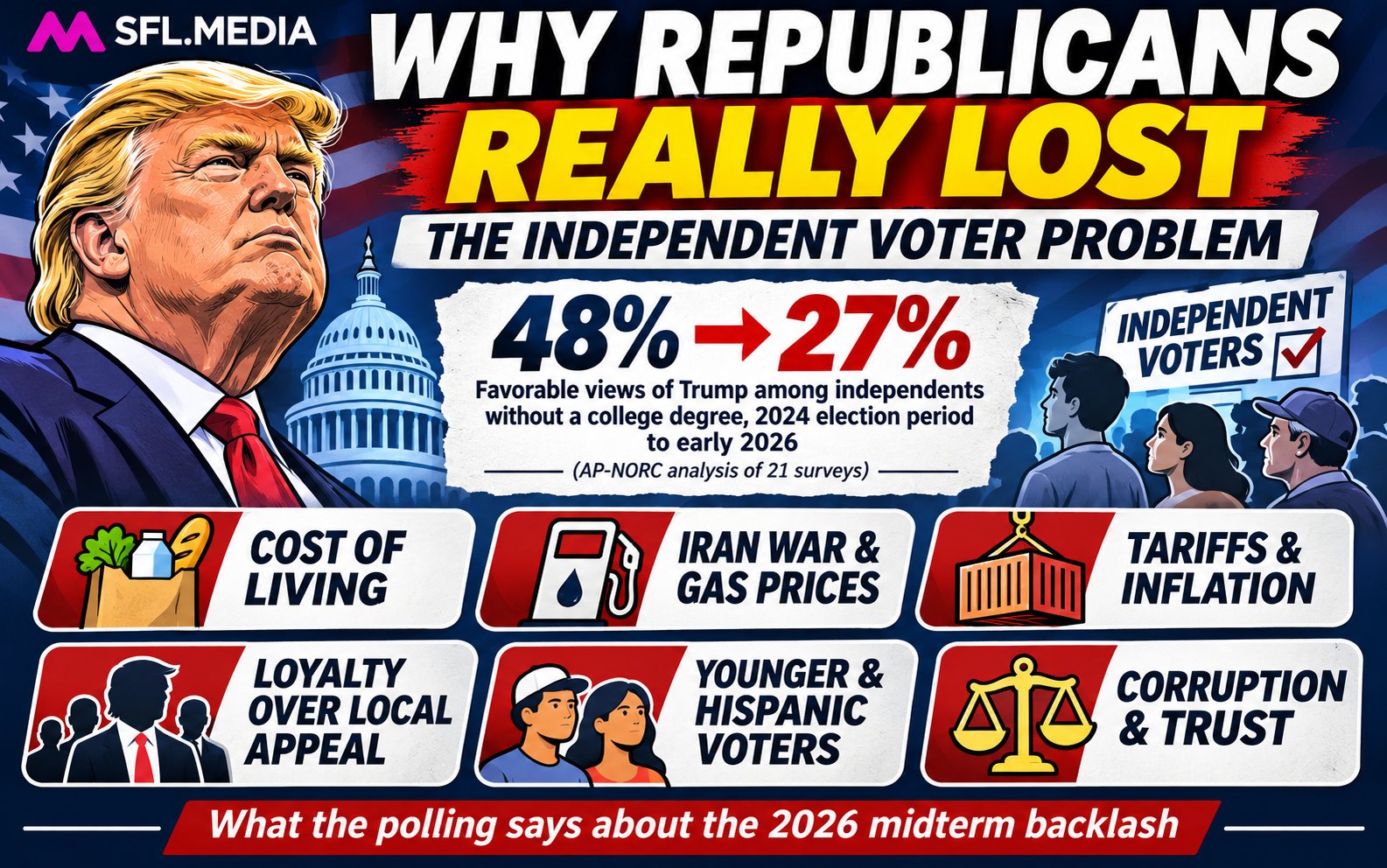
Why Republicans Really Lost: The Independent Voter Problem
Here’s where the conversation needs to move beyond Trump’s social media posts. Republicans didn’t simply lose because Fox News interviewed a Democrat, Tucker Carlson criticized the administration or Greg Abbott supposedly wasn’t conservative enough. The Republican Party lost because a significant portion of the electorate was no longer buying what it was selling. And one of the biggest problems was the collapse of support among independent voters.
Independents are incredibly important in American elections because they can determine the outcome in competitive districts and statewide races. They are also less likely to remain loyal to a political party simply because of its identity. Trump made significant inroads with independent voters in 2024. That support helped him return to the White House. But the AP-NORC polling conducted during his second term showed a substantial erosion of that support. Among independents without college degrees, favorable views of Trump fell from approximately 48% around the 2024 election to roughly 25% by the spring of 2026.
That is not a minor warning sign. The AP’s November 2026 Voter Poll also found that voters frustrated with Trump’s priorities and economic policies overwhelmingly favored Democratic congressional candidates. In other words, the voters who helped put Trump back in office were not necessarily interested in giving Republicans another blank check.
And that brings us to the biggest reasons for the Republican losses.
1. The Economy: Voters Care About Their Grocery Bills, Not Trump’s Victory Lap
Trump campaigned on making America affordable again. He repeatedly promised to bring down prices, improve the economy and make life easier for ordinary Americans. But voters are still dealing with expensive groceries, housing, healthcare, utilities and gasoline. According to the AP Voter Poll, approximately nine in ten voters considered the cost of living a major or crucial factor in their voting decisions.
About two thirds said Trump’s policies had made the economy worse. That is a devastating finding for a president whose political brand has long been built around his supposed business expertise. Trump can talk about stock market records, economic growth and his administration’s accomplishments all day. But when somebody is standing in a grocery store wondering why a relatively ordinary shopping trip costs so much, those talking points don’t necessarily translate into votes. Voters don’t pay their electric bills with presidential press releases.
2. The Iran War and Rising Gas Prices
Foreign policy also became a major problem. The administration’s decision to launch a war with Iran contributed to higher energy costs and created another source of frustration among voters who were already concerned about affordability. JD Vance acknowledged that the war was a major reason Republicans lost. Trump, meanwhile, defended his decisions and indicated he would have made the same choices again.
That may satisfy some of his most loyal supporters, but independent voters are not necessarily interested in being told that higher gasoline prices are simply the price of doing business. Americans have repeatedly demonstrated that they are reluctant to support prolonged foreign conflicts, particularly when those conflicts begin affecting their household finances. The America First message was supposed to put American interests first. For some voters, the Iran war raised questions about whether that promise was being honored.
3. Tariffs and the Cost of Everyday Life
Trump’s tariff policies also became a political liability. Tariffs are often presented as a way to protect American industries and encourage domestic manufacturing. But businesses importing goods can face higher costs, and those expenses can ultimately be passed along to consumers.
The AP Voter Poll found that roughly two-thirds of voters believed Trump’s policies had contributed to worsening inflation. The problem for Republicans was that voters were not necessarily interested in the theoretical long-term benefits of tariffs when they were experiencing higher prices in the present. Economic policy is complicated. Paying more for everyday products is not.
4. Trump Put Loyalty Ahead of Electability
Another major problem was Trump’s obsession with political loyalty. The president has spent years reshaping the Republican Party around personal allegiance to him and the MAGA movement. But winning a Republican primary and winning a general election are two very different things.
The AP’s election analysis found that Trump’s endorsed candidates faced serious concerns about their experience, character and excessive loyalty to the president. In Texas, Trump’s support for Ken Paxton over incumbent John Cornyn became a particularly controversial decision. Approximately two thirds of Texas Senate voters said Paxton lacked the character necessary to serve in the Senate.
In North Carolina, approximately six in ten voters considered Republican nominee Michael Whatley too supportive of Trump. That should tell Republican strategists something important. A candidate’s ability to win over Trump supporters does not automatically mean that candidate can win over everyone else. Republicans need candidates who can appeal to independent voters, suburban voters and people who are not particularly interested in the MAGA personality cult.
5. Younger Voters and Hispanic Voters Moved Away From Republicans
Republicans also struggled with demographic groups that had helped Trump make gains in 2024. The AP Voter Poll found that approximately seven in ten voters under 30 supported Democratic House candidates in 2026. That represented a substantial shift from the relatively competitive split among younger voters in the 2024 presidential election. Republicans also appeared to lose much of their previous momentum among Hispanic voters, particularly in Texas.
These are not insignificant developments. The Republican Party had spent years trying to expand its coalition. Trump’s 2024 victory suggested that the party was making progress with voters who had traditionally leaned Democratic. But political coalitions are not permanent. If voters believe their economic circumstances have deteriorated, or that the administration is focused on the wrong priorities, they can change their minds. And apparently, plenty of them did.
6. The Epstein Files, Corruption and the Appearance of Self Interest
Another issue that deserves attention is public confidence in government. The AP Voter Poll found that more than half of voters considered government corruption crucial to their congressional vote. Approximately two thirds said Trump did not have the right priorities. Questions surrounding Trump’s cryptocurrency ventures, business interests, family dealings and the proposed White House ballroom contributed to concerns about whether the administration was focused on ordinary Americans or its own interests.
The Epstein files and the administration’s handling of transparency surrounding the case also became part of the broader political debate. For voters who expected Washington to become less corrupt and more accountable, the perception that wealthy insiders continue to benefit from their proximity to political power was damaging. Whether voters agree on every allegation or controversy is beside the point. Public trust is a political asset, and Republicans had a serious problem with it.
So What Does This Mean for the Republican Party?
The biggest mistake Republicans can make right now is convincing themselves that the solution is to become even more MAGA. That might keep the most devoted supporters happy, but it does very little to address the concerns of independent voters who helped determine the election. Trump’s political brand has dominated the Republican Party for more than a decade. Candidates have been encouraged to embrace his endorsements, repeat his talking points and demonstrate their loyalty.
But there is a difference between building a political movement and building an election winning coalition. The 2026 results suggest that the Republican coalition has serious cracks. And Democrats should not necessarily celebrate too much, either. The AP found that only about half of voters viewed the Democratic Party favorably. Many people who voted Democratic were still unhappy with the party itself. In many cases, voters were looking for change rather than enthusiastically embracing the Democratic platform. That is an important distinction.
Trump Told Republicans to Pretend He Was on the Ballot
After the GOP lost, Trump said that they would have won if he actually was on ballots. (Wait, what?!??!) Is this guy for real? During the final days of the 2026 midterm campaign, Donald Trump repeatedly told Republican voters to pretend he was on the ballot because, in his words, his presence would bring out more voters. After Republicans suffered major defeats, Trump offered a familiar explanation: They lost because he wasn’t actually on the ballot. According to the president, if voters had been voting for him personally, Republicans would have won.
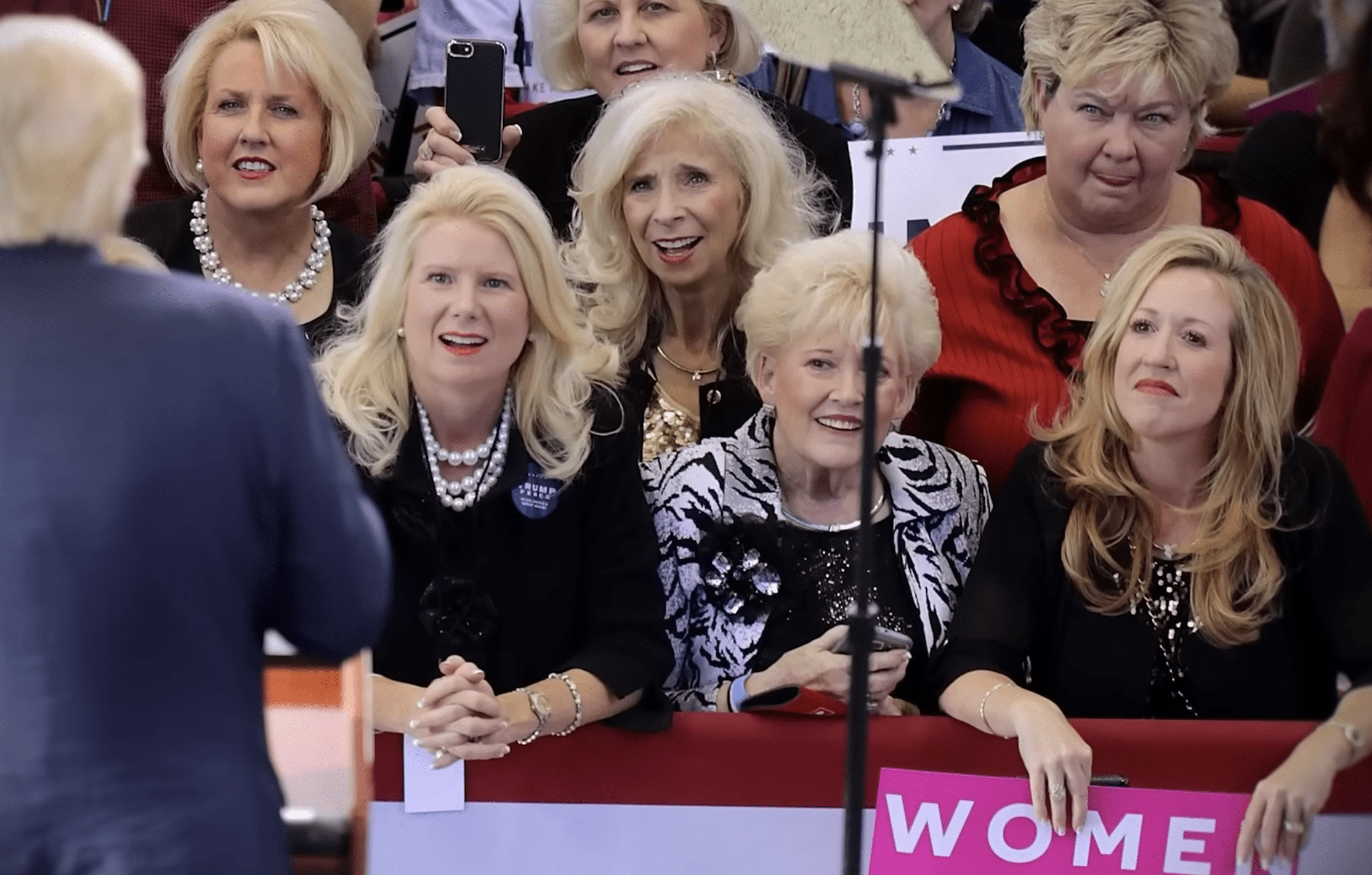
There is a fascinating contradiction in Donald Trump’s explanation for the Republican Party’s November 3rd election losses. For weeks, Trump traveled around the country holding rallies, urging supporters to get out and vote for Republican candidates. But he wasn’t simply asking them to support the Republican ticket. He wanted them to imagine something else entirely.
He wanted them to pretend they were voting for himself. At a November 1st rally in Dubuque, Iowa, Trump explained his theory to the crowd.
“When I’m on the ballot, we get 49.2% more people voting,” Trump told supporters. He then pointed out that he had won his previous three presidential elections and argued that Republican turnout naturally declined when he wasn’t personally running. Just pretend I’m on the ballot.”
“If I were on the ballot, we would have won,” Trump said. “You saw the people that were packed. Thousands and thousands of people at every rally. And if I was on the ballot, we would have won.”
He repeated the message at other campaign appearances, including an October 28th rally in Chillicothe, Ohio. The message was essentially that Republican candidates needed Trump supporters to turn out as if the president himself were running for office. And Trump was convinced that his political popularity could carry the entire Republican ticket. There was just one problem. The voters still had to decide whether they liked the Republican candidates themselves.
The “I Would Have Won in a Landslide” Defense
Trump also took to Truth Social on election night, writing:
“I wasn’t on the Ballot and if I was, we would have won IN A LANDSLIDE!”
The statement followed an election in which Democrats made major gains, taking control of both chambers of Congress and scoring victories in several traditionally Republican areas. Trump’s explanation essentially separated his own popularity from the performance of the candidates he had endorsed and campaigned for. He also suggested that some Republican candidates were unpopular with his base and that certain supporters simply stayed home.
In his November 4th remarks, he specifically argued that some candidates were not his friends and that voters recognized this. That raises another interesting question: If Trump’s endorsement and political influence are as powerful as he repeatedly claims, why weren’t those endorsements enough to get his candidates across the finish line? And if voters only turn out when Trump’s name appears on the ballot, what does that say about the Republican Party’s ability to function independently of him?
Packed Rallies Are Not the Same Thing as Nationwide Popularity
Trump frequently points to his enormous campaign crowds as evidence of his popularity. But political rallies are not scientific measurements of national public opinion. People attending a Trump rally are generally among his most enthusiastic supporters. They have already demonstrated an interest in seeing him, hearing him speak and participating in his political movement. That is not necessarily representative of independent voters, suburban voters, younger Americans or people who oppose his administration. There is also a difference between voting for Trump and voting for a Republican congressional candidate.
A voter might enthusiastically support Trump’s immigration policies but disagree with his handling of the economy. Another might like his tax policies but oppose the Iran war. Someone else might support the president but have serious reservations about a particular Senate or House candidate. Elections involve individual candidates, local issues and different political calculations. The 2026 results demonstrate that the enthusiasm Trump generates at his rallies did not automatically translate into electoral victories for the Republican candidates he supported.
The Bigger Question: Is the Republican Party Dependent on One Man?
Perhaps the most important takeaway from Trump’s comments isn’t his insistence that he personally would have won. It’s what his explanation suggests about the Republican Party’s current political structure. After more than a decade of Trump’s influence, the GOP has become increasingly centered around one personality. Candidates frequently campaign on their relationship with Trump, seek his endorsement and attempt to demonstrate their loyalty to his agenda.
But a political party needs to be able to win elections beyond the popularity of its leading personality. Republicans cannot realistically expect every congressional election to be treated like a presidential election. They need candidates who can appeal to voters who may not particularly like Trump but might otherwise support Republican policies. The independent vote is especially important here. These voters are not necessarily committed to either party and can shift depending on economic conditions, political controversies and the candidates on the ballot.
If Republicans cannot persuade those voters to support their congressional candidates without Trump’s name appearing alongside theirs, that presents a serious challenge for the party’s future. Trump spent the weeks before the election telling Republicans to pretend he was on the ballot. After they lost, he told the country they would have won if he actually had been. The question Republicans now have to answer is whether they have built a political party capable of winning elections on its own, or one that increasingly depends on Donald Trump being the name at the top of the ticket.


1. Are You Ready, Because Here Comes Trump TV? September 24, 2026
2. President Trump’s Financial Empire in His Second Term: How Did He Do This, and How Is It Legal? July 4, 2026
3. The Golden Toad and the Rat Makes Friends Again August 27, 2026. Trump and Michael Cohen reunite.
4. Pete Hegseth’s Trip to Panama: SFL.MEDIA Takes a Closer Look October 26, 2026
5. The Truth About Electronic Voting Machines: What Do You Think About Them? October 8, 2026
6. No He Didn’t… Trump Praises Nicki Minaj’s “Beautiful Ass” at Michigan Rally October 29, 2026
7. Potheads Rejoice! President Trump Just Shook Up the Whole Marijuana Industry April 24, 2026





































Want to join the conversation?
Create an account or sign in to share your thoughts, vote,
and reply to other readers.
Showing 0 of 0 comments
Don't have an account?
Already have an account?