
Trump Pardon Raises Questions After Former Lawyer’s Reported $50 Million Deal With Banker’s Family
A New York Times investigation, highlighted by CNN, has raised questions about presidential clemency, political contributions and access to Donald Trump’s inner circle after a Venezuelan banker received a pardon following a reported multimillion-dollar business agreement involving former Trump attorney Alina Habba. Both Habba and the White House deny that she played any role in obtaining the pardon.
A presidential pardon granted to Venezuelan banker Julio Herrera Velutini has become the focus of renewed scrutiny following reporting that a company established by his daughter entered into a business agreement potentially worth more than $50 million with Alina Habba, President Donald Trump’s former personal attorney and a prominent figure in his administration. According to an investigation by The New York Times discussed in a CNN report, the agreement was finalized shortly before Trump pardoned Herrera, who had pleaded guilty to a misdemeanor campaign finance offense stemming from a federal corruption investigation involving Puerto Rico’s former governor.
The reporting also described millions of dollars in political contributions and pledges associated with Herrera’s daughter, raising questions about whether financial relationships and proximity to the president can create privileged access to the federal clemency process. Habba has categorically denied participating in efforts to secure the pardon, saying she neither performed pardon-related work nor received payment for obtaining clemency. A White House official likewise denied that Habba had any involvement in the decision. Although the reported timing of the business agreement and political contributions raises legitimate questions about transparency and potential conflicts of interest, it does not, by itself, establish that the pardon was purchased or that anyone committed a crime.
A Puerto Rico Corruption Case That Ended With Presidential Clemency
Herrera’s legal troubles began with a federal investigation into an alleged scheme involving campaign contributions and regulatory influence in Puerto Rico. In 2022, the Department of Justice announced charges connected to allegations that financial support for then Governor Wanda Vázquez Garced’s political campaign had been offered in exchange for favorable treatment involving the island’s banking regulator. Federal prosecutors alleged that the proposed arrangement involved efforts to influence the selection or replacement of an official responsible for overseeing a financial institution associated with Herrera, raising concerns about the potential use of political contributions to influence government supervision of the banking industry.
The original indictment contained serious corruption allegations, but an indictment is not a conviction. Herrera ultimately pleaded guilty in 2025 to a lesser misdemeanor campaign finance offense, substantially narrowing the criminal conduct established through the proceedings. Before his sentencing, Trump granted him a presidential pardon, ending the federal criminal consequences covered by that act of clemency. Although the federal investigation began with allegations of bribery and regulatory manipulation, the final criminal disposition did not establish guilt on every allegation described in the original case. The subsequent pardon nevertheless attracted scrutiny because of the reported financial arrangements involving individuals connected to Herrera’s family and Trump’s political network.
The Reported $50 Million Agreement With Alina Habba
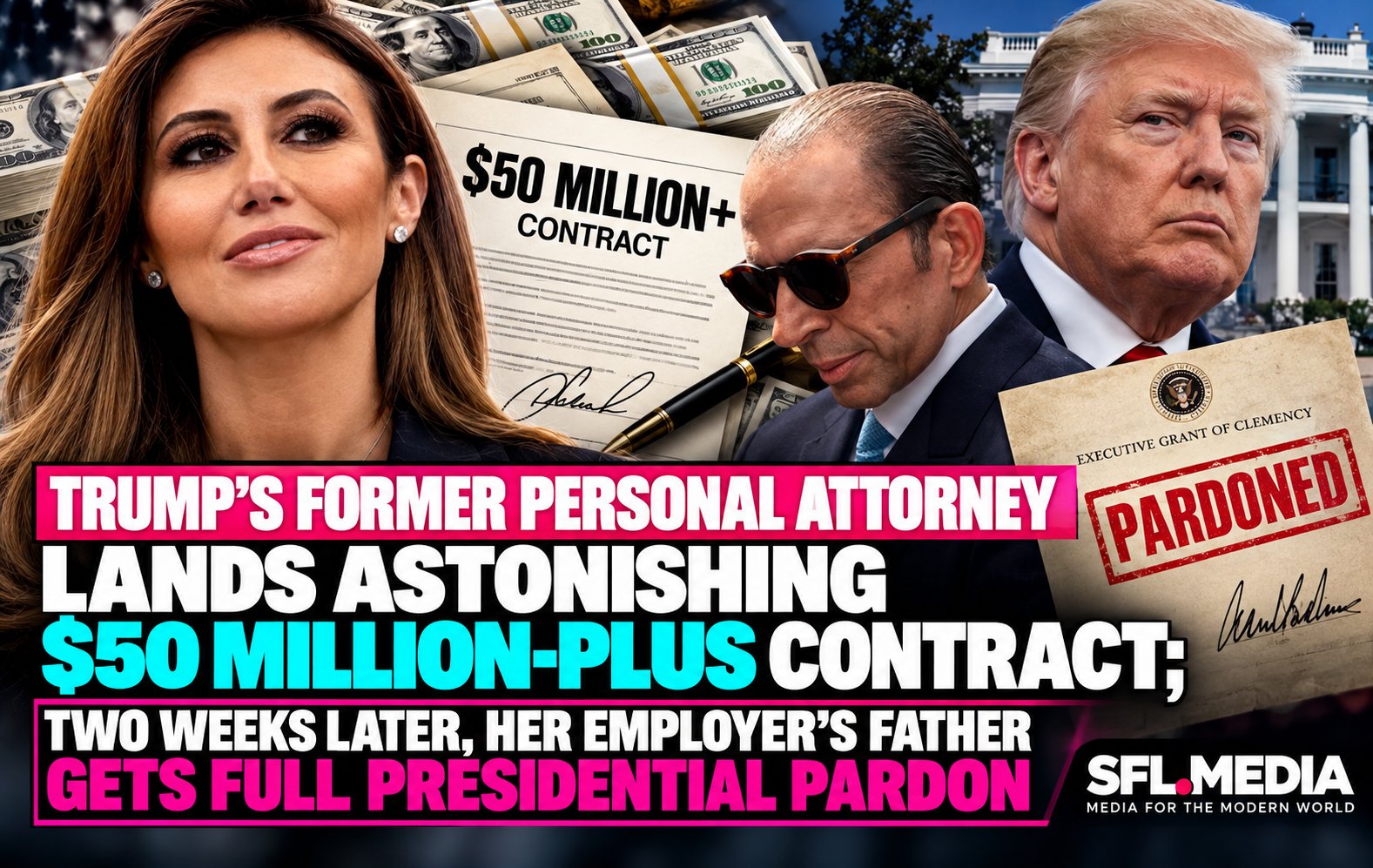
The most consequential element of the new reporting concerns a business agreement between Habba and Concord Partners, a company established by Herrera’s daughter, Isabela Herrera. According to the account of The New York Times investigation presented by CNN, the agreement was structured to provide approximately $10 million annually over four years, with additional bonuses potentially bringing its total value above $50 million. The reported arrangement was finalized only weeks before Herrera received his presidential pardon, creating a sequence of events that journalists and ethics specialists may consider relevant when examining whether access to politically connected advisers played any role in the clemency decision.
The size of the agreement is particularly notable because Habba had previously represented Trump personally and subsequently held prominent positions within his administration, giving her a public association with the president that extended beyond an ordinary private legal practice. However, the existence of a lucrative contract does not establish what services were performed under it, whether all contemplated payments were made or whether the agreement was connected to the pardon. Those questions require examination of the underlying contract, payment records, communications and actual services provided, since a reported contract value should not be confused with money proven to have been received.
Habba has rejected suggestions that the arrangement involved efforts to obtain presidential clemency. In statements described by CNN, she maintained that she had not met with the White House or Justice Department about Herrera’s pardon, had not performed work on a pardon application and had not been paid to secure one. The White House separately stated that Habba was not involved in the pardon process, directly disputing any implication that her relationship with Trump influenced the decision.
Millions in Political Contributions Add Another Layer of Scrutiny
The investigation also examined financial support associated with Isabela Herrera, including a reported $3.5 million contribution to a political action committee supporting Trump and a separate $2.5 million pledge toward the White House ballroom project. According to CNN’s summary of the reporting, those commitments preceded her father’s pardon and became part of the broader examination of how wealthy individuals and their families interact with the president’s political and personal networks.
Political donations are lawful when they comply with applicable campaign finance requirements, and contributing to a presidential political organization does not automatically imply an improper expectation of government action. Similarly, a private pledge toward a government related construction initiative does not establish wrongdoing merely because the donor has an interest in a separate federal matter. The central concern arises when large financial commitments coincide with requests for discretionary government benefits and the public lacks sufficient information to determine whether those matters were evaluated independently.
The reported contributions and business agreement therefore raise questions that go beyond any single transaction, including whether the contributions were discussed with officials involved in reviewing the pardon, whether individuals recommending clemency knew about the financial arrangements and whether any intermediaries were compensated specifically for facilitating access to government decision makers. The answers would help distinguish lawful political activity and professional representation from conduct that could warrant further investigation. At present, the information summarized in the CNN report does not establish a direct exchange of money for presidential clemency, and any suggestion of bribery or an unlawful quid pro quo would require evidence of an improper agreement or other conduct satisfying the relevant legal standards.
A Critical Timeline: The Contract, the Donations and the Pardon
The sequence of events documented by The New York Times is central to the controversy. Isabela Herrera donated $2.5 million to MAGA Inc., a super PAC supporting Trump, in December 2024 and another $1 million in July 2025. In August 2025, her father pleaded guilty to a misdemeanor campaign finance violation after the Justice Department agreed to abandon the more serious felony charges originally brought against him. In September 2025, according to reporting cited by CNN, Isabela Herrera pledged an additional $2.5 million toward Trump’s White House ballroom project.
The following month, she established Concord Partners in Florida, and Habba finalized an employment agreement with the newly created company. Habba formally began working for Concord Partners on January 1, 2026, while serving as a senior adviser to Attorney General Pam Bondi. On January 15, 2026, Trump granted Herrera a full and unconditional presidential pardon, approximately two weeks after Habba’s employment formally began. The Justice Department subsequently published an amended clemency listing dated January 20, and Trump also pardoned former Puerto Rico Governor Wanda Vázquez Garced and former FBI agent Mark Rossini, who had been defendants in the same federal case.
The sequence establishes that the political contributions, ballroom pledge and Habba employment agreement preceded the pardon, but it does not establish that any of those arrangements caused the president to grant clemency. Determining whether an improper exchange occurred would require evidence connecting the financial activity to the decision making process, including communications, payment records or other documentation demonstrating that the financial arrangements influenced the outcome.
The Company Behind the Agreement Raises Additional Questions
According to The New York Times, Concord Partners was established in Florida shortly before Habba agreed to become its general counsel. The company reportedly had little public business presence, and even some individuals familiar with the Herrera family’s broader business interests were uncertain about its operations. The reported compensation was extraordinary, with Habba’s agreement providing $10 million annually over four years and additional bonuses that reportedly guaranteed total compensation exceeding $50 million. That represents a substantial financial commitment for a general counsel position, particularly at a newly established company whose business activities were not clearly explained in the reporting.
The New York Times interviewed individuals familiar with the contract who believed Habba had been hired to assist the family’s efforts to obtain clemency. Those individuals’ interpretations, however, are not proof that she performed pardon related services. Habba has explicitly denied doing so, and the Justice Department stated that she had not discussed a pardon with department officials. The employment arrangement also raises questions about potential conflicts of interest because Habba was simultaneously involved in federal government service, although special government employees may maintain certain outside professional activities while remaining subject to applicable ethics requirements and conflict-of-interest restrictions.
Habba said her outside employment had been reviewed and disclosed to the Justice Department. The publicly reported information does not establish that her employment violated federal ethics rules, but the overlap between her government position, private compensation and the family’s pursuit of clemency warrants examination of the applicable disclosures and safeguards.
Watchdog Group Questions the Source of $3.5 Million in Political Donations
The financial arrangements have attracted attention beyond the presidential pardon itself. In February 2026, Campaign Legal Center asked the Federal Election Commission to investigate whether the $3.5 million in political contributions attributed to Isabela Herrera had actually been financed by her father. The distinction is legally significant because Julio Herrera Velutini is a foreign national, while his daughter is a United States citizen. Federal campaign finance law generally prohibits foreign nationals from making contributions in connection with American elections and also prohibits making political contributions in another person’s name to conceal the actual source of the money.
Campaign Legal Center questioned whether the contributions reflected Isabela Herrera’s own funds or money supplied by someone legally prohibited from making them. The organization pointed to the unusually large donations and the family’s financial relationships as reasons for regulators to examine the transactions. The complaint does not establish that the contributions were illegal, since a finding of wrongdoing would require evidence about the actual source of the funds, the relevant financial transfers and whether any person knowingly participated in an unlawful arrangement.
Nevertheless, the watchdog complaint adds a separate legal question to the broader pardon controversy. Even if no improper connection existed between the contributions and the president’s clemency decision, the donations themselves could warrant scrutiny if they were made using funds supplied by a prohibited contributor. The issue therefore extends beyond presidential discretion and into the enforcement of federal campaign finance restrictions designed to prevent undisclosed or unlawful financial influence in American elections.
A Federal Judge Had Already Questioned the Reduced Charges
The presidential pardon was not the first controversial development in Herrera’s criminal case. Months earlier, the Justice Department’s decision to reduce the original felony prosecution to misdemeanor charges had already drawn criticism. Federal prosecutors originally accused Herrera, Vázquez and Rossini of participating in a scheme involving campaign financing and regulatory influence. According to the 2022 indictment, Herrera and associates allegedly sought to influence the replacement of a banking regulator investigating his financial institution, an arrangement prosecutors argued could undermine the independence of Puerto Rico’s financial oversight system.
The case carried potentially serious criminal penalties, but in 2025 the Justice Department reached agreements allowing the principal defendants to plead guilty to lesser campaign finance offenses. U.S. District Judge Silvia Carreño Coll questioned the proposed resolution, describing the reduced punishment as “a mere slap on the wrist” in a written order reported by The Washington Post. The judge’s concerns highlighted the contrast between the seriousness of the original allegations and the substantially reduced charges ultimately pursued.
Defense attorneys argued that the prosecution had been politically motivated, and the White House subsequently defended the clemency decisions on similar grounds. The administration maintained that the original case involved political considerations that justified presidential intervention. The prosecution’s initial allegations, the later misdemeanor pleas and the pardons are distinct legal events, however, and the defendants were not convicted of the original felony bribery charges. The decision to reduce those charges did not itself establish improper conduct by Justice Department officials, although the judge’s criticism demonstrates that the case was already facing questions about the administration of justice before the subsequent pardon.
Christopher Kise and the Growing Role of Trump’s Former Lawyers
Habba was not the only attorney with close ties to Trump involved in the broader Herrera matter. Christopher Kise, a former Florida solicitor general who previously represented Trump in the federal classified documents case, represented Herrera and helped negotiate the 2025 plea agreement. Kise also assisted Herrera in seeking presidential clemency, according to The New York Times, illustrating how attorneys with experience representing the president can become involved in high stakes legal matters requiring decisions by the same administration.
There is nothing inherently unlawful about retaining a lawyer who previously represented a president. Experienced attorneys routinely represent clients before government agencies and courts, and individuals seeking pardons have a constitutional right to petition for clemency. The concern arises when the value of legal representation appears to depend not only on legal expertise but also on perceived personal access to officials exercising extraordinary discretionary authority. In such circumstances, the public may have difficulty determining whether a favorable outcome resulted from the merits of a case, ordinary advocacy or privileged relationships, a problem that becomes more pronounced when substantial political donations, unusually lucrative contracts and government appointments overlap within the same network of individuals.
Presidential Pardons Are Broadly Constitutional, but Corruption Laws Still Apply
Article II of the United States Constitution gives presidents broad authority to grant reprieves and pardons for federal offenses, except in cases of impeachment. The power is intentionally expansive and has historically been used to correct perceived injustices, offer mercy and resolve politically sensitive cases. Presidents are not generally required to explain every clemency decision publicly, and the Constitution does not require them to follow a particular recommendation from the Justice Department’s Office of the Pardon Attorney. That flexibility has made the pardon power valuable, but it has also exposed the process to recurring accusations of favoritism.
The constitutional authority to issue a pardon does not make every surrounding transaction lawful. Federal bribery, campaign finance and conflict of interest laws may apply to conduct connected with an effort to obtain government action, depending on the evidence and the individuals involved. A lawful donation followed by a favorable government decision is not automatically bribery, nor is hiring an attorney with political connections. Establishing criminal corruption generally requires evidence satisfying specific statutory elements, which may include an improper exchange or corrupt intent.
In the Herrera matter, the publicly reported facts establish a series of financial relationships and a subsequent presidential pardon. They do not establish that Trump, Habba, Herrera or other participants entered into an unlawful agreement to exchange money for clemency. That distinction is essential to evaluating the controversy without converting legitimate questions about access and influence into unsupported accusations of criminal conduct.
The Historical Precedent: When the Appearance of Impropriety Was Enough to Reverse a Pardon
Concerns about political influence over presidential clemency are not new. One notable precedent occurred in December 2008, when President George W. Bush reversed a pardon granted to Isaac Robert Toussie after questions emerged about political contributions involving Toussie’s family. The White House withdrew the pardon before it had been formally completed, citing the need for additional review. The unusual reversal demonstrated how even the appearance of preferential access could undermine confidence in the clemency process.
Other administrations have faced controversies involving politically connected pardon applicants, donors and intermediaries. Those historical examples do not establish wrongdoing in the Herrera case, but they demonstrate that concerns about access and favoritism extend beyond any single presidency. The question is whether the procedures surrounding presidential clemency provide sufficient transparency to distinguish legitimate requests for mercy from efforts to purchase influence, particularly when applicants have substantial financial resources and established relationships with influential political figures.
The Larger Issue: Can Wealth Buy Access to Presidential Mercy?
The Herrera case presents a broader challenge for the American justice system because presidential pardons operate outside many of the ordinary checks that govern criminal proceedings. Judges must explain their rulings, prosecutors operate within legal and ethical frameworks, and criminal defendants have procedural rights. Presidential clemency, by contrast, ultimately depends on the discretion of one elected official. That arrangement becomes controversial when applicants possess extraordinary wealth and access to influential political figures, since individuals who can afford expensive legal teams, prominent lobbyists and large political contributions may have opportunities to communicate their cases that are unavailable to ordinary defendants.
The New York Times investigation described a growing market for clemency advocacy involving lawyers, lobbyists and political intermediaries with connections to Trump’s administration. Such services can be lawful, but the combination of enormous fees and discretionary presidential power creates questions about equal treatment. In Herrera’s case, the reported facts are substantial: a federal corruption prosecution reduced to a misdemeanor, $3.5 million in political donations, a $2.5 million ballroom pledge, a private employment agreement worth more than $50 million and a full presidential pardon granted shortly after the employment began.
Habba and the administration deny that her employment was connected to the pardon. The president’s clemency authority is constitutionally broad, and no publicly established finding demonstrates that the pardon was exchanged for financial benefits. Nevertheless, the size and timing of the transactions make the decision an appropriate subject for investigative journalism and public oversight. The central issue is not whether wealthy defendants are entitled to seek presidential mercy; they are. It is whether the clemency process provides enough transparency for the public to determine that presidential mercy is being exercised independently of private financial interests.
Until the relevant contracts, communications and decision making records are more fully understood, the relationship between the financial arrangements and the pardon remains an unanswered question rather than an established corruption scheme. For an administration responsible for enforcing federal law, the appearance of preferential treatment can carry consequences even when criminal wrongdoing has not been demonstrated. Public confidence depends not only on whether a decision is legally permissible but also on whether government officials can credibly explain how and why that decision was made.
Sources & Further Reading
- The New York Times — A Billionaire Wanted a Trump Pardon. His Family Gave Alina Habba a $50 Million Deal. October 2026. Original investigation, republished by GV Wire.
https://gvwire.com/2026/10/21/a-billionaire-wanted-a-trump-pardon-his-family-gave-alina-habba-a-50-million-deal/ - CNN — Anderson Cooper 360° Transcript. October 21, 2026. Interview with New York Times reporter Tyler Pager concerning the contract, political contributions and presidential pardon.
https://transcripts.cnn.com/show/acd/date/2026-10-21/segment/01 - U.S. Department of Justice — Clemency Grants by President Donald J. Trump, 2025–Present. Official federal clemency records identifying Herrera, Vázquez and Rossini.
https://www.justice.gov/pardon/clemency-grants-president-donald-j-trump-2025-present - U.S. Department of Justice — Executive Grant of Clemency for Julio M. Herrera Velutini. Official presidential pardon warrant.
https://www.justice.gov/pardon/media/1424211/dl - U.S. Department of Justice — Former Governor of Puerto Rico Arrested in Bribery Scheme. August 2022. Original federal allegations concerning the banking regulator and campaign financing.
https://www.justice.gov/archives/opa/pr/former-governor-puerto-rico-arrested-bribery-scheme - CBS News — Trump Pardons Puerto Rico’s Former Governor Wanda Vázquez. January 16, 2026. Reporting on the pardons, political donations and defense statements.
https://www.cbsnews.com/news/trump-pardoning-puerto-rico-former-governor-wanda-vazquez-officials-say/ - The Washington Post — Trump Pardons Former Puerto Rico Governor in Campaign Finance Case. January 16, 2026. Reporting on the reduced charges, judicial criticism and Christopher Kise’s representation.
https://www.washingtonpost.com/politics/2026/01/16/trump-pardons-puerto-rico-ex-governor/ Moneycontrol — A $50 Million-Plus Deal, Trump’s Former Lawyer and a Presidential Pardon. October 2026. Additional reporting on Campaign Legal Center’s complaint, the political donations and the ballroom pledge.
https://www.moneycontrol.com/world/a-50-million-plus-deal-trump-s-former-lawyer-and-a-presidential-pardon-how-a-venezuelan-billionaire-s-case-unfolded-article-14056829.html
Related SFL Media Reporting
- Trump Pardons Same Woman Twice, Nullifying Separate Fraud Convictions — January 17, 2026. Examines Trump’s repeated clemency for Adriana Camberos and also discusses the Puerto Rico corruption case involving Julio Herrera Velutini.
- Trump’s Pardons: Last Week Tonight With John Oliver — June 1, 2026. Explores concerns about presidential clemency, politically connected applicants and unequal treatment in the justice system.
- The First 500 Days of the Most Corrupt Presidency in American History — June 25, 2026. Covers Senator Chris Murphy’s allegations involving presidential pardons, political donors, conflicts of interest and government decisions benefiting connected individuals.
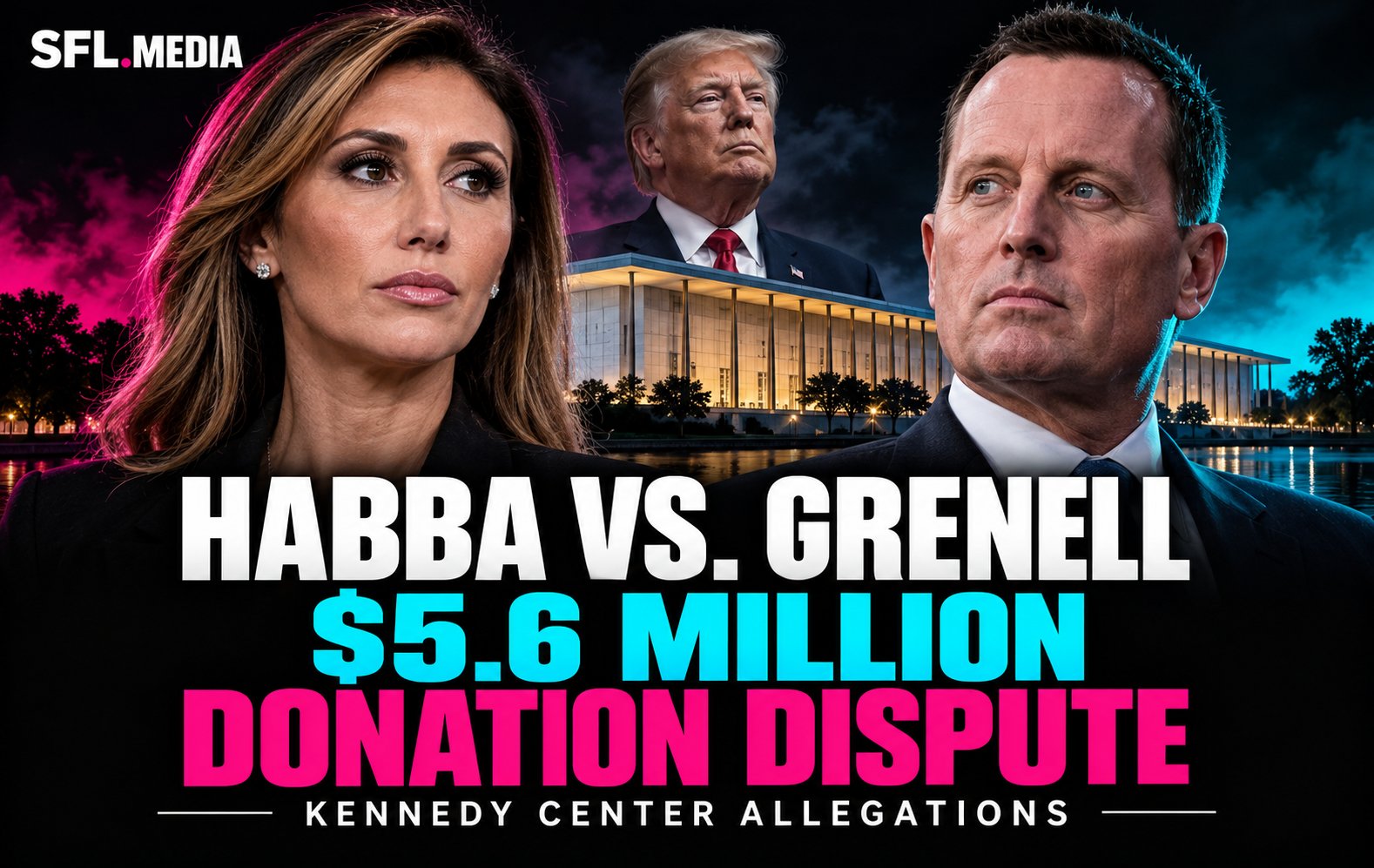
- Alina Habba Accuses Ric Grenell Over $5.6 Million Kennedy Center Donation That Allegedly Never Arrived — October 22, 2026. Examines another financial controversy involving Habba, disputed donations and allegations concerning access to the Trump administration.
- Trump Frees George Santos After Just Months in Prison, Commuting His Seven-Year Sentence — October 17, 2025. Reports on Trump’s commutation of former Congressman George Santos’s federal prison sentence and the broader debate surrounding presidential clemency.




































Want to join the conversation?
Create an account or sign in to share your thoughts, vote,
and reply to other readers.
Showing 0 of 0 comments
Don't have an account?
Already have an account?