
Decades of Underfunded Reserves, Aging Infrastructure, and New State Regulations Are Pushing South Florida’s Condo Market Toward a Multibillion Dollar Financial Reckoning…
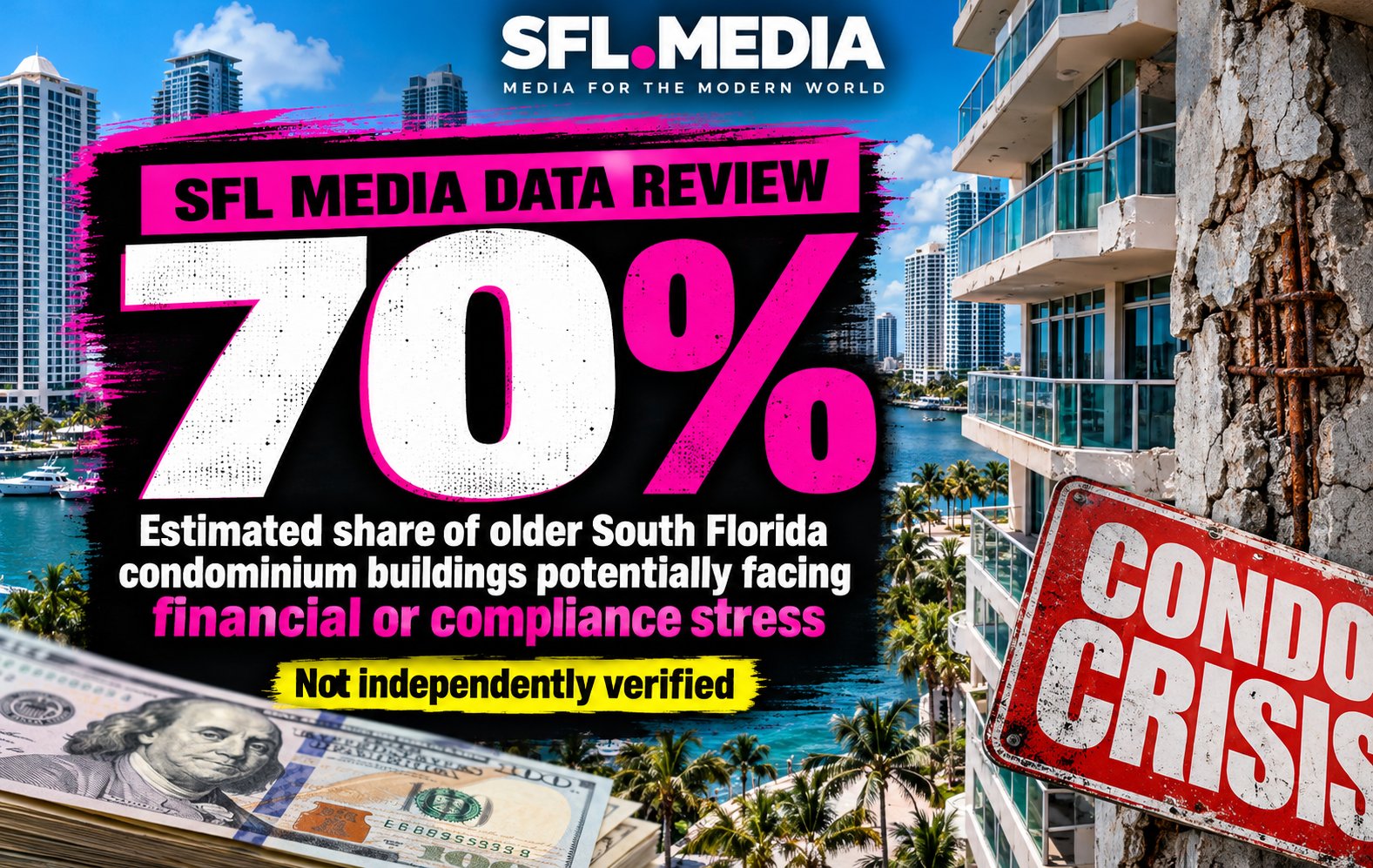
An SFL Media analysis of Florida’s condominium inspection findings, reserve funding requirements, decades of deferred maintenance, and increasingly restrictive mortgage lending standards suggests that financial or regulatory distress could affect a substantial majority of South Florida’s aging condominium inventory. Our preliminary estimate reaches as high as 70%, raising serious questions about the future of thousands of residential properties across Miami-Dade, Broward, and Palm Beach counties.
South Florida’s Condominium Crisis May Be Much Larger Than Anyone Realizes
South Florida’s condominium market is approaching a financial reckoning that could fundamentally reshape the region’s real estate industry. Behind the oceanfront views, luxury amenities, and multimillion dollar property listings, thousands of aging condominium buildings are confronting a dangerous combination of inadequate reserves, expensive structural repairs, mounting insurance costs, mandatory inspections, and increasingly difficult mortgage financing requirements.
After examining Florida’s condominium safety legislation, state inspection findings, reserve funding requirements, and changes in mortgage underwriting, SFL Media estimates that as many as 70% of South Florida condominium buildings constructed more than 30 years ago and standing at least three stories tall could be experiencing meaningful financial, structural repair, or regulatory compliance stress. The figure represents our preliminary analytical assessment rather than a completed building by building census, and additional association level financial records, inspection reports, and mortgage eligibility data will be necessary to refine the percentage. Nevertheless, the convergence of available evidence raises the possibility that a substantial majority of the region’s aging condominium inventory is financially vulnerable.
The implications extend far beyond homeowners facing higher association fees. The problem threatens to affect condominium values, mortgage availability, property insurance, retirement savings, local tax bases, and the broader South Florida housing market. For some owners, the situation could become a choice between paying tens of thousands of dollars in unexpected assessments, taking on substantial debt, or selling properties into a market where prospective buyers are increasingly concerned about the financial condition of the buildings themselves.
The crisis has been developing for decades. Florida’s post Surfside condominium reforms did not create deteriorating concrete, aging roofs, corroding structural components, or insufficient reserve accounts. Instead, they forced associations to confront expenses that many buildings had postponed, sometimes for generations. The result is a financial collision between aging infrastructure and the actual cost of maintaining it.
Why SFL Media Believes the Distress Rate Could Approach 70%
SFL Media’s estimate is based on the convergence of three major indicators: historical reserve underfunding, mandatory structural inspection and repair obligations, and mortgage financing restrictions affecting condominium projects with unresolved financial or structural problems. These indicators measure different dimensions of the same underlying problem. Reserve shortfalls reveal associations that may lack the savings necessary to address anticipated repairs, structural inspections expose maintenance needs that can require substantial capital expenditures, and mortgage underwriting rules create additional financial pressure when buildings cannot demonstrate adequate maintenance, insurance, reserves, or association financial stability.
Our assessment focuses on older condominium buildings, particularly those constructed before the mid 1990s, rather than South Florida’s entire condominium inventory. That distinction matters because newer buildings generally have had fewer decades to accumulate deferred maintenance, while older coastal properties have endured prolonged exposure to moisture, salt air, storms, and ordinary structural aging. Historical industry research indicates that inadequate reserve funding has been widespread among homeowner and condominium associations, while Florida’s former reserve waiver provisions allowed many associations to reduce contributions that would otherwise have been set aside for future expenses.
At the same time, state inspection records now document extensive engineering activity, major repair projects, and buildings identified as unsafe or uninhabitable. Mortgage financing changes introduce another pressure point, potentially restricting conventional loans in projects that cannot satisfy applicable financial and structural standards. Taken together, these conditions suggest that the number of financially vulnerable older condominium buildings could be substantially larger than any single regulatory or industry dataset indicates.
Our 70% estimate is an assessment of the possible combined prevalence of these overlapping problems, not a sum of separate percentages. It does not mean that 70% of buildings are structurally unsafe, insolvent, or facing immediate closure. Rather, it reflects our concern that a substantial portion of older buildings may be experiencing at least one material financial or compliance problem, with many confronting multiple pressures simultaneously. A comprehensive building-level review would be needed to establish the actual percentage, but the available evidence provides substantial grounds for investigating the scale of the crisis.
Florida’s Own Inspection Data Reveals the Scale of the Problem
One of the strongest pieces of evidence comes from the Florida Legislature’s Office of Program Policy Analysis and Government Accountability, known as OPPAGA. In July 2026, the agency released its report on milestone inspection activity during 2024 and 2025, providing an official accounting of how Florida’s post Surfside structural inspection requirements were progressing. Building officials reported 8,736 completed phase-one milestone inspections and 1,575 completed phase two inspections across Florida, along with 1,587 extensions for initial inspection deadlines. Approximately 94% of those extensions were granted in coastal counties and municipalities, underscoring the particular importance of the inspection program to Florida’s aging coastal condominium inventory.
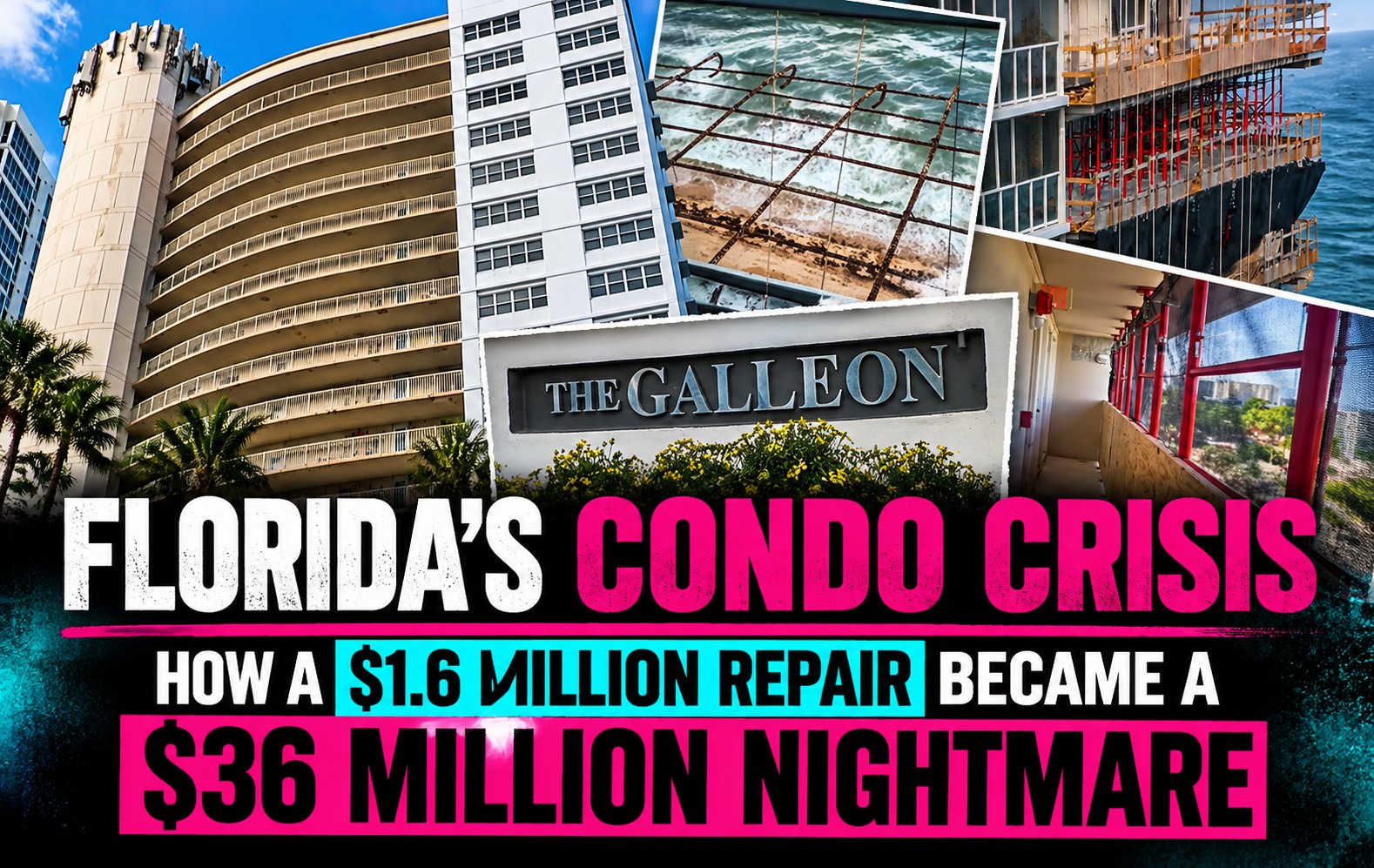
The report also documented 903 permit applications for repairs identified through phase two inspections, with estimated project costs ranging from less than $1,000 to as much as $30 million. Concrete, electrical, and structural repairs were among the common categories, illustrating how engineering evaluations can translate into substantial financial obligations for condominium associations, particularly when necessary work has not already been funded.
Even more concerning, building officials reported that milestone inspections identified 30 buildings as unsafe or uninhabitable in 2024 and another 24 in 2025. That represents 54 buildings receiving serious safety related designations during the two year reporting period, although the underlying classifications and circumstances varied. The report also found that most buildings receiving those designations had not been vacated, highlighting the complexity of addressing serious structural concerns while residents continue occupying affected properties.
These statewide findings do not establish the percentage of South Florida buildings experiencing distress, but they demonstrate that Florida’s inspection program is uncovering genuine structural and financial challenges. The existence of buildings requiring major repairs, including projects carrying multimillion dollar price tags, illustrates why the financial consequences of the state’s safety reforms could be substantial. The inspections are doing more than identifying maintenance needs; they are revealing the true cost of owning and maintaining aging residential towers.
The State Still Cannot Fully Account for Inspection Compliance
Florida’s condominium inspection system is also struggling with significant reporting deficiencies, particularly in South Florida. The July 2026 OPPAGA investigation identified problems involving local government submissions, incomplete records, and inconsistencies in the state’s ability to track required inspections. Reporting on the audit showed that 21% of municipal building officials in Miami-Dade County, 23% in Broward County, and 44% in Palm Beach County had not submitted required 2025 milestone inspection data to the state.
Although missing state reports do not necessarily mean that individual buildings failed to complete their inspections, the deficiencies reveal a serious transparency problem. Florida’s regulatory system cannot provide a complete picture of condominium safety compliance when local authorities have not consistently submitted the information required to evaluate it. For prospective buyers and mortgage lenders, uncertainty surrounding inspection status can complicate financial decisions, while incomplete documentation creates additional administrative and regulatory challenges for condominium boards.
The missing information also complicates efforts to measure financial distress across South Florida. A building with an incomplete state record may have completed its inspection locally, while another may still be awaiting engineering work, preparing repairs, or seeking additional time to comply. The result is a fragmented system in which structural conditions, financial obligations, and regulatory compliance are not always visible through a single reliable public record. That lack of transparency is itself part of the condominium crisis.
The Reserve Funding Crisis: Decades of Low HOA Fees Are Coming Due
For decades, many Florida condominium associations operated under financial practices that allowed owners to postpone the full cost of maintaining their buildings. State law generally permitted associations to vote to waive or reduce certain reserve contributions, enabling boards to keep monthly condominium fees lower than they otherwise would have been. That approach was attractive to homeowners seeking affordable payments, retirees living on fixed incomes, and investors attempting to minimize carrying costs, but it also created a fundamental financial problem: buildings continued deteriorating while associations failed to accumulate the money necessary to repair or replace major structural components.
A condominium tower constructed in the 1970s or 1980s may now require extensive concrete restoration, balcony repairs, roof replacement, waterproofing, electrical modernization, or plumbing upgrades. When several of those projects become necessary within a relatively short period, the total cost can reach millions of dollars. Florida’s post-Surfside legislation changed the financial equation by requiring qualifying associations to commission Structural Integrity Reserve Studies, commonly known as SIRS, and fund reserves according to applicable statutory requirements.
These studies evaluate major building components, estimate their remaining useful lives, determine anticipated repair or replacement costs, and recommend funding schedules. Qualifying associations generally cannot simply vote to waive required SIRS reserve contributions as they could under earlier reserve practices, although subsequent legislation has introduced alternative funding methods and limited flexibility. The Florida Department of Business and Professional Regulation has acknowledged that associations lacking adequate reserve funds may need to levy assessments, obtain loans, or establish lines of credit to satisfy their obligations.
The financial consequences are potentially enormous. Buildings that maintained artificially low monthly fees for decades must now account for expenses that should have been incorporated into their long term budgets. Those costs ultimately fall on unit owners, whether through higher monthly assessments, special assessments, association borrowing, or some combination of those approaches.
Nearly 8,000 Associations Had Reported Completed Reserve Studies Before the Deadline
Florida’s Department of Business and Professional Regulation provided another important indication of the scale of the transition in its 2024–2025 condominium compliance report. As of November 30, 2025, the department reported that 7,836 condominium associations had submitted notice of completed Structural Integrity Reserve Studies. The state also established an online database identifying associations that reported completing the studies, providing greater visibility into a process that had previously been difficult for buyers and owners to track.
The initial deadline for many existing, owner controlled associations was December 31, 2025. Associations required to complete qualifying milestone inspections by the end of 2026 may conduct the reserve study simultaneously, but no later than December 31, 2026. These deadlines matter because the reserve study is not simply another administrative document; it is a financial roadmap identifying the cost of maintaining critical building systems and the funding required to address those expenses over time.
For an association with healthy reserves and a history of proactive maintenance, the study may confirm that its financial planning is reasonably aligned with future obligations. For a building with decades of deferred maintenance and little money in the bank, the same process can expose a potentially overwhelming financial shortfall. Although Florida law does not require every association to immediately deposit the full future replacement cost of all covered components, the new requirements reduce the ability of associations to avoid confronting those expenses indefinitely.
How a $500,000 Reserve Fund Can Become a $75,000 Assessment Per Owner
The financial danger becomes easier to understand when the numbers are applied to a hypothetical aging condominium association. Consider a 100 unit South Florida building with $500,000 in available reserves that receives an engineering report identifying approximately $8 million in necessary concrete restoration, balcony repairs, waterproofing, and other structural work. Even if the entire reserve balance could legally be applied toward those repairs, the association would still face a $7.5 million funding shortfall, equivalent to approximately $75,000 per homeowner if costs were divided equally among the units.
For a financially secure homeowner, an unexpected $75,000 obligation may be manageable. For a retired resident relying on Social Security or a middle class household already facing higher insurance premiums, property taxes, and monthly association dues, the same assessment can become devastating. Associations can sometimes spread those expenses over time through loans or installment plans, but borrowing introduces interest costs and additional financial commitments. A building that finances a multimillion dollar restoration project may require higher monthly fees for years, even after the repairs are completed.
If enough owners struggle to pay, the association may encounter delinquency problems that further complicate its finances. Collection proceedings, liens, legal expenses, and additional borrowing can follow, spreading the financial burden beyond individual owners to the entire condominium community. This is how a building with manageable monthly expenses can become a property where ownership carries an unexpected six-figure financial obligation.
Rising HOA Fees Are Only One Part of the Financial Squeeze
Special assessments attract attention because they can arrive as large, unexpected bills, but the longer-term financial pressure facing older condominium buildings also includes recurring monthly expenses that can steadily erode affordability. Insurance costs, labor, utilities, maintenance contracts, professional engineering services, and reserve contributions all affect association budgets, while buildings undertaking extensive structural repairs may require additional inspections, legal services, construction management, and financing arrangements.
The cumulative effect can be substantial. A condominium owner may face a special assessment while simultaneously absorbing increases in monthly association dues. Even when a repair project is financed through an association loan, the resulting debt payments often become part of the building’s ongoing financial obligations. This is particularly consequential in South Florida, where many condominium properties are owned by retirees, seasonal residents, and households that purchased their units long before today’s maintenance and insurance costs emerged.
An owner who purchased a waterfront condominium decades ago may have paid off the mortgage and expected relatively predictable housing expenses, only to discover that higher monthly fees and a major assessment have fundamentally altered that financial plan. The vulnerability is not limited to inexpensive properties, as luxury condominium buildings can also face costly restoration projects involving complex structural systems, extensive balconies, parking garages, and waterfront exposure. The underlying problem is that condominium ownership involves shared responsibility for an entire building, making the financial condition of the association just as important as the market value of the individual unit.
The Mortgage Trap: When a Condo Becomes Difficult to Finance or Sell
South Florida’s condominium crisis is also colliding with increasingly demanding mortgage underwriting requirements. In August 2026, Fannie Mae’s retirement of its Limited Review process changed how many condominium projects are evaluated for conventional mortgage eligibility. Under the updated framework, many established condominium projects must undergo a more comprehensive Full Review unless they qualify for another permitted review pathway, with the process examining project characteristics, association finances, insurance, structural conditions, reserves, delinquency levels, and other eligibility requirements.
These rules are particularly important for older condominium buildings facing major repairs or unresolved financial problems. A buyer may have excellent credit, a substantial down payment, and sufficient income to qualify for a mortgage, yet still encounter financing difficulties because the condominium project itself does not meet the lender’s applicable requirements. Buildings with critical repairs, significant deferred maintenance, inadequate insurance, or other disqualifying conditions may be ineligible for certain Fannie Mae-backed mortgages, while the agency’s project review rules also impose limits on common expense assessment delinquencies.
This creates a second financial problem for owners already struggling with association expenses. The very conditions that make a condominium expensive to maintain can also reduce the number of buyers able to finance a purchase. A unit in a financially stable building may qualify for conventional financing without major complications, while a comparable unit in an association facing unresolved structural repairs may require a cash buyer or alternative financing. Although that does not make the troubled property impossible to sell, a smaller financing pool can weaken buyer demand and place additional pressure on sellers.
The result is a potential liquidity problem in which owners may need to sell because of rising expenses, only to discover that the financial condition of their building makes selling more difficult.
The Dangerous Cycle of Repairs, Assessments, Delinquencies, and Falling Marketability
The most serious financial risk facing older condominium buildings is not any single expense or regulatory requirement, but the possibility that several problems begin reinforcing one another. An engineering inspection may identify major concrete deterioration or other repairs, forcing an association with insufficient reserves to obtain financing or assess unit owners. Those additional expenses may cause some owners to fall behind on payments, reducing association cash flow and increasing collection costs.
As the building’s financial condition deteriorates, mortgage lenders may apply additional scrutiny or determine that the project does not satisfy eligibility requirements. That can reduce the pool of buyers, complicate refinancing, and make it harder for owners to exit the property. If prospective purchasers begin discounting their offers to account for anticipated assessments or financing restrictions, individual property values may come under pressure, leaving owners with limited equity particularly vulnerable.
The cycle can become self-reinforcing. Buildings need capital to complete repairs, but their financial difficulties can make obtaining that capital more expensive. Owners need buyers to provide an exit, but unresolved association problems can make conventional financing more difficult. This is the scenario that makes the South Florida condominium situation so concerning: a building does not need to be on the verge of collapse to become a serious financial liability for its owners.
Coastal Buildings Face an Additional Structural Challenge
South Florida’s older coastal condominium towers operate in an environment that can accelerate deterioration of certain building components. Salt air, moisture intrusion, wind driven rain, and repeated exposure to severe weather can affect concrete, reinforcing steel, waterproofing systems, balconies, and exterior building materials. Over decades, these conditions can create substantial maintenance requirements, particularly when associations fail to address smaller problems before they develop into expensive structural repairs.
Concrete restoration is especially significant because deterioration can extend beyond visible cosmetic damage. Water intrusion and corrosion of embedded reinforcing steel can require engineering evaluations and extensive restoration work, depending on the severity and location of the damage. Older buildings may also face simultaneous replacement needs involving roofs, elevators, electrical systems, plumbing, fire protection equipment, and other major components, creating capital requirements that can overwhelm associations without adequate reserves.
This is one reason SFL Media considers the region’s aging coastal condominium inventory particularly vulnerable. The combination of environmental exposure, building age, historical reserve practices, and stricter financial requirements creates conditions in which maintenance costs can escalate rapidly. Although many older coastal associations have invested heavily in preventative repairs and remain financially stable, the consequences for those that have postponed essential work can be extraordinary.
South Florida Could Be Developing a Two Tier Condominium Market
The widening differences between financially stable condominium associations and those struggling with major repair obligations could increasingly shape property values across South Florida. Buildings with completed inspections, adequate reserves, manageable insurance costs, and documented maintenance plans may be better positioned to attract conventional mortgage buyers, while associations facing substantial assessments, unresolved repairs, or financing complications may encounter greater resistance from prospective purchasers.
That divergence could produce a two tier condominium market in which otherwise comparable units carry very different financial risks. A waterfront condominium with strong reserves and completed structural work may command a premium over a nearby building where owners are facing large assessments and uncertainty about future repairs. Buyers and investors may increasingly evaluate reserve studies, engineering reports, association debt, and mortgage eligibility alongside traditional considerations such as location, square footage, amenities, and views.
The consequences could extend to entire neighborhoods where aging condominium towers make up a significant share of the housing stock. If multiple buildings in the same area require expensive repairs or experience financing difficulties, local real estate activity could be affected. These pressures do not necessarily mean South Florida is headed for a broad condominium market collapse, but they suggest that the financial health of individual associations may become an increasingly important factor in determining which properties remain attractive to buyers.
Retirees and Longtime Owners May Face the Greatest Hardship
Among the people most exposed to this crisis are condominium owners who purchased their properties decades ago and planned to remain in them throughout retirement. For these residents, the condominium may represent their largest financial asset, their primary residence, and the foundation of their retirement plan. Many purchased their units when association fees were relatively affordable and before today’s structural reserve requirements existed.
A major assessment can force difficult decisions. Some owners may need to withdraw retirement savings, obtain loans, sell investments, or seek financial assistance from family members, while others may attempt to sell their units at the same time neighbors are facing similar financial pressures. Those decisions become especially difficult when mortgage financing restrictions reduce the number of eligible buyers, potentially leaving retirees with substantial equity on paper but limited access to that wealth.
The hardship can also extend to younger households and middle income owners who purchased condominium units as an alternative to increasingly expensive single family homes. Rising association fees and assessments can undermine the affordability that initially made condominium ownership attractive. What begins as a structural maintenance problem can therefore become a retirement security problem, a housing affordability problem, and a broader economic issue for South Florida communities.
Florida’s Safety Reforms Are Exposing a Financial Problem That Already Existed
The Surfside condominium collapse in June 2021, which killed 98 people, fundamentally changed the conversation about condominium safety in Florida. The disaster demonstrated the consequences that can follow when serious structural problems are not adequately addressed, prompting lawmakers to strengthen inspection requirements and reserve planning. Senate Bill 4-D established major changes to condominium inspections and reserve obligations, while subsequent legislation, including House Bill 913 in 2025, adjusted deadlines, expanded transparency requirements, and introduced additional funding flexibility.
These reforms have been controversial because of their financial impact on owners, particularly those in older buildings with limited reserves. But the underlying maintenance obligations existed before the laws changed. Concrete deteriorated, roofs aged, waterproofing systems failed, and structural components required repairs regardless of whether associations had saved enough money to address them. The legislation effectively accelerated the financial recognition of those obligations.
At the same time, Florida lawmakers face a difficult balancing act. Delaying necessary structural repairs can expose residents to safety risks, while requiring associations to fund extensive projects over relatively short periods can impose severe financial hardship. Florida has already modified its condominium legislation to provide additional financing options and certain reserve funding adjustments, but those changes cannot eliminate the cost of necessary repairs. They can only influence how and when associations pay for them.
The Next Phase of the Crisis May Be Financial Rather Than Structural
The most visible concern following the Surfside disaster was the possibility of another catastrophic structural failure, and preventing such tragedies remains a central reason for mandatory inspections and stronger maintenance requirements. But the next phase of South Florida’s condominium crisis may increasingly unfold through association budgets, special assessments, mortgage underwriting decisions, and property transactions.
Buildings requiring major restoration projects will need access to capital, owners will need to absorb additional expenses, and associations will need to demonstrate that their financial plans can support required maintenance. At the same time, lenders and insurers will evaluate whether properties meet their standards, creating further challenges for associations already dealing with extensive repairs and limited reserves.
For some buildings, these challenges will be manageable. Others may face prolonged financial pressure, particularly where expensive repairs coincide with weak reserves and owner delinquency. A condominium association can remain structurally sound while imposing expenses that make ownership unaffordable for a significant portion of its residents, demonstrating why financial distress deserves attention even when a building is not immediately unsafe.
That distinction is central to SFL Media’s assessment. The concern is not that seven out of ten older buildings are about to collapse, but that a substantial majority may be carrying financial, maintenance, or compliance burdens that could materially affect their owners and marketability.
SFL Media’s Assessment: A Serious Regional Crisis That Demands Better Data
Based on the available evidence, SFL Media believes the financial and regulatory problems affecting older South Florida condominium buildings may be considerably more widespread than the public recognizes. Our working estimate of up to 70% reflects the convergence of historical reserve underfunding, aging infrastructure, structural inspection obligations, and mortgage financing restrictions. It is an analytical estimate intended to describe the potential scale of financial vulnerability among older buildings rather than a verified count of properties meeting a standardized distress threshold.
A comprehensive regional study would require building level data from Miami-Dade, Broward, and Palm Beach counties, including association budgets, reserve balances, Structural Integrity Reserve Studies, milestone inspection results, outstanding repair obligations, special assessments, and mortgage project eligibility information. Such a study would also need to distinguish manageable funding gaps from severe financial distress and avoid counting the same building multiple times.
The final measured percentage may differ from our preliminary assessment, but the official findings already establish the seriousness of the underlying problem: thousands of inspections, hundreds of repair permit applications, multimillion-dollar restoration projects, unsafe-building designations, and substantial gaps in regulatory reporting. The financial implications are too significant to dismiss simply because a comprehensive regional distress census has not yet been completed.
South Florida’s Condominium Reckoning Has Arrived
South Florida spent decades building one of the nation’s most recognizable condominium markets, transforming its coastline into a landscape of residential towers that attracted retirees, investors, seasonal residents, and homeowners from around the world. Today, a substantial portion of that aging inventory is confronting the accumulated cost of maintaining those buildings, as mandatory inspections identify repair obligations, reserve studies expose funding requirements, and mortgage underwriting standards make association financial health increasingly important to property transactions.
For owners, the consequences can include higher monthly fees, major assessments, additional debt, reduced financing options, and difficult decisions about whether they can afford to remain in their homes. For the broader real estate market, the implications may include greater differences in property values between financially stable and distressed buildings, changing buyer preferences, and increased pressure on older condominium inventory.
SFL Media’s preliminary assessment is that as many as seven out of ten older South Florida condominium buildings could be experiencing meaningful financial, structural repair, or regulatory compliance stress. That estimate requires further building level verification, but the evidence already points to a serious regional problem with potentially far reaching consequences. The central issue is not whether every aging condominium tower is unsafe or financially insolvent, but whether decades of deferred maintenance and insufficient financial planning have left a substantial majority of older buildings exposed to expenses their owners may struggle to afford.
Florida’s condominium reforms are forcing those costs into the open, mortgage lenders are increasingly scrutinizing the results, and condominium owners across South Florida are discovering that the true price of their properties may include decades of bills that have only now come due.
The buildings are getting older, the repairs are getting more expensive, and for thousands of South Florida condominium owners, the financial reckoning may only be beginning.

Sources & Further Reading
Florida Government Reports and Legislation
- Florida OPPAGA — Milestone Inspection Reporting Data 2024 and 2025, Report 26-04, July 2026: https://oppaga.fl.gov/Products/ReportDetail?rn=26-04
- Florida DBPR — Condominium Compliance Annual Report 2024–2025: https://www2.myfloridalicense.com/lsc/documents/CTMH%20Annual%20Report%202024-25.pdf
- Florida DBPR — Structural Integrity Reserve Studies and Inspections: https://condos.myfloridalicense.com/inspections/
- Florida DBPR — Condominium Reform Timeline and House Bill 913: https://condos.myfloridalicense.com/timeline/
- Florida DBPR — Condominium Compliance and Reserve Funding FAQs: https://condos.myfloridalicense.com/faqs/
- Florida Statutes — Chapter 718, Condominiums: https://www.flsenate.gov/Laws/Statutes/2025/Chapter718/All
Mortgage Lending and Financing Standards
- Fannie Mae — Full Review Process and Condominium Project Eligibility: https://selling-guide.fanniemae.com/sel/b4-2.2-02/full-review-process
- Fannie Mae — Condominium Project Review and Lending Standards: https://selling-guide.fanniemae.com/
Industry Research and Additional Reporting
- WUSF — Florida Condo Inspection Report Finds Unsafe Buildings and Reporting Gaps: https://www.wusf.org/politics-issues/2026-07-31/florida-condo-inspection-report-finds-unsafe-buildings-and-reporting-gaps
- ManageCasa — HOA Reserve Funds and Financial Planning: https://managecasa.com/articles/hoa-reserve-funds
- GoverningDocs — Florida Condo Crisis 2026: https://governingdocs.dev/blog/florida-condo-crisis-2026/

















































Want to join the conversation?
Create an account or sign in to share your thoughts, vote,
and reply to other readers.
Showing 0 of 0 comments
Don't have an account?
Already have an account?