
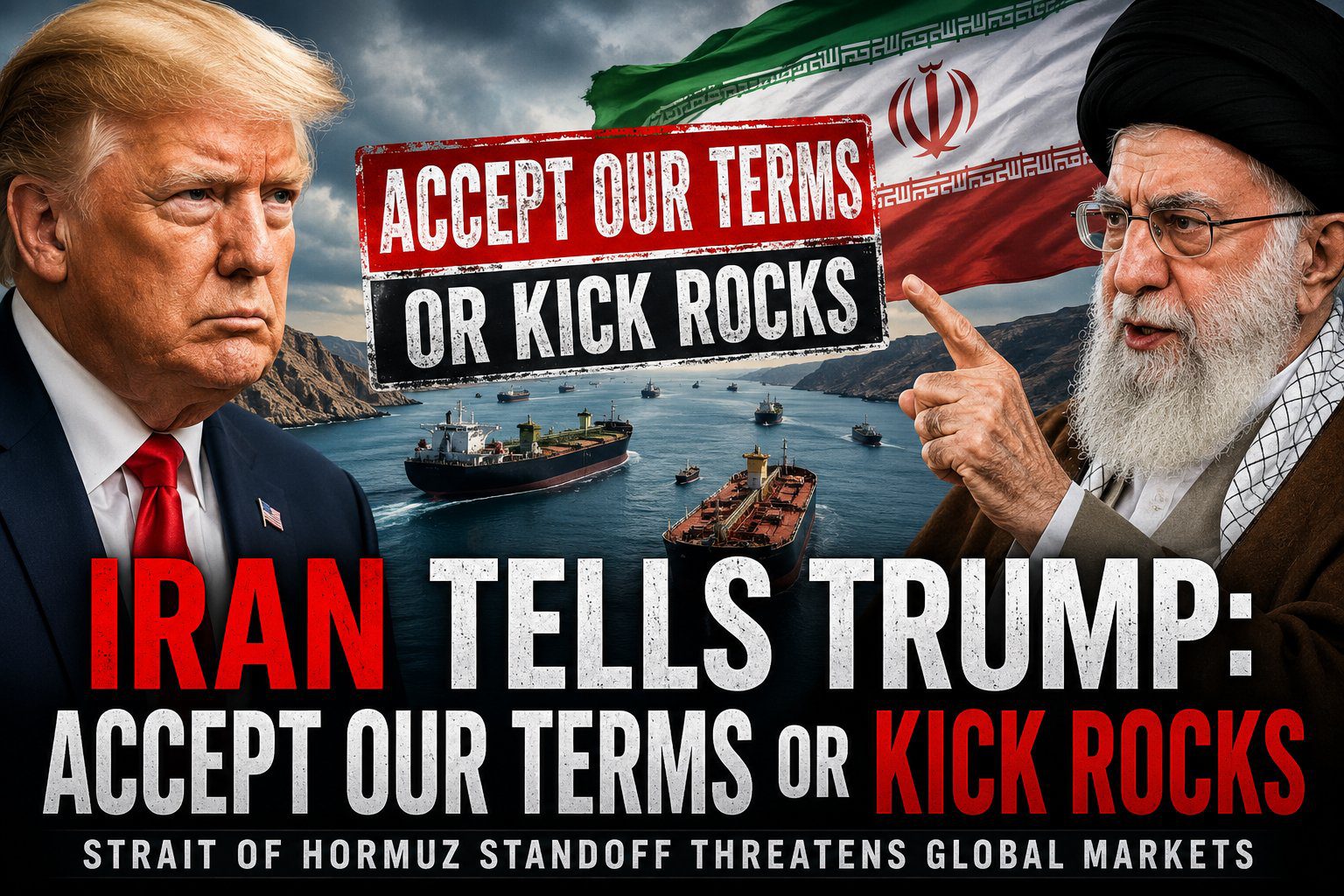
Iran’s Hormuz Strategy Could Be Designed to Outlast Trump While America’s Missile Stockpiles Become the War’s Other Clock
The war between the United States and Iran is increasingly being fought on two clocks.
One is political. Iran appears to be betting that President Donald Trump cannot tolerate years of elevated energy prices, economic uncertainty and an unresolved Strait of Hormuz crisis without eventually accepting terms Tehran can live with or leaving office with the confrontation still unresolved.
The other is military. The United States can manufacture more missiles, but it cannot manufacture its most sophisticated weapons overnight. After months of combat, American stocks of Tomahawk cruise missiles, Patriot interceptors and THAAD interceptors have been drawn down dramatically, raising increasingly serious questions about how long Washington can maintain its current operational tempo while simultaneously preparing for other potential conflicts and supporting allies such as Ukraine.
Together, those pressures create a potentially powerful Iranian strategy: survive, stall, impose economic costs and force Washington to expend expensive weapons faster than American factories can replace them.
But one viral claim circulating online requires an important correction. Iran has not, based on credible reporting available as of August 10, formally announced that the Strait of Hormuz will remain closed specifically until “the last day of Trump’s presidency.” That claim has spread rapidly across social media.
What Tehran has actually said publicly is arguably more strategically significant: the Strait will remain restricted until the United States accepts a sweeping set of Iranian conditions that the Trump administration is extremely unlikely to accept. The distinction matters. Tehran does not need to formally announce that it intends to wait Trump out if it can create negotiating conditions that effectively accomplish the same thing.
Iran Has Turned the Strait of Hormuz Into Political Leverage
The Strait of Hormuz is no ordinary maritime corridor. It is one of the most strategically important energy chokepoints on Earth, connecting the Persian Gulf with the Gulf of Oman and global markets. Iran understands exactly what that means, and Tehran has increasingly transformed control over shipping through the Strait from a military issue into an economic and political weapon.
After Trump suggested that an agreement to reopen the Strait could be imminent, Iranian officials quickly poured cold water on those expectations. Tehran has instead presented Washington with conditions for a full reopening that go far beyond maritime security.
Mohammad Bagher Zolghadr, secretary of Iran’s Supreme National Security Council, demanded an end to U.S. military pressure surrounding Iran, an end to sanctions, the release of frozen Iranian assets, compensation for wartime destruction and an end to American military actions and threats against Iran and its regional allies. Iranian Foreign Ministry spokesman Esmaeil Baghaei reinforced that position Monday, saying negotiations with Oman over safe shipping passage should not be confused with negotiations over fully reopening the Strait.
In other words, Iran appears willing to discuss mechanisms that allow some ships to move while preserving the broader crisis. That is an enormously important distinction. A partially functioning Strait keeps Tehran’s leverage alive. It allows Iran to demonstrate that it can loosen or tighten pressure without surrendering control of the issue entirely.
Trump has rejected Iran’s demands and responded with a compensation demand of his own, arguing that Tehran should compensate Americans killed or wounded by Iranian backed forces and roadside bombs. The two sides therefore remain extraordinarily far apart, creating exactly the kind of prolonged diplomatic stalemate that could allow Iran to continue extracting economic and political costs from Washington without agreeing to a comprehensive settlement.
The “Wait Out Trump” Theory Is More Complicated Than the Viral Headline
This is where the political strategy becomes fascinating. There are reports circulating from Iranian political circles arguing explicitly for strategic patience rather than either a decisive military confrontation or a rapid agreement with Trump. One widely circulated statement attributed to Majid Shakeri, described as an adviser to Iranian Parliament Speaker Mohammad Bagher Ghalibaf, argued that Iran should manage a prolonged state of “neither war nor peace” rather than rush into negotiations.
That is not equivalent to an official Iranian government declaration that Hormuz will remain closed until January 2029. But the broader strategic logic is difficult to ignore.
Iran does not necessarily need to defeat the United States militarily. It needs to make the cost of achieving Washington’s political objectives progressively higher. That means keeping pressure on shipping, maintaining uncertainty in global oil markets, forcing the United States to maintain expensive military deployments, making Washington expend sophisticated weapons and, perhaps most importantly, allowing those costs to migrate from the battlefield into American politics.
If Tehran believes Trump is under greater political pressure from expensive gasoline, inflation, financial market instability and an open ended Middle Eastern war than Iran is from maintaining the confrontation, then time itself becomes a weapon.
Hormuz Is Already Reaching Wall Street
The consequences are no longer theoretical. U.S. stocks closed lower Monday as optimism surrounding a possible Hormuz agreement faded. Oil markets reacted sharply as investors reassessed the likelihood that normal shipping would resume soon. That is exactly why the Strait gives Iran such unusual leverage. The United States does not need to import most of its oil directly through Hormuz to suffer economically from a disruption there. Oil is globally priced. When supplies become constrained or traders believe future supplies are threatened, prices can rise throughout the international market.
Earlier in the conflict, FactCheck.org documented that the effective closure of Hormuz contributed to double digit increases in oil prices and a jump of more than 50 cents per gallon in average U.S. gasoline prices. Iran therefore has a mechanism for transferring the costs of the war directly into the American economy. Every American driver filling a gas tank can become indirectly exposed to the conflict. Every airline, trucking company, shipping operation and business dependent on energy prices can feel the pressure as well. Those increases can eventually filter through transportation costs and supply chains into the broader economy. That creates a political vulnerability that missiles alone cannot solve.
There Is Another Problem: America Is Burning Through Missiles
While the administration publicly insists that the United States has sufficient weapons to continue the campaign, independent reporting and defense analysis paint a much more complicated picture.
The Washington Post reported in March that the U.S. military fired more than 850 Tomahawk cruise missiles during just the first four weeks of the Iran war. That number is staggering when compared with normal procurement rates. The Post reported that only 57 Tomahawks were included in the previous year’s defense budget, while modern variants can cost as much as approximately $3.6 million each and can require lengthy manufacturing timelines. The United States has also expended more than 1,000 air-defense interceptors during the conflict, including missiles fired by Patriot and Terminal High Altitude Area Defense systems.
Those weapons are considerably more difficult to replace than conventional ammunition. This is not a situation in which the Pentagon has literally “run out of ammo.” That description would be inaccurate. The more serious problem is that stocks of certain high end weapons are becoming strategically constrained at precisely the moment when the United States is attempting to maintain military commitments across multiple regions of the world.
THAAD and Patriot Stocks Are Becoming a Strategic Liability
A July analysis from the Center for Strategic and International Studies estimated that Patriot interceptor inventories had fallen below 1,000 missiles while THAAD interceptor inventories were around 250. Those numbers matter because the missiles are not simply offensive weapons that commanders can choose not to fire. They protect American troops, bases, ships and allies from incoming ballistic missiles.
If Iran fires a ballistic missile toward a U.S. base, commanders cannot casually decide that an interceptor is too expensive to use. The entire purpose of systems such as Patriot and THAAD is to destroy those incoming threats before they reach American personnel, infrastructure or allied territory.
That creates one of the most brutal equations in modern warfare.
Iran and its partners can launch comparatively inexpensive drones and missiles that may require the United States to respond with interceptors costing millions of dollars each. Even when American defenses successfully destroy the incoming weapon, Iran can still impose a financial and logistical cost. And every interceptor fired today is one fewer available for tomorrow.
The Pentagon Cannot Replace Them Fast Enough
The industrial problem may be even more consequential than the inventory numbers themselves. An Associated Press report published in May cited analysis concluding that American defense contractors could require at least three years to replenish stocks of Tomahawk, Patriot and THAAD weapons consumed during the Iran war. That means the battlefield is moving faster than the defense-industrial base.
For decades, the United States designed its military around technological superiority: extremely sophisticated aircraft, missiles, sensors and defensive systems capable of defeating adversaries with extraordinary precision. The weakness of that model emerges during a prolonged war of attrition. Precision weapons are extraordinarily effective. They are also extraordinarily complicated to manufacture.
Iran does not need to build something equivalent to a THAAD interceptor to create the need for the United States to fire one. Tehran merely needs to continue producing or acquiring weapons capable of threatening targets important enough that Washington cannot afford to ignore them. That asymmetry is becoming increasingly important.
The United States can spend millions of dollars destroying a weapon that costs a fraction of that amount to launch. Multiply that equation across hundreds or thousands of engagements and the question becomes less about whether American defenses work and more about whether the industrial system behind those defenses can sustain the consumption rate.
Trump and Hegseth Have Publicly Rejected Shortage Claims
Defense Secretary Pete Hegseth has repeatedly rejected suggestions that the military lacks sufficient munitions.
“Our stockpiles of defensive and offensive weapons allow us to sustain this campaign as long as we need to,” Hegseth said earlier in the conflict.
Trump has similarly insisted that the United States possesses enormous quantities of weapons and can continue operations. There is an important distinction between those statements and the concerns being raised by military analysts. The Pentagon can simultaneously possess enough weapons to continue fighting Iran today while also having significantly depleted the strategic reserves required for another major conflict tomorrow. Those propositions are not mutually exclusive. The real question is therefore not simply whether America has missiles left. Of course it does. The question is how many high-end weapons the Pentagon is willing to expend against Iran before doing so begins creating unacceptable risks elsewhere.
Reports of a Trump-Hegseth Rift Raise Questions Inside the Administration
The stockpile issue has reportedly become a source of tension inside the administration. Reporting attributed to people familiar with discussions at Camp David described Trump pressing Hegseth over depleted munitions and questioning why the problem had not already been resolved. Other accounts portrayed the exchange as a significant confrontation over American military readiness and the pace at which sophisticated weapons were being consumed.
The administration has disputed reporting portraying the interaction as a major confrontation, and both the White House and Pentagon have publicly rejected claims that America’s military is incapable of sustaining operations. That denial needs to be included because the precise nature and intensity of the alleged Trump Hegseth confrontation remain contested.
The underlying stockpile problem, however, is much harder to dismiss. Independent military analysis has repeatedly documented pressure on American interceptor inventories and the enormous difficulty of replacing sophisticated missiles at the rate they can be consumed during high intensity warfare. CSIS has independently concluded that renewed fighting with Iran would put additional strain on already diminished interceptor inventories. And that pressure does not stop in the Middle East.
Ukraine Is Paying Part of the Price
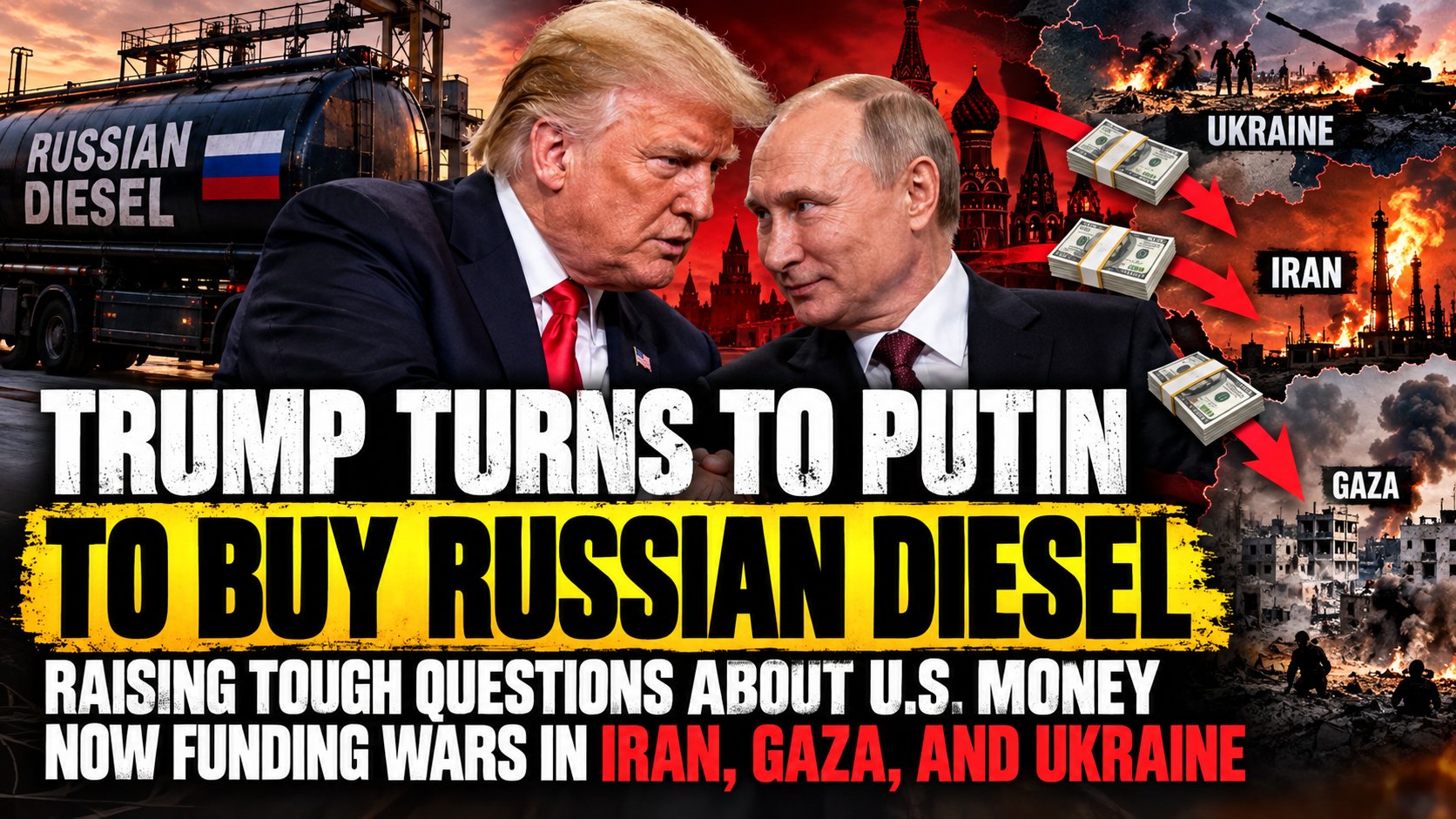
The Iran war has created a strategic domino effect thousands of miles away. Ukraine desperately needs Patriot interceptors to defend its cities against Russian ballistic missiles. Those are some of the same weapons increasingly valuable to American forces and U.S. allies confronting Iranian missile attacks. Ukrainian President Volodymyr Zelenskyy said last week that Ukraine has received only about one-third as many air-defense missiles from allies in 2026 as it received during the comparable period in 2025. Zelenskyy explicitly identified the Middle East war as the principal reason for the decline. The consequences are visible over Ukrainian cities.
During a massive Russian attack last week involving 24 ballistic missiles and four Zircon cruise missiles, Ukrainian air defenses failed to intercept a single one of those missiles, according to Ukraine’s air force. Russia understands the arithmetic too. If American Patriot interceptors are being consumed or reserved for the Middle East, Moscow has every incentive to increase ballistic missile pressure on Ukraine. Russia does not need Washington to formally announce that Ukraine is receiving fewer interceptors. Russian military planners can observe Ukrainian interception rates, Western production capacity and American deployments just as closely as everyone else. That means a missile fired by Iran can indirectly influence the military balance in Ukraine.
European Allies Are Being Pushed Toward the Front
The pressure does not end with Washington and Kyiv. European NATO members have already transferred significant quantities of air defense equipment and ammunition to Ukraine, including Patriot systems and other sophisticated defensive weapons. Countries including Germany, the Netherlands and Spain have faced their own difficult decisions over how much equipment can be transferred without weakening national defense requirements. European governments can purchase additional American weapons, but purchasing a missile does not make one immediately appear.
Manufacturing capacity remains the bottleneck. Ukraine has increasingly relied on a layered air-defense network combining Patriot batteries with European systems such as IRIS-T and SAMP/T, along with shorter-range defenses, electronic warfare and increasingly sophisticated anti-drone systems. Those weapons can dramatically strengthen Ukrainian defenses, but they are not universally interchangeable. Different threats require different interceptors. Ballistic missiles are particularly difficult targets, making high-end systems such as Patriot extraordinarily valuable. That means Europe cannot simply replace every missing American interceptor with another missile system and expect identical battlefield results.
The Iran War Is Becoming a Global Resource Competition
This is where the conflict becomes considerably larger than Iran. Every THAAD interceptor committed to the Middle East is an interceptor unavailable somewhere else. Every Patriot missile allocated to American forces, Israel or Gulf allies is a missile that cannot simultaneously defend Kyiv. Every Tomahawk fired at Iran reduces the inventory potentially available during a future confrontation in the Indo Pacific. The United States is still overwhelmingly more powerful militarily than Iran.
But military power is not unlimited. Washington must maintain forces in Europe, the Middle East and the Indo Pacific while defending American territory, protecting overseas bases, supporting allies and maintaining sufficient reserves to deter another major adversary from exploiting the situation. Iran only has to fight the war directly in front of it. That difference matters enormously in a prolonged confrontation.
For American military planners, the nightmare scenario is not necessarily losing the war against Iran. It is winning tactical engagements against Iran while degrading the strategic reserves required to deter or fight another adversary. A missile inventory that looks adequate when Iran is considered in isolation can look dramatically different when planners simultaneously consider Russia, China, North Korea and the defense requirements of American allies. That is why the munitions issue cannot be evaluated solely through the question of whether the United States can continue bombing Iran. The Pentagon has to think about the war after this war.
Tehran May Be Trying to Turn Trump’s Political Clock Against Him
Iran’s emerging strategy therefore looks less like an attempt to defeat the United States militarily and more like an attempt to survive longer than Washington’s willingness to absorb the costs. Keep Hormuz restricted. Keep oil markets nervous. Keep American naval and air forces deployed. Keep negotiations alive without giving Trump the decisive agreement he wants. Keep forcing expensive American defensive systems to intercept Iranian weapons. And wait.
If the conflict remains unresolved through the 2026 midterm elections and into the final two years of Trump’s presidency, Tehran could calculate that political pressure inside the United States will steadily increase. By January 20, 2029, Trump is constitutionally scheduled to leave office. The 22nd Amendment prevents him from being elected president again, meaning Iran knows exactly when the current administration ends regardless of what happens politically between now and then.
A new president would then inherit the conflict. That administration could decide to continue Trump’s strategy. It could escalate. Or it could seek an entirely different diplomatic arrangement. From Tehran’s perspective, simply reaching that moment without surrendering its core negotiating position could represent a strategic victory. That does not mean Iran knows who the next president will be or that a Democratic administration would necessarily offer Tehran more favorable conditions. There is no guarantee whatsoever that Trump’s successor would abandon his policies. Iran does not need that guarantee. It only needs to believe that a future administration creates another opportunity to reset negotiations.
The 2026 Midterms Could Arrive Much Sooner Than 2029
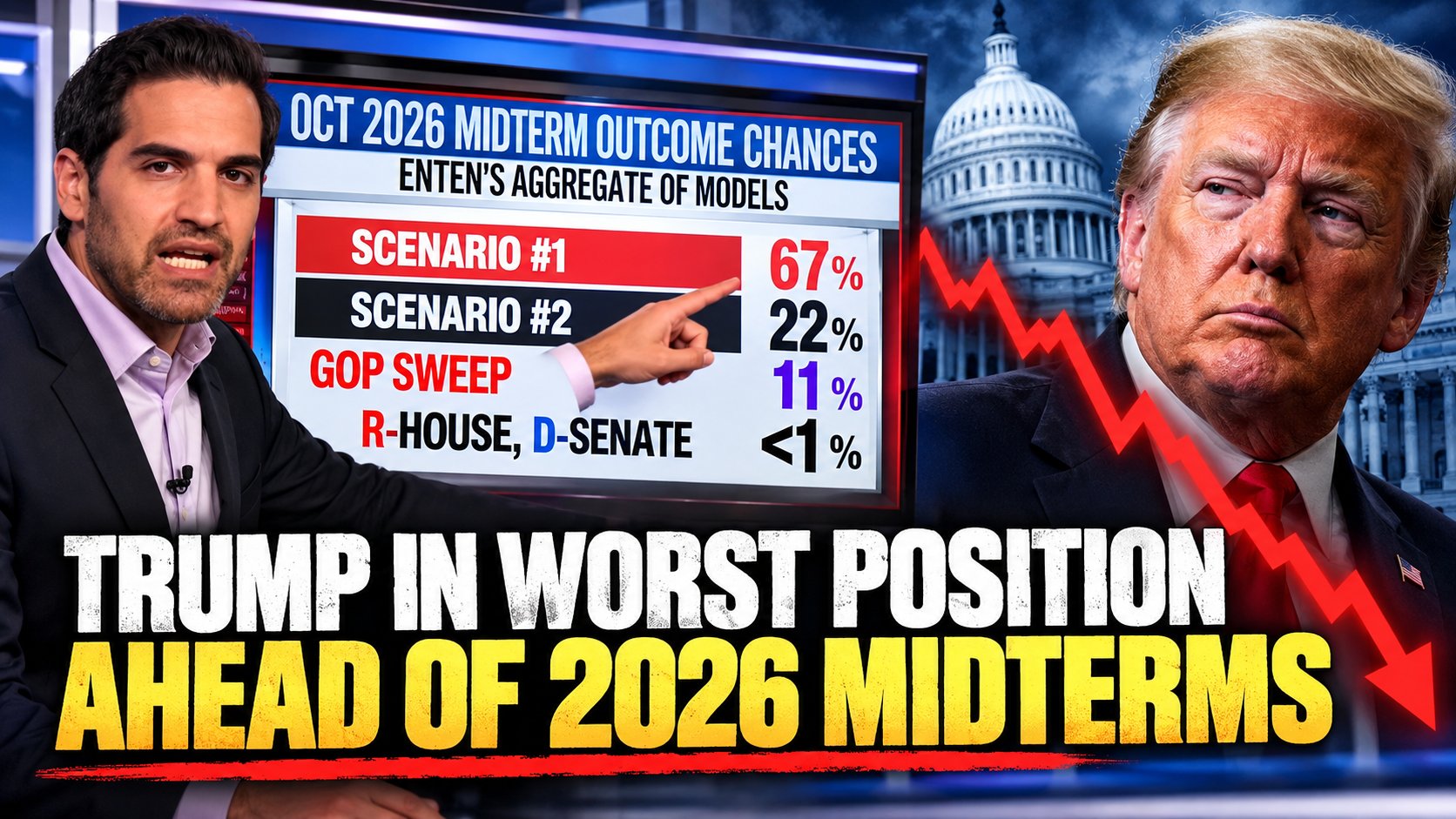
Iran may not even need to wait until Trump leaves office to create political consequences. The 2026 midterm elections arrive in November. If American voters enter those elections facing elevated gasoline prices, persistent inflationary pressure and an expensive Middle Eastern conflict with no obvious conclusion, Iran’s strategy could begin influencing American politics long before the next presidential election. Presidents do not personally appear on the ballot during midterm elections, but their parties almost always pay a political price when voters are dissatisfied with economic conditions or the direction of the country.
That gives Tehran another potential pressure point. Iran cannot determine the outcome of an American election, and there are countless domestic issues that will influence voters far more directly. But Tehran can attempt to create economic conditions that make governing more difficult. That is geopolitical warfare conducted through markets rather than territory.
That Would Be a Ruthlessly Effective Political Strategy, If Iran Can Survive It
There is, however, enormous risk for Iran. Waiting out Trump only works if the Iranian government can withstand continued sanctions, military strikes, infrastructure destruction, internal economic pressure and the possibility of renewed large-scale American attacks. Trump also retains escalation options that could dramatically change Tehran’s calculation.
Iran is therefore playing an extremely dangerous game. But it is a game built around one uncomfortable reality for Washington: the United States may possess vastly greater military power while Iran possesses something American presidents never have enough of time without an election.
The Strait of Hormuz gives Tehran a mechanism for converting that time into economic pressure. American missile depletion gives it another mechanism for converting time into military pressure. Ukraine demonstrates the global consequences. And Trump’s political calendar provides a finite endpoint. The viral claim that Iran has officially declared it will keep Hormuz closed until the final day of Trump’s presidency goes beyond what credible reporting currently establishes. The more important story is that Iran may not need to say it.
If Tehran can maintain enough control over Hormuz to keep energy markets unstable, survive American military pressure, force the Pentagon to continue burning through sophisticated weapons and prevent Trump from obtaining the decisive victory or agreement he wants, then the calendar itself begins working in Iran’s favor. Washington can destroy targets. It can deploy aircraft carriers. It can fire Tomahawks. It can intercept Iranian missiles. What it cannot manufacture is unlimited time, unlimited interceptors or another four years for Donald Trump. That may ultimately be the calculation Tehran is making.
Sources
- Reuters — Trump Says Iran Must Pay Compensation as Hormuz Standoff Continues
- TIME — Iran Lays Out Six Conditions for Reopening the Strait of Hormuz
- Associated Press — Trump Rejects Iran’s War Reparations Demands
- Reuters — Wall Street Falls as Expectations of a Hormuz Agreement Fade
- The Washington Post — U.S. Fires More Than 850 Tomahawk Missiles During Iran War
- Center for Strategic and International Studies — Renewed Iran War Would Test Diminished U.S. Interceptor Inventories
- Associated Press — Replenishing Key U.S. Weapons Used in Iran War Could Take Years
- Reuters — Ukraine Says Missile Interceptor Deliveries Have Fallen to One-Third of 2025 Levels
- FactCheck.org — How Iran Blocking the Strait of Hormuz Affects U.S. Energy Prices














































Want to join the conversation?
Create an account or sign in to share your thoughts, vote,
and reply to other readers.
Showing 0 of 0 comments
Don't have an account?
Already have an account?