
Former Defense Secretary Robert Gates Warns America May Be Entering Its Most Dangerous Era Since World War II
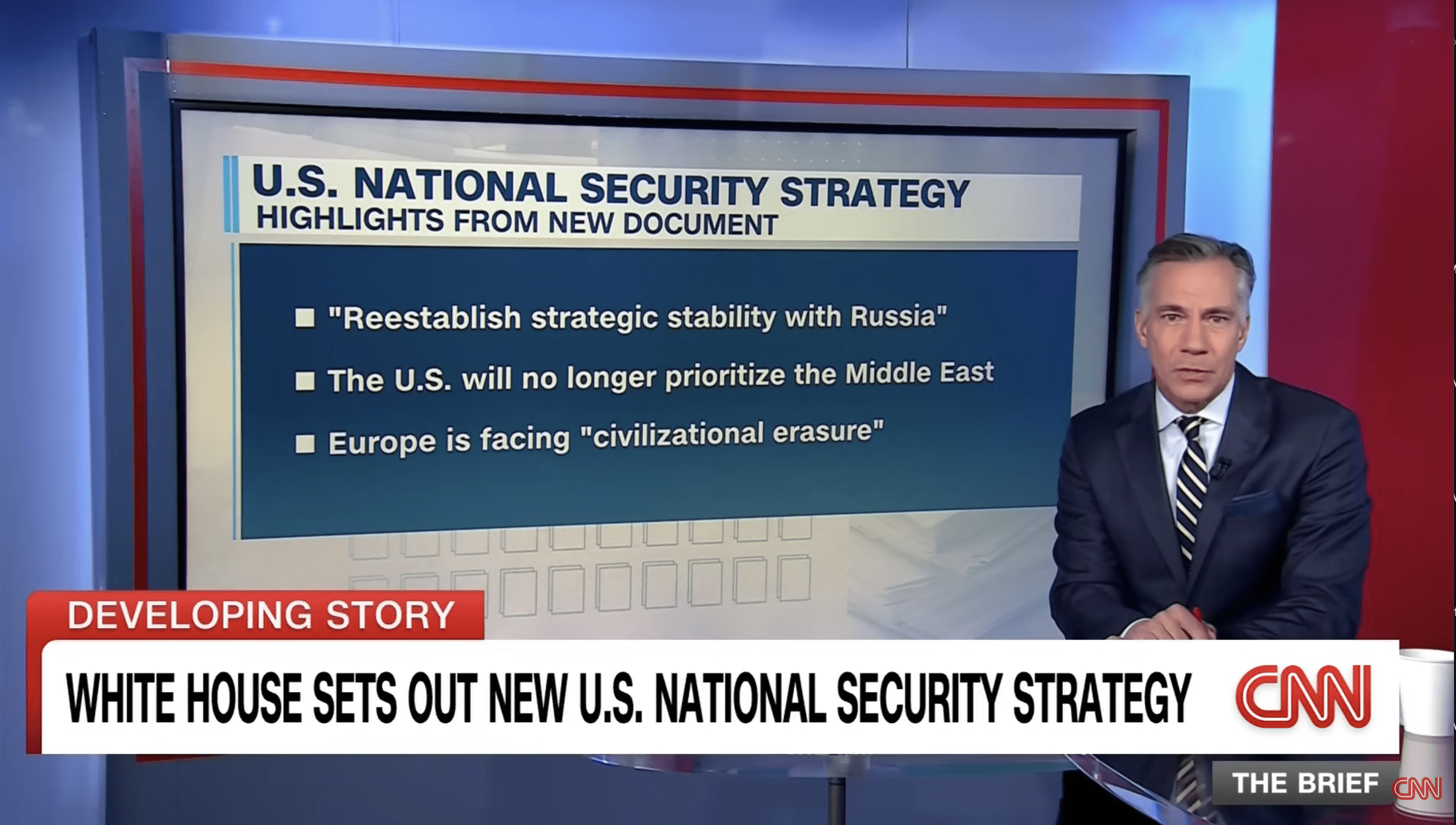
Former U.S. Defense Secretary Robert Gates delivered one of the bleakest assessments of American national security in recent memory this week, warning that the United States is now confronting a level of global danger unlike anything seen in modern history. During an extended interview analyzing America’s military readiness, geopolitical position, and growing tensions with China, Russia, and Iran, Gates described a rapidly changing world where the United States no longer enjoys the overwhelming industrial, military, and strategic dominance it possessed for decades after World War II.
For the first time in American history, the U.S. is simultaneously facing multiple nuclear armed superpower rivals across separate theaters of conflict. And according to Gates, the balance of power is shifting fast.
“We are in perhaps the most dangerous period in modern American history.”
The warning was not political theater. It came from one of the most experienced national security officials in modern U.S. history a man who served under both Republican and Democratic administrations and oversaw the Pentagon during some of America’s most volatile wars. What Gates outlined was not a single crisis. It was a convergence of crises.
America’s Nuclear Advantage Is Shrinking
For nearly 80 years, America’s strategic position rested on one core reality: no rival could truly match the combined military, industrial, economic, and nuclear dominance of the United States. That era may be ending. Gates warned that China’s rapid nuclear modernization is fundamentally changing the global balance of power. Once Beijing completes its current strategic buildup, Gates stated that China and Russia combined could possess nearly double the number of deployed strategic nuclear warheads compared to the United States.
That is a staggering shift in deterrence mathematics. For decades, American military doctrine operated under the assumption that the U.S. could deter one major nuclear rival at a time. Now Washington faces simultaneous strategic competition against both Moscow and Beijing while also managing growing instability in the Middle East. The implications stretch far beyond raw warhead counts. Modern warfare is increasingly defined by cyber capabilities, artificial intelligence, drone swarms, hypersonic systems, satellite warfare, and industrial production capacity, areas where China is aggressively expanding its influence.
The United States No Longer Dominates Manufacturing
Gates delivered another uncomfortable reality that many economists and defense analysts have quietly warned about for years: America no longer possesses the overwhelming industrial supremacy that once made it the “Arsenal of Democracy.” During World War II, the United States could outproduce virtually every adversary on Earth combined. American factories built tanks, bombers, ammunition, naval fleets, and vehicles at levels no rival nation could remotely approach. Today, much of that manufacturing dominance belongs to China.
Gates pointed specifically to shipbuilding and military industrial production, where Beijing has rapidly closed the gap or overtaken the United States in several categories. That matters enormously in any prolonged conflict. Wars are not won solely with advanced weapons. They are won by the ability to replace destroyed equipment faster than an opponent can destroy it. And according to Gates, America’s defense industrial base is struggling badly.
U.S. Weapons Stockpiles Are Running Thin
The wars in Ukraine and the Middle East are exposing weaknesses that were largely hidden during America’s post Cold War era of counterterrorism operations. Gates confirmed that U.S. stockpiles of precision guided munitions and advanced missile defense systems are becoming dangerously depleted. Systems like Patriot missiles, THAAD interceptors, and SM-3 naval defense platforms are expensive, technologically complex, and slow to manufacture at scale. At the same time, modern warfare is consuming ammunition at staggering rates.
The Ukraine conflict alone has transformed global military planning by revealing how quickly advanced weapons stockpiles can evaporate during sustained conventional warfare. Drone warfare, artillery exchanges, missile barrages, and air defense interception rates are now occurring at levels Western planners had not fully anticipated.
In simple terms, the United States is discovering that high tech warfare burns through inventory faster than its factories can currently replenish it. That becomes extremely dangerous when facing adversaries with larger industrial output and state controlled manufacturing systems.
China’s Real Advantage May Be Soft Power
One of Gates’ most important observations involved China’s growing use of non-military influence. Unlike the Soviet Union during the Cold War, China is not attempting to dominate purely through military intimidation or ideological revolution. Instead, Beijing is using infrastructure investments, trade agreements, development programs, resource partnerships, and economic dependency to steadily expand its global influence.
From Africa to South America to Southeast Asia, China has spent years embedding itself economically inside emerging markets while the United States often remained distracted by domestic political conflict and endless wars. That strategy matters because global influence is not determined solely by aircraft carriers or missile systems. It is determined by who controls supply chains, ports, rare earth minerals, communications infrastructure, debt relationships, and technological ecosystems. China understands that. And Gates appears deeply concerned that many Americans still do not.
Pentagon Leadership Turmoil Raises New Concerns
The interview also touched on growing instability within the Pentagon itself under Defense Secretary Pete Hegseth. Host Margaret Brennan noted that at least 16 high ranking military officials have reportedly been removed, replaced, or pushed out during an active period of global conflict and military escalation. That includes major leadership positions involving the Army, Navy, and regional combat commands. Gates did not argue that leadership changes are inherently improper. Defense secretaries routinely reshape command structures. What concerned him was the apparent lack of transparency surrounding the removals.
Gates explained that during his own tenure, when senior officials were fired or replaced, the Pentagon publicly explained the rationale to Congress, the media, and the military itself in order to preserve cohesion and institutional trust. Without that transparency, abrupt leadership purges risk damaging internal stability precisely when continuity and coordination are most needed. That concern becomes even more serious during simultaneous geopolitical crises involving Russia, China, Iran, and growing global military fragmentation.
America’s Greatest Weakness May Be Internal Fracture
Underlying Gates’ warnings was a deeper fear that extends beyond missiles, factories, or troop deployments. The United States is entering this dangerous geopolitical period deeply divided internally. Political polarization, institutional distrust, cultural warfare, congressional dysfunction, and fragmented leadership have created a situation where America’s adversaries increasingly view the country as strategically distracted.
Meanwhile, China continues executing long-term industrial strategy. Russia continues adapting to prolonged warfare. Iran continues operating through regional proxies. And the United States remains trapped in permanent domestic political combat. That combination worries many national security experts far more than any single foreign threat. Because history repeatedly shows that great powers rarely collapse solely because of external enemies. They weaken internally first.
The Global Balance of Power Is Changing
Robert Gates’ warning ultimately cuts through years of political spin coming from both parties. The world order that existed after the Cold War is breaking apart. America still possesses enormous military power, technological capability, and economic strength. But the assumption of permanent uncontested dominance no longer reflects reality. The United States now faces near-peer adversaries with growing nuclear capabilities, larger manufacturing output, expanding global alliances, and increasingly sophisticated military systems.
At the same time, America’s own defense stockpiles are strained, its political institutions are fractured, and confidence in leadership continues eroding across large parts of the population. That does not mean collapse is inevitable. But Gates’ message was unmistakable. The era of assuming America can endlessly project power without rebuilding its industrial base, stabilizing its institutions, and adapting to a multipolar world may be over.













































Want to join the conversation?
Create an account or sign in to share your thoughts, vote,
and reply to other readers.
Showing 0 of 0 comments
Don't have an account?
Already have an account?