
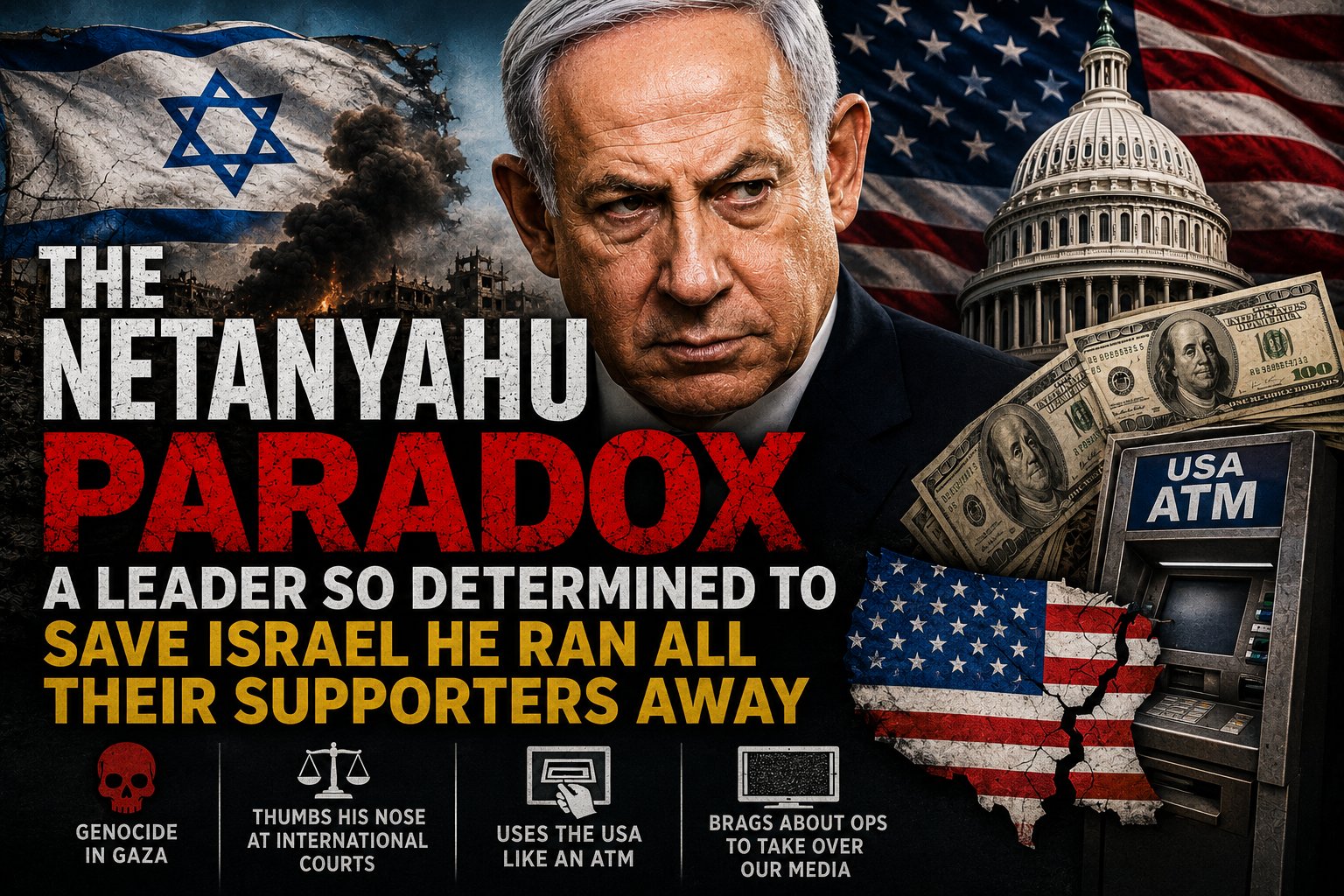
The Netanyahu Paradox: A Leader So Determined to Save Israel He May Leave It and the USA Weaker
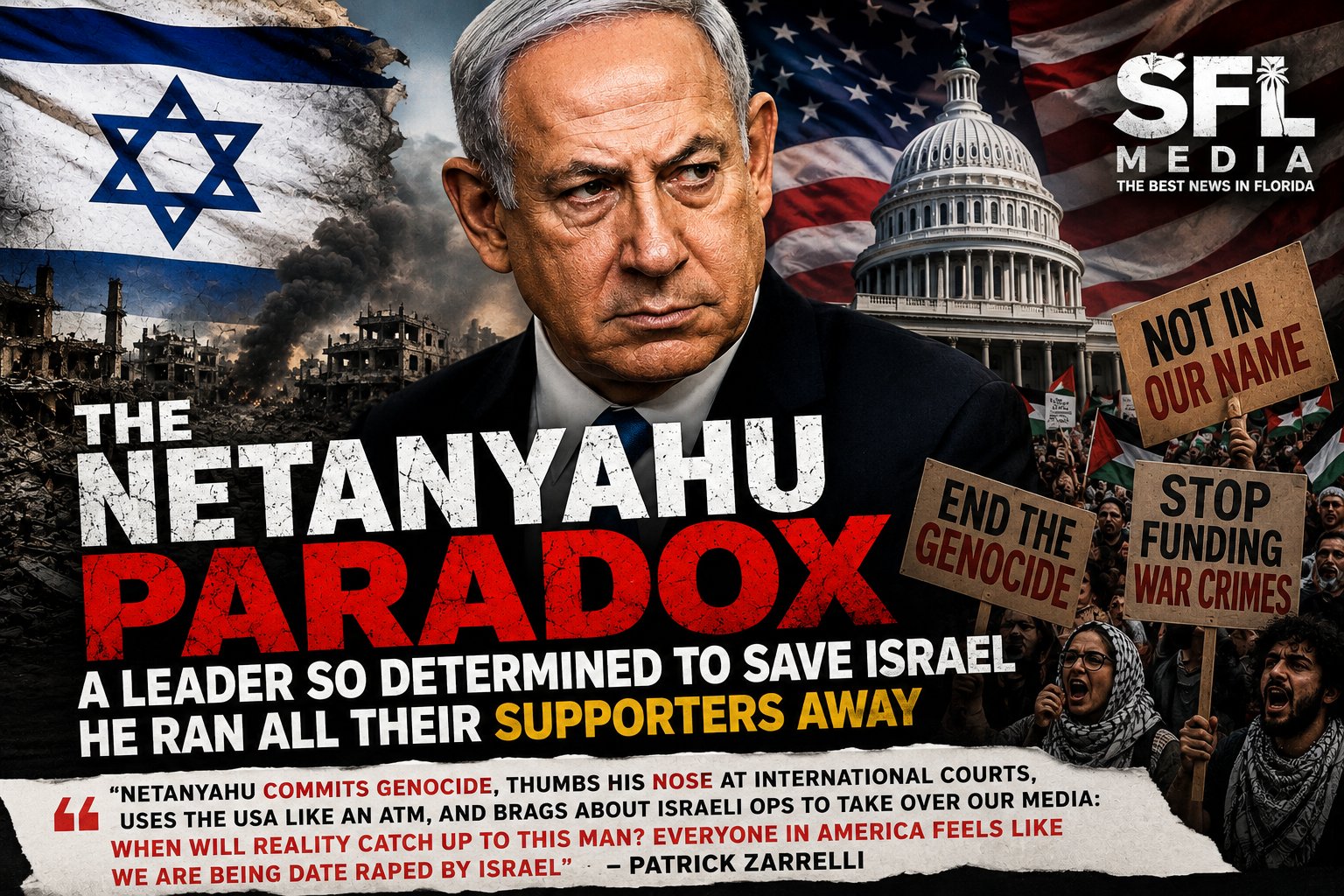
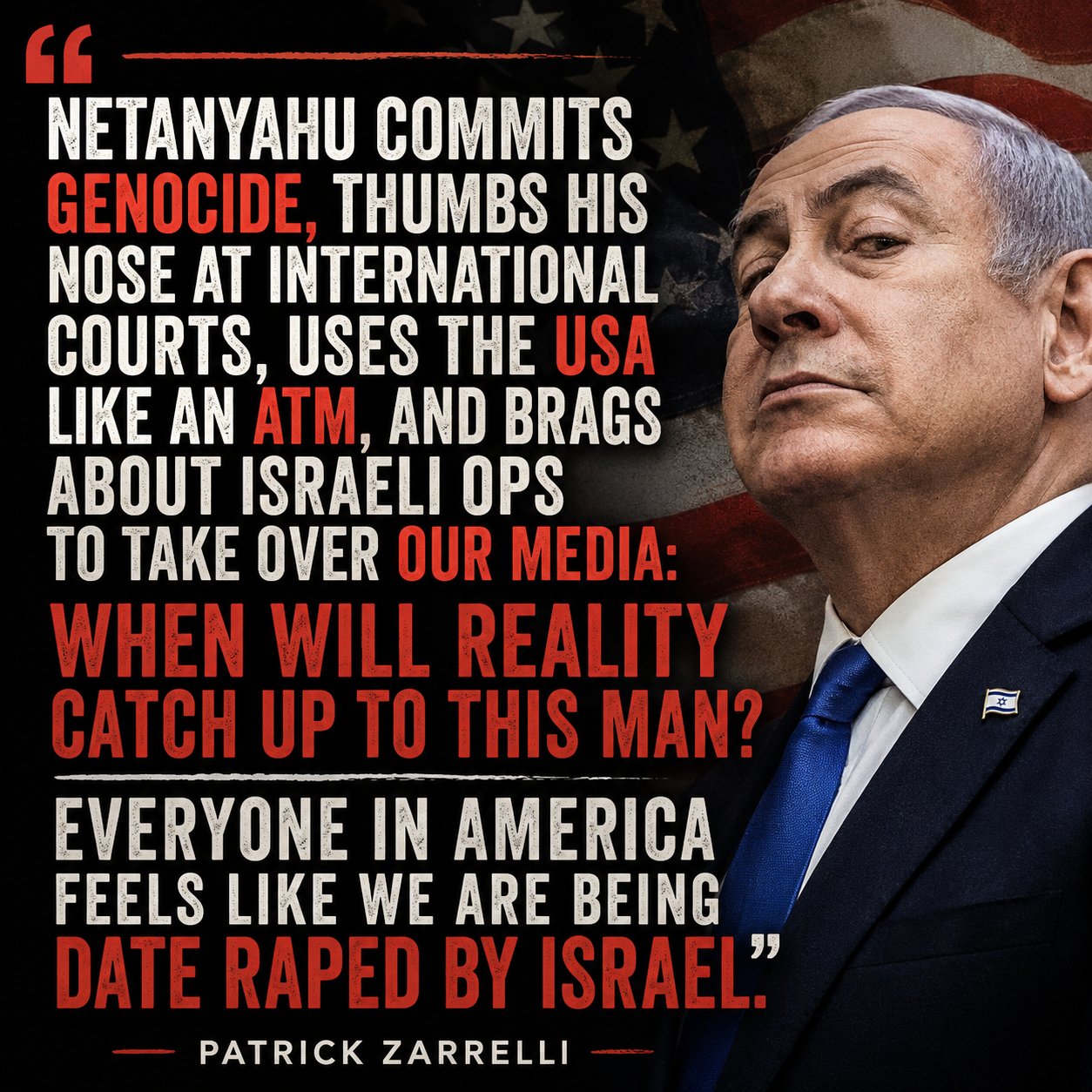
“Netanyahu Commits Genocide, Thumbs His Nose at International Courts, Uses the USA Like an ATM, and Brags About Israeli Ops to Take Over Our Media: When Will Reality Catch Up to this Man? Everyone in America Feels Like We Are Being Date Raped by Israel” – Patrick Zarrelli
History is filled with leaders who became convinced that their personal vision and their nation’s destiny were the same thing. They accumulated power, dismissed warnings, interpreted temporary military victories as proof of strategic genius and eventually became incapable of distinguishing between protecting the state and protecting their own political project. Napoleon Bonaparte did it. Kaiser Wilhelm II did it. Tsar Nicholas II did it. The leaders of imperial powers throughout history have repeatedly discovered the same brutal lesson, military strength can win battles while political arrogance loses the larger struggle.
Benjamin Netanyahu risks joining that list. That does not mean Israel is about to disappear. Israel remains a wealthy, technologically sophisticated country with powerful armed forces, nuclear ambiguity, a formidable intelligence apparatus and deep relationships with the United States and other Western governments. Predictions of Israel’s imminent collapse are not supported by the available evidence.
The more defensible, and potentially more consequential, argument is different: Israel may eventually emerge from the Netanyahu era militarily formidable but economically burdened, diplomatically damaged, politically fractured and substantially more isolated than the country Netanyahu inherited. That would represent one of the great strategic paradoxes of modern Israeli history. Netanyahu has spent much of his career presenting himself as the indispensable guardian of the Jewish state. Yet the ultimate measurement of that legacy will not be how many enemy commanders Israel killed, how many targets it destroyed or how many dramatic military operations Netanyahu announced on television. It will be whether Israel itself is stronger when he leaves. Increasingly, that answer is complicated.
Winning Battles Is Not the Same as Winning History
One of the most dangerous mistakes political leaders make is confusing tactical dominance with strategic success. Napoleon was still capable of winning battles while his empire was beginning to unravel. Germany entered World War I as one of the most powerful industrial states on Earth. Imperial Russia possessed an enormous army before Nicholas II tied his monarchy to a catastrophic war effort. None of those governments collapsed because they suddenly became incapable of inflicting damage on their enemies. They collapsed because their leaders misunderstood the difference between power and sustainability.
That distinction matters enormously when evaluating Netanyahu. Israel has demonstrated extraordinary military capabilities since October 7, 2023. Hamas has been devastated. Hezbollah suffered enormous losses. Iranian military infrastructure and regional proxy networks have faced unprecedented Israeli pressure. Those are significant tactical achievements.
But military success answers only one question: What can Israel destroy?
Grand strategy asks another: What political order exists after the destruction? That question remains unresolved.
As recently as July 31, 2026, significant disagreement remained over implementation of a U.S. backed Gaza roadmap. Israel demanded complete Hamas disarmament before withdrawal, while Hamas demanded Israeli action first. Netanyahu had not publicly endorsed the proposed arrangement. That is precisely the strategic problem Israel faces. A military campaign can eliminate commanders, destroy tunnels and degrade weapons systems. It cannot automatically manufacture a stable political settlement.
The Economic Bill Is Becoming Enormous
Wars do not only consume ammunition. They consume productive workers, investment, government borrowing capacity and years of economic opportunity. The Bank of Israel estimated the fiscal cost of the war that began October 7 at approximately 350 billion shekels for 2023 through 2026, and that estimate specifically excluded subsequent decisions associated with Israel’s 2026 military campaign against Iran. Approximately 116 billion shekels in war related costs were incurred during 2025 alone. Israel’s debt to GDP ratio increased from 67.6% in 2024 to 68.5% in 2025, according to the central bank.
The human mobilization behind the war has economic consequences as well. The OECD reported that nearly 300,000 reservists, roughly 6.5% of Israel’s workforce, served during the year following October 7, averaging 61 days of service each. The organization estimated that mobilization effectively reduced the civilian labor force while creating additional disruptions for families and employers.
That does not mean Israel’s economy is collapsing. In fact, this is where the argument needs intellectual discipline. The OECD has emphasized the Israeli economy’s remarkable resilience, citing its financial system, high tech sector, employment levels and long term growth potential. Its projections have anticipated substantial economic growth as security conditions improve.
That evidence cuts against apocalyptic predictions. But it reinforces another point: peace itself has become an economic asset. When reservists return to civilian employment, geopolitical conditions stabilize and businesses can invest without constantly calculating the possibility of another regional escalation, Israel’s economy benefits. Permanent mobilization carries permanent opportunity costs.
The Creation of a Permanent War State
The deeper danger is cultural. Israel has always been different from most Western countries because military service is woven directly into national life. Its reserve system is fundamental to its defense, and the country has faced genuine security threats throughout its existence. October 7 demonstrated with horrifying clarity that those threats are not theoretical.
But a society designed to mobilize quickly faces another challenge: demobilizing psychologically after prolonged conflict. A government that repeatedly tells citizens they are surrounded by existential enemies can create political conditions in which almost every disagreement becomes a security question. Criticism becomes disloyalty. Compromise becomes weakness. Diplomacy becomes appeasement. Political opponents become threats. Military solutions begin appearing more reliable than political ones because military action produces immediate, measurable results.
A missile hits something. A commander dies. A building disappears. Diplomacy is slower, uglier and infinitely less satisfying on television. But countries cannot bomb their way into every political objective. At some point, a nation has to decide what peace is supposed to look like.
Netanyahu’s Greatest Political Talent May Also Be His Greatest Liability
Netanyahu is unquestionably one of the most talented political survivors of the modern era. That is not praise or condemnation. It is observable political reality. He has repeatedly survived elections, coalition collapses, enormous demonstrations, international pressure, security catastrophes and an ongoing corruption prosecution. But political survival and national strategy are different skills.
Netanyahu’s political model depends heavily on conflict: conflict with Iran, Hamas, Hezbollah, international institutions, domestic opponents, hostile media, prosecutors and critics abroad. There is almost always another adversary. That can be enormously effective politics. It can also make normalcy politically dangerous. If a leader’s strongest argument for remaining in power is that the country faces extraordinary danger, the disappearance of extraordinary danger creates an uncomfortable question: Why is the extraordinary leader still necessary? That creates a structural incentive that democracies should always treat cautiously.
Netanyahu’s Remarkable Comments About Social Media
Perhaps nowhere is Netanyahu’s worldview clearer than in his discussion of modern information warfare. In September 2025, Netanyahu spoke to American social media influencers about the importance of social platforms in maintaining support for Israel. He described social media in explicitly strategic terms and identified TikTok as an extraordinarily consequential platform.
Whatever one thinks about Israeli policy, the underlying observation is correct: modern wars are fought simultaneously on battlefields and information networks. TikTok, X, YouTube, Instagram and traditional television can shape public perceptions of conflicts thousands of miles away. But Netanyahu’s rhetoric also exposes a serious political vulnerability. When a foreign leader publicly discusses American social media platforms as strategic instruments for maintaining support for his country, Americans are naturally going to ask uncomfortable questions about foreign influence.
That skepticism becomes even more intense when wealthy American technology and media executives with strong pro-Israel positions become involved in major platforms or news organizations. Those relationships deserve scrutiny. But scrutiny requires precision. There is no credible evidence establishing that Netanyahu personally “bought TikTok,” controls American media or secretly directs the Ellison family’s business decisions. Those claims go beyond the available evidence. The legitimate story is already significant enough without exaggerating it. Netanyahu openly understands American media and social platforms as essential terrain in Israel’s political struggle for Western support. That is remarkable because American public opinion is not Israeli territory.
America Is an Ally, Not an ATM
For decades, perhaps Israel’s greatest strategic achievement was not military. It was political. Israel constructed an extraordinary relationship with the United States that survived Democratic and Republican administrations, wars, scandals and enormous changes in American society. That bipartisan consensus was effectively a strategic asset. Every Israeli prime minister inherited it. Netanyahu has increasingly gambled with it. American support for Israel has become substantially more polarized, particularly among younger voters and Democrats. That transformation cannot reasonably be blamed entirely on Netanyahu; Gaza, generational change, social media, American polarization and changing attitudes toward foreign policy all matter. But Israeli leadership matters too.
Every combative confrontation with an American administration, every controversial statement by an Israeli minister and every image from Gaza enters an American political environment where unquestioned support for Israel is no longer guaranteed. Once bipartisan support becomes partisan support, Israel’s strategic position becomes inherently less stable. Governments change. Congress changes. Generations change. Public opinion changes. A foreign policy built around assuming American support will remain permanent regardless of Israeli policy is not strategy. It is a bet.
The Napoleon Problem
This is where the historical comparison becomes useful, but only if we use it carefully. Netanyahu is not Napoleon. Israel is not Napoleonic France. Historical analogies become ridiculous when treated literally.
The relevant similarity is psychological and strategic: successful leaders can become prisoners of their own success. Napoleon’s victories convinced him that another victory could solve the problems created by the previous victory. Eventually he invaded Russia. Kaiser Wilhelm II believed Germany could simultaneously expand naval power, pursue global prestige and intimidate rivals without producing a coalition determined to contain Germany. Instead, Germany helped construct exactly that coalition. Tsar Nicholas II believed the monarchy could survive catastrophic military pressure without fundamentally reforming the political system underneath it. It could not. The recurring historical lesson is not that arrogant leaders always lose wars. It is that power can distort feedback. The more powerful the leader becomes, the fewer people remain capable of telling him that his strategy is failing.
Israel’s Military Dominance Could Conceal Strategic Decline
This may ultimately become the central contradiction of Netanyahu’s legacy. Israel could become militarily stronger while becoming strategically weaker. Those concepts are not mutually exclusive. Israel can destroy Iranian missile facilities while losing international political capital. It can eliminate Hezbollah commanders while accumulating hundreds of billions of shekels in war costs. It can devastate Hamas militarily while failing to create a durable governing structure for Gaza. It can expand domestic weapons production while becoming more economically isolated. It can dominate every battlefield in its immediate neighborhood while watching younger generations in allied countries become increasingly hostile to Israeli policy.
That is how strategic decline sometimes works. It does not announce itself with surrender. Sometimes the tanks still work. The aircraft still fly. The intelligence services still conduct extraordinary operations. The GDP still grows. The country simply discovers that every victory costs more politically than the previous one.
Netanyahu’s Defenders Have a Serious Counterargument
Any fair assessment must acknowledge the alternative interpretation. Netanyahu’s supporters argue that the Middle East does not reward restraint. October 7 is their evidence. From this perspective, previous assumptions about deterrence and containment catastrophically failed. Hamas attacked despite Israeli economic concessions and deterrence strategy. Hezbollah maintained an enormous missile arsenal. Iran constructed a network of armed proxies surrounding Israel.
Netanyahu’s defenders therefore argue that Israel had to fundamentally reset the regional security environment. Diplomatic criticism, temporary economic damage and international anger are secondary if the result is an Iran with diminished military capabilities, a crippled Hamas and a weakened Hezbollah. There is real strategic logic behind that argument. The question is what happens afterward. Deterrence cannot be measured six months after a bombing campaign. History will measure it over decades.
 The Question Netanyahu Cannot Answer With Another Airstrike
 The Question Netanyahu Cannot Answer With Another Airstrike
The defining question for Israel is no longer whether it possesses enough military power. Clearly it does. The question is what that power is ultimately supposed to achieve. A permanently mobilized Israel? A territorially expanded Israel? A diplomatically integrated Israel? A fortress Israel capable of surviving without substantial Western support? A democratic Jewish state with normalized relationships throughout the region?
Those are radically different futures. Netanyahu has demonstrated extraordinary ability to identify enemies and mobilize Israel against them. His historical legacy will depend on whether he can identify the destination after the enemies are defeated. Because war cannot itself be the destination.
Israel After Netanyahu
Netanyahu will eventually leave office. Every leader does. When that happens, Israelis will inherit more than his military victories. They will inherit the debt. They will inherit the diplomatic relationships. They will inherit the relationship with Washington. They will inherit Gaza. They will inherit whatever remains of the Iranian confrontation. They will inherit the political culture produced by years of emergency. And they will inherit the international reputation of the country Netanyahu leaves behind.
That is when the Netanyahu era can actually be judged. The final balance sheet will not ask how frequently Netanyahu appeared on television or how many times he declared victory. It will ask something much simpler. Is Israel safer? Is it wealthier? Is it more internationally integrated? Is American support stronger? Are its democratic institutions healthier? Does the next generation have a sustainable country to govern? If those answers are yes, Netanyahu’s defenders will have a powerful historical case. If they are no, then the uncomfortable possibility becomes unavoidable. Benjamin Netanyahu may have spent decades believing that only he could save Israel, while leaving the country that followed him into war after war with a far more difficult future than the one he inherited.


















































Want to join the conversation?
Create an account or sign in to share your thoughts, vote,
and reply to other readers.
Showing 0 of 0 comments
Don't have an account?
Already have an account?