
Trump Reportedly Explodes at Netanyahu in Heated Phone Call as Lebanon Conflict Threatens Iran Peace Talks
A growing rift between President Donald Trump and Israeli Prime Minister Benjamin Netanyahu may have erupted into the open this week after multiple reports described an extraordinary phone call in which Trump allegedly berated the Israeli leader over military operations in Lebanon.
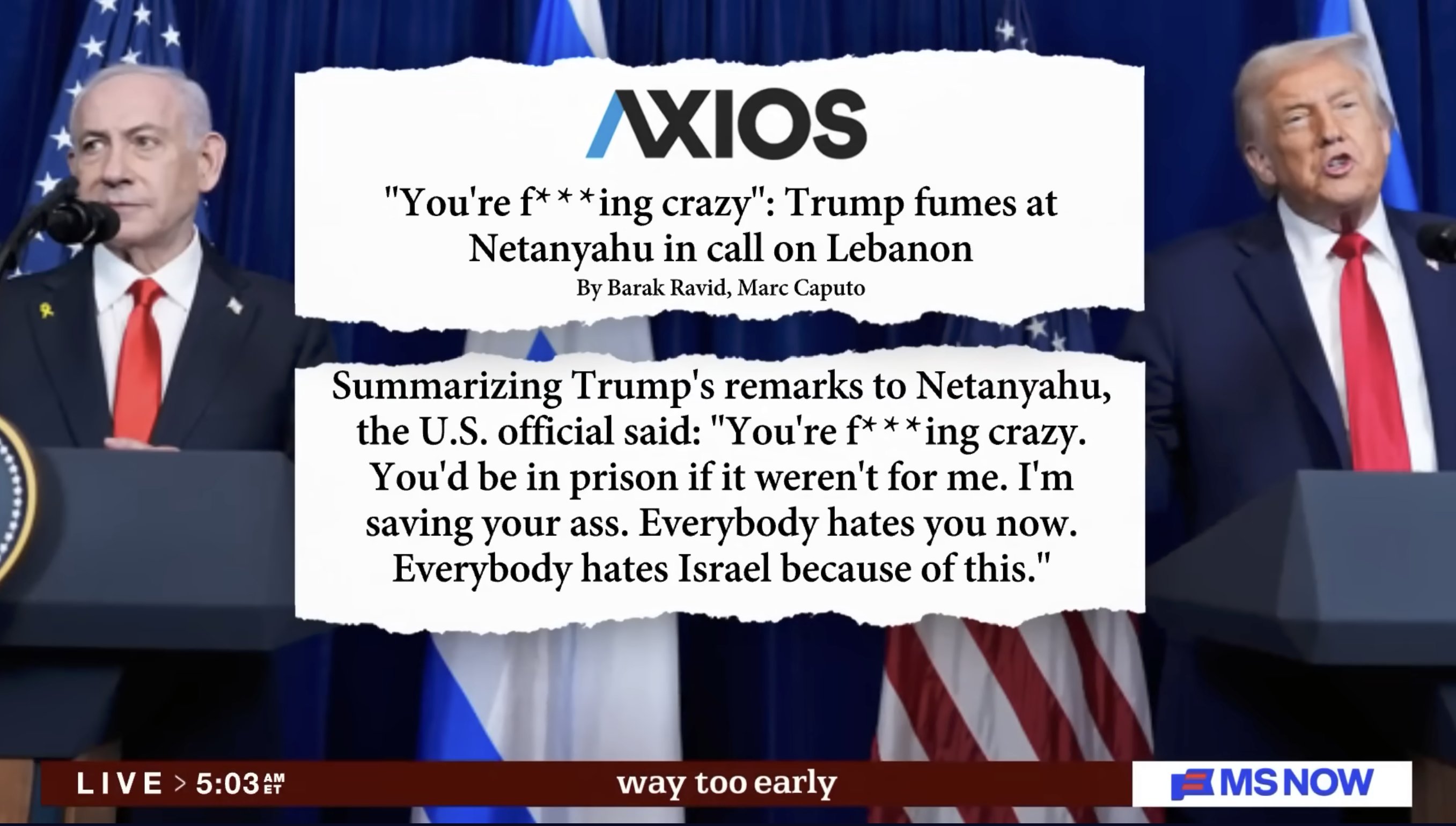
According to reporting first published by Axios and subsequently confirmed by multiple news organizations citing sources familiar with the conversation, Trump became furious with Netanyahu over plans to expand Israeli military action against Hezbollah targets in Lebanon, fearing the escalation could derail delicate negotiations with Iran and further isolate Israel on the world stage. (Axios)
If the reports are accurate, the conversation represents one of the sharpest known confrontations between Trump and Netanyahu despite years of close political alignment.
“You’re F***ing Crazy”
The reported call occurred amid rapidly escalating tensions in Lebanon and increasing concerns that Israel’s military campaign against Hezbollah could undermine broader diplomatic efforts involving Iran. According to Axios, citing two U.S. officials and another source briefed on the discussion, Trump unleashed a profanity filled dressing down of the Israeli prime minister. One official summarized Trump’s remarks as:
“You’re f***ing crazy. You’d be in prison if it weren’t for me. I’m saving your ass. Everybody hates you now. Everybody hates Israel because of this.”
A second source briefed on the call told Axios that Trump was “pissed” and at one point shouted:
“What the f*** are you doing?”
According to those sources, Trump’s anger was driven by concerns that Israel’s military actions were becoming disproportionate and risked collapsing ongoing diplomatic negotiations with Tehran. (People.com)
The Lebanon Flashpoint
The confrontation reportedly centered on Israeli plans to strike targets in Beirut following Hezbollah attacks on Israeli forces. Trump has spent months attempting to prevent the Lebanon conflict from spiraling into a broader regional war. Earlier this year, he publicly urged Netanyahu to limit military operations in Lebanon to what he described as “surgical” actions rather than large-scale offensives.
According to officials familiar with the latest dispute, Trump specifically objected to the scale of proposed Israeli strikes and expressed concern about civilian casualties in Lebanon. He reportedly argued that leveling large sections of Beirut to eliminate Hezbollah targets would further damage Israel’s international standing and complicate American diplomatic efforts.
Following the call, Israeli plans for a major strike on Beirut were reportedly suspended.
Netanyahu’s Immediate Pushback
What makes the incident especially notable is that Netanyahu appeared unwilling to publicly follow Trump’s lead. After Trump posted on Truth Social describing the conversation as productive and suggesting that both sides were moving toward de-escalation, Netanyahu issued statements indicating Israel would continue military operations in southern Lebanon and retain the option of striking Beirut if Hezbollah attacks persisted. (The Times)
That public contradiction highlighted what appears to be a widening divide between Washington and Jerusalem over how aggressively to prosecute the conflict. For years, critics argued that Trump gave Netanyahu extraordinary diplomatic and political support. During Trump’s first presidency, the United States moved its embassy to Jerusalem, recognized Israeli sovereignty claims over disputed territory, and generally aligned itself closely with Netanyahu’s government. The latest dispute suggests that alliance may now be facing significant strain.
Iran Talks Hanging in the Balance
The timing of the blowup is particularly important because it comes as the Trump administration continues pursuing a broader diplomatic agreement with Iran. According to reports, Iranian officials warned that escalating Israeli military operations in Lebanon could jeopardize ongoing negotiations with Washington. Those warnings reportedly helped trigger Trump’s frustration with Netanyahu. Complicating matters further, Trump recently appeared to express frustration with the pace of the talks themselves. Speaking publicly about negotiations, Trump remarked:
“Frankly, I thought they started to get very boring. It took too long.”
Yet administration officials continue to insist that a negotiated framework remains possible. The White House has attempted to separate negotiations with Iran from the Israel-Hezbollah conflict, but events on the ground increasingly suggest the two issues are deeply intertwined. Every new Israeli strike risks triggering a broader regional response that could derail diplomacy entirely.
The Netanyahu Legal Reference
One of the most striking portions of the reported exchange involved Trump’s alleged claim that Netanyahu “would be in prison” without his support. The comment appears to reference Netanyahu’s long running corruption trial in Israel, which has dominated Israeli politics for years.
While Trump has frequently defended Netanyahu publicly, the reported remark suggests Trump views himself as having played a significant role in helping Netanyahu maintain political viability during periods of intense legal and political pressure.
Whether Trump actually used those exact words remains impossible to independently verify because neither government has released a transcript or recording of the call. The White House has declined to comment on the reported tone of the conversation. (https://www.fox19.com)
A Rare Public Break
Even if some details remain disputed, the larger picture is becoming increasingly clear. Trump and Netanyahu appear to be diverging on strategy. Trump’s priority appears focused on containing regional escalation and preserving negotiations with Iran. Netanyahu’s government, meanwhile, continues emphasizing military pressure against Hezbollah and maintaining operational freedom in Lebanon.
For decades, U.S.-Israeli disagreements typically occurred behind closed doors. If the reports surrounding this week’s phone call are accurate, that era may be ending. Instead of quiet diplomatic disagreements, the world may now be witnessing an increasingly public power struggle between two leaders known for their strong personalities, political instincts, and unwillingness to back down. And with fighting continuing in Lebanon, Iran threatening to walk away from negotiations, and Congress preparing to scrutinize the administration’s Middle East strategy, the consequences of that conflict could extend far beyond a single angry phone call.


















































Want to join the conversation?
Create an account or sign in to share your thoughts, vote,
and reply to other readers.
Showing 0 of 0 comments
Don't have an account?
Already have an account?