
Anthony Scaramucci Says Trump Is Delivering Putin’s Foreign Policy Wish List, Raising Questions About Russia’s Influence Over Washington
The former Trump White House communications director argues that Donald Trump’s policies toward NATO, Europe and Russia have repeatedly advanced Vladimir Putin’s strategic interests, while stopping short of alleging that the president is a Russian intelligence agent.
Former Trump Insider Delivers a Blistering Assessment of the President’s Russia Policies
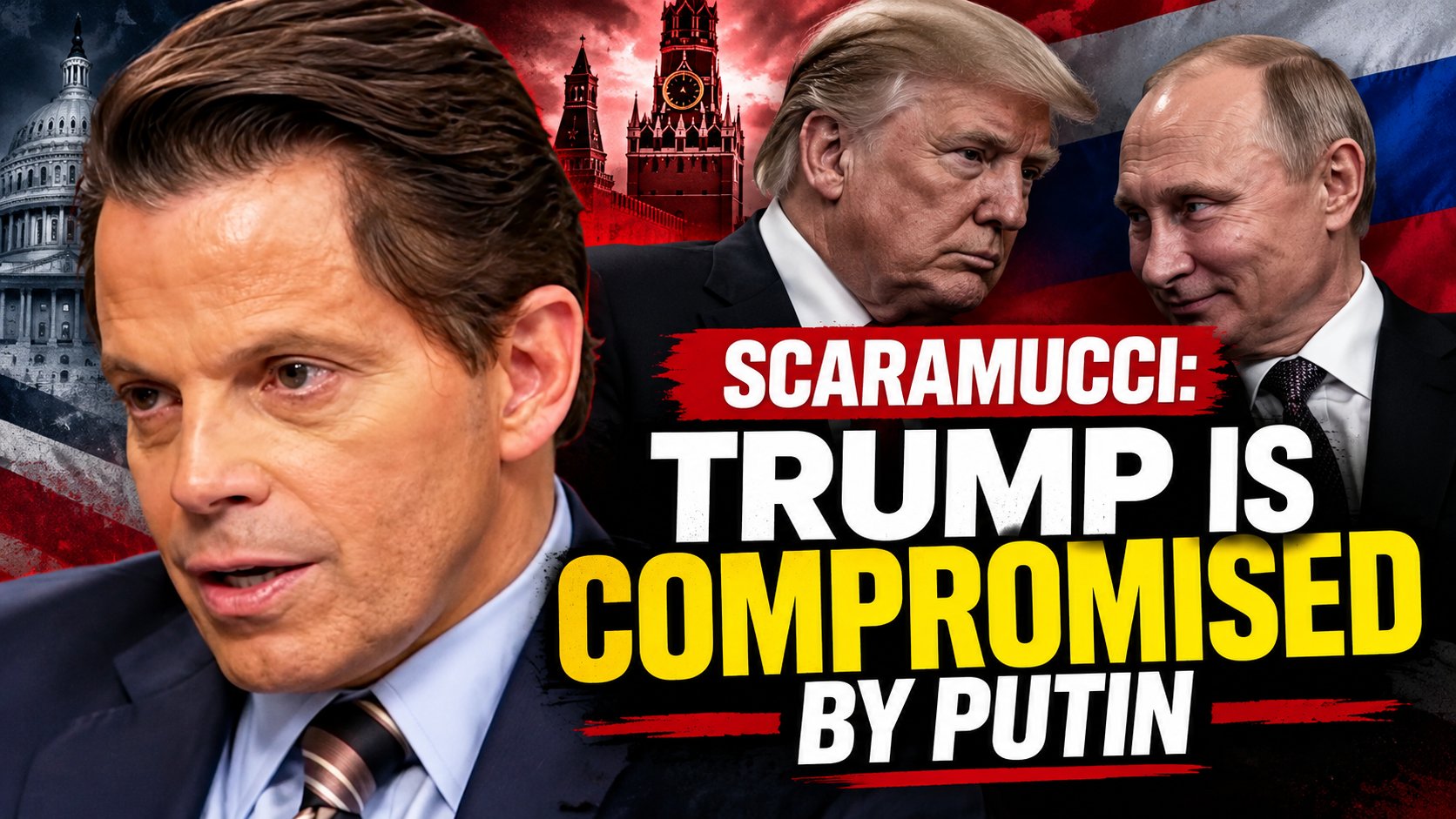
Anthony Scaramucci, the former White House communications director who once served under President Donald Trump, has delivered a sweeping criticism of the president’s relationship with Russian President Vladimir Putin, arguing that Trump’s political rise and foreign policy decisions have produced extraordinary strategic benefits for Moscow.
In a sharply worded video posted to YouTube, Scaramucci described Trump’s election as one of the greatest foreign policy successes in Russian history since the fall of the tsarist monarchy. His central argument was not that Trump had necessarily been recruited by Russian intelligence or was knowingly working as an operative for Moscow, but that his actions have so consistently aligned with Putin’s interests that the practical consequences deserve serious scrutiny.
Scaramucci pointed to Trump’s confrontational approach toward NATO, proposals to reduce American military forces in Europe, decisions involving nuclear arms agreements and rhetoric concerning Russian assistance to American adversaries. Taken together, he argued, those positions resemble a list of strategic objectives that Moscow has pursued for decades. The accusations are politically explosive, particularly because they come from a former member of Trump’s own administration. However, Scaramucci’s assessment remains an argument about the consequences of presidential decision-making rather than documented proof of espionage, coercion or a secret arrangement between Trump and the Kremlin. Understanding that distinction is essential to evaluating the substance of his claims.
Scaramucci: Trump’s Election Was a Historic Victory for Russia
Scaramucci’s remarks, also reported by Mediaite on October 20, originated from an appearance on The 1600 podcast while he was promoting his new book. The former White House official, who served briefly as Trump’s communications director in 2017 before becoming a vocal critic, argued that the president’s record should be evaluated by comparing his decisions with Russia’s long standing foreign policy objectives.
“One of the greatest foreign policy successes in post-Tsarist Russian history is the election of Donald Trump.”
Scaramucci went further, suggesting that Trump’s actions had earned him the equivalent of a perfect score from the Kremlin. Although he acknowledged that Trump need not literally be a Russian intelligence operative, he expressed his belief that the president had been compromised by Putin. He did not present direct evidence of blackmail, recruitment or financial coercion in the excerpt, instead building his case around a series of policy decisions that he believes have disproportionately benefited Moscow.
The distinction between political alignment and actual compromise is significant. A president can pursue policies that benefit a foreign government without acting under that government’s direction. Conversely, a pattern of decisions favoring an adversary can raise legitimate national security questions, particularly when those decisions involve military alliances, intelligence cooperation and nuclear arms control. Scaramucci’s argument rests on the cumulative effect of Trump’s actions rather than proof of a covert relationship.
NATO and the Western Alliance: A Strategic Prize for Putin
One of Scaramucci’s central accusations concerns Trump’s repeated confrontations with the North Atlantic Treaty Organization, the military alliance that has served as a foundation of American and European security since 1949. Russia has long opposed NATO’s expansion and military presence near its borders, making divisions within the alliance strategically advantageous to Moscow.
Trump has repeatedly criticized NATO members over defense spending and burden sharing, while questioning the reliability of American commitments to European security. In April 2026, he threatened to withdraw the United States from NATO after European governments declined to provide naval assistance in reopening the Strait of Hormuz during the conflict involving Iran. Reuters reported that the threat renewed questions about whether a president could withdraw from the alliance without congressional approval.
Scaramucci also pointed to Trump’s rhetoric concerning Greenland, the autonomous Danish territory whose strategic location has made it increasingly important to Arctic security. Denmark is a NATO member, and threats against its territory would create an extraordinary confrontation between countries that are supposed to defend one another. For Russia, any serious rupture between Washington and Copenhagen could weaken confidence in NATO’s collective defense commitments.
Trump and his supporters have argued that demanding greater European defense spending strengthens NATO by reducing dependence on American military resources. That argument has a legitimate strategic basis, particularly as European governments confront the costs of deterring Russian aggression. However, critics distinguish between pressuring allies to contribute more and threatening the political foundations of the alliance itself. A stronger European military presence could deter Moscow, while uncertainty about American commitments could encourage Russian risk taking.
American Troop Reductions Could Reshape Europe’s Security
Scaramucci also criticized proposals to withdraw between 25,000 and 40,000 American troops from Western Europe, arguing that such reductions would advance Putin’s objectives at a time of heightened tensions with Russia. The numbers he cited should be understood as proposed reductions, not an independently verified count of troops already withdrawn.
The broader concern is supported by developments in American military deployments. In May 2026, The Washington Post reported that the Pentagon had abruptly canceled a planned deployment involving thousands of soldiers to Poland as tensions between the Trump administration and European allies intensified. The report described the decision as part of a wider reduction in America’s military presence in Europe.
American forces stationed in Europe provide more than conventional combat capabilities. They support intelligence operations, logistics, air defense, military training and the rapid deployment of reinforcements during a crisis. Their presence also signals that the United States is prepared to defend NATO territory, potentially raising the costs of Russian military aggression.
Reducing those forces could create opportunities for European governments to assume greater responsibility for their own security, a goal advocated by successive American administrations. However, reductions implemented without sufficient coordination or replacement capabilities could undermine deterrence, particularly in countries geographically exposed to Russia.
For Scaramucci, the central issue is timing. He argues that withdrawing substantial American forces while Moscow continues to threaten European security would provide Putin with precisely the strategic opening he has sought.
Russian Intelligence, Iran and the Killing of American Troops
Among Scaramucci’s most serious allegations was his reference to Russian intelligence allegedly providing targeting information to Iranian forces during attacks involving American military personnel. He criticized Trump’s response, portraying the president as dismissive of the possibility that Moscow was assisting a country engaged in hostilities with the United States.
The accusation raises an important distinction between an intelligence allegation and an established finding. The video excerpt does not provide underlying intelligence documents, operational records or an independent assessment confirming that Russian-provided satellite coordinates directly caused specific American deaths. Scaramucci’s description therefore cannot, by itself, establish Russian responsibility for particular casualties.
Nevertheless, intelligence cooperation between American adversaries represents a substantial national security concern. Russia and Iran have developed extensive military and strategic relationships, including cooperation involving weapons technology and the war in Ukraine. Any verified Russian assistance enabling attacks on American personnel would carry serious implications for Washington’s relationship with Moscow.
Scaramucci’s criticism is ultimately directed at what he considers Trump’s insufficiently confrontational posture toward Putin. His argument is that an American president should respond forcefully when credible evidence indicates a foreign power is assisting attacks on U.S. troops, rather than treating such conduct as an ordinary exchange of hostilities. Whether Trump’s actual response met that standard requires examination of the underlying intelligence, the precise presidential remarks and the administration’s subsequent actions. The short video alone does not resolve those questions.
The Nuclear Treaty Withdrawal: A More Complicated Historical Record
Scaramucci also cited Trump’s decision to withdraw the United States from the Intermediate Range Nuclear Forces Treaty, a landmark Cold War arms control agreement signed by President Ronald Reagan and Soviet leader Mikhail Gorbachev in 1987. The agreement prohibited American and Soviet ground launched ballistic and cruise missiles with ranges between 500 and 5,500 kilometers, eliminating an entire category of nuclear capable weapons that had threatened European security.
The Trump administration formally withdrew from the agreement on August 2, 2019, ending one of the most consequential arms control arrangements of the late Cold War. Scaramucci characterized the withdrawal as another decision that served Putin’s interests, but the historical record is considerably more complicated.
The United States had accused Russia of violating the treaty by developing and deploying the 9M729 missile system, allegations supported by NATO allies. The Trump administration maintained that remaining bound by an agreement Russia was violating would place American and allied forces at a strategic disadvantage. NATO supported the American withdrawal and assigned responsibility for the treaty’s collapse to Russia. The withdrawal nevertheless eliminated a major arms control mechanism and created the possibility of renewed competition involving intermediate-range missiles. Critics warned that abandoning the treaty could accelerate military escalation, while supporters argued that Washington needed freedom to develop comparable weapons in response to Russian violations.
That distinction matters when evaluating Scaramucci’s broader argument. The collapse of the treaty may have served certain Russian military objectives, but it cannot accurately be portrayed as a unilateral concession to Putin without acknowledging Moscow’s documented violations and NATO’s support for the American decision.
Trump’s Latest Russia Decisions Intensify the Controversy
Scaramucci’s comments arrive amid renewed scrutiny of the Trump administration’s approach to Russia and its ongoing war against Ukraine. Recent decisions involving economic sanctions, diplomatic engagement and pressure on Kyiv have prompted criticism from both Democrats and some Republicans who believe the administration is weakening American leverage over Moscow.
In October, Trump signed an executive order waiving a broad package of sanctions against Russia, according to The Washington Post. The decision sparked bipartisan objections because the restrictions were intended to weaken Russia’s ability to finance its war in Ukraine. Trump defended the waiver as serving American national interests, while critics argued that reducing economic pressure would reward Moscow without securing meaningful concessions.
The sanctions controversy followed reports of an agreement involving Russian diesel imports and renewed tensions over American pressure on Ukraine. European leaders have also expressed concern about Washington’s approach to Kyiv, particularly as Ukrainian President Volodymyr Zelenskyy continues to seek military assistance and diplomatic support against Russia’s invasion.
Taken together, these developments provide contemporary context for Scaramucci’s argument. The dispute is no longer limited to Trump’s statements about Putin or decisions made during his first administration. It now involves the direction of American foreign policy during an active European war, the future of economic sanctions and the credibility of Western security guarantees.
However, Trump’s administration has also defended its approach as an effort to negotiate an end to the war, reduce the financial and military burden on American taxpayers and require European governments to assume greater responsibility for their own defense. Whether that strategy ultimately produces a durable settlement or strengthens Russia’s negotiating position remains an unresolved question.
Does Advancing Putin’s Interests Mean Trump Is Compromised?
The most serious element of Scaramucci’s accusation is his suggestion that Trump has been compromised by the Russian president. In intelligence and national security discussions, compromise can refer to a situation in which a foreign government possesses leverage over an official through financial relationships, personal vulnerabilities, coercion or other means. Scaramucci did not provide evidence establishing such a relationship in the video. His argument instead relies on what he considers an extraordinary pattern of decisions favorable to Moscow. That pattern may justify political criticism and closer examination, but it does not independently establish that Trump is acting under Russian direction.
There are also important differences among the policies Scaramucci cited. Threatening NATO allies over Greenland could undermine Western unity, while withdrawing from the INF Treaty followed documented Russian violations and received NATO support. Reducing American troops in Europe could weaken deterrence if implemented without adequate planning, but troop deployments also involve legitimate debates over military resources, strategic priorities and burden sharing.
Those distinctions do not invalidate Scaramucci’s criticism. They demonstrate why assessing the president’s foreign policy requires examining the evidence behind individual decisions rather than treating every disagreement with traditional American policy as proof of foreign influence. The broader question is whether Trump’s policies have consistently increased Russia’s strategic advantages relative to the United States and its allies. That is a legitimate subject for investigation, particularly when examining NATO readiness, Ukraine’s defensive capabilities, sanctions enforcement and Moscow’s international influence.
A Former Trump Official Says the Pattern Is Impossible to Ignore
Scaramucci concluded his criticism with a colorful analogy about recognizing a horse by the sound of its hooves rather than searching for a more exotic explanation. His point was that Trump’s conduct should be judged by its observable consequences, not exclusively by whether investigators can establish a hidden motive.
For the former White House communications director, the repeated alignment between Trump’s decisions and Moscow’s strategic interests has become too significant to dismiss as coincidence. His argument reflects a broader concern among critics of the administration that American foreign policy is increasingly accommodating Russia while placing additional pressure on the democratic allies the United States has historically supported.
But the stakes extend beyond the question of Trump’s personal relationship with Putin. NATO’s credibility, Ukraine’s sovereignty, European military security and the future of nuclear arms control all depend on decisions being made in Washington. Those policies have consequences regardless of whether they result from ideological convictions, domestic political calculations, diplomatic strategy or foreign influence.
Scaramucci has offered a provocative assessment from someone who once worked inside Trump’s White House. What he has not offered in the video is proof that the president is secretly controlled by the Kremlin. The distinction is essential, but so is the underlying policy debate. The question facing Washington is not simply whether Donald Trump is personally compromised by Vladimir Putin. It is whether the United States is pursuing a foreign policy that strengthens its own security and alliances or one that increasingly delivers strategic advantages to its most powerful adversaries.



































Want to join the conversation?
Create an account or sign in to share your thoughts, vote,
and reply to other readers.
Showing 0 of 0 comments
Don't have an account?
Already have an account?