
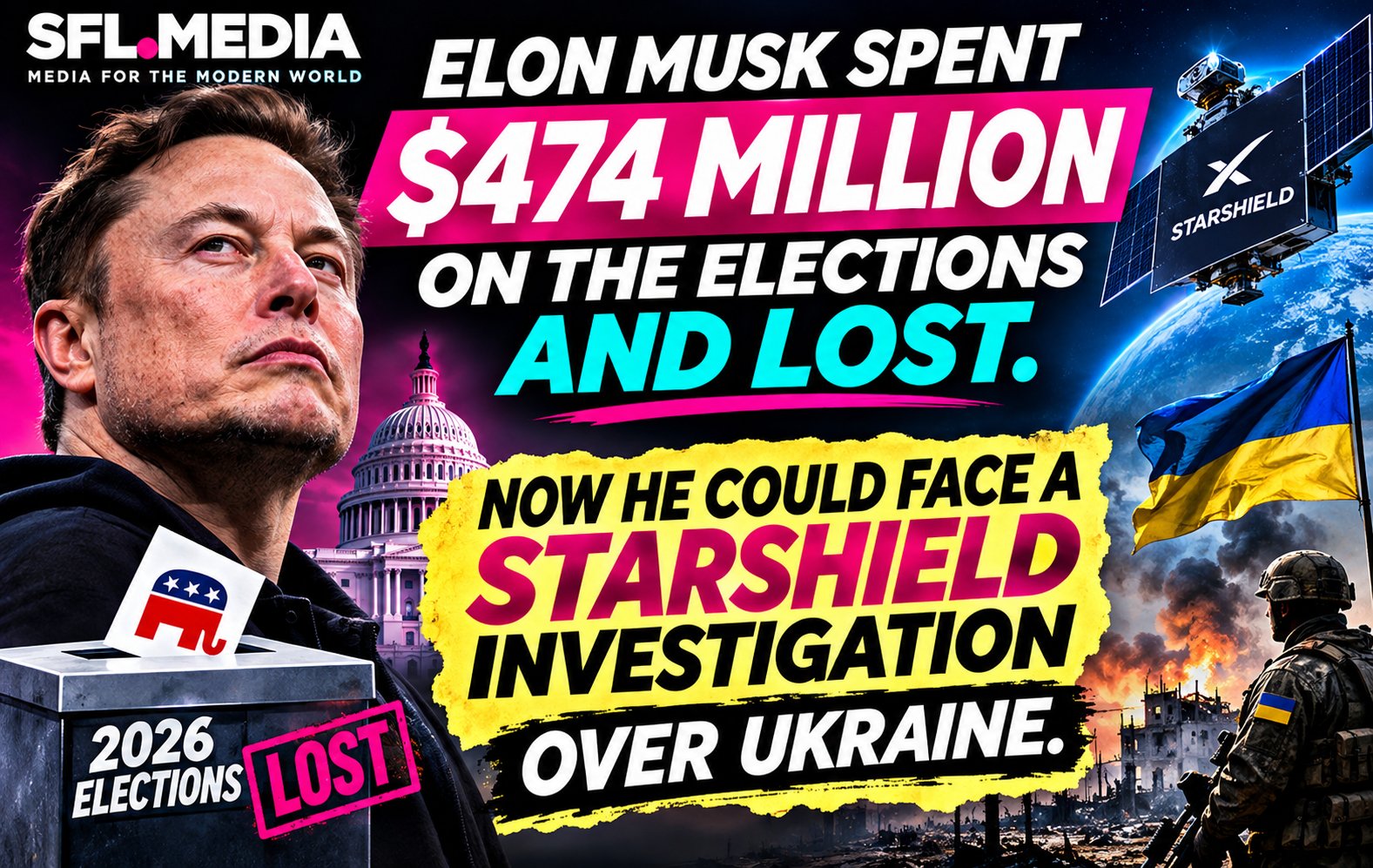
Elon Musk Spent Hundreds of Millions Backing Ken Paxton. His Starlink Decisions in Ukraine Raise an Even Bigger Question About Billionaire Power
From extraordinary political spending to billions in government contracts and controversial restrictions on Ukrainian military communications, Elon Musk’s growing influence raises fundamental questions about wealth, accountability, and the power of one unelected billionaire to shape public policy and international security.
WASHINGTON — Elon Musk has become one of the most politically influential billionaires in American history, using his extraordinary personal fortune, control of major technology companies, and ownership of a powerful social media platform to intervene in elections, influence government policy, and shape public debate. His financial support for controversial Republican candidates, including former Texas Attorney General Ken Paxton, has intensified scrutiny of the relationship between concentrated private wealth and democratic government.
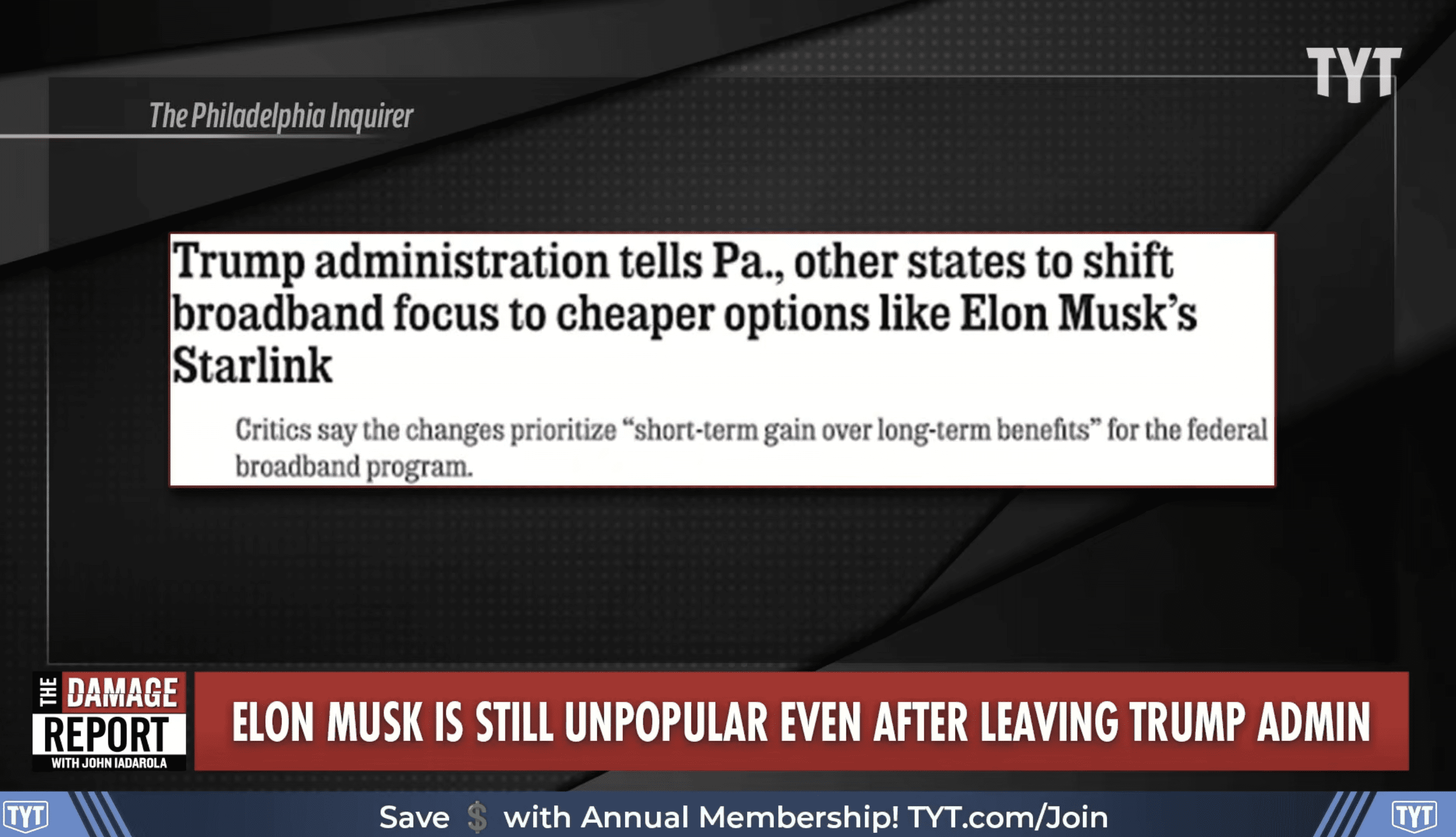
The controversy extends far beyond campaign contributions. Musk’s companies have received billions of dollars in government contracts, benefited from federal loans and tax incentives, and become deeply embedded in American national security infrastructure. At the same time, his decisions involving SpaceX’s Starlink satellite communications network during Russia’s invasion of Ukraine have raised questions about the authority private technology executives can exercise over military capabilities during an international conflict.
The central issue is not whether Musk has the legal right to support political candidates or establish operating restrictions for commercial technology. He generally does, subject to applicable election and contract laws. The more consequential question is whether the United States has allowed an extraordinary concentration of political, economic, and technological power to accumulate in the hands of an individual who is not accountable to voters.
The 2026 midterm elections have brought that debate into sharper focus, particularly in Texas, where Democrat James Talarico and Republican Ken Paxton became the subjects of one of the country’s most closely watched Senate contests. Claims that Musk spent approximately $212 million in Texas and as much as $474 million nationally require independent confirmation through campaign finance disclosures before those amounts can be presented as established facts.
Ken Paxton and the Political Candidates Musk Chooses to Support
Ken Paxton’s political career has been marked by a series of controversies that make his candidacy particularly relevant to any examination of Musk’s political priorities. As Texas attorney general, Paxton became a prominent figure in Republican efforts to challenge the 2020 presidential election results, including filing a lawsuit seeking to invalidate presidential election outcomes in four states won by Joe Biden. The U.S. Supreme Court rejected the challenge, finding that Texas lacked standing to pursue it.
Paxton also faced impeachment proceedings in Texas in 2023 over allegations involving abuse of office, bribery, and improper assistance to a political donor. The Republican controlled Texas House voted to impeach him, but the state Senate subsequently acquitted him. Separately, Paxton resolved a long running securities fraud case in 2024 through an agreement that required restitution and community service without a criminal conviction. Those outcomes are important distinctions: allegations, impeachment, acquittal, and criminal conviction are not interchangeable.
Paxton nevertheless remained a powerful figure within the Republican Party, closely aligned with Trump and the conservative political movement that has reshaped Texas politics. His Senate candidacy presented voters with a choice between an established Republican political figure carrying substantial legal and ethical controversies and a Democratic challenger who built his public profile around education, economic opportunity, and political reform.
Talarico, a former public school teacher and Texas state legislator, emerged as a prominent Democratic voice by combining arguments about affordability and public education with criticism of the growing influence of wealthy political donors. His campaign also emphasized religious values, challenging the idea that conservative politicians hold exclusive authority to define faith-based political arguments.
That contrast helps explain why Musk’s reported financial intervention attracted such intense attention. Supporting Paxton was not simply a decision to favor one political party over another. It meant directing political resources toward a candidate whose public record included serious controversies involving election challenges and official conduct.
Those controversies do not establish that Musk supported Paxton because of them. A credible examination of Musk’s motives must distinguish documented political expenditures from interpretations of why he made them.
Elon Musk’s $474 Million Midterm Gamble: The Largest Political Spending Campaign by an Outside Donor
The scale of Musk’s financial involvement in the 2026 elections was extraordinary. A New York Times analysis of federal and state campaign finance disclosures found that Musk contributed approximately $474 million to political organizations and Republican election efforts between January 2025 and mid-October 2026. The figure represents an unprecedented amount of disclosed spending by a donor who was not financing his own campaign, surpassing the contributions of other major political financiers in recent election cycles.
The spending was distributed through several organizations rather than a single political committee. Approximately $216 million went to America PAC, Musk’s own super PAC, which supported Republican candidates and operated political field programs across the country. Another $168 million went to the Senate Leadership Fund, the principal super PAC supporting Senate Republicans, while approximately $30 million went to the Congressional Leadership Fund, which supports Republican House candidates. Additional contributions totaling roughly $60 million were directed toward other federal and state political organizations.
Texas was the centerpiece of Musk’s political strategy. According to reporting based on campaign finance disclosures, approximately $212 million of his political contributions and related spending supported efforts to elect Paxton to the Senate. The figure included money directed through multiple political organizations, particularly the Senate Leadership Fund and Texas focused committees, rather than a single $212 million donation to America PAC or directly to Paxton’s campaign.
That distinction matters because federal campaign finance law limits direct contributions to candidates while allowing super PACs to raise and spend unlimited amounts independently of official campaigns. The system enables extremely wealthy individuals to exert extraordinary financial influence over elections without making contributions directly to the candidates benefiting from their expenditures.
The $474 million figure may also be incomplete. Reporting based on campaign finance disclosures noted that some federal records extended only through October 14, leaving contributions during the final weeks of the election cycle outside the available totals. Other spending through organizations that do not disclose their donors may be difficult to trace.
Despite the massive financial commitment, Musk’s principal political objectives failed. Democrats captured both chambers of Congress, while Paxton lost the Texas Senate election to Talarico. The defeat was particularly striking because Texas had not elected a Democrat to the U.S. Senate since 1988.
Musk’s political spending was not sufficient to overcome voter dissatisfaction with Republican candidates, demonstrating that even unprecedented financial resources cannot guarantee an electoral victory. It also exposed a fundamental contradiction in American campaign finance: an individual can spend hundreds of millions of dollars attempting to shape elections while remaining entirely unaccountable to the voters whose government he seeks to influence.
Musk’s Political Spending Was Enormous, but Almost Trivial Relative to His Wealth
The amount Musk committed to the 2026 elections is difficult to comprehend in ordinary financial terms. Nearly half a billion dollars could fund major public infrastructure projects, support thousands of jobs, or finance substantial educational and community programs. Yet for a person whose wealth is measured in hundreds of billions of dollars, the expenditure represents a comparatively small percentage of total net worth.
Using the approximately $901.7 billion fortune cited in November 2026 reporting, Musk’s $474 million in political contributions represented about 0.0526% of his estimated wealth. For a person with a net worth of $1 million, an equivalent proportion would amount to approximately $526. For someone with $192,000 in household wealth, the comparable amount would be approximately $101.
WHAT $474 MILLION REPRESENTS AT DIFFERENT WEALTH LEVELS
0.0526% of net worth
| Elon Musk — $901.7B | $474 million |
| Person worth $1 million | $526 |
| Household worth $192,000 | $101 |
| Person worth $100,000 | $53 |
The comparison reveals the extraordinary political influence that concentrated wealth can purchase. A middle class American contributing a few hundred dollars to a political campaign may be making a meaningful financial sacrifice. A billionaire with hundreds of billions in assets can commit sums large enough to reshape the national political advertising market while risking only a fraction of personal wealth.
That disparity raises questions about the effectiveness of existing campaign finance rules. Under the Supreme Court’s 2010 Citizens United v. Federal Election Commission decision and subsequent campaign finance rulings, independent political spending receives substantial First Amendment protection. Super PACs can accept unlimited contributions, provided their expenditures remain legally independent of the candidates they support.
The arrangement does not guarantee that wealthy donors will win elections. Musk’s 2026 experience demonstrates the opposite. But it allows a relatively small number of extremely wealthy individuals to exercise a level of political influence that ordinary citizens cannot realistically match.
The Government Helped Build Musk’s Business Empire
Musk’s political spending becomes more consequential when examined alongside the relationship between his companies and the federal government. Tesla, SpaceX, and SolarCity have all benefited from public financing programs, tax incentives, government procurement, or regulatory policies that supported their development and expansion.
Tesla received a $465 million loan through the Department of Energy’s Advanced Technology Vehicles Manufacturing program in 2010, helping finance the development and manufacturing of the Model S. The loan was an important component of Tesla’s early expansion, arriving at a time when electric vehicles remained a relatively unproven mass market technology.
Tesla repaid the loan in full, with interest, in May 2013, nine years ahead of schedule. That repayment is an essential part of the historical record. The company did not simply receive $465 million in taxpayer money and keep it. The government provided financing under a program intended to accelerate advanced automotive manufacturing, and Tesla fulfilled its repayment obligations.
The broader public contribution to Tesla’s development extended beyond that loan. Federal electric vehicle tax credits helped reduce purchase costs for qualifying consumers, while state zero emission vehicle programs enabled Tesla to generate substantial revenue by selling regulatory credits to automakers that needed them to comply with emissions requirements. SolarCity, which Tesla acquired in 2016, also operated in an industry supported by federal solar investment tax credits and state level renewable energy incentives.
SpaceX’s relationship with the federal government is even more direct. NASA and the Department of Defense have become major customers for the company’s launch systems, spacecraft, and satellite technology. These relationships involve commercial contracts for goods and services rather than simple government subsidies, but they nevertheless demonstrate the importance of public spending to Musk’s business interests.
In September 2026, NASA awarded SpaceX a $946 million contract modification covering three additional astronaut transportation missions to the International Space Station. The award increased the total value of SpaceX’s Commercial Crew Transportation Capability contract to approximately $5.92 billion. The company has also secured substantial military and national security contracts involving satellite launches and communications infrastructure.
These contracts reflect genuine technological achievements. SpaceX developed reusable rockets, substantially expanded commercial launch capacity, and became a critical provider of American space transportation. Its success cannot reasonably be attributed exclusively to government assistance. But neither can the role of taxpayer funded procurement and public investment be dismissed.
The resulting relationship creates a significant accountability issue. Musk is simultaneously a major recipient of federal contracting revenue, a powerful political donor, and a former leader of the Trump administration’s Department of Government Efficiency initiative. That combination creates potential conflicts of interest that warrant careful examination, even though receiving government contracts while making lawful political contributions is not itself evidence of corruption.
Starlink and Ukraine: When a Private Billionaire Can Influence the Battlefield
The most serious questions surrounding Musk’s power may have little to do with American elections. They concern his ability to influence military communications during Russia’s invasion of Ukraine, where SpaceX’s Starlink satellite internet network became a critical component of Ukrainian defense operations.
When Russia launched its full scale invasion in February 2022, Ukrainian communications infrastructure came under intense pressure. SpaceX rapidly supplied Starlink terminals that helped restore connectivity for civilians, government institutions, emergency responders, and military units. The network provided an important alternative to terrestrial communications systems vulnerable to physical attacks and electronic warfare.
Starlink subsequently became deeply integrated into Ukrainian military operations. Soldiers used the service to coordinate movements, communicate with commanders, transmit battlefield intelligence, and support drone operations. Its deployment represented a significant technological advantage for Ukraine and demonstrated the value of commercially developed satellite infrastructure during modern warfare.
But the same technology that helped Ukraine resist Russia also created a dangerous dependency. Because SpaceX controlled the network, decisions made by the company could affect communications availability in active combat zones.
The first major controversy emerged over a planned Ukrainian attack against Russian naval vessels near Crimea in 2022. Musk declined a Ukrainian request to activate Starlink coverage near Sevastopol, the home of Russia’s Black Sea Fleet, saying he feared that enabling the attack could make SpaceX complicit in a major escalation of the war.
Early accounts of the episode suggested Musk had actively switched off service during the operation. That characterization was subsequently corrected by Musk biographer Walter Isaacson, who acknowledged that Starlink coverage had not been enabled in the relevant area and that Musk had refused to activate it. The distinction is crucial: declining to expand coverage is different from deliberately disabling an existing military communications connection during an attack.
However, a separate Reuters investigation published in July 2025 raised substantially more serious allegations about another Starlink incident during Ukraine’s 2022 counteroffensive.
Reuters Investigation: Musk Allegedly Ordered Starlink Coverage Disabled During Ukraine’s Counteroffensive
According to a Reuters investigation based on three people familiar with the decision, Musk instructed a senior SpaceX engineer to disable Starlink coverage in parts of Ukraine during a major counteroffensive against Russian forces in September 2022.
The reported order affected areas including Kherson, a strategically important region in southern Ukraine that Russian forces had occupied following the invasion. Reuters reported that at least 100 Starlink terminals were deactivated, interrupting communications used by Ukrainian forces attempting to retake territory.
The consequences described by Reuters were significant. Ukrainian units reportedly lost access to battlefield communications and drone surveillance capabilities, while military coordination was disrupted during operations against Russian positions. The report said the interruption contributed to difficulties during an attempted encirclement of Russian forces near Beryslav, although Ukraine ultimately succeeded in recapturing Kherson later that year.
Reuters reported that Musk’s concerns involved the possibility that Ukrainian military advances could provoke a Russian nuclear response. Those concerns emerged against the backdrop of repeated nuclear threats from Russian President Vladimir Putin and growing international anxiety about escalation.
SpaceX disputed Reuters’ account as inaccurate but did not publicly identify every specific detail it contested. Musk had previously denied deliberately shutting down Starlink coverage during the conflict. Reuters also acknowledged that the precise duration and timing of the reported interruption remained unclear.
Those qualifications matter. The Reuters investigation provides substantial grounds for scrutiny, but it does not establish that Musk acted under Putin’s instructions, coordinated the decision with Russian officials, or intended to assist Russia. Such claims would require additional evidence.
Nevertheless, the allegations reveal the extraordinary strategic influence that control of private communications infrastructure can confer during wartime. If the reported order occurred as described, a decision made inside a private American technology company disrupted military operations by a country defending itself against a foreign invasion.
The broader issue is not whether Musk personally supports Russia. It is whether decisions affecting battlefield communications, military coordination, and potentially human lives should depend on the judgment of a single private executive.
The Putin Question: Strategic Consequences Are Not Proof of Collaboration
Musk’s decisions involving Starlink have repeatedly prompted accusations that his actions benefited Russia. The distinction between benefiting an adversary and deliberately collaborating with that adversary is essential to responsible reporting.
Russia’s invasion of Ukraine is a war of aggression that began with the seizure of Crimea in 2014 and escalated into a full scale invasion in February 2022. Ukrainian forces have used Starlink to maintain communications and resist Russian attacks, while Russian military operations have repeatedly targeted Ukrainian infrastructure and civilian communities.
Restrictions on Ukrainian access to Starlink can therefore have consequences favorable to Russian military objectives, particularly when they interrupt Ukrainian operations or limit the effectiveness of Ukrainian weapons systems. That strategic effect is a legitimate subject of public scrutiny.
But it would be inaccurate to conclude from those effects alone that Musk was acting on Putin’s behalf. Musk has publicly defended his restrictions as efforts to prevent dangerous escalation, and SpaceX has continued providing communications technology used extensively by Ukraine.
The more defensible criticism concerns accountability and decision making authority. An unelected private executive should not become an informal arbiter of which military operations a sovereign nation may conduct while defending itself against invasion, particularly when the technology involved has become essential to that nation’s defense.
The situation also raises questions for American national security officials. When military operations depend on private communications networks, governments must establish clear contractual terms, contingency plans, and alternative capabilities to prevent unilateral commercial decisions from disrupting critical operations.
Pentagon Contracts and the Attempt to Reduce Dependence on Musk’s Decisions
The United States eventually moved to formalize its relationship with SpaceX over Starlink services supporting Ukraine. The Department of Defense entered into contractual arrangements intended to provide more predictable communications support and establish clearer government oversight of services used for military purposes.
SpaceX’s Starshield program, which develops satellite communications and related capabilities for national security customers, represents a separate but related component of the company’s expanding defense business. Unlike consumer Starlink services, Starshield is designed around government requirements and military applications.
These arrangements can provide greater contractual clarity, but they do not automatically eliminate dependence on SpaceX infrastructure or transfer complete operational control to the Pentagon. The precise authority granted to government customers depends on individual contracts, technical architecture, and operational agreements, some of which are not publicly disclosed.
The controversy illustrates a larger problem confronting modern militaries. Commercial technology companies increasingly provide capabilities that governments once developed and operated directly, including satellite communications, cloud computing, artificial intelligence, and intelligence analysis systems.
Private sector innovation can deliver these technologies more quickly and efficiently than traditional government procurement. But when a company becomes indispensable to national defense, its executives acquire leverage that can extend far beyond ordinary commercial negotiations.
The challenge for policymakers is to preserve the benefits of private innovation without allowing critical national security decisions to become dependent on the personal judgment, financial interests, or political preferences of individual corporate leaders.
Musk’s Defeats in Texas Expose the Limits of Billionaire Political Influence
The 2026 election results provide a striking contrast between Musk’s enormous financial resources and the choices made by voters. Despite spending approximately $474 million across the election cycle and directing roughly $212 million toward efforts supporting Paxton, Musk failed to secure his preferred outcome in Texas.
Talarico’s victory was especially significant because it demonstrated that a candidate emphasizing economic concerns, political accountability, and public education could overcome both the Republican Party’s longstanding advantages in Texas and unprecedented outside political spending.
Democrat Gina Hinojosa’s defeat of Republican Governor Greg Abbott reinforced that message. The simultaneous Democratic victories in the Senate and governor’s races represented a profound political reversal in a state that had been central to Republican national strategy for decades.
Musk’s spending did not necessarily produce no political benefits. His contributions supported Republican candidates, campaign infrastructure, advertising, and voter mobilization operations across numerous states, and not every candidate benefiting from those organizations lost. Measuring the precise effect of his money would require a detailed race by race analysis of expenditures and electoral outcomes.
Still, the central result is unmistakable: the largest disclosed political spending effort by an outside donor in American history failed to preserve Republican control of Congress or deliver victory in Musk’s highest profile Texas Senate contest.
The election also raises a larger question about what happens after a billionaire loses politically. Musk’s wealth, businesses, government contracts, and ownership of X remain intact. His ability to influence public debate and future elections has not disappeared simply because voters rejected many of the candidates he supported.
The Real Issue Is the Concentration of Power, Not Just One Billionaire’s Politics
Elon Musk’s career reflects an extraordinary combination of technological achievement, commercial success, political influence, and controversy. Tesla helped accelerate the electric vehicle industry. SpaceX transformed commercial spaceflight and became indispensable to American space operations. Starlink has provided communications capabilities that have helped civilians, emergency responders, and Ukrainian forces during periods of crisis.
Those accomplishments deserve recognition. They also make the questions surrounding Musk’s political and strategic influence more important, not less.
A billionaire who controls major transportation, aerospace, communications, and social media businesses already occupies an unusually powerful position in society. When that same individual spends nearly half a billion dollars influencing elections, receives billions in federal contracts, participates in government restructuring, and exercises authority over communications systems used in active military operations, the concentration of power becomes a matter of legitimate public concern.
The issue is not whether Musk should be prohibited from participating in politics or whether successful companies should be denied government contracts. It is whether democratic institutions have established adequate safeguards to prevent private financial power from overwhelming public accountability.
The 2026 midterms demonstrated that voters can reject even the most lavishly financed political campaigns. But elections alone cannot resolve questions about government contracting, conflicts of interest, military dependence on private technology, or the influence of concentrated wealth over public policy. Those issues require transparency, congressional oversight, competitive procurement, enforceable contractual protections, and campaign finance rules capable of addressing the extraordinary scale of modern billionaire political spending.
Musk’s support for Ken Paxton and his controversial decisions involving Starlink are not identical controversies. One concerns political influence within a democratic election; the other concerns control over infrastructure with potentially life-or-death consequences during war. What connects them is the extraordinary authority that one private individual has accumulated across institutions traditionally accountable to the public.
The lesson of the 2026 election is that money cannot always purchase victory. The more difficult lesson is that losing an election does not necessarily diminish a billionaire’s power over the systems on which governments, economies, and even armies depend. The fundamental question facing Congress is no longer simply how much political influence Elon Musk can buy. It is how much power any unelected billionaire should be permitted to exercise without meaningful public accountability.
Sources & Further Reading

Campaign finance and the 2026 election
Starlink, Ukraine, and national security
Government funding and federal contracts
SFL Media coverage
SFL Media — Politics, Technology, Government Accountability, and Investigative Reporting















































Want to join the conversation?
Create an account or sign in to share your thoughts, vote,
and reply to other readers.
Showing 0 of 0 comments
Don't have an account?
Already have an account?