
America’s Global Trust Crisis Deepens as Trump and Musk Push Allies Toward China, New Defense Alliances, and Nuclear Independence
Fareed Zakaria warns that Washington is losing one of its most valuable strategic assets: the confidence of its allies. From India’s resistance to Elon Musk’s Starlink to Europe’s confrontation with Russia, a changing international order is forcing governments to reconsider their dependence on American power.
WASHINGTON — The United States is confronting a potentially historic crisis of international confidence as longtime allies question whether Washington can still be trusted to provide the military protection, diplomatic stability, and technological infrastructure that helped sustain the global security order for more than eight decades. From Europe and East Asia to Canada, India, and the Middle East, governments are increasingly exploring alternatives to American leadership, raising concerns about nuclear proliferation, competing military alliances, and a gradual restructuring of the international system.
In a pointed analysis broadcast October 25 on CNN’s Fareed Zakaria GPS, veteran foreign affairs journalist Fareed Zakaria argued that President Donald Trump’s foreign policy and billionaire Elon Musk’s growing influence over critical satellite communications have accelerated a broader erosion of confidence in the United States. Zakaria’s central argument was that American global influence has historically depended on something more valuable than military superiority or economic power alone: the willingness of other nations to believe that Washington would honor its commitments when those commitments became costly or politically inconvenient.
The warning comes as new international polling documents substantial declines in America’s reputation, while governments that once relied heavily on U.S. security guarantees are strengthening relationships with other powers. A July 2026 Pew Research Center study found that China was viewed more favorably than the United States in most of the 36 countries surveyed, a significant reversal from the international attitudes recorded during the latter years of President Joe Biden’s administration. The findings do not mean that Beijing has replaced Washington as the world’s dominant military or economic power, but they suggest that America’s longstanding diplomatic advantages are under increasing pressure.
Zakaria’s segment also featured an interview with Polish Foreign Minister Radosław Sikorski, who described Europe’s growing determination to support Ukraine and confront Russian aggression even as disagreements with Washington complicate the transatlantic relationship. Together, the commentary and interview raised a question with consequences extending far beyond the current administration: What happens when countries that have depended on American protection for generations begin preparing for a world in which that protection can no longer be taken for granted?
Elon Musk’s Starlink Dispute With India Exposes a Larger National Security Problem
Zakaria opened his analysis with an increasingly contentious dispute involving Elon Musk, the Indian government, and Starlink, SpaceX’s satellite internet network. Musk publicly criticized Indian authorities over delays in granting Starlink permission to operate commercially, suggesting that officials were protecting the business interests of Mukesh Ambani, the billionaire whose Reliance Jio telecommunications empire represents one of India’s most powerful corporate interests.
Indian authorities rejected Musk’s accusations, while nationalist organizations aligned with the country’s governing political movement raised national security objections to allowing Starlink into the market. Although the dispute initially appeared to concern telecommunications licensing and commercial competition, Zakaria argued that it exposed a much larger strategic concern: whether a country should place essential communications infrastructure under the control of a foreign corporation whose leadership maintains close relationships with the American president.
Satellite internet has become increasingly important to modern military operations, particularly in areas where conventional communications networks are vulnerable to destruction, electronic interference, or physical sabotage. SpaceX’s Starlink network has played a major role in Ukraine’s wartime communications, providing connectivity for military personnel, civilian institutions, and emergency services. The company’s military-focused Starshield offerings have also attracted attention from governments seeking secure satellite capabilities, although Starlink and Starshield are distinct services with different customers and contractual arrangements.
The Ukraine experience has demonstrated both the extraordinary military value of satellite communications and the strategic complications created when essential capabilities depend on commercial providers. Decisions about geographic access, service restrictions, military applications, and government contracts can affect how communications systems operate during armed conflict. Those decisions have generated controversy over the extent to which private technology companies should influence military operations and whether governments can maintain sufficient operational independence when relying on privately controlled networks.
For India, which has experienced repeated military confrontations with Pakistan and maintains a complex strategic relationship with both Washington and Beijing, these concerns are particularly significant. Indian policymakers must consider not only the technical capabilities of satellite communications providers but also the legal, political, and operational risks associated with foreign ownership. Zakaria suggested that India’s resistance to Musk’s pressure reflects a wider international calculation about the dangers of relying on infrastructure that could become vulnerable to geopolitical disagreements.
The distinction is important because India’s objections do not establish that SpaceX would necessarily disable communications during a future crisis. They do, however, demonstrate why governments increasingly view technological sovereignty as an essential component of national security. A communications network may be commercially attractive and technologically advanced while still creating strategic dependencies that national governments are unwilling to accept.
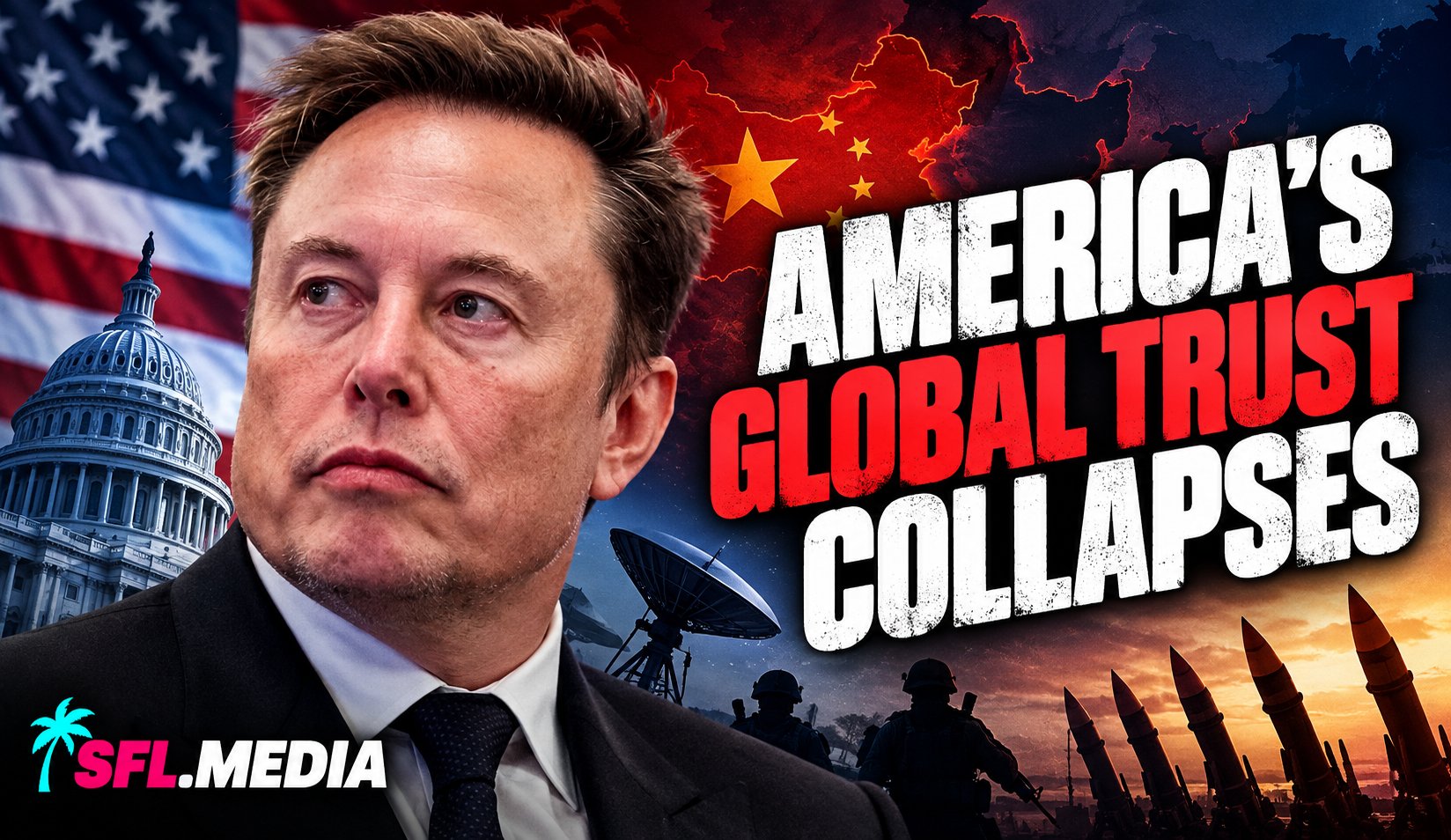
Trump’s Foreign Policy Raises Questions About America’s Reliability as an Ally
The controversy surrounding Starlink reflects a broader debate over the direction of American foreign policy under Trump’s second administration. Since returning to the White House in January 2025, Trump has emphasized transactional relationships, increased allied defense spending, and a willingness to reconsider longstanding diplomatic assumptions. His administration has argued that previous American governments allowed wealthy allies to rely too heavily on U.S. taxpayers and military resources without making sufficient contributions to their own security.
Supporters of this approach maintain that demanding greater burden sharing can strengthen alliances by encouraging partners to develop military capabilities they should have built years earlier. European NATO members, for example, have faced persistent criticism over defense spending, military readiness, and dependence on American intelligence, logistics, and advanced weapons systems. From this perspective, encouraging allies to become more capable and financially responsible does not necessarily represent an abandonment of international leadership.
Zakaria’s criticism focused on a different concern: that uncertainty about Washington’s commitments can undermine the very alliances that have historically amplified American power. If governments believe U.S. assistance might depend on unpredictable political calculations, they have incentives to seek alternative arrangements even when doing so is expensive, inefficient, or strategically risky.
That distinction separates a debate about how much allies should contribute from a more fundamental question about whether American guarantees remain dependable. Countries can accept demands for higher defense spending while simultaneously becoming concerned about the reliability of the institutions and political relationships upon which their national security depends.
The consequences extend beyond military planning. Governments considering major infrastructure projects, trade agreements, intelligence partnerships, or long term technology investments must evaluate whether those arrangements will remain viable through changes in American political leadership. As uncertainty grows, diversification becomes an increasingly attractive strategy, even among countries that continue to value their relationships with the United States.
Pew Research Finds China Viewed More Favorably Than America Across Much of the World
One of the most consequential developments highlighted by Zakaria is the deterioration of America’s international reputation relative to China. A Pew Research Center report published July 15, 2026, surveyed 42,151 adults across 36 countries between February 8 and May 13, examining attitudes toward the United States, China, and their respective leaders.
The research found that China was viewed more favorably than the United States in most of the countries surveyed. The shift reflected a combination of improving perceptions of China and worsening attitudes toward America, rather than a uniform increase in enthusiasm for Beijing. The findings also revealed important regional differences, with countries including India, Japan, the Philippines, and South Korea continuing to view the United States more positively than China.
The reversal was particularly notable because favorable international perceptions of the United States have historically provided Washington with substantial diplomatic advantages. Governments that are trusted can negotiate security agreements, organize international coalitions, attract investment, and influence global institutions with less resistance than governments viewed as unreliable or threatening. Public opinion does not determine foreign policy on its own, but it can influence the domestic political environment in which leaders make decisions about international partnerships.
U.S. Favorability in South Korea

Pew Research Center, Spring Global Attitudes Surveys. Percent of South Korean adults with a favorable view of the United States.
South Korean favorability toward the United States declined from 77% in 2024 to 45% in 2026, according to Pew Research Center.
Canada provides another striking example. Pew found that 57% of Canadians viewed the United States favorably in 2023, compared with just 14% who held favorable views of China. By 2026, those attitudes had shifted considerably, with 44% viewing China favorably and only 33% expressing a favorable opinion of the United States. The change illustrates how quickly longstanding public attitudes can evolve when political disputes, trade tensions, and security concerns alter perceptions of a neighboring country.
South Korea has experienced a similarly significant decline in favorable views of America. According to Pew’s August 2026 analysis, just 45% of South Korean adults expressed a favorable opinion of the United States, compared with 77% in 2024 and 61% in 2025. For the first time in more than two decades of Pew’s tracking, a majority of South Korean respondents held an unfavorable view of America. The findings are particularly consequential because South Korea depends on a longstanding U.S. security alliance and faces the persistent threat posed by North Korea’s nuclear weapons program.
These figures require careful interpretation. Favorability ratings are measures of public attitudes, not direct measures of military cooperation or the reliability of formal defense treaties. They also do not demonstrate that every change in opinion can be attributed exclusively to Trump. Nevertheless, the scale of the decline provides evidence that the political environment surrounding American alliances has become substantially more difficult.
Canada and Europe Explore Ways to Reduce Their Dependence on Washington
Canada’s response to changing relations with the United States illustrates how even America’s closest partners are reconsidering the risks associated with economic and strategic dependence. Prime Minister Mark Carney has pursued efforts to diversify Canadian trade relationships and strengthen cooperation with European partners, reflecting concerns about the vulnerability of an economy deeply integrated with the United States.
Canada and the United States share one of the world’s most extensive commercial relationships, along with longstanding defense cooperation through NATO and the North American Aerospace Defense Command. That integration provides substantial benefits to both countries, but it also creates vulnerabilities when trade disputes or political disagreements disrupt established expectations. Carney’s efforts to expand Canada’s international relationships can therefore be understood as an attempt to preserve economic and diplomatic flexibility rather than an immediate abandonment of Washington.
European governments face an even more complicated challenge because their security arrangements depend heavily on American military capabilities. Although European NATO members collectively possess significant economic resources and sophisticated armed forces, the alliance has historically relied on the United States for important capabilities involving strategic intelligence, long range logistics, missile defense, advanced weapons, and nuclear deterrence.
The war in Ukraine has exposed those dependencies while accelerating European efforts to expand domestic defense production and coordinate military procurement. Governments across the continent have increased spending, discussed new financing arrangements, and sought ways to strengthen their ability to respond to security threats without assuming that American assistance will always be available at the same level.
European strategic autonomy does not necessarily require replacing NATO or severing ties with Washington. Many European officials continue to regard the transatlantic alliance as indispensable while arguing that Europe must develop greater independent capabilities. The challenge is determining how to strengthen European defense without undermining the cooperation that has helped maintain regional security for decades.
Saudi Arabia’s New Defense Pact With Turkey and Pakistan Signals a Changing Middle East
The Middle East provides another example of governments reassessing their security relationships amid a period of sustained regional conflict. In August 2026, Saudi Arabia, Turkey, and Pakistan signed the Makkah Joint Defence Agreement, establishing a new framework for collective security cooperation that includes a commitment to regard an armed attack against one participating country as an attack against all three.
The agreement was signed August 7 in Saudi Arabia by Crown Prince Mohammed bin Salman, Turkish President Recep Tayyip Erdoğan, and Pakistani Prime Minister Shehbaz Sharif. The participating governments described the arrangement as an effort to strengthen deterrence, deepen military cooperation, and promote regional stability. The agreement also provides for expanded defense industrial coordination, intelligence cooperation, and other security initiatives.
The arrangement is particularly significant because Pakistan possesses nuclear weapons, Turkey maintains one of NATO’s largest military forces, and Saudi Arabia has substantial financial resources and longstanding security relationships with the United States. Their cooperation creates additional opportunities for regional military coordination outside the traditional framework of American-led security partnerships.
The agreement does not establish that Saudi Arabia has obtained access to Pakistan’s nuclear arsenal, nor does it mean that Turkey has withdrawn from NATO or that the participating countries have abandoned their existing relationships with Washington. Saudi officials have explicitly rejected suggestions that the agreement is intended to launch a nuclear arms race, while Turkish officials have emphasized its defensive purpose.
Nevertheless, the timing reflects a broader environment in which regional governments are seeking additional security options. The war involving Iran, attacks across the region, and questions about the effectiveness of existing military arrangements have increased the importance of independent deterrence and diversified partnerships.
Zakaria cited the agreement as evidence that countries historically dependent on American security guarantees are developing alternatives. That interpretation is consistent with the broader pattern of strategic diversification, although the pact also reflects longstanding military cooperation among the three countries and regional concerns that extend beyond Washington’s foreign policy.
The Nuclear Weapons Question Could Become America’s Most Dangerous Strategic Challenge
Perhaps the most consequential issue raised in Zakaria’s analysis concerns the potential spread of nuclear weapons. For decades, American security guarantees helped persuade technologically advanced countries such as Germany, Japan, and South Korea that they did not need independent nuclear arsenals to protect themselves against major military threats.
The arrangement became one of the central pillars of the postwar international security system. By extending military protection and nuclear deterrence to allied countries, Washington reduced incentives for governments to develop weapons that could otherwise trigger regional arms races. That system was reinforced by arms control agreements, the Nuclear Non-Proliferation Treaty, international inspections, and domestic political decisions made by individual governments.
Zakaria recalled President John F. Kennedy’s 1963 warning that the world could eventually contain 15 or 20 nuclear-armed states. That scenario did not materialize. More than eight decades after the atomic bombings of Hiroshima and Nagasaki, nine countries are generally recognized as possessing nuclear weapons: the United States, Russia, China, France, the United Kingdom, India, Pakistan, North Korea, and Israel, which maintains a policy of nuclear ambiguity.
The relatively limited number of nuclear-armed states represents a major feature of the existing international security order, although it cannot be attributed to American protection alone. International treaties, economic considerations, domestic politics, diplomatic negotiations, and concerns about the consequences of nuclear proliferation have also played important roles.
The concern now is that uncertainty about American commitments could change the calculations of countries that possess the technological and industrial capabilities necessary to pursue nuclear weapons. South Korea is frequently cited in this debate because it faces an established North Korean nuclear threat while depending on the United States for extended deterrence. Zakaria referenced an August survey indicating that approximately 65% of South Korean respondents supported developing an independent nuclear arsenal, illustrating the political pressure that can emerge when citizens question whether external guarantees are sufficient.
Japan faces a related but distinct debate. Its longstanding non-nuclear principles, public opposition to nuclear weapons, and constitutional and political traditions have shaped its security policies for decades. Nevertheless, China’s expanding military capabilities, North Korea’s weapons programs, and uncertainty about American commitments have encouraged discussions about how Japan should strengthen its defenses and maintain credible deterrence.
In Europe, France and Germany have explored closer discussions concerning nuclear deterrence and the potential role of France’s existing arsenal in European security. Such discussions do not amount to a decision by Germany to develop nuclear weapons, and European leaders have emphasized that stronger regional capabilities should reinforce rather than replace NATO. Their significance lies in the willingness of governments to examine arrangements that once appeared unnecessary under a more predictable American security umbrella.
A world containing additional nuclear-armed countries would create new challenges involving command and control, crisis management, weapons security, and the risk of miscalculation. Each additional nuclear arsenal would introduce another set of political leaders, military institutions, and strategic relationships into an already complicated deterrence system. Whether that outcome materializes remains uncertain, but the possibility illustrates why confidence in international security guarantees has consequences extending far beyond diplomatic reputation.
Poland’s Foreign Minister Says Europe Must Pressure Russia, Not Ukraine
The second major portion of Zakaria’s CNN segment featured Polish Deputy Prime Minister and Foreign Minister Radosław Sikorski, who addressed growing disagreements between Washington and European governments over Russia’s invasion of Ukraine.
Poland occupies a particularly important position in the conflict because it borders Ukraine, hosts critical transportation and logistics routes supporting Ukrainian defense, and maintains a longstanding concern about Russian military expansion. Warsaw has been among the strongest European advocates for military assistance to Kyiv and for maintaining pressure on Moscow through sanctions and other measures.
Zakaria questioned Sikorski about recent American statements that appeared to place greater responsibility on Ukraine for the continuation of the war while offering a more accommodating assessment of Russia’s willingness to negotiate. The Polish foreign minister rejected the premise that pressuring Ukraine into concessions would necessarily produce a durable peace.
Sikorski argued that any credible effort to end the conflict must focus on the country that launched the invasion. He emphasized that Ukraine must emerge from the war with defensible borders and sufficient security for displaced citizens to consider returning home. His position reflects the concern among European governments that a settlement imposed without meaningful security guarantees could leave Ukraine vulnerable to renewed aggression.
The disagreement highlights competing approaches to ending the war. The Trump administration has emphasized negotiations and the urgency of securing an agreement, while European leaders including Sikorski have argued that the terms of any settlement are as important as the cessation of hostilities itself. A ceasefire that leaves unresolved territorial disputes, inadequate security arrangements, or opportunities for renewed attacks could produce only a temporary pause in the fighting.
For Poland and other countries bordering Russia or Belarus, the issue is not simply a matter of diplomatic principle. Their governments must consider whether the outcome in Ukraine will affect the credibility of European borders, the effectiveness of military deterrence, and the willingness of Moscow to challenge neighboring states in the future.
Europe Is Financing Ukraine’s Survival as American Support Becomes Less Predictable
Sikorski also challenged the assumption that Ukraine’s defense remains overwhelmingly dependent on direct American financial assistance. He told Zakaria that European countries have taken on a substantially larger role in sustaining the Ukrainian government, providing military equipment, and financing domestic weapons production since the beginning of 2025.
The Polish foreign minister described Europe’s contribution as extending beyond conventional military aid. European governments and institutions have supported Ukraine’s public finances, helped maintain essential state functions, and invested in the country’s growing defense industry. These commitments have become increasingly important as American policy changes have created uncertainty over the availability and timing of military assistance.
Sikorski’s description of Europe carrying the financial burden should be understood as his characterization of the current funding relationship, rather than evidence that the United States has ceased providing every form of military or intelligence support. American weapons systems, previously authorized assistance, intelligence capabilities, and commercial defense arrangements remain important elements of Ukraine’s military position.
Europe has also attempted to increase pressure on Russia through sanctions and restrictions on energy imports. Sikorski emphasized that Russia has lost access to much of its former European oil and gas market, reducing an important source of revenue and changing the economic relationship that existed before the full-scale invasion in February 2022.
The European Union’s sanctions regime has targeted Russian financial institutions, technology imports, energy revenues, transportation, and individuals associated with the Russian government. Although sanctions have not ended the war, European officials argue that they have imposed economic costs and restricted Moscow’s access to resources needed for military production.
Sikorski also pointed to frozen Russian assets as a potential source of leverage, reflecting ongoing European discussions about how immobilized Russian state funds and associated proceeds might be used to support Ukraine. The legal and financial questions surrounding those assets remain complex, particularly because governments must balance the desire to hold Russia accountable with concerns about sovereign immunity, financial stability, and international legal precedent.
For European governments, the larger strategic objective is to demonstrate that their support for Ukraine does not depend entirely on decisions made in Washington. The ability to sustain financial assistance, expand military production, and maintain diplomatic pressure would give Europe greater influence over negotiations affecting its own security.
Russian Hybrid Warfare Is Already Targeting European Countries, Sikorski Warns
One of the interview’s most serious exchanges concerned Russia’s alleged campaign of hybrid warfare against European countries. Sikorski described a range of activities that he said were designed to destabilize European societies and infrastructure while remaining below the threshold of a conventional military invasion.
Hybrid warfare generally refers to the coordinated use of conventional and unconventional methods, including cyberattacks, sabotage, disinformation, espionage, economic pressure, and covert operations. Such activities can create significant security challenges because they are often difficult to attribute, may involve intermediaries, and can be calibrated to avoid triggering a direct military response.
Sikorski alleged that Russian operations have included assassination plots, arson attacks, attempted railway sabotage, drone incursions, and attacks targeting critical infrastructure across several European countries. He also described persistent cyber threats against hospitals, financial institutions, energy systems, and other essential services, arguing that European governments are confronting a sustained campaign rather than isolated security incidents.
The Polish minister attributed elements of this activity to Russia’s military intelligence apparatus, commonly known as the GRU. His statements reflect assessments and allegations made by European security officials; individual incidents require separate examination to establish responsibility, intent, and the strength of the available evidence. Russia has denied involvement in various alleged sabotage operations, while European authorities have continued investigating suspected state directed activities.
The concern is particularly acute because attacks on civilian infrastructure can have consequences resembling those of conventional warfare even when no uniformed soldiers cross a national border. Disrupting an electrical grid, damaging a railway system, or interfering with hospital networks can threaten civilian lives, undermine economic stability, and force governments to divert resources toward domestic security.
Sikorski argued that Europe’s response should focus on strengthening Ukraine rather than attempting to imitate the covert operations attributed to Russia. In his view, supporting Ukraine’s ability to defend itself is a central component of protecting the wider European security environment.
The argument reflects a strategic calculation shared by several European governments: that the outcome of the war in Ukraine will influence Russia’s future willingness and ability to challenge neighboring countries. However, the precise relationship between individual sabotage incidents and a centrally directed Russian campaign remains subject to investigation, and allegations should not be treated as established findings without supporting evidence.
Ukraine’s Starshield Controversy Shows Why America’s Allies Are Questioning Technological Dependence
The concerns raised by Zakaria and Sikorski closely parallel recent reporting by SFL Media examining restrictions imposed on satellite communications used by Ukrainian forces. In October 2026, Ukrainian officials reported disruptions affecting military applications of SpaceX’s Starlink and Starshield systems, including high speed drone operations critical to defending against Russian aerial attacks.
As SFL Media previously reported, Reuters cited American and Western officials indicating that instructions to restrict the military satellite service originated within the White House. Separate reporting by The Telegraph alleged that Musk had personally proposed limitations to Trump before the restrictions were implemented. Those accounts raised serious questions about the chain of command governing essential battlefield technology, although the publicly available evidence has not conclusively established who initiated the policy or documented the complete decision-making process.
The controversy became more complicated when American officials and Musk offered differing explanations of responsibility. Musk maintained that restrictions involving the military focused Starshield system were subject to U.S. government authority, while the White House disputed allegations that Trump personally ordered the slowdown. Ukrainian officials, meanwhile, sought clarification as military personnel confronted operational limitations during continuing Russian attacks.
On October 24, SFL Media reported that Ukraine’s satellite communications had returned to normal operating speeds after more than a week of disruptions. The restoration addressed the immediate operational problem but did not resolve the underlying questions about authorization, accountability, and the consequences of the restrictions while they were in effect.
The incident provides a concrete example of the strategic vulnerability Zakaria described in his discussion of India. Countries that depend on foreign controlled communications systems must consider whether access could be altered during a military emergency, whether technical restrictions could be imposed without sufficient warning, and whether commercial providers or foreign governments ultimately control critical operational decisions.
It also illustrates the distinction between the technological value of American systems and the political confidence required to depend on them. Starlink and Starshield can provide capabilities that are difficult to replace quickly, particularly in wartime conditions. That effectiveness makes them attractive to allied governments, but it also increases the consequences when access becomes uncertain.
For India, Poland, Ukraine, and other countries evaluating their future security arrangements, the issue is therefore not simply whether American technology is advanced. It is whether essential capabilities will remain available when national survival depends on them.
The United States Still Holds Enormous Power, but Trust Is Becoming a Strategic Liability
Despite the deterioration in international public opinion documented by Pew Research Center, the United States retains substantial military, economic, technological, and diplomatic advantages. Its network of formal alliances, overseas military facilities, intelligence partnerships, and international financial relationships remains extensive, and many countries continue to regard cooperation with Washington as essential to their national interests.
China’s improving international reputation also has important limitations. Beijing faces longstanding disputes with neighboring countries, concerns about political freedoms, and significant distrust among governments that view its military expansion as a security threat. Pew’s 2026 research found that the United States continued to receive more favorable ratings than China in several important Asian countries, including Japan, India, the Philippines, and South Korea.
Those findings complicate any suggestion that the international system is undergoing a simple transfer of allegiance from Washington to Beijing. Many governments are instead attempting to diversify their relationships, maintaining American security ties while expanding economic cooperation with China, investing in domestic defense capabilities, or creating additional regional partnerships.
That approach can produce a more fragmented international system without necessarily eliminating American influence. Countries may continue purchasing American weapons, cooperating with U.S. intelligence agencies, and participating in American led alliances while simultaneously preparing for circumstances in which Washington’s assistance becomes less predictable.
The distinction matters because international trust is not measured solely by favorable public opinion. It is also reflected in the willingness of governments to make long term commitments, share sensitive intelligence, coordinate military operations, and accept strategic dependencies that could become dangerous if political relationships deteriorate.
Rebuilding confidence, if governments determine that it has been damaged, would therefore require more than diplomatic reassurance. It would depend on sustained policy consistency, credible security commitments, transparent decision making, and evidence that international agreements can survive political disagreements.
The Real Consequence of America’s Trust Crisis Could Be a More Dangerous World
Zakaria’s central warning is that the erosion of confidence in American leadership could encourage countries to make decisions that increase international instability, even when those decisions appear rational from the perspective of their own national security.
Governments that doubt American protection may increase military spending, pursue new alliances, seek alternative communications infrastructure, or reconsider previously rejected defense capabilities. Some of those responses could strengthen regional security and reduce excessive dependence on Washington. Others could intensify competition, create overlapping military commitments, or increase the risk of arms races.
The possibility of additional nuclear armed states represents the most consequential concern because nuclear proliferation introduces risks that are difficult to reverse. A government that concludes it cannot depend on an external security guarantee may view an independent nuclear deterrent as a necessary insurance policy, even when developing such weapons would create substantial economic, diplomatic, and military costs.
The international system that emerged after World War II was never free of conflict, inequality, or contradictions. American foreign policy has included military interventions, support for authoritarian governments, and decisions that damaged confidence among allies and adversaries alike. Nevertheless, the network of alliances and security guarantees established during that period helped shape the strategic calculations of countries that might otherwise have pursued more independent military policies.
The developments examined by Zakaria suggest that those calculations are changing. India’s scrutiny of Starlink, Canada’s economic diversification, Europe’s expanding defense ambitions, Saudi Arabia’s new regional security arrangements, and South Korea’s debate over nuclear weapons are distinct developments with different causes. Taken together, however, they illustrate a growing international interest in reducing dependence on any single external power.
For the United States, the challenge extends beyond preserving its reputation or maintaining diplomatic influence. It concerns whether Washington can sustain a system in which other governments consider American commitments sufficiently reliable to shape their own security decisions around them.
As Poland’s foreign minister made clear during his interview, European governments are already preparing to assume greater responsibility for their defense and Ukraine’s survival. Other countries are making similar calculations in response to their own regional threats and political circumstances.
The emerging international order may ultimately feature stronger regional alliances, greater military self-reliance, and more diversified economic relationships. Whether those developments produce greater stability or more dangerous strategic competition will depend in part on how governments manage the transition and whether existing security institutions can adapt.
What is increasingly apparent is that American military and economic power alone cannot resolve the underlying question of confidence. The United States can possess extraordinary capabilities while its allies remain uncertain about when, how, and under what conditions those capabilities will be used.
For countries making decisions about war, peace, and national survival, that uncertainty is not an abstract diplomatic problem. It is a central consideration in determining how they prepare for the future.

Sources & Further Reading
CNN, Primary Reporting & International Research
SFL Media Previous Investigations and Related Coverage

















































Want to join the conversation?
Create an account or sign in to share your thoughts, vote,
and reply to other readers.
Showing 0 of 0 comments
Don't have an account?
Already have an account?