
Ukraine Runs Out of Patriot Missiles as Russian Bombs Rain Down, Zelenskyy Accuses Trump of Betrayal, and Washington Restricts Critical Defense Technology
Ukraine is facing one of the most dangerous air defense shortages of the war after a CNN investigation revealed that the country has exhausted its supply of American made Patriot interceptor missiles. With Russian ballistic missiles striking power plants and killing civilians, President Volodymyr Zelenskyy is accusing Donald Trump of betrayal over a controversial Russian diesel deal, while new reporting indicates that restrictions on Ukraine’s vital military satellite communications originated inside the White House.
Ukraine’s Air Defense Crisis Reaches a Dangerous Breaking Point
KYIV, UKRAINE — Ukraine has reportedly exhausted its supply of American made Patriot interceptor missiles, leaving some of the country’s most important air defense systems unable to perform their primary mission against Russian ballistic missiles as Moscow intensifies attacks against Ukrainian cities and critical infrastructure. The shortage, disclosed in an October 15 CNN investigation citing a source familiar with Ukraine’s military situation, represents a potentially devastating development for a country already struggling to protect its population against sustained Russian bombardment.
According to CNN, nearly all the ballistic missiles launched during a major Russian attack overnight Tuesday into Wednesday penetrated Ukrainian defenses because the necessary Patriot interceptors were unavailable. Russian missiles struck three power plants in Kyiv and targeted energy infrastructure in Kharkiv, killing four people in the Ukrainian capital and injuring 25 others. The attacks demonstrated the consequences of Ukraine’s dwindling defensive ammunition supplies, as Russian forces continued striking infrastructure essential to electricity generation, heating, water distribution, and civilian survival.
The Patriot system is among Ukraine’s most sophisticated defenses against ballistic missiles, which travel at extraordinary speeds and can be extremely difficult to intercept using conventional air defense weapons. Although Ukraine operates other systems capable of engaging drones, aircraft, and certain cruise missiles, those weapons cannot necessarily replace the Patriot’s specialized capabilities against ballistic threats. The shortage does not mean Ukraine has lost its entire air defense network, but it does mean that some of the most dangerous Russian weapons could face substantially fewer defensive obstacles.
CNN’s reporting relied on a source familiar with the situation rather than publicly released military inventory records, making the precise extent of the shortage difficult to independently verify. Nevertheless, the account is consistent with months of warnings from Zelenskyy and Ukrainian military officials about critically low interceptor supplies, limited Western production capacity, and growing international competition for advanced air-defense ammunition.
Russian Ballistic Missiles Strike Ukrainian Power Plants as Defenses Run Dry
The latest Russian attacks illustrate the vulnerability created when advanced defensive weapons run out of ammunition. During the overnight assault into Wednesday, Russian ballistic missiles struck three power plants in Kyiv while additional attacks targeted energy infrastructure in Kharkiv. CNN’s source reported that the overwhelming majority of the ballistic missiles involved were not intercepted because Ukraine lacked sufficient Patriot missiles to engage them.
The consequences extend far beyond the immediate destruction of individual facilities. Ukraine’s electricity system supports hospitals, emergency communications, water treatment, transportation, industrial production, and residential heating. Repeated attacks against power-generation facilities and substations can produce cascading failures across entire communities, particularly when damaged equipment is difficult to replace and repair crews must operate under the threat of additional bombardment.
The latest strikes are particularly alarming because Ukraine is approaching another winter after more than four years of full scale Russian invasion. Damage to electrical infrastructure can leave households without heat or power during freezing temperatures, while hospitals and emergency services must rely on backup generators and other temporary measures. Russia’s repeated targeting of energy infrastructure has made maintaining the electrical grid one of Ukraine’s most important civilian and national security challenges.
The shortage of Patriot interceptors also creates a difficult military calculation. Ukrainian commanders must decide which facilities and population centers receive priority protection when available defensive ammunition is insufficient to cover every potential target. That problem becomes even more serious when Russian forces launch multiple types of weapons simultaneously, combining ballistic missiles, cruise missiles, and drones in an effort to saturate defensive systems.
Zelenskyy Warned for Months That Ukraine Was Running Out of Missiles
Ukraine’s Patriot crisis did not emerge without warning. Zelenskyy has repeatedly appealed to the United States and European governments for additional interceptor missiles, explaining that sophisticated launchers and radar systems provide little protection when the ammunition required to operate them is unavailable. During an August interview with CNN, the Ukrainian president described spending much of his time contacting international partners and attempting to secure additional weapons, warning that Ukraine possessed only a fraction of the interceptors it urgently needed.
CNN reported that Ukraine experienced a similar shortage in August before European governments provided emergency assistance to replenish its supplies. Those additional stocks have reportedly been exhausted, leaving Kyiv once again dependent on urgent foreign deliveries. Zelenskyy had also discussed the possibility of obtaining a license to manufacture Patriot missiles, but no such arrangement had materialized by the time of the latest CNN report.
The problem is compounded by the complexity and cost of Patriot interceptors. These are not weapons that can be manufactured overnight or replaced through ordinary commercial supply chains. Their production requires specialized industrial facilities, sophisticated components, extensive testing, and long term procurement agreements. Global demand has increased as other countries seek to replenish their own inventories or strengthen air defenses amid the ongoing conflict involving Iran and broader international security concerns.
The United States remains a central producer and supplier of Patriot interceptor technology, making American cooperation essential to Ukraine’s immediate defense requirements. Although European governments possess Patriot systems and ammunition, their own inventories are limited, and transferring additional missiles to Ukraine can create difficult decisions about domestic security and NATO readiness.
Russian Drone Strike Hits Supermarket as Civilian Infrastructure Comes Under Fire
The severity of Ukraine’s broader air defense crisis was underscored by another Russian attack in the Black Sea port city of Odesa, where surveillance footage broadcast by CNN showed a drone striking a supermarket and injuring at least three people. The footage captured the danger facing ordinary Ukrainians as Russian forces continue attacking populated areas and civilian infrastructure, even as Kyiv struggles to secure sufficient defensive weapons from its international partners.
The supermarket attack involved a drone rather than a ballistic missile, meaning the Patriot shortage cannot be identified as the cause of that particular strike. However, the incident illustrates the broader strain on Ukraine’s layered air defense network, which must simultaneously confront inexpensive attack drones, sophisticated cruise missiles, and high speed ballistic weapons. Each threat requires different detection and interception capabilities, placing extraordinary pressure on military personnel, ammunition supplies, and the country’s defensive infrastructure.
Russia’s continuing bombardment has created a humanitarian emergency extending beyond the immediate casualties. Damage to electrical infrastructure, commercial facilities, and residential neighborhoods disrupts economic activity, displaces families, and forces Ukrainian authorities to divert resources toward emergency repairs and civilian protection. With the country’s most capable ballistic missile defenses reportedly running out of ammunition, Ukrainian officials face the possibility of additional attacks reaching targets that might otherwise have been protected.
Zelenskyy Says He Feels Betrayed as Trump Pursues Russian Diesel Deal
Ukraine’s military emergency is unfolding alongside an increasingly bitter diplomatic confrontation between Zelenskyy and Trump, whose administration has pursued an arrangement to increase Russian diesel supplies to American and international markets. The agreement has generated controversy because petroleum exports provide revenue to Moscow while Russia continues financing its invasion of Ukraine. Zelenskyy has criticized the arrangement and questioned why Washington is seeking additional Russian energy supplies while simultaneously pressuring Kyiv to stop attacking the refineries that help sustain Russia’s economy.
In an interview with British journalist Piers Morgan, Zelenskyy acknowledged feeling betrayed by Trump’s recent decisions, although he emphasized that Ukraine’s survival requires maintaining relationships with important strategic partners, including the United States. His frustration extends beyond the diesel agreement to reported restrictions on military satellite communications and uncertainty surrounding American intelligence support. The Ukrainian president has argued that Washington’s actions risk weakening Ukraine at a moment when Russia continues attacking its cities and infrastructure.
The disagreement intensified after Trump called for an energy ceasefire between Russia and Ukraine. Zelenskyy said Ukrainian forces temporarily suspended attacks against Russian oil refineries in response to the proposal, but Russian forces continued striking Ukrainian energy facilities. Ukraine subsequently resumed its refinery campaign, including an October 15 drone attack that reportedly caused a fire at a facility in Russia’s Ryazan region. Moscow disputed Kyiv’s account of the pause, claiming Ukraine had never fully stopped attacking Russian energy infrastructure.
The dispute has exposed competing approaches to ending the war. Trump has emphasized negotiations, energy-market stability, and efforts to reduce attacks on infrastructure, while Zelenskyy argues that any restrictions must be reciprocal and accompanied by credible guarantees of Ukrainian security. For Kyiv, the central concern is that limiting Ukrainian strikes without stopping Russian attacks could preserve Moscow’s economic and military capabilities while leaving Ukrainian civilians exposed.
Zelenskyy Challenges Trump: If Ukraine Must Stop Attacking Russia, Who Will Protect Ukraine?
The Patriot shortage has given Zelenskyy’s criticism of the proposed energy ceasefire new urgency. During his interview with the Financial Times, the Ukrainian president argued that if Washington expects Kyiv to stop striking Russian oil facilities, the United States must provide additional Patriot interceptors to protect Ukraine against continuing Russian missile attacks. His position reflects a fundamental security concern: Ukraine cannot reasonably rely on an agreement intended to protect energy infrastructure if Russia continues launching attacks and Ukrainian forces lack the weapons necessary to intercept them.
The military imbalance is significant. Russian oil refineries represent economically important targets that Ukraine can reach with long-range drones, while Russia retains a substantial arsenal of ballistic missiles and other weapons capable of striking Ukrainian cities. Restricting Ukraine’s refinery campaign could reduce economic pressure on Moscow, particularly if additional Russian petroleum products simultaneously gain access to international markets. Without corresponding Russian concessions, such restrictions could alter the military and economic balance without producing meaningful progress toward a ceasefire.
Ukraine’s government has maintained that its refinery operations are intended to disrupt military fuel supplies and reduce the economic resources available to Russia’s war effort. Whether individual refineries qualify as lawful military targets depends on their military contribution and the circumstances of each attack, including the requirements of international humanitarian law. Nevertheless, Kyiv views the campaign as an important means of imposing costs on Russia despite its own limitations in conventional military strength.
The confrontation illustrates the difficulty of negotiating restrictions on military operations when the parties disagree about their scope, enforcement, and reciprocity. A credible energy ceasefire could protect civilians and reduce infrastructure damage, but Ukraine’s leadership argues that such an arrangement must apply meaningfully to both sides rather than requiring unilateral restraint.
Reuters Investigation Links Starshield Restrictions to the White House
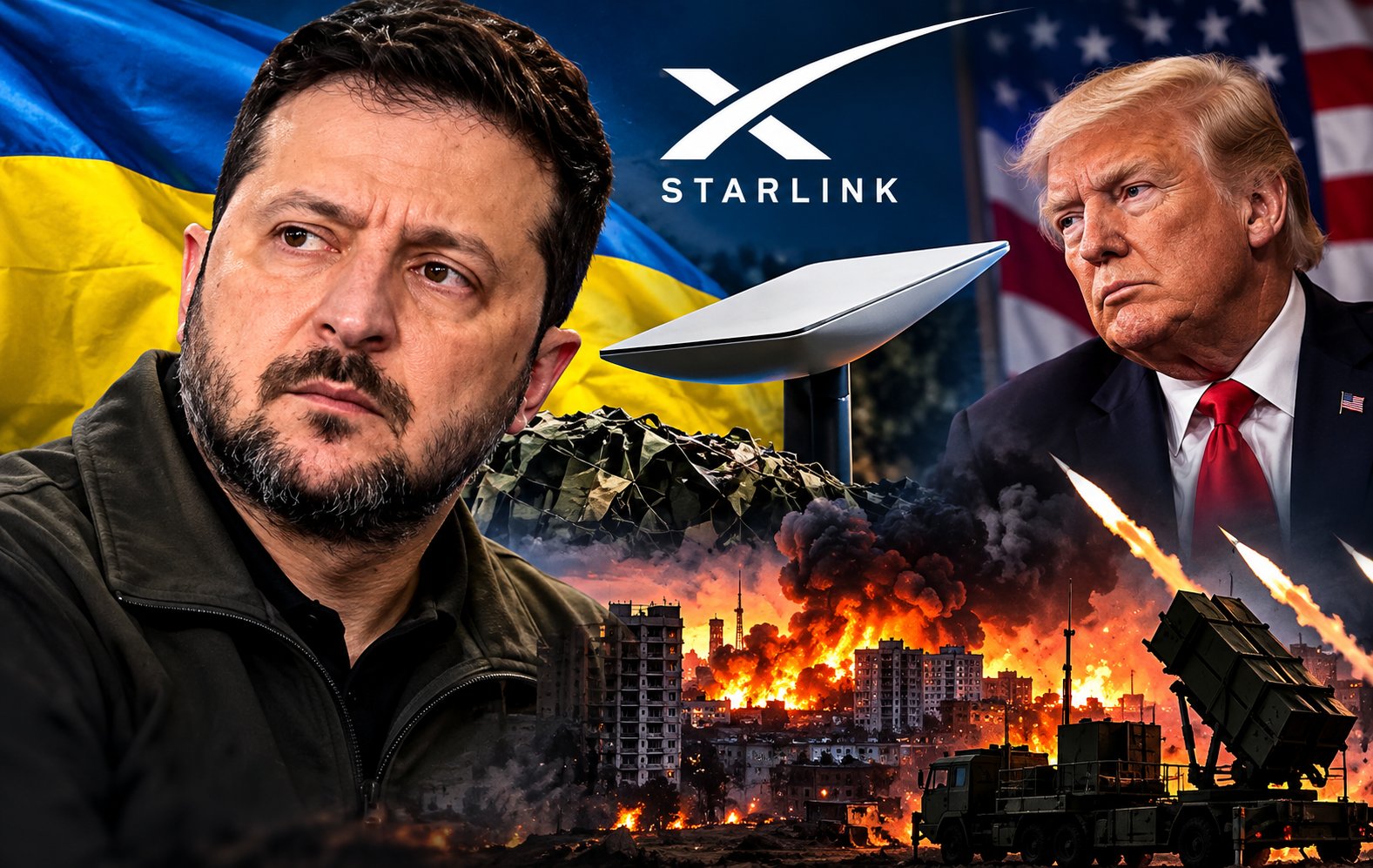
Adding to Ukraine’s concerns, Reuters reported on October 15 that an order restricting the Starshield satellite communications service used by Ukrainian forces originated inside the White House. Citing two American officials and a Western official familiar with the matter, Reuters reported that Defense Department leaders received instructions to slow the service, affecting communications equipment used in Ukrainian drone operations and other military activities.
The findings represent an important development because Starshield is a military oriented satellite communications system developed by Elon Musk’s SpaceX for government and national security applications. Ukrainian officials reported that terminals stopped functioning properly when mounted on fast moving platforms, interfering with drones used for offensive missions and defensive operations against incoming Russian threats. A Ukrainian Defense Ministry source subsequently indicated that some functionality had been restored, although operational speed limitations reportedly remained.
Reuters did not establish which White House official issued the instruction or who implemented it. A senior American official denied that Trump personally made such a request, while the White House did not clarify whether another administration official had authorized the restrictions. Musk has publicly maintained that the American government controls Starshield’s military usage and determines applicable operating limitations. The reporting therefore supports the conclusion that the restrictions originated within the administration, but it does not establish that Trump personally ordered them or that Musk independently imposed them.
The timing has nevertheless intensified Ukrainian concerns because the restrictions occurred as Washington increased pressure on Kyiv to halt refinery attacks. Reuters also reported that American officials had threatened to reduce intelligence sharing involving Russian missile launches, although Trump publicly maintained that intelligence cooperation was continuing. Ukrainian officials have expressed concern about disruptions to advance warning information that can provide critical time for air-defense responses and civilian sheltering.
These developments raise serious questions about the reliability of military capabilities Ukraine has come to depend upon. Satellite communications, intelligence warnings, and interceptor missiles serve different operational purposes, and no public evidence establishes that the Starshield restrictions caused the Patriot shortage. However, the simultaneous disputes over all three capabilities illustrate the growing uncertainty surrounding American military cooperation with Kyiv.
European Allies Face Mounting Pressure to Fill the American Defense Gap
As Ukraine’s relationship with Washington deteriorates, European governments face increasing pressure to provide additional military assistance, replenish interceptor inventories, and strengthen Ukraine’s ability to defend its cities. European countries have already helped address previous Patriot ammunition shortages, but their inventories are limited, and transferring additional interceptors can create vulnerabilities in their own national defense systems.
The challenge is both immediate and structural. Ukraine requires missiles that can be delivered quickly enough to protect against the next major Russian attack, while European governments must consider longer term investments in weapons production, procurement, and industrial capacity. Expanding manufacturing facilities could eventually increase the supply of advanced interceptors, but those investments cannot instantly resolve shortages affecting active military operations.
The war has demonstrated how rapidly modern conflicts can consume sophisticated defensive ammunition. A single large-scale Russian missile assault can require numerous interceptor launches, while repeated attacks gradually exhaust stockpiles that may take months to replenish. These pressures have become more complicated as conflicts elsewhere increase international demand for the same weapons systems.
European leaders must also navigate the diplomatic consequences of worsening relations between Trump and Zelenskyy. Maintaining American participation in Ukraine’s defense remains important because the United States possesses industrial, technological, and military capabilities that European governments cannot immediately replace. At the same time, Ukraine’s growing concerns about American policy have reinforced arguments for expanding European defense production and reducing dependence on any single foreign supplier.
The White House Faces Questions Over Its Response to Russian Attacks
The Trump administration’s approach has also drawn scrutiny over its response to Russian attacks affecting civilian infrastructure and commercial interests in Ukraine. CNN highlighted the administration’s limited public response to attacks involving American business interests operating in the country, raising questions about whether Washington is applying consistent diplomatic pressure to Moscow.
The administration has defended its broader approach through an emphasis on negotiations and international energy stability, but its policies have created friction with Ukraine and some members of Congress. The Russian diesel arrangement has drawn bipartisan criticism from lawmakers concerned that additional petroleum revenue could strengthen Moscow’s financial position without securing meaningful concessions toward ending the invasion.
The controversy has become more serious as Ukraine reports shortages of the weapons needed to defend its population. Washington’s decisions about military assistance, satellite communications, and intelligence cooperation now carry consequences that extend well beyond diplomatic disagreements. For Ukrainian military planners, uncertainty surrounding those capabilities complicates preparations for future attacks and makes it more difficult to determine which cities and infrastructure facilities can be reliably defended.
The administration’s position also presents a broader policy challenge. Efforts to stabilize energy markets and negotiate an end to hostilities may serve legitimate economic and diplomatic objectives, but their effectiveness depends on whether they produce reciprocal commitments and measurable reductions in violence. Without those results, Ukraine’s leaders fear that restrictions on their military operations could weaken their position while Russian attacks continue.
Ukraine’s Patriot Crisis Exposes a Dangerous Weakness in Modern Warfare
Beyond the diplomatic confrontation, the reported depletion of Patriot interceptors illustrates a fundamental vulnerability in modern military planning. Advanced weapons systems depend on sustained ammunition production, reliable logistics, and international supply chains. Even the most sophisticated radar and missile launching equipment becomes significantly less effective when the necessary interceptors are unavailable.
Ukraine’s experience demonstrates how an extended conflict can exhaust inventories that were never designed to support years of continuous high intensity warfare. Russian forces have repeatedly launched combinations of ballistic missiles, cruise missiles, and drones, forcing Ukrainian defenders to allocate limited resources among multiple threats. The imbalance between the cost of offensive weapons and the expense of certain defensive interceptors adds further pressure to an already difficult situation.
For Western governments, the shortage raises questions about industrial readiness and the ability to sustain prolonged military assistance while maintaining adequate domestic stockpiles. Increasing production requires investment, manufacturing capacity, skilled workers, specialized components, and long term commitments that extend beyond immediate political decisions. Ukraine’s current emergency demonstrates the consequences when battlefield demand exceeds the rate at which advanced ammunition can be replaced.
For Ukrainian civilians, however, the problem is far more immediate. A shortage of Patriot missiles means additional Russian ballistic attacks could reach populated areas and critical facilities with fewer opportunities for interception. The exact level of risk will depend on available replacement stocks, the deployment of other defensive systems, and the speed with which international partners can deliver additional ammunition.
A Defining Test of American Support as Ukraine Faces Another Russian Assault
Ukraine’s reported exhaustion of Patriot interceptors represents a potentially dangerous turning point in the war, arriving as its government confronts renewed diplomatic pressure from Washington and continued Russian attacks against civilian and energy infrastructure. The shortage has exposed the country’s dependence on American military technology while highlighting the growing difficulties of maintaining that support amid disagreements over energy policy, sanctions, and negotiations with Moscow.
Zelenskyy’s criticism of Trump reflects the urgency of a government attempting to defend its population while questioning whether its most important military partner will continue providing essential capabilities. The Russian diesel agreement, restrictions involving Starshield, and concerns about intelligence sharing have compounded those fears, creating a diplomatic crisis at precisely the moment Ukraine requires additional defensive ammunition.
The immediate priority is determining how quickly Ukraine can obtain new Patriot interceptors and whether the United States and European governments can coordinate emergency deliveries. The broader challenge is establishing a sustainable supply of advanced defensive weapons while pursuing diplomatic arrangements that provide meaningful protection against future attacks.
A negotiated reduction in attacks against energy infrastructure could offer significant humanitarian benefits if both sides observe it. But Ukraine’s leadership has made clear that it considers reciprocal commitments and reliable defensive support essential to any such arrangement. Without them, Kyiv faces the prospect of limiting its own military options while remaining vulnerable to Russian strikes.
The central question is no longer simply whether Ukraine has enough Patriot launchers or whether Trump and Zelenskyy can resolve their latest disagreement. It is whether the United States and its allies can restore Ukraine’s ability to intercept Russian ballistic missiles before another major attack strikes cities whose defenses are already running dangerously low.



















































Want to join the conversation?
Create an account or sign in to share your thoughts, vote,
and reply to other readers.
Showing 0 of 0 comments
Don't have an account?
Already have an account?