
Something Had to be Done to Eradicate This Invasive Species
More than 500 participants joined Florida’s annual lionfish hunt, removing a record breaking number of venomous invaders from state waters. Monroe and Broward County divers claimed top honors as wildlife officials continue the fight to protect Florida’s reefs and native marine life.
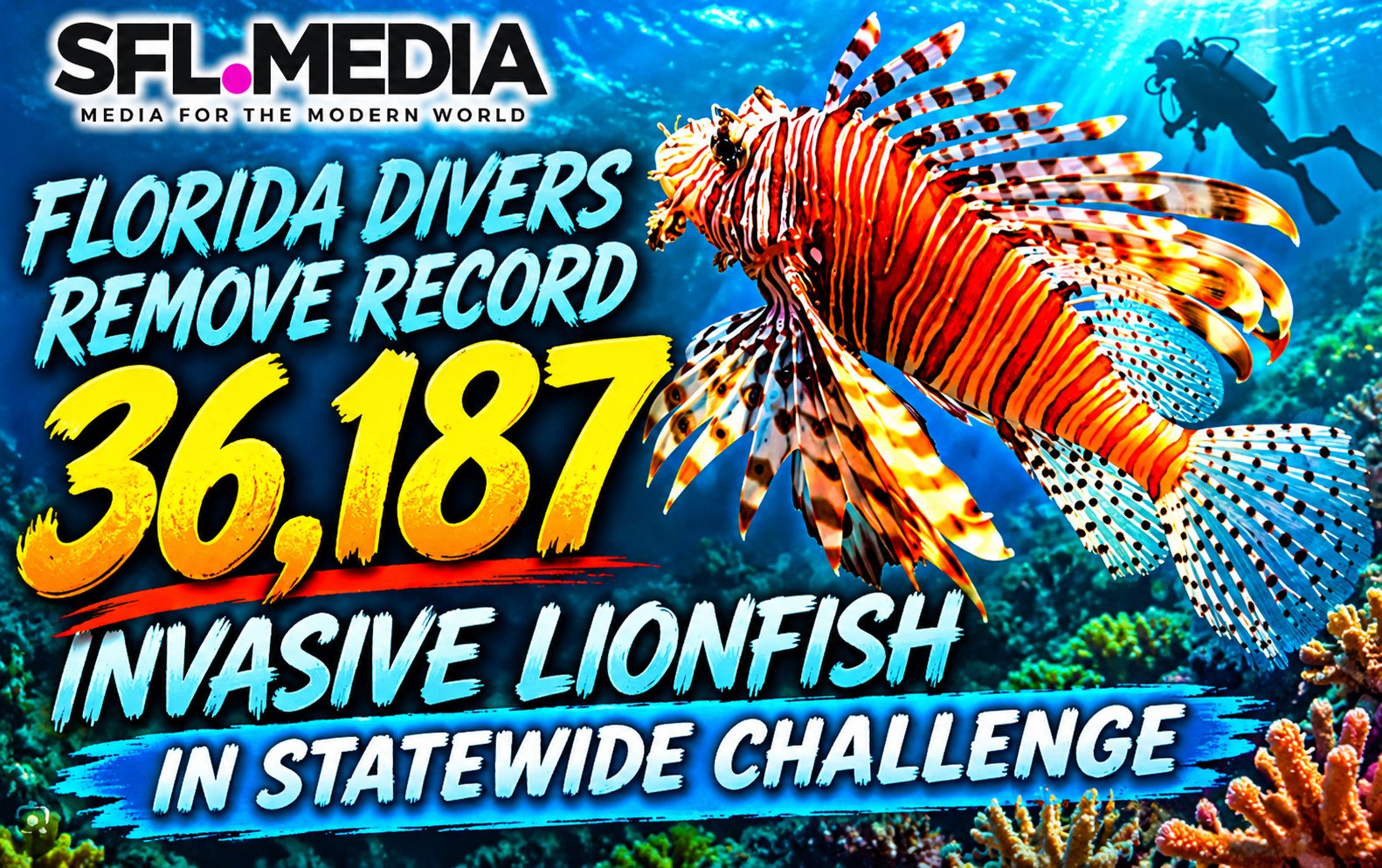
Florida’s underwater ecosystem just got a little breathing room. More than 36,000 invasive lionfish have been removed from Florida waters as part of the 2026 Florida Fish and Wildlife Conservation Commission (FWC) Lionfish Challenge, setting a new record for the annual statewide competition.
According to the FWC, 533 registered participants removed an incredible 36,187 lionfish during 1,468 dive trips throughout the summer long challenge. That’s more than 5,000 additional lionfish compared to the 2025 competition, making 2026 the most successful year in the program’s history for both participation and removals.
The competition ran from May 22nd through September 14th, bringing together recreational divers and commercial harvesters with a common goal. Remove as many invasive lionfish as possible before they can continue damaging Florida’s marine ecosystems. And while the competition included prizes, titles and bragging rights, the bigger victory was happening beneath the surface.
Why Are Lionfish Such a Problem in Florida?
Lionfish might look like something designed for an expensive aquarium, but these colorful, spiny predators have become one of the most troublesome invasive species in the Atlantic Ocean. Native to the Indo-Pacific region and the Red Sea, lionfish are not supposed to be swimming around Florida’s reefs. They first appeared off Florida’s Atlantic coast during the 1980s and have since spread throughout the Caribbean, Gulf of Mexico and much of the western Atlantic.
Their success as an invasive species comes down to several characteristics that make them particularly difficult to control. Lionfish are aggressive predators with an enormous appetite, feeding on smaller fish, shrimp and other marine animals. They also reproduce rapidly, with females capable of releasing tens of thousands of eggs every few days.
Even more concerning, lionfish have relatively few natural predators in Atlantic waters. Their venomous spines provide an effective defense against animals that might otherwise consider them a meal. That combination creates a serious problem for native marine life. Lionfish consume juvenile fish and other small marine species, including fish that eventually grow into important reef predators such as grouper and snapper. They also compete with native species for food and habitat. In other words, these fish aren’t exactly doing Florida’s underwater neighborhoods any favors.
Meet Florida’s 2026 Lionfish Champions
While hundreds of divers contributed to the record breaking effort, several participants stood out for their extraordinary catches. The FWC expanded the competition this year to recognize six champions across recreational, commercial, junior, military and checkpoint categories.
Here are the 2026 winners:
- Lionfish King: Hunter Ledbetter (Monroe County) – Removed 1,541 lionfish to claim the top recreational title.
- Lionfish Queen: Helen Rodney (Broward County) – Harvested 1,488 lionfish, earning the top female competitor title.
- Commercial Champion: David Garrett (Volusia County) – Removed an impressive 1,136 pounds of lionfish.
- Junior Champion: Meagan Huffman (Texas) – Removed 185 lionfish.
- Veteran Champion: Hunter Ledbetter – Also claimed the top military and veteran participant award. Ledbetter is a U.S. Marine Corps veteran.
- Top Checkpoint: Dive Pros (Pensacola) – Accepted more than 5,000 lionfish tails during the competition.
The addition of six award categories reflects the FWC’s effort to encourage participation from different groups and recognize the people and businesses helping combat the invasive species.
How Did the Lionfish Challenge Work?
The FWC Lionfish Challenge was a free statewide competition designed to encourage recreational divers and commercial harvesters to remove lionfish from Florida waters. Participants earn recognition and prizes based on the number of fish they harvest. Recreational divers submit their catches through designated checkpoints, where lionfish tails are counted and verified. Commercial harvesters document their catches through commercial sales records and trip tickets.
The competition is open to participants throughout Florida, and it isn’t necessary to be a professional diver to participate in the recreational division. However, participants must follow applicable diving, harvesting and tournament rules. The program also gives divers an opportunity to contribute to marine conservation while participating in an activity that can be both challenging and rewarding.
Can Florida (or Anyone) Ever Get Rid of Lionfish?
That’s the million dollar question, and unfortunately, the answer isn’t particularly encouraging. Although removing 36,187 lionfish is a significant accomplishment, Florida’s lionfish problem is far from solved. These fish have established populations throughout a massive geographic area, extending well beyond Florida’s coastline.
Their reproductive capabilities, adaptability and lack of natural predators make completely eliminating them extremely difficult. Even after thousands are removed, new lionfish can continue spreading into areas where populations have already been reduced. That doesn’t mean removal efforts are pointless. In fact, localized harvesting can help reduce lionfish numbers in important reef habitats, giving native fish populations a better opportunity to survive.
Florida also encourages consumers to consider lionfish as a seafood option. Their meat is considered excellent eating, and increased commercial demand can provide another incentive for fishermen to harvest them. One important warning though, lionfish have venomous spines capable of delivering extremely painful stings. Anyone harvesting or handling them needs proper equipment and training. They are not fish that should be casually picked up because someone thinks they look interesting.
Florida’s Underwater Battle Continues
FWC Chairman Rodney Barreto praised the participants for their efforts, pointing to the conservation benefits of removing thousands of invasive predators from Florida’s waters. Marine Fisheries Management Director Jessica McCawley also credited recreational divers, commercial harvesters, sponsors and community partners for helping make this year’s competition a success. The numbers certainly tell an impressive story. More than 36,000 invasive fish removed, 533 registered participants and 1,468 dive trips represent a major statewide conservation effort.
But the fight isn’t over. Florida’s reefs remain under pressure from invasive species, habitat changes and other environmental challenges. The Lionfish Challenge provides one way residents and visitors can get directly involved in protecting the state’s marine resources. And considering how quickly these underwater invaders reproduce, Florida’s divers will have plenty of work waiting for them when the next competition rolls around.














































Want to join the conversation?
Create an account or sign in to share your thoughts, vote,
and reply to other readers.
Showing 0 of 0 comments
Don't have an account?
Already have an account?