
White House Ordered Ukraine’s Starshield Slowed as Musk Reportedly Pitched Plan to Trump, Crippling Drone Defenses During Russian Attacks
New investigations reveal that restrictions on Ukraine’s critical military satellite network originated inside the White House, while Elon Musk reportedly proposed the plan to Donald Trump before publicly pointing to the president’s authority. As Russian forces continued attacking Ukrainian cities, the decision raised serious questions about American accountability, Putin’s strategic advantage, and the potential human cost of restricting Ukraine’s defenses.
Washington’s Satellite Controversy Becomes a National Security Crisis
WASHINGTON, D.C. — A sudden restriction on Ukraine’s military satellite communications has escalated into a major national security controversy after investigations by Reuters and The Telegraph linked the decision to the White House and alleged that billionaire SpaceX founder Elon Musk personally proposed the slowdown to President Donald Trump.
The restrictions, which disrupted communications on Ukraine’s Starshield satellite network, interfered with military drone operations at a time when Russian forces were continuing their campaign of missile and drone attacks against Ukrainian cities and infrastructure. Ukrainian officials reported that satellite-equipped drones were losing connectivity when traveling faster than approximately 100 miles per hour, limiting the effectiveness of both offensive operations and systems designed to intercept incoming Russian weapons.
The revelations have introduced a remarkable contradiction between the public explanations offered by Musk and Trump and the accounts provided by officials familiar with the decision. Musk publicly emphasized that the American military and president control Starshield and determine its operating restrictions. Trump denied ordering the slowdown and suggested Musk was not responsible either. However, The Telegraph reported on October 16 that Musk had personally approached Trump with the proposal and that the president agreed, according to sources familiar with their discussions.
Reuters separately reported on October 15 that the instruction to restrict Starshield originated inside the White House, citing two American officials and a Western official briefed on the matter. Although the officials did not identify who issued the directive, their accounts indicated that the slowdown was not simply an unexpected technical malfunction or a unilateral decision by SpaceX.
The developments come amid a broader confrontation between Washington and Kyiv over Ukrainian strikes against Russian oil refineries, American intelligence cooperation, and the Trump administration’s diplomatic and economic dealings with Moscow. They also raise a question that cannot be answered by political denials alone: Who authorized a restriction affecting Ukraine’s military defenses, and what did American officials know about its potential consequences?
The 100 MPH Restriction That Undermined Ukraine’s Drone Operations
At the center of the controversy is Starshield, a military satellite communications service developed by SpaceX using technology associated with its commercial Starlink network. Starshield supports government and defense operations, including communications for military aircraft and remotely operated systems. Ukraine relies on satellite connectivity to coordinate battlefield activities, control certain drones, conduct reconnaissance, and intercept incoming Russian weapons.
According to The Associated Press, the restrictions were introduced without advance warning and caused affected Starshield terminals to lose their data connections when moving faster than approximately 160 kilometers per hour, or 100 miles per hour. Ukrainian defense technology adviser Serhii Beskrestnov, who works with President Volodymyr Zelenskyy’s administration, said the limitation disrupted drone operations and forced Ukrainian forces to reconsider how they deployed some of their most important defensive technologies.
The technical problem is particularly significant because Ukrainian interceptor drones must often travel at high speeds to pursue Russian attack drones. Some newer Russian Shahed variants use jet engines and travel considerably faster than the 100 mph threshold. If an interceptor depends on continuous satellite connectivity and loses that connection during a pursuit, it may be unable to complete its mission, depending on its onboard navigation and targeting capabilities.
The restrictions also affected Ukrainian attack drones operating against Russian military positions and infrastructure. According to Ukrainian accounts, some missions were disrupted or canceled, while other aircraft had to operate at reduced speeds to maintain communications. Slower aircraft can become easier targets for Russian defenses, potentially reducing their effectiveness and increasing the risk of losing expensive equipment.
Beskrestnov told the Associated Press on October 16 that some of the initial connectivity problems had been resolved, but the speed limitation remained an issue. Ukraine was negotiating with SpaceX and the Pentagon to restore full operational capabilities and examining alternative satellite communications arrangements.
The episode exposed a critical vulnerability in Ukraine’s military strategy: even sophisticated domestically developed drones can become ineffective if their communications depend on infrastructure controlled by foreign governments or corporations.
Reuters Investigation Traces the Order Directly to the White House
The Reuters investigation substantially changed the understanding of the controversy by reporting that the directive to limit Starshield originated within the Trump administration rather than arising solely from a commercial or technical decision.
According to the news agency, American and Western officials familiar with the matter said the Pentagon received instructions to restrict the satellite service supporting Ukrainian military operations. The officials traced the directive to the White House but did not identify the individual responsible for authorizing it or provide a complete explanation of the decision-making process.
The distinction is consequential. An unexpected satellite malfunction would represent a technical failure requiring engineering intervention. A government directed restriction imposed during active military operations raises entirely different questions about national security policy, military coordination, diplomatic pressure, and the foreseeable risks of limiting an allied country’s defenses.
Ukrainian officials said they had not received adequate advance warning, leaving military personnel struggling to understand why previously functioning systems had suddenly become unreliable. The interruption occurred as Russia continued launching attacks against Ukrainian infrastructure and as relations between Washington and Kyiv deteriorated over disagreements involving Russian energy exports and Ukrainian strikes on oil facilities.
The Trump administration disputed the reporting. Trump denied ordering the restriction, and the White House did not publicly acknowledge that the president had directed the slowdown. However, the administration also did not provide a detailed public explanation identifying who made the decision, why it was implemented, or whether the Pentagon had assessed the consequences for Ukrainian military operations.
Reuters’ findings therefore establish a substantial basis for further investigation, although the precise chain of command remains unresolved. The existence of a White House-originated directive, as described by the news agency’s sources, does not independently establish that Trump personally issued the order.
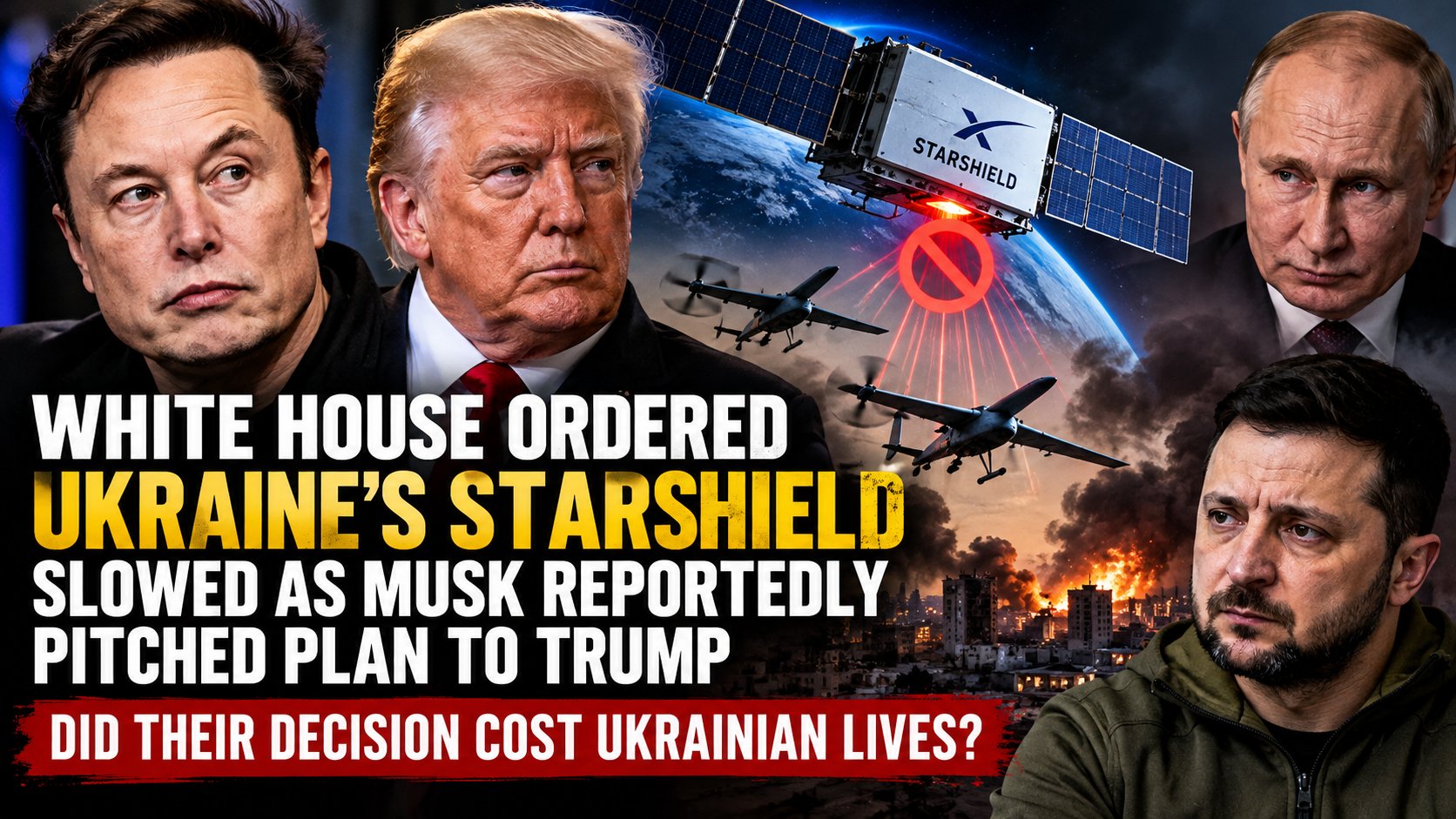
Musk Reportedly Proposed the Plan Before Pointing to Trump’s Authority
The Telegraph’s October 16 investigation introduced an additional and potentially explosive allegation: Elon Musk may have been directly involved in initiating the restrictions rather than simply implementing instructions from the American government.
Citing four sources familiar with the discussions, the British newspaper reported that Musk approached Trump with a proposal to impose speed limits on Ukraine’s satellite communications. One source said Trump agreed to the suggestion, opening the way for the Pentagon to implement the restrictions on Starshield.
The account was subsequently reported by Ukrainian news organizations, including The Kyiv Independent and Ukrainska Pravda, which attributed the allegations to The Telegraph’s investigation. A European official and Ukrainian sources were also cited in accounts describing Musk’s reported involvement.
The allegations are particularly significant because Musk had publicly emphasized that Starshield’s operating restrictions were ultimately decisions for the American government. In a statement on X, Musk said that Starshield systems were owned and controlled by the United States government and that restrictions on their speed or usage were determined by the military and ultimately the president.
That statement addresses the question of formal authority, but it does not necessarily resolve who originally proposed the policy. If The Telegraph’s reporting is accurate, Musk could have initiated the proposal while Trump or other American officials retained responsibility for approving and implementing it.
Musk’s public comments also should not be interpreted as a direct admission that Trump personally ordered the restrictions. They describe the government’s authority over Starshield rather than documenting the specific decision. Nevertheless, the contrast between Musk’s explanation and the allegations about his involvement raises legitimate questions about whether the public received a complete account of how the slowdown originated.
SpaceX’s substantial relationship with the Pentagon adds another layer of scrutiny. The company supplies communications and aerospace technology to the American government, and its founder has maintained significant political influence. The possibility that a private defense contractor’s executive helped initiate a decision affecting an allied military’s operational capabilities warrants examination, particularly when the decision may have increased the vulnerability of forces engaged in active combat.
Trump Denies Involvement as the Accounts Continue to Conflict
Trump rejected the suggestion that he ordered the restrictions when questioned by reporters on October 16. The president said he did not believe either he or Musk was responsible for the disruption, directly contradicting the allegations reported by The Telegraph and the accounts provided to Reuters.
The competing explanations leave several important facts unresolved. Reuters reported that the directive originated inside the White House, but its sources did not identify the person who authorized it. The Telegraph reported that Musk proposed the restriction and Trump agreed, but the underlying conversations have not been independently documented through publicly released communications or government records.
Those distinctions matter because a president’s formal responsibility for military policy is not identical to proof that the president personally initiated or approved a particular operational decision. Similarly, Musk’s influence over the proposal would not necessarily mean that SpaceX independently imposed the restrictions without government authorization.
The Pentagon has not publicly provided a comprehensive explanation of the decision, and the administration has not released documentation clarifying whether the slowdown resulted from military policy, diplomatic negotiations, contractual limitations, or some combination of factors.
The absence of a clear explanation has intensified concern in Ukraine, where military officials depend on American communications and intelligence capabilities to support operations against Russian forces. It has also raised questions about whether other forms of American assistance could be restricted unexpectedly during future disagreements between Washington and Kyiv.
The Putin Connection: Who Benefited From Restricting Ukraine’s Defenses?
The timing of the Starshield restrictions has generated intense scrutiny because they occurred during a broader dispute involving Trump, Zelenskyy, Russian oil exports, and Ukrainian attacks on Russia’s energy infrastructure.
As South Florida Media previously reported, Ukraine had temporarily suspended certain attacks on Russian oil facilities amid diplomatic pressure surrounding energy markets and negotiations involving Washington and Moscow. Ukrainian forces subsequently resumed strikes against Russian refineries as Russian attacks continued and Zelenskyy expressed growing frustration with American policy.
The Trump administration’s handling of Russian energy sanctions and a controversial arrangement involving Russian diesel supplies added to the tensions. Ukrainian officials argued that policies benefiting Russian energy exports risked strengthening Moscow’s financial position while Russia continued its military campaign.
Against that background, the Starshield restrictions created a potential tactical advantage for Russian forces. Ukrainian drones capable of attacking military targets or intercepting incoming Russian weapons became less effective when their satellite communications were limited. That disruption could reduce pressure on Russian military operations while making Ukrainian defensive missions more difficult.
However, there is an important difference between establishing that Russia benefited from the restrictions and proving that Vladimir Putin orchestrated them. The available reporting does not demonstrate that Putin personally requested the Starshield slowdown, that Moscow negotiated the restriction with Trump, or that Russian officials influenced Musk’s reported proposal.
The connection between the satellite restrictions and Washington’s pressure on Ukraine over oil refinery strikes is also not conclusively established. Their timing and the surrounding diplomatic disputes justify investigation, but they do not independently prove a coordinated strategy to assist Russia.
The question for American policymakers is whether restrictions on Ukrainian military capabilities were considered an acceptable instrument of diplomatic pressure during negotiations with Kyiv. If so, the public deserves to know what objectives the administration hoped to achieve and whether officials assessed the potential consequences for Ukraine’s defense.
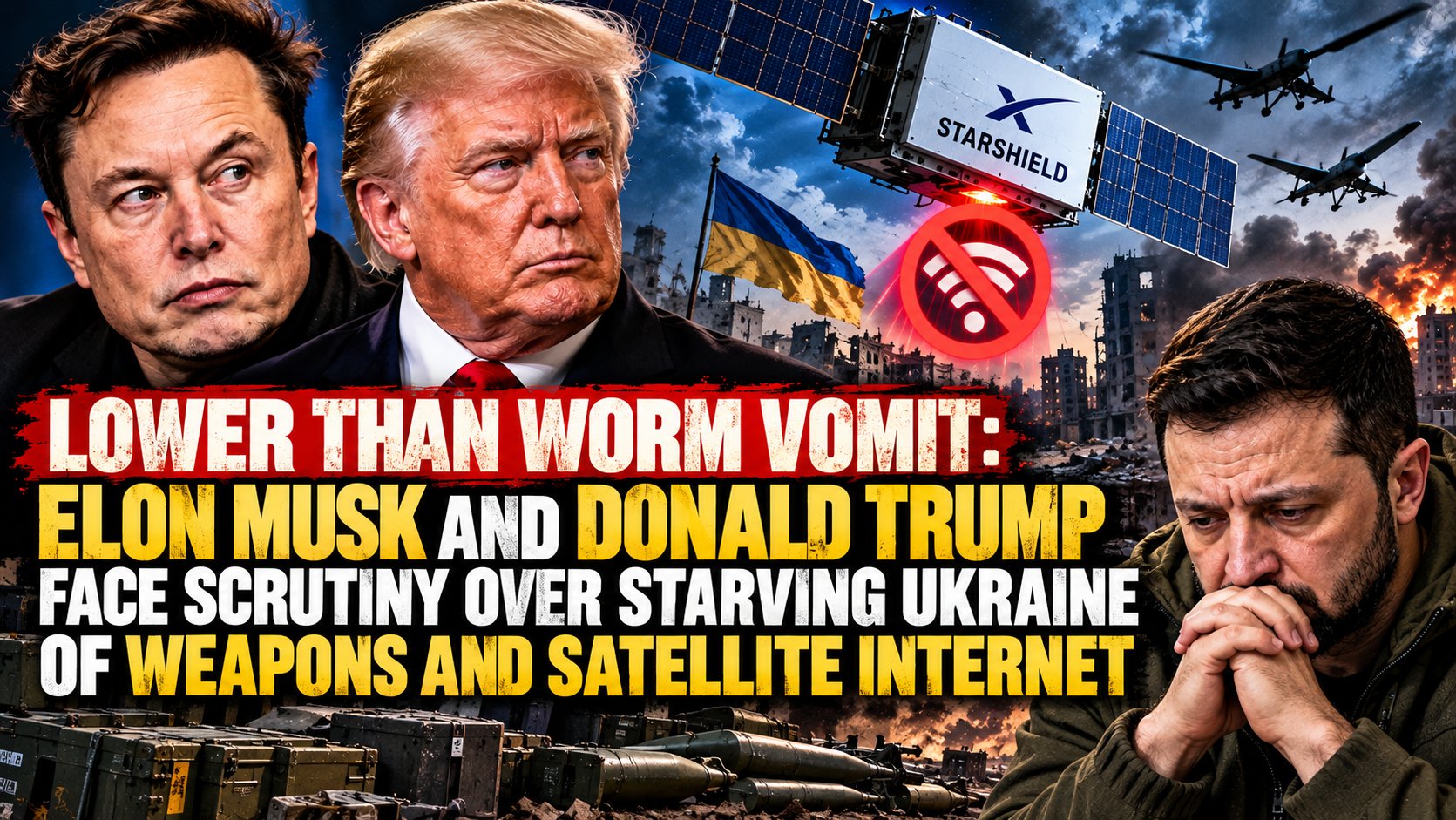
Did the Restrictions Cost Ukrainian Lives?
The most serious question surrounding the Starshield controversy concerns whether the restrictions contributed to Ukrainian military or civilian casualties by weakening defenses against Russian attacks.
The Associated Press reported that Ukrainian officials considered the slowdown particularly dangerous because it interfered with interceptor drones designed to destroy fast moving Russian Shahed weapons. Some jet-powered variants can exceed 250 miles per hour, meaning that Ukrainian interceptors pursuing them may need to operate well above the newly imposed satellite speed limit.
Beskrestnov explained that Ukrainian forces had developed effective methods of countering these weapons, only to encounter an unexpected communications restriction that undermined those defenses. He also reported that the limitations affected some Ukrainian helicopters involved in hunting Russian attack drones, further complicating the country’s defensive operations.
The potential consequences are serious. If a defensive drone loses communications while pursuing an incoming Russian weapon, the interception may fail, depending on the aircraft’s onboard capabilities. A weapon that penetrates Ukraine’s defenses can strike homes, power facilities, transportation infrastructure, or military positions. During a sustained aerial campaign, even relatively small reductions in interception effectiveness can increase the danger faced by soldiers and civilians.
However, the available evidence does not establish that a particular Ukrainian death resulted directly from the Starshield restrictions. No independently verified casualty assessment has identified specific attacks that succeeded because satellite communications were interrupted, and no public investigation has established that Musk, Trump, or other American officials intended to cause Ukrainian casualties.
That distinction does not eliminate the need for accountability. It defines what an investigation must determine. American officials responsible for the restrictions should be able to explain whether they evaluated the military consequences, whether they understood that defensive interceptors could be affected, and whether Ukrainian forces received sufficient warning to protect their operations.
If the restrictions were imposed knowingly despite foreseeable risks to civilian protection, the decision would raise serious questions about judgment, responsibility, and the priorities guiding American policy. Establishing direct responsibility for specific casualties, however, would require operational records, verified timelines, and evidence connecting the restrictions to identifiable attacks.
Ukraine’s Growing Dependence on American Technology Has Become a Strategic Vulnerability
Beyond the immediate controversy, the Starshield restrictions have exposed a structural weakness in Ukraine’s military capabilities: dependence on communications infrastructure that can be modified or restricted by outside parties during an active war.
Ukraine has invested heavily in developing drones capable of striking Russian military targets, conducting reconnaissance, and intercepting incoming weapons. These systems have become increasingly important as conventional air-defense supplies face pressure and Russia expands its use of inexpensive attack drones.
Yet many of those aircraft depend on satellite communications for control and coordination. When access to those networks changes unexpectedly, military planners may be forced to redesign operations, reduce aircraft speeds, or abandon missions entirely. The underlying hardware can remain functional while the communications infrastructure necessary to operate it becomes unavailable.
According to the Associated Press, Ukraine is investigating alternatives to Starshield, including OneWeb, operated by Europe’s Eutelsat, and satellite networks being developed by Amazon. Ukrainian officials are also exploring whether a more expensive aviation-specific Starshield service could restore the capabilities lost under the current restrictions.
The problem is becoming more urgent as Russia develops its own satellite communications technology. Beskrestnov warned that Moscow’s emerging Rassvet satellite network could eventually allow Russian forces to control drones and missiles in real time across larger areas of Ukraine, potentially undermining electronic warfare systems designed to disrupt their guidance.
That creates an increasingly dangerous technological competition. Russia is attempting to expand its ability to control weapons through satellite networks, while Ukraine is confronting uncertainty over access to the American controlled communications infrastructure supporting its defenses.
For Kyiv, the lesson is that technological sophistication alone cannot guarantee military independence. Reliable access to the networks controlling those technologies is equally important.
The White House Still Owes an Explanation
The investigations by Reuters and The Telegraph have placed the origins of the Starshield restrictions under substantial scrutiny, but the most important questions remain unanswered.
Who first proposed the restrictions? Who authorized their implementation? Did the Pentagon conduct a military assessment before imposing the speed limit? Were Ukrainian officials warned that interceptor drones could lose connectivity? And was the decision connected to Washington’s pressure on Kyiv over Russian oil refinery attacks?
The available reporting offers partial answers. Reuters traced the directive to the White House through officials familiar with the matter. The Telegraph reported that Musk personally proposed the restrictions and Trump agreed. Ukrainian officials documented the resulting operational disruptions, while Trump denied ordering the slowdown.
Those accounts establish a serious controversy involving American military policy, private-sector influence, and the consequences of restricting an ally’s battlefield communications. They do not yet establish the complete decision making process, the administration’s intended objectives, or the full extent of the military damage.
What makes the controversy especially consequential is that the restrictions affected a country defending itself against an ongoing Russian invasion. Ukraine was not merely experiencing a commercial service interruption. Its military was confronting unexpected limitations on technology used to intercept weapons and conduct operations during active hostilities.
The distinction matters because decisions involving military communications can have consequences extending far beyond diplomatic negotiations or political disputes. They can affect the ability of an armed force to defend its positions, protect infrastructure, and respond to attacks.
If American officials imposed restrictions as a means of pressuring Ukraine, the administration should explain why that approach was considered necessary and what safeguards were established to prevent unintended military consequences. If the restrictions arose from technical or contractual considerations, the government should provide evidence supporting that explanation.
Either way, the American public, Congress, and Ukraine’s government have legitimate reasons to seek a transparent accounting of the decision.
A Dangerous Precedent for Ukraine and America’s Allies
The Starshield controversy has become a test of accountability in American foreign policy and the increasingly complicated relationship between governments and private technology companies operating critical military infrastructure.
Reuters’ investigation indicates that the restriction originated within the White House. The Telegraph’s reporting raises the possibility that Musk helped initiate it before publicly emphasizing the president’s authority over the system. Trump denies ordering the change, and the Pentagon has not publicly explained the full decision-making process.
Meanwhile, Ukrainian military officials have described operational consequences that affected their ability to use drones against Russian forces and intercept incoming weapons. Russia continued its attacks as Kyiv struggled to restore reliable communications and determine why the restrictions had been imposed.
Whether the decision was intended to influence Ukrainian military operations, advance diplomatic negotiations, or address some other concern remains unresolved. So does the question of whether it contributed to particular battlefield losses or civilian casualties. But the controversy has already exposed a dangerous reality of modern warfare: essential military capabilities can depend on decisions made thousands of miles from the battlefield by political leaders and technology executives whose interests may not always align with those of the forces relying on their systems.
For Ukraine, the immediate concern is restoring the communications necessary to defend its territory. For the United States, the larger issue is whether its government can provide a credible explanation for restricting technology supporting an allied military during active Russian attacks. Until that explanation emerges, the central question will remain: Who decided to limit Ukraine’s defenses, why was the decision made, and what consequences did those responsible understand they were risking?

Sources and Further Reading
Primary reporting
Axios — Trump Denies White House Impeded Satellite System in Ukraine — October 16, 2026.
Previous South Florida Media coverage


















































Want to join the conversation?
Create an account or sign in to share your thoughts, vote,
and reply to other readers.
Showing 0 of 0 comments
Don't have an account?
Already have an account?