
Florida Gunman Kills Citibank Employee Over $2,500 Debt Before Armed Marine Veteran Stops Tampa Shooting Rampage
A 35 year old Orlando man furious over a $2,500 credit card debt allegedly threatened to attack a law firm with an AR-15 before driving to a Citibank corporate campus in Tampa, crashing through a security gate and fatally shooting a 41 year old employee. The attack ended when an armed Citibank security officer, a Marine Corps veteran, confronted the gunman inside the building and shot him five times, preventing what authorities believe could have become a far deadlier workplace massacre.
A $2,500 Credit Card Debt Escalates Into a Deadly Attack
A dispute over a relatively modest credit card debt erupted into deadly violence at a Citibank corporate campus in the Tampa area on Wednesday, November 4, 2026, after an Orlando man allegedly became enraged over a court summons involving approximately $2,500 owed to the financial institution. According to Hillsborough County Sheriff Chad Chronister, the suspect, identified as 35 year old Jacob Pearson, threatened violence against attorneys handling the collection case before traveling to the banking company’s Tampa area facility, where he killed an employee who had no apparent involvement in his financial dispute.
The victim, identified by authorities as 41 year old Leanne Selman of Palm Harbor, was reportedly the first employee Pearson encountered after crashing his vehicle through a security gate. Investigators described a deliberate and extraordinarily violent attack in which Pearson initially shot Selman with a rifle, retrieved a handgun after the rifle malfunctioned and returned to shoot her again as she attempted to crawl away. The shooting ended when an armed Citibank security officer confronted Pearson inside the corporate campus, exchanging gunfire and striking the suspect five times. Pearson was transported to Tampa General Hospital, where he was pronounced dead.
Sheriff Chronister credited the security officer’s intervention with stopping the attacker before he could reach additional employees inside the sprawling corporate facility, which reportedly had approximately 3,200 workers on campus when the violence unfolded. Authorities believe the swift response prevented what could have become a mass casualty shooting.
Threatening Voicemail Warned Attorneys of an AR-15 Attack
According to the sheriff’s account, the violence began with Pearson’s anger over a court summons connected to a delinquent Citibank credit card account. Rather than addressing the debt through the legal process, Pearson allegedly called the office of the attorneys handling the collection matter and left an explicit voicemail threatening to arrive armed with an AR-15 rifle and wearing body armor unless the case was canceled. The message was direct, profane and unmistakably threatening, with Pearson warning the attorneys that he was approximately an hour away and prepared to confront them.
The threatening voicemail reportedly stated, in part, “Unless you want me to go over there with my AR-15, my bulletproof vest, and my insanity,” before demanding that the attorneys cancel the court case. The statement referenced the relatively short driving distance to the law office, suggesting that Pearson was contemplating an imminent armed confrontation rather than merely expressing frustration over the debt.
Recognizing the seriousness of the threat, employees at the law firm immediately contacted Citibank’s head of security, whom the sheriff identified as a retired United States Secret Service agent. The security official recognized the potential for violence and contacted the Orlando Police Department, requesting a welfare check at Pearson’s residence. The response reflected an effort to locate and assess the suspect before the threat escalated into an attack, although authorities were ultimately unable to intercept him before he reached the Tampa-area campus.
Police Attempted to Locate Gunman Before He Reached Tampa
Orlando police responded to Pearson’s home following the warning from Citibank security personnel. According to Chronister, officers spoke with Pearson’s wife, who cooperated with investigators and explained that her husband had left the residence in an angry state without telling her where he was going. By that point, however, Pearson was reportedly already traveling toward the Tampa area, leaving law enforcement attempting to locate a potentially armed suspect whose precise destination was not yet known.
The incident illustrates the difficulty authorities can face when a credible threat is reported but the individual making it has already left the location where officers expect to find them. Although the law firm and Citibank security personnel acted to notify police, the warning did not result in Pearson being intercepted before he reached the corporate campus. Investigators have not established in the available public account whether Pearson had previously visited the facility, how he selected the location or whether he had specifically identified the campus as his intended target before leaving Orlando.
What authorities did describe was an escalating sequence that began with a financial dispute, progressed to an explicit armed threat and culminated in a deadly assault against an employee who had no apparent connection to the underlying debt. The case raises questions about how law enforcement agencies and corporate security teams coordinate when a suspect threatens violence across multiple jurisdictions and may already be traveling toward a potential target.
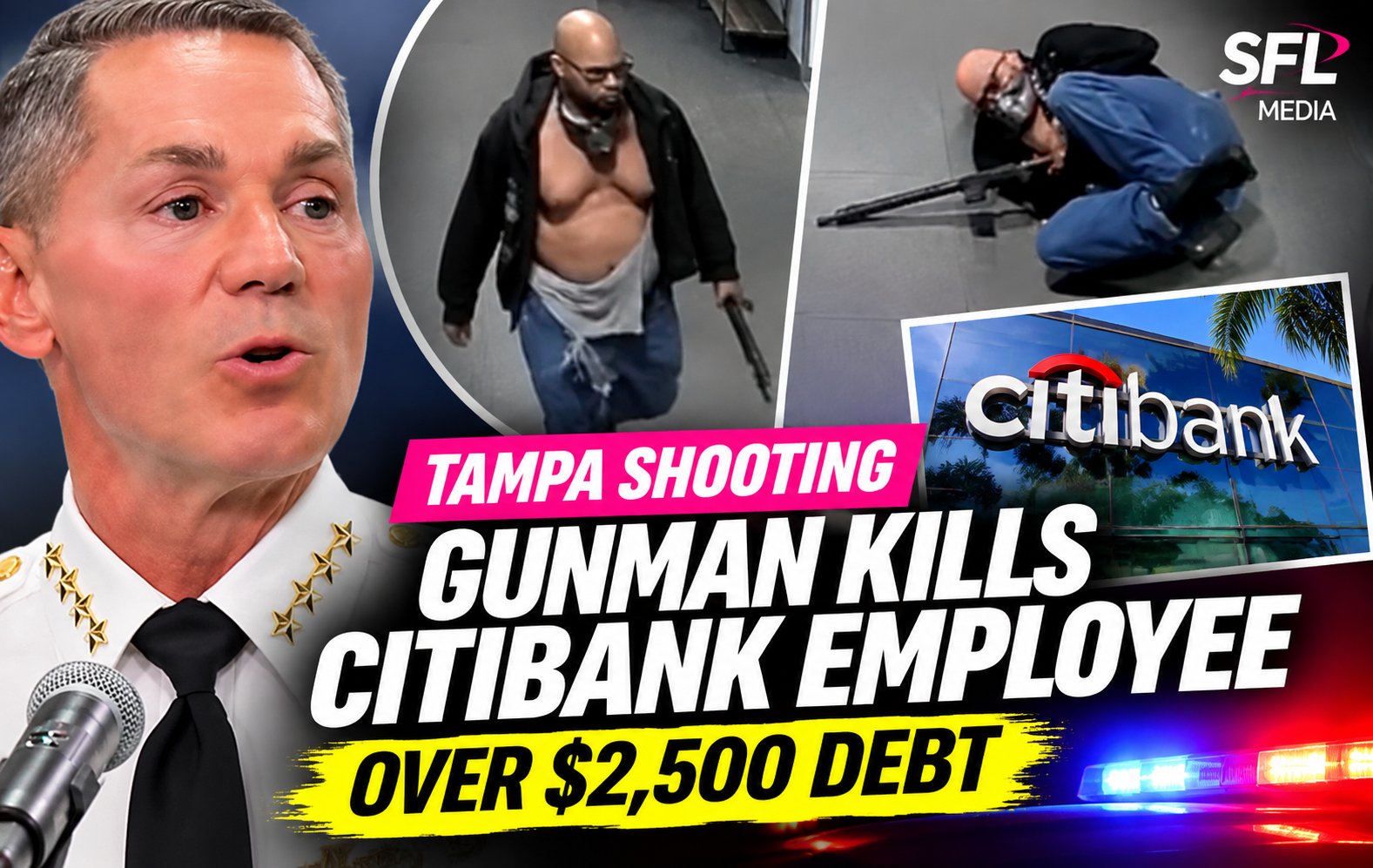
Gunman Crashes Through Citibank Security Gate and Opens Fire on Employee
The shooting occurred at Citibank’s Sabal Center campus in the Brandon area of Hillsborough County, a sprawling corporate complex near Interstate 75 and Dr. Martin Luther King Jr. Boulevard. Approximately 3,200 employees were reportedly on campus when Pearson arrived, many of them eating lunch or moving between buildings during the midday break. According to the sheriff’s office, Pearson crashed his vehicle through the campus security gate at approximately 12:10 p.m. and drove into an outdoor courtyard before exiting with a rifle and opening fire.
Investigators said Pearson targeted Selman, who was outside during her lunch break, shooting her three times before his rifle malfunctioned. Rather than retreating or abandoning the attack, Pearson reportedly returned to his vehicle, retrieved a handgun and approached Selman again as she attempted to crawl away from the gunfire. Authorities said he fired additional shots, fatally wounding her in what investigators described as an especially brutal and deliberate act of violence.
Selman was pronounced dead at the scene. Authorities emphasized that she had no known personal or professional connection to Pearson and had played no role in the debt collection proceedings that apparently motivated the attack. She had worked for Citibank for nine years and served as a learning advisor for Citi Security and Investigative Services, making her death particularly devastating to colleagues who had known her throughout much of her career.
The shooting sent employees fleeing for safety as emergency calls began reaching authorities. Four additional people were reportedly taken to hospitals with non-life-threatening injuries or medical concerns and were subsequently released. With thousands of employees inside the complex, investigators said the potential for additional casualties was significant as Pearson moved from the outdoor courtyard toward the building.
Marine Corps Veteran John Fraley Confronts Gunman and Ends Attack
After killing Selman, Pearson entered the Citibank building through the cafeteria, where employees were fleeing or attempting to shelter from the gunfire. Inside, he encountered John Fraley, 38, a Marine Corps veteran who worked as a Citibank vice president and intelligence lead analyst and was part of the company’s armed security team. Fraley had reportedly heard the initial gunshots and immediately positioned himself to confront the attacker before he could advance farther into the occupied facility.
According to the sheriff’s account, Fraley took a tactical position near a restroom and engaged Pearson as the gunman moved through the building. The two exchanged gunfire, and Fraley struck Pearson five times, bringing the attack to an end approximately one minute after the first shots were fired. Investigators said Pearson had brought approximately 90 rounds of ammunition to the campus and fired 15 shots before being stopped, underscoring the potential for additional casualties had the confrontation not occurred.
Deputies who had been dispatched in response to the earlier threat arrived as the attack unfolded and moved toward the gunfire. At approximately 12:16 p.m., they reached the cafeteria and began providing medical assistance to Pearson until emergency medical personnel arrived. The suspect was transported to Tampa General Hospital, where he was pronounced dead at approximately 1:12 p.m.
During his November 5 news conference, Chronister praised Fraley’s intervention and the preparedness of Citibank’s security team, describing the Marine veteran as a hero whose actions prevented the shooting from becoming a mass-casualty event. With thousands of employees present and the attacker carrying enough ammunition to continue shooting, authorities believe Fraley’s immediate response was instrumental in preventing further loss of life.
Court Records Reveal Exact Debt and Pending February Hearing
Additional reporting by Tampa Bay 28 uncovered the underlying civil lawsuit that apparently triggered Pearson’s anger. According to court records reviewed by the station, Citibank filed a complaint in Orange County on October 23 seeking to recover $2,556.40 allegedly owed on a My Best Buy Visa Platinum credit card issued by the bank. The court summons had been served at Pearson’s Orlando residence, and a pretrial conference was scheduled for February 15, meaning the shooting occurred months before the scheduled hearing.
The underlying case involved a routine civil debt collection matter rather than an imminent criminal prosecution or arrest. Such proceedings generally provide defendants opportunities to contest the debt, negotiate repayment or raise legal defenses before a court determines whether the creditor is entitled to a judgment. Nothing in the available court reporting suggests that Pearson faced incarceration over the unpaid credit card balance itself.
Authorities described Pearson as a married father with a young child and no known prior criminal record. The available reporting does not establish why he selected the Tampa corporate campus rather than the law office handling his debt, although investigators said he appeared to hold Citibank employees collectively responsible for his financial dispute. The precise debt amount underscores the extraordinary disproportion between the underlying legal matter and the violence that followed, with a civil claim seeking approximately $2,556 ending in the death of an innocent employee, the killing of the suspect and widespread trauma among thousands of workers.
Security Warnings and Rapid Intervention Prevented an Even Greater Tragedy
The case raises important questions about workplace security, threat assessment and the narrow window available to law enforcement when an armed suspect announces violent intentions and immediately begins traveling toward a potential target. The attorney’s office recognized the threat, Citibank’s security leadership escalated the warning, Orlando police attempted to locate Pearson, and Hillsborough County deputies were dispatched to protect the campus. Nevertheless, the gunman arrived before authorities could stop him, illustrating the limitations of even a coordinated security response when an individual is already moving toward a target.
According to the timeline presented by investigators, Pearson reportedly made his threatening telephone call around 9 a.m., and by approximately 12:11 p.m. he had breached the corporate campus and opened fire. Deputies were arriving as the shooting began, while Fraley’s immediate response inside the building prevented Pearson from continuing his attack. The confrontation occurred within minutes of the initial gunfire, leaving little time for employees to escape or for responding officers to establish control of the sprawling facility.
The sheriff’s office has not announced evidence that Pearson was working with anyone else or that Selman was specifically selected because of her identity. Investigators have also not publicly established every detail of Pearson’s movements or preparations before the shooting, including whether he conducted advance surveillance of the campus or had additional destinations in mind. Those unanswered questions remain relevant to understanding whether the attack was planned around a specific location or whether Pearson simply targeted the first Citibank employees he encountered.
Citigroup officials said employees would not be required to return to the campus immediately as the company worked to support those affected by the violence. The company also expressed gratitude for the actions of its security personnel and acknowledged the emotional toll on the thousands of workers who experienced the attack. For employees who witnessed the shooting, sheltered inside the facility or learned that a longtime colleague had been killed, the psychological consequences may extend well beyond the reopening of the campus.
A Nine-Year Citibank Employee Loses Her Life Over a Debt That Wasn’t Hers
Beyond the confrontation between the gunman and the security officer, the central tragedy remains the death of Leanne Selman, a 41 year old Palm Harbor resident who had spent nine years working for Citibank. She was not the attorney pursuing Pearson’s debt, was not responsible for issuing his court summons and had no known connection to the financial dispute that investigators believe motivated the attack. She was simply at work when a stranger drove into the campus and began shooting, transforming an ordinary lunch break into a fatal encounter.
Investigators said Selman attempted to escape after being wounded, but Pearson returned with another firearm and shot her again. The circumstances of her death underscore the indiscriminate consequences of violence directed at an institution, where employees with no responsibility for the perceived grievance can become targets simply because they happen to work for the organization involved.
The attack left a family grieving, a corporate community shaken and an armed security officer credited with preventing further deaths. It also demonstrated how a dispute that should have remained within the civil court system can become catastrophic when an individual chooses violence against people who have no personal responsibility for the underlying grievance. For Hillsborough County authorities, the investigation continues. For Citibank employees, the recovery will extend well beyond the reopening of the campus. And for Selman’s family, the consequences are permanent: a woman who went to work on an ordinary Wednesday never returned home.

Sources & Further Reading
- Hillsborough County Sheriff’s Office: Official November 5, 2026, Homicide Investigation Update
- Hillsborough County Sheriff Chad Chronister: Official Press Conference on the Citibank Campus Shooting
- Tampa Bay 28: Court Records Reveal $2,500 Credit Card Lawsuit Behind Deadly Citibank Shooting
- FOX 13 Tampa Bay: Citibank Center Shooting: Minute-by-Minute Timeline of the Attack
- Associated Press via WPLG Local 10: Florida Sheriff Says Citibank Shooter Targeted Company Over $2,500 Debt
- SFL Media: Florida Breaking News, Crime Reporting and Investigations

















































Want to join the conversation?
Create an account or sign in to share your thoughts, vote,
and reply to other readers.
Showing 0 of 0 comments
Don't have an account?
Already have an account?