

Florida Plastic Surgeon Sentenced to Death for Murdering Attorney in Chilling Revenge Killing
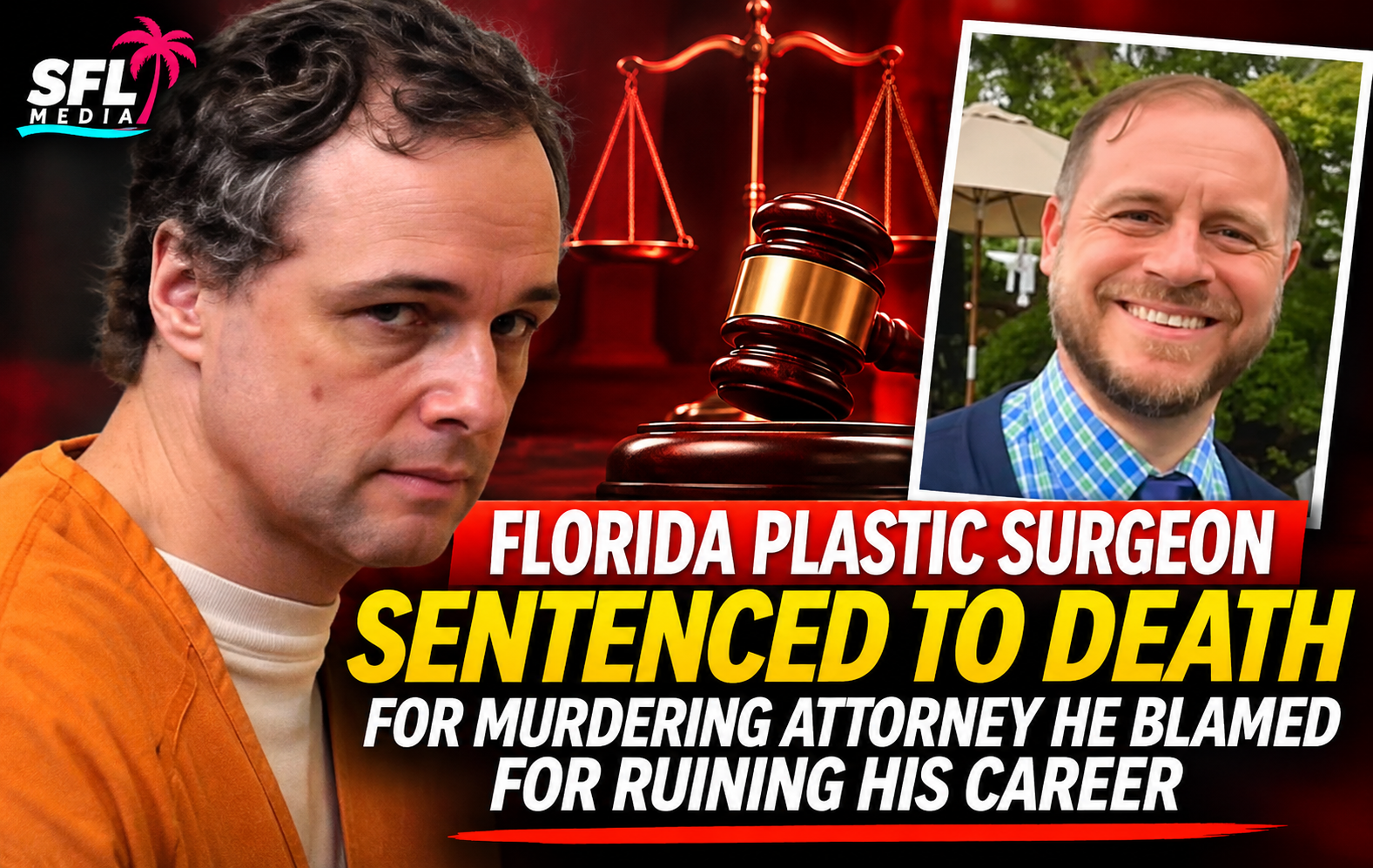
Former Florida plastic surgeon Tomasz Kosowski has been sentenced to death for the calculated murder of attorney Steven Cozzi, who disappeared from his Largo law office in March 2023 while representing defendants in a civil lawsuit filed by the surgeon. The case, which involved surveillance footage, blood evidence, an elaborate plan to conceal the victim’s body, and a murder conviction without the recovery of human remains, concluded with a death sentence in Pinellas County Circuit Court on Friday, November 20, 2026.
Pinellas County Circuit Judge Joseph Bulone imposed the death penalty on Kosowski, 47, after finding that the murder was cold, calculated, and premeditated and was committed, at least in part, for financial gain. The sentence followed a September bench trial in which Kosowski represented himself and attempted to challenge the prosecution’s reconstruction of the killing, arguing that investigators had failed to establish how he could have murdered Cozzi and removed his body without attracting attention.
Cozzi, 41, was a civil litigation attorney at the Blanchard Law Firm in Largo, Florida, whose professional responsibilities placed him in direct conflict with Kosowski during a contentious lawsuit involving the surgeon’s former medical practice. Prosecutors argued that Kosowski’s resentment over the litigation escalated into a meticulously planned murder, with the surgeon stalking Cozzi before attacking him inside a bathroom at the law office and transporting his body to Southwest Florida.
Although Cozzi’s remains have never been recovered, investigators assembled a circumstantial and forensic case involving surveillance recordings, cellphone location data, blood evidence, and materials discovered during searches of Kosowski’s vehicle and property. The evidence ultimately persuaded Judge Bulone to convict the former surgeon of first degree murder on September 23, 2026, setting the stage for the subsequent capital sentencing proceedings.
A Civil Lawsuit That Turned Into a Murder Investigation
The conflict between Kosowski and Cozzi originated in a civil lawsuit filed in 2019 against Kosowski’s former employer, the Laufer Institute of Plastic Surgery in Dunedin, Florida, and associated medical professionals. Kosowski, a Dartmouth Medical School graduate who specialized in reconstructive breast surgery, alleged that the practice had improperly withheld compensation and damaged his professional reputation.
Cozzi represented defendants in the litigation, bringing him into direct contact with Kosowski, who had chosen to represent himself. Prosecutors described the lawsuit as the source of a growing fixation that ultimately led Kosowski to target the attorney personally. Evidence presented during the case included allegations that Kosowski had repeatedly driven near Cozzi’s home and workplace in the months preceding the disappearance, behavior prosecutors characterized as surveillance in preparation for the killing.
The dispute also provided the prosecution with a potential financial motive. By eliminating an attorney involved in litigation over his professional income and reputation, prosecutors argued, Kosowski believed he could improve his position in the underlying case. The sentencing court later accepted financial gain as one of the statutory aggravating circumstances supporting the death penalty.
Steven Cozzi Disappeared From His Law Office Without a Trace
On March 21, 2023, Cozzi vanished during the workday from the Blanchard Law Firm’s office in Largo, leaving behind his wallet, keys, cellphone, and an open work file on his computer. The circumstances immediately raised concern among colleagues because the attorney had apparently disappeared without taking the personal belongings he would ordinarily need to leave the building.
Investigators discovered blood evidence inside a common bathroom at the office complex, transforming the missing person investigation into a suspected homicide. Surveillance footage subsequently became central to the case, showing movements that prosecutors said placed Kosowski at the building during the critical period and documented the removal of a large cart or wagon from the premises.
According to the prosecution’s reconstruction, Kosowski waited inside the building’s common bathroom, attacked Cozzi, and concealed his body before transporting it out of the office complex. Investigators alleged that he loaded the remains into his vehicle and drove south, eventually traveling to Collier County, where authorities believe Cozzi’s body was discarded in a dumpster and subsequently transported to a landfill.
Cellphone location evidence helped investigators reconstruct Kosowski’s movements after the disappearance, while the surveillance recordings and forensic evidence connected the alleged attack to the office building and the defendant’s vehicle. Despite extensive investigative efforts, Cozzi’s body was never recovered, leaving his family without the opportunity to bury his remains.
The absence of a body became one of the central issues in the trial, but Florida law does not require prosecutors to recover a victim’s remains to establish that a homicide occurred. Instead, the state must prove the killing and the defendant’s responsibility beyond a reasonable doubt through the available evidence, which can include forensic findings, surveillance recordings, digital records, and other circumstantial proof.
Investigators Discovered Weapons, Cash, and a Powerful Paralytic Drug
Kosowski was arrested on March 25, 2023, four days after Cozzi disappeared. Searches conducted during the investigation uncovered an extensive collection of weapons, tactical equipment, cash, and other materials that prosecutors used to support their account of planning and preparation.
Authorities reported discovering approximately $280,000 in cash, masks, duct tape, brass knuckles, a stun device, a crowbar, firearms, and a ballistic vest marked with emergency medical services identification. Investigators also recovered law enforcement related patches and a vial or syringe associated with succinylcholine, a powerful neuromuscular blocking medication used in medical procedures.
Succinylcholine temporarily paralyzes skeletal muscles, including those involved in breathing, and must be administered under appropriate medical supervision. Its presence among the materials recovered during the investigation attracted particular attention because Kosowski was a trained physician with knowledge of the drug’s effects. However, the recovery of the substance does not independently establish that it was administered to Cozzi, and the absence of the victim’s remains limited investigators’ ability to determine the precise mechanism of death.
Additional searches reportedly uncovered a large collection of firearms at Kosowski’s residence, with investigators documenting approximately 200 weapons. Blood evidence recovered from the office bathroom and Kosowski’s vehicle became particularly important because it provided a forensic connection between the missing attorney, the suspected crime scene, and the defendant’s movements.
Together, the physical evidence, digital records, and surveillance footage formed the foundation of the prosecution’s case, allowing investigators to reconstruct the alleged killing despite the absence of Cozzi’s body.
Surgeon Represented Himself in Rare Death Penalty Bench Trial
Kosowski’s criminal trial took an unusual turn when he waived his right to a jury and chose to represent himself against the first degree murder charge. The decision left Judge Bulone responsible for determining guilt and, ultimately, whether the defendant should receive a life sentence without parole or the death penalty. Although defendants have constitutional rights concerning legal representation and jury trials, self-representation in a capital murder proceeding carries extraordinary risks because of the complexity of the evidence, procedural requirements, and potential consequences.
During the September 2026 trial, prosecutors presented evidence describing what they characterized as a methodically planned killing. Surveillance recordings, cellphone records, forensic testing, and the circumstances surrounding Cozzi’s disappearance formed the foundation of their case. Prosecutors also emphasized that Kosowski had participated in a scheduled remote hearing connected to the civil litigation on the morning Cozzi disappeared, an unusual detail that helped establish the timeline surrounding the crime.
Kosowski challenged the prosecution’s reconstruction, questioning whether a person could have killed Cozzi inside an office bathroom and moved a body weighing approximately 190 pounds into a vehicle without being detected. He also emphasized that investigators had never recovered Cozzi’s remains or produced a death certificate establishing the precise cause of death. Despite those arguments, Judge Bulone found the prosecution had established first degree murder beyond a reasonable doubt and convicted Kosowski on September 23.
The proceedings then moved into the penalty phase, where Kosowski again declined to present a substantive defense or mitigating evidence on his own behalf. The court appointed special counsel to ensure that circumstances potentially supporting a life sentence were considered before the final punishment was imposed. Those considerations included Kosowski’s prior professional career and lack of a significant criminal history, but the judge ultimately determined that the aggravating circumstances outweighed the mitigation.
Judge Rejects Last Minute Motion and Imposes Death Sentence
The final sentencing hearing began Friday afternoon, November 20, at the Pinellas County courthouse in Clearwater. Before the judge could announce his decision, Kosowski submitted a last-minute motion seeking Bulone’s disqualification from the case. The judge recessed to review the filing before returning approximately 15 minutes later, denying the motion, and proceeding with sentencing.
Bulone found that the murder satisfied two statutory aggravating circumstances: that it was committed in a cold, calculated, and premeditated manner without any pretense of moral or legal justification, and that it was committed for financial gain. The judge determined that the evidence supporting the calculated nature of the killing was particularly compelling and sufficient on its own to outweigh the mitigating circumstances presented.
In announcing his decision, Bulone stated that Kosowski had “forfeited his right to live” under Florida law and imposed the death penalty for the murder of Steven Cozzi. The judge also informed Kosowski that his conviction and sentence would receive automatic review by the Florida Supreme Court and appointed the public defender’s office to represent him during the appellate process.
The court’s decision brought the trial and sentencing phases to a close, but it did not exhaust the legal proceedings available to Kosowski. Florida death sentences are subject to mandatory appellate review, and additional postconviction challenges may follow. No execution date was established by the sentencing decision.
Family Honors Murdered Attorney With Bow Ties at Sentencing
The sentencing hearing was also an emotional moment for Cozzi’s family, friends, and colleagues, who had spent more than three years waiting for the criminal case to reach its conclusion. Several attendees wore bow ties in tribute to Cozzi, whose personal style and personality had become part of the way loved ones remembered him.
Cozzi’s husband, Michael Montgomery, and other family members attended the proceedings as the judge delivered the sentence. According to FOX 13 Tampa Bay, relatives and supporters reacted with visible relief, while one person in the courtroom shouted “Rot in hell” as Kosowski was escorted away following the ruling.
Before becoming an attorney, Cozzi had worked as a wardrobe technician in Broadway theater productions, a career that reflected his interests in the performing arts before he entered the legal profession. His transition into law brought him to the Tampa Bay area, where he developed a career in civil litigation and built relationships with colleagues and clients who later mourned his disappearance.
The absence of his remains has made the loss particularly difficult for those closest to him. Although the conviction established Kosowski’s criminal responsibility, the investigation did not recover Cozzi’s body, leaving his family without a burial or a final opportunity to say goodbye. State Attorney Bruce Bartlett acknowledged that suffering after sentencing, emphasizing the complexity of the investigation and the work required to secure a conviction in a case without a recovered body.
A Murder Conviction Without a Body
The Kosowski case demonstrates how prosecutors can establish a homicide through circumstantial and forensic evidence even when investigators cannot recover the victim’s remains. Florida law does not require the discovery of a body to support a murder conviction, provided the state establishes that a killing occurred and proves the defendant’s responsibility beyond a reasonable doubt.
In this case, the prosecution relied on evidence from multiple sources that reinforced one another. Cozzi’s unexplained disappearance, his abandoned personal belongings, blood evidence at the law office, surveillance recordings of Kosowski’s movements, and forensic evidence recovered from his vehicle and property supported the state’s reconstruction of the killing. Cellphone records documenting travel toward the Everglades further strengthened the prosecution’s account of how the remains were disposed of.
The disappearance of Cozzi’s body also complicated the investigation by preventing a conventional autopsy and leaving uncertainty about the precise method used to kill him. Nevertheless, the court concluded that the totality of the evidence established the necessary elements of first-degree murder, rejecting the defense’s contention that the missing remains created reasonable doubt.
The case has drawn national attention because of the defendant’s medical background, the alleged planning involved, the unusual decision to conduct a capital defense without an attorney, and the severity of the punishment. It also underscores the potential danger posed by escalating personal grievances when a civil dispute becomes the focus of a violent obsession.
Florida’s Death Penalty and the Appeals Ahead
Kosowski’s sentence places him among defendants facing capital punishment in Florida, where first-degree murder can carry either life imprisonment without the possibility of parole or death when the statutory requirements for capital sentencing are satisfied.
The sentence will now undergo automatic review by the Florida Supreme Court, which must examine the conviction and punishment under applicable law. That process can involve challenges to the trial proceedings, the admission of evidence, the findings supporting the death sentence, and other constitutional or procedural issues. The appointment of appellate counsel ensures that Kosowski will have legal representation during the next stage, despite his decision to represent himself at trial.
For Cozzi’s family, the sentence marks a major milestone in a case that began with an unexplained disappearance from an ordinary workplace and developed into one of the Tampa Bay area’s most disturbing murder investigations. The court has determined that Kosowski murdered the attorney and imposed Florida’s most severe criminal punishment, but the appeals process remains ahead, and the location of Cozzi’s remains remains unknown.
More than three years after Steven Cozzi disappeared from his Largo office, the criminal case has produced a conviction and a death sentence. What it has not produced is the return of his body to the people who loved him.

Sources & Further Reading
-
FOX 13 Tampa Bay — Plastic Surgeon Who Murdered Largo Attorney Sentenced to Death
-
FOX 13 Tampa Bay — September 2026 First-Degree Murder Verdict
-
Pinellas County Clerk of Court — State of Florida v. Tomasz Roman Kosowski, Case 23-02935-CF
-
Sentencing Hearing Transcript — Judge Joseph Bulone, November 20, 2026
-
ABC News — Former Florida Plastic Surgeon Found Guilty of Murdering Missing Attorney
-
Florida Politics — Kosowski Sentenced to Death for Steven Cozzi Murder
-
FOX 13 Tampa Bay — Video Report on Death Sentence and Family Reaction












Loading comments…